A US Colonel Ordered a Surprise Readiness Test. The SAS Were Already Outside His Perimeter
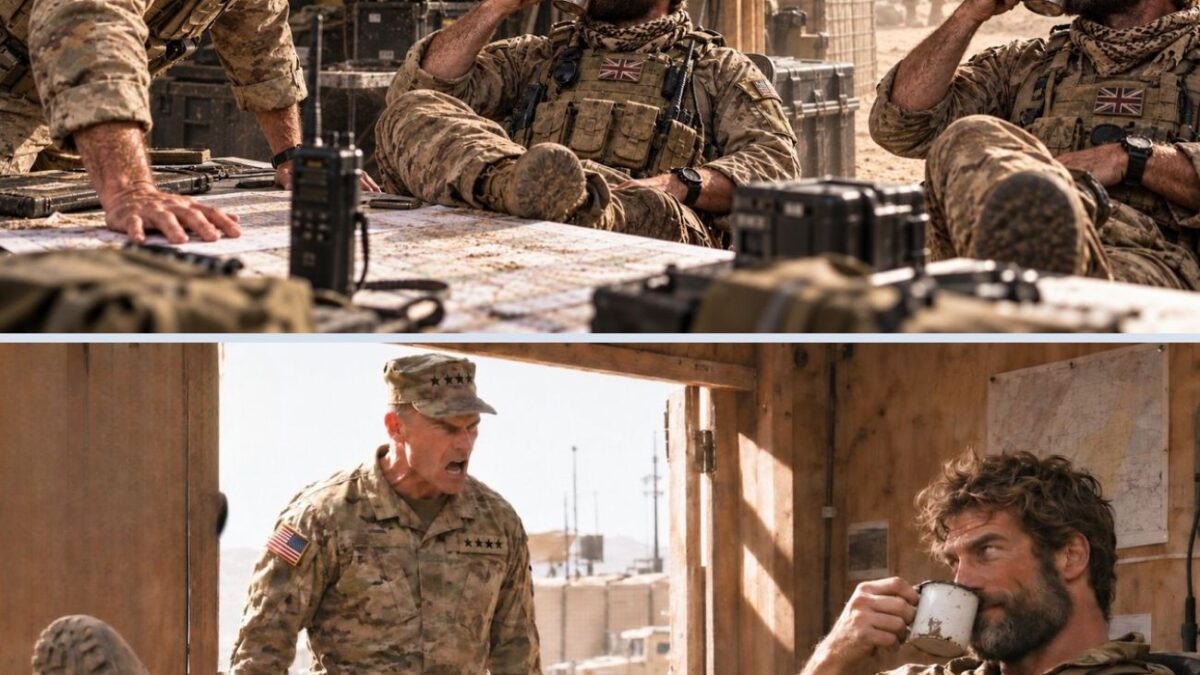
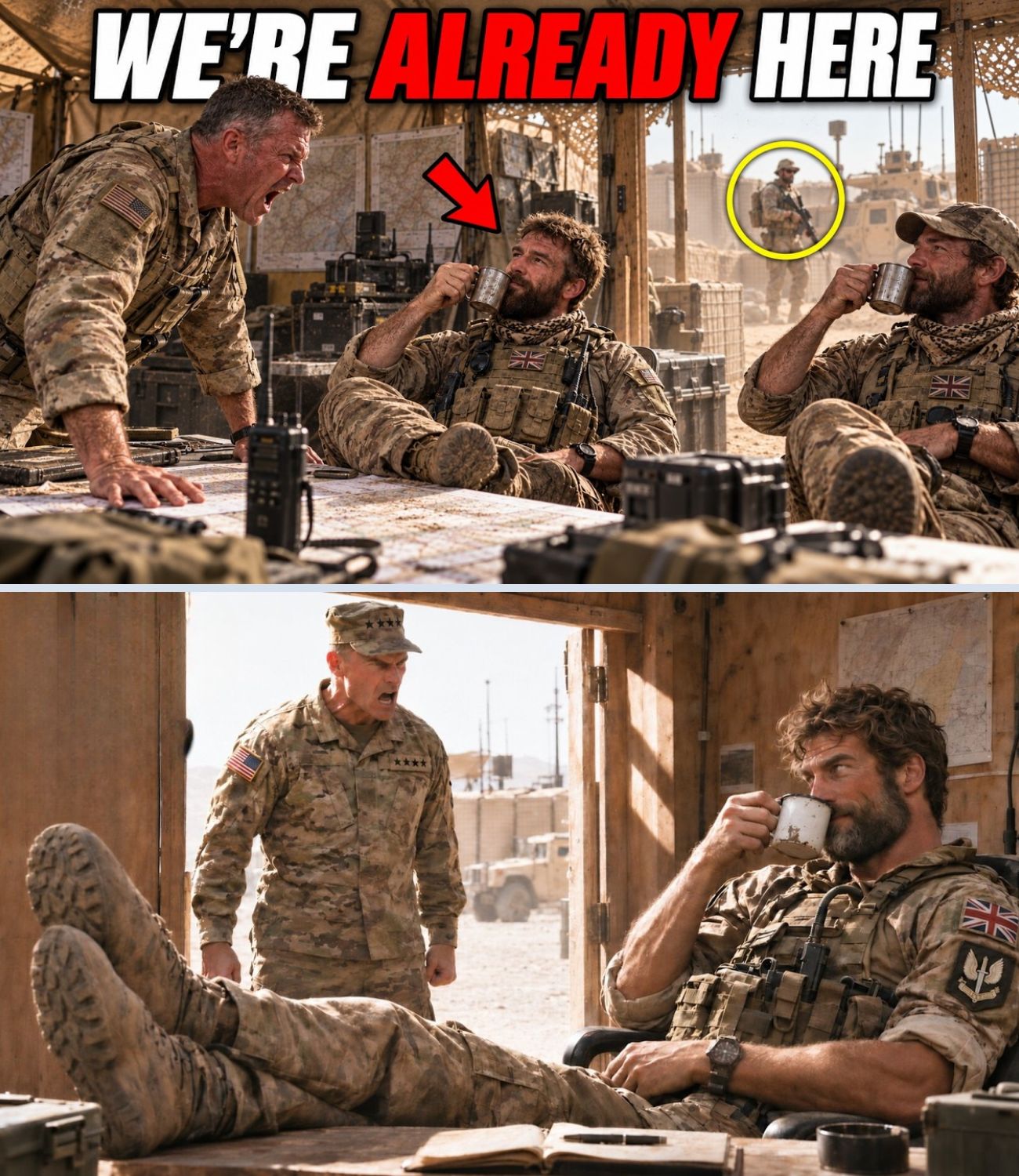
“Wake the SAS. Full kit. I want them on the line in 5 minutes.” Colonel Jack Warren checked his watch while nobody had been warned about the readiness test. Captain Luke Harris returned from the British shelters and reported that they were gone. Warren asked where they had gone, and Harris replied that all six were outside the perimeter.
Warren reached for the radio and said, “Carter, you have 30 seconds to explain yourself.” The SAS patrol leader answered quietly from the other end. “Keep your voice down, sir. Your attacking force is 40 yards from us.”
Warren looked at the sealed exercise orders resting on his desk. He had signed them just three minutes earlier. The gate log clearly showed the British had left forty minutes before. He asked how Carter could possibly have known.
“We didn’t,” came the reply before the radio went silent. Warren kept the handset pressed against his ear. “Carter, no answer,” he muttered.
Across the operations room, Harris stood with a clipboard tucked under one arm. Beyond the open doorway, soldiers were moving briskly through the dusty compound. Boots struck concrete as someone called out for a missing squad leader and a vehicle door slammed shut.
The base was waking up exactly as Warren had expected, save for the six men he had intended to surprise. “Give me the exercise controller,” he said firmly. Harris promptly picked up the desk phone.
Warren lowered the radio and looked again at the official order. The exercise window was set for 0615 onward with activation at 0618. There was no advance notification given to any of the participating units.
The opposing force was authorised to approach from any direction within the designated training area. He had chosen the activation time himself. Until four minutes ago, it had existed only inside his own head.
The British patrol had crossed the gate at 0538, which was the main problem. Somebody could conceivably have told them an exercise was coming. Somebody might even have mentioned the available window.
However, nobody could possibly have leaked a start time Warren had not yet selected. Harris covered the phone’s mouthpiece with his hand. “Controller confirms the opposing force is moving, sir.”
“Where?” Warren demanded. “He won’t disclose their position during the assessment,” Harris answered. “Ask whether a British patrol has made contact.”
Harris repeated the question into the telephone receiver. After a brief moment, his expression noticeably changed. “No contact reported,” he stated.
Warren walked across the room to the large wall map. The training base occupied an old logistics compound at the edge of a broad desert valley. A sturdy wire perimeter enclosed vehicle bays, accommodation blocks, a command building, and a maintenance yard.
Low ridges overlooked the southern side of the compound. A dry drainage channel curved around the eastern perimeter. There was nothing particularly complicated about the surrounding terrain.
That was precisely why Warren had chosen it for the test. He wanted an honest evaluation with no elaborate scenarios or rehearsed responses. An unexpected alarm, a possible breach, and a clear measure of how quickly each team could become useful were his goals.
The American platoons had spent three days preparing for joint exercises. The SAS had spent those same three days asking pertinent questions. Which patrol routes remained open before breakfast?
Who controlled the observation point above the drainage channel? Were routine departures suspended during exercise preparation? Warren had mistakenly viewed those questions as mere administrative details.
Now he wanted every single answer clarified immediately. “Find their movement authorisation,” he told Harris. “Then find out who approved it.” “Sir.”
Outside, a sergeant shouted that the first response squad was ready. Warren glanced down at his watch to check the elapsed time. Four minutes and twelve seconds was a respectable time indeed.
He should naturally have been pleased with the result. Instead, he was staring grimly at six empty spaces on the readiness board.
Harris had first entered the British accommodation block expecting complaints. Perhaps one man would still be pulling on his muddy boots. Perhaps another would ask whether the shrill alarm was actually real.
He had carefully prepared himself for the dry humour that seemed to accompany every conversation with the SAS. What he found instead was utter silence.
Six camp beds stood neatly beneath the barracks windows. Blankets were neatly folded and personal bags remained tucked beneath the bed frames. A paperback lay face down beside a ceramic mug while the patrol equipment was completely gone.
Harris checked the communal washroom and then the narrow space behind the building, finding nobody. A British liaison sergeant attached to the headquarters staff emerged from the neighbouring office carrying a cup of tea.
“Looking for Carter?” the sergeant asked. “Where is he?” Harris inquired. “Out.” “When?” “Before I got here.”
“Did he know about the alarm?” Harris pressed. The sergeant looked up toward the loudspeaker hanging above the vehicle yard. “It only just started.”
At the gatehouse, Harris found the departure recorded in ordinary black ink. It listed six personnel on a routine reconnaissance patrol. Their return was scheduled no later than 0800 within the approved eastern drainage ground training sector.
Nothing had been crossed out or altered on the log. Nothing had been added afterward by the staff. The duty guard remembered them clearly.
“Quiet group, sir,” the guard remarked. “Checked out properly. Sergeant Carter showed the authorisation.”
“Were they in a hurry?” Harris asked. “No, sir.” “Did they say anything about a test?” “No.”
Harris asked to see the duty officer’s copy of the document. That official paper had been signed at 2110 the previous evening.
Now, back in the operations room, he placed both records directly onto Warren’s desk. The patrol was fully authorised the previous night.
Warren read the signature and saw it belonged to his own operations major. The stated reason was ground familiarization. Carter had requested permission to inspect the eastern approaches before scheduled training commenced.
“Convenient,” Warren noted. “Yes, sir, but it was approved before you decided to run this test,” Harris replied. Warren looked up sharply.
Harris did not retreat from his statement. The colonel had selected him as test controller precisely because he was methodical. Harris checked things other officers were willing to take for granted.
That admirable habit felt less comfortable when the assumption belonged to Warren himself. Could the patrol have known the opposing force was deployed? They might have seen preparations just like everyone else.
“Yes, sir,” Harris agreed. Warren pushed the paperwork away in frustration. That answer irritated him more than a direct argument would have.
The British had clearly not needed secret information. If Harris was right, they had merely used information already available to the entire base.
The readiness board filled up slowly across the room. First platoon assembled swiftly, followed closely by second platoon. One minor radio fault was reported.
The quick reaction vehicle was awaiting its driver, while the medical team stood ready. The British patrol remained outside the perimeter.
Warren pointed a finger at the final entry on the board. “Mark them unaccounted for until we establish their exact status.”
Harris hesitated for a moment. “We have their departure record and radio contact, sir, but we do not have their location.”
“That rule applies to deployed teams once the exercise starts,” Warren said firmly, holding his gaze. Then he looked back at the board and ordered, “Mark them deployed with location pending.”
Harris dutifully changed the entry on the board. A young runner appeared anxiously at the doorway. “Sir, response teams are requesting positions.”
Warren turned back to the wall map. “First platoon covers the main gate while second takes the southern boundary. Hold the vehicle in the center until we have a clear direction.”
The runner saluted and left the room. Those tactical positions made complete sense. The gate offered the easiest access while the southern ridge offered the best view into the compound.
Either position could support a convincing exercise attack. The eastern drainage channel was far less obvious.
It featured shallow bends, patches of scrub, and broken earth banks. Vehicles could not drive straight through it under any circumstances.
Anyone using that route would have to dismount and move with extreme care. Warren had walked part of that channel two days earlier.
He remembered the oppressive heat, loose stones, and awkward footing. He did not remember seeing anyone study where it disappeared behind the maintenance yard.
Harris gathered up the records neatly. “Anything else, sir?” Warren looked toward the eastern edge of the map. “Yes.” He tapped the drainage channel. “Tell me what Carter was doing before he left.”
At 0506, Staff Sergeant Ben Carter stood outside the accommodation block fastening his watch strap. Corporal Sam Reed came around the corner carrying two mugs of coffee. Carter took one gratefully.
Across the compound, a forklift moved a heavy pallet beside the maintenance shed. Its reversing alarm sounded briefly before stopping.
Beyond it, the opposing force parking area was clearly visible through the wire fence. Two utility vehicles had been parked there during the previous afternoon.
Now both parking spaces were completely empty. Carter watched quietly for a moment. “Seen those trucks this morning?”
Reed followed his gaze across the yard. “No, they were there at lights out.” “Early start?” “Maybe.” Carter drank his coffee in silence.
A missing vehicle was hardly remarkable on a busy military training base. Drivers collected equipment while controllers checked routes.
Maintenance staff frequently moved things without notifying visitors. He would have forgotten the detail entirely if the observation point had been occupied.
It sat on a low-rise east of the compound. During the previous two mornings, a controller had stood there with a radio and a folding chair.
He watched patrol traffic entering the drainage ground. Today the folding chair remained in place, but the controller did not.
Carter looked from the empty parking spaces to the empty observation point. Then he noticed a third significant change.
The service track beyond the eastern fence showed fresh tire marks. There was nothing inherently unusual about tire marks, of course.
However, these particular tracks turned away from the normal route heading toward the range offices. They continued directly toward the ground behind the drainage channel.
Reed noticed Carter watching the ground closely. “What?” “Get the others.” “Problem?” “Something worth checking.” That was all he said.
Carter did not predict a readiness test at that moment. He did not know what Warren was going to order.
He did not possess some mysterious instinct telling him six men should vanish before an alarm. He simply had a valid patrol authorization, an assigned task, and three small changes pointing toward the same spot.
He could investigate them before breakfast. Inside the room, Corporal Dan Price was checking his radio battery.
Trooper Will Baker sat on his bed tightly lacing his boots. Troopers Joe Ellis and Nick Shaw were busy packing their water bottles.
Carter briefed them on what he had observed. Price asked the obvious question. “Exercise force?” “Could be.”
“Are we supposed to leave them alone?” “We’re supposed to stay inside our sector and report anything relevant, same as yesterday.”
Baker glanced up at the clock on the wall. “We leaving early?” “Within the authorised window.” There was no dramatic speech given.
They finished preparing their kit methodically. Price verified the patrol radio frequency. “Read, check the movement document.”
Carter made certain all six men understood their route and expected return time. At the gate, the guard looked through their paperwork. “Back for eight.” “Before eight if we can.”
The guard noted down the departure time as 0538. Carter thanked him and led his men out.
Outside the compound, early morning light spread across the valley. The air remained cool enough that the men could walk without sweating through their shirts.
They followed their approved route toward the east. At the first sharp bend, Carter stopped and looked back.
From that vantage point, the base appeared completely orderly and secure. Wire fences, watchtowers, permanent buildings, and a wide vehicle entrance formed a neat picture.
Anyone standing inside could reasonably feel that everything important happened securely behind those fences. Ahead of them, Reed crouched low beside the service track.
The fresh tire marks continued well beyond the patrol’s first observation position. Carter studied them carefully without touching anything on the ground. “Same direction.” They moved onward.
Near the next rise, Ellis signalled that he had heard an engine. The patrol paused instantly.
The sound drifted from beyond the drainage ground, softened noticeably by the low earthen banks. Carter sent a routine position report over the radio.
“Patrol inside approved sector. Continuing ground familiarization.” The headquarters operator acknowledged the message without any comment.
Later, Harris would find that exact message logged in the system. At the time, it had attracted zero attention.
There was no alarm sounding yet. No colonel was checking his watch anxiously. No one was looking for six empty beds.
At 0609, Carter spotted the first utility vehicle. It sat quietly behind a lower earth bank.
Several men wearing exercise identification bands were unloading equipment. A controller spoke to them while pointing toward the main compound.
Carter could not hear the verbal briefing, but he could clearly see its direction. One man checked his watch while another adjusted a training weapon strap.
A third man lifted a folded map from the vehicle hood. Reed leaned close to Carter. “That answers the truck question.” Carter nodded in agreement.
They had found an exercise force assembling outside the eastern boundary. The crucial question now was whether it mattered to their own assigned task.
Then the base alarm suddenly sounded. Every man standing beside the utility vehicle stopped instantly. The controller lowered his arm.
Carter watched the group begin moving purposefully toward the drainage channel. A moment later, his radio crackled to life.
“Carter, you have 30 seconds to explain yourself.” He instantly recognized Warren’s voice over the airwaves.
The men below were close enough that speaking loudly would give away the patrol’s position. Carter pressed the transmit switch. “Keep your voice down, sir. Your attacking force is 40 yards from us.”
Back inside the compound, Warren had a completely different view of the exercise. American soldiers were rushing to take their assigned positions.
Squad leaders checked ammunition substitutes and training equipment thoroughly. Radios passed short, urgent reports back and forth.
The medical team established its temporary station beside the command building. The overall response was improving with every passing minute.
Harris returned carrying the headquarters log sheet. “Carter reported his position at 0552, and the operator acknowledged it.”
Warren took the paper. “Why wasn’t that passed on to me?” “It was a routine patrol report before the exercise started, sir.”
Warren read the entry twice over. There was no missing report and no unauthorised departure. There was no evidence whatsoever of a leak.
There was, however, a considerable operational difference between knowing a patrol was outside and actually utilizing that knowledge.
He picked up the radio handset once more. “Carter, send your location and what you can confirm.” His voice was much lower this time.
The answer came back after several tense seconds. “Inside our approved eastern sector. Two exercise vehicles observed. One group moving towards the drainage channel with unconfirmed exact strength.”
“Intent?” Warren asked. “Looks like an approach to your eastern boundary.” “That’s an assessment, sir.”
Warren deeply appreciated the distinction. Carter was not offering certainty he did not possess. “Have they seen you?” “No indication. Stand by.”
Warren turned back to Harris. “Have the controller confirm whether the eastern channel is in bounds.” Harris made the call.
While he waited, an incoming report arrived from the southern boundary. “Movement on the ridge. Three figures.”
Warren faced the map board. There it was, the southern ridge approach he had anticipated.
“Have second platoon investigate and report. Keep them inside the wire.” Another transmission followed immediately.
“Main gate has a vehicle approaching with exercise markings visible.” Now the test began to look familiar.
A visible approach at the gate combined with movement on high ground forced defenders to divide their attention. Warren dispatched the reserve vehicle toward the main entrance.
Harris lowered the phone. “Eastern channel is in bounds, sir.” Warren looked at him. “Any restrictions?”
“Usual safety boundaries. The controller says all participating patrols can report what they observe.” “Then Carter’s report counts.” “Yes, sir.”
Outside, the engine roar of the reserve vehicle rose, then faded as it moved toward the gate. Warren studied the eastern side of the base closely.
The maintenance yard occupied that vulnerable corner. A delivery opening in the fence had been closed with a temporary barrier following recent repairs.
It was secure enough for routine operations, but it urgently needed observation during an active exercise. “Who has eyes on the maintenance boundary?”
Harris checked the position sheet. “Second platoon’s rear pair. They’re on the south side.” “Can they see the drainage exit?”
Harris paused briefly. “Not from their assigned position.” Warren called the platoon leader directly. “Shift your rear pair to cover the eastern maintenance boundary.”
The reply came back instantly. “Understood.” Then another voice cut across the communications net.
“Contact at the main gate. Exercise force requesting entry under a simulated emergency.” The reserve team arrived there exactly as Warren had ordered.
A controller began presenting the gate guards with a complex scenario involving a damaged vehicle, an injured driver, and pressure to open the barrier quickly.
At the southern ridge, the three figures moved into plain view. Second platoon reported them once again.
For nearly a minute, everyone on Warren’s net spoke exclusively about what they could see at the gate, the ridge, and the vehicle. Nobody mentioned the drainage channel.
Then Carter transmitted again. “Colonel, the eastern group has split. One element is continuing toward your maintenance yard while the other has stopped short.”
Warren leaned heavily over the map. “How many continuing?” “Four confirmed.” “Can you maintain observation?” “Yes.”
Warren called second platoon. “Confirm your eastern pair is in position.” Static hissed on the line.
Then the platoon leader answered, “Moving now, sir. We had to identify the ridge group first.” Warren’s jaw tightened visibly.
He had ordered the tactical shift and the platoon leader had acknowledged it. On paper, that boundary was fully covered.
On the ground, however, the men were still moving. A sharp whistle sounded outside the operations room.
An evaluator appeared at the door holding a card. “Colonel, exercise update.” He handed the card to Harris, who read it and looked toward Warren with concern.
“What is it?” Warren asked. “Simulated breach at the eastern maintenance boundary.” Warren took the card from his hand.
Two defenders were assessed as casualties, the temporary barrier was compromised, and attackers were inside the maintenance yard.
For a few quiet seconds, the operations room fell completely silent. The first response squad had assembled in just over four minutes.
The gate team had followed its proper emergency procedure. Second platoon had identified the visible movement on the ridge.
Every early metric had looked exceptionally good. Yet four attackers had still successfully reached the yard.
Warren walked briskly to the doorway. Beyond the vehicle bays, an evaluator stood beside the eastern barrier.
Two American soldiers waited with exercise casualty tags clipped to their equipment. One of them looked visibly angry.
The other soldier was staring at the drainage channel as though it had only just materialized from thin air. Harris joined Warren at the threshold.
“The reserve can move across, sir,” Harris suggested. Warren looked toward the main gate.
The reserve unit was currently occupied with the simulated emergency. Pulling them away would leave the gate team handling that difficult problem entirely alone.
He could certainly do it. But the exercise had already made him pay dearly for his first assumption.
He did not want to pay for another mistake. The radio crackled again. “Carter to headquarters.”
Warren lifted the handset immediately. “Go ahead.” “The four at your boundary are only part of the force, sir.”
Warren turned back toward the map. “How many more?” “Still confirming.” After a short pause, Carter continued. “The second group hasn’t moved because they’re watching your reserve.”
Warren looked through the doorway at the American vehicle stationed beside the gate. Carter spoke again over the radio. “They’re waiting to see where you send it next.”
Colonel Jack Warren kept his eyes fixed on the reserve vehicle. Its crew stood beside the main gate occupied with an exercise casualty who had become remarkably difficult to evacuate.
The simulated injury required a stretcher, and the stretcher required two soldiers. Meanwhile, the vehicle supposedly carrying the casualty had developed a sudden engine fault.
Every individual complication sounded entirely reasonable on its own. Together, however, they kept Warren’s reserve pinned firmly in one place.
“Carter, explain what you’re seeing.” Outside the perimeter, Staff Sergeant Ben Carter watched the second group through a gap between two low banks.
“One man is observing your gate while another watches the maintenance yard. The rest are waiting behind the rise.”
“Waiting for what?” “Your response to the breach.” Warren studied the map intently.
Four attackers had entered the maintenance yard, making them visible, active, and close enough to demand immediate attention. The second group remained safely outside.
If he sent the reserve rushing east, the men waiting beyond the fence would know precisely which sector of the base had lost its mobile response.
“Can you confirm they’re coordinating?” “Observed a radio exchange immediately after your vehicle reached the gate, and another after the breach whistle. I can’t confirm the exact words.”
Warren deeply appreciated the strict limit on their certainty. He needed Carter’s accurate observations.
He also needed to remember that a raw observation and a definitive explanation were two different things. “Maintain watch and report any movement.” “Understood.”
Harris pointed toward the command building’s rear entrance. “We have the headquarters protection section.”
Four soldiers were assigned to that specific duty. They had remained near the operations room while the larger teams deployed outward.
Warren had originally counted them as close protection for the staff. Now they were the only uncommitted personnel within immediate reach.
“Put them behind the vehicle bays,” he ordered. “Position them to cover the maintenance yard’s inner exit and keep one man reporting directly here.”
Harris passed the order along. Warren called second platoon again. “Hold your southern positions while your eastern pair observes the yard. Do not send the whole platoon after the breach.”
The platoon leader answered, “Four attackers are in the yard, sir.” “I know. Contain them.” There was a brief pause before he replied, “Understood.”
At the gate, the reserve team leader requested permission to transport the simulated casualty to the medical station. Warren looked at Harris. “Send the medical team to them.”
That action would resolve the casualty problem without pulling the entire reserve across the base. Then he addressed the driver directly. “Keep your vehicle available. No movement without my direct order.”
Outside, Carter watched the observer beside the earth bank lower his binoculars. The man spoke hurriedly into a radio.
Then he looked toward the maintenance yard once more. Reed lay flat several feet to Carter’s left, expecting the truck to move.
“Looks that way,” Carter whispered. He checked the patrol’s tactical position.
They remained safely inside their authorized sector beyond the immediate path of the opposing force. The men were spread across ground they had thoroughly inspected on the way in.
Price held the radio steady. Ellis kept watch behind them while Baker and Shaw covered the patrol’s other observation angles.
They had a remarkably good view of proceedings. They also had a growing problem.
The opposing observer below had begun studying the surrounding terrain. Until now, his attention had belonged entirely to the main base.
Carter lowered himself further behind the earthen bank, and Reed did the exact same thing. A few seconds later, the observer turned fully away from the compound.
He looked directly toward the high ground where Carter’s patrol had been lying. Carter waited motionless as loose gravel pressed sharply against his forearm.
Somewhere behind him, a small insect moved through a dry clump of grass. Below them, boots scraped audibly against earth.
The observer was coming noticeably closer. Carter could have ordered an immediate move, but six men shifting at once would create far more visual signs than staying completely still.
He held his position and listened intently. The footsteps abruptly stopped. A radio clicked softly.
Then the observer spoke to someone Carter could not see. “Thought I caught something up here.” Another voice answered, “Controller?” “Maybe.”
Carter glanced toward Reed. The corporal remained entirely motionless. The opposing force knew exercise staff were stationed outside the base.
A brief glimpse of a man on high ground might easily belong to a controller. That uncertainty bought the patrol several crucial seconds.
The observer finally stepped away. Carter waited until the footsteps faded before signalling a quiet withdrawal to the next piece of cover.
The six men moved in strict sequence with no rush and no scramble. Once they were settled, Price passed the handset forward. “Headquarters asking for confirmation.”
Carter transmitted clearly. “Second group still outside. We’ve changed observation position. Their observer may have noticed movement.”
Inside the operations room, Warren carefully considered the report. His defenders were utilizing vital information from a patrol nobody had included in the original exercise plan.
If that information proved inaccurate, he could easily misplace the few men he still had available. He turned to Harris. “Can we verify their observation independently?”
“Yes, sir.” “How?” “The northern tower can see part of that rise from a different angle.”
“Have them look, and don’t tell them what answer we want.” Harris called the tower directly.
He gave a specific location and asked for a detailed report. For twenty seconds, they heard absolute silence on the line.
Then the tower guard answered clearly. “Vehicle behind the rise with personnel nearby, partially obscured.”
“Any movement?” Warren asked. “Two moving north along the outside track while others hold position.”
Warren leaned over the map. The northern track connected directly to a service opening behind the storage sheds.
During ordinary operations, it was used exclusively for deliveries. During this exercise, it sat squarely inside the approved attack area.
“Carter, two moving north. Can you confirm?” “Affirmative. Seen from here.”
Now Warren had two independent reports from different positions confirming the enemy movement. The second group had been waiting and was now on the move.
“Reserve to the storage sheds,” he ordered decisively. “Stay inside the perimeter and cover the service opening.” The driver acknowledged the command.
At the main gate, the medical team accepted the simulated casualty. The reserve soldiers climbed aboard their vehicle.
This time, they moved because Warren possessed verified information he could trust. Harris updated the tracking board.
The headquarters protection section held firm behind the vehicle base. Second platoon retained its southern positions.
The eastern pair reported the four attackers contained inside the maintenance yard. The reserve now covered the northern service opening.
For the first time since the alarm sounded, Warren could connect each defensive position to a current, logical reason. Then a new report arrived.
“Maintenance attackers moving toward the inner yard.” Warren answered immediately. “Protection section, hold your position. They’re coming toward you.”
Outside, sharp whistles sounded across the compound. Training weapons cracked loudly. An evaluator called for everyone in the immediate lane to freeze.
Harris looked through the window, unable to see past the parked vehicles. Warren remained focused beside the radio.
The protection section leader reported, “Attack stopped at the vehicle base, awaiting assessment.” A second transmission came from the northern service opening.
“Two exercise personnel approaching. We have them observed.” The attackers stopped short of the barrier.
Their controller raised an arm and blew another whistle. Harris let out a long breath.
The base had suffered a localized breach, but that breach had not become a clear route to the operations room. Warren looked back toward the eastern drainage channel.
“Carter’s status?” “All six accounted for and still outside. They will return when the controller clears their route.” “Understood.”
Then Carter added something Warren had not expected. “Sir, one correction.” “Go ahead.”
“Earlier, I said they were watching your reserve. That was our assessment. Their movement supported it, but we never heard their direct order.”
Warren looked at Harris, who was already writing it down. “Correction received,” Warren said, setting the handset on the desk.
The man outside his perimeter had just given him useful intelligence while making certain he understood its exact limits. The exercise officially ended at 0654.
The final official result was mixed. Two defenders were assessed as casualties at the maintenance boundary.
Four attackers were successfully contained inside the yard. The operations room held firm.
The northern approach was detected before entry, and the gate remained under friendly control. Warren could easily have described it as a successful recovery operation.
He knew doing that would leave the most useful part unexplained. At 0718, Carter’s patrol returned through the main gate.
Six men walked in carrying the exact same equipment they had taken out. There was no dramatic entrance and no cheering defenders waiting.
They signed in properly, cleared their exercise equipment according to range procedures, and walked toward the briefing room.
Warren was waiting there with Harris and the senior evaluator. A large tactical map covered one entire wall.
On the table lay the exercise order, gate log, radio records, and assessment cards. Carter removed his patrol cap.
“Sir.” “Sit down.” The other British soldiers took seats along the side.
American platoon leaders joined them around the table. The reserve team sergeant arrived last, carrying a thick notebook.
Warren began the debriefing with the breach. “Why was the eastern boundary left uncovered?”
Second platoon’s leader carefully explained his position. The original task covered the southern ridge.
When enemy movement appeared there, his rear pair stayed behind to help identify it. He had acknowledged the order to move east before those men had actually made the physical shift.
Warren listened intently before nodding. “We recorded an instruction as a completed action.”
Harris wrote that sentence down on the board. The gate team described the simulated emergency scenario.
The complex scenario had completely held their attention. They had requested the reserve because a casualty and a disabled vehicle seemed to require immediate help.
The reserve sergeant explained that he had simply followed the order he received. Warren did not ask him to defend it.
“That decision was mine.” The evaluator placed the opposing force plan on the table.
The ridge group was designed as a deliberate distraction. The gate emergency was intended to occupy the mobile reserve entirely.
The first eastern element would attempt a direct breach. The second element would exploit whichever opening appeared after the defenders reacted.
Harris looked toward Carter. The independent assessment from outside had been substantially correct.
Warren turned the plan document over. “When did your force begin preparing?” The evaluator checked his notes.
“Vehicles departed the parking area at 0450.” “Before I gave the start order?” “Yes, sir.”
They were preparing inside the approved morning exercise window. They held their positions until formal activation.
“Who knew the exact start time?” “You and me once you called it.” Warren pushed the gate log toward the center of the table.
“British patrol departed at 0538.” He put the exercise order beside it. “Activation order signed at 0618. That is forty minutes difference.”
Nobody in the room spoke. Then Warren looked directly at Carter. “How did you know there would be a test?”
“We didn’t, sir. You told me that on the radio.” “It’s still the answer.” A few men smiled quietly at the exchange.
Carter continued before the moment could become a joke at Warren’s expense. “The vehicles were gone. The observation point was empty. Fresh tracks went toward ground we were already authorized to inspect.”
“You thought they were connected?” “Yes.” “You could have reported that from inside.” “Yes, sir.”
“Why leave?” “Because we had permission to patrol, and looking from the gate wouldn’t tell us where they’d gone.” Warren studied him carefully.
“You weren’t trying to prove a point.” “No.” “Then what were you doing?” Carter answered without hesitation. “We saw something worth checking.”
Harris stood up and added the patrol’s first position report to the timeline. 0552. The headquarters had received it.
That entry mattered just as much as the departure time. The SAS had not vanished into thin air.
They had gone out through the gate, remained inside their approved area, and told headquarters precisely where they were. The base had possessed that crucial information during the alarm.
Nobody had connected it to the problem outside the wire. Warren leaned back in his chair.
He had begun the morning treating six empty bunks as evidence of failure. By the end of the exercise, those six men had provided the warning that protected his command building.
Both facts had been completely true. His first interpretation had not been. Warren asked Harris for the readiness sheet.
The captain placed it in front of him. Time to assemble, personnel present, equipment complete, communications established, and positions occupied.
These were all useful measures worth keeping. Warren pointed to the first entry. “Four minutes, 12 seconds.”
The response squad leader nodded. “First squad, sir. Good work.” Then Warren pointed toward the assessment cards.
“Two men assessed as casualties before we covered the eastern approach.” The room stayed completely quiet.
He laid the papers side by side. “We need both records.” That was the fundamental change.
The morning’s fast assembly had clear value. So did Carter’s early departure. Neither told the complete story alone.
Warren asked each team leader the same question. What did your men know when they took their positions? Some answers were clear.
The gate team knew a vehicle was approaching. Second platoon knew figures had appeared on the ridge.
The reserve knew it had been sent to assist. Other answers were uncomfortable.
The soldiers covering the southern side did not know a patrol was observing the eastern ground. The headquarters staff knew the SAS were deployed, but had not asked whether they could provide information.
The protection section knew its assignment, but had no current picture of the outer approaches. Harris filled half the whiteboard.
The discussion stopped being about the British. It became about the base itself.
That suited Carter just fine. He sat beside Reed listening while the American leaders worked through their own decisions.
When asked what the SAS would change, Carter did not say nothing. “Our first report could have been more useful,” he said.
Harris looked up. “How?” “We reported our position. Once we saw the vehicles, we should have told headquarters sooner.”
“We waited to establish what they were doing.” “Wouldn’t that have created another uncertain report?” “It would. We could have said exactly what we saw and left the conclusion open.”
Warren nodded thoughtfully. That answer prevented the debrief from becoming a contest between a perfect patrol and a careless base.
The patrol had acted well, but it still had something to improve. Before dismissing the room, Warren gave three clear instructions.
Patrol status would be included in the first readiness report. Position changes would be reported complete only when the soldiers physically arrived.
Every exercise assessment would record how units obtained and shared the information behind their decisions. Harris read them back.
Warren approved the wording. Then he looked toward Carter. “You’ll brief the platoon leaders on what you noticed before departure.” “Yes, sir.”
“Keep it practical.” “It’ll be short.” This time, Warren smiled. “Somehow I believe that.”
By breakfast time, the base had returned to its ordinary noise. Cutlery struck trays loudly while drivers argued about vehicle bookings.
The two soldiers assessed as casualties were alive, hungry, and determined to explain why the temporary barrier was a terrible place to defend.
Carter’s patrol sat together near the end of the long table. Baker had finally obtained the breakfast he had been thinking about since leaving the gate.
Reed stirred his coffee quietly. Warren entered the mess with Harris. Several soldiers began to stand up.
The colonel motioned them down with his hand. He stopped beside the British table. “Carter.” “Sir.”
“Next time you see something worth checking, make sure the operations room knows what you’re checking.” “Will do.”
Warren glanced at Reed’s mug. “Did you at least get coffee before you went?” “Half of one, sir.” “Then the morning wasn’t a complete success.”
He moved on before anyone could turn the light exchange into a speech. Later that afternoon, Harris printed out the corrected exercise report.
The first draft had described the British patrol as absent at activation. The final version gave its actual status accurately.
It stated they were deployed within their authorized sector with their position previously reported, providing external observation during the exercise.
Warren read it over carefully and signed his name. There was no need to make the morning sound more impressive than it had been.
The SAS had not predicted his secret order. They had simply noticed changes, used an existing authorization, and gone to look.
The Americans had responded quickly, suffered an early failure, checked new information, and recovered successfully. What made the exercise truly useful was the moment Warren stopped asking why the British were missing and started asking what they could see.
The next readiness test took place eleven days later. Once again, the start time was entirely unannounced.
Again, soldiers moved quickly through the compound. But this time, the first situation report included the patrols outside the wire.
One American team was already operating on the western track. A second team was returning from the northern observation point.
Carter’s men were inside the block, preparing for their scheduled training. Harris handed Warren the first report.
“All personnel accounted for. Two patrols deployed. Both contacted.” Warren checked his watch.
Then he put it down on the desk. “What are they seeing?” Harris reached for the radio.
That question had officially become part of the test.
You Might Also Enjoy

Mom Installed a Camera To Discover Why Babysitters Keep Quitting But What She Broke Her Heart


She Gave a Hungry Little Girl a Free Birthday Cake — The Next Morning, a Black Rolls-Royce Arrived