A Mother Went to the Morgue to Say Goodbye to Her Baby—Then She Heard Something That Stopped Her Cold…
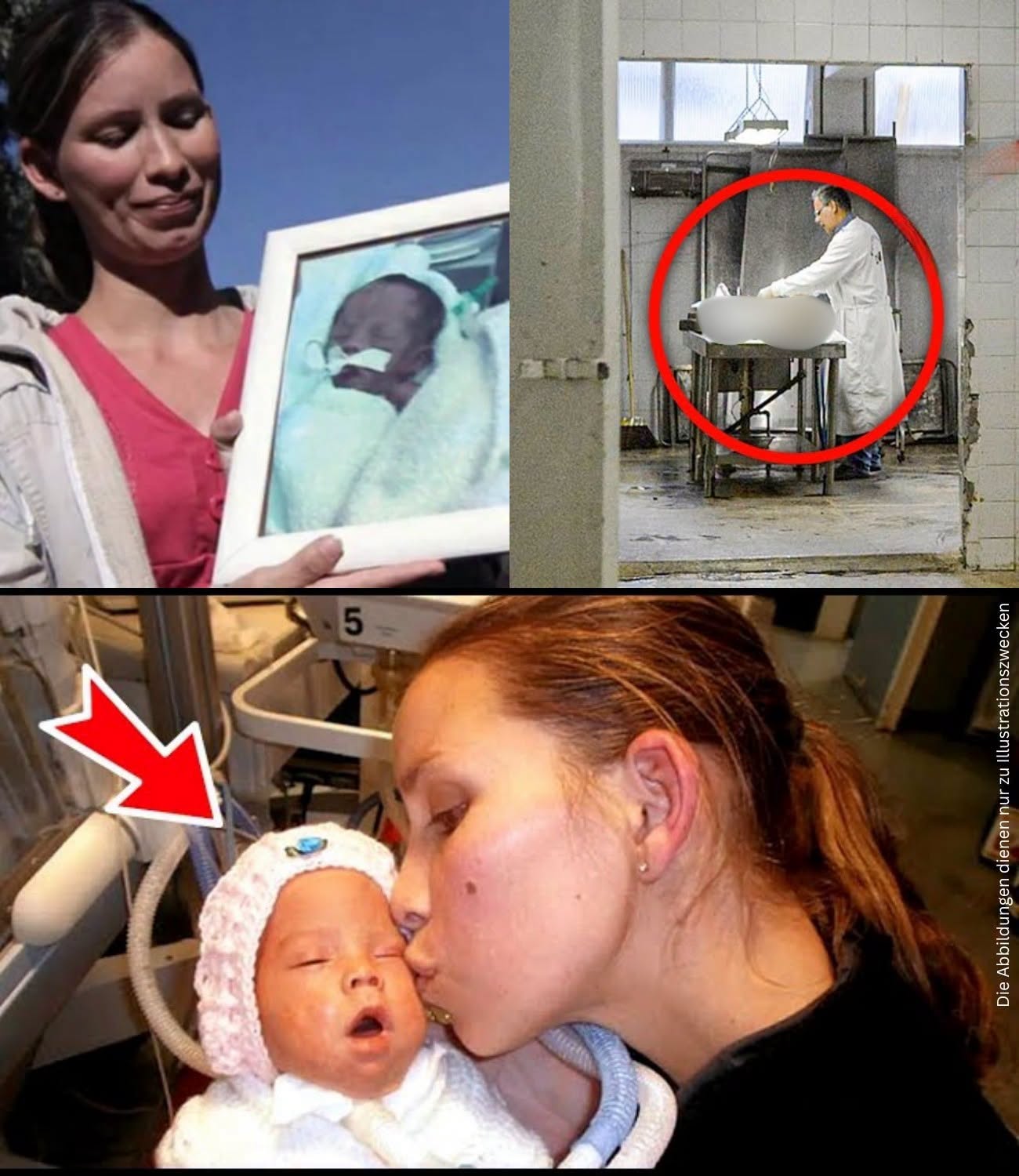
A Mother Went to the Morgue to Say Goodbye to Her Baby—Then She Heard Something That Stopped Her Cold…
A mother walked into a hospital morgue to kiss her baby girl goodbye. What she found inside that little wooden box stopped her heart, and then it went around the world.
Sandra lived in northeastern Argentina. She already had four kids, so she knew the drill. Then came number five, a girl. She and her partner Martin let themselves get excited. They picked out a name. They started counting weeks. Then at 26 weeks, the contractions started. She got to the hospital as fast as anyone could. But this baby wasn’t waiting. Way too early. Way too fast. Amelia arrived on April 8th, 2017, almost 3 months before she was supposed to.
One and a half kilos, small enough to hold in two hands. And she wasn’t breathing. No cry, no movement, nothing. The doctors worked on her. They called in a neonatologist who checked again and again and found nothing at all. No pulse, no breath. They made it official. They signed a death certificate. Then they wrapped that tiny body in cloth and laid her in a small wooden coffin.
Sandra had been under anesthesia the whole time. She woke up to the news. Her daughter was gone just like that. The pregnancy, the birth, the loss, all of it collapsed into a few hours she didn’t even remember living through. And she couldn’t accept it, not without seeing her.
She needed to look at her daughter’s face, needed to be sure, needed a photograph for the service. So, she begged Martin and she begged her brother, and the three of them got permission to go down to the morgue. By then, more than 12 hours had passed since Amelia was born. Sandra could barely walk. Her body was still wrecked from the delivery. And every step down that hallway, she was bracing herself for the worst moment of her life.
Imagine that walk. No parent should ever have to take it. They found the coffin. Sandra leaned over it and touched her daughter’s hand. Then she reached up and eased the cloth back from her face, and she heard a sound, a small cry, barely there. And then two enormous eyes opened and looked straight up at her. Sandra jumped back.
“I’m losing my mind. That didn’t happen.”
But it did. Her daughter was awake, alive, looking at her like she’d been waiting the whole time for her mother to show up. Nobody moved. Sandra and Martin were frozen solid, but her brother wasn’t. He scooped that baby up and sprinted out of the morgue, straight to the newborn ward, shouting the whole way. The doctors couldn’t believe what they were seeing.
Once they confirmed it, this baby was alive, Amelia went straight to intensive care. Warm her up, get oxygen in, get nutrition in, run every test they could think of to find out what 12 hours in a refrigerated drawer had done to her. And underneath all of it, one question nobody could answer. How? While Amelia fought in the ICU, her parents were trying to catch up emotionally. They’d buried her in their minds already. Now they had to unlearn it.
“I can’t explain what happened,” Martin said. “Some things just don’t have an explanation.”
The doctors didn’t have one either. What they did have was an investigation. The hospital opened one immediately.
“The staff involved are responsible and they will be held accountable,” said Juan Rodriguez, the deputy health minister for the Chaco region.
Amelia stabilized and once she did they moved her to a hospital in Buenos Aires with a specialized neonatal unit and far better equipment. Then came the next scare. A few days in she stopped breathing from a hemorrhage in her lungs. It took full cardiopulmonary resuscitation to bring her back, and that episode did permanent damage.
Her parents were told that roughly 10% of her brain was still working. She stayed in Buenos Aires for 8 weeks and slowly, stubbornly, she got stronger. She put on weight. She started taking her mother’s milk which is always a sign the body is fighting back. Martin though couldn’t carry it. He walked out and left Sandra with the kids. All of it alone on her.
And finally, after months of fear that started the day her daughter was born, Amelia was strong enough to go home. Sandra carried her out of that hospital, feeling like she was holding something impossible. But it wasn’t over. Amelia stayed fragile. Over the next 15 months came one complication after another, plus serious developmental delays.
Three months premature, 12 hours in the cold, a cardiac arrest. A body that small doesn’t come through all that untouched. Sandra gave her everything, every hour, every bit of energy she had. And she wasn’t a wealthy woman. Not even close. More tests brought a diagnosis: Microcephaly. Her skull and her brain weren’t developing the way they should. The one treatment on the table was a stem cell transplant.
Extremely complex and extremely expensive. Sandra didn’t have that kind of money, but she got an idea. Take Amelia to China for treatment. She launched a fundraising campaign even after doctors told her flatly that her daughter would never survive the journey.
Then at the end of June, Amelia’s heart stopped again back at the hospital, onto a ventilator, critical for hours. And this time, CPR didn’t bring her back. Her little heart was done. She was gone. Think about that. Sandra lost her daughter twice and the second time was for good. Sandra shared it publicly in a farewell letter that gutted everyone who read it. She wrote that this wasn’t goodbye because someday they’d find each other again.
She said she was thankful for every single minute they got: a year, 3 months, and 15 days with Amelia. And she said that stretch made her the happiest woman alive. She was certain her daughter came here with a purpose and she had proof. A young man once came up to her and told her he’d hit the lowest point of his life and was ready to give up until he watched Amelia fight for every breath she took and thought:
“If she can do that, I can keep going.”
That one gives me goosebumps every time. Whatever strength Sandra and her family have, I hope they hold on to it.