Remember the Conjoined Twins Doctors Said Might Not Survive 24 Hours? Their Parents’ Decision Left Everyone Stunned…
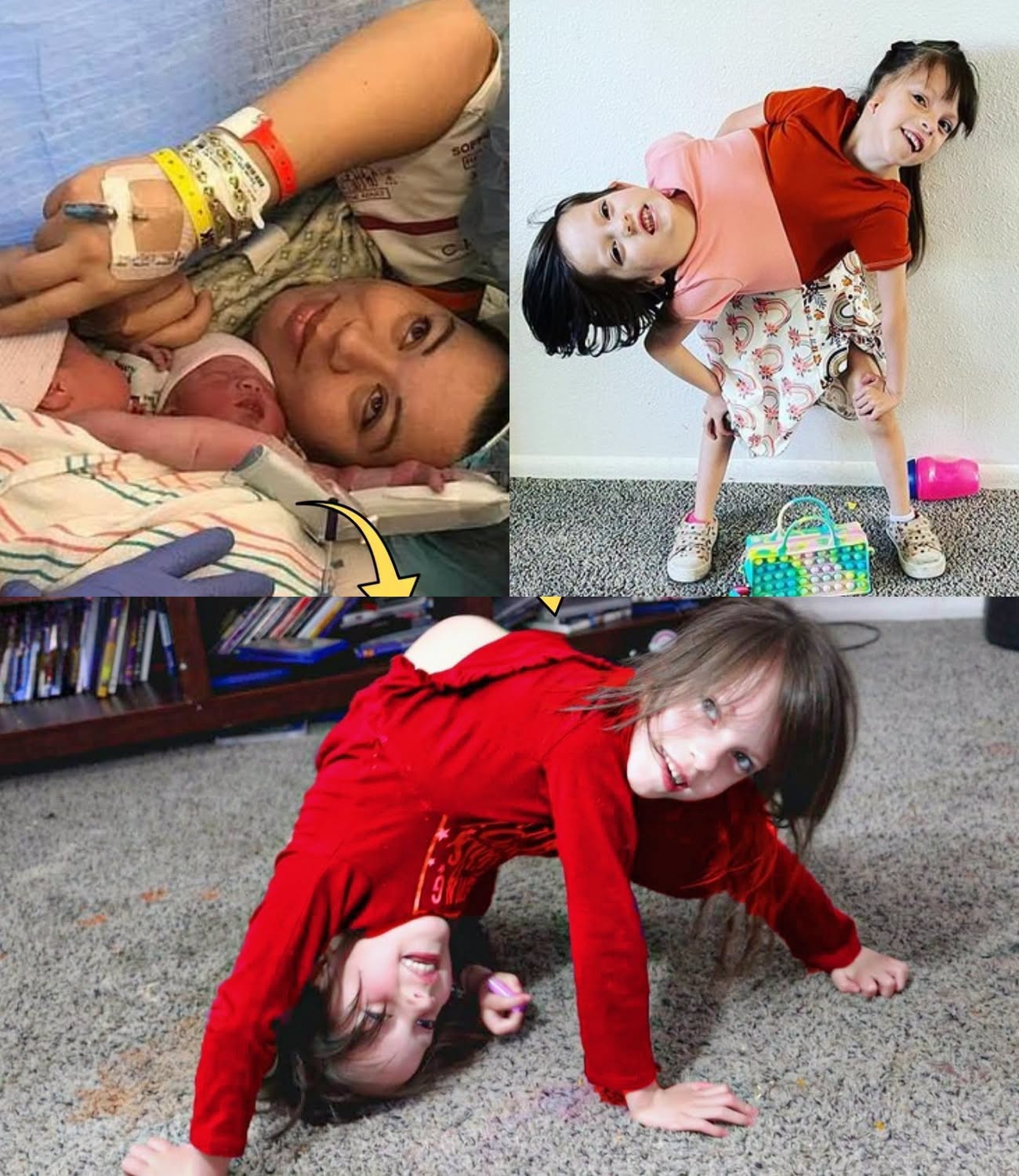
Remember the Conjoined Twins Doctors Said Might Not Survive 24 Hours? Their Parents’ Decision Left Everyone Stunned…
Nine years ago, two tiny girls arrived into the world sharing one body. Doctors had already warned their parents that neither baby would survive past the first day. But Cali and Carter Torres weren’t just born that night. They were born fighting. And the decision their parents would make in the months that followed would shock everyone around them.
It all started in June 2016 in the small town of Blackfoot, Idaho. Chelsea Torres, a 23-year-old veterinary technician student, had just found out she was pregnant. She was thrilled, but the excitement didn’t last long. At five weeks, she went in for an ultrasound because of painful cramping, and the doctor delivered devastating news.
“You are miscarrying,” he told her.
Chelsea left the clinic in tears, completely shattered. They monitored her blood levels for six days. On the sixth day, they called.
“The levels are rising but still low,” they explained. “The pregnancy is too close to your cervix. It won’t last.”
She waited for a miscarriage that never came. Then, at eight weeks, Chelsea went to a different clinic and this time she saw a heartbeat. She started crying right there on the table.
“I’m crying because I’m happy,” she told the technician, not even looking at the rest of the screen.
She turned to her husband, Nick, and just smiled. Their baby was alive. But what happened next changed everything. A few weeks later, the doctor came in with a serious expression.
“Are you bleeding or cramping?” he asked.
She knew something was wrong the moment he asked.
“The babies are stuck together,” he explained gently. “They are conjoined.”
Chelsea couldn’t believe what she was hearing. She thought it was just a scare at first, that the babies were just really close, just little things growing, but a follow-up ultrasound at ten weeks confirmed it. Chelsea said it took three days for them to get out of the shock and move on with their lives.
This wasn’t the first time Chelsea had faced the impossible. With her firstborn, Jason, she’d had an emergency C-section after severe cramping and bleeding. Jason had died during delivery and was brought back to life. Chelsea was left with scarring and tearing in her uterus. She never thought she could conceive again. And now she was carrying conjoined twins.
The diagnosis was amphoiskopagus, a condition so rare it affects fewer than 5% of all conjoined twins worldwide. Doctors told Chelsea and Nick that only 40 to 60% of conjoined twins survive birth. With this particular type, the odds were even worse. They gave the babies a 5% chance of living more than 24 hours. Nick, just 22 years old at the time, admitted later that in the very beginning, they considered ending the pregnancy.
“No one wants to carry their kids for nine months just to have them die,” he said.
The weight of that sentence still sits heavy. But Chelsea felt something different pulling at her heart.
“If those babies are fighting to be here, then I should fight for them, too,” she decided.
The couple made their choice: they would go through with it. But they didn’t allow themselves to hope too much. They never bought a single piece of clothing for the babies. Not a blanket, not a onesie, nothing. If the worst happened, they didn’t want to come home to an empty nursery full of reminders.
Chelsea put her college career on hold. She had been taking 16 credit hours and was weeks away from applying for graduation. Nick had been working part-time. They were switching off caring for Jason. Now, everything changed. Chelsea couldn’t work because of subchorionic hemorrhages and the need for a stress-free pregnancy. Doctors told them the only hospital equipped to handle this birth was Texas Children’s Hospital in Houston.
So, at 20 weeks pregnant, the young family packed up and left Blackfoot, the only home three-year-old Jason had ever known. The little boy took it hard. They had Idaho insurance and while some costs were covered, a huge chunk wasn’t for out-of-state care. When Jason had been in the NICU for just nine days after his birth, the bill had reached $200,000. Now they were looking at weeks, maybe months, in a Texas hospital with two babies whose survival wasn’t even guaranteed.
Chelsea was 36 weeks and six days pregnant when she had the C-section on January 30th, 2017. The moment the babies arrived, they were brought to Chelsea. They cuddled up to her. Then they were taken away to the NICU.
“Go be with them,” Chelsea told Nick. “I’ll be okay.”
Carter needed a ventilator for two hours after birth. Just two hours. Then she stabilized. Both babies were alive. Both were breathing. Both were fighting. The girls that doctors said wouldn’t survive 24 hours had already made it through the hardest part. Chelsea stayed with them the whole time in those early days.
“They are just cute little babies,” she later said. “They are just Cali and Carter.”
The original plan had been clear from the start: birth, separation surgery, stay in Texas for a few years, get the girls healthy, and bring them home. Texas Children’s Hospital had extensive experience separating conjoined twins. That was the whole reason they had moved there.
But as the weeks of testing went on, doctors began mapping the girls’ anatomy in detail. And what they found changed everything. Callie and Carter had two separate heads, two separate hearts, two separate stomachs, and two separate torsos that faced each other. Chelsea described their anatomy like two waves crashing together. The top part was each girl’s own. But where things got complicated was lower down. From the intestines on, everything was shared: one liver, one intestinal tract, one bladder, two legs, one pelvis. Each girl controlled just one leg and one arm.
Their pediatrician, Dr. Mitchell Stewart, looked at the results and delivered the verdict that no one expected. Separation surgery would be life-threatening. The girls had a much better life expectancy together than if they were pulled apart. If they were separated, they would need ostomy bags, colostomy bags, lifelong medications, and a mountain of medical complications they didn’t currently face. The doctors told Chelsea and Nick something that stunned them.
“Nothing is wrong with them. They are perfect. They are healthy,” the doctors explained. “Take them home and treat them like normal kids.”
And that’s exactly what they did. After five weeks in the hospital, the only thing keeping them there was a custom car seat that hadn’t arrived yet. Once it did, the Torres family hit the road. It took six days to drive from Houston back to Blackfoot. When they finally pulled into their small Idaho town, the community was waiting.
Life at home was a different kind of challenge. People stared. People took pictures. Chelsea struggled with it badly in the beginning. She started hiding the girls under a blanket in their stroller whenever they went out. She once smashed a stranger’s phone who tried to photograph them without asking.
“It’s just easier to hide them,” she admitted back then.
But Chelsea couldn’t stay hidden forever. While still pregnant, she had created a Facebook page called Beating the Odds with Cali and Carter, hoping to find other families with conjoined twins. And she did. She found groups. She found people. And she got the support she desperately needed. Slowly, the hiding stopped. The blankets came off. Chelsea started posting photos and videos of the girls on social media—Facebook, Instagram, TikTok, YouTube. The world started watching. And what the world saw was two completely normal little girls living an extraordinary life.
Cali and Carter started kindergarten. They made friends. They told reporters that the best part about school was lunch and recess. When asked if they were best friends, Carter giggled.
“Sometimes we aren’t,” she said. “Sometimes we fight.”
Just like any set of twins, their personalities couldn’t be more different. Callie is girly, mellow, into makeup and lipstick. Ask her what she wishes for and she’ll tell you.
“I want a thousand lipsticks!”
Carter is the energetic one, the talkative one, the one who gravitates toward video games and playing Mario Party with her older brother, Jason. Ask Carter what she wants, and she’ll give a quick answer.
“Taco Bell every day and trips to the aquarium!”
They go to physical therapy. They ride bikes. They do chores. Callie controls the leg under her. Carter controls the leg under her. And together, they’ve learned to take about 40 steps. Even during COVID lockdowns, when they couldn’t get to their therapy appointments, Chelsea refused to stop. She researched walking exercises herself and helped the twins practice at home, holding on to furniture one step at a time.
Chelsea sews all their clothes by hand. She buys two of everything: dresses, jackets, shirts, cuts them apart, and stitches them together into one outfit.
“It’s one of the hardest parts of daily life,” she says.
That and the custom car seat they keep outgrowing. But the small things are what make this story. The quiet moments that no headline captures. When one girl needs a break, she’ll put on headphones and watch something on a tablet while the other plays. And then there’s this: when Carter gets anxious, she draws a small circle on Callie’s leg with her finger and just keeps following it over and over until she feels calm.
Some kids at school have called them a spider. It stings. But Callie and Carter handle it together. They always do. Their older brother, Jason, now a teenager, gives them piggyback rides and is one of their biggest fans. He sees them as just two individuals, just like anyone else.
“They’re both special to me, both funny, and I love them both,” he told reporters.
Their younger brother, Micah, rounds out the family. Neither Cali nor Carter has ever asked to be separated. Chelsea says they don’t know any other way of life. When people ask them if they want to be separated, they just look confused.
“Why?” they ask.
Chelsea leaves the door open. If one day they say they want it, she’ll support it. She’ll tell them to listen to the doctors, understand the odds, and if they still want to go through with it, she’ll be right there beside them. But for now, Chelsea says her girls are happy in the skin that they’re in. And maybe the most powerful thing Chelsea ever said was the simplest.
“I just want people to know that they are two normal kids in an unusual circumstance,” she urged. “Just treat them normal. They like to be treated like any other kids because they are.”