1984 3 Year Old Girl Kidnapped In California — 10 Months Later, A 13 Year Old Told Police
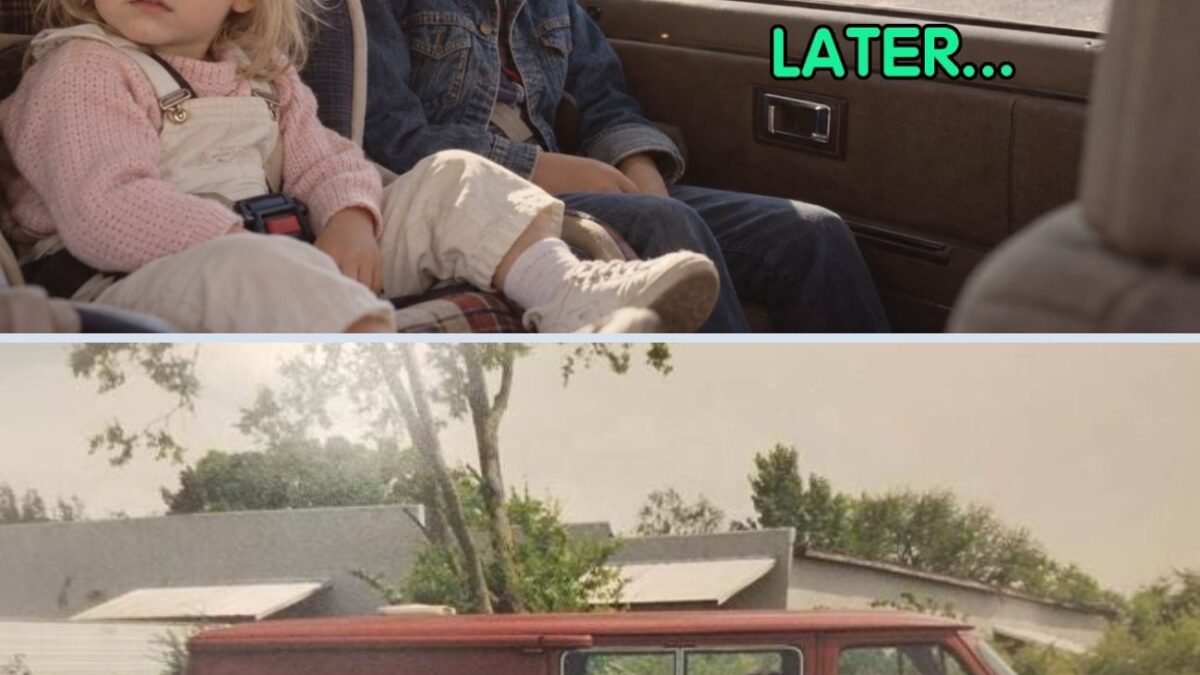
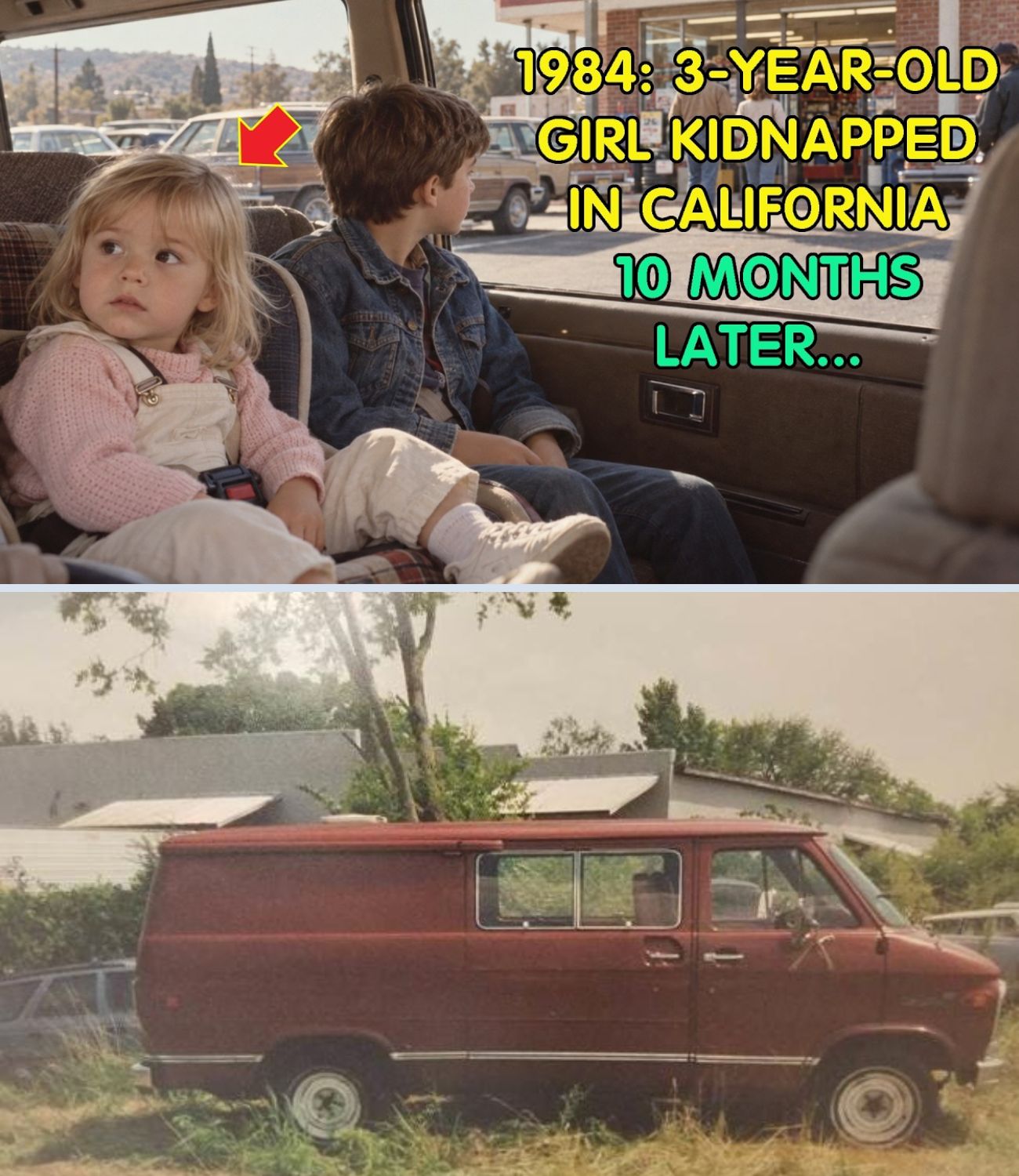
On February 6th, 1984, Vaughn and Karen Mercer expected nothing more than an ordinary Saturday errand in Concord, California. By the end of that afternoon, their youngest child would be gone. Their 9-year-old son would believe he had caused it, and a family with no enemies, no money worth stealing, and no history of trouble would become the centre of a missing child investigation. The Mercers lived in a working-class neighbourhood outside Walnut Creek.
Vaughn Mercer had been visually impaired since early adulthood and supported the family by repairing and tuning pianos. Much of his work came through churches, schools, music teachers, and families who recommended him to one another. Karen managed the household and cared for their two children. Their older child, Bram, was nine.
He was cautious, responsible, and old enough that his parents trusted him with small responsibilities. His younger sister, Aloan, was 2 years old and would turn three the following month. She was still at the age when nearly everything important in her life existed inside a small circle formed by her parents, her brother, her bedroom, and the familiar routines of home. Nothing about the Mercer family suggested that anyone would deliberately target them.
There was no custody dispute. There were no threatening relatives, unpaid criminal debts, or known conflicts. Vaughn’s work brought him into many homes, but police would later find no customer with an obvious reason to harm his family. Karen’s life was equally ordinary.
Their financial situation was modest, their social circle was small, and their daily routines were predictable, only in the way most family routines were predictable. That Saturday, the family needed a replacement part for their aging van. They drove to an auto parts store in a commercial area near Concord. The errand was expected to take only a few minutes.
Vaughn and Karen went inside while Bram remained with Aloan in the van. The vehicle was locked. Aloan was secured in her child’s seat behind the driver’s position. Bram had been told to stay with her until their parents returned.
For a 9-year-old in 1984, this did not feel like an unusual responsibility. There were no smartphones, no text messages, no instant way for parents and children to verify a sudden change of plans. Children were routinely expected to follow instructions delivered by adults, especially when those instructions appeared to come from a parent. That assumption became the opening someone needed.
A man appeared beside the van. Bram would later remember a dark jacket and a baseball cap. The cap partly obscured the man’s face, and the encounter was too brief for Bram to provide investigators with a reliable estimate of his exact age. What Bram remembered most clearly was that the stranger did not initially seem alarming.
The man told him that his mother wanted both children inside the store. It was a simple claim. There was no complicated story and no obvious threat. It sounded like the kind of message an adult might reasonably be asked to deliver.
Bram hesitated because Karen had never said that she would send anyone for them. But he also knew his parents were only a short distance away inside the store. The possibility that his mother had changed her mind seemed more believable than the possibility that a stranger had approached a family vehicle in daylight to abduct his little sister. Bram unlocked the door.
Within seconds, the situation changed completely. The stranger removed Aloan from the child’s seat and took her away from the van. Bram tried to stop what was happening, but he was a 9-year-old confronting an adult who had already decided exactly what he intended to do. The man disappeared toward the streets and buildings beyond the shopping area before anyone nearby fully understood what had happened.
Several people noticed fragments of the incident. One witness remembered seeing an adult carrying a small child away from the parking area. Another recalled someone moving toward the nearby residential blocks. None had observed enough to understand the event while it was unfolding.
By the time the situation became recognizable as an abduction, Aloan and the stranger were already gone. Vaughn and Karen returned expecting to find both children where they had left them. Instead, Aloan’s seat was empty. Bram told them that a man had said Karen wanted the children inside.
He explained that he had believed the message and opened the door. The meaning of what had happened became clear almost immediately. Police were contacted and the response escalated quickly. Concord officers treated the case as a child abduction from the beginning.
The parking area was secured, employees and customers were questioned, and descriptions were distributed to patrol units throughout the surrounding area. Officers searched the nearby streets and residential complexes while other investigators began documenting the van and interviewing Bram separately. His description was limited but consistent. A man wearing a dark jacket and a baseball cap with much of his face difficult to remember because the encounter had lasted only moments.
Investigators avoided forcing Bram to guess details he could not reliably provide. The most important fact was already clear. The stranger had used Karen’s authority to gain the boy’s trust. A canine unit was brought to the scene.
The dog followed a scent believed to be connected to Aloan from the van across part of the commercial property and toured a nearby sidewalk. Then the trail ended. Investigators could not prove exactly what had happened at that location, but the strongest working theory was that the abductor had transferred Aloan into another vehicle and driven away. That possibility immediately expanded the search beyond Concord.
Information about Aloan was sent to neighboring police departments. Roads leading away from the area received additional attention. Officers began checking nearby parking lots, apartment complexes, service stations, and businesses for anyone who might have noticed a suspicious vehicle or an adult traveling with a small child. No one could yet say how far Aloan had been taken.
For Bram, the first hours of the investigation created a burden far beyond his age. He knew that he had opened the door. He knew that the stranger had succeeded because he had believed the message about his mother. What he could not yet understand was that the responsibility belonged entirely to the adult who had deliberately manipulated a child’s trust.
For Vaughn and Karen, the problem was even more immediate. Their daughter had vanished in minutes from a public place during an ordinary family errand. By nightfall, police had a description, a probable escape route, several incomplete witness accounts, and a theory that Aloan had been removed from the area by vehicle. They did not have the identity of the man.
They did not have his vehicle, and they did not know where Aloan Mercer had been taken. By the second morning, the disappearance of Aloan Mercer had become one of the most urgent child abduction cases in Contra Costa County. Her photograph was already moving through police departments, local television stations, newspapers, hospitals, churches, and community organizations across the East Bay. What had begun as a search around one shopping centre was becoming something much larger.
The case was assigned to Sergeant Orson Vale, a 36-year-old investigator with the Concord Police Department’s juvenile division. Vale had handled runaway cases, custody disputes, child abuse investigations, and situations in which frightened families had mistaken temporary disappearances for something worse. Aloan’s case did not resemble any of those. There was no dispute inside the Mercer family, no evidence that a relative had taken her, and no reason to believe the disappearance had been staged.
Every reliable fact pointed toward an unknown adult deliberately taking a child who had no connection to him. That distinction shaped the investigation from the beginning. Police circulated Aloan’s most recent photograph throughout Northern California. She was described as nearly 3 years old with light hair and brown eyes.
Flyers appeared in grocery stores, gas stations, churches, schools, pharmacies, bus terminals, laundromats, and neighbourhood businesses. Local television stations repeated her description during evening broadcasts. Newspapers published photographs of Aloan alongside contact information for investigators. The city of Concord announced a reward for information leading to her recovery.
Community groups organized their own efforts. Churches distributed flyers after Sunday services. Parents carried copies into workplaces. Volunteers placed photographs on bulletin boards throughout Contra Costa County.
Families who had never met the Mercers began checking passing cars and paying closer attention whenever they saw an unfamiliar adult travelling with a small child. The response generated an enormous amount of information. Within the first several weeks, investigators received hundreds of tips. A waitress believed she had seen Aloan with a man at a diner outside Oakland.
Officers checked the location and identified the child as someone else. A motel employee remembered a man checking in with a young girl whose hair matched Aloan’s description. Records were reviewed and the family was located. A caller reported seeing a frightened child at a service station near Sacramento.
Local police investigated and found no connection. The pattern repeated itself. Some callers were sincere but mistaken. Others were responding to children who shared only the most basic characteristics with Aloan.
A few reports lacked enough information to investigate at all. Vale treated each credible lead seriously because there was no reliable way to know which ordinary-sounding observation might become the one that mattered. By the time the total approached 1,500 reports and possible sightings, investigators had followed leads across much of Northern California. None produced Aloan.
There was another fact that troubled Vale more with each passing week. No ransom demand arrived. No letter appeared at the Mercer home. No telephone caller demanded money.
No intermediary approached the family. Vaughn and Karen had no substantial wealth, and nothing in their background suggested that anyone would expect them to produce a large payment. The absence of a ransom demand gradually weakened any theory that Aloan had been taken for financial reasons. Investigators also reviewed relatives, acquaintances, customers connected to Vaughn’s piano business, and people who had interacted with the family before February 6th.
Nothing established a personal motive. No custody conflict existed. No family member had disappeared at the same time. No one close to the Mercers owned a vehicle that clearly matched the limited information being developed from witness accounts.
The investigation increasingly pointed toward a stranger. That possibility made the case more difficult. A stranger had no obvious connection to trace. There were no shared telephone records, family arguments, financial transactions, or personal relationships leading from the victim to the offender.
If the person responsible had simply noticed an opportunity and acted on it, investigators could be searching among thousands of people who had never before heard the Mercer name. February became March. The initial flood of news coverage began to slow.
Other crimes demanded attention. New missing person reports arrived. Detectives assigned temporarily to Aloan’s case returned to their regular duties as individual leads were exhausted. Vale did not close the file.
He kept Aloan’s photograph near his desk and continued working through possibilities after the largest organized search efforts had ended. He contacted hospitals and clinics about unidentified young children admitted under unusual circumstances. He checked with motel operators and campgrounds where an adult might stay without attracting much attention. He sent inquiries to nearby law enforcement agencies and reviewed reports involving suspicious adults travelling with children.
He also considered the practical problem facing whoever had taken Aloan. A child that young required food, clothing, supervision, and medical care. She could not simply disappear without creating needs. If she became sick, someone might bring her to a clinic.
If the abductor needed money, belongings might be sold. If he stayed in a motel, someone might remember them. If he travelled continuously, a clerk, gas station employee, neighbour, or police officer might eventually notice something inconsistent. Vale searched for those points of contact.
Again and again, they led nowhere. Spring passed into summer. At the Mercer home, the public attention surrounding the case became quieter, but the absence itself did not. Vaughn and Karen continued cooperating with investigators and responding whenever Vale needed additional information.
Bram remained part of the family’s private struggle, carrying a sense of responsibility that adults around him repeatedly tried to correct. Vale understood that solving the case would not automatically erase what had already happened to them. Still, the first objective remained unchanged. Find Aloan.
By fall, the case had entered the stage investigators feared most. There were no active leads strong enough to direct a concentrated search. The telephone line that had once produced constant reports could remain quiet for long periods. Many of the original flyers were gone.
Those still displayed had become part of the background of everyday life. Vale refused to interpret silence as proof that Aloan was dead without physical evidence establishing otherwise. He continued treating her as a living missing child. Halloween passed.
Thanksgiving followed. December arrived. Nearly 10 months had passed since Aloan disappeared. Vale still reviewed reports that might connect to the case.
He still contacted agencies outside Concord when something appeared remotely relevant. He still kept the investigation available rather than allowing it to become nothing more than a file stored in records. There was no new suspect, no confirmed sighting, no location, no evidence explaining what had happened after Aloan was taken away from Concord. By the middle of December 1984, every major effort undertaken by police and the community had failed to answer the same question that had existed since the first afternoon.
Aloan Mercer was still missing. On December 18th, 1984, a 13-year-old boy named Calder Wyn arrived at a San Francisco police station carrying information that no one yet understood was connected to a missing child case almost 10 months old. Calder was not listed in any major statewide search. There were no television appeals built around his disappearance and no large reward attached to his name.
His family situation had been unstable for years, and by the spring of 1984, he had become one of many young runaways moving through San Francisco without attracting sustained attention from authorities. To most people who encountered him, he was simply another teenager trying to survive without dependable adults around him. The officers who first spoke with Calder quickly realized that his circumstances were far more serious than an ordinary runaway case. He said he had escaped from a man who had kept him under control for months inside an old cargo van.
The man’s name, as Calder knew it, was Lyall Doran. Doran was 35 years old and had approached Calder months earlier when the boy had no stable place to stay and very little money. Calder had already learned that adults sometimes offered temporary work to teenagers living on the margins, carrying boxes, cleaning storage areas, helping with vehicles, or doing small jobs for cash. Doran’s offer, therefore, did not immediately seem impossible.
He promised Calder work, regular meals, and somewhere to stay. For a 13-year-old who had left an unstable home and was trying to manage alone, those promises carried weight. Calder did not have savings, reliable transportation, or an adult he trusted enough to call. A place to sleep and a small amount of money sounded less like an opportunity than a solution to an immediate problem.
Calder entered Doran’s Dodge Tradesman van, expecting a temporary arrangement. Instead, his independence ended. Doran controlled where the van went, when Calder could leave, and whom he could speak to. The promised work never became anything resembling normal employment.
There was no regular wage and no safe place to live. Calder remained dependent on Doran for food and transportation while the older man steadily reduced any realistic chance for him to separate from the situation. The van itself became the centre of that control. Doran moved frequently around San Francisco, particularly through industrial districts south of the city’s central commercial areas.
He avoided staying in one place long enough to become familiar to neighbours or business owners. Some nights were spent near warehouses. Others were in areas where commercial vehicles parked without attracting attention. Calder never had a complete understanding of their route because Doran deliberately kept their movements unpredictable.
The windows were covered from the inside with cardboard, fabric, and tape that served more than one purpose. It prevented people outside from seeing who was inside, and it also made it difficult for Calder to identify locations unless he recognized something during the limited periods when the coverings were disturbed or the van was being used. Doran was intensely suspicious of strangers. He did not want Calder speaking to people at stores or service stations.
He avoided situations where anyone might ask questions about why a 13-year-old was travelling with him. When Calder resisted instructions or challenged the arrangement, the consequences became increasingly severe. Threats were common. So were beatings.
By December, Calder had learned that Doran could react violently to minor disobedience. The rules changed depending on Doran’s mood, making it impossible for Calder to know which behaviour might trigger punishment. The instability itself became another means of control. Calder was not simply afraid of breaking a known rule.
He was afraid because there were no reliable rules at all. But Calder was not the only child inside the van. There was also a very young girl. He estimated that she was 2 or 3 years old.
Determining her exact age was difficult because she spoke so little and was rarely allowed to behave like an ordinary child. Her hair had been cut extremely short and darkened to a dull brown. She was dressed in boys’ clothing and referred to by a male name. Doran treated that identity as something everyone around him was required to accept.
Calder understood that the child was actually a girl, but he did not initially know who she was or where she had come from. Doran offered no truthful explanation. The child had no photographs, identification, or possessions that clearly connected her to another family. What Calder noticed instead was how thoroughly she had been taught not to attract attention.
She rarely spoke unless permitted. She did not give strangers her real name. She appeared to understand that Doran expected her to respond to the male name he had chosen. For months, Calder assumed she was another child trapped inside the same strange, controlled existence.
Then Doran made a mistake. During an angry exchange, he referred to the little girl by another name. Calder could not later reproduce the name with complete certainty. He had heard it only once, and the moment had passed quickly, but he remembered one detail clearly.
The name began with the letter E. Immediately afterward, Doran returned to the male name and made it clear that the other name was not supposed to be used. Calder remembered that moment because it confirmed something he had already suspected. Doran was not merely dressing the child differently.
He was actively concealing who she was. From then on, Calder paid closer attention. He tried to remember locations where the van stopped. He noticed details about the vehicle itself.
An older Dodge Tradesman worn from years of use with covered windows and a roof vent that provided one of the few openings to the outside. That vent eventually became his only realistic chance to escape. By December, Calder had spent months under Doran’s control. He understood that waiting for Doran to voluntarily release him was pointless.
He also understood that leaving through a normal door carried too great a risk of immediate discovery. The roof vent was different. When an opportunity finally appeared, Calder used it. He escaped from the van and found help before Doran could regain control of him.
From there, he was directed to police. At the station, investigators initially focused on the 13-year-old sitting before them. A runaway who had been held for months, threatened, beaten, and prevented from living freely. Then Calder told them about the other child.
A girl around 3 years old, short darkened hair, boy’s clothing, a false male name, and one real name heard only once, beginning with E. From that moment, the case was no longer only about Calder Wyn. On the afternoon of December 18th, 1984, Sergeant Orson Vale received a brief inter-agency bulletin from San Francisco that immediately separated itself from the hundreds of reports he had reviewed over the previous 10 months. The message concerned a 13-year-old boy who had escaped from prolonged confinement and reported that another child was still being held by the same man.
The child was described as a very young girl whose real identity appeared to have been deliberately concealed. Vale did not need a long explanation to recognise the significance. Aloan Mercer was nearly 3 years old. She had been missing since February 6th.
The timing fit closely enough that the report could not be ignored. Vale contacted the San Francisco investigators handling the new case and asked for the boy’s original statement rather than a shortened summary. He wanted to know exactly what had been said before anyone in San Francisco became aware of the Mercer investigation. That distinction mattered.
A witness could unintentionally absorb information after seeing a photograph or hearing a detective suggest a possibility. Vale needed to know whether the connection to Aloan existed independently. The answer was yes. The information had been recorded before anyone mentioned her name.
That was enough for Vale to take the next step. He brought Aloan’s missing person file to San Francisco and met with the investigators assigned to Calder Wyn. By that point, officers had already confirmed that Lyall Doran was a real person with prior police contacts. More importantly, several details Calder had provided about him had been independently verified.
The meeting shifted the investigation from possibility to comparison. Vale presented Aloan’s most recent photograph. No one told Calder that police believed the child he had described might be Aloan. No one asked him to confirm what they hoped to hear.
The photograph was simply placed among the materials being reviewed. Calder could not make a positive identification. That answer disappointed no one. In fact, Vale considered it more credible than an immediate certainty.
The photograph showed Aloan before her disappearance. Nearly 10 months had passed. She had been a toddler when she vanished, and children changed quickly at that age. Calder had also known the other child under circumstances that made careful observation difficult.
What mattered was that he did not reject the photograph. He said the child he knew could be the same girl, but he would not claim certainty. Vale accepted that. Investigators then concentrated on something more objective.
The vehicle. Calder had provided enough information for officers to narrow their search to a specific type of Dodge cargo van associated with Doran. Vehicle registration records produced a match. The van was registered to Lyall Doran.
That was the first solid link between Calder’s account and a traceable object police could actually locate. Finding the registration did not mean finding the van. Doran did not maintain a dependable residential address. He moved frequently enough that sending officers to the last address connected to his name would probably accomplish nothing.
Police therefore returned to Calder’s memory of where the vehicle had been kept. They avoided asking him to reconstruct every route. Instead, detectives focused on locations he could identify with reasonable confidence. Commercial streets, warehouse districts, service areas, and places where Doran repeatedly returned.
One area appeared more than once, Army Street. In 1984, that part of San Francisco contained enough industrial and commercial activity that an old cargo van could remain parked without immediately appearing unusual. Officers began checking streets, lots, and areas surrounding businesses where unattended vehicles were common. The search required patience.
There was no electronic tracking device attached to the van. There were no citywide camera systems capable of locating it within minutes. Police had a registration number, a physical description, and a section of the city. They still had to find the vehicle themselves.
Several vans were checked and eliminated. One belonged to a delivery company. Another had been parked for repairs. A third resembled Calder’s description, but carried a different registration.
Then officers located an older Dodge Tradesman near Army Street. The license information matched Doran. The vehicle had the characteristics Calder had identified. At that point, the investigation changed again.
For 10 months, Vale had dealt mainly with reports of what people believed they had seen. This was different. The van was real. It belonged to the man Calder had identified, and it was sitting in one of the areas the boy had helped police narrow down.
San Francisco officers did not immediately force entry. They established control around the location and began watching the vehicle. No one knew who was inside. Doran could be present.
Someone else could be with him. The young child could have been moved hours earlier. There was also no reliable information about whether Doran possessed a weapon. A careless approach could put a child at greater risk.
Vale remained involved while San Francisco officers handled the immediate operation. The departments exchanged information continuously, but command at the location stayed with the officers responsible for the scene. The longer the van remained still, the more difficult it became to interpret. There was no obvious movement.
No one entered. No one left. The covered windows prevented officers from seeing into the cargo area. Investigators considered whether Doran had abandoned the vehicle after realising Calder had escaped.
If that were true, the most important lead in 10 months might already be empty. Then one of the officers noticed something through a small break in the material covering a rear window. A faint light. It was not enough to show who was inside.
It was enough to indicate that the van was not simply an abandoned vehicle sitting in an industrial district. Someone had been using the interior. Additional officers were brought closer to the area. The possibility of a child still being inside was treated as immediate.
Vale had spent months receiving information that always required one more assumption before it could mean anything. This time there was almost nothing left between the investigation and an answer. Calder had given them a man. The records had given them a van.
His memory had given them an area. Police had found all three in the same place. Now only the closed door of the Dodge Tradesman remained between them and whatever Lyall Doran had been hiding. Late on December 18th, 1984, San Francisco officers made the decision to enter the Dodge Tradesman after repeated commands from outside received no response.
The possibility that a child was still inside outweighed the risk of waiting longer. When the side door was opened, the interior immediately confirmed that the vehicle had been used for long-term living rather than ordinary transportation. Blankets, food containers, bottles, clothing, and personal belongings filled the cargo area. Children’s items were mixed among the adult possessions.
A thin mattress occupied the rear section. At the far end of the van, officers found a small child. She appeared to be about 3 years old and significantly underweight. Her condition suggested prolonged neglect.
She was conscious but extremely quiet with little spontaneous reaction to the unfamiliar adults suddenly surrounding her. No officer attempted to question her about her identity. The priority was medical care. Emergency personnel were brought in immediately.
The child was evaluated for dehydration, malnutrition, bruising, and other signs of prolonged mistreatment. None of the first responders could yet determine how long she had been living under those conditions or what psychological damage had occurred. She did not give them a name. That silence made the next stage of the investigation more urgent.
While the child was transferred into protective care, officers continued searching the area for Lyall Doran. He was found nearby. With him was Merrick Voss, 19 years old, a young man already known to have a long association with Doran. Both were taken into custody.
Doran gave investigators no useful explanation for the child in the van and requested legal counsel. Voss was separated from him immediately for questioning. Police did not yet know exactly how much responsibility Voss carried. That issue would require its own investigation.
For the moment, only one question mattered. Who was the child? Sergeant Orson Vale received the call that a young girl had been recovered alive. The news was not presented to him as confirmation.
Investigators were careful. A child of the correct age had been found in the vehicle connected to Doran, but resemblance was not enough to identify her as Aloan Mercer. Nearly 10 months had passed since the disappearance. A child that young could change considerably in that amount of time, even under normal circumstances.
Poor nutrition, stress, and neglect made visual identification even less reliable. Vale understood that the Mercer family could not be told anything until investigators had objective evidence. Fortunately, the original investigation had preserved something that now became critical. During the first days after Aloan disappeared, technicians had processed several objects from the Mercer home that she regularly handled.
Some of those surfaces produced partial latent fingerprints clear enough to retain for comparison. At the time, no one knew whether those prints would ever be useful. Now, they offered a possible answer. San Francisco investigators arranged for fingerprints to be taken from the recovered child in a controlled setting.
Because of her age and condition, the process was handled as gently as possible. The comparison was not immediate. The prints from the Mercer home were not formal identification records. They were partial impressions collected from ordinary household objects.
Examiners had to compare ridge details carefully and determine whether enough corresponding characteristics existed to support a reliable identification. Hours passed. Vale remained available for updates. The Mercer family had not yet been contacted.
He knew that calling too early would be cruel if the identification proved wrong. After 10 months of false sightings and failed leads, the family had already endured enough uncertainty. The child remained under medical supervision. She accepted food and water in small amounts.
She still said very little. No one tried to force conversation. The staff understood that silence itself could be part of what she had survived. Near midnight, investigators examining the van continued cataloging evidence while the fingerprint comparison moved forward independently.
Doran remained in custody. Voss remained separated from him. Neither man had provided anything that could resolve the child’s identity. The answer would come from the evidence.
Shortly before dawn on December 19th, the fingerprint examiner completed the comparison. The result was positive. The recovered child’s prints matched the usable latent impressions preserved from Aloan Mercer’s belongings. The identification was no longer based on age, not on appearance, not on Calder’s statement, not on the location of the van.
The child was Aloan Mercer, alive 10 months and 13 days after she disappeared. Vale received the confirmation in the early hours of the morning. For the first time since February, the case no longer centered on where Aloan might be. She had been found.
But relief came with another reality. Finding her did not mean the damage was over. Medical staff had already made clear that she would need continued evaluation. Her physical condition required careful monitoring.
Her silence suggested that the psychological consequences of what she had endured might take far longer to understand. The family would have to be prepared for a reunion very different from the one they had imagined during the months she was missing. Vale knew all of that, but none of it changed the significance of the result. For 10 months, every major lead had ended without Aloan.
Every reported sighting had failed. Every promising call had produced another disappointment. Now the uncertainty that had defined the investigation was gone. There was no longer a missing child to search for.
There was a living child who needed to be protected, identified to her family, and given the chance to recover. Before sunrise on December 19th, the official record was updated. Aloan Mercer had been located alive in San Francisco. Doran was in custody.
Merrick Voss was in custody, and after 10 months and 13 days, the Mercer family was finally about to receive the answer they had been waiting for. By the morning of December 19th, 1984, the Mercer family was no longer waiting for news about whether Aloan had been found. They were waiting to see what 10 months away had done to their daughter.
Sergeant Orson Vale arrived at the children’s care facility after the identification was confirmed. Medical staff had already made one point clear. The first hours after recovery had to be handled carefully. Aloan had been through prolonged fear and control, and no one wanted her first experience of safety to feel like another round of questioning.
Vale therefore brought only one familiar object from the case file. A family photograph taken before the disappearance. He did not ask Aloan to explain anything. He did not ask where she had been.
He did not ask who had hurt her. The photograph was simply placed where she could see it. For several moments, there was no response. Then Aloan recognized herself.
She understood that the little girl in the photograph was her. She also remembered that her hair had once been long. For the adults in the room, the significance was immediate. The child in front of them had spent months being controlled by someone else.
But the connection between her present self and the life she had known before had not disappeared completely. Vale did not push further. That small recognition was enough. The next priority was the family.
Vaughn and Karen were informed privately before any public announcement was made. After nearly 10 months of uncertainty, they were being told something they had wanted to believe but had never been able to prove. Their daughter was alive. The reunion was arranged with the help of staff experienced in working with traumatized children.
Everyone understood that the moment could not be treated like a simple return home after a long absence. Aloan might remember them immediately. She might not. She might understand who they were without showing it clearly.
She might need time. When she saw Vaughn and Karen, recognition came. Not through a long explanation, not through a dramatic outpouring, but through familiarity. She knew who they were.
She knew they belonged to the life she had before. For Karen, that recognition carried more meaning than any detailed account could have offered. It meant that the months away had not erased the most basic connections in Aloan’s memory. Then came Bram.
For almost a year, Bram had lived with one private belief that no reassurance had fully removed. He had opened the van door. He had believed the stranger. He had allowed the moment to happen.
Adults had explained repeatedly that he had been 9 years old, that he had been deliberately deceived, and that responsibility belonged only to the person who had chosen to exploit a child’s trust. Bram understood those words. He had not truly believed them. Aloan’s recognition of him became the first thing powerful enough to challenge that guilt.
She knew her brother. She did not return to him as someone accusing him of what happened. She returned knowing who he was. That did not erase 10 months of blame Bram had placed on himself.
But it changed the meaning of the memory he had carried. For the first time, he had something stronger than the last moment before she disappeared. He had the moment she came back. The first days after the reunion also made clear that the Mercer family could not simply resume their old routine.
Aloan did not tolerate being left alone easily. If one parent moved too far away, she became distressed. Ordinary moments that would have meant nothing before February now required patience and planning. The family learned quickly that safety was not something Aloan could be told once and immediately believe.
It had to become predictable again and again. Clothing became another difficulty. Some familiar clothes from before her disappearance caused visible resistance. Karen initially interpreted that reaction as something that needed to be corrected, but counselors advised against forcing the issue.
Aloan had spent too much time with adults deciding what she was allowed to wear and how she was expected to present herself. Now she needed choices. Small choices mattered. Which shirt, which blanket, which toy, whether a door stayed open, whether a parent remained nearby.
The point was not convenience. It was control being returned to the child in harmless, ordinary ways. Her speech also returned slowly. No one expected long explanations.
At 3 years old, Aloan was already too young to organize months of traumatic experience into a reliable narrative. The pressure of being questioned could also interfere with recovery. The family was encouraged to listen when she spoke and not force words when she did not. That approach was difficult for adults who desperately wanted answers.
Karen wanted to know what her daughter remembered. Vaughn wanted to know what had frightened her. Bram wanted to know whether she had thought about home, but those questions had to wait. Some might never be answered clearly.
Recovery had to come before explanation. One of the most important early moments occurred when Aloan returned to her bedroom. The room had been preserved through the months she was missing. Vaughn and Karen had never reached a point where they could bring themselves to remove her belongings.
Aloan recognized the space. She recognized her toys. She knew that the objects there belonged to her. Those recognitions gave the family something they had not expected to receive so quickly.
Continuity. There was still a connection between the child who had disappeared in February and the child who returned in December. The connection was fragile, but it existed. The Mercers also began counseling as a family.
The goal was not to make everyone forget. It was to prevent the disappearance from becoming the only thing that defined them. Bram needed help separating responsibility from memory. Vaughn and Karen needed help balancing protection with the risk of becoming so fearful that Aloan could never develop normally.
Aloan needed time without being made responsible for everyone else’s relief. There were no guarantees. No one promised that nightmares would stop quickly. No one promised that fear would disappear within weeks.
No one promised that Christmas would somehow restore the family to what it had been before February. What they had was more realistic than that. Aloan was home. She recognized the people who loved her.
She recognized pieces of the life that had belonged to her before the disappearance. And for the Mercer family, that was enough to begin rebuilding from a place they had once feared they would never reach. Once Aloan Mercer was safely back with her family, investigators shifted their attention fully to the evidence recovered from Lyall Doran’s Dodge Tradesman. The van was no longer treated simply as the place where a missing child had been found.
It was now a crime scene. Every item inside was cataloged. Investigators recovered photographs, notebooks, children’s belongings, restraints, rolls of tape, clothing, and personal objects that could not be immediately connected to Doran or Merrick Voss. Some of those items raised questions that went beyond Aloan’s case.
Police had to determine whether they belonged to other children, whether they had been collected over time, and whether additional victims might exist. The written material became especially important. Doran had kept notes. They were not organized like a normal diary.
Some pages contained lists. Others contained fragments of thoughts, names, rules, and repeated references to obedience and family. Investigators found enough consistency in those pages to conclude that Doran’s behaviour had not been spontaneous. He had created a structure around control.
The evidence supported the idea that he intended to keep children dependent on him for long periods rather than release them after a short time. That distinction mattered legally. A single abduction could be argued as one criminal act. What police found suggested something sustained, planned, and repeated.
The van itself supported that conclusion. Certain areas had clearly been arranged for confinement rather than travel. Children’s belongings had been stored separately from adult items. Some objects had been modified or placed in ways that made sense only if the vehicle was being used to control movement and privacy.
The evidence did not require investigators to rely entirely on memory or testimony. They now had physical proof of preparation. Merrick Voss became the most complicated part of the case. He was 19 when arrested, which meant prosecutors could not treat him simply as a child caught in Doran’s influence.
At the same time, investigators learned that his connection to Doran had begun years earlier. Voss had spent much of his adolescence dependent on him. He had no stable home life. Investigators could identify his education had been inconsistent.
People who knew portions of his history described a young person who had gradually become isolated from ordinary family and social structures. Mental health evaluators were brought in. Their job was not to decide whether Voss was innocent. It was to determine how much independent judgment he possessed after years under Doran’s control.
That question became central to his defence. Prosecutors took a different position. Whatever Voss had experienced earlier in life, he was old enough at the time of Aloan’s confinement to understand that a child was being held against her will. He had opportunities to seek help.
He did not. The court would eventually have to consider both realities. Voss could have been manipulated by Doran and still have participated in serious crimes. The two ideas were not mutually exclusive.
Doran presented a much more direct legal picture. The evidence linked him to the vehicle. The vehicle contained material consistent with prolonged confinement. The written notes reflected deliberate control.
The recovered child had been found in his custody. Calder’s testimony connected the physical evidence to daily life inside the van. Prosecutors built the case around those combined elements. The charges included kidnapping, false imprisonment, child abuse, assault, conspiracy, and multiple offences involving the mistreatment and exploitation of minors.
Additional counts were considered as investigators processed the photographs and other materials recovered from the vehicle. The volume of evidence made the case unusually complex. Each item had to be tied to a specific charge. Each allegation had to be supported independently.
The fact that Aloan had been found alive did not simplify the prosecution. It expanded it. Calder became one of the most important witnesses. By then, he was living under protective supervision and receiving counseling.
Investigators tried to avoid making him repeat the same account unnecessarily. But parts of the case could not be established without him. He was the person who could explain how Doran operated over time. He could identify objects recovered from the van.
He could confirm which belongings he had seen used. He could identify places where Doran had stayed. He could explain the relationship between Doran and Voss in ways physical evidence alone could not. Most importantly, Calder had given police information before he knew anything about the Mercer case.
That strengthened his credibility in court. Defence attorneys challenged his memory. They questioned whether a 13-year-old who had experienced prolonged abuse could accurately remember dates, locations, and sequences. Prosecutors did not pretend that every detail was perfect.
They did not need it to be. The strength of Calder’s testimony came from the parts that could be independently verified. The van existed. The registration matched.
The locations matched. The recovered evidence matched. Aloan had been there. Where Calder’s memory aligned with physical evidence, his testimony became difficult to dismiss.
The legal proceedings drew heavy attention. The public had followed Aloan’s disappearance for nearly a year. Now, people wanted to know how such a crime had continued for so long without detection. The trial answered some questions, but could not answer all of them.
Doran denied responsibility for many of the charges. His attorneys challenged the interpretation of the notebooks and argued over the meaning of specific pieces of evidence. Voss’s defence focused heavily on his history under Doran’s influence. The prosecution focused on conduct.
The court had to separate sympathy from responsibility. Over time, the case became less about one dramatic piece of evidence and more about accumulation. The van, the photographs, the notes, the children’s belongings, the medical findings, Calder’s testimony, the defendants’ connection to the vehicle. Each piece supported the others.
By the time the prosecution completed its case, the original uncertainty surrounding Aloan’s disappearance had been replaced by something far more concrete. There was a record. There were witnesses. There was physical evidence, and there were two defendants facing the consequences of what investigators could now prove.
For Calder, testifying did not make the experience disappear. It required him to return to memories he had spent months trying to survive. But it also gave those memories a different purpose. They were no longer only evidence of what had been done to him.
They had become evidence that could prevent Doran from controlling another child in the same way. The legal case gave the Mercer family an answer, but it did not give them back the life they had before February 1984. What came next was quieter, slower, and far less visible than the investigation. Aloan continued receiving specialized counseling.
At her age, recovery was not measured by whether she could explain everything that had happened. The people caring for her focused instead on routines, sleep, trust, and the small choices that helped her feel safe again. Some changes came gradually. She became more comfortable being in a room without one of her parents constantly beside her.
She began making ordinary decisions for herself without immediately looking for permission. She returned to familiar foods, familiar toys, and familiar family routines. Other difficulties remained. There were periods when fear returned without an obvious reason.
Certain situations made her unusually anxious. Some nights were harder than others. Vaughn and Karen learned not to treat those moments as failure. They had once believed that bringing Aloan home would be the end of the ordeal.
Instead, they discovered that coming home was only the beginning of recovery. Their responsibility was no longer to search for her. It was to give her enough stability to grow beyond what had happened. Bram needed his own kind of recovery.
For months, his childhood had been organized around guilt. The family counselor worked with him separately so that the disappearance would not become the event through which he judged every future decision. That process took time. Bram had to understand something adults had told him many times, but that he had never fully accepted.
Being deceived was not the same as being responsible. He had been a child. An adult had deliberately used his trust. Nothing Bram had done created the crime.
That understanding did not arrive in one dramatic moment. It developed slowly through family routines, counseling, and the ordinary return of his relationship with his sister. Over time, Bram became less focused on the moment she disappeared and more focused on the fact that she was once again part of his daily life. For Vaughn and Karen, that change mattered almost as much as Aloan’s progress.
They had lost nearly a year to uncertainty. They refused to lose their son to guilt as well. Sergeant Orson Vale also had to learn how to let the case go. For most of 1984, Aloan’s file had remained active in a way few investigations could sustain indefinitely.
It had followed Vale through long shifts, dead-end reports, and months when there was no meaningful progress. After the prosecution was complete, the file finally moved out of the category of an active missing child investigation. That transition felt unusual. Vale had spent so long thinking about what still needed to be done that closure did not immediately feel natural.
There were reports to finish. Evidence had to be documented. Agencies had to coordinate final records. The Mercer family still needed occasional contact as court proceedings continued, but the central responsibility had changed.
Aloan was no longer waiting to be found. Eventually, Vale removed the copy of her photograph that had remained near his desk. He did not discard it. He placed it with the closed case materials.
The photograph no longer represented uncertainty. It represented a case that had reached the outcome everyone involved had once been afraid to imagine. Calder’s future was more complicated. The attention surrounding the investigation could easily have reduced him to one role.
The boy whose information broke the case open. The adults responsible for his care tried not to let that happen. Calder was still 13. He needed schooling.
He needed counseling. He needed a stable place to live. He needed adults who did not expect him to remain brave everyday simply because he had been brave once. Protective services arranged long-term support while his family situation was evaluated.
His testimony had been important, but the people working with him understood that usefulness to a criminal case was not the same as recovery. Calder had spent too long surviving according to someone else’s rules. His next years needed to belong to him. That meant giving him choices that had nothing to do with police reports or courtrooms, school subjects, friends, sports, music, plans for adulthood, and ordinary things.
The kind of things children and teenagers should be allowed to think about before the worst event in their lives becomes the only story anyone knows about them. By Christmas of 1984, the Mercer household was no longer waiting for a telephone call. There were still appointments, legal updates, and difficult days. But there was also routine meals, school schedules, family visits, small arguments, and quiet evenings.
The normal inconveniences of family life began returning, and the Mercers gradually came to value them. Normal life no longer seemed boring. It seemed precious. The family never tried to erase the year from memory.
They also refused to let it become the final definition of Aloan’s childhood. What had happened to her belonged in her history. It did not have to control her future. The same was true for Bram.
The same was true for Calder. The adults around them could not change what had already happened, but they could decide what happened next. That became the deeper meaning of the case. Justice mattered.
Persistence mattered. Evidence mattered. But recovery depended on something different. It depended on whether people remained present after the headlines ended.
Whether a child was still believed when the courtroom was empty, whether a family received support after everyone else had moved on. Whether a frightened teenager was treated as more than a witness, whether surviving something terrible was followed by the chance to build something ordinary. Years later, the most important part of the story would not be the fear that began it. It would be the fact that several people refused to accept that fear as the final word.
Aloan was given the chance to grow up beyond what had been done to her. Bram was given the chance to stop carrying responsibility that had never belonged to him. Calder was given the chance to become more than the boy who escaped. And the Mercer family was given something no investigation, trial, or sentence could manufacture on its own.
Time together. That is sometimes what hope really looks like. Not a perfect ending. Not a life untouched by pain.
Just enough safety, enough patience, and enough people willing to stay for someone to begin again.
You Might Also Enjoy

Mom Installed a Camera To Discover Why Babysitters Keep Quitting But What She Broke Her Heart


She Gave a Hungry Little Girl a Free Birthday Cake — The Next Morning, a Black Rolls-Royce Arrived