7 Things Delta Force Found Strange About the British SAS
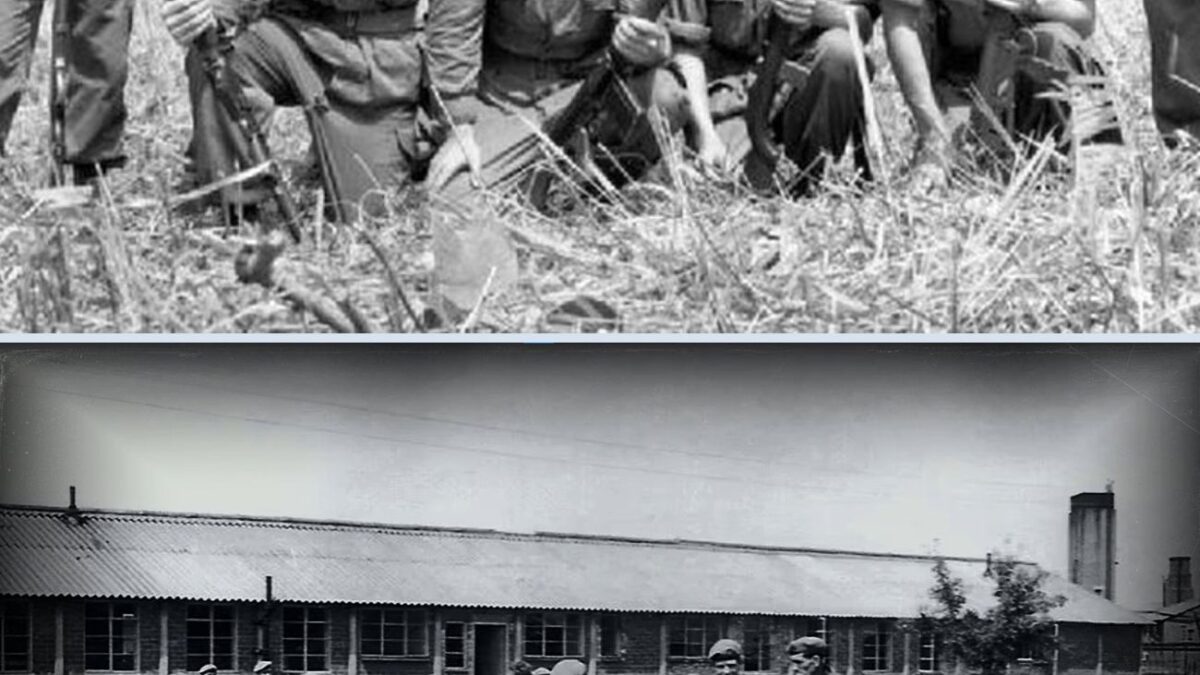
Everything I’d been taught about soldiering, been trained to believe, was turned upside down.
Captain Charlie Beckwith, United States Army. He wrote those words about the summer of 1962, when he reported as an exchange officer to the British 22nd Special Air Service Regiment at Bradbury Lines in Hereford.
The memoir that holds them was published in 1983. On first reading, it sounds like a complaint about the British. Read the rest of his account and it turns into something else, a confession about his own army. 15 years after that summer, the same officer founded a unit the United States would barely admit existed. 1st Special Forces Operational Detachment Delta.
Its squadrons, its troops, its brutal selection march. The blueprint for all of it was drawn in Hereford. The films about Delta Force rarely start there. They open on men already formed, already deadly. They skip the American captain who stepped off a ship in England with his family and thought he had walked into a badly run barracks. That leaves a contradiction worth answering.
Why would an officer who found almost everything about the SAS wrong spend 15 years fighting his own Pentagon to build a copy of it?
The answer is spread across seven things Beckwith saw in Britain and could not, at first, explain. He wrote most of them down himself. One of them nearly killed him. There is also a single sentence spoken by an SAS officer to an American magazine 18 years after that summer. Keep it in reserve. It surfaces in the worst month of Beckwith’s career.
Charles Alvin Beckwith was born in Atlanta, Georgia on the 22nd of January, 1929. He played football well enough to letter for the University of Georgia. The Green Bay Packers approached him ahead of the 1950 draft. He turned professional football down. He chose the army.
After the fighting in Korea ended, he served there as a platoon leader in Charlie Company, 17th Infantry Regiment, 7th Infantry Division. Then he moved into Special Forces, the Green Berets, a branch built in those years around one mission above all others, teaching, training foreign fighters, raising other men’s armies behind enemy lines.
In 1962, the army sent him across the Atlantic on exchange from the 7th Special Forces Group to the British. He was 33 years old. June 1962, Southampton. Beckwith comes ashore with his family.
Waiting for him is an American major, Bob Kingston, who already knows the regiment and speaks of it with open admiration. Then the road west toward the Welsh border, Hereford, Bradbury Lines. Beckwith is assigned to A Squadron. His squadron commander is Major Peter Walter. He is given command of three troop. His troop sergeant is a man the regiment calls Gypsy Smith.
On paper, an ordinary posting. A captain takes over a troop. What follows is a year of shocks.
The first thing that struck him, the barracks. Beckwith walks into three troop’s quarters and finds, in his own word, a mess. Equipment scattered across the room, uniforms worn and dirty. For an American officer of 1962, this is no small detail. In his army, a barracks is inspected. A bunk is made to a measurement. Brass is polished until it reflects a face. A disordered room is read as a disordered soldier. So, Beckwith does what he has been trained to do. He wants it cleaned.
Two troopers, Scott and Larson, push back. One of them gives him a sentence he would still remember 20 years later.
“One of the reasons we volunteered for the SAS was so we wouldn’t have to worry about the unimportant things.”
Insolence, by American standards. By theirs, a statement of priorities. These men had already decided what mattered, and a polished floor was not on the list. Weapons were. Navigation was. Fitness was. Everything else could gather dust. Beckwith had no answer ready. He would spend the next year finding one.
The second thing, the names. Early in his posting, in a room with only officers present, Beckwith addresses Major Water by his rank. It is the reflex of every American officer of his generation. Rank is respect. Rank is distance. Rank is the chain of command spoken aloud. Water corrects him.
“But, when we’re in a room like this and there are just officers present, it’s always on a first name basis.”
On parade, in formation, in front of the men, the ranks return. In private, between officers, they fall away. To Beckwith, it sounds careless. He comes from an army where the salute and the title hold the whole structure together. Here, the regiment seems to stand without them. As though the discipline lived somewhere other than on the sleeve. He does not yet see where it lives. He is about to find out on a Welsh hillside.
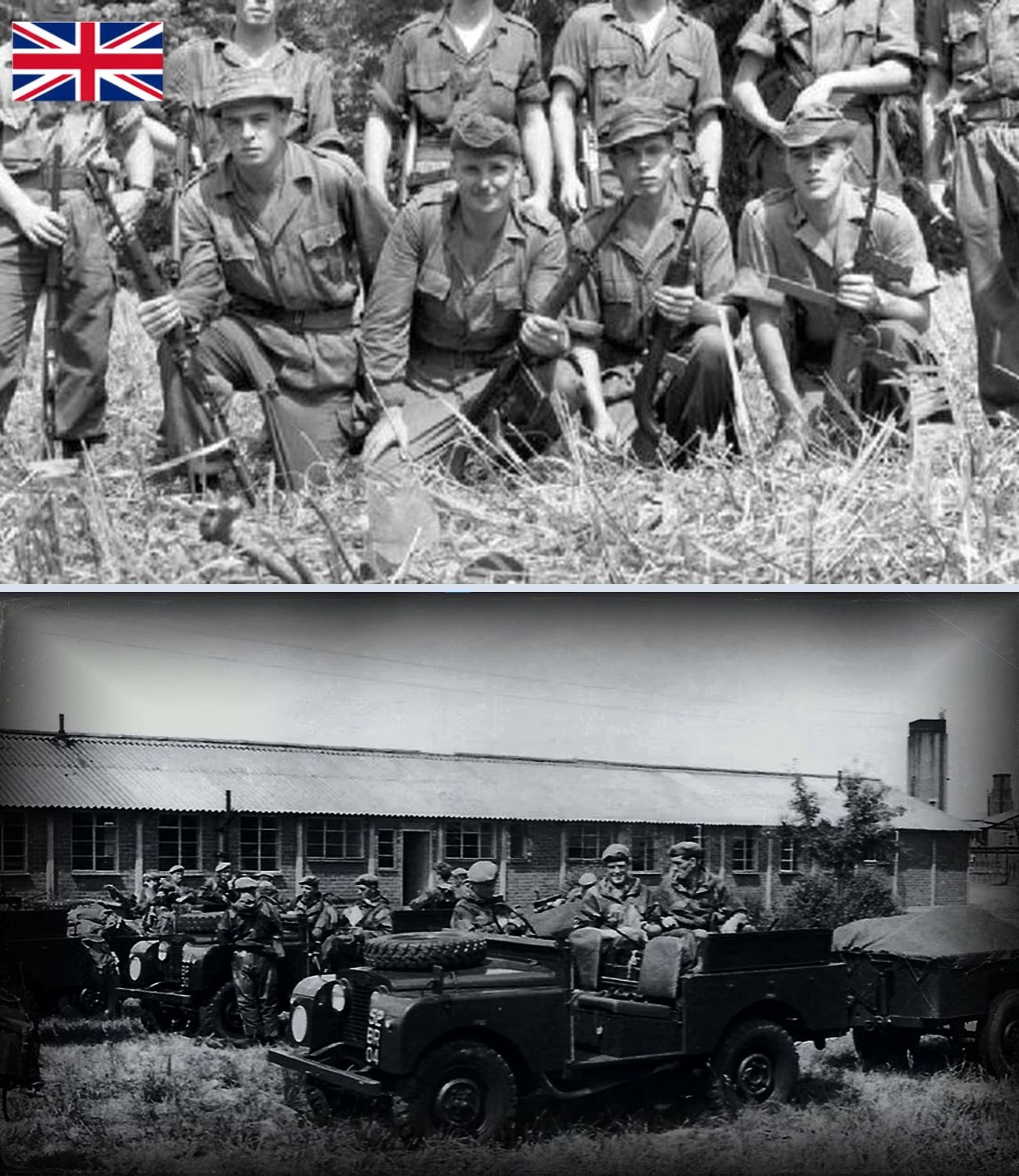
The third thing, the map. The first serious test Beckwith watches is designed by Sergeant Major Ross, a large, fair-haired Scott, methodical, exacting, so little loved by officers and troopers alike that they call him Gloom. The ground is the Brecon Beacons in Wales, high, open, bare hills where paths run out and every ridge looks like the last one.
The troopers do not receive a proper map. They receive, in Beckwith’s words, a small sketch showing only major terrain features, few instructions, a rendezvous to reach, heavy bergans on their backs, individual weapons in their hands, and a clock. The pace is set so that most of the night is spent running, not walking.
In Beckwith’s army, a navigation exercise came with full maps, marked checkpoints, and an instructor who explained the task twice. On the Beacons, the lack of explanation is part of the exam. A man who needs to be told more is a man who will not be kept. Nobody holds anyone’s hand on those hills. And as Beckwith is about to learn, nobody forgives a mistake there, either.
The fourth thing, the river. One trooper misses his rendezvous point. He gets lost. No lecture follows. No counseling. No quiet note in a personnel file. Beckwith describes the punishment in one flat sentence.
“A rope was tied to his waist and he was thrown in with all of his gear, including sleeping bag, into the river.”
Rope at the waist. Bergen, weapon, clothing, everything he carries in the field goes under with him. The sleeping bag he will need when the light goes comes up streaming. This is where Beckwith’s first judgment begins to crack.
The same men who would not tidy a barracks accept, without protest, a punishment that would have triggered an inquiry back home. The slackness he saw in the quarters was never slackness. The regiment is lenient about everything that cannot kill you in the field and merciless about everything that can. A man lost on a Welsh hill is a rehearsal for a man lost in the jungle. And a man lost in the jungle gets his patrol killed.
The fifth thing, the beret. Beckwith is a captain, an exchange officer, a qualified Green Beret. The regiment has placed a troop under his command. None of that entitles him to wear the SAS beret. Back in the United States, as he would later argue, officers were being posted into special forces straight from the staff schools with no special operations background and handed their Green Beret on arrival. Hereford had no such door. The beret was something you earned and the captain from Georgia had to earn it like everyone else.
So he marches. Sherwood Forest, a forced march. Beckwith chooses his partners for it and his choice says a great deal about him. He picks Scott and Larson, the two troopers who refused to clean the barracks. He goes with the men who argued with him. The march tears his feet apart. The blisters are so bad that the troop hands him a name and he records it himself.
“In Sherwood Forest I got my nickname, Blisters.”
Then a solo march, point to point, alone in the dark. Somewhere along the route, Beckwith steps off into a hole about 6 ft deep. He climbs out. He carries on. By the end of his tour, according to the accounts of it, he has been granted the right to wear the beret. A piece of cloth, but in Hereford, it is the one distinction that rank cannot buy, and the American captain has paid for it with his feet.
The sixth thing, the odds. Every trooper in three troop had passed through a filter that the United States Army of 1962 had no real equivalent for. SAS selection. The course had been created in 1952 by John Wodhouse, an officer of the regiment. It was designed to find the few men who could already endure, and to send everyone else home.
It’s climax is a long march across the Welsh hills, and the figures vary from one source to another. Time magazine, in May 1980, described a 37 mi trek over 20 hours with a 55-lb pack. Later accounts give 40 mi with full equipment up and down Pen y Fan inside 20 hours. The difference is small, and the sources do not settle it.
On the outcome, they agree. Time put the failure rate at 90%. Other accounts say that typically only one candidate in 10 gets through. The staff, by most descriptions, say almost nothing along the way. A candidate is not told whether he is ahead or behind. He is not told the standard. He walks on into the dark without knowing whether he has already failed.
For an officer raised on training schedules, pass marks, and encouragement, this was perhaps the oddest arithmetic of all. A unit that turned away nine volunteers out of 10, deliberately, and treated that as efficiency. Beckwith would copy it almost line for line.
The seventh thing, the purpose. The deepest difference between the two armies did not lie in the barracks or on the hills. It lay in what each unit existed to do. American Special Forces taught. They trained other people to fight. The SAS went in themselves. Small teams inside hostile country doing the fighting with their own hands. Beckwith later summed up what America lacked in a single phrase.
“The army needed, he argued, not only a force of teachers, but a force of doers.”
He saw the doers at work in the jungle, Malaya. His memoir places him in jungle training near the Thai border. Other records describe operations with the regiment during the Indonesian confrontation. Either way, the ground is the same. Leeches. Thick, close country. Patrols that move slowly, silently, for days. Men who live in the green as though they had grown up in it.
And somewhere in that jungle, Beckwith picks up leptospirosis, a bacterial infection. It attacks the kidneys. It can make the lungs bleed. The doctors who treat him call it one of the three worst cases they have ever seen. They give him three weeks to live. Three weeks. He does not die. Within months, he has made a full recovery.
That was the year seven strange things, a filthy barracks, first names behind closed doors, a sketch instead of a map, a man thrown into a river, a beret that had to be earned with blood on the socks, a selection that rejected nine men in 10, a regiment of doers, and a near death in the jungle to seal it. Beckwith goes home with a report.
Back in the United States, he writes it out in detail. The argument is simple. The army is vulnerable because it has no unit like the SAS. It needs one. The report goes nowhere. For years, he pitches the idea. For years, it is turned down.
In the meantime, there is Vietnam. In 1965, Beckwith commands Project Delta, Detachment B-52, and leads the relief of the besieged Special Forces camp at Plei Me. The President of the United States, Lyndon Johnson, asks to speak with him over the radio. Early in 1966, a .50 caliber bullet goes through his abdomen. He is triaged as beyond help. He is, in the words of one account, taped up and essentially left for dead. He survives that, too.
Then the 1970s bring a new kind of war, hijackings, hostages, small groups of armed men holding governments to ransom. In October 1977, West Germany’s GSG 9 storms a hijacked airliner at Mogadishu. That is the trigger Washington had been waiting for.
In November 1977, the army finally gives Beckwith his unit. Records differ by 2 days on the exact date, the 17th or the 19th of November. The name is First Special Forces Operational Detachment Delta. He tells General Hennessey the truth straight away.
“I don’t have anybody at this time. We’re just getting started, sir. It’s going to take 2 years to build this force. 24 months.”
An estimate drawn, according to the unit’s history, from the guidance of a British officer, Brigadier John Watts. And what Beckwith builds is Hereford. Squadrons lettered A, B, and later more. Troops inside each squadron. A selection course that grows harder with each day and ends with a final march known as the long walk. 40 miles, a 45-lb rucksack. One former operator recalled that from a class of about 120, only 12 to 14 made it through.
The seven strange things have crossed the Atlantic. Now they are American. And within 3 years, the new unit faces its first real test.
The 24th of April, 1980. Iran. 52 Americans held hostage in Tehran. Operation Eagle Claw. A salt flat in the Great Salt Desert, about 200 miles southeast of Tehran. Code name, Desert One.
Eight RH-53D helicopters launch toward the rendezvous. A sandstorm. One helicopter abandoned. A cracked rotor blade warning. One turns back. Hydraulic and electrical trouble in the dust. One arrives with a failing hydraulic system. Five operational.
The planners had fixed the rule in advance. Fewer than six helicopters at Desert One and the mission stops. Five. Colonel James Kyle, the air commander on the ground, confers with the senior helicopter pilot and with Beckwith. Kyle recommends the abort.
The force begins to pull out. In the dark, one helicopter hover taxis to reposition. Its rotor strikes an EC-130 transport. Explosion. Fire. Eight American servicemen dead. Five from the Air Force, three Marines. The hostages stay in Tehran.
11 days later, in London, a different unit faces a different siege. The 5th of May, 1980. The Iranian Embassy at Princes Gate has been occupied for six days by six armed men. They had taken 26 hostages. Five have been released. One, Abbas Lavasani, has been killed.
Seven 23 in the evening. B Squadron of the 22nd SAS, reinforced by specialists, goes in. Between 30 and 35 soldiers. Ropes down the facade. Charges on the windows. Smoke. Room by room. 17 minutes. Five of the six gunmen are dead. The sixth is captured. One more hostage, Ali Akbar Samadzadeh, is killed during the assault. Two are wounded. 19 hostages walk out alive. The whole world watches it on television.
This is where that sentence comes in. On the 19th of May, 1980, Time magazine publishes a long piece on the SAS under the regiment’s motto, “Who dares wins.” The article notes that the commander of the failed American mission, Colonel Charlie Beckwith, had trained with the regiment at Hereford in 1962 and was regarded there as an honorary member. An SAS officer gives the magazine his verdict on the American.
“Charlie was the best that any army could produce.”
He goes on to point out the difference in scale and circumstances between the two operations. A building in a capital city, a few miles from base. A desert half a world away at the end of a chain of aircraft. No mockery, no comparison designed to wound. In the months when the original succeeds and the copy fails, the original stands up for the man who made the copy.
The tally of those two spring weeks is short. A desert one, eight American dead, and 52 hostages left in captivity. They are released on the 20th of January 1981, minutes after Ronald Reagan’s inauguration. At Princess Gate, two hostages lost across the whole siege, 19 freed, five gunmen killed in 17 minutes.
The British do not celebrate the comparison. Beckwith, by his own account, does not flee it. He retired from the army after the failure. In 1983, with Donald Knox, he published his memoir. It is in that book that the barracks, the first names, the sketch map, the river, and the nickname Blisters are written down. Without it, most of them would not be known at all.
Charlie Beckwith died in Austin, Texas on the 13th of June, 1994. He was 65. He is buried at Fort Sam Houston National Cemetery. Of Major Peter Walter, of Gypsy Smith, of the sergeant major they called Gloom, of the troopers Scott and Larson, the public record keeps almost nothing beyond the pages where an American officer named them. The regiment preferred it that way.
The unit he founded outlived him. Delta added a C squadron around 1990, and a D squadron in 2006. Each squadron is still organized in troops on the Hereford pattern. Delta and the SAS train together and run exchange programs to this day. The same kind of exchange that sent a captain from Georgia to Bradbury Lines.
Why does so little of this reach the wider public? Partly because of the men themselves. In that same May 1980 article, Time wrote that the soldiers of the regiment, alive or dead, remained unknown to the world at large. Partly because Delta itself spent decades officially unacknowledged, and partly because the origin is awkward. The most famous American special operations unit began as an admission that a smaller army across the ocean, had understood something first. The films prefer to begin with the finished product. The record begins with a messy room in Hereford.
Which brings us back to the sentence at the start.
Everything I’d been taught about soldiering, been trained to believe, was turned upside down.
In 1962, that line described confusion. A captain who could not understand dirty uniforms, first names, a sketch for a map, and a man in a river. By 1977, it described a method. Beckwith had worked out that what looked like disorder was the discipline. The regiment had simply moved it out of the barracks and onto the hills, into the jungle, into the men.
He found the SAS strange because he was looking for discipline in the wrong places. So, he spent 15 years building those same strange things into his own army, one by one. And he did it with a beret he’d paid for in blisters. Elite units are made in their founders’ memories long before anyone puts them on paper. Someone has to keep the record.
You Might Also Enjoy

Mom Installed a Camera To Discover Why Babysitters Keep Quitting But What She Broke Her Heart
She Gave a Hungry Little Girl a Free Birthday Cake — The Next Morning, a Black Rolls-Royce Arrived