7 Things US Special Forces Found Strange About the British SAS
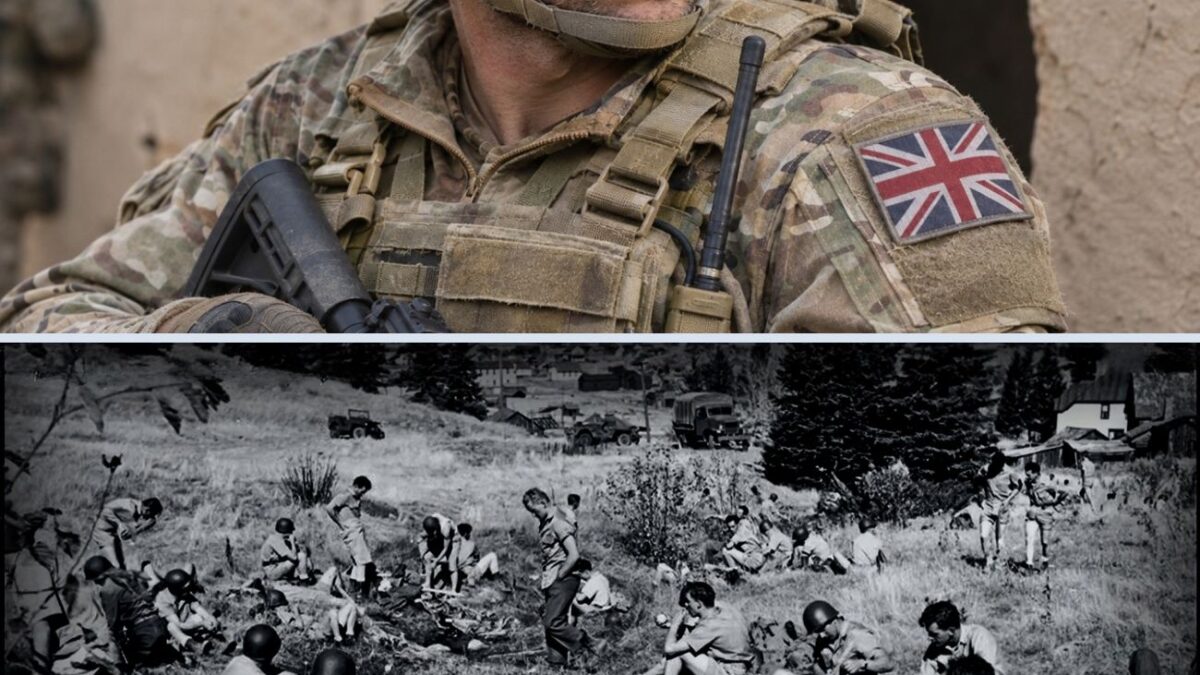
It had to be those people who would keep pushing even when it was clearly time to quit. Colonel Charlie Beckwith, founder of the United States Army’s Delta Force, used those words in his memoir published in 1983. He was describing the kind of man he wanted. He was also describing how he meant to find him. It sounds like a line from a recruiting poster. Beckwith meant it as a working rule, and he had brought it home from Britain.
20 years before that book, Beckwith was an American officer serving inside a British regiment that confused him. Its soldiers looked untidy. Its sergeants argued with their officers. Some of its men had given up rank to get in. By his own account, he was uncomfortable there for weeks.
The United States would still build its most secretive military unit on that regiment’s model. So why did it happen? The United States had divisions, budgets, and manuals that no other army could match. Why would it copy a regiment of a few hundred British soldiers that one of its own officers had first found undisciplined?
That question runs underneath everything in this story. The full answer comes at the end. What follows are seven things American Special Operations soldiers found strange about the British Special Air Service. Every one of them is on the record in memoirs, official inquiries, and campaign histories. None of it needs dressing up.
Now, back to a young man from Atlanta. Charles Alvin Beckwith was born in Atlanta, Georgia on the 22nd of January 1929. He was big and he was fast. He was an all-state high school football player, and he went on to letter for the University of Georgia Bulldogs. The Green Bay Packers showed interest in him for the professional draft. He turned them down. He chose the army.
By 1962, he was a Special Forces officer, one of the Green Berets, trained to work with irregular fighters behind enemy lines. That year, he received an assignment few Americans had ever held. He went to Britain as exchange officer with the 22nd Special Air Service Regiment. He was given command of three troop A squadron.
The regiment he joined was young in its modern form. David Stirling had founded the original SAS in 1941 in the North African desert with a motto that has followed it ever since. Who dares wins. The unit was disbanded after the Second World War. In 1950 it came back to life in the jungles of Malaya, first as the Malayan scouts under Mike Calvert, and in 1952 the 22nd SAS Regiment was formally added to the British Army list.
Since 1960 it had been based at Hereford near the Welsh border. Its men wore a sand-coloured beret with a cap badge showing a flaming sword on a shield. There were not many of them. Even today official histories put the regiment at somewhere between 400 and 600 soldiers. They are divided into four squadrons, A, B, D and G, each of around 65 men. Each squadron splits into four troops of about 16 and each troop breaks down into patrols of four men. That was the basic working unit of the entire regiment.
Beckwith arrived from an army that counted in battalions and divisions. Almost at once he started noticing things. The first thing was the look of the place. According to his memoir, Beckwith was struck by what he saw as a lack of discipline in his troop. The squadron’s living quarters were messy. The men did not move with the parade ground polish an American officer expected from an elite unit. He struggled, in his own telling, with the gap between the military culture he had grown up in and the one in front of him.
An American Special Forces officer of the early 1960s measured a unit partly by its appearance, pressed uniforms, shined boots, crisp salutes. The SAS measured a man by what he did when nobody was watching. It took Beckwith time to see that these were two different kinds of discipline. One was imposed from outside by sergeants in inspections. The other had been built inside each man because the regiment expected him to operate for weeks where no inspection could ever reach him. At first, he saw only the mess.
The second thing was what men gave up to get in. In the British Army, a soldier who passes SAS selection loses the rank he held in his old unit. A sergeant becomes a trooper. A corporal becomes a trooper. Years of promotion are set aside for the right to wear the sand-colored beret. Beckwith noticed that officers made the same trade. He recorded the case of a major who became a captain in order to join the regiment.
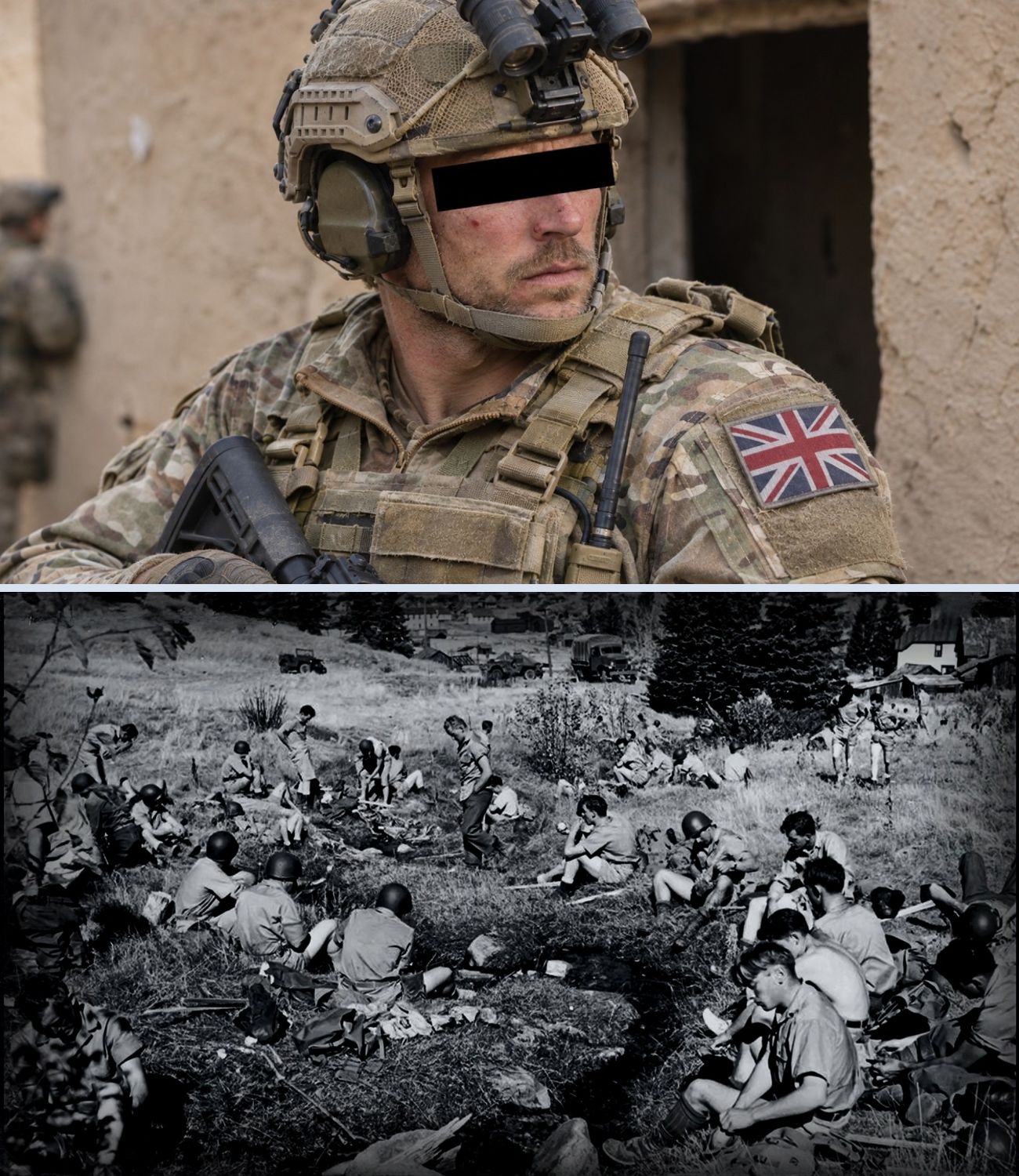
To an American career officer, this was hard to understand. Rank meant pay, status, and a pension. Rank was the career. Here were men lowering themselves deliberately. A trooper with a sergeant’s experience and a trooper’s stripes was not a demoted man. He was a man who had decided that the regiment was worth more than the rank. In the SAS, the beret could not be handed out with an assignment. It had to be earned.
That led to the third thing, the selection process. In Beckwith’s Army, a soldier was largely assigned to a unit. Training followed, and most men who started a course were expected to finish it. The SAS worked the other way. It assumed that almost everyone who arrived would fail, and it designed a process to make sure they did. Its modern form is still built around the Brecon Beacons in Wales, the bare, wet hills where candidates spend their first weeks.
The opening test is called the Fan Dance. It is 26 km up and over Pen y Fan, the highest peak in southern Britain, down the far side along an old Roman road, then back over the same summit. Candidates are allowed 4 hours and 10 minutes. That is the start. At the end of the hill phase comes a march that candidates call the Long Drag. 64 km with a Bergen weighing 25 kg before food, water, and rifle are added. Each man moves alone from checkpoint to checkpoint against a clock he cannot see in whatever weather the hills choose to deliver. He must finish in under 20 hours.
He is given the next point on the map, only the next point. He does not know how far the route goes in total. Fewer than one candidate in 10 makes it through the entire process. The hills are not harmless. In 2013, three army reservists died on the Fan Dance route when the temperature reached 30° Celsius, each carrying a rifle and a bergen of at least 27 kg.
To an American officer, the strangest part was not the distance, it was the silence. No instructor offered encouragement or announced the remaining miles, and nobody explained how close a man was to the standard. The point was not to see whether a man could walk. It was to see whether he would keep walking when nothing in front of him promised an end.
The fourth thing happened indoors. Beckwith watched officers and sergeants meet in the sergeants’ mess and talk to each other openly. Not orders passed down, discussions, disagreements, men of lower rank telling officers where a plan was wrong. The regiment had a name for this habit of collective planning. It called it the Chinese Parliament.
Before an operation, the patrol talked it through. Every man had his say, regardless of the stripes on his arm. The officer still decided, but he decided after hearing the troopers who would carry out the plan and who often had more years in the regiment than he did. A Norwegian study of special operations units, published decades later, noted that this kind of collective, informal decision making is well known inside most special forces and rarely described anywhere else. In 1962, for an American officer raised on a strict chain of command, it was close to unheard of.
The fifth thing was scale. The United States had built special forces to teach. Its teams were trained to go into a country, raise local fighters, and multiply themselves through other men’s hands. The SAS fought with its own hands. Four men in a patrol, each one trained to carry the load of a larger unit. Each troop specialized in one way of reaching the enemy, by air, by boat, over mountains, or in vehicles. The regiment as a whole was smaller than a single American infantry battalion at full strength.
What Beckwith took from this he later put into words that would shape Delta Force. Americans needed, he argued, not only a force of teachers but a force of doers. He also drew a harder lesson about his own army’s men. Before a Special Forces soldier could become a good, unconventional soldier, he concluded, he first had to be a good conventional one. The SAS did not take men who were unusual. It took men who were very good, then made them unusual.
Beckwith did not learn all of this at Hereford. He learned most of it in the jungle. His exchange took him to Malaya, where the SAS had first rebuilt itself a decade earlier. He conducted operations with the regiment during the confrontation with Indonesia, in country where the canopy blocked the sky and a four-man patrol could vanish for weeks. Something happened to him there. It almost ended his life before any of what followed could happen, and it waits a little longer in this story because it explains why he never let go of the idea.
The jungle is where we resume. In the Malayan jungle, Beckwith contracted leptospirosis. The disease comes from bacteria carried in water and soil contaminated by animals. In severe cases, it attacks the kidneys and causes bleeding in the lungs. His case was severe. According to later accounts, the doctors who treated him considered it one of the three worst they had ever seen. They did not expect him to survive. One account says they gave him three weeks. He was in his early thirties, a long way from home, in the care of another country’s army.
According to the summary of his memoir, he chose to recover with British medics rather than be transferred to American facilities. He recovered fully within months. That decision stayed with him. The regiment that had him at first had also kept him alive. When Beckwith returned to the United States in 1963, he did not come back as an observer with notes. He came back as an advocate. He presented a detailed report. Its argument was simple and unwelcome. The United States Army was vulnerable because it had nothing like the SAS, no small, permanent, self-reliant unit of men selected by ordeal and trained to act on their own. The Army was not ready to listen.
Beckwith went to Vietnam. In early 1966, a .50 caliber bullet passed through his abdomen. Medical staff sorted him among the men who were beyond help. It was the second time in his career that doctors had written him off. He survived again. It took more than a decade and a wave of international hijackings and hostage takings before the Army gave him what he had been asking for since 1963.
In November 1977, Beckwith and Colonel Thomas Henry established the first Special Forces Operational Detachment, Delta. He was told to move quickly. He refused. He told his superiors he needed two years to stand the unit up, partly because he wanted to build SAS selection and training into its foundations. Senior Army leaders pressed him to go faster. So according to accounts of the period, did the White House of President Jimmy Carter? He held his ground.
What he built was a copy of the thing that had first seemed so strange. The march at the end of Delta selection became known as the Long Walk, about 40 miles over steep ground, first at Fort Bragg in North Carolina, later in the mountains of West Virginia, a 70 lb rucksack, a time limit of around 20 hours that was never announced to the candidate, no distance given, no feedback, no encouragement. Each man received his next point on the map and nothing more. Even finishing did not guarantee a place. A selection board still had to decide. Beckwith wanted the men, in his words, who would keep pushing even when it was clearly time to quit. He had seen how the British found them. He used the same method.
Delta reached full readiness in the autumn of 1979. A few weeks later, militants seized the American Embassy in Tehran. That brings us to the sixth thing. Beckwith had noticed in the SAS a preference for swift execution, which he set against the methodical planning of the American system. He thought the best force would combine the two.
In April 1980, the world saw what happened when a rescue depended on too many moving parts. Operation Eagle Claw, the night of the 24th to the 25th of April. The goal was to rescue 53 American hostages. Eight RH-53D Sea Stallion helicopters launched toward a staging point in the Iranian desert, a salt flat around 200 miles southeast of Tehran that the planners called Desert One. Only five arrived in working condition. Beckwith, the ground force commander, refused to reduce the size of the rescue team he had trained. With five serviceable helicopters, the plan could not go forward. The mission was aborted.
Then, during the withdrawal, a helicopter collided with a refueling aircraft. The fire killed eight American servicemen, five from the Air Force, three Marines. The official inquiry led by retired Admiral James Holloway pointed to deficiencies in mission planning, in command and control, and in the ability of the services to work together. Its findings led to the reorganization that created the United States Special Operations Command and a dedicated Special Operations Aviation Regiment.
11 days after Desert One in London, the SAS went into action. On the 30th of April 1980, six armed men had seized the Iranian Embassy in Kensington and taken 26 people hostage. On the sixth day, the gunman killed a hostage, Abbas Lavasani. At 23 minutes past 7 in the evening on the 5th of May, B Squadron went in. The operation was code-named Nimrod. It lasted 17 minutes. Five of the six gunmen were killed. One was captured, tried and later sentenced to life imprisonment. One hostage, Ali Akbar Samadzadeh, was killed during the assault. The rest came out alive.
The comparison is unfair, and it should be stated plainly. One mission began in a British capital with the police and the full state behind it. The other required a secret flight hundreds of miles into a hostile country with aircraft from several services that had never worked together at that scale. The failure in the Iranian desert was mostly a failure of machines and coordination, not of the men Beckwith had selected. Still, inside the American Special Operations world, the two weeks of spring 1980 were remembered side by side.
The seventh thing came 11 years later in another desert. When Iraq invaded Kuwait in 1990, the coalition commander was General Norman Schwarzkopf. He was a veteran of Vietnam and Grenada. By several accounts, he had little regard for special forces. He was planning one of the largest air campaigns in history. According to one history of the war, he asked what the SEALs could do that an F-16 could not.
The man who answered him was British. Lieutenant General Peter de la Billière commanded the British forces in the Gulf. He had once commanded the SAS himself. He persuaded Schwarzkopf that soldiers on the ground could still do things aircraft could not. Shortly after Christmas 1990, the regiment began its largest deployment since Malaya, drawing on A, B, and D squadrons.
Then Iraq began firing Scud missiles at Israel. If Israel struck back, the Arab members of the coalition might walk away. The launchers were mobile. They hid by day and fired at night. From the air, they were very hard to find. The SAS went looking for them on the ground. Columns of Land Rovers, between eight and 12 vehicles each, armed with heavy machine guns, grenade launchers, and anti-tank missiles drove into western Iraq. They moved by night. By day, they lay up under nets in open desert. They marked targets for aircraft, attacked communication sites and ambushed supply routes.
American Delta Force operators joined the same hunt. The student and the model were working the same desert. To the Americans, the strangeness was the sheer exposure of it. A small number of lightly protected vehicles, hundreds of kilometers behind enemy lines, with only their own guns and their own judgment. It cost lives. One eight-man patrol inserted on foot by an RAF Chinook became known by its call sign, Bravo Two Zero. It was compromised. Three of its men died. Four were captured and tortured before their release at the end of the war. One, Chris Ryan, walked alone across the desert until he reached Syria.
Across the campaign, the regiment lost four men. One estimate holds that by the end of the war, the SAS had accounted for about a third of the Scud launches. Like most battlefield estimates of mobile targets, that figure is difficult to confirm. What can be confirmed is what Schwarzkopf did afterwards. The general who had asked what the SAS could do that an F-16 could not gave the regiment his personal commendation for its work. He did not withdraw his question in so many words. He answered it himself.
By the time American and British special forces fought together in Iraq after 2003, the relationship had shifted. The journalist Mark Urban in his 2010 book Task Force Black described a prickly partnership. Early on, the British operated under cautious rules of engagement and kept their American counterparts at a distance. The Americans, under General Stanley McChrystal, ran what Urban’s reviewers called industrial counterterrorism. Raid after raid, night after night.
This time, it was the British who found the Americans strange. And in the end, according to Urban, the SAS adopted the American tempo. 40 years had passed since an American captain first walked into a messy troop room at Hereford. The influence had gone in both directions.
Charlie Beckwith retired from the army in the 1980s. He never commanded Delta again after Desert One. He wrote his memoir with Donald Knox and published it in 1983, the book in which he set down the standard he had borrowed from the British. He died of natural causes in Austin, Texas on the 13th of June 1994. He was 65. He is buried at Fort Sam Houston National Cemetery in San Antonio. Twice in his life doctors had decided he would die. Once in a Malayan jungle, once in Vietnam.
Peter de la Billière, the former SAS commander who convinced an American general to let a few hundred men drive into Iraq, ended his career among the most senior soldiers in the British army. Norman Schwarzkopf returned home to a victory parade. The commendation he gave the regiment is a small entry in the record of a very large war. Chris Ryan, the only man of Bravo Two Zero to escape, walked out of Iraq alone.
So why is this history so little known outside the units themselves? The first reason is simple. Both regiments keep quiet. The British government does not comment on its special forces. The American government rarely acknowledges Delta’s operations. Most of what is public comes from a handful of memoirs, inquiries and campaign histories, and from men who chose to speak after they left.
The second reason is that the story does not fit the usual picture. Americans are used to being the ones who are copied. Here the largest military in the world took a habit of mind from a regiment smaller than one of its battalions.
The third reason is that what Beckwith imported cannot be photographed. A march with no announced distance. A trooper allowed to tell an officer his plan is wrong. A man who gives up his stripes for a beret. None of these make a good image. All of them made Delta.
The record is still there. It is in Beckwith’s own book, in the Holloway report, in the Gulf War histories, and in the selection routes over the Brecon Beacons and through the mountains of West Virginia, where the same kind of test is still run.
Look again at the question from the beginning. Why would the United States build its most secretive unit on a regiment its own officer first found undisciplined? Because the disorder was never what it looked like. Beckwith saw untidy rooms and sergeants who argued. What he was really looking at was discipline that no longer needed an inspector because the regiment had already tested each man alone with a heavy pack at night, in the rain, with only the next point on the map. That was the standard he took home.
It had to be those people who would keep pushing even when it was clearly time to quit. When he wrote it in 1983, it read as a description of Delta’s men. It was also a description of the British troopers who had confused him in 1962. In some ways, it described him too.
You Might Also Enjoy


Mom Installed a Camera To Discover Why Babysitters Keep Quitting But What She Broke Her Heart


She Gave a Hungry Little Girl a Free Birthday Cake — The Next Morning, a Black Rolls-Royce Arrived




