A US Colonel Ordered the SAS to Stand in Line. They Vanished Before Roll Call
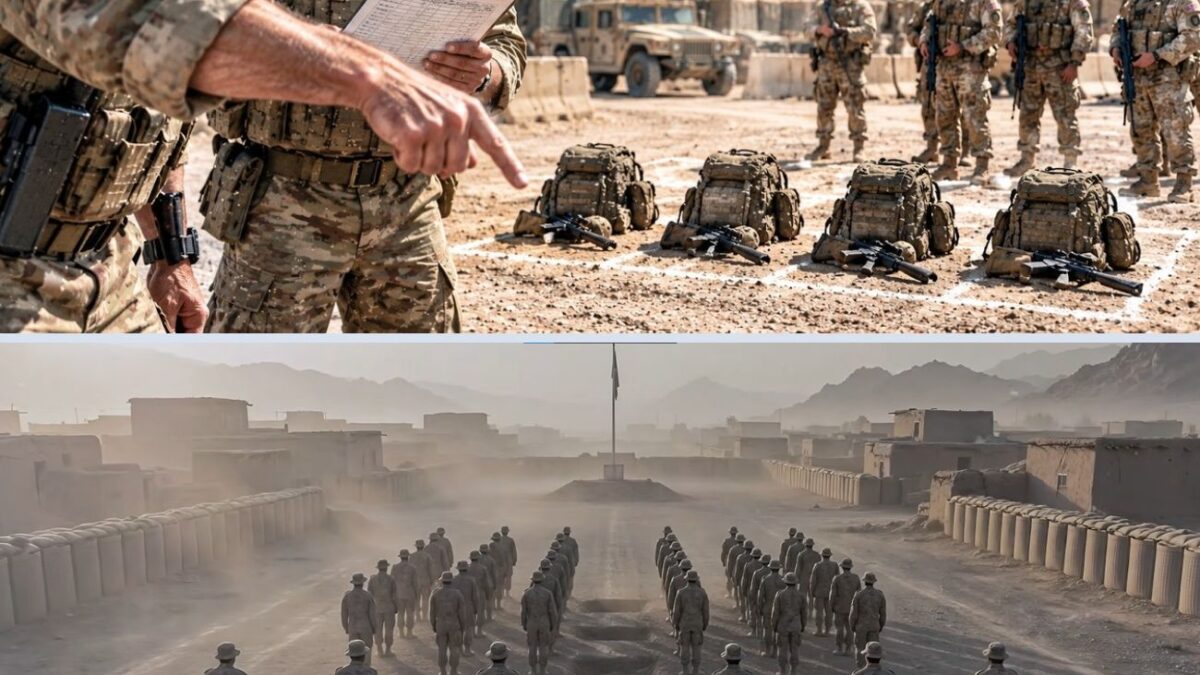
It is 5:31 in the morning on the 14th of May, 2009, and the parade ground at forward operating base Kestrel is empty except for the dust. The dust is already moving. It comes off the Kandahar plane in a thin pale sheet and runs low across the hardpacked gravel, past the flagpole, past the sandbagged walls, past the row of Hesco barriers that mark the edge of the base.
The sun is not up yet, but the light is already hard and white and thin at the edges of the sky, the way it gets in the desert before the heat arrives. In an hour, the ground will be too hot to touch. Right now it is cool enough that a man can kneel on it and not feel it through his trousers.
Four men are kneeling on it. They are not kneeling in a line. They are kneeling in a loose half circle beside a low concrete wall at the southern edge of the parade ground. And they are doing it the way men do when they have done it a hundred times before without talking, without looking at each other, without any wasted movement at all.
Their rifles are laid across their knees. Their packs are on the ground beside them, already closed, already strapped. One of them is checking a map, folded small, the size of a hand. One of them is drinking water from a canteen, one slow mouthful, then putting the cap back on.
One of them is watching the gate. The fourth is watching the road beyond the gate, where the dust is moving and nothing else is. The fourth man is Staff Sergeant Silas Crowe and he is 36 years old and he has been in the desert long enough to know that the hour before a roll call is the most dangerous hour of the day.
Not because of the enemy, because of officers. The order came down at midnight. It came down on a printed sheet and it was read out in the operations tent and it was read out in a voice that expected no questions.
At 0600 hours, every unit on this base will form up on the parade ground for a formal roll call and inspection. Every unit, boots polished, uniforms pressed, weapons clean. The new base commander wants to see his command, and he wants to see it standing in a straight line.
The new base commander is Colonel Isaac Thorne, and he arrived yesterday afternoon in a helicopter that threw dust over the whole southern half of the base, and he has been in command for 11 hours. 11 hours is not long enough to learn a base. It is long enough to order one.
Crowe folds the map and puts it in his pocket. He stands up. The other three stand up with him and they do it without a word being spoken the way a patrol stands when the patrol commander stands.
They pick up their packs. They pick up their rifles. They do not walk toward the parade ground. They walk toward the gate.
Corporal Theo Radcliffe falls in beside him. Radcliffe is 29 and he has been on this patrol for two years and he knows Crowe well enough to know when a question is worth asking and when it is not.
“This is not 5 minutes,” Radcliffe says quietly. “If we go now we make the wire before the guard changes.”
Crowe nods. “Then we go now.”
Lance Corporal Gus Pemberton is already moving toward the southern sally port, the small gate the patrols use, the one the base commander does not know about yet because nobody has shown him a map of it. Trooper Archie Sutton, the youngest of the four at 23, the medic, brings up the rear and he is carrying his pack the way medics carry packs, high and tight.
And he does not look back at the parade ground behind them. The parade ground is still empty. In 29 minutes it will be full of men standing in straight lines.
Four of those men will not be there. Four spaces will be empty. Four names will be called and nobody will answer.
That is the whole story. And it has not happened yet. But it will because at 5:40 in the morning four British soldiers are about to walk out of a gate that is not on the colonel’s map.
And they are about to do it carrying everything they need and nothing they do not. And they are about to do it for a reason that the colonel was told about at midnight and chose not to hear.
The report was filed at midnight, not at midnight. In one minute, at midnight. On the minute. Because Crowe is the kind of man who files a report at the time he said he would file it.
It was three pages long. It was written in pencil in a small square hand on paper that had been folded into quarters and carried in a map pocket for nine hours. It said that for three nights running, a patrol had watched the same stretch of the north supply road.
And for three nights running, the same thing had happened. Two men, sometimes three, had come out of the dark at the same hour, and they had knelt on the road in the same place, and they had dug. It said the place was a shallow bend in the road, a kilometer and a half outside the wire, where the road dips, and a driver cannot see more than 30 meters ahead.
It said the digging lasted about 40 minutes. And then the men left and they left the road looking exactly the way it had looked before they arrived. It said the patrol had not engaged because the patrol had been told to observe and report and the patrol had observed and reported.
It said in the last paragraph in the same small square hand that the morning convoy used that road every day at 0630 and that 12 vehicles used it and that the first vehicle was always a fuel tanker. The report went to the operations tent. Major Caleb Rohr read it.
Rohr is 38 and he has been the operations officer at Kestrel for four months and he knows what a digging report means because he has seen one before at another base in another year and the convoy that used that road the next morning did not come back whole. Rohr took the report to the colonel. Colonel Isaac Thorne was sitting at the desk in his office and the office was new because the colonel was new and the desk had been cleared by someone who wanted to make a good impression and there was nothing on it except a lamp and a telephone and the colonel’s cap placed exactly in the center of the desk.
The way a man places his cap when he believes that order is something you can arrange on a surface. Thorne read the first page. He read the second page. He did not read the third page.
He put the report down on the desk and he lined up its edge with the edge of the desk and he said, “This is local gossip.”
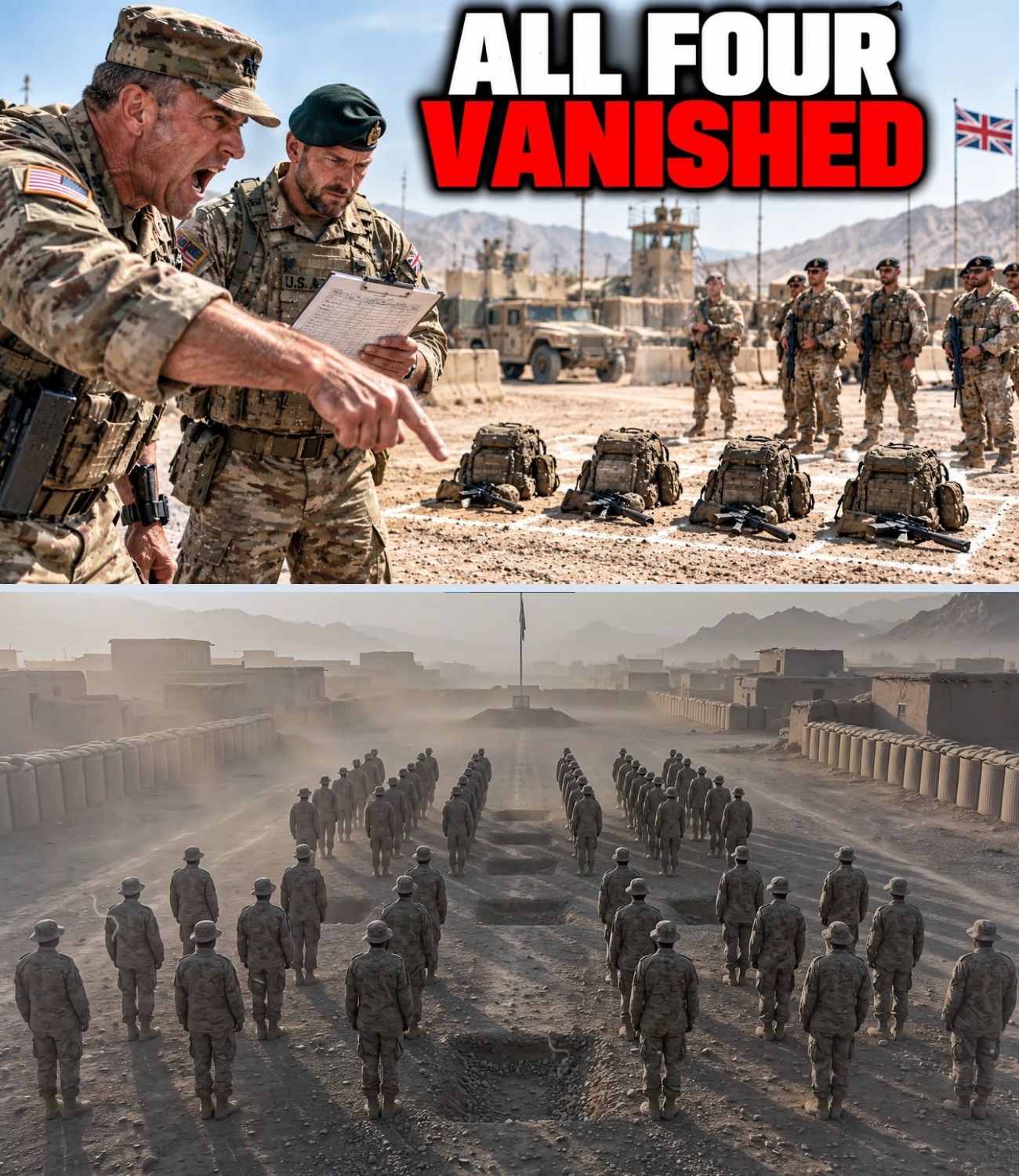
Rohr said, “Sir, the patrol watched them for three nights.”
Thorne said, “Three nights of watching men dig a hole does not make a threat. Farmers dig holes. Men mend roads. This is Afghanistan, Major. Men dig.”
Rohr said, “They dug in the road, sir. In the same place at the same hour.”
Thorne said, “Then we will watch the road tomorrow and the day after and the day after that and when nothing happens we will stop wasting patrols on it. I did not come here to chase shadows, Major. I came here to run a base and a base runs on discipline. And discipline starts with men standing where they are told to stand.”
He picked up the report. He folded it in half. He put it in the top drawer of his desk and he closed the drawer. And the drawer made a small neat sound.
The way a drawer makes when it is closed by a man who believes he has finished something. “0600,” Thorne said. “Roll call. Every unit. I want to see my command.”
Rohr said, “Yes, sir.” He walked out of the office and he walked back to the operations tent and he stood there for a long time looking at the map on the wall at the north road at the shallow bend a kilometer and a half outside the wire. And he thought about the fuel tanker that went first every morning.
And he thought about the report in the drawer. And he thought about the fact that he had done his job and it had not been enough. At 0100 hours, Crowe came into the operations tent.
He did not ask what the colonel had said. He looked at Rohr’s face and he knew. “Nothing changes,” Crowe said. “We watch the road again tonight.”
Rohr said, “The colonel has ordered a roll call at 0600. Every unit.”
Crowe said, “I know.”
Rohr said, “You will be standing in it.”
Crowe studied the map for a moment. Then he said, “We will see.” That was midnight.
This is 5:31 in the morning. And the four men who were kneeling beside the concrete wall are walking toward a gate that is not on the colonel’s map. And the report is still in the drawer, and the convoy leaves at 0630, and the road is waiting.
The southern sally port is not a gate. It is a gap in the wire four feet wide where a section of fencing has been folded back and tied with wire. And it has been there for two years and every patrol on this base uses it.
And no officer has ever written it down on a map because the men who use it do not want it on a map. Crowe goes through it first. He does not duck. He steps through the way a man steps through a doorway in his own house.
And then he is outside the wire and the desert is in front of him. And it is the same desert he has walked for three nights. And it smells the same: dust and dry grass and cold stone.
And the light is coming up over the ridge to the east, pale and flat. And it throws long shadows across the ground. Radcliffe comes through second, Pemberton third, Sutton last, and Sutton turns as he comes through and reties the wire behind him.
The way you close a door behind you, and then the four of them are outside and the base is behind them and nobody on the base knows they are gone yet. They do not run. Running makes noise and running makes dust and running makes a patrol easy to see. They walk and they walk in single file and they walk along the low ground where the ridge hides them from the watchtower and they walk the way they have walked for three nights because the route is already in their feet.
Farid is waiting for them at the wadi half a kilometer out. Farid is 41 and he is an interpreter and he has worked with this patrol for six months and he is not a soldier but he walks like one when he walks with them and he does not talk when he walks with them. He is crouched behind a rock and he has a radio in his hand, a small civilian radio the kind you can buy in a market, and he holds it up when he sees them.
“They came at 4,” Farid says, his voice low. “Two men, the same two. They dug for 40 minutes and then they left.”
Crowe kneels beside him. “Did they see you?”
Farid shakes his head. “They do not look. They dig. They think nobody watches the road at night.”
Radcliffe is already glassing the road with binoculars, lying flat behind the rock, his elbows dug into the dust. “Same place,” he says. “The bend. You can see the fresh earth from here if you know where to look.”
Pemberton opens his pack and takes out a small spade, a folding spade, the kind that fits in a pocket. Sutton takes out a roll of white tape, the kind engineers use to mark a safe lane, and a handful of short wooden stakes. They have rehearsed this a hundred times on the training ground.
They have never done it for real, at dawn with a convoy coming. Crowe looks at his watch. It is 5:47. The roll call is in 13 minutes.
“We do it the same way we planned it,” Crowe says. “We go in from the low side. We do not cross the road. We stay off the road until we know what is in it. Farid stays here and watches the track from the village. If anyone comes from the village, he calls.”
Farid nods. He puts the radio back in his pocket. He does not ask what happens if the diggers come back. He already knows what happens. The patrol knows too. Nobody says it.
They move, four men single file low along the wadi, and the sun is coming up behind them now. And the shadows are getting shorter, and the road is ahead of them. And the fresh earth at the bend is a slightly darker color than the earth around it, the way fresh earth always is.
And any man who has spent three nights watching a road knows what that color means. The north road is not a road. It is a track, two ruts in the dust with a strip of hard ground between them.
And it runs from the base gate to the village of Charz. And then it runs onto the town. And every vehicle that leaves this base uses it because there is no other road, and there has never been another road.
The bend is a kilometer and a half outside the wire. The road dips there down into a shallow hollow, and the hollow is ringed with low rocks, and the rocks give a man cover if he wants to watch the road, and they give a man cover if he wants to dig in it. Crowe’s patrol has been watching the hollow for three nights from a rise 200 meters to the east and they know every rock in it, and they know the shape of the ground the way a man knows the shape of his own street.
Now they are going into the hollow. Crowe goes first and he goes on his stomach and he goes slowly and he stops every 10 meters and listens, and the desert is quiet and the only sound is the wind moving dust across the track. Radcliffe follows 10 meters behind, and Pemberton follows Radcliffe, and Sutton follows Pemberton.
And they move the way a patrol moves when it is going into a place that might be wired to kill it. Which is to say, they move as if the ground itself is listening. At the edge of the hollow, Crowe stops.
He raises one hand. The patrol stops behind him. He looks at the road for a long time.
The fresh earth is there at the bend in three places, and each place is about the size of a dinner plate, and each place is slightly darker than the ground around it, and each place is exactly where a wheel would go. A driver coming around the bend would put his front wheel on the first one before he saw it. The second one is where the second wheel would go. The third one is where the tanker would go because the tanker is always the first vehicle and the tanker is always the heaviest.
Three devices, three plates of fresh earth, 12 vehicles, one fuel tanker. Crowe turns his head very slowly and looks at Radcliffe. Radcliffe nods. He has seen it too.
“Mark it,” Crowe says, and his voice is so quiet that only the men behind him can hear it. “Do not touch it. Mark it.”
Pemberton crawls forward with the white tape and the stakes. He does not go onto the road. He goes along the edge of it and he pushes a stake into the ground a meter short of the first patch of fresh earth and he ties the tape to the stake.
And he does it with his hands, and his hands do not shake because his hands have practiced it a hundred times before and practice is what keeps a man’s hands steady when the real thing arrives. Sutton is behind him with a second roll of tape marking the safe lane. The strip of ground between the devices, the narrow line a driver can follow if he is told where to look.
The tape is white and it is bright in the morning light and it will be visible from 200 meters and that is the point. A driver who sees white tape knows where to drive. A driver who does not see it drives where the road takes him.
It takes 11 minutes. 11 minutes to mark three devices and a safe lane. And in those 11 minutes, the sun comes fully up, and the hollow fills with light, and the road is no longer in shadow, and the patrol is no longer hidden by the dark, and they are four men in a hollow with three buried devices, and a convoy coming in 32 minutes. Crowe looks at his watch.
It is 6:03. The roll call started 3 minutes ago. Four names have been called on a parade ground a kilometer and a half away and nobody has answered them.
At 0600 hours, the parade ground at forward operating base Kestrel is full. Every unit is there. The infantry company is there in three neat ranks.
Their boots polished the way boots get polished when a man has been told to polish them. Their rifles held at the same angle. Their faces turned toward the flagpole.
The engineers are there. The medics are there. Drivers are there standing in a line beside their vehicles which are parked in a line beside the parade ground, 12 of them.
And the first one is a fuel tanker. Colonel Isaac Thorne stands on the low platform at the head of the parade ground and he is wearing his best uniform and his boots are polished and his cap is on straight, and he is looking at his command the way a man looks at a thing he has arranged. Major Caleb Rohr stands two steps behind him holding a clipboard.
The clipboard has the roll on it. Every name on this base in order by unit. Rohr has been holding that clipboard for 20 minutes and his hand has not moved and his face has not changed and he has been thinking about the report in the colonel’s drawer for the whole 20 minutes.
“Call the roll,” Thorne says.
Rohr reads the first name. A voice answers. He reads the second name. A voice answers.
The roll goes the way a roll always goes. Name after name. Answer after answer. And the morning is quiet.
And the only sound is Rohr’s voice and the answers and the dust moving across the gravel. Then Rohr comes to the British patrol. He reads the first name.
Staff Sergeant Crowe. Nobody answers. He waits a beat.
The way a man waits when he expects an answer and does not get one. He reads the name again. Staff Sergeant Crowe.
Silence. He reads the second name. Corporal Radcliffe.
Silence. He reads the third name. Lance Corporal Pemberton.
Silence. He reads the fourth name. Trooper Sutton.
Silence. Four names, four silences, for empty spaces in a line that is supposed to be straight. Thorne turns his head.
He looks at Rohr. He looks at the four empty spaces. He looks back at Rohr and his face has changed.
And it is not the look of a commander who has just found four soldiers missing. It is the look of a commander who has just found four soldiers who chose to disobey him. “Where are they?” Thorne says, and his voice is quiet and the quiet is worse than shouting.
Rohr says, “I do not know, sir.”
Thorne says, “They were ordered to be here. I ordered every unit to be here.”
Rohr says, “Yes, sir.”
Thorne steps down from the platform. He walks across the parade ground and his boots make a sound on the gravel and every man on the parade ground watches him and nobody moves. He stops in front of the four empty spaces and he looks at the ground where four men should be standing and the ground is empty and the dust is moving across it and he says, “Find them.”
Captain Seth Mallerie steps forward. Mallerie is 27 and he is the colonel’s aide and he is the kind of officer who does what he is told quickly because he has learned that doing it quickly is the safest thing to do. “Sir,” he says, “I will take a vehicle and…”
Thorne cuts him off. “No vehicle, no search. They will come back and when they come back, they will explain themselves to me. Until then, the roll call continues. I will not have a parade ground held hostage by four men who think the rules do not apply to them.”
He walks back to the platform. The roll call continues, name after name, answer after answer, but the four silences stay in the air, and every man on the parade ground heard them. And every man on the parade ground is thinking about them.
And Rohr is thinking about the report in the drawer, and the road, and the fuel tanker, and the time, which is now 6:09, and the convoy leaves in 21 minutes. At 6:09, the diggers come back. There are two of them.
They come down the track from the village walking the way men walk when they believe they are alone, unhurried, talking to each other, and they are carrying a sack between them and the sack is heavy and they are carrying it the way men carry a thing they do not want to drop. Farid sees them first. He is still at the wadi, still behind the rock, still holding the small radio, and he presses the button twice, two short clicks, which is the signal they agreed on, which means they are coming, two of them from the village side.
Crowe hears the clicks in his earpiece. He raises one hand. The patrol freezes.
The two men reach the bend. They put the sack down on the road. One of them kneels beside the first patch of fresh earth and he opens the sack and he takes out a wire and he begins to connect it and his hands are steady and he is not looking around because he believes no one is watching.
He is wrong. Crowe moves first. He does not run. He rises from behind the rocks at the edge of the hollow and he walks toward the road.
And he walks the way a man walks when he wants to be seen at the last possible moment, which is to say, he walks without hurry and without noise. And by the time the kneeling man looks up, Crowe is 10 meters away and Radcliffe is 10 meters to his left and Pemberton is 10 meters to his right and Sutton is behind them and the hollow is closed. The kneeling man freezes.
The standing man takes a step back. His hand goes toward his waist, toward the place where a man keeps a knife or a pistol, and it does not get there because Pemberton is already there. And Pemberton’s hand closes around his wrist.
And Pemberton says very quietly, “No.” That is the whole fight. There is no shouting.
There is no shooting. There is a kneeling man with a wire in his hand and a standing man with his wrist held and four soldiers who have been watching a road for three nights and a sack on the road that holds two more devices that have not been buried yet. Sutton kneels beside the sack.
He opens it carefully the way a man opens a thing that might kill him. And inside are two metal cylinders and wires and a battery and a small black box with a switch on it. He looks at Crowe.
Crowe looks at him. Neither of them says anything because there is nothing to say. The sack is the proof.
The report was right. The road was mined. The convoy was driving into it.
Crowe takes the radio from his vest. He switches it to the convoy frequency, the frequency the convoy commander uses, the frequency that is not the colonel’s frequency. And he says, “Convoy Kestrel, this is Crowe. The north road is mined. Three devices in the road at the bend. Two more in a sack. I have marked a safe lane with white tape. Follow the tape. Do not leave the tape.”
There is a silence on the radio. Then a voice comes back and the voice belongs to Sergeant Leo Brandt who is sitting in the lead vehicle of the convoy which is not the fuel tanker today because Brandt swapped the order this morning and he does not know why he swapped it, only that something told him to. “Copy that, Crowe,” Brandt says. “White tape. We follow the tape.”
Crowe looks at his watch. It is 6:21. The convoy leaves in nine minutes.
The roll call is still going on a kilometer and a half away. Four names were called and nobody answered them. And the men who did not answer are standing in a hollow with two prisoners and five devices and a roll of white tape.
And they have just done the only thing that mattered this morning. At 06:30, the convoy leaves the base. 12 vehicles.
The first one is not the fuel tanker. Sergeant Leo Brandt is driving it. And Brandt is 33 and he has driven this road 40 times.
And he has never driven it first before because the tanker always goes first. And today the tanker is third because Brandt swapped the order at 5:50 this morning. And when the drivers asked him why, he said, “Because I said so,” and that was enough.
Brandt drives slowly. He drives at 20 kilometers an hour. And he keeps his eyes on the road.
And at the bend, a kilometer and a half outside the wire, he sees it: white tape tied to wooden stakes running in a narrow line along the edge of the road. And beyond the tape, three patches of fresh earth, darker than the ground around them, each one exactly where a wheel would go. He follows the tape.
He keeps his wheels inside the white line. And the vehicle behind him follows him. And the vehicle behind that one follows.
And the tanker follows third. And the whole convoy follows the white tape around the bend. And nobody leaves the tape.
And nobody stops. And the road goes past. And the hollow goes past.
And the four men standing in the hollow watch the convoy go past. And the two prisoners sit on the ground beside the sack. And the morning goes on.
On the radio, Brandt says, “Convoy clear of the bend. All 12 through. Nobody stopped. Nobody touched the tape.”
Crowe says, “Copy that. Hold at the village junction. I will meet you there.”
Brandt says, “Crowe, the tape. Who put the tape down?”
Crowe says, “We did.”
Brandt goes quiet for a beat. Then he says, “The roll call, Crowe. The colonel called your names four times. Nobody answered.”
Crowe says, “I know.”
Brandt says, “He is going to want an explanation.”
Crowe says, “He is going to get one.”
The convoy rolls on slowly toward the village junction. The hollow is quiet again. The white tape flutters in the wind and the fresh earth sits in the road and the five devices are still there.
Three in the ground and two in the sack. And the patrol stands around them and they do not celebrate because there is nothing to celebrate. A road was mined.
A convoy drove through it. That is what happened. That is the whole of it.
Radcliffe looks at his watch. It is 6:44. The roll call ended 14 minutes ago.
The parade ground is empty now. The colonel is in his office. The report is still in his drawer.
“Time to go back,” Radcliffe says.
Crowe nods. “Time to go back.”
Colonel Isaac Thorne does not find out about the convoy from a report. He finds out about it from a radio call. And the radio call comes at 6:51.
And it comes from Major Rohr. And Rohr’s voice on the radio is the voice of a man who has held one sentence back all morning. “Sir,” Rohr says, “the convoy is through the bend. All 12 vehicles. No incident.”
Thorne says, “Good. That is what a convoy does, Major. It goes through.”
Rohr says, “Sir. The convoy followed white tape around the bend. The patrol marked a safe lane. Three devices in the road. Two more in a sack. Two prisoners.”
Thorne is silent. He is sitting at his desk. And the desk is clear except for the lamp and the telephone and his cap placed exactly in the center.
And his hand is on the top drawer and the drawer has the report in it. And the report has been in the drawer since midnight. “Where is the patrol now?” Thorne says.
“At the village junction, sir,” Rohr says. “With the convoy.”
Thorne stands up. He puts on his cap. He walks out of his office and he walks across the parade ground, which is empty now, and the dust is moving across the gravel.
And he gets into a vehicle and he tells the driver to take him to the village junction and the driver does and the vehicle goes out through the gate and the gate is the main gate, the one on the colonel’s map, and the road is the north road and the bend is a kilometer and a half out and the white tape is still there. Thorne gets out of the vehicle at the bend. He walks to the first patch of fresh earth.
He kneels beside it. He looks at it for a long time. He looks at the white tape.
He looks at the stakes. He looks at the hollow and the rocks and the rise 200 meters to the east where a patrol watched this road for three nights. Then he walks to the village junction and the convoy is there.
12 vehicles parked in a line and the drivers are standing beside them. And the fuel tanker is third and the patrol is standing beside the convoy, four men. And the two prisoners are sitting on the ground and Farid is standing beside them.
And Crowe is standing in front of the patrol. And Crowe’s uniform is dusty and his boots are dusty. And he has not stood in a line all morning.
Thorne stops in front of him. He looks at the four men. He looks at the prisoners.
He looks at the sack. “Report,” Thorne says.
Crowe reports. He does it the way he wrote the report at midnight. In the same small square way: three nights, two men, the same place, the same hour, three devices in the road, two in the sack, the convoy through on the tape.
He does not raise his voice. He does not excuse anything. He does not mention the roll call.
He does not need to. The roll call is standing right there in the dust in the shape of four men who were not where they were ordered to be. When he finishes, Thorne says nothing for a long time.
The convoy drivers are watching. The prisoners are watching. Farid is watching.
The desert is quiet and the sun is high now and the heat is coming and the white tape is fluttering in the wind. “Get in the vehicle,” Thorne says. “All of you. We are going back to the base.”
At 8:15 in the morning, Colonel Isaac Thorne is sitting at his desk and the desk is clear except for the lamp and the telephone and his cap and his hand is on the top drawer and he opens the drawer and he takes out the report. He reads it this time. He reads all three pages.
He reads the first page and the second page and the third page and he reads the last paragraph twice. The one about the morning convoy and the 12 vehicles and the fuel tanker that goes first every morning. Then he puts the report down on the desk and he lines up its edge with the edge of the desk the way he lined it up at midnight and he looks at it for a long time.
And then he picks up the telephone and he calls Major Rohr and he says, “Bring them in.”
All four. They come in. They stand in front of his desk, four men, and their uniforms are dusty and their boots are dusty and they stand the way soldiers stand in front of a colonel: straight, hands at their sides, eyes forward. And Crowe is in front and he does not look at the report on the desk because he already knows what it says.
Thorne looks at them. He looks at the report. He looks at them again.
“I ordered you to stand in line,” Thorne says.
“Yes, sir,” Crowe says.
“You vanished before roll call.”
“Yes, sir.”
“I called your names four times. Nobody answered.”
“No, sir.”
Thorne goes quiet for a beat. Then he says, “If you had stood in my line this morning, 12 vehicles would have driven into that bend and the first one would have been a fuel tanker and I would have written 12 letters today instead of reading one report.”
Crowe says nothing. Thorne stands up. He walks around the desk.
He stops in front of Crowe and he looks at him and he is not angry anymore. And that is the strangest thing of all because Thorne has been angry since 6:00 and the anger has gone out of him the way heat goes out of the ground at night, slowly and without a sound. “You were supposed to stand in my line,” Thorne says.
Crowe says, “We were standing in the only line that mattered, sir.”
Thorne nods. He picks up the report. He folds it in half the way he folded it at midnight and he puts it in his pocket and he says, “From tomorrow there is no roll call for your patrol. You report to Major Rohr and only to him and you go where the road tells you to go. Is that clear?”
“Yes, sir,” Crowe says.
Thorne says, “Dismissed.”
They walk out of the office. They walk across the parade ground which is empty and the dust is moving across the gravel and the sun is high and the heat has arrived and the ground is too hot to touch now. They walk to the southern sally port, the gap in the wire that is not on the colonel’s map.
And they go through it and Farid is waiting for them at the wadi and the road is waiting beyond that. And the next morning they will be out there again at 5:40 before the guard changes, before the roll call, before anyone on the base knows they are gone. And on the parade ground where four men were supposed to stand, there are four empty spaces in the gravel and the pale dust moves slowly across them and nobody stands in them because the men learned a long time ago that a line on a parade ground is not the line that matters.
The line that matters is the white tape on a road a kilometer and a half outside the wire and the men who put it there.
You Might Also Enjoy


Mom Installed a Camera To Discover Why Babysitters Keep Quitting But What She Broke Her Heart


She Gave a Hungry Little Girl a Free Birthday Cake — The Next Morning, a Black Rolls-Royce Arrived




