“Friendlies Coming In!” — The SAS Knew in 3 Seconds They Weren’t Americans.
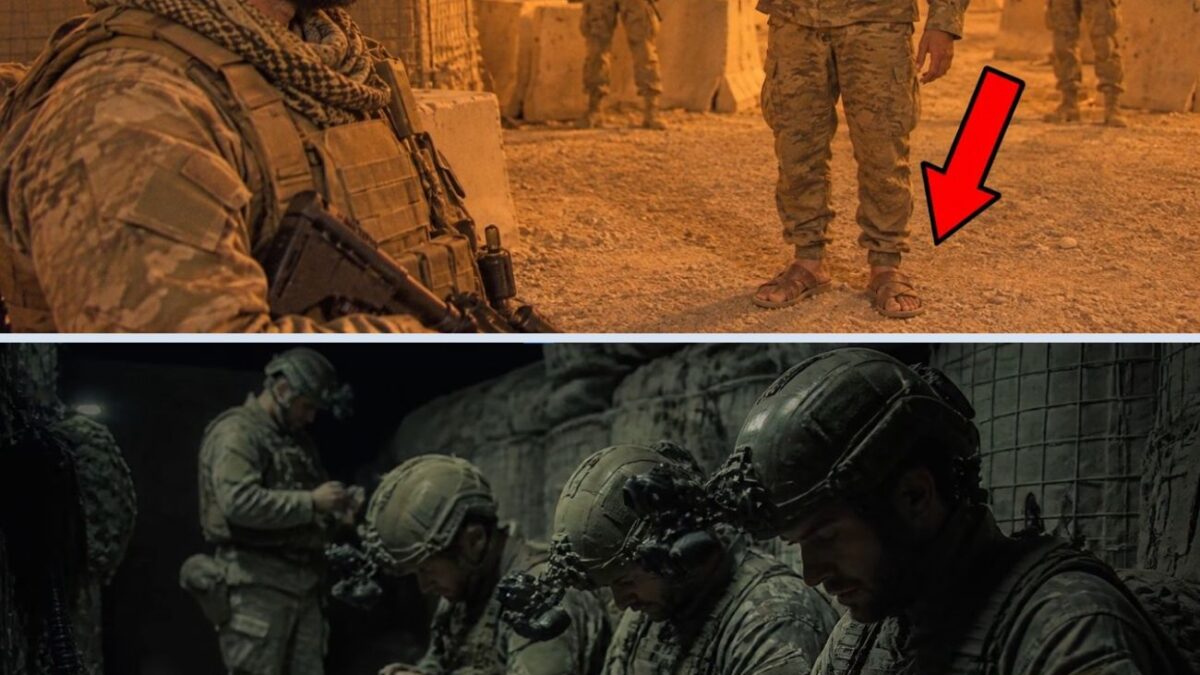
There is a stretch of road in southern Helmand where the dust is so fine it takes the print of a foot the way wet concrete does and holds it until the wind decides otherwise. On a Tuesday night in the autumn of 2011, a line of six men walks out of that dust toward the lights of a small coalition outpost called Jericho, waving an open palm in the slow, tired way that soldiers do when they have been out too long and want the gate to open without a fuss. Five of them are Taliban, while the sixth is a boy who does not want to be there, and all six are wearing the uniform of the Afghan National Army.
If you have ever stood on a gate at night in a country where the wrong face can walk up smiling and the right face can be anywhere, you already know the quiet calculation that happens in the three seconds between the challenge and the answer. You hear the voice, you see the kit, you read the walk, and somewhere behind you, in the shadow of the Hesco, there might be another pair of eyes doing a different kind of reading entirely. You will not know they were there until it is over, lingering silently in the dark.
There is a thing older British soldiers say quietly when the subject of that war comes up in a pub, and nobody is quite sober: three words,
“Check his feet.”
They will not explain it, and if you press them, they will shift the conversation entirely. The ones who were there in that particular season, in that particular province, will sometimes put a thumb to the rim of their glass and say it again as if it were a prayer against something before taking a drink.
The men who walked back into their base at dawn the next morning—the American ones, the ones who had been on the gate and in the tower and asleep in their cots—would only ever say one thing about that night, and they would say it the same way every time. For the rest of this hour, you are going to be walking toward the moment they learned it. What follows is a fictional account built on the real texture of coalition operations in southern Afghanistan around 2011.
The outpost, the men, and the ruse are invented, but the kit, the vegetation, the doctrine, and the cadence of a shared base at that time are real, moving the story forward. Combat outpost Jericho sat at a bend in a road nobody of consequence used in a district of Helmand, where the poppies had already been harvested that spring and the fields had gone back to a dull, patient brown. It was a small place by the standards of that war, held by a platoon of United States Marines along with a dozen Afghan National Army soldiers.
They shared a long tent with a kerosene heater that smoked a thin seam of soot. Nobody at Jericho spoke of them loudly, and most of the Marines had been told simply not to notice the few additional men who came and went through a side gate at odd hours. Those men had been attached for a particular week, for reasons that would be sanitized out of every after-action document that came later.
The outpost was ringed by Hesco barriers, the big wire and fabric cubes filled with the local dirt, topped with concertina wire and the harsh, flat light of two sodium lamps. This lighting turned everything the color of a bruise, while the ground beyond the wire had been swept of anything that could hide a man. There was no vegetation of any use within 300 metres, and the dust inside the wire was powder fine, recording every footprint in perfect detail.
The land the cell moved through was theirs in a way that had nothing to do with maps. Mullah Hafizullah had grown up in a compound whose roof you could still see from the ridge they had been lying on for the last six hours, if you knew where to stand. He walked with a slight limp from an old Soviet-era shrapnel wound in his right thigh, having walked this ground as a boy carrying water and as a young man carrying a Kalashnikov.
The wind shifted at the same time every evening, and he knew the direction before it came, while the jackals quieted at the same stretch of the night. The sentries at Jericho had been there seven weeks, but he had been there forty-six years, meaning the ground belonged to him. The others belonged to him in a different way, following behind him with their own quiet burdens and hidden fears.
Nasratullah walked at his left shoulder half a pace back because Nasrat was the one who knew how to look like what they were pretending to be. Nasrat had served two years in the real Afghan National Army before drifting home with an unassigned grievance and being talked into a different allegiance over a long winter. He knew the slang, knowing that a real patrol coming in at this hour would have sloped weapons and loud voices.
He had rehearsed the laugh, worrying a false front tooth—a cheap metal cap—with his tongue in the lamplight without realizing he was doing it. Behind Nasrat came Sedqullah, the bomb maker, with the device flat against his chest under a stolen plate carrier. His hands were a dull orange, stained permanently by ammonium nitrate in a shade that dust and lamplight could not hide.
He kept his hands in the drag position every soldier used after a long night, crossed low at the stock of a rifle he was not planning to fire. He had not blinked properly in nine days, while the others walked slightly ahead so the Marines at the gate would read the cell as a unified unit. Qari Dawod, the shooter, walked at the right-hand edge of the formation at twenty-two years old, having never stepped inside a coalition base before.
His one English sentence was stuck in his throat and would not sit still:
“I am A.N.A. I am a friend.”
He had practiced it so many times over the last nine days that it had started to lose its shape, and he feared it would come out wrong under the lamps. Ismael walked in the middle where the real ones would put the youngest and the tiredest, sweating through a cousin’s uniform at nineteen years old.
He had not meant to think of his sister, Miriam, who was six and afraid of the dark, but now he could not stop, terrified that he was the dark she should be afraid of. Hafizullah touched his brother’s wristwatch on his right wrist without noticing, a watch that had stopped at a quarter to four in 1987. That was the afternoon his brother had died with a Soviet round in his belly on a hillside west of Lashkar Gah, and he had never wound it since.
The generator at the outpost hummed, a dog barked once inside the wire and stopped, and far off to the north, the thump of a helicopter stitched the horizon before fading. The land was alive with the sounds it was supposed to have as the cell stepped out of the dead ground onto the road. The sodium lamps caught them as they began their slow, tired walk toward the gate of a place that was watching them in more ways than they knew.
The intelligence the cell carried about Jericho was good, bought by Hafizullah in pieces over two months. He knew the rotation of the gate approximately, knew the marine lieutenant’s name, and knew the number of Afghan soldiers on the base. Crucially, he knew the Afghan sergeant on night shift, Hamidullah, who would have spotted Nasrat instantly, was sleeping in the tent and would not be on the gate tonight.
That final piece of information had cost them a man and a long negotiation, forming the pin around which the whole operation was built. Without Hamidullah on the gate, the stolen uniforms would read as authentic because the Marines did not know the face of every Afghan soldier. What the cell did not know, and could not have known, was that for six days a side gate on the northeast corner had been quietly opening and closing for other men.
These men were neither Americans nor French, and they wore no patches of anyone the Afghans had been briefed to expect. The Marines had been told in a short meeting without paperwork to look the other way when that gate cycled, with one lance corporal who asked on the second day being told to forget he had asked. Those mysterious men slept during the day, never ate in the dining facility, and were only ever seen as fleeting shadows between doorways.
Across the valley in a village the cell had passed through three nights earlier, an old retired sergeant would talk when the evening was long and tea was strong. He had taken part in a joint push into a green zone two summers prior alongside Marines and those other people, once seeing one of them clearly in daylight. He described the man with jeweler-like precision: the beard, the absence of insignia, and the way he looked at people without seeming to look at them.
The old sergeant noted that the man spoke Pashto well enough and asked three questions about a compound at the bottom of the wadi, listening in total silence. Later that same week, that exact compound had ceased to exist without a single explosion or gunshot being heard. A goatherd wandering down the slope found the gate open and the five residents laid out neatly inside with boots removed and weapons stacked.
The goatherd ran two kilometres without stopping before making a sound that was not even a proper word. The old sergeant told this story like a flood narrative, attributing it simply to “the quiet ones” and mentioning the wind. At the end of every telling, he repeated three specific words:
“Check his feet.”
If pressed, he would explain softly that when the quiet ones walked through a compound, they never stole anything, but they would turn things over—a cup, a rifle, a dead man—to be sure, and they almost always turned them by the foot. The sergeant could not explain why and refused to be drawn further on the matter.
“Check his feet,”
he repeated before telling everyone it was time for bed.
The cell knew nothing of this sergeant or his story, otherwise they might have approached Jericho differently or stayed away entirely. Myths do not advertise themselves, and the quiet ones had built a track record that read from above as a total absence. Patrols sent against them returned diminished, and sheltering compounds changed hands overnight without a single sound.
A tracker team of six elite men from a neighbouring valley had gone looking for them in April and returned in May with only four members, refusing to look each other in the eye. Large and capable forces failed to catch these men because you cannot catch what you cannot see, track what leaves no sign, or bait what refuses to come. The quiet ones came and went entirely on their own terms, catching adversaries unaware.
Inside the guard shack at the east gate, specialist Dale Witten, the attached signaler, leaned over his radio with his helmet off and a laminated photograph of a golden retriever named Buster taped inside. He was twenty-two years old, thinking only about the dog and the radio while knowing no more about the week than anyone else. The men in the shadow of the Hesco had been there for three hours before the cell even stepped onto the road.
They had made no visible movement, spoken no words, and simply existed in the margin where the sodium light failed to reach, much like a crack in a wall noticed only under specific lighting. They had already clocked the feet the very moment the cell topped the final fold of dead ground. They did nothing immediately, waiting to see what the cell would do next so their response would be exact.
The road to the gate at Jericho was one hundred and thirty paces long once you stepped onto it. Mullah Hafizullah counted every step because counting was the one thing in his head that remained reliably his. At forty paces, the shape of the night shifted subtly in a way he could not quite identify, causing him to touch his stopped watch and favour his left foot as he kept walking.
The dog inside the wire had barked once at roughly fifty paces—a single sharp sound followed by complete silence. A dog that barks once and stays quiet has been silenced by a familiar voice, a sobering thought that brushed against Hafizullah’s mind and left a thinness in his chest. The dog should have barked twice at six men approaching in the dark, making the single bark deeply unnatural.
At sixty paces, Nasrat glanced down at the road without breaking stride, though Hafizullah caught the movement. A fresh boot print sat in the dust on the shoulder of the road, and it was neither an Afghan print nor a marine print. The sole pattern, depth, and stride were entirely wrong, placed in dead ground beyond the lamps where no sentry walked.
Nasrat did not turn his head, merely murmuring a single Pashto word meaning
“noted”
in their local dialect. Hafizullah said nothing, touched his watch, and walked on to seventy paces while glancing toward the dark corner of the Hesco barrier. He saw nothing there in the specific way a person sees nothing in a room where someone just stopped breathing, making his mouth go dry.
At the gate itself, Sergeant Broady Vessio stood with his rifle butt resting on his thigh, chewing a stick of cinnamon gum. He dropped his wrapper into the dust beside his boot, where it would remain untouched throughout the night as the dust preserved everything. Vessio was thinking about a girl in the Alleghenies as he raised a hand to issue the challenge in English.
Nasrat answered in the slightly too-loud, Pashto-accented English of a real soldier who had drilled the challenge a hundred times and disliked doing it. Nasrat’s small mistake lay in his cadence; he used the correct words and order, but spoke half a beat too fast from nine days of wadi rehearsals. A tired returning sergeant would have spoken slowly and flatly, a nuance Vessio missed while thinking of the girl.
The men in the shadow of the Hesco caught the mismatched voice immediately, having already catalogued the feet. They remained entirely motionless, waiting for the third element, because the quiet ones always waited for the prey to choose their own fate. Hafizullah stood at the gate telling himself that nothing was wrong, convincing himself the dog was merely bored and the strange footprint came from a dusk ration run.
He told himself Nasrat spoke too fast simply because he was Nasrat, pushing down the tightening feeling in his chest as Vessio lowered his rifle and made a welcoming gesture. As the gate began to open, Hafizullah stepped forward, favoured his left foot, counted his one-hundred-and-thirtieth pace, and crossed the wire. Inside, the plan had three distinct movements that he visualized clearly in his mind.
Nasrat was supposed to peel off toward the water butt, make a show of refilling his canteen, and watch the guard shack. Qari was to drift left toward the dining tent to find a firing lane along the mess wall where Marines ate late. Sedqullah and the device were meant to walk toward the center generator shed, which would trigger a blackout when detonated, allowing Qari to open fire and Hafizullah to escape northward.
The boy Ismael was not part of the plan and served merely as window-dressing. Nasrat walked to the plastic water butt on its wooden frame, unslung his canteen, and turned his back to the yard to screen the act from the wind. As the tap hissed and the canteen filled, Hafizullah watched with patient attention from the middle of the yard.
Hafizullah looked away for a single second to track a passing marine corporal, and when he looked back, the canteen lay on its side with water trickling out. Nasrat was entirely gone, yet the tap was still running, the cup remained on its chain, and the ground was dark where he had stood. Hafizullah formed Nasrat’s name in his mouth without speaking it, staring at the Hesco shadow which revealed nothing.
The footprints in the dust showed Nasrat walking to the butt, but the returning prints simply stopped in open ground as if he had been lifted bodily into the air. At twenty-two minutes to eleven, the generator at the far end coughed, dropped a note, and continued running at a slightly different pitch. While the lights stayed on, the generator ran a quarter-tone flat, sending a fresh wave of unease through Hafizullah.
Qari Dawod reached the concrete barrier by the dining tent without incident, leaning on his rifle and checking his firing lane, which offered a clear view of two Marines inside. He turned across the yard to catch Hafizullah’s ready signal, but when he turned back, he was gone. Hafizullah had blinked for half a second after seeing Qari’s profile against the concrete, and upon opening his eyes, the young fighter had vanished.
The concrete barrier remained untouched, with Qari’s rifle propped upright and its sling neatly arranged. The marine with the plate continued chewing inside the tent, while his companion frowned at the empty space where Qari had stood before laughing with his friend—a sound Hafizullah found sickening. Back at the gate shack, Witten stared at Buster’s photograph as the radio traffic abruptly went flat.
The carrier hiss remained, but all voices vanished, leaving Witten speaking into a dead handset with no reply. He would later tell his wife that the true terror wasn’t the radio dying, but his inability to determine when the silence had actually begun. Sedqullah had successfully reached the generator shed as planned, holding the explosive device warm against his ribs inside his plate carrier.
He looked across the yard and locked eyes with Hafizullah, whose expression conveyed a silent warning:
“Do not.”
Sedqullah looked down at his own hand on the toggle, confused, and glanced up to ask a question, but vanished mid-sentence. Hafizullah watched him for a fraction of a second, looked away to check on Ismail, and looked back to find the generator shed empty except for a light disturbance in the dust.
The device, the chest rig, and Sedqullah had all been removed from reality between heartbeats while the generator hummed on. From the Afghan tent, the ordinary murmur of resting soldiers abruptly stopped without an alarm or a shout, replaced by a suffocating absence of sound. The men in the Hesco shadow had taken the hands, eyes, and device without making a single sound.
Mullah Hafizullah stood alone in the middle of the yard, counting the missing men while young Ismail stood nearby with wide eyes and pale skin. Realizing that running would be fatal because whatever took his comrades was watching him right now, he kept his composure. He looked down at his own Afghan army boots, noting the frayed laces and the tighter fit on his limping right foot.
He glanced toward the northeast Hesco shadow and recognized the quality of nothingness—the stillness of a predator waiting in plain sight. The three whispered words echoed in his mind:
“Check his feet.”
His limp had been visible from the very first step, a detail a real veteran would not have carried without discharge paperwork, and the quiet ones had noticed it within three seconds.
It had taken the quiet ones exactly three seconds to realize the infiltration was a ruse from the moment the first boot crossed the dead ground. They had spent the rest of the walk dismantling the cell piece by piece, turning the infiltrators’ own plan against them. Hafizullah understood with chilling clarity that his walk had never been an infiltration, but a deliberate march into a trap.
He looked across at Ismail, whose growing panic was evident as he shifted his weight and gripped his rifle nervously. The boy thought of his sister Miriam, realizing the dark had already infiltrated the base and escape was impossible. The men in the shadow of the Hesco waited patiently for the final act, holding the night in absolute stillness as the generator hummed on.
Without warning, a sudden pressure change struck the air like a door slamming in a sealed room, and Hafizullah’s left kneecap was instantly detached from his leg. He hit the dust without hearing a single gunshot, staring at a cinnamon gum wrapper lying half a metre from his nose. To his left, a muffled thud signaled Ismail’s fall, followed by a final, quiet exhalation from the direction of the Afghan tent.
From the guard shack, he heard the soft click of a radio handset being returned to its cradle with meticulous care. He realized his cheek rested in the dust and his watch glass was cracked across the four and three, permanently frozen at a quarter to four. The shadow of the Hesco was once again just a shadow as the mysterious entities departed as silently as they had arrived.
Dawn arrived cold and gray over Helmand, turning the sky from ash to milky tea while the sodium lamps faded. The generator continued running, and the dog sat quietly by its handler’s door as soldiers began walking the yard with the quiet solemnity of mourners. Vessio inspected the abandoned canteen and bootprints by the water butt, leaving them untouched in accordance with old tactical lore.
He walked to the dining tent, looked at Qari’s neatly propped rifle without touching it, and remembered the warning about the quiet ones. The final headcount revealed four dead infiltrators in bizarrely positioned poses inside the yard and tent, while Hafizullah lay gravely wounded with his ruined leg and stopped watch. Young Ismail had vanished completely, leaving behind only a tiny scrap of uniform fabric caught on the northeast concertina wire.
Sedqullah’s explosive device was discovered neatly disassembled and disarmed on the generator shed floor alongside his folded plate carrier and orange-stained hands. An unidentified external team arrived later that morning to remove the equipment and clean the shed entirely. Vessio recovered the silver gum wrapper from the dust, slipping it into his pocket where he would carry it for years.
Mullah Hafizullah survived his amputation in an undisclosed military hospital, enduring endless questioning from intelligence officers who could never make sense of his story. When pressed about how he knew he was the prey, he spoke only of his feet and the three-second realization in the dust. The American Marines at Jericho returned home with fragmented memories of unauthorized visitors and an inexplicable three-second realization that haunts their late-night phone calls.
The myth of the quiet ones lives on among old soldiers who whisper the three warning words whenever that province is mentioned. The boy Ismail was never found, though Hafizullah liked to believe he was safely delivered to his sister Miriam. Ultimately, those who walked out of the dust learned that when the quiet ones are watching, you are never the hunter—you are simply walking toward your end.
You Might Also Enjoy


Mom Installed a Camera To Discover Why Babysitters Keep Quitting But What She Broke Her Heart


She Gave a Hungry Little Girl a Free Birthday Cake — The Next Morning, a Black Rolls-Royce Arrived




