Husband and pregnant wife disappeared while camping; 11 years later, they are found…
In 1976, three children were found in an earth cellar beneath what locals called the Fowler estate.
They had no photographs, no medical records, no birth certificates. When state officials finally took blood samples, the results came back with a note that was to be sealed for three decades.
Genetic markers that did not match any known human population. Two days later, the lab technician who had processed the samples quit her job and never spoke publicly about what she had seen.
The children were separated. Their files were buried under layers of bureaucratic red tape, and the Fowler estate was burned to the ground by unknown perpetrators.
This is not folklore. This is not a legend. This is a story that has been deliberately erased from public memory. And tonight we will uncover why…
In the summer of 2006, a husband and his pregnant wife set off for a weekend camping trip to Joshua Tree and sent one last photo before vanishing without a trace. For eleven years, their families clung to hope while investigators chased false sightings and dead-end theories that only took them further from the truth. Then, a hiker wandering through a remote part of the park stumbled upon something sticking out of the sand—a discovery that would force investigators to rush back to prove something they had ignored for years.
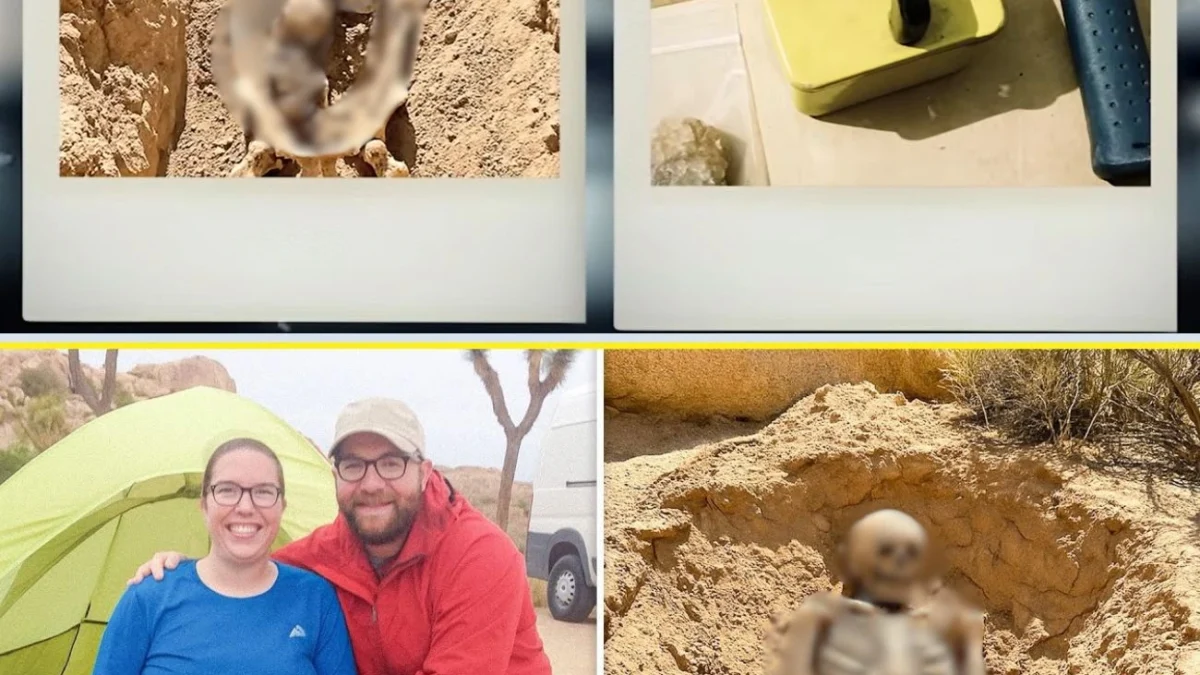
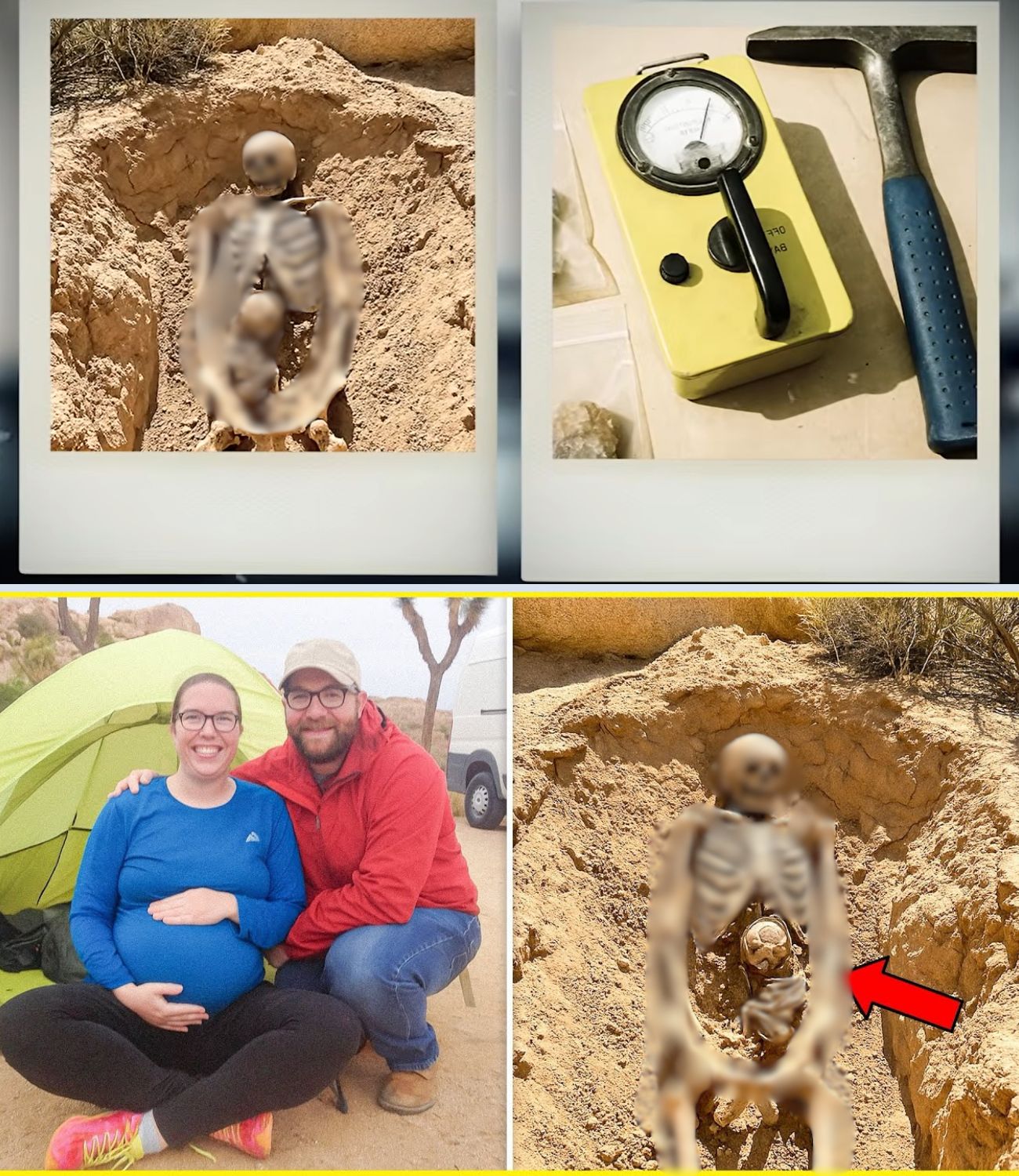
The last message from the desert arrived with the sterile ping of a satellite connecting to a device miles above the Earth. For Chloe, Jenna Dellinger’s younger sister, this modern miracle was a source of comfort. Her sister, seven months pregnant and camping in the vast, untouched expanse of Joshua Tree National Park, was still reachable. The photo that appeared on Chloe’s phone screen was pure joy. Jenna, beaming and with a rounded belly, wearing a blue sweater, sat in front of a lime-green tent. Her husband knelt behind her, his arm protectively around her. A wide, happy grin spread across his bearded face. The picture perfectly encapsulated their excitement. One last adventure before their world would change forever with the arrival of their first child.
Moments later, a text message arrived: Everything set up for the night. The desert is beautiful. I love you. Chloe replied immediately, sending heart emojis back and a reminder for Jenna to stay hydrated. Then she went into the couple’s room and pictured them under a canopy of brilliant desert stars.
That was yesterday. Now the afternoon sun cast long shadows across their living room floor, and the silence from Joshua Tree had gone from peaceful to unsettling. They had a plan, born out of Chloe’s sisterly concern. Jenna was to call the following noon, just to confirm that everything was alright. It was a concession to Chloe’s fear that her heavily pregnant sister would sleep on the floor, even with the comfortable backing of their new RV parked nearby. But noon had come and gone.
At first, Chloe tried to rationalize it. Maybe they’d overslept. Maybe they’d gone for a short hike and lost track of time. The Starling was new. Maybe it was temperamental. But when 1:00 turned into 3:00 and 3:00 into 5:00, the rationalizations began to fray, replaced by a cold, creeping anxiety. She called Jena’s phone, but it went straight to voicemail. She called Marcus, same result. The picture on her phone, once a source of joy, now looked like a ghost. Her smile seemed frozen, the desert landscape behind them vast and menacing. The RV, a symbol of security and preparedness, was just a silent white box in the background. Every detail that had been comforting yesterday was now a source of dread. Why hadn’t they packed up and left? Why hadn’t they at least gone somewhere with cell service? The questions circled, each one darker than the last.
As the sun set, the knot of fear in her stomach was too tight to ignore. Her hands trembling slightly, she looked up the emergency number for the Joshua Tree National Park Service Dispatch. She explained the situation in a calm, professional voice to the person on the other end of the line. A 37-year-old pregnant woman and her 42-year-old husband were overdue for a response. She relayed the photo, the last proof of life, and described their vehicle, a white RAM ProMaster RV. The ranger on the phone was reassuring, but the underlying procedure was clear. That was the priority now.
Two park rangers were dispatched as the last light of day faded from the sky. Their headlights cut a lonely path into the immense darkness of the park. They knew the general area the Dellingers preferred, a semi-secluded spot away from the main campgrounds. It took nearly an hour’s drive on paved roads and then graded gravel tracks before they saw it. In the harsh white beam of their vehicle’s searchlight, the scene looked exactly like the photo Chloe had sent. The white RV was parked on a level patch of ground. About 30 feet away, the lime-green tent stood taut against the gentle night breeze. It was a perfectly peaceful scene.
As the rangers approached on foot, their boots crunching on the gravelly sand, the silence was absolute. There was no flickering campfire, no murmur of conversation.
“Mr. Dellinger, Mrs. Dellinger,” one of the rangers called. His voice was swallowed by the immense space. The only answer was the whisper of the wind through the creosote bushes.
They circled the campsite. Two camping chairs were positioned facing a cold, unused fire pit. The tent entrance was zipped closed. A quick glance inside with a flashlight revealed two empty sleeping bags, neatly laid out. They tried the camper doors. Locked. Everything was in its place, tidy and expectant, as if the occupants had simply vanished into the dry desert air.
With the first light of day, the campground transformed from a place of eerie silence into an expanded crime scene. The area was cordoned off with yellow tape, a stark artificial boundary against the natural landscape of twisted trees and ancient rocks. The initial park rangers gave way to county sheriff deputies and a team of investigators. Their first priority was to gain access to the locked RV, which sat like a sealed metal tomb at the center of the unfolding drama. Rather than break a window, they called a locksmith, rooted in the hope of preserving every piece of potential evidence.
While the locksmith worked, the lead detective, a man hardened by years of investigations in these vast, empty spaces, surveyed the scene; everything was too perfect. In his experience, campsites were often chaotic when people disappeared in the wilderness—a sign of a hasty departure, a medical emergency, or an animal attack. This was different. This was sterile.
The click of the RV lock, breaking the morning stillness, was sharp. The side door slid open with a smooth metallic sigh, revealing the interior. The investigators lingered inside, the mystery deepening. The small, custom-built living space was immaculate. A bed in the back was neatly made. A half-empty bag of trail mix was clipped to a small kitchenette. A water bottle was full, and there, carefully placed side by side, lay the wallets of Marcus and Jenna Dellinger.
An investigator wearing latex gloves gently opened it. Inside were cash, credit cards, and their driver’s licenses. Next to the wallets was a second cell phone, an older model they likely kept for emergencies, and beside that, a bottle of Jena’s prenatal vitamins, a poignant symbol of the life that should have been.
The discovery of the wallets and phone was a critical turning point. People who choose to disappear, to start a new life, take their money and identification with them. People who get lost on a hike would have their wallets. And no one, absolutely no one, would leave behind their pregnant wife’s vital medication. The scene screamed that whatever had happened to the Dellingers, it hadn’t been planned. They had intended to return to that RV. The only things missing were the couple themselves, the clothes on their backs, and the primary smartphone that had sent that last happy photo.
The complete absence of any signs of a struggle inside the camper was equally perplexing. There were no overturned objects, no scratches on the floor, no trace of violence. It was as if they had been called out of the camper and simply walked away, abandoning the entire infrastructure of their lives.
While search and rescue teams began a grid search of the surrounding desert terrain, a grim and often fruitless task in the unforgiving landscape of Joshua Tree, the investigative team focused its attention on the digital and financial lives of Marcus and Jenna Dellinger. They were a popular couple with no known enemies. Jenna was a beloved elementary school teacher who took a year off for her pregnancy. Marcus was described as a self-employed business consultant—a kind, outgoing man who adored his wife. On the surface, their life was as orderly and undisturbed as the interior of their RV. But in any investigation, the surface is only the starting point.
The first crack in this perfect facade appeared two days after the investigation began. A financial investigator tasked with taking a deep dive into their accounts found something the standard credit reports had missed. While their joint bank accounts and credit cards were healthy, Marcus Dellinger had another, hidden financial life. He carried a staggering amount of personal debt stemming from high-interest loans. It was the kind of debt one incurs when conventional credit is no longer available. It was desperate money, and according to the repayment schedules, he was on the verge of default.
This discovery changed everything. Suddenly, Marcus Dellinger wasn’t just a missing person; he was a man under immense, secret pressure. He had a powerful motive to escape his life. The question hanging in the air at the detective agency was chilling: Was this motive strong enough for him to eliminate his pregnant wife?
The theory began to take shape, and it was ugly. Perhaps the babymoon was a trap. Perhaps Marcus, seeing no way out of his financial ruin, had hatched a desperate plan.
This grim hypothesis gained terrifying momentum when a new clue came in. A Be on the Lookout (BOLO) had been issued for Marcus. A gas station attendant working the night shift in a dusty town over 100 miles from the park called the tip line. He remembered a man who matched Marcus’s photo. The man had come two nights after the Dellingers had last been seen. He seemed nervous, the attendant recalled. His eyes kept scanning the parking lot. He paid for the gas with crumpled bills from his pocket, bought a prepaid disposable cell phone, and, most tellingly, a detailed paper road atlas of the American Southwest. The attendant remembered it because it was such an old-fashioned purchase. The man made eye contact, his shoulders were hunched, and he walked briskly. The attendant couldn’t be 100% certain it was Marcus Dellinger, but the resemblance was striking.
For the investigators, this was the missing piece of the puzzle. A man with secret, crippling debts, a wife who had likely just discovered them, a remote location, and now a credible sighting of the husband alone, purchasing precisely the tools a fugitive would need to get off the radar. The narrative wrote itself: An argument in the desert escalates to a deadly end. In a panic, Markus hides his wife’s body in the vast wilderness and flees, using a two-day head start to begin his new life as a wanted man.
Der schwerste Teil des Jobs war es, diese Nachricht der Familie zu überbringen. Der leitende Detektiv traf sich mit Chloe in ihrem Haus. Er präsentierte die Fakten so neutral wie möglich. Die Entdeckung der Schulden, die Sichtung an der Tankstelle. Er beobachtete, wie die Hoffnung, die sie tagelang getragen hatte, zu Unglauben und dann zu roher Wut gerann. Sie sprang auf, ihr Gesicht rot vor Zorn.
“Nein”, sagte sie, ihre Stimme zitterte. “Absolut nicht, nicht Marcus.”
Sie erzählte dem Detektiv, wie Marcus wochenlang das Babybett von Hand gebaut hatte, wie er Jenas Bauch jeden Abend vorlas, wie er vor Freude weinte, als sie den ersten Ultraschall sahen. Er war kein Mann, der vor dem Leben davonlief. Er war ein Mann, der darauf zuglief.
“Sie haben Unrecht”, beharrte sie. Tränen strömten über ihr Gesicht. “Er würde für sie sterben. Er würde ihr nicht wehtun. Er ist ein Opfer, genau wie Sie.”
In diesem Moment wurden zwei unvereinbare Geschichten geboren. Für die Polizei war Marcus Dellinger ein Flüchtiger und ihr Hauptverdächtiger. Für seine Familie war er nur eine weitere vermisste Person, und die Polizei verschwendete wertvolle Zeit damit, einem Geist nachzujagen.
Die anfängliche hektische Energie der Suche nach Marcus und Jenna Dellinger verlangsamte sich unweigerlich, kam dann zum Erliegen und löste sich schließlich wie eine Wüstenfata Morgana auf. Die Jahreszeiten wechselten über dem Joshua Tree Nationalpark. Die intensive Hitze des Sommers briet den Boden, auf dem einst das Zelt des Paares gestanden hatte, gefolgt von den knackigen, kalten Winternächten. Das gelbe Tatortband war längst verschwunden, und die Natur hatte das kleine Stück geräumten Landes zurückerobert, ohne eine Spur zu hinterlassen, dass dort eine schicksalhafte Tragödie begonnen hatte.
Beim Sheriff-Department wurde die Dellinger-Akte, einst die aktivste Ermittlung im County, von der Spitze des Stapels in eine Schublade und schließlich auf ein Regal im Archivraum verschoben. Ein dicker Manila-Ordner voller Sackgassen und unbeantworteter Fragen. Es war nun offiziell ein Cold Case.
Für die Öffentlichkeit verblasste die Geschichte aus dem Nachrichtenzyklus, ersetzt durch neuere, unmittelbarere Tragödien. Aber für Chloe bot die Zeit keine solche Erleichterung. Jeder vergangene Tag war eine frische Wunde. Sie kämpfte unermüdlich dafür, die Geschichte ihrer Schwester und ihres Schwagers am Leben zu erhalten, und belästigte den leitenden Detektiv nach Updates, die nie kamen. Sie weigerte sich, das offizielle Narrativ zu akzeptieren. Das Bild von Marcus als flüchtigem Mörder war Fiktion, eine faule Schlussfolgerung von Ermittlern, die sich nicht die Mühe machen konnten, nach einer komplexeren Wahrheit zu suchen.
She pointed to the complete lack of evidence that he was even still alive. In the following years, not a single one of his credit cards was ever used. His Social Security number never appeared on a payroll. No credible sightings materialized after the gas station attendant’s initial shaky report. He hadn’t contacted a single friend or family member. He had vanished completely. Like Jenna, a ghost who left no footprints in the world. To Chloe, this wasn’t the behavior of a cunning fugitive. It was the silence of a dead man.
The years stretched into a silent, agonizing limbo. 2012 became 2013, then 2014. The original lead detective retired. New sheriffs were elected. The Dellinger case became a local legend, a cautionary tale trotted out to tourists, but for law enforcement, it was a frustrating monument to failure.
Then, in late summer 2017, nearly six years after the couple’s disappearance, a bureaucratic decision forced the case back into the spotlight. The Dellingers’ RV, gathering dust and storage fees at the county impound lot, was slated for removal. It was one last painful piece of administrative budgeting. Chloe, as their next of kin, was notified to arrange for its removal. Before the vehicle could be released, however, department policy required one final, thorough inventory. It was a thankless task, one that fell to a young, meticulous deputy who had been a rookie when the case first surfaced.
The tow yard was a grim place, a vehicle graveyard where every car, truck, and van was a chapter in a story of misfortune or malice. The Dellinger camper was parked in a back row, its white paint now dull and streaked with dirt. The deputy unlocked it; the air inside was stale and hot. He began his methodical work, clipboard in hand, ticking off the items listed on the original evidence inventory. Sleeping bags, stove, first-aid kit—everything was there, a time capsule from that fateful last night.
He worked his way through the small living space, noting the condition of the custom-made cabinetry that Marcus, a skilled woodworker, had installed himself. Running a hand-protected hand over a row of upper cabinets, his fingers detected a subtle imperfection. One of the vertical joints between two cabinets felt off. It was almost too perfect, lacking the tiny gap it should have had. Curious, he pressed on it. It didn’t move. He tapped it with his knuckle. The sound was different from the surrounding panels. Not a solid strike, but a hollow, echoing reverberation.
His pulse quickened slightly. This wasn’t on any inventory list. This was something new. He took a multitool from his belt and carefully worked the thin flathead screwdriver tip into the hairline crack in the joint. With a gentle twist, a hidden magnetic catch released, and the panel popped open with a soft click, revealing a dark, rectangular cavity.
The deputy shone his flashlight into the hidden compartment. He wasn’t sure what to expect. A weapon, a stash of cash, a confession letter. But it was none of those things. Diagonally inside lay a single object, a gray, cylindrical, waterproof cardboard tube of the kind a serious architect or engineer might use. It was completely sealed.
He carefully removed the tube. His mind was racing. This wasn’t the work of a man in a panic. This was careful cover-up. This was premeditation.
Back at the station, the discovery sent shockwaves through the cold case unit. The tube was opened in a sterile evidence room. A seasoned detective, a veteran who remembered the initial frustration of the case, carefully slid out the contents. It wasn’t one map, but a series of them, tightly rolled up. When they were unfolded on a large table, it was clear these were no standard tourist maps. They were highly detailed, professional geological surveys. They depicted a specific, remote sector of Joshua Tree National Park, an area far removed from established trails or campsites, known for its rugged terrain and complex rock formations.
But it was the handwritten notes that truly baffled the investigators. The maps were covered with small, neat notes written in pencil. They were cryptic technical references. Pegmatite veins prominent. Check alluvium for float, followed by notations like “Monaite possible .” This was the language of a prospector.
The discovery completely shattered the established theory of the case. The man seen at a gas station buying a simple road atlas was a fake, a ghost. The real Marcus Dellinger, it seemed, was involved in something far more complex and mysterious. Had he been an illegal prospector? Was he meeting someone in the desert for some clandestine deal?
Die Ermittler verfolgten den neuen Hinweis mit erneuertem Eifer, aber er wurde schnell zu einer frustrierenden Sackgasse. Sie holten einen Geologieprofessor von einer nahegelegenen Universität, um die Karten zu untersuchen. Er bestätigte, dass die Notizen mit der Suche nach Seltenen Erden zusammenhingen, nannte sie jedoch ehrgeizigen Dilettantismus. Sie waren kenntnisreich, ließen aber die Präzision einer professionellen Vermessung vermissen. Die Detektive versuchten, den Ursprung der speziell gedruckten Karten zurückzuverfolgen, aber das Unternehmen, das sie produziert hatte, hatte das Geschäft vor Jahren verlassen, ihre Aufzeichnungen waren verloren gegangen.
Sie organisierten eine gezielte Suche nach dem auf den Karten markierten Bereich, aber es war eine weite, unerbittliche Landschaft aus Schluchten und felsigem Terrain. Ohne ein spezifischeres Ziel war die Suche aussichtslos und wurde nach drei Tagen abgebrochen.
Die Karten waren eine Bombe, die nicht explodierte. Sie boten einen verlockenden Einblick in Marcus Dellingers geheime Aktivitäten, boten aber keinen klaren Weg nach vorne. Der Hinweis war ebenso tiefgründig wie nutzlos. Er bewies nicht seine Unschuld, aber er ließ die Theorie seiner Schuld simpel und unwahrscheinlich erscheinen. Er deutete auf ein tieferes, gefährlicheres Spiel hin, bot aber keinen Hinweis auf die anderen Spieler. Die Dellinger-Akte wurde ein letztes Mal aktualisiert. Die geologischen Karten wurden fotografiert, dokumentiert und in einen Beweisbeutel versiegelt. Die Akte, die jetzt dicker und geheimnisvoller denn je war, wurde ins Regal zurückgestellt. Der Fall war kälter denn je, nun heimgesucht von dem Geist eines Hinweises, den niemand zu lösen wusste.
Elf Jahre lang behielt die Wüste ihr Geheimnis. Die Sonne bleichte die Landschaft aus, die Winde verschoben den Sand, und die Erinnerung an das vermisste Paar aus Joshua Tree verblasste in das Reich der kalten, staubigen Akten. Die Welt zog weiter.
Der Oktober 2022 war nicht anders als jeder andere Herbst im Park. Die Luft war trocken, der Himmel ein brillanter, wolkenloser Blau. Unter diesem weiten, gleichgültigen Himmel beschloss ein Mann namens Derek Vincent, ein Softwareingenieur aus Seattle, der eine kurze Flucht vor dem grauen Nieselregen des Pazifischen Nordwestens suchte, sich abseits der ausgetretenen Pfade zu wagen. Er war ein erfahrener Wanderer, der sich zur Einsamkeit der weniger bereisten Ecken des Parks hingezogen fühlte und eine gewisse Ruhe in der kargen, fremden Schönheit der Geologie fand. Er folgte keinem Weg, nur seiner eigenen Neugier, navigierte nach der Position der Sonne und der Form entfernter Gesteinsformationen.
Der Ruf der Natur kam plötzlich und unerbittlich. Er sah sich um und sah meilenweit niemanden. Er entdeckte eine große, verwitterte Ansammlung von Granitblöcken, die ein bisschen Privatsphäre bieten würde, und begann, auf sie zuzugehen.
Als er die Ecke des größten Felsblocks rundete, scannte sein Auge den Boden und er hielt inne. Etwas war fehl am Platz. In einer kleinen, flachen Vertiefung war der sandige Boden deutlich gestört. Er war locker und aufgewühlt, übersät mit der Art von Schutt, die auf jüngste tierische Aktivität hindeutete. Höchstwahrscheinlich ein Kojote, der nach einem Nagetier gräbt. Es war ein gewohnter Anblick, aber etwas an diesem speziellen Fleck erregte seine Aufmerksamkeit. In der Mitte der gestörten Erde sah er einen weißen Schimmer, nicht das helle Weiß von gebleichtem Gestein, sondern eine stumpfe, cremeweiße, fast gelbliche Farbe.
Sein erster Gedanke war, dass es ein Stück Müll oder vielleicht ein Tierknochen war. Er war für einen Moment genervt bei dem Gedanken, dass unvorsichtige Besucher ihren Müll zurückließen, selbst hier draußen. Angetrieben von einer Mischung aus Neugier und dem Instinkt eines Wanderers, keine Spuren zu hinterlassen, bewegte er sich näher.
Das weiße Objekt war teilweise vergraben, gebogen auf eine Weise, die seltsam vertraut schien. Er schubste es mit der Spitze seines Wanderschuhs an und erwartete, dass es ein schäbiges Stück Plastik oder ein sonnengebackener Dickhornschafknochen sein würde. Nicht nur, dass sich das Objekt bewegte, der Sand um es herum bröckelte weg und gab mehr von seiner Form preis, und in diesem Augenblick neigte sich die Welt für Derek Vincent auf ihrer Achse.
Es war kein einzelner Knochen; es war eine Reihe von ihnen, die in einem verstörend erkennbaren Muster verschmolzen waren. Die Kurve, die er gesehen hatte, war die elegante, geschwungene Form einer menschlichen Rippe. Er blickte auf einen menschlichen Brustkorb.
Er stolperte zurück. Ein Keuchen kalter Luft blieb ihm in der Kehle stecken. Sein Herz hämmerte gegen seine Rippen, ein panischer Trommelschlag in der plötzlichen, tiefen Stille der Wüste. Er schaute wieder hin. Sein Verstand weigerte sich zu verarbeiten, was seine Augen sahen. Es war unbestreitbar real. Er konnte die deutlichen parallelen Linien einzelner Rippen sehen, die aus dem Sand ragten.
Er nestelte nach seinem Telefon. Seine Finger tasteten ungeschickt mit einem plötzlichen Adrenalinstoß. Er tippte auf den Bildschirm und wählte die 110 beziehungsweise den Notruf. Die Stimme des Dispatchers war eine ruhige, erdende Präsenz in seiner wirbelnden Panik.
“Notruf, was ist Ihr Notfall?”
“Ich habe etwas gefunden”, stammelte Derek, seine Stimme dünn und schimmernd. “Eine Leiche, glaube ich. Knochen. Menschliche Knochen.”
Der Ton des Dispatchers blieb ruhig, professionell. “Okay, Sir, können Sie mir Ihren Standort nennen?”
Derek looked around frantically. The familiar landscape now felt alien and threatening. He tried to describe his position, referring to the sun, the shape of the rock formation, the direction he had come from the nearest gravel road. He could hear the clicking of a keyboard on the other end of the line as the dispatcher tried to establish his coordinates. The process felt like an eternity. He was told to stay where he was, not to touch anything, and that units were on their way.
After he hung up, he collapsed on a rock about 50 feet away from the spot, his back to her, unable to look again. He simply stared out into the empty desert, the image of the ribcage seared into his mind.
Within an hour, the silence was broken by the distant sound of approaching vehicles. Two park rangers arrived first, their faces serious and professional as Derek described his discovery. They confirmed that the remains were human and immediately established a wide perimeter, their yellow tape a stark indication that this patch of wilderness was now a crime scene.
The first rangers were soon joined by sheriff’s deputies and, most importantly, the county’s forensic investigation unit. The lead forensic archaeologist, a woman with sun-weathered skin and eyes that had seen more than most, directed the operation with quiet authority. This wasn’t a recovery; it was an excavation.
The process was meticulous, almost reverential. Her team set up a grid system over the shallow grave. They didn’t use shovels. They used trowels, toothpicks, and soft-bristled brushes. With the fine precision of surgeons, they began to remove the layers of sand and earth, grain by grain.
As the afternoon progressed, the full extent of the burial was revealed. The skeleton was remarkably complete, preserved by the dry desert air. It was positioned in a seated, almost fetal position, with the knees drawn up to the ribcage. The skull was intact, the empty eye sockets staring out at a world that had moved on without her for over a decade. It was the skeleton of an adult woman.
As the team carefully swept away the last of the sand from the abdominal and pelvic area, the lead archaeologist suddenly stopped. She gestured to her colleague to look there.
Nestled in the protective cradle of the female skeleton’s pelvic bones lay another, impossibly small and fragile skeleton. The tiny, delicate bones of a skull, a miniature ribcage, the thread-like bones of limbs. It was the perfectly formed skeleton of a fetus, lying exactly where it would have been in the womb.
A silence fell over the entire team. Even the hardened deputies looked away. This wasn’t just one victim; it was two. After years of silence, buried beneath layers of sand and secrets, Jenna Dellinger and her unborn child had finally been found.
The discovery of Jenna Dellinger’s remains sent a seismic shockwave through the county sheriff’s department. The Dellinger case, a cold case so dormant it was practically petrified, was abruptly reactivated. This was no longer a missing person case overshadowed by the ambiguous possibility of a fugitive husband. This was a murder.
The location of the grave, in a remote, almost inaccessible part of the park, immediately discredited the long-held theory that Marcus had killed his wife in a spontaneous fit of rage near their campsite and fled. This burial was deliberate, calculated, and required intimate knowledge of the park’s hidden corners. The escape theory, which had guided the investigation for over a decade, evaporated under the harsh desert sun. The entire case had been reset to zero.
A new task force was assembled, mixing veteran detectives who remembered the original case with younger officers who brought fresh perspectives and familiarity with new forensic technologies. Their first and most critical task was a complete review of the mountain of old evidence. A detective named Miles Corbin, a man nearing retirement who had been a junior officer in 2011, was given the arduous task of rereading every report, every interview transcript, every dead-end lead in the original file. He spent two days immersed in the history of the case, the faded ink and typewritten pages, a testament to a decade of frustration.
On the third day, he came across the 2017 supplementary report, the discovery of the hidden compartment in the camper van. He read the description of the waterproof tube and the geological maps found inside. He called up the digitized images of the maps, their surfaces covered with Marcus Dellinger’s cryptic handwritten notes. A jolt ran through him.
He compared the GPS coordinates of the newly discovered burial site with the annotations on the maps. It was a perfect match. The shallow pit where Jenna and her baby had been found lay precisely within a large hand-drawn circle on one of Marcus’s surveys.
Der vergessene Hinweis, die rätselhafte Entdeckung, die sechs Jahre zuvor zu nichts geführt hatte, war plötzlich der Stein von Rosette der gesamten Untersuchung. Die Karten waren nicht nur eine zufällige Neugier; sie waren eine direkte Verbindung zwischen dem Opfer und dem Ort ihrer Bestattung. Marcus Dellinger war nicht nur ein einfacher Tourist gewesen. Er war aus einem Grund zu diesem spezifischen, trostlosen Ort hingezogen worden. Die Frage war nicht länger, ob er dort war, sondern warum.
Während Corbin die Punkte der Vergangenheit verband, wurden die Überreste von Jenna und ihrem Kind in der Rechtsmedizin des Countys einer akribischen Untersuchung unterzogen. Der Anthropologe, der dem Fall zugewiesen war, stand vor einer gewaltigen Herausforderung. Jahre in der Wüste hatten jedes Weichgewebe ausgelöscht und nur Knochen zurückgelassen. Die Bestimmung einer genauen Todesursache würde schwierig, wenn nicht unmöglich sein.
Eine visuelle Inspektion ergab keine offensichtlichen Anzeichen von Trauma, keine Schusslöcher im Schädel, keine Messermarken an den Rippen, keine Brüche, die auf stumpfe Gewalt hindeuteten. Das Skelett war ein stummer Zeuge, seine Geheimnisse von der Zeit verschlossen.
Unwillig aufzugeben, beschloss der Anthropologe, eine fortgeschrittenere Technik zu verwenden: Rasterelektronenmikroskopie. Der Prozess beinhaltete die Entnahme mikroskopischer Proben von der Oberfläche der Knochen, um nach Spurenbewesen zu suchen, die von einer Waffe oder der Umgebung des Angriffs selbst hinterlassen worden sein könnten. Sie konzentrierte sich auf die Halswirbel, die Knochen des Halses, da diese in Fällen von Strangulation oder anderen Formen des Erstickens oft markiert sind.
Unter der immensen Vergrößerung des Elektronenmikroskops fand sie etwas. Es war keine Markierung von einer Ligatur, sondern etwas noch Seltsameres. Eingebettet in die poröse mikroskopische Matrix der Knochenoberfläche waren winzige, fast unendliche Partikel eines feinen granulären Staubs. Die Partikel waren metallisch und ungewöhnlich dicht. Sie waren keine natürlich vorkommende Komponente des Wüstensandes. Dies war eine Fremdsubstanz, die zum oder um den Zeitpunkt des Todes in den Knochen eingebracht worden war.
Die Entdeckung war höchst ungewöhnlich. Der Anthropologe sammelte sorgfältig eine Probe der Spurenpartikel und schickte sie an ein spezialisiertes forensisches Labor mit Fachwissen in Materialwissenschaft und Geologie. Die Frage war einfach: Was war dieser mysteriöse Staub und woher kam er?
Die Untersuchung hatte nun zwei mächtige konvergierende Untersuchungslinien. Die erste war die Karte, die bewies, dass der Bestattungsort nicht durch Zufall gewählt worden war. Es war ein Ziel. Diese Tatsache verschob die Untersuchung komplett. Detektive suchten nicht länger nach einem Mann, der vor seinem Leben davongelaufen war. Sie suchten nach jemandem, der mit diesem spezifischen Stück Land verbunden war. Jemandem, der wusste, was Marcus Dellinger dort draußen tat.
Die zweite Untersuchungslinie war der mikroskopische Staub, ein physischer Hinweis, der das Potenzial hatte, einen Verdächtigen direkt mit dem Körper des Opfers zu verknüpfen. Die Task Force änderten ihre Meinung. Sie legten die alten Theorien über eheliche Streitigkeiten und finanzielle Verzweiflung beiseite. Der Schlüssel zu diesem Mord, glaubten sie nun, lag nicht im persönlichen Leben der Dellingers, sondern in Marcus’ geheimem Berufsleben.
Sie begannen den mühsamen Prozess der Rekonstruktion seiner Geschäftsbeziehungen aus über einem Jahrzehnt zuvor, indem sie auf alte Firmenunterlagen, Steuerdokumente und Telefonprotokolle zurückgriffen. Sie jagten nicht länger Marcus Dellinger, sie jagten seine Geschäftspartner. Sie suchten nach dem anderen Spieler in dem gefährlichen Spiel, das ihn und seine schwangere Frau an diesen trostlosen Ort in der Wüste geführt hatte. Der Geist von Marcus, dem Flüchtenden, wurde schließlich zu Ruge gelegt, ersetzt durch das Bild von Marcus, dem Opfer, einem Mann, der über ein Geheimnis gestolpert war, das es wert war, dafür zu töten.
Die neue Richtung der Untersuchung fühlte sich an wie das Ausgraben einer einzigartigen archäologischen Stadt. Aufzeichnungen aus über einem Jahrzehnt waren archiviert worden, Unternehmen hatten sich aufgelöst, und Menschen waren weitergezogen. Die Detektive begannen, die lähmenden Schulden, die Marcus Dellinger 2011 zu einem so attraktiven Verdächtigen gemacht hatten, neu zu untersuchen. Diesmal sahen sie sich nicht nur die Zahlen an, sie sahen sich die Namen an. Sie verfolgten den Ursprung der hochverzinslichen Kredite und entdeckten, dass sie nicht von zwielichtigen Kreditgebern stammten, sondern Teil einer komplexen und bitteren Unternehmensliquidation waren.
Das Geld, das Marcus schuldete, hing direkt mit der Auflösung seiner Beratungspartnerschaft zusammen. Sein Partner, ein Mann namens Leland Croft, war derjenige gewesen, der die Zahlung der Schulden gefordert und eine Reihe aggressiver rechtlicher Schritte eingeleitet hatte, nur Wochen bevor die Dellingers verschwanden.
Leland Croft. Der Name war in der Originalakte aufgetaucht, aber nur peripher. Er wurde 2011 kurz interviewt und drückte Schock und Trauer über das Verschwunden seiner ehemaligen Partnerin aus. Er hatte bestätigt, dass ihre Geschäftsbeziehung geendet hatte, sie aber als eine einvernehmliche, wenn auch etwas angespannte Trennung charakterisiert. Zu der Zeit, als die Fluchttheorie in vollem Gange war, hatte es keinen Grund gegeben, ihn genauer unter die Lupe zu nehmen. Jetzt war er das Zentrum von allem.
Investigators began to piece together a profile of Leland Croft, and as they dug deeper, the pieces fell into place with alarming clarity. They used his old credit card statements and public records. While his professional life lay in management consulting, his personal passion, bordering on obsession, was geology. He had subscriptions to obscure mining journals, receipts for tumbled rocks and Geiger counters, and, most revealingly, records of purchasing specialized geological surveying software. Leland Croft wasn’t just an amateur; he was a dedicated, knowledgeable prospector.
The cryptic notes on Marcus’s maps suddenly made perfect sense. They weren’t Marcus’s notes; they were probably Lelan’s, or at least written in his language. A new, frightening theory began to emerge. One that recontextualized every element of the case.
The task force now believed that the consulting business was a front. Or at least, Leland Croft was using his legitimate operations as cover for his true passion: illegally mining for valuable rare earth elements within the protected boundaries of Joshua Tree National Park.
The partnership didn’t end because of simple business disagreements. It had changed because Marcus Dellinger, an honest man, had discovered what Leland was doing. The debts weren’t a sign of Marcus’s failure. They were a weapon Leland used against him in their dispute.
The babymoon camping trip was now seen in a frightening new light. It wasn’t a final romantic getaway. It was a confrontation. Marcus, likely armed with copies of the maps and other evidence he had gathered, had gone to Joshua Tree not to relax, but to stop Lelan’s operation. Perhaps he intended to gather definitive, irrefutable evidence to hand over to the authorities. Or perhaps even more dangerously, he had arranged to meet Lelan directly, to confront him one last time at the very location where the illegal activity was taking place. He had brought Jenna along, most likely under the guise of a babymoon, without ever revealing the true, dangerous nature of their trip. The RV wasn’t just for comfort. It was a mobile base of operations for a man about to assume the role of whistleblower for a clandestine enterprise worth a considerable sum of money.
Leland Croft was no longer a person of interest. He was the prime suspect. The motive was clear and powerful: to silence Marcus in order to protect his lucrative illegal operation.
Investigators re-examined the original sighting at the gas station, which had misled the investigation for 11 years. They used grainy surveillance footage from 2011. The quality was poor, but the man at the counter bore a distinct, fleeting resemblance to Leland Croft. Similar overall build. Similar hairline.
It was now disgustingly clear what had likely happened. Leland hadn’t just killed the Dellingers; he had ingeniously and cynically orchestrated the aftermath. He had murdered his partner and the only witness. Then he drove miles away to a random gas station, where he, a man who bore a striking resemblance to Marcus, deliberately purchased the items a fugitive would need. He had created a false trail, a perfect piece of deception that had successfully deflected suspicion from him for over a decade. He had not only committed the perfect crime, but he had also blamed a dead man for it.
The task force now had a solid, coherent theory, a compelling motive, and strong circumstantial evidence linking Leland Croft to the victim’s secret activities and the crime scene, but they knew it wasn’t enough. A good defense attorney would dismantle it in court, dismissing it as speculation and coincidence. They had a story, but they needed proof. They needed something that would physically connect Leland Croft to the murders of Jenna and Marcus Dellinger. The entire weight of the case now rested on the forensic lab’s findings, on the identity of the mysterious microscopic dust found on Jenna’s bones.
Leland Croft was found in a small, sun-drenched town in central Oregon, a world away from the harsh deserts of Southern California. He was the owner and sole proprietor of Croft’s Hardware and Feed, a neat, well-organized store that smelled of sawdust, fertilizer, and honest work.
When Detective Corbin and his younger partner entered, Leland was advising a customer on the best type of fungicide for rose bushes. He was 54 now, heavier around the middle, his hair gray at the temples, but he had the same calm, confident demeanor they remembered from his original statement.
He looked up and offered a polite, professional smile that wavered slightly when he saw her badges. He agreed to accompany her to the local police station to settle some old issues, with a sigh of weary cooperation, as if this were a tedious but necessary piece of bureaucratic paperwork from a bygone era.
In dem sterilen Verhörraum mit grauen Wänden war Lelands Haltung eine Festung. Er lehnte sich in seinem Stuhl zurück, seine Hände ruhten ruhig auf dem Metalltisch, und projizierten eine Aura geduldiger Hilfsbereitschaft. Er hörte zu, wie Corbin begann, ihn durch die Ereignisse von 2011 zurückzuführen. Lelands Antworten waren glatt, konsistent und unverändert von seiner ursprünglichen Geschichte.
Ja, die Geschäftsabwicklung mit Marcus war schwierig gewesen. Ja, Geld war beteiligt. “Partnerschaften enden”, sagte er mit einem abweisenden Achselzucken. “Es ist wie eine Scheidung. Es ist nie angenehm, aber es ist nur Geschäft. Marcus war ein guter Mann, ein bisschen ein Träumer. Ich war am Boden zerstört, als ich hörte, was passiert war.”
Corbin drängte weiter und präsentierte das erste Stück neuer Beweise. Er schob einen großen Farbausdruck einer der geologischen Karten über den Tisch.
“Wir haben sie gefunden, Leland, versteckt in einem geheimen Fach in Marcus’ Wohnmobil. Das sieht aus wie Karten eines Schürfers. Vielleicht Ihre Notizen?”
Leland beugte sich vor und kniff die Augen mit milder Neugier auf die Karte zu. Er kicherte. Ein trockener, abweisender Ton.
“Meine Notizen? Nein, Marcus hat sich in alle Arten von seltsamen Hobbys verstrickt. Er hatte eine kurze Besessenheit mit Goldwaschen für ein Jahr, dann war es Meteoritenjagd. Das war wahrscheinlich eine andere seiner Phasen. Er dachte, er würde in der Wüste reich werden. Ich habe ihm gesagt, dass er seine Zeit verschwendet.”
Er lenkte die Frage geschickt ab und verwandelte den Beweis einer geheimen Operation in einen Charakterfehler des Opfers. Er porträtierte Marcus als naiven Träumer und sich selbst als den geerdeten, praktischen Partner. Die Festung seiner Leugnung schien undurchdringlich.
Corbin drängte weiter und beschrieb den bitteren Finanzstreit und die aggressiven Anwaltsbriefe, die Lelands Anwalt kurz vor seinem Verschwinden geschickt hatte. Leland zuckte nicht zusammen.
“Wie ich sagte, es war eine geschäftliche Scheidung. Anwälte werden involviert, Dinge werden hässlich. Es ist bedauerlich, aber es ist Standardprozedur. Das hat nichts damit zu tun, dass er und Jenna vermisst werden.”
Leland nahm jedes Stück von Indizien auf, das von den Detektiven präsentiert wurde, und zerlegte es ruhig mit einer plausiblen, rationalen Erklärung. Für einen Moment trat ein kleiner Funke des Zweifels in Corbins Geist. War es möglich, dass sie sich irrten, dass all dies nur eine Reihe unglaublicher Zufälle war?
Dann gab es ein Klopfen an der Tür. Ein uniformierter Beamter trat ein und reichte Detektiv Corbin einen versiegelten Beweisumschlag. Es war der Bericht des Materialanalyse-Labors. Das war der Moment.
Corbin öffnete den Umschlag. Seine Augen überflogen die technische Sprache des Berichts. Er schaute auf, sein Blick traf Lelands. Die Luft im Raum wurde schwer. Als der Gerichtsmediziner Jenas Überreste untersuchte, begann Corbin, seine Stimme tief und stehend:
“We found something unusual: a fine metallic dust embedded in the bones of her neck.”
He paused, leaving the statement hanging in the air.
“We sent a sample to the lab for analysis. The substance is called torbernite, Leland. It’s a radioactive rare-earth mineral. It’s not something you just find everywhere. In fact, it only occurs in commercially usable concentrations in a few places in North America.”
Corbin leaned forward, his voice dropping to almost a whisper.
“One of these places just happens to be the very isolated piece of desert where you were digging and where we found Jena’s body.”
A crack appeared for the first time in Leland Croft’s fortress. It was barely perceptible. A slight tension in the muscles of his jaw, a flicker of something cold and dark in his eyes. He tried to speak, but his voice was a dry croak.
“Contamination from the soil. It’s a coincidence.”
His words were weak and lacked the confident authority he had projected moments before. Science was a wall he couldn’t talk past.
Before Leland could recover, Corbin’s partner slid a second envelope across the table. He opened it to reveal two photographs side by side.
“That’s what really changes things, Leland,” the younger detective said, his tone sharp. “We couldn’t see that in 2011; the technology wasn’t there, but we re-analyzed the original crime scene photos from inside the RV.”
He pointed to the first image, a digitally enhanced, high-contrast picture of a faint, dusty footprint on the inside steps of the camper van. It was now shockingly clear. He then pointed to the second photo.
“This is the tread pattern of a pair of Redback Geological Boots, a specialist brand. Your preferred brand according to your credit card statements from back then. They fit perfectly.”
Leland stared at the photographs. The torbernite had placed him at the burial site. The boot print had placed him in the camper van. The two pieces of evidence were like the jaws of a vise, closing in on him from opposite sides. There was no more room for denial. There was nowhere left to escape.
The collapse was total. The calm, confident hardware store owner dissolved, replaced by a man drowning in a memory he had kept underwater for years. His shoulders slumped. The color drained from his face. He stared at his hands on the table as if they belonged to a stranger. A long, trembling breath escaped his lips, a sound of deep and utter defeat.
“He shouldn’t have brought them,” he whispered miserably.
The words tumbled out, thick with a decade of silence. He told the story in a broken, disjointed stream. The meeting had been his idea, a final, furious confrontation at his mining site. He had been enraged that Marcus threatened to expose him. The argument escalated. Marcus was quite stubborn, unstoppable. In a fit of pure rage, Leland had struck him with a heavy rock hammer he kept with his tools. Marcus fell to the ground and never got up again.
And then he turned around, and Jenna was standing there by the camper van. Her face was a mask of pure terror. She had seen everything.
“I had no choice,” he seemed to be saying. The pathetic, classic excuse of a murderer.
He described in cold detail how he had killed her, buried her in a pit he had already dug, and then returned for Marcus’s body and thrown it into the shaft of a nearby abandoned mine he knew. The drive to the gas station was a final act of cynical genius, a way to throw the police off his trail forever by blaming the man he had just murdered.
The interrogation room was silent, except for the sound of Leland Croft’s ragged, sobbing breaths. The fortress had crumbled to dust. After eleven years of agonizing mystery, the case had finally been brutally closed.
Leland Croft’s confession did not end the investigation. It marked the beginning of his final dark chapter. While Croft was being processed and held without bail, a massive search operation was launched, its focus now narrowed from the entirety of Joshua Tree National Park to a few square miles of barren land—the very area Leland had described in his confession.
The mission was no longer a search for a missing person, but a rescue operation. They had to find Marcus Dellinger. The terrain was Turkish, littered with the open mouths of abandoned mine shafts from a long-forgotten mining boom. These shafts were vertical graves, several hundred feet deep, their wooden supports rotten and their edges unstable. Sending personnel down was deemed too dangerous. Instead, the task force brought in a specialized team from the robotics lab of a state university. Their tools were a fleet of advanced remotely piloted drones, small enough to navigate the narrow shafts, equipped with high-energy lights and high-resolution cameras.
The operation unfolded over two days under the relentless desert sun. The team worked methodically, moving from one abandoned mine to the next. The drone operators sat in the cool, air-conditioned darkness of a command train, their faces illuminated by the green glow of their monitors as they watched the live feed while the drones descended into the earth. The images returned were claustrophobic and tense, showing roughly hewn rock walls, dangling roots, and occasionally the desiccated carcass of an animal that had fallen in. Shaft after shaft revealed only darkness and debris.
On the afternoon of the second day, a drone was lowered into a particularly deep and narrow shaft, which Leland had marked on a map from memory. It descended over 50 feet, then 100. The darkness was broken only by the drone’s powerful LED lights.
At approximately 150 feet, the drone’s camera tilted downward, and the operator froze. At the very bottom of the shaft, entangled in a tangle of discarded wood and falling rocks, was a form that was unmistakably human. The operator zoomed in, the camera lens adjusting to the darkness. The image sharpened and dissolved into the chillingly clear sight of skeletal remains, clad in tattered remnants of clothing.
A quiet, somber confirmation was broadcast over the radio: “We have found him.”
A specialized rescue team, using a complex system of ropes and straps, was sent into the shaft. The arduous process took several hours. Finally, as the sun began to set, casting long purple shadows across the landscape, the remains of Marcus Dellinger were brought to the surface for the first time in eleven years. Dental records provided a swift and reliable identification.
With the recovery of both victims, the story of their missing man was finally complete. Leland Croft, facing an ironclad case built on his own confession and irrefutable forensic evidence, was convicted of two counts of first-degree murder. He was sentenced to life imprisonment without the possibility of parole.
For Chloe and the rest of her family, the verdict brought not joy, but a deep and painful sense of closure. The terrible weight of ignorance they had carried for over a decade had finally been lifted.
You Might Also Enjoy

Mom Installed a Camera To Discover Why Babysitters Keep Quitting But What She Broke Her Heart

She Gave a Hungry Little Girl a Free Birthday Cake — The Next Morning, a Black Rolls-Royce Arrived