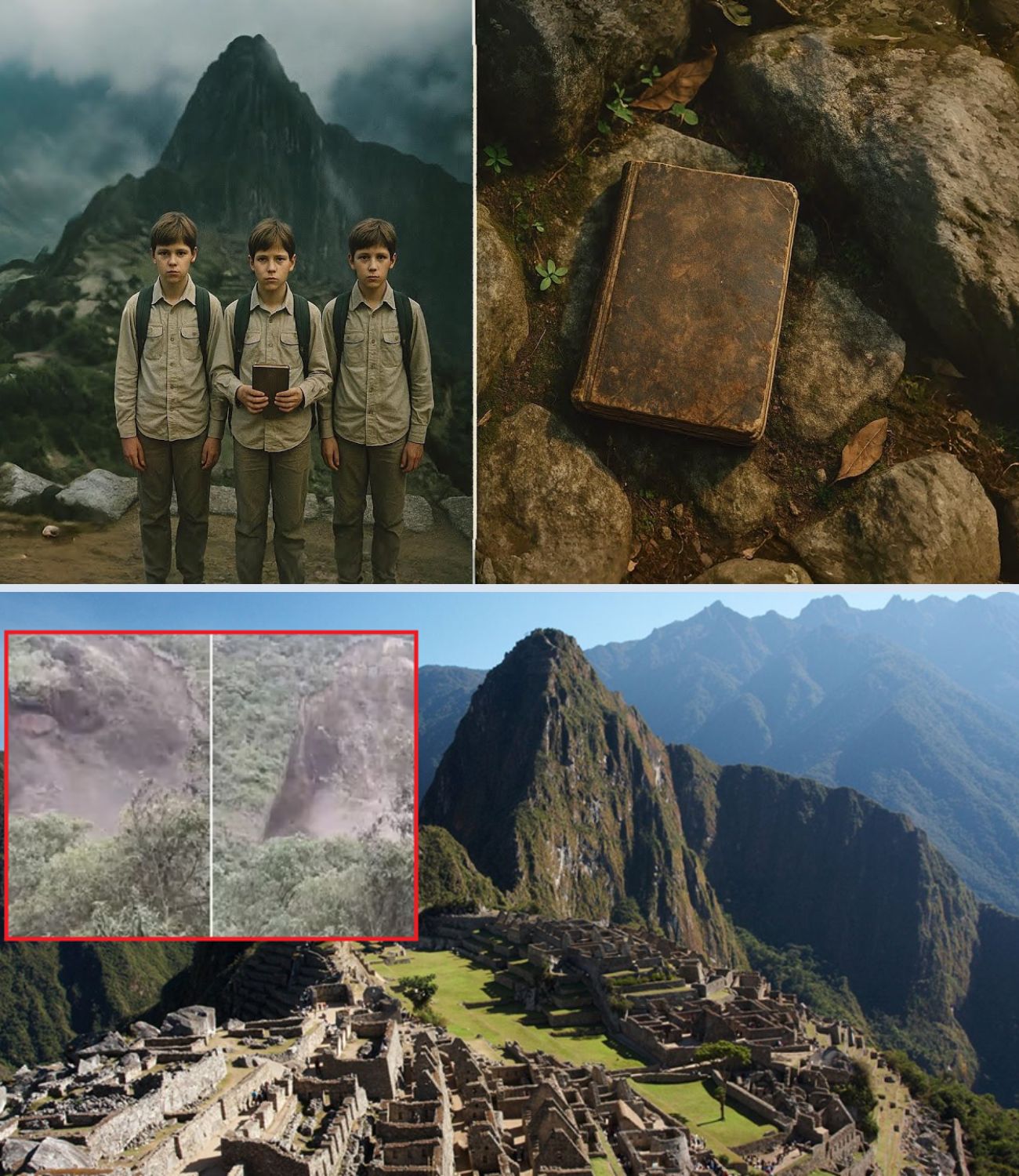
In 2001, triplets disappeared in Machu Picchu – 18 years later, a tourist finds their diary.
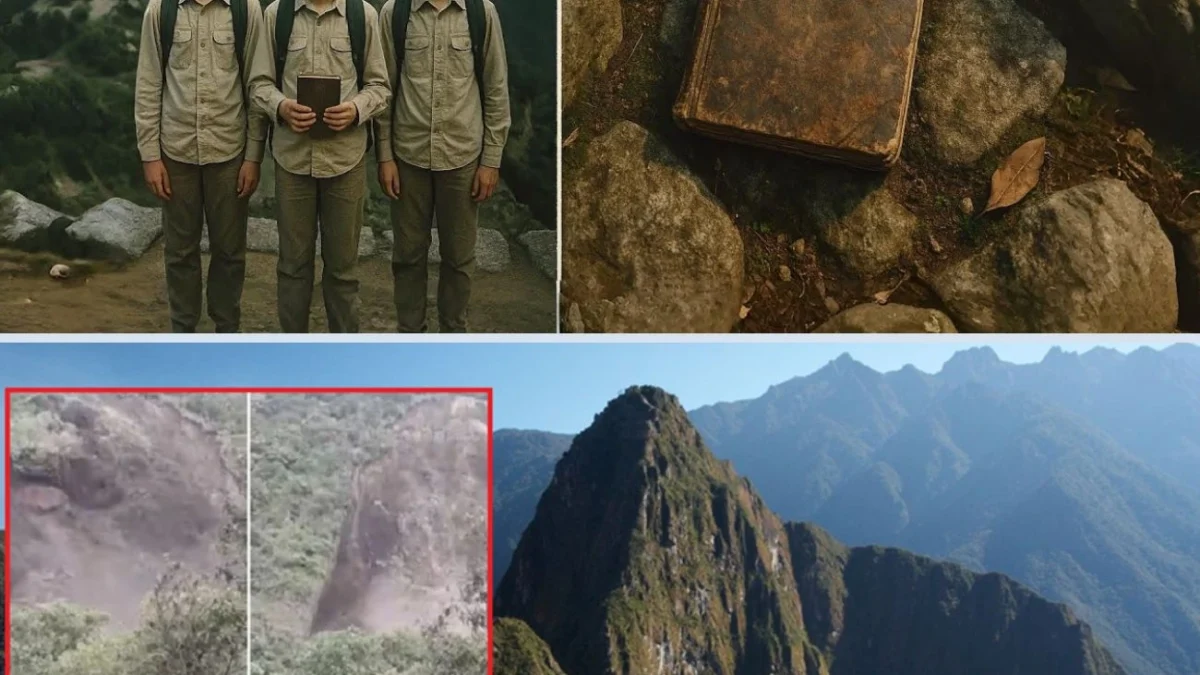
Morning mist shrouded the ancient stones of Machu Picchu as Diego Mendoza, a 34-year-old Argentinian photographer, detached himself from his tour group to capture the sunrise from an unusual perspective. The sky still shimmered with violet, and the silence was broken only occasionally by the song of an Andean bird. Diego had dreamed of visiting this archaeological site since childhood, fascinated by the stories he had heard about the Peruvian Inca civilization. As he climbed the narrow stone steps, slippery with morning dew, his foot struck something that made a metallic clanging sound.
He bent down, carefully pushed aside the vegetation, and discovered a small, rusty metal box, partially buried among the stones. The box was secured with a small padlock, which had been damaged by the elements.
"O que isto está a fazer aqui?"he muttered, looking around to make sure no guards were watching him handle a possibly historical artifact.
Somewhat hesitantly, but driven by curiosity, Diego took out the box and stowed it in his backpack. His guide, Javier Hamán, a man from Cusco with a life-worn face and a piercing gaze, called to him from afar, inviting him to join the group.
"Já vou!"“— replied Diego, adjusting his backpack on his shoulders, feeling the extra weight like a mystery.”
That night, in the silence of his room at a hostel by the hot springs in the small town at the foot of Machu Picchu, Diego finally succumbed to temptation. The rusty padlock gave way slightly under the pressure of a pen. Inside the box, he found a diary with a worn leather cover, protected by a plastic bag that had kept the pages from moisture. The first page contained a handwritten inscription by the Suárez siblings: Mateo, Marina, and Miguel.
"Se encontrar este diário, por favor contacte-nos ou aos nossos pais, Eduardo e Carmen Suárez, em Lima."
Beneath the inscription was a Lima phone number and the date: July 23, 2001. Diego felt a shiver run down his spine. He vaguely remembered reading about the disappearance of three brothers in Machu Picchu many years ago. Could they be them? With trembling hands, he began to read.
The first entries described the excitement of three 16-year-old teenagers—triplets, as Diego understood them—who were visiting Machu Picchu with their parents during the school holidays. The pages were filled with detailed drawings of the ruins, observations about the tourists, and comments about their guide: a man named Romulus who, as Mateo had written, knew all the secrets of the Incas. But their arrival on July 23rd abruptly woke Diego in bed.
"Hoje decidimos explorar sozinhos enquanto a mãe e o pai descansavam no hotel. Rómulo falou-nos de um trilho pouco conhecido que conduz a terraços agrícolas onde os incas cultivavam plantas medicinais. Ele diz que poucos turistas vão lá. Partiremos ao amanhecer, antes que os nossos pais acordem. Será a nossa pequena aventura secreta."
That was the last entry.
Diego immediately searched the internet for information about the case. Headlines from 2001 appeared on his screen: “Lima triplets disappear in Machu Picchu,” “Large-scale search at historical site yields no results,” “Desperate parents return to Lima without their children.” According to the articles, the Suárez triplets had left the hotel early without informing their parents and never returned. The authorities conducted an extensive search for weeks, but the case was eventually forgotten. Some theories suggested they had fallen victim to human traffickers; others speculated about an accident in a dangerous area of the region.
Diego spent the entire night reading old articles. He discovered that the guide mentioned in the diary, Rômulo Quispe, had been questioned several times but had always denied suggesting such an excursion to the teenagers. Lacking concrete evidence, he was never formally charged. The next morning, with dark circles under his eyes and the weight of an 18-year-old mystery on his shoulders, Diego made a decision: He would call the number listed in the diary, even though it was probably no longer in service; and if that proved fruitless, he would search for the triplets’ parents in Lima. He had three days left in Peru before he had to return to Argentina. What Diego didn’t realize was that this discovery would not only solve the mystery of the three missing teenagers but also bring to light secrets that had long lain hidden in the shadows of the sacred Inca mountains.
Lima seemed gray and damp, shrouded in the characteristic winter drizzle that locals called the “bridal coat.” Diego, his diary carefully tucked away in his backpack, walked through the streets of the Miraflores district, following the taxi driver’s directions. As he had suspected, the newspaper’s phone number was no longer valid. But after several calls and with the help of a local journalist who had reported on the case years earlier, Diego managed to track down Eduardo and Carmen Suárez’s address in Lima.
He stopped in front of a two-story house with an unplastered brick facade and a small front garden. A woman in her sixties was watering geraniums. Her gray hair was pulled back in a bun, and her movements were slow, as if every gesture required enormous effort.
"Dona Carmen?"— asked Diego as he approached the gate.
The woman looked up. Her deep brown eyes seemed to have cried enough for a lifetime.
"Sim, sou eu. Como posso ajudá-lo?"
Diego took a deep breath.
"O meu nome é Diego Mendoza. Estive em Machu Picchu há poucos dias e encontrei algo que acredito pertencer-lhe."
Carmen’s hands trembled as she took the diary. Reverently, she opened it, like someone discovering a relic. Her eyes slid over the first page, and a suppressed sob escaped her. Eduardo called out in a broken voice:
"Eduardo, vem rápido!"
A man of robust build, but stooped with the weight of years, appeared in the doorway. His expression initially showed confusion, which quickly turned to disbelief when he saw what his wife was holding.
"Por favor, entrem"— said Eduardo in a hoarse voice that betrayed suppressed feelings.
In the Suárez family’s living room, surrounded by photos of three smiling teenagers who looked so similar yet were so different, Diego told them about his discovery, showed them the research he had done, and confessed his interest in finding out what had really happened.
"Já passaram 18 anos"— said Carmen, running her fingers over the pages of the diary. —"18 anos sem respostas. A polícia acabou por fechar o caso. Disseram que provavelmente tinham sofrido um acidente e caído numa ravina onde não podiam ser encontrados."
"Mas nunca acreditámos nessa versão"— interrupted Eduardo in a hardened voice. —"Os nossos filhos eram inteligentes e cautelosos; não corriam riscos estúpidos. Além disso, se tivesse sido um acidente, pelo menos teriam encontrado alguma coisa."
Carmen wiped away a tear.
"Continuámos a procurar sozinhos durante anos. Contratámos investigadores privados, até oferecemos recompensas, mas nada. Era como se a terra os tivesse engolido."
"E aquele Rómulo Quispe?"— Diego added, recalling his investigation. —"O que aconteceu-lhe?"
Eduardo’s eyes gleamed with an old, but not extinguished, hatred.
"Sabemos que ele teve algo a ver com isso. Foi o último a ver os nossos filhos, mas sempre os negou e sugeriu aquele percurso. Não havia provas. Eventualmente, ele desapareceu. Alguns dizem que se mudou para a Bolívia ou Equador, mas há poucos anos..."— Carmen continued —"vimos o seu nome num jornal local em Cusco. Tinha sido preso por tráfico de artefactos arqueológicos. Aparentemente, saqueava sítios incas há anos e vendia as peças no mercado negro."
Diego felt that the puzzle pieces were slowly coming together.
"Acha que ele usou os filhos para algum tipo de operação de contrabando?"
"É uma possibilidade que sempre considerámos"— Eduardo replied bitterly. —"Talvez lhes tenha oferecido mostrar algum tesouro escondido, algo exclusivo que não veriam no circuito turístico normal."
Carmen stood up and returned with a box containing newspaper clippings, police reports, and photographs. For years, they had collected all the information that might shed light on their children’s fate. Among the documents, Diego found a detailed map of Machu Picchu with search areas marked. There was also a list of those interviewed, including several tour guides and reserve staff.
"Há um nome que aparece várias vezes"— Diego showed —"Javier Hamán."
"Eduardo Asintio"— Carmen was finished. —"Era um jovem guarda florestal na altura. Foi dos poucos que continuou a ajudar-nos mesmo depois de a busca oficial ter terminado. De vez em quando, ligava-nos para dizer que tinha explorado uma nova área ou seguido alguma pista."
Diego was startled.
"Javier Hamán? Cerca de 50 anos, com uma cicatriz perto da sobrancelha esquerda?"
Carmen looked at him in surprise.
"Sim, ele ficou com essa cicatriz durante uma das buscas. Conheces-lo?"
"Ele foi o meu guia em Machu Picchu na semana passada"— Diego replied, feeling a shiver run down his spine."Ele não mencionou os trigémeos, embora tenhamos conversado bastante sobre a história do lugar."
The three looked at each other in silence, trying to process this disturbing coincidence.
"Preciso de voltar a Cusco"— Diego decided —"falar com o Javier e, se possível, tentar encontrar alguma informação sobre o paradeiro atual de Rómulo Quispe."
"Nós vamos contigo"— said Eduardo without hesitation. —"Esperámos 18 anos por uma pista destas. Não vamos ficar de braços cruzados agora."
Diego spent the night in a nearby hotel and read the triplets’ diary more carefully. Between everyday anecdotes and travel descriptions, he noticed something he had initially overlooked: Mateo, the most observant of the three, had written about a secret compartment that Romulo had shown them in one of the less frequented buildings.
"Ele diz que os incas escondiam lá objetos cerimoniais"— Mateo had written. —"Prometeu mostrar-nos alguns que ainda estão escondidos dos arqueólogos. Diz que seremos os primeiros turistas a vê-los em 500 anos."
Diego schloss das Tagebuch, seine Gedanken rasten. Was, wenn Romulus nicht nur mit bereits ausgegrabenen Artefakten handelte, sondern auch von geheimen Kammern in Machu Picchu wusste, in denen noch immer Inka-Schätze darauf warteten, entdeckt zu werden? Und was, wenn die Drillinge benutzt worden waren, um Zugang zu einigen dieser Orte zu erhalten, die vielleicht zu klein für einen Erwachsenen waren? Der Gedanke war beunruhigend, aber er würde erklären, warum die Leichen nie gefunden wurden, falls etwas schiefgegangen war. Und er würde auch erklären, warum das Tagebuch an einem so bestimmten Ort versteckt war.
Am nächsten Morgen machten sich die drei auf den Weg zum Flughafen Jorge Chávez, um einen Flug nach Cusco zu nehmen. Carmen drückte das Tagebuch ihrer Kinder fest an ihre Brust, als fürchte sie, es könnte verschwinden, wenn sie es losließe. Eduardo spürte zum ersten Mal seit Jahren, dass sie der Wahrheit nahe waren. Was keiner von ihnen wusste: Jemand anderes interessierte sich sehr für dieses Tagebuch. Jemand, der 18 Jahre lang dafür gesorgt hatte, dass bestimmte Geheimnisse zwischen den alten Steinen der verlorenen Inka-Stadt verborgen blieben.
Der Zug schlängelte sich durch das Tal, dem Lauf des Urubamba folgend, der zwischen gewaltigen, tropisch bewachsenen Bergen tosend dahinfloss. Diego saß am Fenster und beobachtete die tief hängenden Wolken, die zwischen den Gipfeln zogen und wie in einem Spiel der Illusionen immer wieder Teile der Landschaft enthüllten und verbargen. Neben ihm saßen Eduardo und Carmen Suárez schweigend, jeder in seine eigenen Gedanken versunken. Sie waren am Vorabend in Cusco angekommen und wohnten in einem kleinen Hotel nahe dem Hauptplatz. Diego hatte versucht, Javier Hamán zu erreichen, doch man hatte ihm mitgeteilt, dass der Reiseführer auf einer mehrtägigen Expedition sei und erst in einer Woche zurückkehren würde.
"Não podemos esperar tanto tempo"— sagte Eduardo. —"Vamos a Machu Picchu; talvez encontremos algumas respostas lá."
Während der Zug auf Aguas Calientes zurollte, ging Diego die gesammelten Informationen im Geiste durch. Laut Carmens akribisch geführten Aufzeichnungen hatte Rômulo Quispe zwischen 1998 und 2004 als freiberuflicher Fremdenführer gearbeitet. Nach dem Verschwinden der Drillinge arbeitete er noch drei Jahre weiter, bis er plötzlich seine Tätigkeit in der Gegend einstellte. 2015 tauchte er wieder auf, als er bei einer Razzia gegen Antiquitätenhandel in Cusco festgenommen, aber gegen Kaution freigelassen wurde und erneut verschwand.
"Estaremos em Aguas Calientes em cinco minutos"— verkündete die Stimme des Fahrers über den Lautsprecher und riss Diego aus seinen Gedanken.
Das Dorf war so lebendig, wie er es in Erinnerung hatte. Touristen aus aller Welt bevölkerten die engen Gassen, Restaurants und Souvenirläden. Doch für die Familie Suárez war jeder Winkel des Ortes von schmerzhaften Erinnerungen durchdrungen.
"Ficámos naquele hotel"— sagte Carmen, als sie auf die Unterkunft zugingen. —"No dia em que desapareceram, o Eduardo e eu tínhamos planeado descansar. Os rapazes disseram que queriam rever as fotos que tinham tirado no dia anterior."
Ihre Stimme versagte. Eduardo legte seinen Arm um sie und zog sie beschützend an sich.
"Quando acordámos e não os encontrámos, pensámos que podiam ter descido para tomar o pequeno-almoço, mas ninguém os tinha visto. Ao meio-dia, já tínhamos alertado a polícia."
After checking into the hotel, the three met to plan their strategy. Diego spread out a detailed map of Machu Picchu that he had bought in Cusco.
"De acordo com o diário, Rómulo falou-lhes de um trilho pouco conhecido que conduzia a alguns terraços agrícolas"— said Diego, pointing to the northeastern part of the map. —"Esta zona fica mais afastada do circuito turístico principal. Há vários terraços que os incas usavam para experienciar com diferentes culturas."
"A busca concentrou-se principalmente nas rotas estabelecidas e ravinas próximas"— explained Eduardo.
"Mais se o Rómulo os levou por um caminho não oficial, isso poderia explicar porque nunca foram encontrados"— Diego added.
The next morning, they took the first bus to the citadel. The sky was clear, offering a spectacular view of the Inca ruins surrounded by majestic mountains. For any tourist, it was a breathtaking panorama. For the Suárez family, it was a nightmarish sight that had engulfed their children. Diego had hired an official guide, recommended by his hotel, a man named Luis Mamani, about 40 years old, who had worked at the citadel for over 15 years. They decided not to reveal the true reason for their visit immediately.
As they followed the usual route, Diego carefully observed every detail and compared it with the descriptions in his diary. When they passed near the Temple of the Sun, he noticed a match.
"O Mateo mencionou este templo"— he whispered to the Suárez family. —"Estava escrito que o Rómulo lhes falou sobre um sistema de espelhos que..."
"Os incas usavam isto para comunicar com outros postos de vigia"— finished Luis, who had gone a few steps ahead and was explaining the features of the temple to other tourists in the group, and stopped when he heard the name.
"Rómulo?"— he asked, turning to them. —"Rómulo Quispe."
The three exchanged surprised glances.
"Conheces-lo?"— asked Diego, trying to keep his tone light.
Luis frowned.
"Trabalhou aqui há muitos anos. Não era um guia oficial, mas conhecia o lugar como a palma da mão. Diziam que o seu avô tinha trabalhado com Bingham durante as primeiras escavações."
As the rest of the group moved on to admire the view from a terrace, Luis approached them.
"Desculpem a minha curiosidade, mas não é comum ouvir esse nome depois de tanto tempo. São amigos dele?"
Diego looked at the Suárez brothers, who nodded slightly, giving him permission to speak.
"Na verdade, estamos a investigar o desaparecimento de três adolescentes em 2001, os trigémeos Suárez"“— said Diego, carefully observing the guide’s reaction. —”"Estes são os seus pais, Eduardo e Carmen."
Luis’s face changed. First it showed surprise, then recognition, and finally, deep compassion.
"O caso dos trigémeos"— he murmured, tipping his hat in a sign of respect. —"Todos os que trabalham aqui conhecem essa história. Foi terrível. Lamento muito."
"Encontrámos o diário dele"— Diego explained. —"Mencionaram que o Rómulo lhes tinha falado de um caminho pouco utilizado que conduzia a alguns terraços agrícolas com plantas medicinais."
Luis remained silent for a moment, as if he were pondering something important.
"Olhem"— she said finally, lowering her voice. —"Não posso falar aqui. Há demasiadas pessoas e alguns tópicos são sensíveis. Podíamos encontrar-nos mais tarde, quando o meu turno terminar."
They arranged to meet at a discreet café in Aguas Calientes at nightfall. As night fell, Luis appeared at the café dressed in civilian clothes instead of his guide uniform. He seemed nervous, constantly glancing over his shoulder towards the entrance.
"O que vos vou contar não é conhecimento oficial"— he began, leaning over the table. —"E posso meter-me em problemas se se souber que falei nisto."
He explained to them that Machu Picchu, like many important archaeological sites, had areas that were not shown to the public, some for conservation reasons, others for security, and others for obvious reasons. Romulo had always been a controversial figure among the guides. He had an impressive knowledge of the Inca civilization, knew stories and details that even archaeologists hadn’t documented, but he also had other interests.
"O comércio de antiguidades"— Diego ventured.
Luis nodded.
"Havia rumores de que ele tinha contactos no mercado negro internacional. Nada pôde ser provado durante anos, até à sua prisão em 2015, mas todos nós sabíamos."
"E o que é que isto tem a ver com os nossos filhos?"— asked Eduardo, losing his patience.
"Há uma área no setor nordeste, para além dos terraços agrícolas visíveis. De acordo com a tradição oral, era um lugar onde os incas cultivavam plantas para rituais específicos, plantas com propriedades especiais."
"Drogas?"— asked Diego.
"Medicina tradicional"— corrected Luis. —"Mas algumas tinham efeitos psicotrópicos que usavam em cerimónias religiosas. A área está tecnicamente dentro do santuário, mas fora das rotas permitidas. É preciso uma autorização especial para realizar pesquisas lá."
"Achas que o Rómulo levou os miúdos para esse sítio?"— asked Carmen, her voice barely audible.
"É possível, mas há mais alguma coisa"— Luis continued. —"Perto dessa área há várias pequenas grutas, algumas naturais, outras modificadas pelos incas. Segundo a lenda, algumas serviram de armazéns secretos para objetos cerimoniais valiosos."
Diego lembrou-se do que lera no diário: o compartimento secreto que Rómulo prometera mostrar-lhes.
"Se o Rómulo estava envolvido no tráfico de antiguidades e conhecia a localização de algum esconderijo oficialmente por descobrir, poderia ter usado os rapazes para aceder a espaços estreitos" — concluiu Luis, verbalizando o pensamento terrível que todos partilhavam.
"Podes levar-nos lá?" — perguntou Eduardo, com a voz tensa devido à emoção reprimida.
Luis hesitou.
"É perigoso e tecnicamente ilegal. Se formos descobertos, posso perder a licença, até enfrentar acusações criminais."
"Já passaram 18 anos" — interveio Carmen, com os olhos fixos em Luis. — "18 anos sem saber o que aconteceu aos nossos filhos. Por favor."
O guia olhou alternadamente para cada um deles e acabou por acenar com a cabeça.
"A minha folga é amanhã. Podemos ir como turistas normais e depois fazer um desvio, mas teremos de ter imenso cuidado."
Aquela noite, enquanto Carmen e Eduardo tentavam adormecer no quarto, Diego voltou a rever o diário, procurando quaisquer detalhes que pudessem ser relevantes para a expedição do dia seguinte. Foi aí que reparou em algo: uma marca de lápis pequena, quase imperceptível, na margem de uma página. Parecia um símbolo, talvez um mapa rudimentar. Ao examinar mais de perto, percebeu que era mesmo um símbolo. Olhando com atenção, descobriu marcações semelhantes noutras páginas, como se um dos trigémeos estivesse a deixar uma mensagem codificada ao longo do diário.
Diego começou a copiar os símbolos por ordem, tentando decifrar o seu significado. Gradualmente, o que parecia ser um mapa esquemático emergiu, com referências a pontos cardeais e marcos naturais.
"Esperto" — murmurou para si mesmo. — "Muito esperto."
Die Deutung war richtig: Die Drillinge hatten heimlich den Weg zu dem Ort dokumentiert, den Romulus ihnen gezeigt hatte, vielleicht weil sie ahnten, dass etwas nicht stimmte. Mit neuem Elan bereitete sich Diego auf den nächsten Tag vor, im Bewusstsein, dass sie einer Wahrheit, die fast zwei Jahrzehnte lang verborgen geblieben war, näherkommen könnten. Einer Wahrheit, von der er vermutete, dass sie weitaus düsterer sein könnte, als sie es sich alle vorgestellt hatten.
Der Morgen dämmerte mit einem feinen Nieselregen, der Machu Picchu in einen Nebelschleier hüllte und ihm ein gespenstisches Aussehen verlieh. Diego, Eduardo und Carmen warteten am Eingang des Heiligtums; ihre Regenmäntel glänzten vom Regen. Luis kam pünktlich an, gekleidet wie jeder andere Tourist, mit einem Rucksack, der mehr als nur Proviant für einen normalen Besuch zu enthalten schien.
"O tempo está a nosso favor"— kommentierte Luis, als sie eintraten. —"Haverá menos turistas e a visibilidade reduzida ajudar-nos-á a passar despercebidos quando nos desviarmos da rota."
Sie folgten etwa eine Stunde lang der üblichen Route, mischten sich unter andere Gruppen und hielten an den obligatorischen Aussichtspunkten. Diego bemerkte die wachsende Ungeduld der Familie Suárez, wusste aber, dass sie vorsichtig sein mussten. Jedes verdächtige Verhalten könnte die Förster alarmieren. Als sie einen Aussichtspunkt nahe des landwirtschaftlichen Gebiets erreichten, gab Luis das Zeichen. Sie warteten, bis die nächste Gruppe weitergezogen war, und bogen dann mit geübter Ruhe auf einen kaum sichtbaren Pfad ab, der an einer tiefer gelegenen Terrasse entlangführte.
"A partir daqui, falem baixinho"— Luis warnte. —"E sigam exatamente os meus passos."
Der Weg wurde zunehmend schwieriger, da die dichte Vegetation den Boden teilweise völlig verdeckte. Diego holte die Kopie der Tagebuchsymbole aus der Tasche, die er angefertigt hatte.
"Acho que um dos trigémeos deixou um mapa codificado"— erklärte er und zeigte es Luis. —"Alguma destas referências vos parece familiar?"
Luis studierte das Papier voller Erstaunen.
"Este símbolo parece representar a rocha em forma de condor mais à frente, e este pode ser a ravina que divide os dois terraços principais."
They continued on, now guided by Luis’s knowledge and the cryptic instructions of one of the missing youths. The vegetation grew denser, a sign that they had completely left the regularly maintained areas of the sanctuary. After nearly an hour’s walk, they reached a spot where the Inca agricultural terraces, though dilapidated, were clearly visible. Unlike the terraces for tourists, these were narrower and appeared to have been built for specific crops.
"É aqui"— said Luis, and paused. —"Esta é a área de culturas medicinais de acordo com as tradições orais."
Carmen knelt down and reverently touched the damp earth, as if she could sense the presence of her children through her. Eduardo, on the other hand, surveyed his surroundings with an analytical gaze, searching for clues, for points of reference.
"E as grutas de que falaste?"— Diego asked.
Luis pointed to a rock face that was partially covered with ferns and moss.
"Ali. Mas tenham cuidado, o terreno é instável."
They approached cautiously. At first, they saw nothing but rocks and vegetation. But when Luis pushed aside some vines, a dark opening appeared, just large enough for a person to crouch inside.
"Isto não é natural"— explained Luis."Foi modificado pelos incas. Vejam as margens, estão trabalhadas."
Diego illuminated the interior of the cave with his flashlight. It stretched for several meters before narrowing. In some places, the walls showed signs of having been worked.
"De acordo com o diário, o Rómulo falou-lhes de um compartimento secreto"— said Diego. —"Poderá estar dentro desta gruta."
"É possível"— Luis replied. —"Os incas construíam por vezes nichos ocultos nas suas estruturas para guardar objetos cerimoniais."
Diego felt a chill as he thought about the three teenagers entering that dark place, trusting a man who probably had very different intentions than he claimed.
"Vou entrar"— he announced.
"Eu também"— said Eduardo immediately.
"É estreito"— Luis warned —"e potencialmente perigoso. Devo ir primeiro, conheço melhor este tipo de estruturas."
Luis went in first, followed by Diego and Eduardo. Carmen decided to wait outside, keeping an eye out for any forest rangers. The inside of the cave was cold and damp. The beam of the flashlight revealed small drops of water glistening on the rock walls. They advanced in single file, crouching because of the low ceiling. As they ventured deeper, Diego noticed details that confirmed human intervention: small chisel marks, flattened sections, and even what appeared to be symbols faintly carved into the rock.
"Vejam isto"— whispered Luis, stopping in front of a wall that at first glance looked identical to the others. —"Vêem estes padrões?"
Diego shone his flashlight where he indicated. Indeed, there was a series of almost imperceptible geometric lines that formed a quadrangular pattern.
"É uma falsa porta"— explained Luis. —"Os incas eram mestres neste tipo de técnica. Muitos dos seus recintos sagrados tinham entradas ocultas."
He carefully pressed different points on the pattern. Nothing happened. After several attempts, Luis retreated in frustration.
"Talvez esteja errado, ou o mecanismo esteja demasiado deteriorado após tantos séculos."
Diego remembered the symbols from the diary, took out the copy again, and examined it by the light of the flashlight.
"Há algo aqui"— he said, pointing to a specific sequence. —"Parece uma série de pontos numa ordem específica."
Following the indicated sequence, Diego pressed four different points on the geometric pattern. A muffled thud echoed through the cave, and part of the wall shifted slightly inward.
"Incrível"— murmured Luis, pushing the section of rock that was now loose. —"Os rapazes descobriram isto."
The opening revealed a small chamber, no bigger than a cupboard. The air that escaped was stale, stagnant for centuries. Eduardo was the first to enter, his body tense with anxiety and hope. The beam of the flashlight illuminated the chamber’s contents: remnants of what appeared to be ceramic vessels, some deteriorated textiles, and small metal objects covered in a greenish patina.
"Artefactos incas"— Luis confirmed calmly, in a reverent tone. —"Provavelmente oferendas cerimoniais. Esta é uma descoberta arqueológica significativa."
But Eduardo wasn’t interested in the historical value; he was desperately searching for any sign of his children.
"Não há nada aqui que nos ajude"— he said bitterly. —"Nenhuma pista sobre os miúdos."
Diego, however, noticed something on the floor of the chamber: an object that didn’t look pre-Hispanic, a small, dusty modern pen.
"Espera"“— he said, bending down to pick it up. As he cleaned it, he saw some initials engraved on it. — "É de Mateo Suárez"— whispered Eduardo, picking up the pen with trembling hands. —"É deles, eu reconheço. Demos-lhes quando fizeram 15 anos."
The confirmation that the triplets were there brought with it a wave of emotions. It was the first physical proof in 18 years. Diego carefully examined the interior of the chamber for other signs. In one of the corners, he noticed marks on the wall that didn’t seem to belong to the original structure.
"Há algo escrito aqui"— he said, shining the flashlight on the light.
The markings formed words hastily scratched into the stone: Quispe’s Trap. Second cave. Help.
Eduardo stifled a scream. They had been there and in danger. Luis stepped closer to examine the inscription.
"Há muitas grutas nesta zona. A segunda gruta pode referir-se a qualquer uma."
"Qual é a mais próxima desta?"— Diego asked.
"Há uma ligeiramente maior, cerca de 200 metros a nordeste"— Luis replied. —"Mas é mais profunda e potencialmente perigosa. Parte dela desabou durante um sismo em 2007."
They quickly left the hidden chamber and the main cavern. Carmen waited impatiently for them, and when Eduardo showed her her son’s pen, she burst into tears. Sobbing, they explained what they had found.
"Temos de ir à outra gruta"— Carmen persisted and wiped away her tears with renewed determination.
Luis seemed reluctant.
"É arriscado. Se houve um desabamento em 2007 e os rapazes lá estavam em 2001..."— He left the sentence unfinished, but everyone understood the implication.
"De qualquer forma, temos de ir"— said Eduardo. —"Se houver sequer a menor possibilidade..."
They followed Luis’s instructions and set off for the second cave. The path was rougher, the vegetation denser, and the terrain uneven. Along the way, Diego repeatedly consulted the symbols in the journal to make sure they were on the right track. Finally, they reached a larger opening in the mountainside, partially blocked by fallen rocks.
"É este o lugar"— said Luis. —"Parte da entrada desabou, mas ainda é possível entrar."
They carefully made their way through the loose rock. Inside, the cave widened considerably, forming a natural chamber with a high ceiling. Unlike the previous one, this one appeared to have been less altered by human hands, although there were signs of use, remnants of old hearths, and some niches hewn into the walls.
"Os incas provavelmente usavam este lugar para cerimónias"— Luis explained as they walked. —"É grande o suficiente para um pequeno grupo."
The cave branched into several narrower tunnels that reached deeper into the mountain.
"Devemos ter cuidado"— Luis warned. —"Estas passagens não foram oficialmente exploradas. Pode haver desabamentos ou poços ocultos."
They stopped to plan. It was too risky for everyone to enter the unknown tunnels.
"Vou com o Luis"— Diego decided. —"Eduardo e Carmen, fiquem aqui. Se não voltarmos dentro de uma hora, procurem ajuda."
Zögerlich willigten die Brüder Suárez in den Plan ein. Diego und Luis wagten sich in den Haupttunnel, der sanft in den Berg hinabführte. Nach etwa 50 Metern verengte sich der Gang und weitete sich dann wieder zu einer kleineren Kammer.
"Vejam"— Luis deutete mit dem Finger auf den Boden und beleuchtete ihn.
Er sah die Überreste eines offenbar improvisierten Lagerplatzes: einen von Feuchtigkeit verrotteten Rucksack, Bruchstücke von zerfallenem Plastik, bei denen es sich um Wasserflaschen gehandelt haben könnte, und, am verstörendsten von allem, einen jungen Sportschuh, der durch die trockene Umgebung der Höhle erhalten geblieben war.
"É deles"— bestätigte Diego und merkte an, dass der Stil der Mode der frühen 2000er Jahre entspräche.
Sie erkundeten den Raum weiter. In einer Ecke entdeckte Diego etwas, das ihm das Blut in den Adern gefrieren ließ: drei an der Wand aufgereihte Rucksäcke, deren Inhalt verstreut war, als wäre er hastig durchsucht worden.
"Luis"— rief er mit angespannter Stimme —"acho que os encontrámos."
Der Führer kam rasch näher. Gemeinsam untersuchten sie die Rucksäcke. In einem fanden sie eine alte, aber möglicherweise noch funktionstüchtige Filmkamera, sofern die Batterien ausgetauscht würden; in einem anderen ein Notizbuch mit detaillierten Zeichnungen der Ruinen und einiger Pflanzen.
"Era do Miguel"— sagte Luis und erinnerte sich an die Informationen zu dem Fall. —"Ele gostava de desenhar."
Im dritten Rucksack fanden sie etwas Entscheidendes: einen kleinen digitalen Diktiergerät, ein einfaches Modell, das Anfang der 2000er Jahre beliebt war.
"Achas que ainda funciona?"— fragte Diego.
"Depende das pilhas e de quanto tempo está aqui"— antwortete Luis. —"Mas vale a pena tentar."
Sie brachten die Fundstücke zurück in den Hauptraum, wo Eduardo und Carmen ungeduldig warteten. Beim Anblick der Habseligkeiten ihrer Kinder musste Carmen sich, überwältigt von ihren Gefühlen, setzen.
"São as coisas deles"— bestätigte sie unter Tränen und streichelte dabei den Notizblock. —"Esta é a letra do Miguel."
"E esta máquina. A Marina nunca ia a lado nenhum sem ela."
Eduardo untersuchte das Aufnahmegerät, seine Hände zitterten.
"Eles gostavam sempre de documentar tudo. O Mateo era o mais metódico. Mantinha um registo de cada detalhe."
Sie versuchten, den Kassettenrekorder einzuschalten, aber wie erwartet waren die Batterien nach 18 Jahren völlig leer. Auch die Kamera funktionierte nicht, aber der Film darin konnte noch gerettet werden.
"Temos de levar isto para Cusco"— sagte Diego. —"Talvez consigamos extrair a informação do gravador e revelar o filme."
Sie berieten gerade über das weitere Vorgehen, als sie ein Geräusch vom Höhleneingang hörten. Instinktiv schalteten sie ihre Taschenlampen aus und verharrten regungslos in der Dunkelheit. Schritte. Jemand war in die Höhle eingetreten.
"Olá?"— rief eine Männerstimme. —"Está alguém aqui?"
Luis bedeutete ihnen mit einer Geste, still zu sein. Die Schritte näherten sich langsam und vorsichtig.
"Vi as pegadas frescas"— fuhr die Stimme fort. —"Sei que está aqui alguém."
Am Eingang der Kammer erschien ein Lichtstrahl, der an den Wänden entlangstrich, bis er sie erreichte.
"Não se movam"„—“, befahl der Mann, der nun im Licht seiner Taschenlampe zu sehen war. Er war ein älterer Mann, etwa 70 Jahre alt, mit sonnengegerbtem Gesicht und einer auffälligen Narbe auf der rechten Wange. Er war als einheimischer Führer gekleidet, doch sein Gesichtsausdruck verriet, dass dies keine zufällige Begegnung war.
Luis erkannte ihn als Erster: Romulus Quispe.
The man squinted and studied the faces one after the other until he stopped at Eduardo and Carmen.
"Os Suárez..."— she said in a raspy voice. —"Passaram muitos anos."
Eduardo stormed angrily towards him, but Diego and Luis held him back in time.
"Mataste os nossos filhos!"— Eduardo shouted, trying to break free. —"18 anos, 18 anos sem saber!"
Romulus did not give in. His facial expression was a strange mixture of resignation and something that seemed almost remorseful.
"Eu não os matei"— she said with disturbing calm. —"Foi um acidente. Nunca quis que os rapazes se magoassem."
"O que é que lhes fizeste?"— demanded Carmen. Her voice trembled, but it was firm. —"Onde estão os nossos filhos?"
Romulus examined the recovered backpacks and belongings and then went to one of the tunnels that led deeper into the mountain.
"Vou mostrar-vos"— he said simply."Depois de tantos anos, merecem saber."
The tunnel narrowed as they progressed, forcing them to walk single file. Romulus went first, his stooped figure casting ghostly shadows on the rock walls. Diego and Luis flanked Eduardo and Carmen, constantly watching the old guide who had been a ghostly presence in their lives for the past 18 years.
"Como é que sabias que estávamos aqui?"— asked Diego, breaking the tense silence.
Romulus did not turn around to answer.
"Tenho amigos nas termas. Disseram-me quando perguntaram por mim na vila, e quando soube que tinham encontrado o diário..."— He paused. —"Eu sabia que acabariam por chegar aqui."
"Estiveste a vigiar-nos todo este tempo?"Carmen’s voice trembled with indignation.
"Não ativamente"— Romulus answered. —"Mas sempre soube que este dia chegaria. Alguns segredos não ficam sepultados para sempre."
After about 50 meters, the tunnel opened into a larger chamber. Romulus stopped and shone his flashlight on a specific corner.
"Foi aqui que tudo correu mal"– this.
The light revealed a narrow opening in the cave wall, partially obscured by fallen rocks. Next to it, the word “Help” was roughly carved into the stone.
"Mostrei aos rapazes a câmara cerimonial, como lhes tinha prometido"— Romulus began to speak, his voice heavy with ancient meaning. —"Estavam entusiasmados, especialmente o Mateo. Fazia sempre perguntas inteligentes, aquele miúdo."
Eduardo clenched his fists tightly to suppress his anger as he heard the story he had waited 18 years to hear.
"A câmara continha valiosas oferendas incas, pequenas estatuetas de ouro e prata, cerâmicas cerimoniais e têxteis milagrosamente preservados."
"Eu disse-lhes que não podia mostrar tudo naquele momento, que devíamos voltar no dia seguinte, mas isso não era verdade"— Luis interrupted.
"Planeavas levar os artefactos nessa mesma noite"“A buyer was already waiting for me in Cusco,” Romulo concluded, slowly shaking his head. “A European collector who was prepared to pay a fortune.”
"E os nossos filhos?"— Carmen asked in a barely audible voice.
"Deviam ter voltado para o hotel sem conhecer as minhas verdadeiras intenções"— Romulus continued. —"Mas o Mateo era demasiado observador. Reparou na forma como eu tinha marcado discretamente os objetos mais valiosos. Confrontou-me quando estávamos a sair da gruta."
Romulus shone his flashlight on a section of the wall where faded chalk markings were visible.
"Disse-lhe que eram marcações para um estudo arqueológico. Ele não acreditou em mim. Ameaçou denunciar-me às autoridades. Os outros dois apoiaram-no. Eram bons rapazes, leais uns aos outros."
His voice cracked slightly.
"Tentei convencê-los a guardar segredo. Ofereci-lhes dinheiro. Disse-lhes que podiam fazer parte da descoberta oficial. Mais tarde. Recusaram. Discutimos cada vez mais acaloradamente. A certa altura, o Miguel tentou fugir para ir buscar ajuda."
Romulus paused, his gaze fixed on the blocked opening.
"Agarrei-o para o impedir. Lutámos. Não me tinha apercebido de que estávamos tão perto desta seção da gruta. Era uma entrada para uma passagem mais profunda e mal explorada. O chão cedeu sob o nosso peso, e o Miguel caiu. Os irmãos gritaram e correram para ele. Tentei detê-los, avisá-los de que era perigoso, mas não ouviram. Desceram ambos pela abertura, chamando pelo irmão."
Eduardo was visibly trembling. Carmen had her eyes closed, silent tears running down her cheeks.
"Ouvi as vozes deles a desvanecerem-se. Gritei para esperarem, que iria buscar ajuda."
But then Romulus pointed to the fallen rocks.
"Houve um pequeno tremor, mas suficiente. Parte do túnel desabou."
"Estás a dizer que estão presos?"— asked Diego, while trying to process the information.
"Tentei alcançá-los"— Romulus insisted, his voice now sounding defensive. —"Durante horas tentei mover as rochas, chamar por eles. Ao princípio conseguia ouvi-los, mas depois... silêncio."
"E não procuraste ajuda?"Luis’ voice sounded full of disbelief."Ignoraste as autoridades?"
"Não podia"— Romulus exclaimed. —"Se o fizesse, descobririam o saque dos artefactos. Iria para a prisão durante anos. Pensei, pensei que encontraria outra maneira de chegar até eles."
"Portanto, deixaste-os morrer"— said Eduardo, each word like a sentence. —"Por causa da tua ganância, por causa da tua liberdade."
"Passei dias à procura de outra entrada"Romulus defended himself ."Há um sistema de túneis sob esta parte da montanha. Achei que encontraria outra forma de entrar. Quando finalmente percebi que era impossível, já era demasiado tarde para contar a verdade."
"E deixaste-nos passar 18 anos sem saber"— murmured Carmen in a strangely calm voice. —"18 anos a imaginar todo o tipo de horrores, a perguntar se os nossos filhos estavam a sofrer algures, se precisavam de nós."
"A acordar todas as manhãs sem saber se hoje seria o dia em que finalmente descobriríamos algo. A celebrar os seus anos, ano após ano, perguntando se ainda estariam vivos para os celebrar também"— added Eduardo.
Romulus lowered his head.
"Lamento. Vivi com esta culpa todos os dias. Tornei-me um fantasma de mim mesmo."
Diego approached the blocked opening and examined it with the flashlight.
"Tens a certeza de que não há maneira de passar?"
"O colapso de 2007 selou qualquer possibilidade"— Romulus answered. —"Verifiquei-o eu próprio quando voltei após o sismo."
Luis accompanied Diego on the inspection.
"Parece que tens razão. Sem equipamento especializado, é impossível limpar isto em segurança."
Eduardo also stepped closer and touched the word “Help” carved into the stone . His fingers traced each letter as if he could feel the children’s despair through them.
"Achas que sofreram?"— she whispered.
Romulus took a while to reply.
"O túnel conduzia a uma câmara maior com uma pequena nascente subterrânea. Se conseguiram chegar lá, teriam tido água, mas sem comida, na total escuridão."
She didn’t need to finish the sentence. Carmen had kept her distance and pressed Miguel’s sketchbook tightly to her chest. Now she approached with determined steps.
"Precisamos de recuperar os seus corpos"— he said with surprising determination. —"Precisamos de os levar para casa, de lhes dar um enterro digno."
Luis nodded slowly.
"Teremos de envolver as autoridades. Isto exigirá uma equipa de resgate especializada, arqueólogos, espeleólogos... E tu, Diego"— He turned to Romulus. —"Vais ter de confessar o que fizeste."
The old tour guide stared intently for a long time at the blocked entrance. Then at the parents who had lost their three children because of him. Finally, he nodded.
"Farei isso. Está na hora."
Silently, they returned to the main room, each lost in their own thoughts. Diego carried the recording device and camera, determined to preserve all the information they contained. Perhaps the triplets’ last moments had been recorded there, their voices digitally preserved, waiting to be heard after 18 years.
Outside the cave, the contrast to the outside world was almost painful. The drizzle had stopped, and sunlight occasionally broke through the clouds, bathing Machu Picchu in golden light that seemed to mock the darkness just experienced.
"O que fazemos com ele?"— asked Luis, subtly pointing at Romulus, who was walking a few steps ahead.
"Vamos levá-lo às autoridades em Aguas Calientes"— Diego replied. —"Tem de fazer uma declaração oficial."
"Ele não vai voluntariamente"— Luis said. —"Rapaz, ele passou 18 anos a evitar a justiça."
As if to confirm his suspicions, Romulus suddenly quickened his pace and moved away from the group. Edward reacted immediately, pursuing him with an energy surprising for his age.
"Não vais escapar outra vez!"— he shouted, lunged at Romulus and pulled him to the ground.
The two men wrestled on the damp ground. Diego and Luis rushed to intervene, but before they could reach them, a muffled scream rang out. Eduardo lay motionless, staring in horror at his blood-stained hands. Romulus lay beside him, breathing shallowly and heavily. In the struggle, he had fallen onto a sharp stone that had pierced his side.
"Ele precisa de assistência médica!"— said Diego, kneeling beside the wounded man.
"Não há tempo"Romulus gasped, his face contorted in pain."Ouçam, há mais alguma coisa que precisam de saber... O gravador tem tudo. Pedi-vos para gravarem as vossas impressões do sítio para algum tipo de projeto educativo. A Marina continuou a gravar durante o acidente."
Carmen suppressed a sob.
"Queres dizer que os últimos momentos dele..."
Romulus nodded weakly.
"E há mais alguma coisa no diário. A última página... Estava em código. O Mateo era inteligente, muito inteligente."
His eyes lost focus, his breathing became shallower.
"Lamento"— he muttered. —"Lamento tanto."
Those were his last words. The man who had kept the secret of the triplets’ disappearance for 18 years died at the place where the tragedy had begun.
Three weeks later, Diego was back in Lima, this time at the Presbítero Maestro cemetery. Beside him stood Eduardo and Carmen Suárez before three identical coffins adorned with white flowers. The rescue team had taken ten days to clear the collapsed tunnel and recover the triplets’ remains. As Romulo had recounted, they had entered a chamber with a small spring, but without food and ultimately without light. Their fate had been inevitable.
The cassette recorder worked after the battery was changed. Its recordings confirmed Romulus’s version: the lively voices of the three teenagers exploring the cave could be heard, then the argument, the accident, and finally, the voices falling silent as they searched for a way out in the darkness. The camera’s film had also been developed and showed pictures of the smiling triplets in various locations in Machu Picchu, unaware of their fate. The last photo showed the entrance to the fatal cave, and the diary, as Romulus had mentioned, contained an encrypted message on its last page.
After several days of collaboration with a cryptographer from the university, Diego managed to solve the puzzle:
"Se alguém encontrar isto, por favor digam aos nossos pais que os amamos. Não culpem o Rómulo. Ele cometeu um erro, mas tentou ajudar-nos. O acidente não foi culpa de ninguém. Estamos juntos, como sempre."
The news brought Eduardo and Carmen some peace, for they knew that their children had not been alone in their final moments, that they had each other until the very end.
The story had attracted national and international attention. The triplets of Machu Picchu were now calling for help; their tragedy had led to a review of safety protocols at archaeological sites throughout Peru and to a new program to map all the caves and tunnels in the Machu Picchu area.
When the funeral service was over and the guests began to disperse, Carmen approached Diego.
"Obrigada"— he said simply and pressed his hands into hers —"por os trazeres para casa."
Eduardo joined them and firmly placed his hand on Diego’s shoulder.
"Finalmente podemos dizer adeus. Finalmente podemos começar a sarar."
Diego nodded, unable to find the right words. The weight of the diary he had stumbled upon one foggy morning in Machu Picchu had changed several lives forever, including his own.
As he left the cemetery, he reflected on the coincidences and decisions that had led him to this moment: his Peruvian grandfather, who had told him stories about the Incas; his decision to visit Machu Picchu on this particular day; his impulse to explore a lesser-known part of the archaeological site. Some might call it fate. Diego preferred to believe that sometimes the truth simply finds its way to light, however deeply buried it may be, like water patiently seeping through the hardest rock.
Some stories must be told, some secrets waited to be revealed, and some journeys, however painful, must be completed so that souls may find peace. Carefully wrapped, he carried in his bag a gift from the Suárez family: a copy of Miguel’s sketchbook. In its pages, Machu Picchu came to life through the eyes of a teenager who had seen beauty even in his final days—a reminder that even the most tragic stories contain moments of light, and that memory endures.
You Might Also Enjoy

Mom Installed a Camera To Discover Why Babysitters Keep Quitting But What She Broke Her Heart
She Gave a Hungry Little Girl a Free Birthday Cake — The Next Morning, a Black Rolls-Royce Arrived