Inside the NEW Challenger 3 Tank In The British Army
For nearly thirty years, British tank crews went to war in a vehicle that couldn’t share a single round of ammunition with its closest allies. A rifled gun in a smoothbore world until battlefield losses and a damning parliamentary report forced a billion-pound answer. The Challenger 3.
But behind that headline is a rarely understood transformation. What pushed the Ministry of Defence to finally abandon a gun philosophy it had defended for decades? What makes the Challenger 3’s real cost so controversial? And how did lessons written in blood in Ukraine reshape British armored warfare for the next generation?
The numbers alone do not tell the story. What matters is why the British Army risked its entire heavy armor future on this vehicle. And what is really at stake as a new era of tank warfare begins.
Crews of the Royal Tank Regiment lined up beside vehicles whose turrets had seen years of hard service. The Challenger 2 first entered frontline duty in 1998. At the time, it was formidable.
Second generation Chobham armor, known as Dorchester, wrapped the hull and turret in composite protection so effective that during the invasion of Iraq in 2003, not a single Challenger 2 was lost to enemy fire. A year later, during the Mahdi Army uprising in Al Amarah, one crew survived being hit by fourteen rocket-propelled grenades and a Milan anti-tank missile in a single engagement.
The track was blown off. The driver’s hatch was jammed shut. And the tank kept fighting.
But by 2020, the fleet’s average age was over two decades with some hulls tracing back to the early days of Tony Blair’s government. Maintenance logs told a familiar story. Aging electronics, obsolete components, and a spare parts chain that grew thinner every year.
Between 2010 and 2014, forty-three Challenger 2s were scrapped outright as beyond any economic repair. The Ministry of Defense had known about the problem since at least 2005, when it launched the capability sustainment program.
The idea was to upgrade mobility, lethality, and survivability. But funding never materialized. The program stalled, was reorganized in 2014, stalled again, and by March 2021, the Defense Select Committee published a report with a title that said it all.
Obsolete and outgunned. Roughly half the budget had been spent with no manufacturing contract signed. In training and on deployment, crews faced a growing mismatch between their vehicle and the modern battlefield.
The 120-millimeter rifled L30 gun, once a source of national pride, had become a strategic liability. Every other NATO army had switched to smoothbore cannons in the 1980s, giving them access to a shared pool of advanced ammunition.
Britain stuck with rifling for a reason that made sense at the time. The L30 could fire high explosive squash head rounds, known as HESH, which used a plastic explosive charge to generate a shockwave through armor, spalling lethal fragments off the interior wall.
HESH was devastating against bunkers, buildings, and older Soviet tanks. The rifled barrel also gave those rounds superior accuracy at range, but the tradeoffs compounded over the years.
Britain’s rifled gun could only fire its own unique two-piece rounds, where the shell and propellant charge were loaded separately. No other NATO country used this system.
Production lines for that ammunition in the UK had actually closed, leaving existing stocks finite and shrinking. The barrel itself wore out after roughly 500 rounds. A smoothbore lasts three times longer.
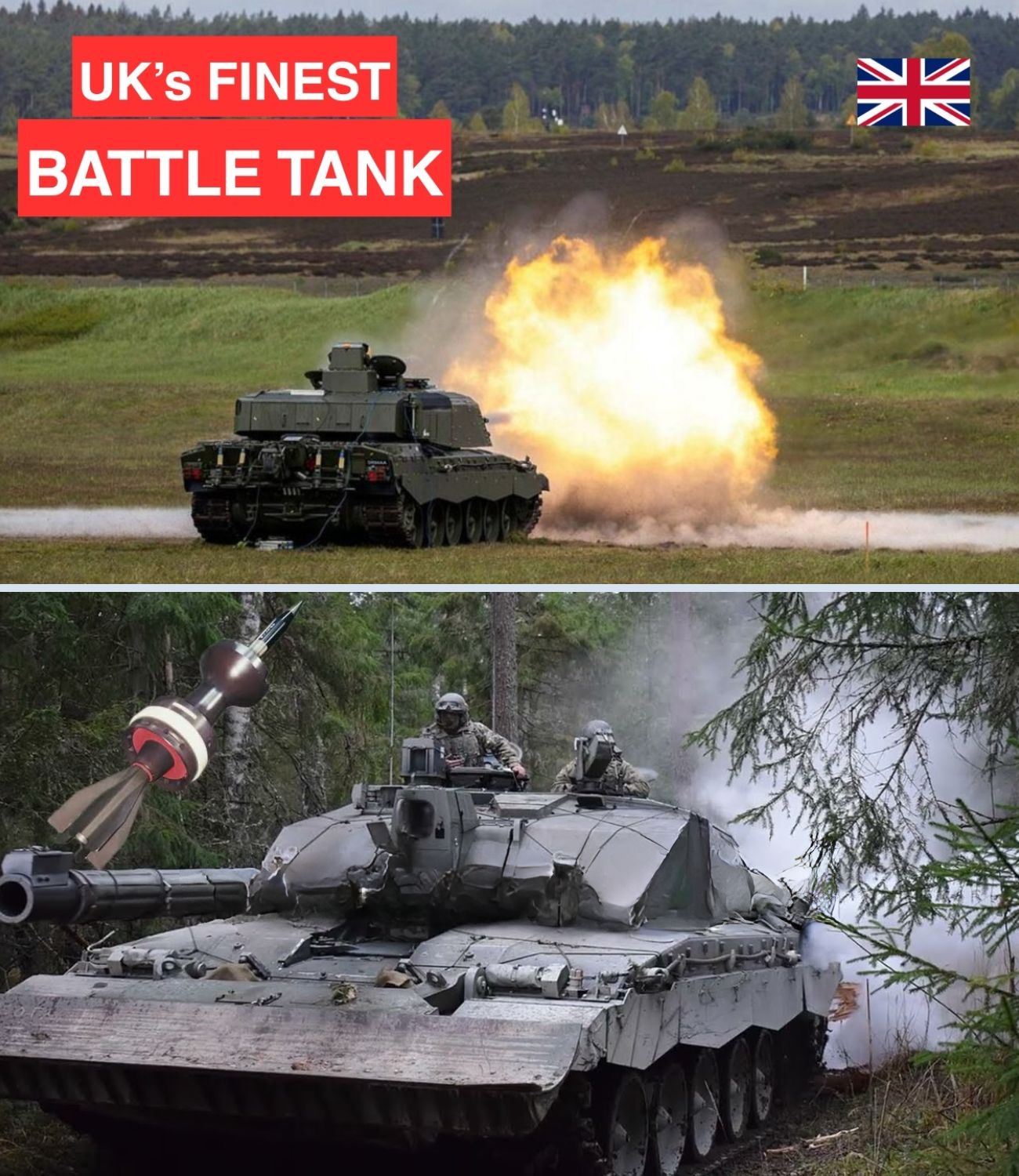
And while HESH worked brilliantly against old steel armor, modern composite designs neutralized it almost entirely, making the very round that justified the rifled gun all but irrelevant against peer threats. The gun’s kinetic energy round, the depleted uranium L27A1, was falling behind German tungsten penetrators in raw armor-piercing performance.
And when Russia unveiled the T-14 Armata with its unmanned turret and 125 millimeter cannon, British defense planners saw the gap widening fast. That reality came to a head in 2023 when fourteen Challenger 2s were sent to Ukraine’s 82nd Air Assault Brigade.
Ukrainian crews praised the accuracy, calling the L30 a sniper rifle among tanks, but the platform’s weaknesses were exposed in a way that peacetime exercises never could. At over 75 tons in combat configuration, the tank was punishing on Ukraine’s soft ground.
Specialized spare parts were nearly impossible to source in theater. And in September 2023, a Kornet anti-tank missile struck a Challenger 2 near Robotyne, detonated its stored ammunition, and tore the turret from the hull.
It was the first confirmed destruction of a Challenger 2 by enemy fire in the tank’s history. By early 2025, at least four of the fourteen had been damaged or destroyed.
For the British Army, this was not just a foreign deployment problem. It was a warning.
The service could no longer afford to rely on a vehicle whose gun, electronics, and protection belonged to a different century. The Challenger 3 represented a necessary leap, not a luxury, as the army prepared for the fight ahead.
The sticker shock of the Challenger 3 program often starts with the headline contract figure. £800 million signed in May 2021 with Rheinmetall BAE Systems Land, the British-German joint venture known as RBSL.
That works out to roughly £5.4 million per vehicle across 148 tanks. But that number only tells part of the story.
In Ministry of Defense accounting, the true cost of a program is measured by its whole life figure, which folds in not just the manufacturing contract, but research, development, testing, the new modular armor system, the Trophy active protection system, and long-term support.
By 2024, the MOD’s internal budgeted estimate for the whole life cost had climbed to £1.99 billion. That is roughly 13.4 million per tank when every pound is accounted for.
Early media reporting leaned on the base contract figure, which reflected the core turret conversion before the new armor package, before Trophy integration, before inflation adjustments, and before the supply chain complications that have since added pressure. That is how the £800 million figure entered the conversation.
But as the program matured, costs rose with added capabilities and the realities of converting aging hulls that each carry slightly different wear patterns from years of hard use. The numbers in the parliamentary updates show the scale of investment.
148 vehicles, each a complex weapon system, not just a hull with a new turret bolted on. For the MOD’s program cost team, every decimal point represents a trade-off between firepower, protection, and the ability to keep Britain fielding incredible heavy armor into the 2040s.
On the 7th of May, 2021, the MOD confirmed the contract signing with RBSL. This was not a tentative study or a paper exercise. It was a binding commitment to convert the entire Challenger 2 fleet into a new standard for armored operations.
The decision locked in a multi-year procurement plan, shifting the Challenger 3 from a concept on PowerPoint slides to an asset every brigade commander had to plan around. The program also brought significant industrial weight.
Nearly 300 jobs were created at RBSL’s manufacturing facility in Telford, with a further 450 across a supply chain stretching from the West Midlands to Glasgow, Newcastle, and the Isle of Wight.
A £40 million investment in a dedicated turret test rig facility at Telford gave engineers a state-of-the-art platform for running simulated battlefield missions without leaving the factory floor. By January 2024, the first pre-production Challenger 3 was delivered.
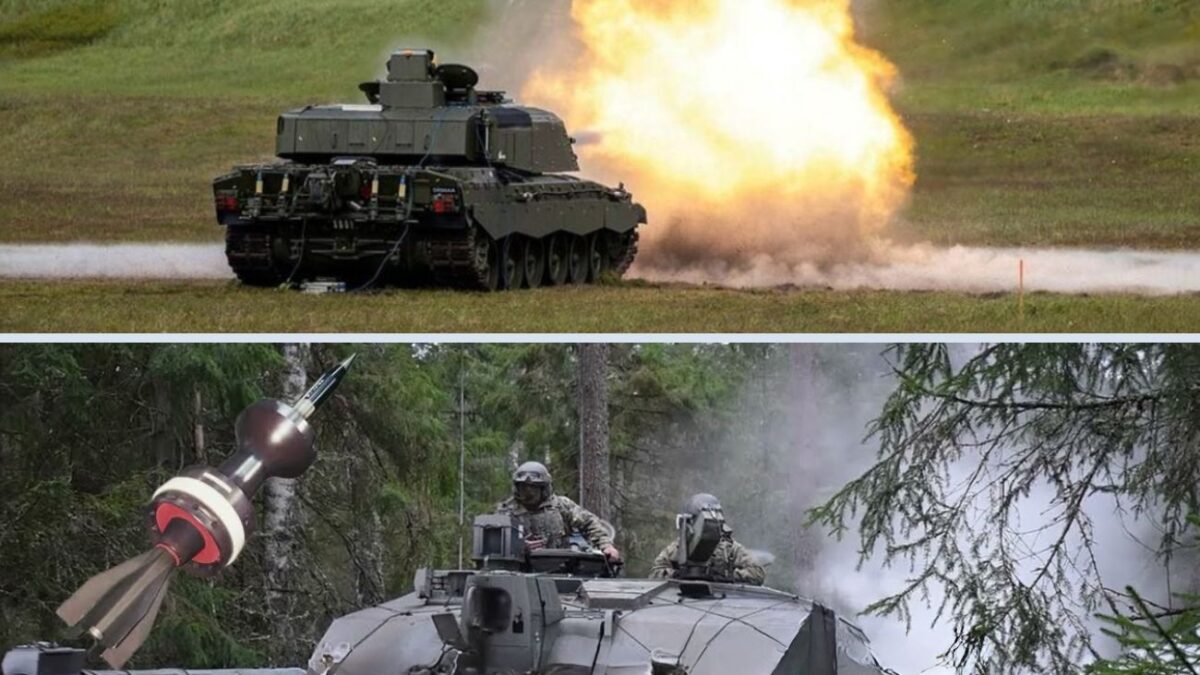
Eight prototypes have now been built at RBSL’s factory in Telford, with four handed to the army for trials, and four more in various stages of completion. Live fire testing in northern Germany in April 2024 validated the new gun system’s accuracy and lethality.
With uncrewed firing proving the turret’s stability and the smoothbore’s precision under controlled conditions. Mobility trials followed in late 2025, conducted alongside QinetiQ at multiple UK sites.
A pre-production vehicle covered 789 kilometers across road and cross-country terrain, with engineers gathering detailed data on platform vibration, crew interface, and the effect of rough ground on stowed ammunition. That data now feeds into refining the final manufacturing standard.
The next major milestone is crewed live firing. Proving the vehicle is safe for full crew operation under combat realistic conditions, followed by reliability growth trials running from RBSL’s turret test rig facility into 2026.
Initial operating capability is targeted for 2027 with full operational capability by 2030. Once those milestones are met, there is no turning back.
The army has made its bet and everything now rests on the Challenger 3’s ability to deliver. The 120 millimeter L55A1 smoothbore cannon is not just a new gun. It is the single most important change in British tank armament in over forty years.
Made by Rheinmetall, the same weapon fitted to the latest Leopard 2A7 variants, it replaces the rifled L30 and with it a generation of ammunition isolation. This switch means Challenger 3 crews can fire the full range of NATO standard rounds.
Advanced armor-piercing fin-stabilized discarding sabot penetrators like the DM63 and DM73, capable of punching through the heaviest modern armor at ranges well beyond two kilometers. Programmable airburst munitions that detonate above a target and shower it with fragments, lethal against dug-in infantry, light vehicles, and even low-flying drones.
And with significantly lower barrel wear than the old rifled gun, the L55A1 keeps tanks in the fight longer between overhauls, slashing long-term maintenance costs across the fleet. The tank carries 31 rounds of single-piece ammunition, down from the Challenger 2’s 52 two-piece rounds.
Fewer shells, but each one vastly more capable. And critically, every round is interchangeable with stocks held by Germany, the Netherlands, Norway, and a dozen other NATO partners.
Britain and Germany have even signed a joint development agreement for a new enhanced kinetic energy round designed specifically for the Challenger 3 and Leopard 2 fleets. Inside the turret, every system has been rebuilt for speed and awareness.
The crew of four, commander, gunner, loader, and driver work from fully digitized stations. Gone are the analog dials and legacy wiring.
In their place, integrated displays, digital mapping, automated target tracking, and vehicle health monitoring feed real-time data to every position. The commander’s stabilized panoramic sight, built around the Thales Orion system with third-generation thermal imaging, gives true hunter-killer capability.
The commander scans for the next threat independently, while the gunner finishes engaging the current one. Day or night, dust or rain, the Challenger 3’s optics package delivers a level of battlefield awareness the Challenger 2 could never match.
This digital backbone does something else that doesn’t make headlines, but matters enormously. It connects the Challenger 3 to every other vehicle in the brigade through a networked battle management system.
Target data, threat warnings, and tactical updates flow between tanks, infantry fighting vehicles, and headquarters in real time. A single Challenger 3 crew is no longer fighting alone. They are a node in a digital web that multiplies the effectiveness of every vehicle around them.
The Challenger 3 is not a one-configuration solution. It is a platform designed for growth. The turret sits on a converted Challenger 2 hull, but that hull receives meaningful upgrades, too.
A reconditioned Perkins CV12 diesel engine is mated to an improved David Brown transmission. A new third-generation Horstmann hydrogas suspension system improves cross-country performance.
Upgraded cooling and electrical systems support the vastly increased power demands of the new turret electronics. The open architecture digital design is what sets the Challenger 3 apart from a simple refit.
Future upgrades, new sensors, unmanned system integration, or AI-driven targeting can be woven into the existing electronic backbone without redesigning the vehicle from scratch. For planners, this means the Challenger 3 is not just built for today’s threats. It is built to adapt to tomorrow’s.
But even the best machine is only as powerful as the force it equips. And that force has a number that defines everything.
The plan to field 148 Challenger 3s signals more than a simple fleet refresh. It is a declaration of intent for British defense planners.
That number defines the backbone of tomorrow’s armored force. It means every armored brigade combat team will have access to vehicles built for peer warfare, not just the counterinsurgency operations of the past two decades.
With 148 Challenger 3s, deployment planners can shape task forces around genuine heavy armor capability, ensuring that every advance, every defensive position, and every rapid deployment is supported by a platform purpose-built for the risks of high-intensity conflict. But the scale demands perspective.
Germany fields around 320 Leopard 2s. The United States operates roughly 4,600 M1 Abrams in various configurations. Poland is building a fleet of nearly 400 modern tanks combining Korean K2 Black Panthers and American Abrams.
Britain’s 148 closes a capability gap, but it does not close a capacity gap. There is no reserve, no surge fleet, and no margin for the kind of attrition Ukraine has demonstrated is the reality of modern armored combat.
Hundreds of tanks have been lost on both sides of that war in under three years. Britain will remain reliant on coalition partners for any large-scale armored operation.
That said, what those 148 vehicles bring to a coalition is significant. The Challenger 3’s NATO standard gun, digital architecture, and integrated combat networking mean it slots directly into allied formations without the interoperability headaches that plagued the Challenger 2.
Protection in the Challenger 3 starts with the hull’s existing Dorchester composite armor, but layers entirely new systems on top. A modular armor package developed with the Defense Science and Technology Laboratory allows individual panels to be removed and replaced in the field.
So, damaged sections don’t require depot level repair. The modular design also means armor can evolve alongside emerging threats with upgraded panels swapped in without pulling the tank out of service.
The MOD doesn’t need to buy full sets for all 148 tanks at once. Modules are fitted as operational needs demand.
On top of that sits the Rafael Trophy active protection system. Combat proven on Israeli Merkava tanks since 2011, Trophy uses a flat panel radar array to detect incoming anti-tank missiles and rocket-propelled grenades within milliseconds, then fires a targeted shotgun-like countermeasure to destroy the threat before it reaches the hull.
The system simultaneously identifies the launch point of the hostile fire, feeding that data straight to the crew for immediate counter engagement. Multiple confirmed interceptions in combat over more than a decade of operational use with no crew injuries and no damage to dismounted troops nearby.
In an era where cheap guided missiles and first-person view drones are destroying multi-million pound armored vehicles with alarming regularity, Trophy gives the Challenger 3 an active defense layer that passive armor alone cannot provide. Ukraine has shown that even the most heavily armored tanks can be killed by a drone costing a few hundred pounds. Trophy changes that equation.
This combination of modular passive protection and active interception reflects a philosophy built for the modern threat environment. Speed, awareness, and layered survivability keep crews alive as much as thick steel does.
Every operational question about Britain’s armored future comes down to one core calculation. Can the British Army field a credible heavy force without the mass its rivals can bring to the battlefield?
The Challenger 3 is the answer to that bet. A vehicle built for lethality, survivability, and coalition integration, but always with the reality of a 148 strong fleet in mind. Commanders now have a tool that lets them hit harder, see further, and stay networked even when the numbers are thin.
Right now, the British Army is trading old vulnerabilities for new possibilities. Each smoothbore round fired, each Trophy interception, each digital link to an allied platform recalibrates what is possible when armor meets the fight.
The Challenger 3 does not answer every question about the future of British armored warfare. 148 tanks cannot hold a front line the way a thousand could, but it answers the most urgent question.
Whether Britain’s tank force can still fight, survive, and win against a peer adversary after two decades of delays, budget fights, and hard lessons paid for in Ukrainian mud. In an era of contested ground warfare, this is not just modernization. It is a live experiment with real stakes.
What is your take? If you made it this far, you clearly care about British military history, and that is exactly what we cover here on Battles of Britain. War stories.
If you enjoyed this one, smash that like button. It genuinely helps the channel more than you think.
And if you’re not subscribed yet, now’s the time. We’ve got a lot more coming on the stories behind Britain’s wars, old and new.
Drop your thoughts in the comments. Tell us if you think 148 tanks is enough, and we will see you in the next one.
You Might Also Enjoy


Mom Installed a Camera To Discover Why Babysitters Keep Quitting But What She Broke Her Heart


She Gave a Hungry Little Girl a Free Birthday Cake — The Next Morning, a Black Rolls-Royce Arrived