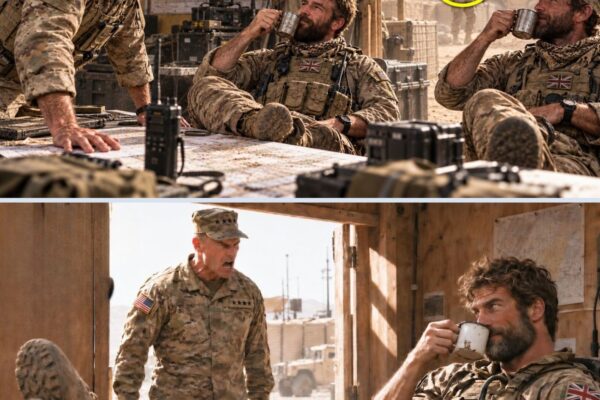
“Rangers Lead the Way, Limey Follows” — The Instructor Who Mocked the SAS, Then His Course Broke Him
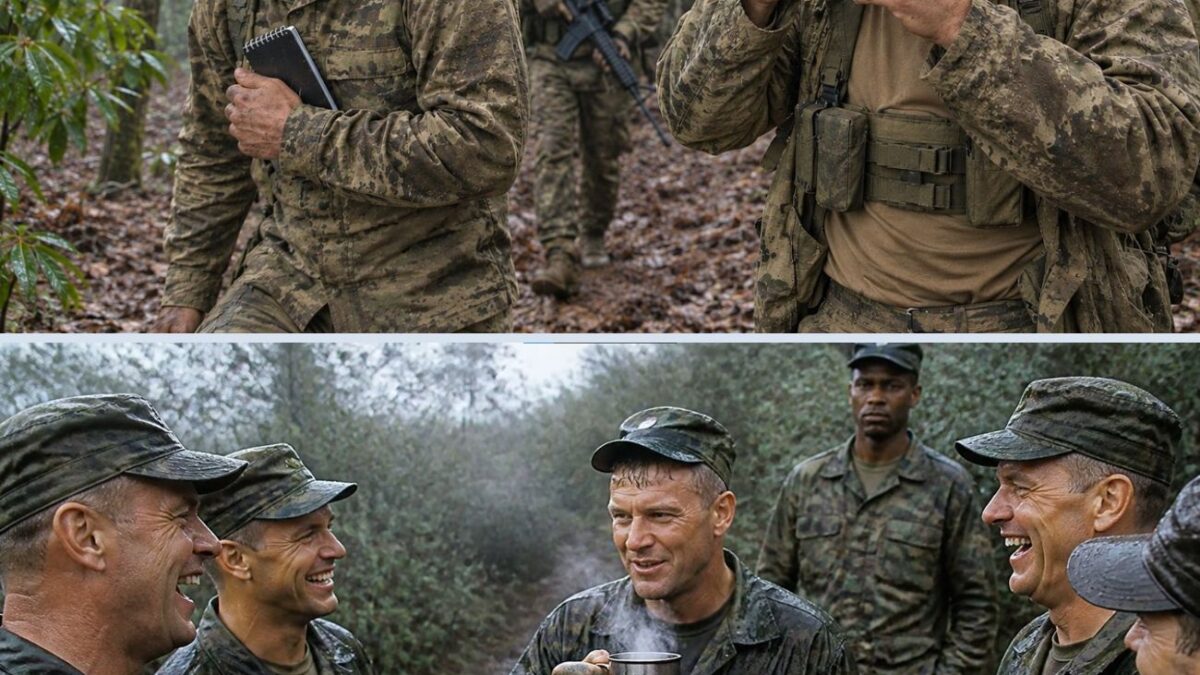
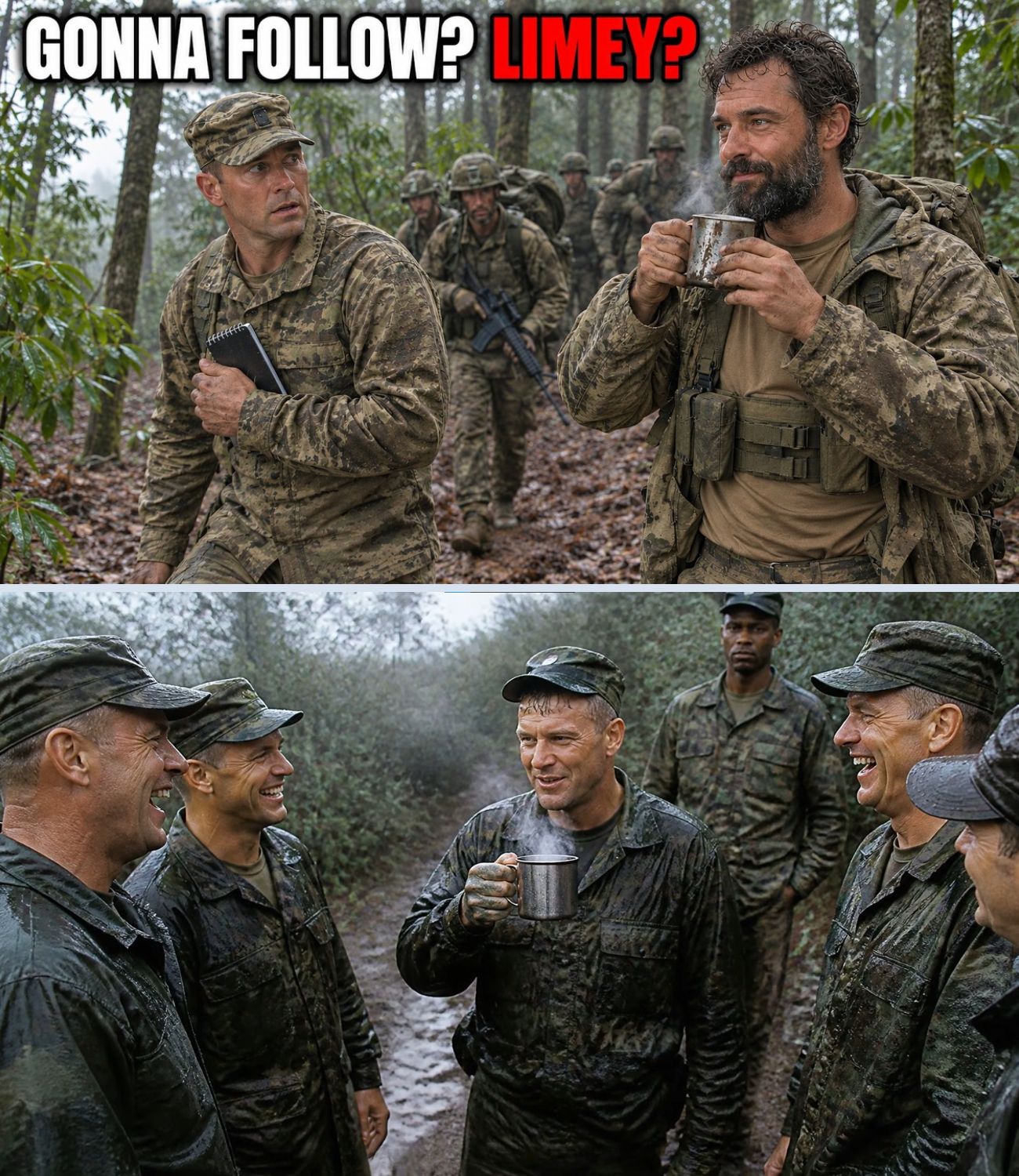
Rain on Georgia granite sounds different from rain on anything else. It hisses because the stone is warm from a day’s sun and the water hits it cold off the ridge. Stand in that hiss for a second before anyone speaks, then let the voice cut through it, American flat. A man who has said this kind of thing a hundred times and been laughed at by a cadre that is paid to laugh.
“Rangers lead the way. Limey follows. That’s the order of march on my mountain and if he can’t keep up, he can drink his tea at the bottom and wait for us.”
He is Master Sergeant Roy Latham, senior ranger instructor on the mountain phase at Camp Frank D. Merrill, 22 years in the United States Army and 11 cycles up on this spur of the Tennessee Valley divide. The man he is talking about is standing six feet from him with a steel mug of tea in his right hand and nothing in his face at all. The mug is scalding.
You can see the steam come off it in the cold. The man holding it does not put it down. The cadre laugh the way men laugh when the boss has made the joke they were going to make themselves. All of them except one, a tall captain at the back with a Kenyan cadence to his English, Odhiambo, who waits for the laughter to finish and does not join it.
Behind the two men in a loose single file along the fire trail, a stick of ranger students in sodden helmets plod past with rucks riding high on their shoulders and not one of them looks up because looking up on this mountain is how you get your name in a black notebook. The man with the mug is Staff Sergeant Ian Brennan, 22 Special Air Service Regiment, B Squadron, Mountain Troop on a four-week exchange from Hereford.
He is wearing a camouflaged Gore-Tex smock over a tan undershirt, a chest rig he has owned longer than some of the students have been soldiers, and a bergen that sits lower on his hips than the Rangers’ rucks sit on theirs. He takes a sip from the mug. He does not say anything. He does not have to. He would remember saying it. He would be made to.
That is the promise of the next few hours on this mountain. The sentence Master Sergeant Latham has just spoken into the rain, “Rangers lead the way. Limey follows. Drink his tea at the bottom and wait for us.” will be read back to him before dark the following day.
Not by a British voice, but by an American colonel with a clean set of boots. He will not be able to argue with a single word of it. He will have to stand at the end of the lane he himself designed, holding his own stopwatch, while the men he laughed at walk past him in the order he said they could not keep. The tea in the mug is still steaming. The notebook in his pocket is still dry.
Neither of those things will last the night. Pull back off the fire trail and give the man a frame he has earned, because a clown’s humiliation is worthless, and this story only works if the Master Sergeant is good at his job.
Roy Latham was 41 years old, 6 ft 1, 190 lb with his plate carrier off, and his service record was the kind of document that gets read aloud at retirement ceremonies. He had enlisted in 2002, infantry assigned to the 3rd Battalion of the 75th Ranger Regiment out of Fort Benning. And he had made the long run from the old indoctrination course through two deployments to Iraq before he was old enough to rent a car in his own country.
He moved to 2nd Battalion at Joint Base Lewis McChord in 2010, and did two more rotations into Afghanistan. One in Paktika, one in Kandahar, during which he earned a Bronze Star with Valor Device for carrying a wounded squad leader down a goat path under direct fire for the better part of an hour. He had been a Ranger instructor at the 5th Ranger Training Battalion, Mountain Phase, since 2017.
This was his 11th cycle through Dahlonega. He had written the current version of the graded night ambush lane with his own hand, and on the mountain he carried a small black field notebook in his left breast pocket. He wrote in it with a stubby carpenter’s pencil that he sharpened with a folding knife between periods of instruction. Candidates had learned, over 11 cycles, that if Latham got the pencil out while you were speaking, you had lost something you would not get back.
He had a reasonable basis for his confidence. Ranger School in October ate candidates. Mountain phase was where men who had survived Camp Darby started to understand what their bodies would and would not do on 3 hours of broken sleep and two meals a day. And Latham had watched majors cry at 1,200 ft. He had watched navy men fail the knot test and foreign exchange students quit on the second night. He had had, in 11 cycles, four British students on the course.
Two of them were paratroopers who passed. Two of them were from line infantry and did not. He had never, in those 11 cycles, had a man from the regiment on his mountain. He had his reasons for not wanting one now. The exchange slot had been offered through the British Army Liaison at Fort Benning. A captain called Edward Wren, who answered to Teddy, wore a signet ring on his little finger and turned it anticlockwise when he was about to say something sharp. Wren had sat across from the commandant’s staff officer 3 weeks earlier and said, mildly, that Hereford would like to send a staff sergeant through the mountain phase as an observer and participant, not for the tab, since he already wore the Pegasus and other things he did not list, but to compare mountain patrolling techniques across the two forces.
The staff officer had agreed. Latham, when told, had not. He thought exchange slots were for allies who had something to learn. He thought the men from Hereford, with their beards and their steel mugs and their refusal to be impressed, had spent two decades borrowing American lift and American overwatch and calling it their own war. He thought that if a man from Hereford wanted to stand on his mountain, that man could stand on it the way a Ranger student stood on it and be graded the way a Ranger student was graded and find out in public what 22 years in a line unit looked like against four weeks of being a tourist.
So, when Staff Sergeant Ian Brennan had arrived at Camp Merrill on the Sunday night with a Bergen and no fuss and had shaken hands around the cadre room and had said he was grateful for the slot and would try not to be a burden, Latham had looked him over the way you look over a used truck you have not decided to buy. He had said nothing and on the Monday morning in the rain with the first stick of candidates filing past them up the fire trail and the cadre gathered around for the day’s orders group, he had said what he said,
“Rangers lead the way. Limey follows. That’s the order of march on my mountain. Drink his tea at the bottom and wait for us.”
The cadre laughed. Captain O’Doulia did not. Captain Wren, who had driven up from Benning that morning to watch the first day, turned the signet ring on his little finger exactly once anticlockwise and said nothing at all because he had already seen this film in two other places and he knew how it ended.
Brennan took a sip of his tea. The rain came off the laurel in fat irregular drops. The master sergeant, very pleased with himself, got the notebook out of his breast pocket and wrote the day’s tasking across the top of a fresh page. He was going to need more pages than he thought.
Camp Frank D. Merrill sits in a bowl in the Chattahoochee National Forest about 70 miles north of Atlanta and the mountains around it are the oldest mountains in North America, which means they are not tall, but they are mean. The ridges are worn down to bone. The draws are choked with rhododendron thickets the cadre call Laurel Hells because the stems lock together at chest height, and you cannot push through them without sounding like a man wrestling a bathtub.
The rain comes in from the west most afternoons in October with no preamble. The graded lanes ran up and down the Tennessee Valley divide between Yonah Mountain and the Blood Mountain Wilderness. And the cadre knew every spur and every reentrant, which is the house advantage every school has over every student who ever walks its ground. Brennan had never been on this mountain before Sunday night. By Monday afternoon, he was moving through it as though he had.
The first day’s tasking was not graded. It was a familiarisation patrol, a 14-km loop with a mocked contact and a map check at the top of a saddle called the Hog Pen. And Latham ran it the way he always ran the first day. He let the candidates set the pace and the instructors watch and the terrain do the sorting. Brennan was attached as a supernumerary to the lead squad under a Ranger student called Hollis, a left-handed squad leader from the 10th Mountain Division who kept his map folded into eights.
Brennan did not ask to lead. He did not offer to navigate. He walked where he was told to walk, three back from point. And he carried a Diemaco pattern carbine, the L119A2, across his chest on a two-point sling, a Glock 17 on his right thigh, and a bergen that looked, to a Ranger instructor who had been reading rucks for 11 cycles, several kilos lighter than it should have been.
Latham, from his position at the back of the stick, made a note of that in his black notebook. Light ruck, wrote it down with the carpenter’s pencil, underlined it. Here is what Latham did not write down because he was not looking for it. Brennan did not sweat for the first hour. He breathed through his nose for the first hour. When the stick stopped for a map check, Brennan did not sit.
He squatted on his heels with his weapon across his thighs and his eyes on the tree line and he did it so economically that Hollis, who was trying to find the hog pen on a map folded into eights, did not notice him do it. When the rain came in harder in the second hour and the Ranger students began to unbuckle and dig into the top flap of their rucks for ponchos, Brennan reached behind his neck without looking and pulled the hood of his Gore-Tex smock up in a single motion that did not cost him his rifle position or his footing or a single beat of his tempo.
When the mocked contact came, a cadre sergeant called Pritchard, popping two blanks from the far side of a draw and then watching to see how the stick broke, the Ranger students went to ground the way the school teaches, which is fast and loud and with a lot of calling out of positions. Brennan went to ground 3 seconds earlier and without a sound behind a rhododendron stump that put a lateral piece of granite between him and the noise. By the time Hollis had called his fire team into a bounding overwatch, Brennan was already in a position to see the near flank of the draw and he did not fire and he did not move because none of those were his job in another man’s drill.
Pritchard, chewing sunflower seeds and spitting the shells into a folded page of a weather report, saw all of this from a 100 m away. He did not say anything to Latham at the end of the lane. He wrote it in his own head where instructors keep the things they intend to raise later in the week. At the end of the day’s loop, back at the harbour site above the camp, Brennan took his Bergen off, laid his weapon across it muzzle to earth, boiled water on a hex stove in a battered steel mug that had clearly been to places colder and worse than Georgia, made a brew and drank it scalding without putting it down until it was empty.
He did this in about 4 minutes. In those 4 minutes, he did not speak once. The students around him, debriefing noisily on the rain and the contact and the folded map, took an hour to produce less information about themselves than Brennan had produced about himself without saying a word. Captain O’Doulia, standing 20 m off, watched the 4 minutes with his arms crossed and did not laugh at anything.
Corporal Davies, Linklater, arrived at the camp that evening by a different route. He had been laid on by the British Liaison as Brennan’s climbing partner for the ridge serials later in the week because the mountain phase included a technical pitch on the third day that the regiment used as an opportunity to send a second man and share the exchange. Linklater was shorter than Brennan, thinner, older in the face with a faded blue wren tattooed on the web of his left hand from his paratroop days before selection. He shook hands with the cadre in the mess, said very little, and was photographed by nobody.
The two men ate separately from the students that evening because they were not in the graded phase, and they sat in the corner of the hut with a map of the Yonas Spur open between them and did not raise their voices once. Latham, from the cadre table, watched them for a while and did not know what he was watching. He saw two bearded men bent over a map at a brew, and he read it as tourists reading a guidebook.
And he got his notebook out and wrote a line about being careful not to let the exchange slow the graded students down. He underlined slow. He did not underline careful. The gun, by last light on the first day, was loaded in plain sight.
Brennan had moved through 14 km of American mountain without raising his voice or his heart rate. Linklater had arrived without being seen. The mountain had rained on them both, and neither had noticed. The undoing device was not a weapon. It was a tempo.
Every cadre man on the hill, except Pritchard and O’Doulia, was reading the tempo as fatigue, which is the single most expensive misread a soldier can make on ground he thinks he owns. The second day’s tasking was a navigation stand run in pairs, timed cross compartment over a 10 km box of ridges and reentrants east of the camp. Mountain phase uses the navigation stand to sift candidates who look good on a fire trail and fall apart in the thickets.
And the cadre run it with a stopwatch and six checkpoints held by instructors who initial a candidate’s control card at each. The slowest pair each cycle is a cadre joke for the rest of the week. The fastest is a name the cadre remember. The box included two Laurel Hells, one creek crossing that was thigh-deep in October, and a false saddle 300 m off a line of drift that caught tired men and sent them into the wrong drainage.
Latham ran the start point himself. He stood under a tarp strung off the side of a pickup with his black notebook in his hand and his stopwatch around his neck. And he briefed each pair as they came up. When Brennan came up, paired with Hollis because Hollis’s regular battle buddy had rolled an ankle on the first day, Latham looked at him over the top of the notebook and said,
“You’re the pacer. Make sure he keeps up. Don’t go wandering off looking for a kettle.”
The cadre around the tarp laughed. Hollis, who had his map folded into eights, did not laugh because he was trying to hear his checkpoints. Brennan nodded once. He said,
“Yes, Master Sergeant.”
In the flat way he said everything. And the pair set off up the fire trail with Hollis in front as the brief required. They disappeared into the tree line at 7 minutes past 9.
By the time they reached the first checkpoint held by Sergeant Pritchard at a spur called the Brasstown reentrant, a thing had happened that Hollis could not account for. Hollis had been running the navigation because the lane required the Ranger student to run the navigation, and Hollis was good at it. He was the kind of candidate who had walked onto Derby phase with a cased compass and a father who had taught him dead reckoning off a cattle station in Montana.
But at the first checkpoint, when he arrived at Pritchard’s tape and held out his control card and found himself breathing hard enough that he could not say his own name in one breath, Brennan was standing 3 m behind him with his hood down and his rifle across his chest, and he was not breathing hard at all. Pritchard noted the time on Hollis’s card. He looked up at Brennan. He said nothing. He wrote a two-letter note on his own scrap of paper, nothing anyone else would ever read, and spat a sunflower seed into the weather report. They went on.
Between the first and second checkpoints, the box crossed a creek, and Hollis, going fast because the stopwatch was in his head, went straight into the thigh-deep water at the obvious ford. Brennan, 2 m behind him, moved 10 m upstream and crossed a submerged log the local deer had been using since July, and came out on the far bank with his boots wet to the ankle and not past it.
Hollis did not see him do it. He saw Brennan on the far bank, dry to the knee, and he thought for a moment that he had imagined the crossing. He did not have time to think about it further because the next 1,000 m were a laurel hell, and the hell is where candidates lose both their tempo and their temper.
The hell was where Brennan showed what he was. He did not try to push through the stems the way the Rangers teach, which is low and hard with the rifle muzzle up and the forearm braced. He went in at a diagonal, found a drift of old pig trail where the rhododendron thinned to waist height, and walked through it at the pace of a man on a towpath.
Hollis, fighting the stems straight on, took 11 minutes to clear the hell. Brennan took four. On the far side, Brennan did not say anything about having found the drift. He waited at a tree and drank from a water bottle and let Hollis arrive and said,
“Second checkpoint should be 200 m bearing 080. Is that your read?”
Hollis, breathing hard, nodded. They went on and Hollis realised in the walking of those 200 m that the pacer the master sergeant had told to keep up had not at any point in the morning been behind him. They came in off the box fourth fastest of the cycle.
That was Hollis’s time, not Brennan’s, because Brennan was a supernumerary and did not have a card. But at the end point where Latham stood with his notebook and his stopwatch, Pritchard walked up and said quietly, in the voice instructors use when they do not want students to hear,
“Master sergeant, I had eyes on the exchange man at the first control. He wasn’t breathing. The kid was. And the kid’s good.”
Latham looked up from the notebook. He said,
“Good’s not the same as fast, Dale.”
Pritchard spat a seed. He said,
“It isn’t, Master sergeant. But he was both.”
He walked away. Latham watched him go. He wrote a single word in the notebook. He underlined it twice. He did not show it to anyone. Captain O’Dwyer, standing at the back of the pickup with a clipboard, had seen Pritchard’s face. He had been on Latham’s cadre long enough to recognise the specific cast of a Ranger instructor who had just seen something that contradicted his master sergeant and chose to tell him anyway.
O’Dwyer turned to the next pair coming up the trail, briefed them, and did not say a word to Latham. He did not need to. The thing was already in motion and he had been waiting for it for 2 days.
Brennan took his bergen off at the end of the lane, boiled water on his hexy stove, made a brew in the steel mug, and drank it scalding, standing at the edge of the hard stand, looking up at the ridge. He finished it and did not put it down until it was empty.
The man who had called him the limey wrote nothing further in his notebook for 20 minutes. And that was only the first time that day he would be wrong.
That afternoon the weather came in harder off the west, and the cadre moved the day’s second serial under cover of the hop lines, and ran the knots and ropes lecture an hour early. Mountain phase runs its knots and ropes testing on a timed stand. Each candidate has to tie six knots to standard. A bowline, a figure of eight on a bite, a prusik, a munter hitch, a double fisherman’s, and a three wrap three pull under instructor eyes against a stopwatch.
With the clock reading a pass or a fail at 90 seconds per knot, it is not a complicated stand. It is a test of hands, and hands under fatigue, and hands under the kind of pressure a stopwatch makes in a room of men who already know each other’s times. Latham ran the stand himself in the afternoon because the weather had collapsed the climbing serial he had planned, and he wanted to put Brennan on the stand in front of the cadre to see what 40-year-old hands could do with a kernmantle rope.
He put it the other way around to the cadre, of course. He said,
“Bring the exchange guy in. Let him see how we do it.”
The cadre heard it the way they had been trained to hear him. Brennan, in a Gore-Tex smock dark with rain, came in from the harbour, took his gloves off, and sat at the stand. Latham handed him a 9-mm rope and said,
“Six knots, Staff Sergeant. 90 seconds a knot. You know all of them?”
Brennan looked at the rope. He said,
“I know them, Master Sergeant.”
Latham said,
“Tea at the bottom we can arrange.”
The cadre laughed. Brennan did not react. He said,
“When you’re ready, Master Sergeant.”
Latham clicked the stopwatch. The bowline went in 9 seconds. One of the cadre, a young staff sergeant named Keen, made a small noise in his throat. The figure of eight on a bite went in 11. The prusik, which is the knot that separates men who have used rope from men who have tied it in a classroom, went in 14, which was a time Latham had seen three times in 11 cycles, and each of those from a working mountaineer.
The munter hitch went in seven. The double fisherman’s, which required two mated knots and a pulled tight dress, went in 19. The three wrap three pull, the trucker’s style friction hitch the course taught for ascending a fixed line, went in 16. Latham clicked the stopwatch at the end of the six knots and looked at it and did not read the time aloud.
The cadre, who had been counting in their heads, did not need him to. Total time, six knots, cold hands in a draughty hut, 76 seconds. The passing standard was 9 minutes. The cycle’s best candidate time that week was 3 minutes and 4 seconds. Brennan had finished in roughly a quarter of it, and he had not put his brew down to do it because the mug was sitting next to his right knee, still steaming.
Keen said,
“Jesus.”
Latham turned to him. Keen shut up. Latham looked at Brennan. He said,
“Lucky run. Do them again.”
Brennan said,
“Yes, Master Sergeant.”
He untied the rope, laid it out, looked up, waited for the click, and did them again in 79 seconds. He did them a third time unasked because Latham had not clicked the stopwatch off properly after the second run, and the third run came in at 74. When Latham finally clicked the watch, he said,
“Right. Fine. Sit down.”
Brennan was already sitting down. Captain Wren, the liaison from Benning, had come up to the hut during the second run and was standing at the back with his hands in his pockets and his signet ring turning very slowly anticlockwise. He said nothing.
He had known Brennan for 6 years since a bad night outside Mosul neither of them discussed and he knew that the man had been a climbing instructor at a joint services centre at Indefatigable for two winters before his second tour. 9 mm rope was to Brennan’s hands what a pen was to Latham’s. He had not volunteered this information because he had not been asked. Wren believed, as a rule, that liaison officers who corrected American master sergeants in front of American cadre were liaison officers who were sent home early and his job was to keep Brennan on the mountain, not to vindicate him in a hut.
Latham, for his part, was already building the rationalisation that would get him through the afternoon. He said to the cadre, loud enough for Brennan to hear,
“Classroom knots good for a camp. Different when the rope’s wet and you’re on the pitch.”
He wrote in the black notebook. Good hands. Dry, he underlined, dry. He did not look at Brennan when he said it because he had begun, without being able to name it yet, to prefer not to look at Brennan. Pritchard, chewing a seed, said quietly to O’Dwyer at the back of the hut,
“Captain, the rope was wet. He came in off a wet rig. He didn’t dry his hands.”
O’Dwyer said,
“I know he didn’t.”
Pritchard said,
“You’re not going to say anything.”
O’Dwyer said,
“I’m not going to need to.”
Brennan picked up the mug, finished the last mouthful of a brew that by any law of thermodynamics should have been cold, and left the hut with his rifle across his chest and his bergen on his shoulder and his hood down in the rain. The ratchet had moved a notch.
Tea at the bottom, Latham had said. The tea was not at the bottom. The tea was with the man tying knots in a quarter of the best cycle time on an instructor’s stopwatch, and the master sergeant had seen it, and so had every man in the room who mattered, and the ladder had one more rung above it still to climb.
The third day was the climbing serial, and the weather had got worse in the night. The pitch the mountain phase used that week was on a crag above the Blood Mountain approach called the Gristle by the cadre. A 30-m face of wet metamorphic rock with two overhanging bulges in the middle third, and a loose finish at the top where the rain brought down grit from the pines.
In good weather it was a hard severe. In October rain turning to sleet at the belay, with gloves on and the rock running water, it was a trad lead that the cadre would not normally let a student within 50 m of. The cadre led the pitch. The students climbed it on a top rope.
The exchange serial was supposed to be Linklater, leading and Brennan belaying. The two men running their own system in front of the cadre as a professional courtesy. Latham had agreed to it on the Monday when he was still measuring the two Hereford men against candidates. By the Wednesday morning, with sleet on the top pitch and the Gristle running like a drainpipe, he did not want it to happen in front of his cadre at all. He did not say so. He said instead at the morning orders group,
“Weather’s marginal. If the exchange don’t want the pitch, we scrub for them and run it for the students on the top rope only. Understood?”
Linklater, standing at the back with the faded wren visible on the web of his left hand, said,
“We’ll take the pitch, Master Sergeant.”
He said it quietly. He did not look at Brennan when he said it. Brennan did not look at him. Captain Wren, at the back of the hut, turned the signet ring once and did not speak.
Latham said,
“Your funeral.”
The cadre laughed. Odoya did not. They walked up to the Grissle through sleet and standing water on a trail that ran a stream for its last 100 m.
At the base, Linklater racked a trad rack off his harness in a sequence that was so economical it looked to the cadre watching as though he was not doing it. Cams and nuts going onto the gear loops in an order that only made sense if you had placed them a thousand times and knew where your hand would want them to be on each pitch. Brennan built a two-piece anchor at the base with a cam in a horizontal and a nut in a constriction, equalised it with a sling, tied himself in short, and settled his weight into it with his face already up the line.
He said,
“On belay.”
Linklater said,
“Climbing.”
Brennan said,
“Climb when ready.”
Linklater climbed the Grissle in sleet in a time the cadre could have argued about for the rest of the cycle. He moved up the first 10 m on positive edges that the water made feel like soap, placed a cam in the first crack without pausing the tempo of his feet, and reached the lower bulge with both hands warm because he had moved through the cold section fast enough not to pay for it. He took the lower bulge on a heel hook over his own hip, placed a nut above it, cleaned a smear with the side of his boot, and came up onto the slab above the bulge with his weight already moving into the next placement.
The cadre, standing at the base in their smocks with their rucks still on, stopped talking. One of them, Keen, the young staff sergeant who had made the noise in the knots hut, said,
“He’s not slowing down.”
Pritchard, spitting a seed, said,
“He isn’t.”
Latham, holding his notebook in a hand that was getting wet, said nothing. Linklater took the second bulge on a hand jam that the cadre would later argue in the hut over whether anyone they had ever seen could have done in sleet. He placed one cam above the jam, moved through to the headwall, and ran the last 8 m of loose gritty rock on confidence alone because there was no gear and no time to find it.
He topped out at a bollard the cadre had slung the previous summer, clipped it, built his belay off the bollard and a second cam and shouted,
“Safe.”
The shout did not echo because the sleet ate it.
Brennan at the base said,
“Off belay.”
Took the belay plate off and started breaking down the ground anchor without looking up. Linklater brought him up on the second rope and Brennan climbed the pitch in roughly the same time Linklater had led it, which is a thing climbers who have led the pitch themselves recognise as impossible unless the second has climbed this grade a thousand times before. He did it with his rifle across his back, which the cadre had not seen done on this pitch in 11 cycles.
They stood on the top of the gristle in sleet and did not high-five, did not speak, did not take a photograph. Linklater racked the gear in the reverse order he had placed it. Brennan at the belay drank from a bottle. At the base, the cadre was silent.
Latham, holding the notebook, held it under the open edge of his Gore-Tex smock to keep the pages dry and he did not write anything on the page he had opened. Pritchard said quietly to O’Dwyer,
“Captain, those are climbing instructors.”
O’Dwyer said,
“They are.”
Pritchard said,
“The master sergeant knew.”
O’Dwyer said,
“He did not know. He had decided not to know.”
The students came up on the top rope after the exchange had come down. Two of them failed the pitch. One of them fell twice and had to be lowered off. Hollis climbed it clean and said at the base,
“How did they do it in that weather?”
Brennan, who was making a brew on a hexie stove under the lee of a boulder, did not answer. He handed Hollis half of the brew in a spare metal cup and said,
“The weather doesn’t change. You change.”
He drank the rest of his own scalding and did not put it down until the mug was empty. Hollis did not forget the sentence, nor did two other students who heard it, nor did Captain O’Dwyer, who heard it from 10 m off. Latham had said he would make the limey drink his tea at the bottom. The limey had drunk his tea at the top of the pitch the master sergeant had tried to scrub after leading his own anchor in sleet with his rifle on his back.
The order of march on this mountain was being rewritten on the mountain itself in weather the master sergeant had been afraid of, and he had stopped writing in the notebook because he no longer wanted the page to say what the page would have to say. There was one serial left. It was the one Latham had written himself. The graded night patrol is Latham’s lane.
He wrote it in 2019 and has refined it every cycle since. The lane is run on the third night of the mountain phase in darkness in full kit with a notional raid on a mocked-up communications relay on a spur above Yonah Mountain. The relay site is a wooden mock-up the cadre maintain on a flat terrace at 1,100 ft, 300 m up a spur off a saddle with two foam rubber sentries, one lock on an equipment hut, and three priority intelligence items: a laptop, a codebook, a hard drive hidden on the objective in positions the cadre rotate.
The lane grades four things: the infiltration, the actions on objective, the exfiltration, and the report at the end. The actions on objective are timed. The cadre standard, the time a very good Ranger squad on a good night takes to clear the objective from first shot to last man off, is 11 minutes. The cycle best in Latham’s 11 years is 9 minutes 20. He is proud of both numbers.
The commandant’s representative has driven up from Benning for the night lane. He is Colonel Weatherby Finch, Ranger Training Brigade, 48 years old, three combat deployments behind him, and a career spent mostly grading other men. He has arrived at the saddle release point in a clean set of boots and with a thermos of black coffee. He is standing at Latham’s shoulder.
He has asked politely whether the exchange section would like to run the lane as a demonstration after the graded student squad has gone through. Latham has said yes because the alternative was saying no in front of a colonel. Captain Wren, further back, turns the signet ring anticlockwise once and does not speak. The student squad goes first.
Hollis leads it. They do it in 10 minutes 40, which is a strong cycle time and will mean a pass for every man on the squad. Latham clicks the stopwatch and writes the number in the notebook. The colonel says,
“Good.”
The cadre begin to drift back towards the pickup. Brennan’s section, four men, assembled from Linklater and two other Hereford NCOs who have come up from Benning for the night, in addition to Brennan himself, moves to the release point without being called. They do not go noisy to the start line. They do not rehearse at the release point.
Linklater checks his night vision device. Brennan checks the section’s radio frequencies, and the two others stand at the edge of the tree line and look at the saddle the way men look at ground they intend to own for 12 minutes. Latham, with the stopwatch in his hand, says,
“You’re on your own clock. I’ll call start.”
He calls,
“Start.”
The section goes into the tree line and is gone. The cadre at the release point lose the sound of them inside 15 seconds. The colonel, standing at Latham’s shoulder, says,
“I can’t hear them.”
Latham says,
“You won’t for a bit.”
He is correct but not for the reason he thinks. At 3 minutes and 8 seconds on the stopwatch, Pritchard’s radio on the cadre at the objective clicks once. That is the first man into the near cordon. Pritchard, who holds the clock on the objective, is leaning against a pine at the far edge of the terrace.
He is watching through a thermal monocular. He later tells O’Dwyer in the hut that he did not see the first man cross the lip of the terrace. He saw the second sentry go down. The thermal bloomed and resolved, and the second sentry was already on the ground, and the first man was on the door of the equipment hut. He did not see the first man cross the lip.
At 3 minutes and 41 seconds, the first blanks go. Two shots, one sentry, one sentry. The cadre at the release point hear them clearly on the saddle. The colonel’s head comes up. Latham clicks the stopwatch marker.
At 4 minutes and 11 seconds, Linklater’s voice comes over the cadre net on an open channel in a flat Scottish cadence that the cadre will remember for the rest of the cycle. He says,
“Objective clear. Three items recovered. Last man off.”
The net is silent for a beat. Then Pritchard from the objective says,
“Confirmed.”
Latham, standing on the saddle, clicks the stopwatch. Read the time off the stopwatch. 4 minutes, 11 seconds from first shot to last man off on the master sergeant’s own lane on a wet October night with foam rubber sentries placed where the cadre thought they would least expect to be found, and three priority intelligence items in positions Latham has rotated for 11 cycles and considers the cleverest things he has ever done on this mountain.
Colonel Finch says,
“Say that again.”
Latham does not say it again. He holds the stopwatch out. The colonel takes it and looks at it under the red of his head torch. He reads it aloud. 4 minutes, 11 seconds. He gives the stopwatch back. Latham does not take it cleanly. The Colonel says,
“Three items.”
Pritchard over the net says,
“Three items, sir. Laptop, codebook, hard drive. All three.”
Finch nods in the dark to nobody in particular and says,
“I want them off the hill and I want a debrief.”
The section comes off the hill by the route Linklater has planned, not the one the cadre expect, and they arrive at the release point in a single file at 21 minutes and 40 seconds from start, which is faster than any student squad has come off that spur in any cycle Latham has run. They arrive with the three items in Linklater’s bergen. They arrive with every man on the section, with every weapon on safe, and with no one breathing hard enough to be heard from 5 m.
Brennan is still carrying the steel mug on the outside of his bergen in a mesh pouch. It is empty. It has been empty since the start line. The cadre at the release point do not speak. One of the Ranger students further back, Hollis, has stayed to watch the demonstration and he claps once before he thinks about it.
Two other students clap. Then the rest of the squad claps. It is not a long applause. It is a short, awkward Ranger student applause made by men who have never applauded a non-American soldier on this mountain in living memory. It goes on for perhaps 8 seconds.
In those 8 seconds, Captain Odoulya looks at Latham and Latham does not look back. The Colonel says to the master sergeant,
“Roy, the time, please, for the record.”
Latham reads the time aloud from his own stopwatch. His mouth works on the second word. He says,
“4 minutes, 11 seconds.”
The Colonel writes it on the pad clipped to the thermos. He writes it carefully. The debt has been paid. The number has been counted and witnessed and read aloud by the mocker in his own voice from his own watch on his own lane.
The debrief happened in the main hut at Camp Merrow an hour after the section came off the hill because Colonel Finch wanted it done while the time on the stopwatch was still warm in the room. The students were not in the hut. The cadre were. Brennan and Linklater and the two other men from Hereford were at the back in Gore-Tex smocks dark with rain with their weapons across their knees and their burgans on the floor.
Captain Wren was at the back wall with his hands behind him and the signet ring on his little finger turning slowly anti-clockwise. Captain O’Dwyer was at the front with a clipboard. Master Sergeant Latham was standing at the map board with his notebook in his hand and the carpenter’s pencil in the other. And in the 20 minutes the debrief lasted, he did not write a single word.
Finch ran the debrief himself. He asked Pritchard to read the times. Pritchard read them. He read the student squad time and then he read the exchange section time and he did not make a face either way because he was Pritchard and he did not make faces when he was paid to read numbers. Finch asked about the three items. Pritchard said,
“Three items, sir, recovered.”
Finch asked about the sentries. Pritchard said,
“Two sentries, sir, dropped before the first shot was heard on the saddle.”
Finch paused on that sentence. He said,
“Before?”
Pritchard said,
“Yes, sir. The second one was down before the thermal resolved.”
Finch did not ask how. He asked Brennan instead from across the hut,
“Staff Sergeant Brennan, your methodology briefly.”
Brennan stood. He said in the flat voice he had used all week,
“Sir, we approached silent. We hit silent. The sentries were taken with suppressed weapons at close range from positions the master sergeant had not expected. The three items were located using the master sergeant’s own lane notes publish in the orientation pack.”
Finch looked at Latham. Latham did not look up from the notebook. Finch said,
“Thank you, Staff Sergeant. Sit down.”
Finch turned to Latham. He said,
“Roy, what did you learn?”
The question was not rhetorical. It was a Ranger question, the way the school asked Ranger questions, and the room was quiet enough that the sleet on the roof was louder than any voice in it. Latham did not answer for a long second. He looked at the notebook in his left hand. He closed it. He did not open it again. He said,
“Colonel, I misjudged the exchange section. I did not expect that time.”
Finch said,
“Did you expect any time close to it?”
Latham said,
“No, sir.”
Finch said,
“Did you expect them to run the lane in daylight terms, let alone in this weather?”
Latham said,
“No, sir.”
Finch nodded. He said,
“I want the lane rewritten before the next cycle. I want the sentry placements reviewed. I want the climbing serial checked against this week’s conditions. I want this time in the cycle report verbatim from your own stopwatch, which you read aloud on the saddle. Understood?”
Latham said,
“Understood, sir.”
He did not say anything about the limey. He did not say anything about the tea. He did not open the notebook. He stood at the map board with a carpenter’s pencil in a hand that was holding nothing to write on.
The section filed out of the hut past him. Linklater went first with his hand on the sling of his carbine, and the faded wren on the web of his left hand visible as he opened the door. The two other men went after him. Brennan went last. He had the empty steel mug hooked on the outside of his bergen. He passed the master sergeant at a distance of about a metre.
He did not look at him. He did not need to. He went through the door into the wet dark and was gone. Captain Oduya waited until the door had closed. He was the one from Latham’s own side who named what had happened because the lane did not allow anyone else to do it. He said, in the Kenyan cadence to his English, loud enough for Pritchard and Keen and the other cadre to hear it clearly,
“Master Sergeant, you told them to drink their tea at the bottom and wait for us. They drank it at the top of your pitch, and they cleared your objective in less than half your cycle best.”
He did not raise his voice. He did not have to. Captain Wren, at the back wall, turned the signet ring one more click anticlockwise and did not say a word. Pritchard chewed a sunflower seed. Finch, folding the pad he had written the time on, said,
“That’s enough, Captain Oduya.”
But he said it after Oduya had finished the sentence, not before. And the sentence had already gone into the room and into every cadre man in it, and into the master sergeant, who was still holding a notebook he had not opened. Latham did not speak again in the debrief.
He stood at the map board, and when Finch left the hut with the pad folded under his arm, and the cadre began slowly to file out, Latham stayed where he was. He put the notebook back into the left breast pocket. He put the pencil in after it. Neither came back out. Rain on Georgia granite still sounded the way it had sounded on the Monday morning.
It hissed when it hit warm stone, and it drummed when it hit a tin roof, and the cadre in the hut after the debrief heard both sounds for a long time before anyone moved. The master sergeant left the hut last. He walked across the hardstand to the pickup, and he stood by the tailgate with his hands in the pockets of his smock. Nobody followed him.
The cadre had been on his cadre a long time, and they knew, without being told, that the next 10 minutes were a man’s own. The record would say what the record said. The cycle report would read under the night patrol serial 4 minutes 11 seconds exchange section three priority intelligence items recovered zero friendly simulated casualties.
The lane notes would be rewritten before the next cycle. The sentry placements would be moved. The climbing serial would have a weather annex. None of this would carry a name on it because reports were written in the passive voice. The men who had been in the hut would know whose name sat inside the passive voice and so would Colonel Finch and so would Captain Wren who would drive back to Benning the next morning and never speak of the week to anyone who had not already heard the number.
Rangers lead the way Limey follows. That was the order of March on the Master Sergeant’s Mountain the Master Sergeant had said and if the Limey could not keep up he could drink his tea at the bottom and wait for us. He was right about the tea.
The Limey did drink it. He drank it on the fire trail in the rain on the Monday morning and he drank it in the Knots Hut in the Monday afternoon and he drank it at the top of the Gristle in sleet on the Wednesday and he drank it on the saddle after the night lane with the empty mug on the outside of his Bergen. He drank it scalding every time and he never put the mug down until it was empty.
The Master Sergeant had been right about the tea. He had been catastrophically wrong about the men who drank it. The lesson sits on the mountain and does not need a voice to speak it. Contempt that reads quietness as weakness is the single most expensive mistake a soldier can make on ground he thinks he owns.
The order of March is not set by the man with the loudest voice at the orders group. It is set by the clock and by the stopwatch and by the three items on the terrace and by the time Linklater and Brennan and two other men in Gore-Tex smocks came off a spur above Yona Mountain in October sleet. The record reads 4 minutes 11 seconds, and the record was read aloud by the master sergeant himself from his own watch on his own lane.
The mountain is quiet now, and the march is in the order the facts have set.
You Might Also Enjoy

Mom Installed a Camera To Discover Why Babysitters Keep Quitting But What She Broke Her Heart

She Gave a Hungry Little Girl a Free Birthday Cake — The Next Morning, a Black Rolls-Royce Arrived