Rock Band Disappeared in 1981 on Private Jet, 19 Years Later Navy Pulls It From the Ocean…
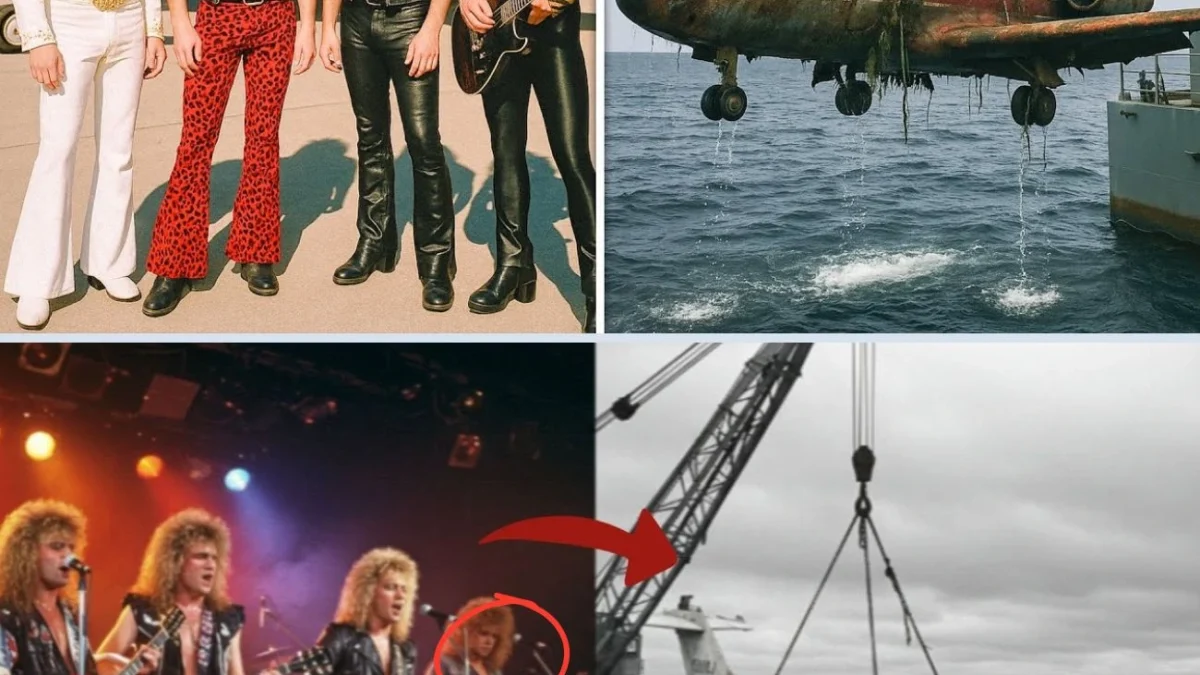

In 1981, four young members of a California rock band disappeared during a flight on a private jet. The plane vanished from radar without a trace. For 19 years, the musicians remained missing. Their fate was a complete mystery that baffled investigators. But then, a deep-sea Navy expedition unearthed something shocking from the ocean floor, a discovery that would expose a dark truth for which no one was prepared.
The afternoon light filtered through the lace curtains of Helen’s modest living room in Crescent Harbor, casting delicate patterns on the worn pages of her book. At 63, Helen had learned to find her parents in simple moments like these, her reading glasses perched on her nose as she lost herself in the familiar comfort of a beloved novel.
The small coastal town in Northern California had served as a refuge for almost two decades, ever since that terrible day in 1981 when her 20-year-old son, the lead singer of the band Crimson Fireline, disappeared. The shrill ring of the kitchen phone shattered the tranquility. Helen sighed, carefully marking the page before rising from the armchair.
Her joints protested slightly as she walked toward the kitchen, feeling the cool linoleum beneath her slipper-clad feet.
“Hello?” she answered, perhaps expecting a telemarketing call or a wrong number.
“Mrs. Reis?” the voice sounded formal, official. “I am Lieutenant Commander Jackson of the United States Navy. I am calling along with the Crescent Harbor Police Department regarding your son, Zane Reis.”
Helen held her breath. After 19 years, she had stopped waiting for those calls.
“What is this about?” he asked.
“We have recovered what we believe to be the private jet your son and the band were on when they disappeared. We need you to come to the naval base in Port Houston.”
The words hit her like a physical blow. Helen gripped the kitchen counter, her knuckles turning white.
“I don’t have time for games,” he said sharply. “My son disappeared 19 years ago in a plane crash. I don’t believe he’s still alive, and I don’t want my peace disturbed.”
She hung up the phone before the man could answer, her hands trembling. The pain she had struggled so hard to suppress now threatened to erupt.
She hadn’t just lost… Shortly after, her husband, Malcolm, was also taken to a psychiatric ward. Although he was declared normal and released five years later, returning to a quiet and isolated life, he remained distant from Helen and withdrawn from the rest of the community to live in peace. The stress of their son’s disappearance had changed them both completely.
Helen returned to her chair, but the words on the page were blurry; she couldn’t concentrate. The phone rang again, insistently. She let it ring four times. Finally, irritated by the persistence, she answered.
“Ms. Reis, please don’t hang up,” said a calm, professional female voice. “I’m FBI agent Dana Truit. I understand this is hard to believe, but we recovered the aircraft. The Navy wasn’t messing with you. We need you at the base.”
Helen felt tears welling up in her eyes.
“I’m sorry,” she whispered. “I thought that…”
“Okay, Mrs. Reis. Do you need transportation?”
“No, I can figure something out.”
Helen switched off and moved mechanically to get ready. She chose a simple navy blue dress and comfortable shoes, with automatic movements. As she left the house towards the train station, a familiar car stopped. The window rolled down, revealing the aged faces of Patricia and Donald Maddox.
“Helen?” Patricia’s voice was full of emotion. “Are you also going to the naval base in Port Houston?”
Helen nodded, unable to speak. He recognized them immediately, despite the years: Trent’s parents. Their son had been the bassist for Crimson Fireline.
“Come with us,” Donald offered, opening the back door.
Helen gratefully accepted, settling into the leather seat. Patricia turned to her.
“The Kleins are on their way too. Derek’s aunt and uncle… His parents passed away two years ago. And Rick’s cousins will be there; their parents have already died of old age.”
The journey took several hours, filled with a tense silence punctuated by Patricia’s occasional sniffs. Helen looked out the window, watching the hazy California coastline pass by. When they finally arrived at the Port Houston naval base, security was overwhelming: Navy personnel, FBI agents, local police, forensic teams, and what appeared to be expedition scientists.
Agent Dana Truit met them at the gate, her badge gleaming. She was younger than Helen had imagined, with piercing eyes that missed nothing.
“Thank you all for coming. I know this is difficult.”
She guided the group through the base to an open field. Helen gasped when she saw the exact jet she recognized from Malcolm’s photos. Her husband had taken pictures with a film camera before the band took off, wanting to immortalize what he called their meteoric career. He had developed those photos to keep as a memento and also for the police investigation.
Now the aircraft stood before them, a ghost from the past. Rust stained its once-white fuselage. Seaweed hung from the wings like mourning shrouds. The once-vibrant red stripes were now faded to a brown hue. Dr. Martinzee, the expedition’s chief scientist, stepped forward.
“We were on a deep-sea ecological expedition with the Navy, exploring hydrothermal vents. Our sonar detected unusual metallic reflections. When our underwater camera confirmed it was an aircraft at a depth of 3,600 meters, we immediately contacted the authorities,” he gestured toward the plane. “The Navy and the FBI collaborated to recover it using a high-capacity maritime crane from our research vessel. The wreckage was surprisingly intact. Sealed door, windows cracked inwards. It’s impressive how the body of the…”
Helen’s eyes fell upon several body bags neatly arranged on tarpaulins near the plane. Her heart tightened. That’s it.
Agent Truit nodded grimly.
“That’s why we need you here for identification.”
Dr. Martinzee added:
“At extreme depths, with low oxygen, cold temperatures, and little disturbance, bodies decompose much more slowly. It is plausible that they are still identifiable after 19 years submerged.”
Patricia Maddox grabbed her husband’s arm.
“Please, we need to see.”
The officers exchanged glances before carefully opening the first bag. Patricia’s sob cut through the air.
“Trent, my baby.”
Even after 19 years, the red leopard-print pants were unmistakable. Trent Maddox, the bassist who always dressed extravagantly, was immediately identified.
The second bag revealed Derek Klein; his leather vest and distinctive belt buckle confirmed his identity. His aunt and uncle collapsed against each other, sobbing. The remaining bags contained crew members none of them recognized. No, not the pilot, nor the flight attendants. They wore expensive suits, now deteriorated, but which still suggested wealth.
The boys should meet with an international record label and a producer.
“Some distributor,” Helen whispered. “Those men might be part of their record label. My husband was the band’s manager, but he rarely shared details with me back then. But I believe he told the police everything.”
Officer Rodrigues, who had handled the original disappearance case, confirmed her account:
“Ill with Reis, he became violent and was diagnosed with acute mental illness shortly after the disappearance. He was released five years later and returned to a life of seclusion. We tried to contact him, but he refused to come.”
The forensic team approached, taking photographs and examining the bodies. One technician looked up abruptly.
“Gunshot wounds. All victims show evidence of gunshot wounds.”
Agent Truit’s expression hardened.
“Then something very bad happened on the plane. They were probably killed instantly. The pilot’s absence suggests the plane was put on autopilot and he parachuted out.”
Helen felt a spark of desperate hope.
“Zane and Ricky’s bodies aren’t here. There might be a chance they’re still alive.”
“It’s possible,” the agent agreed. “No one saw them, but we’re changing this from a missing persons case to a criminal investigation.”
The press arrived like vultures, cameras and microphones pointed straight ahead. One reporter positioned herself in front of the plane, speaking rapidly to the camera:
“Crimson Fireline. Zane on lead vocals, Trent Maddox on bass, Derek Klein on rhythm guitar, and co-songwriter Rick Moreno on lead guitar. Many locals remember them from small gigs in bars. They were just starting to find success selling their music when they disappeared.”
The families were interviewed one by one. When it was Helen’s turn, she stood before the cameras, her voice firm despite her trembling hands.
“I had lost all hope,” she admitted. “But with this new evidence, I pray that the police will find out more about my son.”
She looked directly into the lens.
“Zane, if you’re watching this, please come back to me, come home.”
The other families continued to mourn publicly, but Helen… She had learned to lock away her emotions. When the interviews ended and a police officer approached:
“Mrs. Reis, can we escort you home?”
She felt gratitude. As they walked to the vehicle, she glimpsed the plane one last time. For 19 years, it had rested in the depths of the ocean, guarding its terrible secrets. Now, those secrets were coming to light, and Helen was ready for whatever they might reveal.
The return trip was silent. The young police officer seemed to understand that she needed silence. When they arrived at her house, he accompanied her to the door.
“Madam, if you need anything…”
“Thank you,” she said softly.
She waited until the police car disappeared around the corner before entering the house. In the hallway, Helen leaned her back against the closed door and finally allowed herself to collapse.
Tears came in great sobs, 19 years of pain pouring out in the safety of her own home. She slid to the floor, her navy blue dress scattered around, and wept for her lost son, for the boys who had died, for all the years of not knowing.
After what seemed like hours—but was probably 20 minutes—Helen composed herself. She used the wall to stand up, her knees protesting, and walked to the small office where her old computer was. The machine slowly awoke to life and she navigated to her old forum, Uzenet. She hadn’t logged in for almost a decade.
The support group for families of missing persons had been her lifeline in the early years, but eventually she had stopped attending, unable to bear the constant cycle of hope and disillusionment. Now, her fingers trembled as she typed:
“They found the plane. After 19 years, the Navy pulled it out of the ocean. Two of the boys were inside, shot dead. My God! I wasn’t there. I don’t know what to think.”
The responses came quickly. Some offered prayers and encouragement. Others, perhaps more realistic after years of dashed hopes, gently advised her not to expect too much. One message read:
“Helen, after 19 years, please protect your heart.”
She lost track of time reading and replying, the familiar usernames bringing back memories. When she finally looked at the clock, panic overwhelmed her. Her doctor’s appointment was in 45 minutes, and the bus ride took 30. Helen also wanted to visit Malcolm at his house. He deserved to know about the plane, regardless of their strained relationship.
She grabbed her bag and hurried, walking as fast as her aging legs would allow. The bus was leaving just as she reached the stop. She waved frantically, but the driver didn’t see her. Frustrated, she checked the timetable: 40 minutes until the next one.
A man stood at the opposite end of the bus stop shelter, keeping his distance but watching her intently. He was about 50 years old, wearing a faded jacket and jeans. Something in his gaze made her deeply uncomfortable.
“Good morning!” Helen offered, trying to divert attention.
The man did not smile. His eyes were cold, almost hostile.
“I saw the lady on TV this morning. Her son. I thought he was already dead, probably sinking to the bottom of some pit.”
Helen stepped back.
“What is your problem?”
Another bus approached. Not hers. The man boarded without saying another word. Through the window, he continued to stare at her, his expression unreadable, yet somehow threatening. Helen tried to calm her racing heart. Some people were simply cruel, she told herself; they couldn’t understand the pain of losing family.
She checked her watch: 30 minutes to kill. The payphone outside the local supermarket was three blocks away. She could call her husband and give him the news. The walk would help clear her mind. The supermarket was busy, with shoppers coming and going with their purchases. Helen located the payphone and dialed her husband’s family number.
She told him everything. Malcolm initially refused to acknowledge anything about the jet that was found, but Helen finally persuaded him by insisting.
“I’ll be there at 3,” she assured him. “Right after my appointment.”
She hung up and turned to leave. Her blood ran cold. The same man from the bus stop was right behind her, having appeared silently.
“What was that?” he said sharply when she gasped.
Helen didn’t answer. She stepped back quickly, her sensible shoes clicking on the pavement. She glanced nervously over her shoulder. The man had picked up the payphone, but his eyes followed her as she walked. Something was very wrong. This was no coincidence.
Helen quickened her pace, suddenly aware of how vulnerable a 63-year-old woman was alone on the street. The familiar shops of Crescent Harbor suddenly seemed less comforting. She needed to get somewhere safe, somewhere with people.
Helen walked through the supermarket’s automatic doors, immediately feeling safer among the weekend shoppers. The familiar sounds of creaking shopping carts and beeping barcode scanners helped calm her nerves. She spotted a bus stop sign through the window, near the supermarket entrance, closer than returning to her original stop.
The store was well-stocked, with displays of fresh produce and aisles of groceries occupying the first floor. Helen had shopped there frequently over the years, finding comfort in the routine. The escalator to the second floor hummed silently. She gripped the handrail and went up, thinking of Malcolm. He had always loved National Geographic magazines, even in his current state; the images seemed to soothe him.
The second floor opened into a frenzy of electronics. Rows of bulky CRT televisions displayed the same image: her own face speaking to reporters just hours before. The news had already spread her story. She stopped, mesmerized by the surreal vision of herself multiplied on 20 screens, pleading with her son to come home after 19 years. The reporter on the screen said…
The images showed the recovered plane, its hull covered in rust, dripping saltwater. A woman with a shopping basket stopped beside it.
“My God, it’s you, isn’t it? You’re the mother.”
Before Helen could answer, others began to approach. An elderly gentleman gently touched her shoulder.
“I’m so sorry for your loss, darling.”
“My nephew loved Crimson Fireline,” said a younger woman. “They played at Mickey’s bar every Thursday.”
The crowd drew closer, voices overlapping in questions and condolences. Helen felt her chest tighten, overwhelmed by the sudden attention. She tried to step back, but found herself surrounded.
“Please make room for the lady,” ordered a firm voice.
Helen looked up hopefully, expecting to see the safety of the store. Instead, the man from the bus stop forced his way through the crowd. Before she could protest, he grabbed her wrist and pulled her. His grip was as strong as iron, despite her attempts to resist.
“What are you doing?” she gasped.
He didn’t answer, guiding her toward a fire escape. The door was marked for authorized personnel only, but it was slightly ajar. He opened it and pulled Helen inside. The stairwell was dimly lit, its concrete walls echoing her footsteps. Helen let go.
“Why are you following me?”
The man’s expression was cold, professional.
“I am not your savior, ma’am. I am here to watch over you and deliver a message.”
He moved closer, and Helen recoiled against the wall.
“If you talk to anyone about this—the police, the FBI, whoever—it will be the end of everything.”
In one swift movement, he pulled her close and pressed something hard against her stomach. Helen looked down and saw the black metal of a gun. Terror gripped her.
“Please,” she whispered. “If you know where my son is, if he’s alive…”
“You’d better sink in the ocean before they find you. The man who sent me is not merciful.”
Helen’s mind raced.
“How do I know that you actually know something about Zane?”
The man studied her, then spoke calmly:
“The lighthouse keeper’s daughter waits on the edge, counting stars that have already fallen.”
Helen’s blood turned to ice. They were verses from a song Zane had been writing shortly before he disappeared. He had never finished it, never performed it; only she had heard those words, late at night, as he played the melody on his acoustic guitar.
“We know everything,” the man continued. “Her doctor’s appointments every two weeks, her Tuesday shopping trips, her husband at Sunset Hills. We’ve been watching her for years.”
“Is my son really alive?” Helen’s voice faltered.
The man stepped back, touching the concealed weapon.
“Keep your mouth shut. We’ll talk again. But if you’re reckless, if you say a word about this to anyone, I won’t hesitate. Bad things will happen to you and your boy.”
He turned and went down the stairs, his footsteps echoing until they faded away.
Helen froze, then collapsed against the wall. Tears streamed down her face as she trembled violently. Her heart pounded so hard she feared it would stop. The emergency exit suddenly opened. A young clerk peered inside, concern etched on his face.
“Ma’am, are you alright? You shouldn’t be here. I need to call a doctor.”
Helen forced herself to straighten up.
“I’m not feeling well. I just needed a moment.”
Recognition dawned in his eyes:
“You’re the girl from TV! I’m so sorry about your son.”
“Thank you,” Helen managed to say, passing by him.
She had completely forgotten about the National Geographic magazine. All that mattered now was getting out of there. She found the escalator and hurried down, gripping the handrail with her white knuckles. The supermarket exit seemed miles away. Through the glass doors, she spotted her bus approaching.
Helen ran and stumbled toward the bus stop. The doors were already closed, but the elderly driver saw her desperate wave.
“Please,” she gasped.
The driver, a gentle-looking man who appeared to be about 70 years old, reopened the doors.
“Don’t run, darling.”
Helen boarded the bus, fumbling for her bus pass with trembling hands.
“Thank you very much.”
She walked to the special area reserved for the elderly and collapsed into a seat. As the bus pulled away, she looked back towards the supermarket. No sign of the man, but his words echoed in her mind. We’d watched for years to see if Zane was really alive… What was that man, and what price would she have to pay to see him again?
She stepped off the bus at the hospital complex, her legs still trembling from the encounter at the supermarket. The familiar medical building loomed before her, its beige walls and tinted windows—a witness to years of routine visits. She registered at reception, underwent the usual blood pressure checks, and sat in the waiting room until her name was called.
Dr. Peterson was efficient, as always, reviewing her heart medication and writing new prescriptions. Helen barely heard his reminders about avoiding stress. Her mind kept returning to the man’s threat and those impossible song lyrics. When she finally left the consultation, with her bag of medication in hand, the afternoon sun was already setting.
She stood at the bus stop outside the hospital, torn. The man had explicitly warned her not to speak to anyone, but Malcolm deserved to know about the plane. He was still her husband. Despite everything, she couldn’t simply abandon him. A car horn interrupted her thoughts. Just across the street, a dark sedan was parked.
The man from before was sitting behind the wheel, gesturing for her to come closer with a curt nod. Helen’s stomach clenched. She considered running back to the hospital, but his words echoed: “Bad things are going to happen to you and your boy.” She crossed the street slowly, each step feeling like a betrayal of common sense.
The man lowered the window.
“Get in the back seat,” he ordered.
Helen hesitated.
“I don’t even know who you are.”
“In the back seat. Now.”
His tone left no room for discussion. Against all instincts, Helen opened the back door and slid inside. The locks clicked instantly.
“I know you were planning to visit your husband. You’re waiting for the bus in that direction, not home,” the man said, stepping into traffic. “I can’t let this happen.”
“I’m not going to say anything about you,” Helen protested. “I just… need to tell him about the plane. He has a right to know.”
“No, you can’t just…”
He tossed a pair of handcuffs into the back seat. Helen stared at them in disbelief.
“No, I don’t know you. I don’t trust you. I should have called the police.”
“Now you’re testing my patience.”
In one fluid movement, the man turned and grabbed her wrists, fastening the handcuffs despite her resistance.
“Make a sound and I’ll kill you right here.”
Terror paralyzed Helen as he continued driving. They left Crescent Harbor behind, the familiar streets giving way to the highway and then to narrow roads bordered by towering pine trees.
After what seemed like hours—but was probably 40 minutes—he turned onto a dirt road wide enough for the car. A cabin appeared among the trees: small, isolated, with dark windows. The man parked and pulled her out, his grip firm on her arm.
Inside, the cabin smelled of mildew and old smoke; there was sparse furniture, a stone fireplace, and little else.
“Why are you doing this?” Helen demanded. “The police will be looking for me. If I don’t show up, they will. You can’t keep me here forever.”
“I can and I will. Now you need to be quiet for your own good.”
He produced a roll of black duct tape and wrapped it around his mouth. Despite muffled protests, he left, grabbing a cigarette and his cell phone.
Through the window, Helen saw him walking as he talked. When he realized she was watching, he moved away out of earshot. Helen tested the handcuffs, but they were professional quality, impossible to slip off her arthritic hands. Panic rose in her throat. She was 63 years old, had a heart condition, and had been kidnapped by a stranger who claimed to know about her missing son.
The man returned, crushing the cigarette under his boot. He moved toward the back wall and pressed against what appeared to be an ordinary wooden panel. A section spun inward, revealing a hidden compartment. He pulled out several small packets wrapped in plastic, each containing white powder. Helen’s eyes widened. She knew exactly what they were.
He ripped the tape from her mouth. She gasped:
“What is that?”
“You need to swallow this. It’s drugs.”
Helen shook her head violently.
“No, I won’t. Kill me if you have to, but I won’t do it. Why are you doing this to me? I’m just a grieving old woman who’s going to die soon anyway.”
The man placed the packages on the table.
“My name is Edric Canvo. I have business with your son. If you ever want to see him, you will do exactly as I tell you.”
“Please,” Helen pleaded. “I have a heart condition. This could kill me. If you’re even remotely a decent man, there must be another way.”
Edric drew his weapon, pressing it against her temple.
“I’m not a good man. Are you going to swallow these packages or am I going to pull the trigger? Three seconds. One, please. Two…”
With trembling hands, Helen picked up one of the packages. It was small, carefully wrapped. She placed it on her tongue and forced herself to swallow. Then another, and another. Four in total.
“Good,” Edric lowered the weapon and produced a bottle of pills. “Take these. They’ll help keep the packages intact inside you.”
Helen swallowed the pills dry, tears streaming down her face.
“Don’t ask questions,” Edric said. “It’s better for everyone, especially for you. If you don’t know much, it won’t kill you. You’re just transportation.”
He handcuffed her again and tied her to a wooden chair with a thick rope.
“Someone will come to get her soon. Stay quiet and you’ll see your boy.”
Helen sat bound in the dark cabin, the packets of drugs settling like lead in her stomach, wondering what her son had become for this nightmare to be the path to him.
A few moments passed in the dark cabin. Helen felt the medication take effect, a strong drowsiness enveloping her. Her thoughts became slow and disconnected. She prayed that it was only the pills Edric had given her, and not the packets themselves leaking their contents into her system. The room began to blur at the edges. She felt light, as if floating above the chair.
Time lost its meaning. Minutes or hours passed until she heard the rumble of an approaching vehicle. Through the fog, she saw headlights sweeping against the window, a large truck whose outline rippled in her drugged vision. Edric’s face appeared before her, its features distorted like water.
“Time to go,” his voice seemed to echo from afar.
She felt his hands unlocking the handcuffs, untying the rope. Her legs barely supported her as he pulled her up. The world tilted and swayed with each step toward the door. Outside, the night air hit her face like cold silk. Men stood beside the truck, dark-haired men speaking Spanish rapidly. They looked Mexican, with hard, aged faces.
One of them grabbed her roughly, pushing her towards the back of the vehicle.
“Come in, old woman, ” he growled.
The truck’s cargo area was larger than she had expected. But the man didn’t leave her in the main compartment. He pressed what appeared to be the interior wall, and a section of the door slid inward: a hidden compartment.
“Come in. Be quiet.”
Helen stepped through the opening. Her drugged eyes slowly adjusted to the darkness. Shapes became people—women, all young. Some looked only 18. They sat pressed against the walls, silent and with empty stares. She was the only one over 30, let alone over 60.
The penny dropped, even through the haze of the medication. She’d seen it in movies, read about it in newspapers: human trafficking, drug smuggling. She was now part of it, willingly or not. The secret door slammed shut, plunging them into complete darkness. The truck’s engine roared and they began to move.
Helen found a spot against the wall and sank down, knees raised. Time became meaningless in the darkness. The truck stopped occasionally; she could hear muffled voices. Sometimes the main cargo door opened, but the hidden compartment remained sealed. The younger women remained silent, clearly experienced in that horrible routine.
Helen dozed off intermittently, waking when the truck went over potholes. Gradually, the effects of the medication began to wear off. Her mind cleared, bringing with it all the horror of her situation. She was being smuggled across unknown borders with drugs inside her body, surrounded by trafficked women.
After what seemed like days—but were probably many hours—the truck finally stopped. Different voices, now rough, guttural, speaking accented English and what sounded like Russian. The secret panel opened. Bright lights flooded the space, making everyone squint. A huge man silhouetted himself in the opening.
“Get out, all of you. Move!”
They staggered into what appeared to be a warehouse. Concrete floors, metal beams. The smell of motor oil and something else, something chemical. More men were waiting, all with Slavic features, all armed. They were led into a side room and ordered to line up. Adjacent to it was a smaller room marked with a radiation warning.
Helen’s legs trembled, partly from the long confinement, partly from the dread of watching, one by one, the women being called inside. Each time, the low hum of the X-ray machine echoed ominously. When her turn came, she followed the man who shoved her forward, barking for her to press against the cold metal wall.
Moments later, another man entered. The left side of his face was grotesquely disfigured, crushed and badly healed, forming a permanent grimace. He carried a tray with small cups filled with liquid.
“Drink,” he ordered, passing around the containers.
The younger women obeyed immediately. Helen hesitated, her hand trembling as she reached out to take a glass.
The man with the broken face noticed her and studied her with disgust.
“Why did they send an old woman to us?” he asked his companion in heavily accented English. “She can barely stand and only had four packages inside her.”
“I don’t know,” the other replied. “I need to ask the boss.”
The man with the broken face leaned closer. His breath reeked of a foul odor.
“Drink, babushka , or I’ll make you drink.”
Helen swallowed the bitter liquid. In her mind, she cursed herself for trusting Edric. She should have let him kill her in that cabin; at least it would have been quick. Now she was alone, at the mercy of those monsters.
“I’ll take the old woman to Bruno,” announced the man with the broken face. “He’ll handle her. Maybe we should send a message to the suppliers. Next time, no more looted old women who can barely stand. That’s a defective product.”
The other women stared at Helen with blank eyes; they had already seen too much to feel compassion. The man gripped her upper arm, his fingers digging deep. Her thin muscles offered no protection; she felt his grip crushing against the bone.
“Move,” he ordered, dragging her toward the door.
Helen staggered, wondering if she would ever see the light of day again, if this nightmarish journey would truly lead her to Zane, or if she would simply disappear, like so many others who had crossed paths with those men.
They left the room and walked down a series of corridors, each darker than the last. The man with the broken face never loosened his grip on Helen’s arm. Finally, he stopped before a black door, its paint peeling like diseased skin. He flung it open, revealing a staircase that descended into utter darkness.
The temperature dropped with each step down. Below, another black door awaited. The man pushed it open and threw Helen inside. She staggered and almost fell, but he grabbed her arm again and pulled her up. The room that greeted her was a nightmare come true: red walls, red floor. Then she realized with horror, as the smell hit her like a physical blow—raw meat and human excrement, the stench of a slaughterhouse mixed with a septic tank.
In the center of the room, three women knelt in a row, blindfolded, gagged, with their hands tied behind their backs. They were trembling. A man stood with his back to them, holding a gun raised and pointed at the head of the first woman.
“Gerald, wait! Where’s Bruno?” called the man with the broken face. “I need him to deal with this. The supplier sent us an old woman to the grindstone .”
The man named Gerald turned, and Helen’s world tilted. Despite the 19 years that had passed, despite the different context, she recognized that face instantly: Rick Moreno, her son’s friend, the lead guitarist for Crimson Fireline. His boyish face had hardly aged, still looking childlike even now. Their eyes met.
Recognition shone brightly on him, immediately followed by alarm.
“I think you are…” Helen began.
Rick cleared his throat noisily, cutting it.
“Bring me a gag, a blindfold, and handcuffs,” he barked at the man with the broken face.
Now the items were produced quickly. Rick moved with practical efficiency, gagging Helen first, then blindfolding her. Finally, he tied her wrists with plastic cable ties. His hands were steady, professional, nothing like the gentle boy who played guitar in his garage.
“I’ll take her to Bruno,” Rick said. “Let him handle it.”
He pressed the gun against the hand of the man with the broken face.
“You finish off these three.”
Even through the sale, Helen felt the man’s pleasure.
“Okay, I’ll finish.”
Rick’s hand closed around Helen’s arm, more gently than the previous man’s, but still firm. He guided her toward what she assumed was the door. Behind them, she heard footsteps, the muffled moan of a woman. They were climbing the stairs when the first shot rang out, then the second, then the third—three precise executions.
Helen’s stomach clenched, but the gag prevented her from vomiting. Tears soaked the blindfold. Rick continued pulling her up, through the black door, back to the upper hallway. His pace was quick, but not panicked; this was routine for him, Helen realized. Her son’s friend, the shy boy who blushed when girls spoke to him, had become this.
They walked silently down another corridor. She counted her steps, trying to maintain some sense of direction, but the blindfold made everything disorienting. Finally, Rick stopped. She heard a door open and he guided her inside what seemed to be a smaller space, an office, perhaps away from the main floor of the warehouse.
The horror of what he had witnessed, combined with the shock of seeing Rick, left his legs weak. If Ricky was there alive, working for those monsters, then perhaps Zane was too. They entered the room and Rick stopped. He knocked on an inner door three times loudly, paused, then knocked twice more.
Helen heard cracks turning inside. The door swung open and she was pushed inside.
“Sit down,” Rick ordered.
Helen sat carefully in what appeared to be a leather chair, still blindfolded and bound. She heard the door close and lock again. Then hands touched her face, removing the gag. She gasped for fresh air. The bonds were then cut, freeing her wrists. Finally, cold fingers lifted the blindfold.
Helen blinked in the fluorescent light and her heart stopped. Zane knelt before her. Her son, after 19 years. Her son—the same long, wavy hair, though now streaked with premature gray, the same pale skin that strangers often mistook for albinism, the same full lips and deep eyes, older, tougher, but unmistakably Zane.
“Zane…” Helen’s voice faltered. “Is it really you?”
She turned to look at Rick, confirming what she suspected.
“You’re Rick, aren’t you?”
“Edric kept his promise,” Zane said softly.
Rick scoffed:
“That man is no less evil than Alexei Sokolov.”
Helen’s eyes scanned the office. A nameplate on the desk read: “Manager .” Her stomach dropped.
“What happened? Do you two work for those people?”
Without time to explain, Zane said urgently:
“And nobody can know that we’re related, understand?”
Before Helen could respond, chaos erupted outside. Men shouting in Russian and English, the sharp crack of gunfire, screams. Rick moved instantly, bolting the office door. Zane went to a filing cabinet, pulled out a drawer, and retrieved two pistols.
“There’s a phone,” Helen spotted it on the table. “We should call the police. They’ll rescue us. We can go back to our lives.”
“No, Mom,” Zane’s voice was rough. “This is our life now.”
“What? Edric’s men are taking this place. He promised to reunite me with you. If I stayed by his side, he would protect us.”
“No.”
Helen stood up and reached for the phone.
“It doesn’t have to be this way.”
Zane positioned himself between her and the table, blocking her path. His eyes were cold, unfamiliar.
“Don’t you understand?”
“I didn’t expect to be reunited with my son like this,” tears streamed down Helen’s face. “You’re not a criminal. You’re a victim of a plane crash.”
“Sometimes there’s a fine line between victim and criminal,” Zane retorted. “We have to do whatever it takes to stay alive.”
Heavy fists banged on the door. Bruno, with a thick Russian accent, called out:
“Open the door! We’ve been attacked! Alexei is dead! We need to protect the office!”
Zane and Rick exchanged glances, but remained silent. More knocking, more demands in Russian. Then gunshots right outside the door. The Russian voices stopped mid-sentence. Helen heard bodies hitting the ground there.
A different beat came on, but light, almost casual.
“It’s me,” said a voice with a Mexican accent. “Edric.”
Rick looked at Zane, who nodded. Helen watched her son hold the gun with practical ease; all the innocence he once possessed had been ripped away by 19 years in that hell. Rick cautiously unlocked the door.
Edric Canvo rushed inside. Blood was splattered on his shirt, and the acrid smell of gunpowder clung to him. He closed the door behind him and threw the bolts off.
“Done,” Edric announced, wiping the sweat from his brow. “My men and I have fulfilled our part of the deal. This empire is mine now.”
He looked directly at Zane.
“I want your loyalty, both of you. I got along very well with Alexei in his office. I put three bullets in his head.”
“Alexei Sokolov promised us fame,” Edric continued. “He said that if we did drug trafficking and money laundering through touring, he would turn us into stars. But he never kept that promise. He kept me here as his manager while he slept with girls and counted money.” Edric’s eyes gleamed. “I’m not like Alexei. As we discussed, I will continue this empire, but I will also make you a real band. I will give you the fame you deserve again. Don’t worry about the drugs, just funnel the dirty money to my side. That’s your part of the deal.”
Rick stepped forward:
“You didn’t bring my parents.”
“They’re both dead,” Edric said bluntly. “They died years ago, but I kept my promise to Zane and brought Helen here.”
“I didn’t like what you did to my mother, using her as a drug mule, making her swallow packets,” Zane growled. “What the hell were you thinking?”
“A mãe dele estava prestes a visitar o marido” retrucou Edric. “O que você esperava que eu fizesse? Se ela tivesse contado algo a ele, ele teria ligado para Alexei e arruinado toda a operação. Nosso plano inteiro teria desmoronado” ele olhou para Helen, com a expressão afiada. “Se eu não a tivesse feito engolir esses pacotes, ela não teria acabado aqui no seu escritório. Poderia ir direto para o incinerador.”
O olhar dele permaneceu nela antes de mudar para Zane:
“Ela era tão difícil de convencer. Me lembra alguém que eu conheço” ele estreitou os olhos. “Imagino que nenhum de vocês percebeu que a polícia já encontrou o jato hoje de manhã.”
“Encontraram?” perguntou Rick, chocado. “A notícia ainda não chegou até nós aqui.”
Helen falou, com a voz trêmula:
“Sim, eu vi com meus próprios olhos. A Marinha o tirou do oceano.”
Ela virou-se para Zane, percebendo de repente:
“Seu pai sabia de tudo isso o tempo todo.”
Zane suspirou.
“É uma longa história. Explico tudo depois. A senhora lembra que o papai era nosso empresário?”
Os olhos dela moveram-se para a mão de Edric, que pairava perto da arma.
“Mais uma vez, cumprirei minha promessa, como combinamos, farei minha parte” Edric estendeu a mão, e Zane a apertou, com um aperto firme, mas tenso.
“Sinto muito, mãe!” disse Zane, com voz baixa. “Mas assim poderemos ficar juntos de novo e seguros.”
Helen pressionou a boca enquanto o peso da traição a inundava. Seus joelhos cederam e ela apoiou-se na mesa. Todos aqueles anos, ela acreditara que Malcolm havia sido destruído pela dor, mas agora percebia: o tempo dele na instituição mental havia sido uma fuga calculada. Uma vez libertado, ele retornara silenciosamente para casa, evadindo a polícia e as perguntas deles. O homem com quem ela se casara, o pai de seu filho, era o arquiteto daquele pesadelo, e agora ela estava perdendo o filho também.
Os três homens começaram a discutir logística, descarte de corpos e equipes de limpeza. Quais dos homens de Alexei poderiam ser convertidos e quais precisavam ser eliminados? Conversavam casualmente sobre assassinato, como se estivessem planejando uma fusão de negócios. Os olhos de Helen encontraram o telefone sobre a mesa, bem atrás dela. O número da agente Dana Truit estava armazenado na memória.
Enquanto os homens faziam seus planos, ela moveu-se lentamente em direção à mesa. Seus dedos fecharam-se ao redor do monofone. Ela o pegou silenciosamente e começou a discar.
“Não!” Edric viu-a e sacou a arma.
Zane esticou-se para o telefone, tentando arrancá-lo das mãos de Helen.
“Mãe, não!”
Mas Helen segurou-se desesperadamente. Ela ouviu a linha conectar, ouviu a voz da agente Truit:
“FBI, Truit falando.”
O dedo de Edric pressionou o gatilho. Tudo aconteceu em câmera lenta. Rick avançou em direção a Edric. A arma disparou. Zane atirou-se entre a mãe e a bala. O impacto girou Zane. O sangue jorrou em seu peito. Ele desabou nos braços de Helen.
“Socorro!” gritou Helen no telefone. “Socorro!”
Rick socou Edric, enviando a arma deslizando pelo chão. Em um movimento fluido, Rick agarrou-o e o puxou para longe. Uma, duas, três, quatro, cinco vezes. Os tiros foram precisos, aglomerados firmemente no peito e na cabeça de Edric. Edric desabou, com o sangue formando uma poça sob ele. Rick tirou o telefone das mãos trêmulas de Helen.
“Aqui é Rick Moreno” disse ele rapidamente. “Sou um dos membros desaparecidos da banda, o guitarrista principal do Crimson Fireline. Estou aqui com Zane Reis, nosso vocalista principal, e a mãe dele, Helen.”
Ele passou sua localização rapidamente.
“Zane levou um tiro. Está sangrando muito. Alexei Sokolov está morto, mas ainda há alguns dos homens de Edric aqui. Mandem uma equipe tática agora.”
“Unidades a caminho” disse a agente Truit. “Encontrem um lugar seguro e barrichem-se atrás dele.”
Rick desligou e imediatamente começou a reforçar a porta, arrastando um arquivo pesado para a frente dela. Helen embalava Zane no chão, pressionando as mãos contra a ferida. O sangue escorria entre seus dedos, quente e aterrorizante.
“Fique comigo” suplicou ela. “Por favor, meu querido, fique comigo.”
Os olhos de Zane tremiam. Sua respiração era curta e laboriosa. O sangue encharcava sua camisa, formando uma poça no chão.
Lá fora, ouviram sirenes se aproximando — não apenas algumas, mas o que parecia ser uma frota inteira. Tiros irromperam dentro do armazém enquanto equipes táticas engajavam os criminosos restantes. Helen continuava pressionando a ferida, com as mãos escorregadias pelo sangue do filho. Ela rezou com mais fervor do que jamais fizera, implorando a Deus que poupasse seu filho.
Os tiros do lado de fora intensificaram-se e depois cessaram gradualmente. Minutos que pareceram horas se passaram. Finalmente, uma voz chamou através da porta:
“Equipe tática do FBI, o prédio está seguro!”
Rick moveu o arquivo e destrancou a porta. Oficiais da estatística em equipamento completo inundaram o local.
“Precisamos de médicos!” gritou um deles ao ver o sangue.
“Vocês checaram a sala vermelha subterrânea?” perguntou Rick com urgência. “O incinerador está completamente limpo?”
Um oficial confirmou:
“A instalação inteira está segura.”
Paramédicos correram para dentro com macas. Afastaram Helen com educação, mas rapidamente, e começaram a trabalhar em Zane. Outra equipe checou Edric, mas ficou claro que ele já não tinha salvação.
“Está morto” anunciou um paramédico. “Múltiplos ferimentos de bala na cabeça e no tronco, perda massiva de sangue.”
Um oficial aproximou-se de Rick:
“Quem atirou nele?”
“Eu, Rick” disse ele com firmeza. “Ele ia matar todos nós.”
Eles ergueram Zane para a maca. Helen os seguiu com as mãos trêmulas e manchadas de sangue. Ao atravessarem o armazém, ela viu o rescaldo da batalha: corpos cobertos por lençóis, marcadores de evidências, agentes do FBI documentando tudo. Após 19 anos de dúvida, ela havia encontrado seu filho. Mas a que custo?
Foram conduzidos para fora do armazém, em direção ao ar fresco da noite. Veículos de emergência enchiam a área de estacionamento: ambulâncias, carros de polícia, vans do FBI, luzes vermelhas e azuis pintando tudo em cores alternadas. Paramédicos colocaram a maca de Zane em uma ambulância, enquanto outra equipe acomodava o saco contendo o corpo de Edric em um veículo separado.
Helen viu a agente Dana Truit saindo de um SUV preto, tendo acabado de chegar; o escritório de campo do FBI ficava claramente mais longe do que a base da equipe tática local.
“Sra. Reis” chamou um paramédico com urgência. “Precisamos ir agora. Cada minuto conta.”
Dana correu em direção a eles.
“Vão” disse ela com firmeza. “Encontro a senhora no hospital. Vamos pegar o depoimento de Rick aqui.”
Helen virou-se para onde Rick estava com os oficiais, com as mãos sem algemas, mas a postura derrotada.
“Até logo, Rick. Vamos conversar.”
“Farei a coisa certa” prometeu Rick, com a voz embargada. “Eu juro.”
“Obrigada” sussurrou Helen.
Ela entrou na ambulância; as portas fecharam-se e eles dispararam pelas ruas. A sirene ululava enquanto o paramédico trabalhava em Zane, checando sinais vitais, ajustando linhas intravenosas. Helen agarrou o banco, observando o rosto pálido do filho.
No hospital, tudo moveu-se em um caos controlado. Zane foi levado às pressas para o pronto-socorro, enquanto o corpo de Edric ia para o necrotério. Helen viu-se em uma sala de espera, luzes fluorescentes rigorosas acima dela. Seu coração batia perigosamente forte. O Dr. Peterson a alertara repetidamente sobre estressar sua condição. Ela forçou-se a respirar devagar e uniformemente; precisava se manter forte por Zane.
Uma cãibra súbita no abdômen fê-la ofegar. O medicamento do casebre estava fazendo efeito. Ela chamou uma enfermeira:
“Eu engoli pacotes de drogas” disse com urgência. “Preciso expelir eles.”
Os olhos da enfermeira arregalaram-se.
“Venha comigo. Imediatamente.”
Elas correram com Helen para uma sala especializada. A enfermeira colocou luvas e reuniu suprimentos: uma comadre, sacos de evidência e instrumentos médicos.
“Precisamos recuperá-los com segurança” explicou ela. “Os pacotes podem romper se não forem manuseados adequadamente.”
Helen was positioned over the bedpan. The nurse monitored her closely as her body expelled the packages one by one. Each was carefully retrieved with forceps, inspected for damage, and placed in evidence bags. The process was humiliating, but necessary. Four packages were recovered. The nurse documented that all were intact.
After that, Helen was admitted for observation. She explained her early-stage congestive heart failure to the medical team. They performed electrocardiograms, drew blood, and monitored her closely. The stress had indeed affected her heart, but she was stable.
Hours later, while Helen lay in her hospital bed, Agent Dana Truit arrived with her partner.
“The doctors updated us,” Dana said gently. “Edric Canvo died from massive blood loss and multiple gunshot wounds.”
“And Zane?” Dana’s expression was serious. “He’s alive, but in a coma. He had two cardiac arrests during surgery, but they managed to resuscitate him. He’s in critical but stable condition. He lost a huge amount of blood.”
Helen closed her eyes.
“Thank God he’s alive.”
Dana continued:
“Rick told us everything. He’s cooperating fully. Do you want to know what happened in 1981?”
Helen nodded.
“My son never had the chance to explain.”
Dana picked up her notes:
“According to Rick, her husband Malcolm was their manager. He invited the band on what he called a celebratory trip aboard a private jet. He promised them a contract with an international distributor.”
She paused.
“But on board they met Alexei Sokolov. Malcolm revealed the true agenda: the band would launder money from the drastic trafficking through touring, channeling the cartel’s funds through ticket and merchandise sales.”
Helen felt unwell.
“Malcolm planned this…”
“When Zane and Trent refused, Malcolm and two cartel henchmen drew their weapons. A fight broke out. Trent was shot while trying to fight back. Derek was executed for failing to communicate with air traffic control. But Zane was spared because he was Malcolm’s son, and Rick agreed to cooperate if it could protect his family.”
“He mentioned that he had always been the public’s favorite cute boy,” Dana continued. “Alexei saw value in that for the money laundering operation. Her husband convinced Zane to work for Alexei, threatening to kill the woman if he refused. After the murders, Alexei needed to get rid of the evidence. The pilot, one of Alexei’s men, programmed the autopilot to head towards the Juan de Fuca mountain range. They parachuted out, where Alexei’s team was waiting for them with transport.”
“Why wasn’t he found for 19 years?”
“The plane flew low, avoiding most radar detection. Coverage of the Pacific in 1981 had gaps. The emergency beacon was removed, and the crash site was too deep for the recovery technology of that time to reach.”
Helen wept openly.
“My son worked for monsters for 19 years. I heard them talking about him, taking lives, using women and children as mules. Alexei and Edric are dead, but Zane and Rick were just boys caught up in my husband’s evil. What happens to them now?”
Dana sighed:
“Malcolm is being prosecuted. The years he spent avoiding questioning under the pretext of mental instability will no longer protect him. We will pursue charges. As for Zane and Rick, it’s complex. Prosecutors could present them as willing criminals, but we are emphasizing that they were coerced victims. The court will consider that they were teenagers threatened with the deaths of family members. Rick’s cooperation helps immensely. With good representation, they may receive reduced sentences or even immunity for testifying against the organization.”
“Rick’s parents died years ago,” Helen said softly. “He may not have known, isolated as he was.”
“He’s at the police station right now giving a full statement. Would you like to speak with him when he’s feeling better?”
“That can be arranged,” Dana stood up. “We’ll keep her updated as things develop.”
After the officers left, Helen called the nurse:
“I need to see my son.”
They brought a wheelchair, helping her transfer from the bed to the seat. The nurse pushed her through silent corridors to the ICU. Through glass doors, she saw him. Zane was motionless, connected to multiple machines. A ventilator breathed for him. Monitors tracked his vital signs. Bandages covered his chest. He looked so young, so vulnerable.
The nurse took her inside and gave her privacy. Helen reached out, her fingers trembling, and touched Zane’s hand. It was warm, but there was no response.
“My baby,” she whispered. “My sweet boy.”
Tears streamed freely as she held his hand. Nineteen years of separation, of not knowing, of pain, leading to this moment. Her son was alive, but broken, shaped by circumstances no child should have to endure.
“I’m so truly sorry,” she cried. “I’m sorry I couldn’t protect you. I’m sorry for what your father did, but you saved me, Zane. You took that bullet for me.”
She then prayed, pouring out her heart:
“God, please heal my son. I know he did terrible things, but You know his heart. You know he was just a boy trying to survive. Please be merciful. Let him wake up. Give him a chance at redemption.”
Helen gently shook Zane’s hand.
“I will fight for you,” he promised. “Your father has to pay for his crimes. Not you. You were a victim, my dear. My brave lost boy, who did what he had to do.”
The machines beeped constantly, marking the time. Zane remained motionless, trapped in his coma, but Helen stayed, holding his hand, finally reunited with her son. After 19 years of questions, she had the answers. After 19 years of absence, she was present. It wasn’t the reunion she had dreamed of, but it was real. She would sit there for as long as they allowed, watching over the child she had lost and found again, praying for another miracle: that he would open his eyes and call her mother once more.
You Might Also Enjoy


Mom Installed a Camera To Discover Why Babysitters Keep Quitting But What She Broke Her Heart


She Gave a Hungry Little Girl a Free Birthday Cake — The Next Morning, a Black Rolls-Royce Arrived




