Sisters Disappeared While Camping – 4 Years Later, One Returns with a Horrible Story
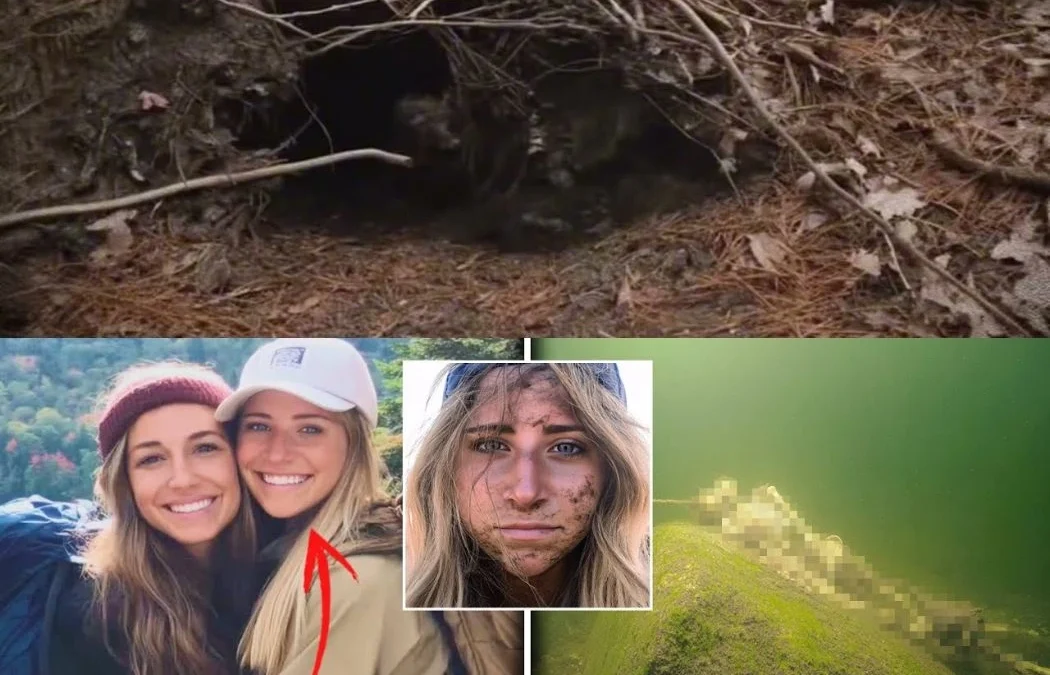
Sisters Disappeared While Camping – 4 Years Later, One Returns with a Horrible Story
In August 2013, two sisters, Sophia and Lily Evans, went to Marcy Lake near Lake Placid, New York, and were due to return in three days.
Their tent was found near Indian Pass Creek. Their equipment was neatly laid out, a map lay open, and the fire was still warm, but the girls themselves were gone.
Four years later, a woman in tattered hiking clothes appeared by the side of the road near Saranac Lake. She introduced herself as Sophia Evans. Exhausted and with scars on her arms, she repeatedly uttered only one sentence: “Where is my sister?”
In early August, the two sisters, 26-year-old Sophia Evans, a nurse from Albany, and her younger sister, 22-year-old Lily, an environmental science student from New York City, went on a short hike along the Van Hoevenberg Trail.
The hiking trail is one of the most popular in the Adirondacks and runs from Lake Placid to the base of Mount Marcy, the highest point in New York State. The sisters were due back in three days.
They were last seen on the afternoon of August 7 at The Mountaineer, a tourist shop in the town of Keene. The shop owner later told investigators: “The girls were quiet and bought petrol, batteries and a new water filter.”
Sophia said they had planned to spend a few days away at Pass Creek. That evening she sent her mother a message with a photo.
It showed Lake Marcy, calm and shrouded in mist. It was the last sign of life from the Evans sisters.
When they didn’t return home on August 9, the family notified the police. The next morning, a search team from the Department of Environmental Conservation retraced the route the girls were believed to have taken.
Around noon, the rangers reached their camp near Indian Pass Creek. The scene was calm yet unsettling.
There were no signs of a struggle or disorder. The tent was upright and the sleeping bags were spread out.
The backpacks were open, but the contents were still in place. Next to the fire lay a torn bracelet made of red thread, which, according to her mother, Lily had worn since childhood.
The police took photographs of the site, restricted access, and began a thorough investigation. There were no footprints on the ground, only indistinct shoe prints that disappeared a few meters from the camp.
The rain overnight had washed away most of the traces. There were also no signs of animals or strangers.
The sisters’ cell phones were not in the camp, but their chargers were in their backpacks. It seemed as if they had simply left the tent and had not returned.
The search operation began immediately. The next day, a helicopter equipped with an infrared scanner took off to search the area around the mountain.
Dozens of volunteers, foresters, and dog handlers worked on the ground. They examined hiking trails, valleys, and hunting cabins.
Over the course of five days, they searched more than 30 square miles of mountainous terrain. At night, the rescuers set up beacons in the hope that the girls would see the light and come out onto the road.
But no signals were received. On the sixth day of the search, they found only scant traces: a plastic wrapper from an energy bar, a mile from the camp.
Experts confirmed that the packaging was from the same brand as the one the sisters had purchased at The Mountaineer Store, but there were no fingerprints. Nearby, the dog picked up a scent leading to a ravine near a stream, but stopped at a cliff edge where the path ended.
The search was called off on the ninth day. The Essex County Sheriff stated in a press release that it was likely the sisters had gotten lost or had an accident.
Experienced hikers disagreed, however: “The route is not too difficult and the weather was calm that day.” There were no thunderstorms, avalanches or landslides that could explain the disappearance.
After two weeks, the operation was officially completed. The case was classified as a missing person case.
For the police, it was just another tragic story of missing tourists who would never be found. But for the Evans family, it was a different story.
The girls’ father, a former firefighter from Albany, demanded that the search continue. He argued that the camp looked too sterile, as if someone had deliberately arranged it that way to create an impression of order.
The mother insisted that Sophia would never have gotten far without the map, which was found unfolded on a rock next to the fire. But all her persuasion was to no avail.
In October 2013, the case was finally closed and the names of Sophia and Lily Evans were entered into the national missing persons database. Winter snow covered the site of their camp.
Only local hunters who happened to be passing by sometimes noticed strange things: traces of old campfires where officially no one was supposed to be, and, they said, short screams in the woods at night. But the police never returned to the place.
Lake Placid, accustomed to mountain tragedies, quietly added the two sisters to the long list of those who never left the Adirondacks alive. Mark Grayson wasn’t related to the Evans sisters, but he was closer to them than most of their friends.
Sophia had once completed an internship at the hospital of Rensselaer Polytechnic Institute, where Mark worked as a young electronics engineer. He helped her with her final project and later met Lily, the carefree ecology student who was constantly photographing birds, even in the rain.
When news of her disappearance came in 2013, Mark immediately drove to Lake Placid. At the time, he still believed that everything could be explained technically: a route error, a faulty navigation device, or perhaps an accident.
But when the search ended, he couldn’t return to his normal life. In December, he created a small website, a combination of diary and database, called the Find Events Project.
On it, he collected all the open cases: coordinates, reports, and witness statements from tourists. His former classmates joined him: Sam, a programmer; Blake, a drone engineer; and Sarah, a geodesy student.
They all agreed to come to the Adirondacks every summer to continue the search on their own. Mark called it an unconventional approach.
In June 2014, they set off on their first expedition. Instead of the usual binoculars and metal detectors, they used an old ground-penetrating radar that Mark himself had restored in the laboratory.
They used it to explore narrow caves and depressions in the High Peaks, an area where strange noises like knocking or screams are often heard, according to rumors. The radar revealed underground cavities, some natural and in some places suspiciously shallow, as if they had been created by humans.
Mark marked them on a digital map, which he stored on his server. The following summer, the team returned with a new experiment: a network of twelve cheap seismic sensors made from components of old gamepads.
They placed them in different locations in the forest to listen to the earth breathing. In calm conditions, the devices recorded strange, short vibrations, similar to rhythmic footsteps or metal striking stone.
Mark called it the mechanical heartbeat of the forest. Other members of the group thought it was the sound of wild animals or a sensor malfunction, but he disagreed.
At the same time, they were working with satellite imagery. Mark wrote an algorithm that compared archive photos of the area spanning several years and identified subtle changes: patches where the soil color had changed, traces of old fires, and missing hiking trails.
The algorithm flagged several areas not shown on the park’s official maps. One of these is a narrow valley near Emperor Mountain where hunters disappeared in the 1980s.
The Essex County Sheriff was skeptical. Police reports stated: “Mark Grayson is not a law enforcement officer. His information cannot be considered reliable evidence.”
But he didn’t give up. He collected testimonies from locals, from old guides, foresters, and campsite owners.
Many spoke of strange screams at night, shadows on the hillsides, and the smell of smoke in places where no tourists had been. One of the hunters, Harold Neil, said in a conversation with Mark: “Someone is living in these woods, neither an animal nor a human like us.”
In 2015, the team installed surveillance cameras in the trees at Indian Pass. Several of the recordings showed only passing animals, but one nighttime recording showed a faint flicker in the distance, as if someone were moving with a lantern.
When Mark tried to verify the coordinates, he found only fresh campfire marks and a piece of fabric with burned edges. The material matched the model of a backpack sold in the same store, The Mountaineer, in 2013.
With each passing year, Mark became more and more engrossed in the search. He stopped teaching at the college and lived on scholarships and donations.
His friends joked that he had married the forest, but he said, “Until I find her, I have no right to leave.” His apartment in Troy contained boxes of hard drives with gigabytes of data, maps, coordinates, reports, even recordings of forest sounds.
In the fall of 2016, he showed journalists his digital map of the hotspots. It was a detailed visualization of all recorded anomalies in the High Peaks area.
Dozens of red markers flickered on the screen, most of them within a five-mile radius of where the sisters disappeared. At that point, no one knew that the key to the sisters’ fate lay hidden within these markers.
But Mark, gazing at the shimmering map, said to the journalists the words that were later quoted in all the materials: “The forest remembers. It records everything. It just doesn’t let us read it.”
On September 19th at 6:45 a.m., a truck driver named Harold Mitchell noticed a woman walking along the side of State Highway NY-86 near the town of Saranac Lake. She was wearing torn tourist clothes, pants with burnt edges, a sleeveless jacket, and mud stains all over her body.
She was walking slowly, clutching her shoulder, hunched over, and barefoot. Harold slowed down, mistaking her for an injured tourist who had gotten lost.
But as he approached, he found that the woman barely reacted to his approach. She stared straight ahead and whispered, “Don’t hurt me. Please don’t hurt me.”
Mitchell opened the car door, wrapped her in a fleece blanket, and drove her to the nearest Franklin County Sheriff’s Office. There, she gave her name: Sophia Evans.
The officer on duty initially thought he was dealing with a mentally ill woman or a homeless person. Sophia looked emaciated, with a gaunt face, knotted hair, and deep scars on her forearms.
But when she was taken to a nurse and questioned, she answered the questions in a way that left little room for doubt. On the identification form, Sophia handwritten the address of her apartment in Albany: 122 Madison Avenue, Apartment 3.
She provided her father’s insurance number, the names of her school friends, her sister’s birthday, and described the kitchen in her apartment down to the smallest detail. The blue clock above the stove, the shelf with the first-aid kit, the peeling paint on the windowsill – everything matched the details of the missing Sophia Evans, from whom nothing had been heard for four years.
The police contacted the Albany Police Department. The Evans family still lived there.
Several hours later, the mother recognized her daughter in a photograph taken at the police station. Her words were recorded in the report: “That’s her. Oh my God, that’s my Sophia.”
While the family was officially notified, Sophia was taken to a hospital in the town of Malone. Doctors diagnosed her with severe exhaustion, dehydration, vitamin deficiencies, and numerous old scars.
She weighed just over 100 pounds and couldn’t keep her eyes open for long because of the light. According to doctors, her body was in a state of chronic stress, typical of people who had lived in separation or captivity for years.
When asked where she had been, Sophia initially remained silent. A few days later, she uttered only one sentence, which was recorded in the report: “We thought it was a hunter, but they were not of this world.”
The doctors decided to do nothing. Psychiatrist George Mason wrote in his conclusion: “The patient is in a state of profound traumatic amnesia. Her memory retains fragments of events, but she cannot place them in a coherent sequence.”
The first person to visit her was Mark Grayson. He learned about the woman from the woods from a local journalist and immediately went to the hospital.
As he entered the station, Sophia looked out the window, clutching a plastic cup of water. When she saw him, she whispered, “You’ve come.”
She recognized him, even though it had been six years since they had last seen each other. Mark remembered that her voice was quiet, as if broken, and her eyes were empty, like those of someone shaken by something they cannot explain.
That evening, police officially confirmed Sophia Evans’ identity. A spokeswoman for the Franklin County Department said, “The woman has been identified through DNA and family records. She is Sophia Evans, who disappeared in August 2013. Her condition is stable.”
The news spread quickly through the local media. Journalists spoke of a return from the dead.
But the real questions only began now. Four years in the wilderness, without papers, without any trace of life – that seemed impossible.
Police suspected she might have fallen in with a cult or been kidnapped. But no one explained how she survived without leaving a single trace.
At the hospital, Sophia was moved to a separate ward. A sign on the door read: “No visitors”.
The nurses reported that she often woke up at night from nightmares, screaming and clinging to the wall as if running away from something. One of the dreams she described during psychotherapy involved people in skins and fire underground.
Meanwhile, Sheriff Thomas Kelly, who had once closed the case, reopened it. He ordered an examination of old material, including Mark Grayson’s maps, which now took on new significance.
The report states: “If confirmed, Sophia Evans’ statement could point to the existence of a group of individuals operating in the woods around High Peaks.” A few days later, journalists from New York appeared at the hospital.
The reporters waited for a word, but Sophia remained silent. She only said to Mark: “I don’t remember how I got out. I just kept running and the forest ended.”
For the police, this marked the beginning of a new investigation. For them, it was an attempt to return to a world where everything seemed artificial, loud, and alien.
Sophia remained a living witness to the events in the Adirondacks, but each of her scars spoke louder than she did herself. For the first few days after her return, Sophia barely spoke.
She was afraid of the dark and asked that the lights be left on even during the day. Only after a week, when the doctors allowed her brief meetings with a psychiatrist and an investigator, did she begin to remember.
Her voice was quiet and fragmented. The nurses didn’t call these sessions interrogations, but confessions.
She said it all happened at night, in August 2013. She and Lily were just about to go to bed when a noise came from the woods: footsteps, hoarse voices.
Then they heard a grunt like an animal. Sophia came out of the tent, thinking it was a deer, and at that same moment she was attacked by someone wearing a deer skull mask.
The flashlight was snatched from her hands and everything was plunged into darkness. She only managed to call out her sister’s name.
When she regained consciousness, they were already far from the camp. Her hands and feet were bound with bark ropes.
Several figures dressed in animal costumes stood around her, their faces hidden beneath horned masks. Sophia could hear Lily praying softly.
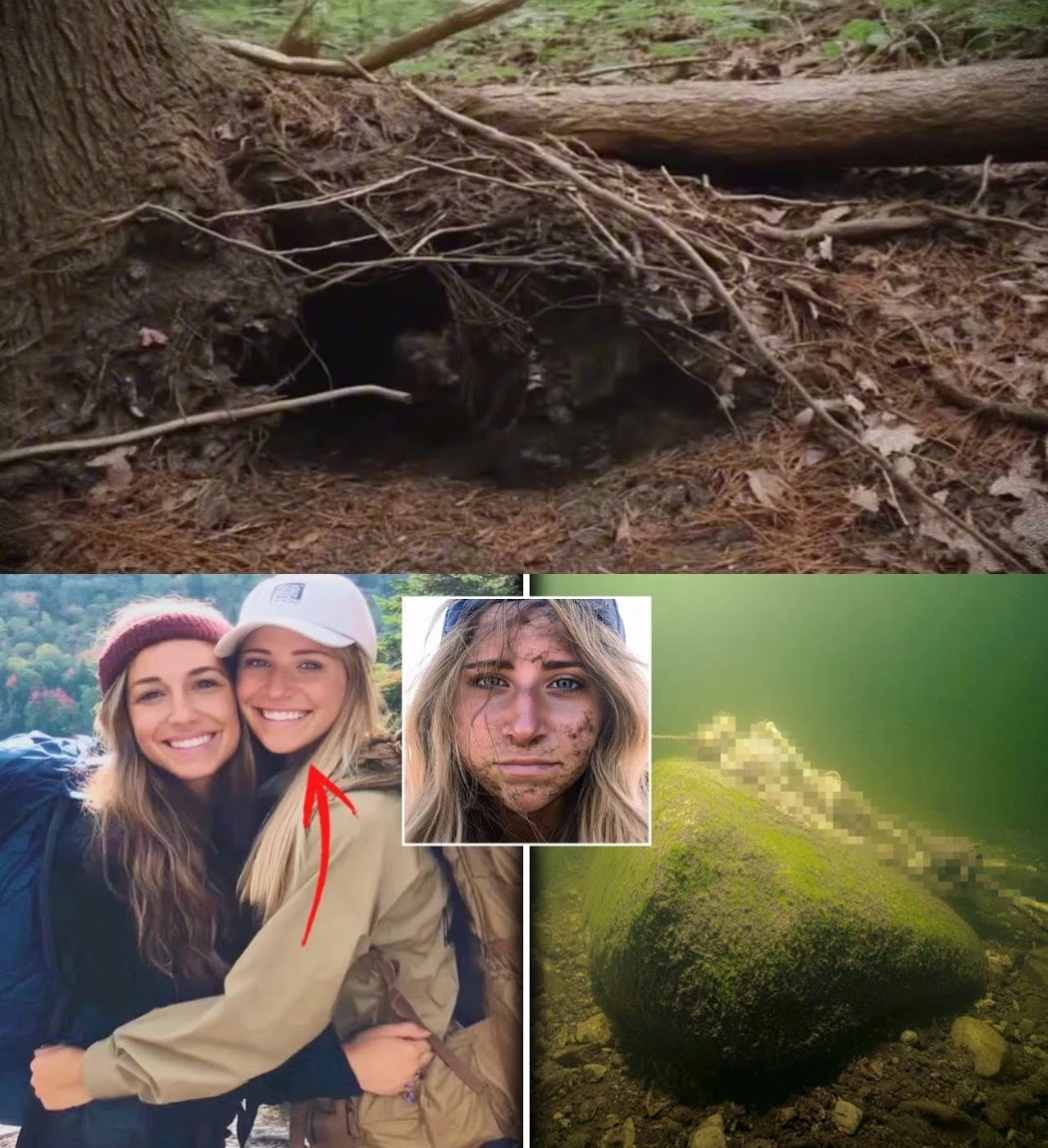
For more than two hours they were dragged uphill through the dense forest. Finally, they were taken to a pit hidden beneath the roots of trees at the foot of an unnamed mountain.
There in the darkness, it smelled of dampness and earth. It was an underground shelter, dug into clay with a roof supported by tree trunks.
They were held there. Sophia said that at first she thought they were crazy followers of a survivalist cult.
But she quickly realized that these people weren’t just savages; they lived by their own laws, which they called “Purification.” Their leader, a man named Elijah, had a former military build, a straight spine, short hair, and cold eyes.
He said he had served at Fort Drum and seen how people destroy themselves. Now it was time to return to nature, to the original balance.
When asked why they had chosen the sisters, Elijah said: “You are a symbol of what the world has lost. Blood and lineage are the last things that are pure.”
Sophia didn’t understand what he meant until she saw their rituals. For several days, the prisoners were kept in a pit and given neither food nor water.
Then they were forced to come to the surface. Around a large fire stood ten people, men and women of all ages, all dressed in the same robes and with symbols carved into their hands with knives.
One of them beat a drum made of deerskin, another poured ashes into the fire. Elijah gave a speech about cleansing civilization of its decay.
Everyone had to endure pain to become a newborn. Sophia and Lily were forced to stand under a waterfall until their bodies lost all feeling.
They were threatened with knives to force them to remain silent. At night, Sophia said, their hands were tied with wires and they lay on the cold floor listening to someone singing a monotonous melody somewhere nearby.
“They lived like a pack,” Sophia said. “They had their own signs, their own punishments. No one dared to speak unless Elijah said so. Everyone listened to him as to a god.”
When asked if she had seen anyone outside, Sophia replied: “There were two others. They were new. They were brought later, from the south. They didn’t come back either.”
The psychiatrist determined that her account was too detailed to be a hallucination. She described the smell of damp earth and the location of the pit beneath a slope where tree roots intertwined to form a dome.
She also mentioned a stream with reddish water that flowed nearby. These details matched the actual geography of the High Peaks massif.
When Detective Kelly asked her about Lily, Sophia remained silent for a long time. Then she said that her sister had collapsed.
She screamed and begged to be let go, and then they put her in the water. Elijah said that she would become part of the circle.
Sophia never saw Lily again. After that, she stopped crying.
She simply repeated that Elijah had taught his people not to kill without reason, but to free souls from a corrupt world. He called their group the “Children of the Forest.”
Sophia described how they lived. They slept in dug holes, ate berries, and sometimes hunted wild animals.
Their shelter was carefully camouflaged with branches and stones. The fire was kept underground so that no smoke would be visible.
Ropes made of bone and feathers hung above the entrance to protect her from outsiders. Sophia’s last memory before her escape is of a nighttime gathering around the fire.
Elijah spoke of a new purification, after which only those who had no fear of the earth would remain. She realized that her time had come.
That night, as the guard fell asleep, Sophia managed to untie the knot and escape. She trembled as she recounted this story in the hospital.
Her hands gripped the blanket. The words were hard to find, but each one sounded hopeful.
When asked if she believed Elijah was still alive, Sophia replied: “He doesn’t die. He just disappears into the shadows.”
The investigators recorded every word. A large-scale operation was imminent to test the worst: whether there really was a community of people in the Adirondacks who believed the world needed to be cleansed with blood.
After the initial interrogations, Sophia was transferred to a separate, guarded unit. Her statement became the most important document in the case, but she herself resembled a person living between two realities.
When the doctors gave her a sedative, she fell silent, and when the effect wore off, she began to whisper fragments of memories, as if afraid someone might overhear her. These fragments gradually formed a story that was later called her “survival diary.”
She said that after the first few weeks of captivity, life in the forest children’s camp was like an endless ritual. Every day she was forced to undergo tests called “purifications”.
One of these took place beneath Oak Creek Waterfall. A narrow stream of icy water cascaded down a cliff, and one had to stand beneath it until losing consciousness.
If a person fell, they were pulled out, rubbed with ashes, and declared reborn. Another test was the hunger strike.
Elijah said that hunger is a conversation between the body and the earth, and only those who endure it hear the voice of the roots. Sophia recalled that they couldn’t eat anything for several days and only drank muddy water from the swamp.
Some of them had symbols branded onto their skin: a circle with a cross-section resembling a sun split in two. Metal rods were heated in a fire, and the smoke from the burning flesh was part of the ritual.
Lily, her sister, was different. She cried, argued, and demanded to be released.
Sophia tried to calm her down, but Lily couldn’t hide her despair. At night, when the wind made the trees above the pit sway, she whispered, “We must escape, even if we don’t survive.”
A few days later, Lily tried it again. She escaped while the guards were asleep, but she didn’t get far.
Sophia heard her scream somewhere in the forest, a short, broken cry. Then Elijah appeared and quietly ordered her to get out of the pit.
The next morning, the group went to a gorge they called Pokama. There lay a large, moss-covered boulder, beneath which a stream flowed into a dark lake.
Elijah said, “She will return to the water from which we all came.” She was tied to a stone and thrown into the water.
Sophia didn’t see it. She was held on her knees and forced to repeat the words of the vow: “Purification knows no mercy.”
When she fell to the ground, the world went empty. After her sister’s death, Sophia withdrew from public life.
She no longer cried, no longer argued, and no longer looked anyone in the eye. She realized that the only way to survive was to be invisible.
She became submissive. She was allowed to carry water, cleanse her skin, and then pick berries.
The years flew by, without days or nights, without time. She lost all sense of the months.
Sometimes Elijah would gather his followers around the fire and speak of a great circle that would soon close. He would say, “The world outside the mountains is already dead, and only those who remain in the forest will preserve the blood of the earth.”
Sophia wasn’t listening, but she remembered that new people were appearing among his people: young, silent, frightened. She suspected that these were the ones who would later be abducted.
Some couldn’t bear it and disappeared. Their escape was not a matter of courage, but of chance.
It was September, cranberry season. She was sent to pick berries in the marshy area of Bloomingdale Bog.
She was accompanied by two guards, one of whom was young and often nervous. As they were about to cross a bog, the ground suddenly gave way.
The young man disappeared instantly into the mud without even shouting. Another man rushed to help, and Sophia seized the opportunity.
She threw the basket and ran off without looking back. She ran until nightfall and then hid in the thicket.
She ate moss and roots and drank rainwater. Her body was exhausted, her legs were cut by stones, but her fear drove her on.
She wandered for several days without knowing the direction, guided only by the sounds of the road, which sometimes seemed to come from a great distance. When she finally emerged from the forest, she was blinded by the headlights of the cars.
She collapsed on the side of the road near Saranac Lake. Later in the hospital, she reiterated that she couldn’t remember how she had traveled those miles.
Only one thing remained in her memory: the sound of a drum, audible somewhere behind her, long after she had run away. It beat a rhythm, slow, like the heart of the earth, refusing to let go.
For the investigators, this was the climax. Sophia not only survived, but also confirmed the existence of a real community operating in the woods.
When her words were compared with Mark Grayson’s map data, it became clear that her escape route led precisely through the locations he had identified as hotspots. That evening, when she told us about her sister’s death, there was complete silence in the station.
Sophia looked out of the window and said only one thing: “Lily didn’t drown. She stayed with them. The water absorbed her.”
A week after Sophia Evans’ body was found on the road near Saranac Lake, the Franklin County Sheriff’s Department announced the start of a special operation. The case, which had been closed four years earlier due to lack of evidence, suddenly gained new momentum.
Sophia’s statements, detailed with precise landmarks, names of streams and slopes, and even descriptions of smells, matched the data Mark Grayson had once compiled in his digital map of the hotspots. Mark arrived at headquarters, which had been set up in an old hangar near High Peaks.
He brought a laptop, an external drive, and printed maps with his own markings—red dots he had placed there over the years. When they compared these with the locations Sophia had mentioned in her confession, a striking match was found.
The points of interest overlapped almost perfectly. Investigator Kelly ordered the formation of five search teams.
At dawn on September 24, 2017, a convoy of jeeps set off towards the High Peaks massif. The group included dog handlers, forensic pathologists, pioneers, two geologists, and Mark himself as a consultant.
The forest greeted them with mist and cold. The branches were covered with frost, and the ground beneath their feet felt springy, as if it were concealing something living.
The first few hours of the search were fruitless, but around noon one of the groups came to the spot where, according to Sophia, there was a talking waterfall: Oak Creek. As they approached it, the dogs became nervous and the smell of smoke filled the air.
Beneath the rock, behind the undergrowth, they found a hole about a meter in diameter, reinforced with logs. Inside were the remains of wooden supports, burnt branches, pieces of leather, and a clay vessel containing dried black deposits.
A few meters from the pit was a stone circle consisting of dozens of boulders. Some showed traces of soot, others had knife marks, as if meat had been cut on them.
Ashes, animal bones, and a rusty knife were found on the ground. Forensic experts documented every detail, the photos were sent to headquarters, and when Sophia was shown one of them in the hospital, she immediately recognized the place: “That’s where we were standing last night. That’s where the cleanup began.”
They found a dilapidated shelter 200 meters from the circle. The entrance was obscured by branches and moss.
Inside were wooden remnants of the floor, food scraps, small animal bones, and a symbol carved into the wall with a knife: a circle divided in two, the same one Sophia described. Above the entrance hung masks made from deer skulls, two large and one small.
Dried blood was found on the antlers. Experts also found traces of everyday life: old metal cups, canisters, fragments of military uniforms with pendants on which part of the name could still be read: Graves.
This was the name of the man Sophia called Elijah. The next day, another unit arrived in the area: a special forces unit from Albany.
The area around Oak Creek was cordoned off. Journalists were not allowed access.
The operation was codenamed Silent High Peaks. Its objective was to find the remaining accomplices and any traces of human remains.
On the third day of their search, they noticed smoke in one of the ravines. When they arrived, they found an abandoned camp, three huts made of logs, and a large fire that someone had hastily tried to extinguish.
Near the fire lay old boots, tin cans, and a child’s helmet from army surplus. In the ashes lay scraps of fabric, pieces of metal, and a wooden idol: a figure with a human face covered in dried resin.
The photos were sent to a laboratory where experts determined that the resin particles contained traces of human blood. It was no longer just the remains of a dwelling, but a ritual site.
That evening, investigators compared the data. Mark’s map and Sophia’s statement formed a triangle between Oak Creek, Bloomingdale Bog, and Lake Tear.
Within this triangle, several other anomalies were observed: fresh excavations, unburned fires, and traces of the transport of heavy objects. This suggested that the group may have been present here for years.
During a search of one of the huts, they found an old military bottle with the letters EG engraved on it. It contained a dried liquid with a pungent odor.
Chemical analysis revealed that the substance was a mixture of alcohol and ash—one of the components used in cleansing rituals. The sheriff’s report stated: “The site appears to have been abandoned for no more than a few months. Some fires are still fresh, and shoe prints of various sizes were found in the ground.”
This means that part of the group may have remained in the forest even after Sophia’s escape. Mark, who was standing near the dug hole, told reporters that he had come to the site to make sure it was reality and not just his obsessive hypothesis.
His words were included in the final report: “What we thought was a digital anomaly turned out to be a real center of evil. The forest was silent, but we heard its echo.”
After a week of work, the area had been completely examined. More than 100 pieces of evidence were collected: bone fragments, tissue, and soil samples.
Part of the sample was sent to a laboratory in Albany, the rest to the FBI. Officially, it was stated that elements had been found that could indicate the commission of ritual murders.
The High Peaks operation was completed on October 1st. It became one of the largest search and crime expeditions in the history of the Adirondacks.
For the locals, this was the moment when the legends about the forest children ceased to be legends. That evening, as the convoy of vehicles began its return journey, a small fire was still burning on the mountainside.
No one had extinguished it. The flames were reflected in the puddles, reminding us that the forest retains its breath even when evil retreats.
The first days of October 2017: Autumn arrives quietly in the Adirondack Mountains. The air becomes thicker, the water colder, and the leaves sink into their own shadows.
At that time, divers from the Department of the Environment began investigating Lake Tear, a small body of water in the High Peaks Possibilities that Sophia had mentioned in her confession. According to her statement, that was where her sister’s life ended.
On October 4th at 9 a.m., a group of four divers entered the lake. The lake was shallow, only a few meters deep at its deepest point, but the bottom was covered with silt and thick algae.
Just one hour after work began, one of the divers spotted a dark shadow in the silt. When he shone his flashlight on it, a human skull emerged from beneath the layer of algae.
Beside it lay fragments of fabric and a rope stretched to a large boulder. The climb took several hours.
A partially preserved skeleton, remnants of clothing, and metal clasps from a backpack were brought ashore. When the forensic examiners cleaned the bones of mud, they discovered that rope fibers were tightly wrapped around the shins and wrists, like handcuffs.
Sheriff Thomas Kelly was on the scene. In his statement, he said: “We are not drawing any conclusions, but everything indicates that this was a ligature performed before drowning.”
The samples were sent to a laboratory in Albany for DNA testing. Three days later, on October 7, the result was confirmed: the remains belonged to Lily Evans.
The match was one hundred percent. When Sophia found out, she silently turned over the page with the results and whispered only: “So she is here after all.”
This discovery was a turning point in the investigation. For the first time, the police had not only a witness statement, but also irrefutable proof of the murder.
At the prosecutor’s initiative, the case was referred to a special team in Syracuse that deals with religious groups and crimes in national parks. All the collected evidence—bones, pieces of rope, army pendants bearing the name E. Graves—was pieced together to form a single chain of evidence.
At the same time, the FBI released a composite sketch of the man Sophia described as Elijah. He had short hair, high cheekbones, and a scar across his eyebrow.
The photo was published in all local media outlets. Within a few days, the police received dozens of calls.
Some claimed to have seen him in Plattsburgh, others near an old sawmill in the north. None of the reports could be confirmed.
On October 12th, the situation changed. In the small town of Tupper Lake, a man attempted to purchase large-caliber ammunition at the hunting store Mountain Dick Outfitters.
The shop owner was alarmed; the customer looked dirty, had torn hands, and was looking around nervously. When asked to show his ID, he ran away.
He was arrested nearby a few minutes later. The report states: “Tobias Reed, 39 years old, former mechanic from North Carolina with no fixed address.”
He carried a knife, a piece of rope, and a homemade locket with an engraved symbol—a circle cut in two. It was the same pattern that had been found at the camp near Oak Creek.
During the interrogation, Reed initially remained silent. Then, after several hours of pressure, he admitted that he knew Elijah.
According to him, they met in 2012 when he was preaching about cleaning up the city’s garbage. Elijah gathered a group of people around him: homeless people, former soldiers who had gone astray.
He promised them a new life in the forest, where there are no lies of civilization. Reed admitted that he had helped build the underground pit and transported the prisoners’ belongings.
When asked about the Evans sisters, he replied: “He said they were pure, that they would turn to water. I didn’t ask what that meant.”
His words corroborated Sophia’s account of Lily’s death. Divers had already worked at the location in Pokama Gorge he described and found the body.
Reed became the key witness for the prosecution, even though he was formally treated as an accomplice. His arrest was the first success of the operation.
The following days were spent in feverish work. Investigators checked all addresses where Elijah Graves might be hiding.
According to the FBI, he had served at Fort Drum and was discharged in 2010 following a disciplinary offense. His psychiatric evaluation described paranoid beliefs about the moral decay of society.
The search lasted three weeks. Graves was seen in various parts of the city: in bars, at gas stations, on the side of the road.
All reports proved false until November 27th, when the patrol stumbled upon an old logging camp between Middle and Upper Saranac Lake. There, in an abandoned building amidst the remains of canned goods and army supplies, they found a sleeping bag containing a rifle and a deer skull mask.
There were signs of a fresh fire nearby. Gunshots were heard in the evening when police were searching the area.
A brief firefight ensued. When it subsided, they found a wounded man in the bushes: bearded, thin, with a cut on his face.
His papers confirmed that it was Elijah Graves. His condition allowed him to speak.
When asked why he did it, he replied: “You call it a crime. I call it purification. The forest reclaims those we do not deem worthy to return.”
The next morning he was taken to the hospital under guard. Sophia was the last person to find out.
She didn’t say a word. She just looked out the window, where the forest stretched out beyond the glass – the same forest that had taken her sister and four years of her life.
Elijah Graves’ trial began in December, just three weeks after his arrest. The case, which once seemed hopeless, now had a name, a face, and irrefutable evidence.
The New York State Attorney General’s office declared the trial a priority criminal case to maintain public outcry. The courtroom in Franklin County was packed.
Journalists, relatives of the missing, several former searchers – all wanted to see the man the forest had hidden for four years. Graves sat motionless, in prison garb, with closely cropped hair and expressionless eyes.
His gaunt and emaciated face seemed timeless. When the judge asked him about his guilt, he replied briefly: “I did what I had to do.”
The prosecutor presented evidence: DNA from Lily’s grave, rope remnants, symbols on stones, and matching shoe prints. But the main witness was Sophia.
She sat in the audience with a white scarf around her neck, staring ahead and trying to avoid his gaze. Her testimony lasted almost two hours.
She spoke about the night of the abduction, the pit under the trees, the rituals, and her sister’s death. The judge repeatedly requested a recess.
When the prosecutor asked her if she was sure it was Elijah Graves, Sophia replied quietly but firmly: “I could hear his voice even when the forest was silent.”
At that moment, the courtroom fell completely silent. The defense attempted to prove that the defendant was mentally ill.
The lawyer read out old military records: post-traumatic stress disorder, episodes of delirium, isolation. But the prosecutor insisted that all of Graves’ actions were deliberate and consistent.
He planned the kidnapping, controlled his accomplices, left behind symbols, and created a system he believed in. It wasn’t blind rage, but religious fanaticism that transformed into a crime.
Among the evidence presented to the court were diaries found in the camp. Graves’ handwriting contained excerpts from his own sermons: “Man is a disease. The earth heals itself through purification.”
The judge quoted these lines in his verdict, calling them the manifesto of a self-proclaimed messiah. The jury delivered its verdict on January 2, 2018.
Elijah Graves was found guilty of the kidnapping and murder of Lily Evans and the wrongful imprisonment of her sister. He was sentenced to life imprisonment without the possibility of parole.
His accomplice, Tobias Reed, who cooperated with the investigation, was sentenced to 25 years in prison. After the verdict was announced, Sophia left the courtroom without a word.
She didn’t speak to the journalists, but went out into the courthouse courtyard where the first snow was falling. Later, one of the reporters described her face as calm but empty, as if she were looking right through us into a forest that no longer exists.
A few weeks later, she moved to Vermont, to a small town near Burlington. There she began working in a clinic for war veterans – the same ones who, like Elijah, had not returned from the war fully alive.
Her colleagues said she didn’t talk much, but she was always nearby if someone woke up screaming in their sleep. Mark Grayson returned to Troy after the trial.
His map showing the hotspots was now in the police archives as official evidence. For him, the story ended not in victory, but in exhaustion.
In an interview with a local newspaper, he said: “I wasn’t looking for a monster. I was looking for people and I found them, but too late.”
In the spring, he shut down the Find Events Project website. The last entry was simple: “We found them, may the forest be silent.”
Graves’ case was entered into the federal register as an example of religiously motivated crimes in closed ecosystems. But even after the verdict, one had the feeling that the story wasn’t over.
During his final speech, as he stood before the judge, Elijah suddenly raised his head and said, “You can imprison the body, but not the forest. It always listens.”
These words were filed away, and a year later someone wrote them on a wooden signpost near Indian Pass. The police never found out who had done it.
The locals simply began to avoid the path.
You Might Also Enjoy


Mom Installed a Camera To Discover Why Babysitters Keep Quitting But What She Broke Her Heart


She Gave a Hungry Little Girl a Free Birthday Cake — The Next Morning, a Black Rolls-Royce Arrived




