The Kate Prout Case: She Went Missing Without a Trace…The Truth Shocked England

Redhill Farm, Red Marley, Gloucestershire. Monday, 5th of November, 2007. 3:29 in the afternoon. A woman picks up the phone and calls her bank. That’s all. An ordinary call on an ordinary Monday. Nothing in it hints at what is coming. But, it is the last moment anyone can prove Kate Prout was alive.
After 3:29, her phone goes quiet, her bank account goes quiet, her family hears nothing. And that night, while fireworks climb over the villages of Gloucestershire, her handbag is still at home. Her purse, her bank cards, her car keys, even her makeup. Everything a person takes when they walk out of the door, left behind.
She lived on 276 acres of fields, woodland, and water. And one man knew every slope of it. In this case, the silence itself would become evidence, and the answer would not arrive the way anyone expected. It would take 4 years, a jury, and one person nobody saw coming.
So, who was she? Kate was 55. A retired primary school teacher. She came from a farming family, one of several siblings. Her older brother, Richard Wakefield, was a farmer, too. Her parents had died before her. And every year, Kate laid flowers on their grave. A small ritual, repeated every year. Hold on to that. It will matter later.
For around 20 years, she taught in primary schools across Gloucestershire. By some accounts, she retired early, while still in her 40s. Two decades of small children, school runs, marking, and parents’ evenings. A full adult life built on her own work.
Later, she became known as a campaigner for fairer prices for dairy farmers. A cause that ran straight back to the world she grew up in. She loved the countryside. She cared about animals. At home, she walked four dogs across the fields, kept chickens, worked on the garden, and arranged the flowers at her village church.
Most retellings shrink her to a single line, a wife in a divorce. She was far more than that. Adrian Prout was about 10 years older. He came from a farming background, too. Before Kate, he had a daughter from an earlier relationship. And when he met Kate, he was living in a caravan.
But he was ambitious, and he was practical. He built a business digging trenches and laying pipes, heavy groundwork across rural land. The business did well, very well. A man who started in a caravan had worked his way up to real money.
On paper, it was a success story. It also gave him something else. Adrian knew earth, how to move it, how to dig it, how the ground behaves in the countryside. Right now, that’s only a job description. Remember it anyway. The picture so far is of a practical, self-made man used to getting what he worked for.
Kate and Adrian married in 2000. They had no children together. In 2004, they bought Red Hill Farm in the village of Red Marley for £820,000. Pasture, woodland, animal pens, and water spread across 276 acres. Adrian’s pipe business paid off a large part of the mortgage. He also set up a commercial pheasant shoot on the land.
For Kate, Red Hill was home. The dogs, the chickens, the garden, the church flowers. For Adrian, it was something bigger. He would later describe the farm in a single word, his dream. By 2007, the farm was valued at around £1.2 million.
And here’s the thing about a dream. When a place becomes someone’s dream, it stops being property. It becomes something a person will fight to keep. So, what happens when a husband’s dream has a price, and the woman in his house is about to name it?
Kate Prout kept a diary. She wrote down what happened in her marriage. Years later, a jury would hear her words read aloud in a courtroom. On Boxing Day 2006, there was a blazing row. It involved Adrian’s daughter, Laura. According to Kate’s diary, Adrian said he wanted a divorce. Laura would later dispute Kate’s version of events.
But the diary was Kate’s own record, written at the time, and it kept going. By late 2006 and early 2007, the prosecutor would tell the jury Kate was complaining that Adrian had been threatening and violent towards her. Her diary described arguments during which she wrote, “He threatened to kill her.”
One entry came from February 2007. The farm had a swimming pool, and at that time it was empty. According to Kate’s diary, Adrian threatened to kill her by holding her over it. An empty pool, a threat. And a woman who chose to write it down. Remember that detail. She was keeping a record.
Over the months that followed, the marriage did not recover. Kate’s diary shows her fearing for her life. It also shows Adrian saying he could not wait to be rid of her. Neither of them left. Think about that. A couple heading for divorce with documented threats still living under one roof on a farm worth around a million pounds. Two people who no longer wanted to be married sharing a house and arguing over how to divide what they owned.
Then came September 2007, Salisbury, Wiltshire. September 2007. Kate decided to get away. She rented a holiday cottage near Salisbury and went there with her half-sister. But a farm does not run itself. There were animals to feed and a house to look after. So, Kate made arrangements for a house-sitter.
Her name was Diane Bellamy. Diane stayed at the farm while Kate was away. And after that first stay, the court heard she and Adrian formed a friendship. It grew. The prosecution told the jury Adrian fell in love with her. Nothing in the public record suggests Diane did anything wrong. She came to a farm to look after a house. What happened next was a matter between Adrian and his marriage.
So, by October 2007, look at where Adrian stood. A marriage he no longer wanted, a farm he called his dream. A woman on his mind. And between him and that future stood one thing. Money.
Rookery Hill Farm. Early November 2007. The couple were set to divorce, and the dispute had narrowed to a single number. The prosecution would put it plainly. Kate wanted £800,000. Weigh that number from both sides.
For Kate, £800,000 was her share after seven years of marriage. It was the price of her independence. For Adrian, the Crown argued it was something else. Paying it could threaten the farm, and the farm was the dream he had built from a caravan. Those two things could not both survive.
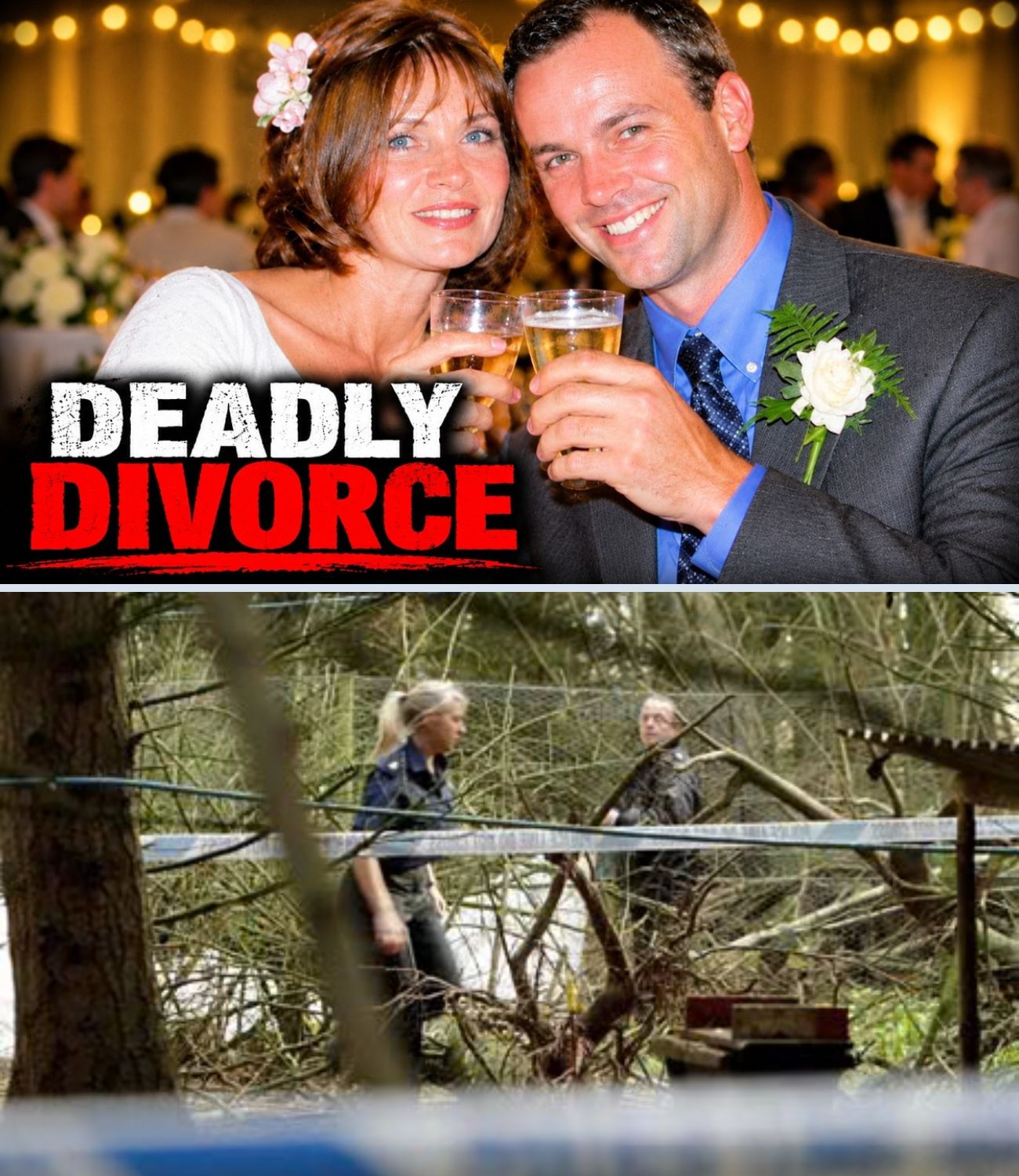
Now, what happened next? Slowly, because every hour matters. It is Monday, 5th of November, 2007. Bonfire Night. That evening, families across England would stand around fires and watch fireworks. But that morning, before the day had properly begun, Adrian Prout picked up his phone. He sent a text message to Diane Bellamy. He told her he loved her. Not in some quiet moment after the marriage had ended. It was sent that very morning, under the same roof as his wife.
Phone records would later confirm the message. A jury would see the date and the time, and they would understand what it showed. On the morning of that day, Adrian Prout was telling another woman he loved her, while his wife was still living in his house, still pressing for the money, and still waiting for an answer.
And Kate? She went about her day. She didn’t know what was coming. Or she did, and wrote it down anyway. At 3:29 that afternoon, she picked up the phone and called her bank. That was the call you heard at the start of this video. It is the last time anyone can prove she was alive.
After it, her phone is quiet. No calls to her brother, no calls to her friends, no bank transactions, not one. Her bag is at home, her purse, her keys. Everything stays where she left it, and the house goes silent. The question now is no longer what Kate said or wrote. It is what happens when a woman who kept a record of everything suddenly stops, because the silence was about to be tested.
Red Hill Farm, Red Marley. Tuesday, 6th of November, 2007. Nothing happens. That is the first thing to understand about the days after Bonfire Night. No sirens, no search parties, no frantic phone calls to her family. Kate Prout is gone, and the only person who knows it is the man in the house.
Tuesday passes, then Wednesday, Thursday, Friday, and Adrian Prout does not call the police. Her handbag is still at the farm, her purse, her car keys, even her passport. Everything a person takes when she walks out of the door left behind.
So, what does Adrian do with those days? At some point that week, he meets Diane Bellamy for lunch at a pub near Gloucester. The jury would later hear what happened at that table. The prosecutor described Adrian as appearing uptight. He complained that Kate had been horrible to his daughter. Diane asked him directly, “What have you done?”
His answer would stay with the jury. He told her that someone had taken Kate away, not that Kate had left, not that he was worried. Someone had taken her. Who? He didn’t say. Nothing in the record shows he ever named anyone. Hold on to that question. We will come back to it at the end. And one more thing. Nothing suggests Diane did anything wrong. She asked the right question at the right table.
Saturday, 10th of November 2007, 5 days after Kate’s last confirmed call, Adrian Prout formally reports his wife missing. His account to police, Kate had left the farm alone without her belongings after a series of rows. Think about that sentence. She left without her purse, her keys, her passport in November, and never called anyone again.
Police did not buy it. They would later reveal that Adrian was their number one suspect from the day she went missing. Her brother, Richard Wakefield, would spend the next 4 years appealing for answers. He would later describe those years as being like a prison sentence for him and his wife, Linda.
“Since Kate, my sister, disappeared, and we’re all extremely worried to her disappearance, and it’s most unusual and out of character for Kate. Kate is a very caring person. She likes she’s artistic and she likes sketching. She does the flowers in the local church. She enjoys the countryside. And she loves walking the dogs. She’s a good cook. She’s articulate, intelligent, always well presented. She’s greatly missed by the family all of her family and friends and we’re most distressed at the moment on Kate’s disappearance. And we’d like Kate to come forward if she she’s anywhere to come forward and and tell us where she is or just tell anyone or and anyone else that’s knows Kate, if they knows where she know where she is to come forward and give assistance to us to where Kate…”
But suspicion is not proof. And without Kate, police had very little. Later that same month, Adrian was arrested for the first time. He was released while the inquiry continued.
On the 12th of December, police made a nationwide appeal for help finding Kate. And at Red Hill Farm, the search began. It was the biggest ever mounted in Gloucestershire. Underwater teams went into the water. Aerial surveillance swept the land. Ground penetrating radar scanned the fields. Officers searched woodland and outbuildings. At one point, they even sifted through animal excrement because they had to consider whether Kate’s body might have been fed to the pigs.
Read that again. That is how far police were forced to go. They found nothing. No body. No grave. No crime scene. And without those, police had no cause of death, no scene to examine, and no forensic trace linking anyone to a corpse.
Meanwhile, Adrian’s life moved on. At some point, his police bail was canceled. A local paper reported he had been taken off the suspect list. Police said the investigation into Kate’s disappearance and suspected death remained active, and a woman named Debbie Garlick entered Adrian’s life.
Let’s be clear because the names are close. Debbie Garlick is not Diane Bellamy. Two different women at two different moments in this story. Diane was the house sitter. Debbie would become his partner. Remember her name. In this case, the person nobody expected to matter would matter most.
Now, think like a detective. To convict Adrian, a prosecutor would have to prove three things: that Kate was dead, that someone killed her, and that someone was Adrian. With no body, every single point would have to be built from circumstance. Her diary, her missing belongings, his text to another woman on the morning she vanished, the five days of silence, the lunch. Piece by piece.
Cheltenham, Gloucestershire, March 2009. On a Tuesday morning, police arrested Adrian at his home. He was taken to Cheltenham Police Station and charged with murder. He then appeared at Cheltenham Magistrates Court. The detectives had no body, they had no cause of death.
Under English law, you can prosecute a murder without a body. But the law also requires something else. A jury willing to convict, and that was the risk. Because if 12 strangers had even a small doubt, Adrian Prout could walk out of Bristol Crown Court a free man. Could a jury convict a man of murder when the victim had never been found?
Bristol Crown Court, January 2010. A week earlier, Debbie Garlick had given birth to a baby girl. Her name was Evie. The father was Adrian Prout. Now, he was in the dock charged with murder. After he was charged, he and Debbie had become engaged. She believed he was innocent. She sat in the public gallery with a newborn at home and a man across the room who said he had done nothing.
And the Crown had a problem you already know about. No body. Prosecutor Paul Dunkels opened with a choice that surprised some people. He did not paint Kate as a saint. He told the jury she could be rude, short-tempered, prone to tantrums, a volatile personality, he said, and that was reflected in her marriage.
Why would a prosecutor say that about the victim? Because he did not need her to be perfect. He needed the jury to understand that a difficult woman can still be killed. And that a troubled marriage does not erase a crime.
Then he told them where the marriage stood. When Kate vanished, it was over. They were set to divorce. And Adrian Prout, the jury heard, had fallen in love with his house sitter, Diane Bellamy.
Now came the case itself. No single piece proved murder. Together, the Crown argued, they pointed one way. First, Kate’s diary. It recorded arguments and threats, including the February 2007 incident when she wrote, “Adrian threatened to kill her by holding her over the empty swimming pool.”
Second, the money. The jury heard that Kate had increased her settlement demand shortly before she vanished, £800,000. Adrian had offered £600,000.
Third, the text. On the morning of 5th of November, Adrian had written to Diane Bellamy to tell her he loved her.
Fourth, the 5 days. Her belongings were still at the farm, and he did not call the police until the Saturday.
And then there was Diane’s evidence about the lunch. She told the court what happened at that pub near Gloucester. When she asked what he had done, he answered her, according to the prosecution, “Don’t ask me. They’ve taken her away.” Then he told her not to ask any more questions. They, not she left. Not “I’m worried.” They had taken her.
The jury also heard that since Kate vanished, no money had been drawn from her bank account. Checks with government agencies, health trusts, and utility companies had found no sign she was alive. A woman does not simply stop existing unless something has happened to her.
The witness box. Then Adrian took the stand. He denied murdering his wife, but he conceded something that mattered. There had been a risk he accepted that he would have to sell his dream farm to meet her £800,000 demand. That one admission pulled the motive into the open. The farm. The dream. The price.
His defense team had a different case to make. There was no body. There was no confirmed cause of death. There was no scene and no forensic link to a corpse. Their position, a missing woman, a hard marriage and nothing more. His daughter Laura backed him. She testified in his defense. She even believed Kate was alive and that Kate had framed her father.
So, what would you have done? You have heard the diary, the money, the text, the silence, the lunch, and a man who says he did nothing. Would you convict someone of murder with no body, no weapon, and no confirmed cause of death? Tell me honestly in the comments because 12 people in Bristol had to decide.
After about 3 weeks, the jury retired. It took them around 14 hours. On a Friday in early February 2010, they returned. By a majority of 10 to 1, they found Adrian Prout guilty of murder.
Kate’s brother, Richard Wakefield, burst into tears as the verdict was read. Outside court, he did not talk about revenge. He appealed to Adrian to tell the family what happened to Kate and where she was so they could lay her to rest and say their goodbyes.
On the Monday, the judge, Mr. Justice Nigel Davis, sentenced Adrian to life imprisonment with a minimum of 18 years. That was 3 years longer than it might have been. The reason, Adrian had refused to say where Kate’s body was.
The judge told him it was his anger that killed her. And he returned to one piece of evidence that he said stuck in his mind. Kate used to remember her parents by placing flowers on their grave. You heard that detail in the first 5 minutes of this video. Now a judge was saying it aloud. Kate had spent years honoring her dead and her family could not do the same for her.
Police said they had never seen any remorse from Adrian and he had never admitted anything. As he was led away, the story, as far as the world knew, was over. Adrian Prout was in prison for life. Kate was still missing, and Adrian insisted to anyone who would listen that he was innocent. One person believed him completely, and she would soon be the reason that silence finally broke.
“The time that she’s been missing, have you looked through her room, looked through her property?”
“No.”
“But were you uh you were aware that her car had been left behind?”
“Mhm.”
“Were you aware of any other things that had been left behind that that she’d normally have with her?”
“No, I couldn’t find her car keys, which was strange. Cuz they always put in the drawer in the kitchen, and they weren’t there. So, I assumed she had her car keys with her.”
“If she goes out, I mean, what stuff would she normally take with her of a personal nature? I mean, credit cards, purse, things like that.”
“Yeah, phone.”
“Were you aware that the phone was still at home?”
“No. I I The only thing is even rang the phone, and I never heard it.”
“But if she went out of her own volition, then that’s the type of stuff that she would take with her.”
“Yeah.”
“And you weren’t even though weeks gone by, you had no concern about her well-being then? You you…”
“Well, I did, but I thought if things weren’t good, someone would have rang me or you know, I assumed she was okay.”
Gart Prison, Lancashire. 16th of August, 2011. A small room next to the prison chaplain’s office. A man sits down. Wires are attached. A polygraph expert named Don Cargill asks one question. “Did you murder Kate Prout?”
Adrian Prout answers, “No.” The test says he is lying.
How did we get here? The answer begins with the one person who never walked away. After the sentence, Debbie Garlick did not retreat. She campaigned for his release. She reportedly built it around a simple message, “No body, no proof, no justice.” She even offered a £10,000 reward for information that would prove he was innocent.
From where she stood, the argument had weight. A man had been convicted without a body, and she had a daughter with him. Little Evie. So, she pressed for something that might clear his name, a lie detector test. Polygraphs are contested. They are not normally used as proof in court. They measure stress, not truth. But, this one was never going to matter in a courtroom. It was going to matter in one relationship.
Debbie paid the expert to visit Gart. The test was set up in that room, and Adrian failed. Cargill told him he should admit his guilt to Debbie and to the authorities. Then, he left the prison and phoned Debbie to tell her the result.
For a while, nothing happened. For almost 4 years, Adrian Prout had let the people closest to him believe a story. He had a fiancee who was campaigning for his freedom, and a child who would grow up believing it. Then, in November 2011, during a prison visit, Adrian told Debbie the truth. He had killed Kate.
She could have stayed silent. She was engaged to him. She had a child with him. She had publicly staked her name on his innocence. She went to the police. And that is the answer to the question I planted at the start of this video. The truth came from the place nobody expected, the person who believed in him most.
17th of November 2011. The next day, two detectives visited Adrian in prison. He admitted the murder. He told them he had disposed of Kate’s body at Redhill Farm. Senior Detective Simon Atkinson said later that he had always denied it.
Redhill Farm, Red Marley. 18th of November 2011. The following morning, a people carrier arrived at the farm just after 11:30. Adrian Prout stepped out handcuffed to a police officer. He was moved into a police car at the farm entrance and driven into the woodland.
4 years earlier, he had walked these same fields. He pointed to an area of about 250 square meters, but he could not give the exact spot.
Cobhill Wood, late November 2011. Police brought in ground-penetrating radar. The search was described as challenging.
Then, after days of work, Detective Superintendent Atkinson stood at a cordon and made an announcement. Human remains had been found close to the location Adrian had identified. Kate had been buried in a pheasant pen. Her body was wrapped in a curtain and plastic sheeting. Dental records confirmed it was her.
Almost 4 years after her last call to her bank, Kate Prout had been found. Her brother, Richard Wakefield, said the family were shocked when police told them. But, they were also glad they could finally give his sister a proper send-off. He and his wife, Linda, said the years since she disappeared had been like a prison sentence for them. 4 years of not knowing. 4 years of asking for a grave.
Remember the flowers Kate laid on her parents’ grave every year? Now, her family could do the same for her.
Gloucestershire Coroner’s Court, May 2012. At the inquest, Adrian’s own account was heard in public for the first time. He said that on the 5th of November 2007, around 5:30 in the afternoon, he and Kate had an argument. He told police he lost his temper and snapped and strangled her. He wrapped her body in a curtain and put it in his Land Rover. Then, he went to a pub to maintain what he called an air of normality. Later, he buried her in a pheasant pen on the farm. The coroner recorded a verdict of unlawful killing.
The confession answered the biggest question, but it left four others open. One, how planned was it? Adrian says he snapped, but in 2017, 10 years on, police said they still had doubts about his explanation. They believed he would not have had time to bury her the way he described.
Two, what was the final argument about? The money is the obvious answer, but no one else was in the room. The only account comes from the man who killed her.
Three, how exactly did she die? Strangulation comes from Adrian’s own words.
Four, who were they? At that pub lunch near Gloucester, he told Diane Bellamy, “They’ve taken her away.” No one was ever identified. Was it a panicked lie, or the first draft of a story he never used?
As for Adrian today, 18 years was his minimum term. That is the earliest point at which parole could be considered. It is not a release date, and I could not find a verified current status.
Here is what I keep coming back to. On Bonfire Night 2007, a woman made a phone call, and her life went silent. For almost 4 years, a man held that silence in place. He did it through two arrests, a 5-week search, a trial, and a jury verdict, and it did not break because of a clever detective or a lucky clue. It broke because the person who trusted him most asked him one question, and he could not keep lying to her.
Now, I want to hear from you. Was this a sudden moment of rage, or had something already been decided on the morning of Bonfire Night when he sent that text? Tell me in the comments. I read them. If you believe no family should ever wait 4 years to lay someone to rest, subscribe and turn on notifications. And Kate, she was a teacher, a sister, a woman who laid flowers on her parents’ grave. Her family can finally do the same for her.
You Might Also Enjoy


Mom Installed a Camera To Discover Why Babysitters Keep Quitting But What She Broke Her Heart


She Gave a Hungry Little Girl a Free Birthday Cake — The Next Morning, a Black Rolls-Royce Arrived




