The Taliban Had the Navy SEALs Trapped, Until the SAS Hit Them From the Ridge.
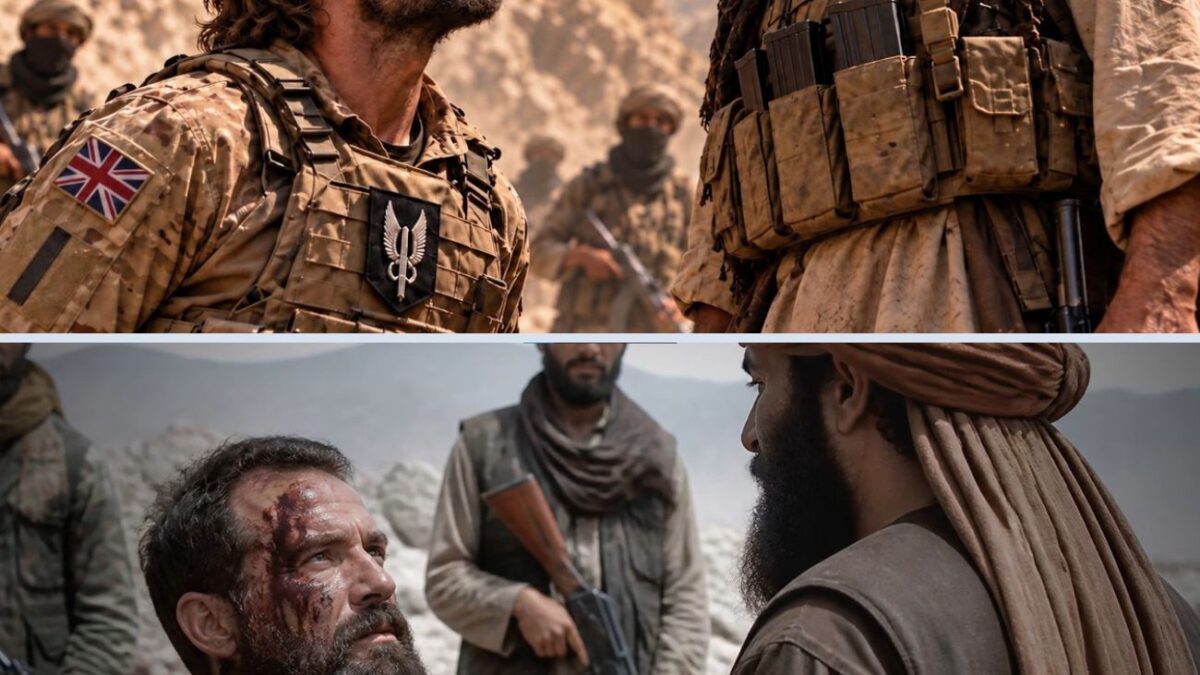
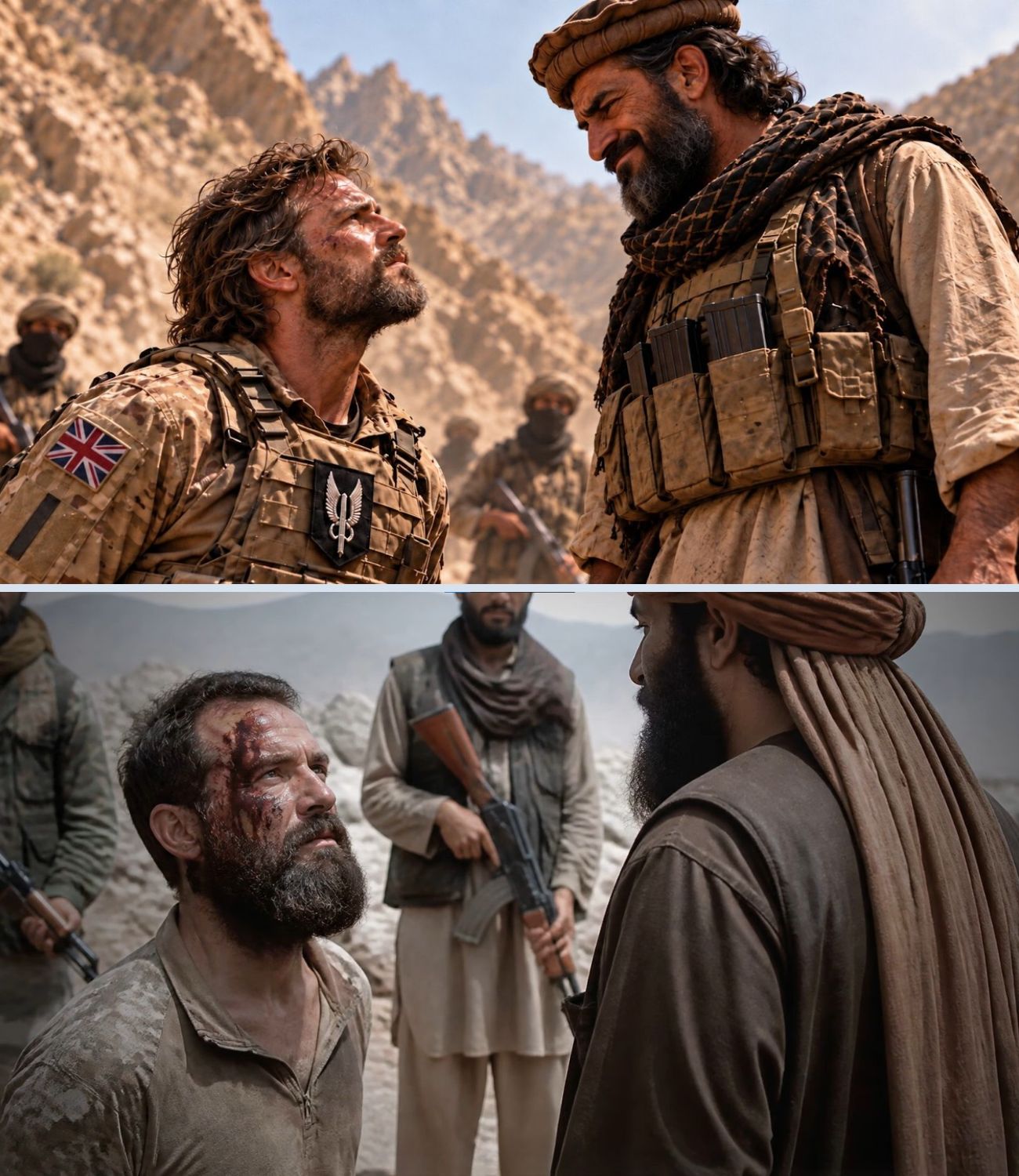
There is a photograph that was never taken in a wadi in eastern Afghanistan, somewhere in the broken country where Kunar bleeds into Nuristan, on a morning in the late 2000s. In the photograph, which exists only in the heads of the men who were there, a Taliban commander is standing in the full white light of a mountain noon. At his feet, kneeling, is a British soldier with blood smeared across his forehead and down one cheek, a Union Jack sewn on the shoulder of a desert smock, and the small winged dagger of his regiment stitched above it. The commander is smirking, and he has every reason to because he thinks he has caught something the Americans spent years failing to catch.
He is wrong, and he does not know it yet. The gap between the moment he is wrong and the moment he finds out is the entire story. His name is Mullah Nazir Aga, and he is in his early forties, hailing from a village two valleys east of where he is standing. On his left wrist, wound twice around the bone, are his father’s prayer beads, and his thumb is working them now, the small worn stones clicking, because he is thinking.
He is not frightened, nor does he have any reason to be. Below him, in the wadi, he has an American reconnaissance element pinned down and bleeding. On the eastern spur, he has a heavy machine gun, while on the western spur he has rifles, and on the saddle above, he has eyes.
In his hand, as he believes, he holds a prisoner—a bloodied Englishman the hills coughed up at dawn, walking down out of the dark alone. He believes the box is closed and that he owns this day. The old fighter at his shoulder, Haji Sher Mohammad, limping and gray, who buried his first son in 1987, says a thing softly in Pashto that Nazir has heard his whole life from his father, his uncles, and every man who ever came back out of a valley the English had been in.
“Do not touch what the quiet men leave behind. If a knife is on the ground that is not yours, it is not a gift; it is a message, and the message is that you were seen.”
Nazir hears the old man, but he does not quite listen. The men who came back out of that valley at the end of that day—the few who did—would in later years only ever say one thing about it, and we will come to what that one thing was at the end. For now, the beads are turning on his wrist beneath the harsh light, beside the man at his feet. To understand the day, you have to understand the ground, and to understand the ground, you have to stop thinking of mountains as scenery.
The ridges above the wadi were not scenery; they were older than any man on them, older than the Soviets who died trying to hold the next valley over, and older than the English who came in the nineteenth century and left graves no one tends. The rock was a pale, hard, burnt-looking stuff that held the heat and gave nothing back. There were no trees to speak of, only a scatter of thorn and some gray-green scrub on the north-facing shelves where a little water sometimes lingered in the spring. Above about two thousand metres, there was almost nothing—only stone, the sun, and the wind that came down off the Hindu Kush like it had an errand to run.
A man who grew up in these hills read the ground the way a city man reads a street, and Nazir read it. Haji read it. Kassim, lying heavy behind his machine gun on the eastern spur, read it. They knew which draws would funnel a man and which would spit him out, and they knew where the shadow fell at nine in the morning, at eleven, and at two in the afternoon, placing themselves accordingly. They knew from long practice that American reconnaissance patrols—small ones of four or six men lightly carried, moving at night—liked to lie up at first light on a shelf with glass on two valleys.
If you could find the shelf before they did, you could wait for them, which was what Nazir had done. The wadi below him was a long cut in the stone, dry at this time of year, floored with rounded cobbles that chimed faintly when a boot moved them. Where it bent, about four hundred metres down from where the commander was standing, there was a boulder field at the bottom of the cut. In that boulder field, since just before dawn, were six Americans.
They were, Noor had established through the chatter on his scanner, a United States Navy reconnaissance element. Their chief, going by his voice on the net, was called Delaney, and Delaney had four daughters. Though Nazir did not know this, the voice on the Icom only told him Delaney was calm, tired, and starting to understand that the Pashtun on the ridge above him was not a farmer with an old rifle. Delaney had one man down with a leg wound and was trying very carefully not to show he knew how bad the position was.
Nazir had set it the way his uncles taught him. On the eastern spur was Qasim with his PKM on its bipod and a boy to feed the belt, with the whole of the wadi floor plunging away from him in a long clean line of fire. On the western spur opposite were six men with Kalashnikovs and two with old Lee-Enfields that still shot sweetly, and in between them was a thirty-year-old man with a rocket-propelled grenade. On the saddle above all of this, three hundred metres higher than Qasim’s gun, was seventeen-year-old Jan Ismael with a pair of binoculars and a radio, watching every approach from the north.
Out down the valley to the south, at the mouth where the wadi met the open country, was Daoud—nineteen with a chipped front tooth—waiting with a motorbike to run messages the radios could not carry. The box was closed on three sides, while the fourth side to the south, the way out towards the open, was theirs. Any American relief that came would have to come up that corridor where Nazir had men watching and where the land would see them long before they saw the land. Any American aircraft would be fifteen minutes away at the fastest, and by the time it was overhead, the Taliban would have thinned off the ridges like water into prax, leaving the Americans in the wadi dead.
This was the plan, and in fact it was the plan Nazir had executed with small variations three times before in these valleys, having worked every time. Listen to the sound of it now at about nine in the morning: the small dry rattle of the wind in the thorn, the thin strained whine of a lammergeier working the thermal above the eastern spur, and every few minutes the dry chuckle of stones under a man shifting his weight on the ridgeline. There was Noor’s scanner hissing softly, and under the hiss, now and then, Delaney’s voice—flat, American, controlled—asking for an update on the man with the leg, alongside the clicking of beads on Nazir’s wrist.
There was the sound of a mountain in the full dry morning, which was nearly silence, but not quite. Nazir had not noticed yet that from the ridges above the saddle, the ground higher even than Ismael, there was no sound at all. There would not be, for it was only stone up there, only wind, only the sort of ground on which, in theory, no one was standing. Before the day was over, Nazir would have cause to remember a great many stories told by old men in his family, and one story in particular that was already in his head.
In his father’s generation, there was an uncle who had fought against the Soviets in Kunar in the mid-1980s. That uncle, who was a hard man and not a frightened one, used to say a thing about the English that even the Russians did not know to say. He used to say that in among the Americans, Europeans, aid workers, Red Crescent, engineers, and various foreigners who came through the valleys, there was now and then a kind of foreigner the others did not seem to know about. They were almost always British, the uncle said, not uniformed British like the ones you saw on the roads of Lashkar Gah or Kabul in proper Union Jack kit with clean rifles, but dirtier and quieter, coming in and out of the hills without papers, trucks, or faces, leaving valleys short of men.
The uncle used to say that you did not track these people because you could not. The ground that would show every bootfall for an ordinary foreigner as if drawn in chalk showed almost nothing for them—a faint pressure here, a disturbed pebble there, not a track but a suggestion of one. Haji, standing beside Nazir now on the ridge, had always said the same thing in slightly different language, remarking:
“They walk as if the ground owes them a favor.”
The uncle used to say—and here he would drop his voice in a way that was not performance, but genuine old man’s unease—that if you found such a thing, you did not touch it. You walked around it, you did not pick it up, and you certainly did not take it home.
“Do not touch what the quiet men leave behind. If a knife is on the ground that is not yours, it is not a gift. It is a message, and the message is that you were seen.”
Nazir grew up with that line, which his father used to say when the boys were playing in the orchard, much like grandfathers said not to go near the well. It was not a theological statement; it was practical. In the uncle’s experience and that of his acquaintances, the ones who touched the knife tended to end up in another valley a few weeks later, found dead in ways no one quite liked to describe. Nazir, standing on the ridge above the wadi this morning at just before ten, was not thinking about the taboo, but about the Americans in the box below him and Delaney’s voice on the Icom.
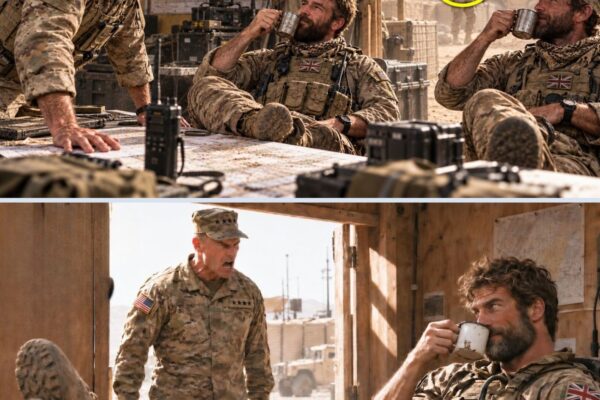
Then, from the south at the mouth of the valley where Daoud was supposed to be waiting on the motorbike, two of his men came up the goat track, half dragging a third man between them. The third man was not one of theirs. They brought him into the small natural amphitheater on the ridge where Nazir had set his command position and pushed him down onto his knees on the stone, which he did without resistance. He was a tall man in his thirties, wearing a desert smock faded from a hundred washes to the colour of weak tea, with a tactical vest over it whose magazine pouches were empty.
His weapon was already gone, and the two who had brought him up were holding an unfamiliar short carbine with a scuffed optic. On the left shoulder of his smock, almost under the arm where dust had gotten into the stitching, was a small square Union Jack, and above it in the regimental place was the shape Haji saw before Nazir did—the little stitched outline of a dagger with wings, which Haji had seen twice in his life, both times on dead men. Haji’s limp seemed to get worse for a second as he took a half step back, marking the first thing anyone had done all morning that was not according to plan.
The man on his knees had blood smeared across his forehead and down the left side of his face from a split in his hairline that was already drying. He had a full dark brown beard down to his collar, the way operators out here grew them to pass, and his medium-length hair was matted on one side with blood. He was looking up now at Nazir, his expression neither frightened nor pleading, but something you would have to call defiance if you were being generous and exhaustion if you were being accurate. The two together had an odd effect on Nazir, who had seen many prisoners and did not usually feel what he felt looking at this one: “I know what you are and I am very pleased that I have caught you.”
He smirked because he could not help it, looking down at this man with the little stitched dagger on his shoulder and thinking of his uncle, the stories, and all the valleys in Kunar in the eighties. Behind him, Haji Sher Mohammad was not looking at the prisoner, but at the man’s boots, noticing that the soles were perfectly clean on the uppers, the laces were tied in an unfamiliar way, and the dust on the trousers was wrong. It was the dust of the lower wadi from the south, where no English soldier had any business coming from because that was where Daoud was waiting with the motorbike.
Haji was a hard man and not a frightened one, having killed Russians and buried three sons, so he said nothing. But his thumb went to his own prayer beads inside his waistcoat pocket, and he began to work them slowly, the way a man works a thought he does not yet want to think. Nazir asked in Pashto where exactly they had found him, and the two who had brought him up told him he was walking alone up the goat track from the mouth of the valley with hands empty and carbine slung, as if coming home from market without resisting or even seeming to wait.
Nazir did not hear the warning in that sentence, but Haji did, though he still said nothing while the beads turned on Nazir’s wrist under the hard, white ridge light. Below in the box, Delaney’s voice was asking for an update on the man with the leg. The first thing went wrong at twenty past ten, so quietly that only Haji noticed, and even he at first decided he was being an old man. He was sent with two of the younger fighters down a goat track below the eastern spur to check the lower end of the wadi because Nazir wanted eyes on the southern mouth to confirm no American reaction force was pushing up from the open country.
Haji went gladly, wanting to walk off the feeling the prisoner had given him and honestly wanting to look at Daoud and the motorbike to remind himself that the day was proceeding. The track dropped in long switchbacks through loose shale, and Haji moved slowly because of his leg while the two younger men went ahead. At the second switchback where the track leveled across a shelf of harder stone, one of the younger men stopped, crouched, and made a small flat movement of his hand to signal looking. Haji came up, knelt, and ignored his screaming bad leg to look at what the younger man was pointing at.
It was a single boot print in the fine dust that had drifted onto the shelf of harder stone—one print, not a track, a print of the right foot with a pattern of lugs Haji did not immediately recognize. It was not the Soviet pattern, nor the American pattern, nor the Afghan National Army pattern, nor the sandaled or soft boot print of a local. The lugs were fine, close, and deep, and the print was clean while the dust around it was undisturbed, as if the foot had come down out of the sky, pressed once, and lifted again. Haji looked at it for perhaps thirty seconds as a trusted sign reader who could tell weight, direction, fatigue, and load from a print.
From this print he could tell the man was carrying weight, going north and up towards their ridges, not tired, and by the depth on the toe, had been in a slight crouch moving quietly rather than walking. The younger man asked in Pashto:
“When?”
Haji did not answer immediately because the problem was the wind on this shelf at this time of morning, which was a thin dry downdraft from the ridges above that would reverse in late afternoon. Prints in this fine drift of dust usually lost definition within an hour with rounded edges and softened lugs, but this print was sharp, crisp, and perfect, meaning the man had passed within the last hour. Within that hour, Haji had been on the ridge with Nazir, Kassim had been on the eastern spur with his gun, Ismael had been on the saddle with his binoculars pointed north watching every approach, and yet someone had walked past this shelf up the slope into the ground Ismael was watching without being seen.
Haji straightened up with an unchanged face while the two younger men watched him, and said in a voice deliberately bored that it was an old print from a kuchi herder a week ago and they should keep moving. The younger men believed him because he was Haji and because they wanted to, but Haji did not believe himself as he limped on down the switchbacks towards the mouth of the valley, worrying at his beads and forcing himself to think about Daoud. He reached the mouth of the valley at ten to eleven, where Daoud was not present, though the motorbike was leaning on its stand exactly where it should have been in the shade of a thorn. The fuel can was beside it, the rag Daoud used to wipe the dust off the seat was folded neatly on the saddle, the ignition key was in place, and Daoud’s radio was on the ground next to the back wheel, turned on to the correct channel with the volume low.
Daoud was not nearby, so Haji walked a slow circle around the motorbike and inspected the ground, which was a flat crust of hard-packed grit taking prints indifferently. He patiently worked through the many marks from the past three days—boot marks, sandal marks, goat marks, the marks of the two men who had brought the English prisoner up, the prisoner’s own clean lugs slightly dragging, and Daoud’s own familiar pigeon-toed, worn-heel prints. In among them he found one other set: four or five footfalls, no more, of the exact same clean lug pattern as on the shelf above, walking straight from the shadow of the thorn past the motorbike and stopping at the exact place where Daoud’s prints also stopped, after which there was nothing. Haji stood very still, being fifty-four years old and having not been genuinely frightened since 1986.
The sound of the mountain at the mouth of the valley at ten to eleven was the small dry rattle of the wind in the thorn, the thin whine of a lammergeier high up, the chuckle of stones, and a distant kite calling, but it notably lacked the small cheerful two-stroke rasp of Daoud’s motorbike idling. Daoud, the last Haji had heard on the radio at 10:10, had been running the engine every few minutes to keep the oil warm, yet now the exhaust was completely cold when Haji put his hand on it. He turned and began to limp back up the switchbacks as fast as his leg would let him, deciding without admitting it that whatever was listening on that channel was not only Noor.
The second thing happened before Haji was halfway back up, at eleven minutes past eleven by Noor’s wristwatch, which Noor checked because he checked his watch. Kassim’s machine gun on the eastern spur—the long clean field of fire down the wadi—went quiet without anything dramatic happening, as Kassim had not been firing since the plan dictated waiting for the Americans to move. The Americans in the box had not tried to move, and Kassim had been lying behind his gun for four hours waiting with a thirteen-year-old boy named Bilal who fed him water and dates from a small pouch. What went quiet was not the gun, but the two of them.
At eleven minutes past eleven, Noor on the command ridge keyed his radio and asked Kassim for a status update as he did every half hour, but Kassim did not answer, leading Noor to assume a loose handset and key again to no avail. Noor sent a runner across the shoulder of the ridge—a four-minute walk along a goat path staying below the skyline—who returned at seventeen minutes past eleven reporting that the gun was still on its bipod with the belt fed and the field of fire clear. He said Bilal was still sitting beside the gun with an open pouch of dates, leaning against the rock the way tired boys do with his eyes open, but Kassim was not there.
The runner had looked behind the gun, in the small dead space for relieving oneself, and down the back slope, finding no prints on the hard scoured stone. There was Kassim’s rifle propped against a rock, his chest rig folded neatly on the ground, and on top of it the small oilcloth-wrapped Quran his mother had given him, but no Kassim. Nazir asked mildly whether Bilal had said anything, and the runner replied that Bilal had heard or seen nothing, having turned his head to speak to Kassim at some point in the last hour and assuming Kassim had just stepped away while following instructions not to move.
Nazir felt a kind of narrowing and tightening of attention, like driving into thickening cloud where the world hasn’t changed but visibility has, and sent two men across to the eastern spur before turning to Noor to raise Ismael on the saddle. Noor keyed the radio:
“Ismael, Ismael, come in.”
The hiss. Nothing. The hiss, which had been in the background carrying Delaney’s American voice up out of the box like someone calling softly from a well, though Delaney was not calling now and had not called for nearly fifteen minutes. Noor stated with an unsteady voice that Ismael’s radio was off or broken, omitting the thought that the person holding it might no longer be doing so, which Nazir already knew anyway. Nazir sent his second runner, a quick, wiry thirty-year-old named Faizullah, up the back of the saddle, taking approximately eleven minutes at a run, while Nazir timed it by Noor’s watch. At twelve minutes Faizullah had not returned, so at fourteen minutes Nazir sent a third man after him.
In the gap between the fourteenth and fifteenth minute, Haji came limping up the last of the goat track onto the command ridge, breathing hard with a strange face, telling Nazir quietly in two sentences that Daoud was gone and strange prints were on the shelf below the spur. Nazir looked down at the English prisoner who had not moved, still kneeling on the stone with his head bloodied and drying, looking up with a defiant, exhausted face without asking for water or pleading. Nazir realized with a cold shock that the prisoner had looked only at him this whole time, prompting Nazir to look back properly at the grey-eyed man who was waiting. Nazir thought of his uncle’s stories about the quiet ones, while behind him Haji looked at the clean boot soles and worked his prayer beads, worrying about Daoud.
The second runner sent to Kassim returned at nineteen minutes past 11, reporting flatly that they found Kassim about forty metres down the back slope of the eastern spur, sitting against a rock facing uphill and facing them with empty hands and his head on his chest as if sleeping. There was no wound, no blood, only a small amount of dust on his shoulder as if someone had brushed against him, leading the runner to remark that Kassim looked as if he had turned at the last moment to look at something he did not expect. At twenty past eleven, the third man sent up the saddle returned white under the dust to report that Ismael was on the saddle behind his binoculars with his radio on the correct low volume channel, eyes open, unmoving, with no wound or blood. Faizullah was also there, three metres away in a slight dip, likewise unmoving and facing away from the proper direction.
The hiss on the scanner, wind in the thorn, and chuckle of stones continued, but high up on the ridges above the saddle where no one should be standing, there was absolute silence. Nazir counted the men still standing within arm’s reach—Haji, Noor, the two who brought the prisoner, the two who returned from Kassim, the third from the saddle, and the prisoner himself—realizing that of the thirty-one men he brought up at dawn, he was suddenly unsure if he had twenty left. He had heard zero shots, shouts, cries, or radio comms from the missing men like Kassim, Ismael, Faizullah, Daoud, and others out of sight. Kassim’s gun still pointed down the wadi at six unshooting Americans, meaning something was being done to his men by a doer he could not name using verbs he could not see.
His prayer beads stopped turning as Haji whispered:
“The thing the uncle used to say: do not touch what the quiet men leave behind. If a knife is on the ground that is not yours, it is not a gift. It is a message. And the message is that you were seen.”
Nazir looked down the wadi at the box he built, the long field of fire, and the western spur where six men with Kalashnikovs still watched the boulder field. Then he turned his back on the wadi, Delaney, and the plan to look north up and behind the command ridge at the higher ground above the saddle where the wind came down from a pale sky. He looked for a long time and saw nothing, for in this whole day Nazir Aga never once saw a single one of them, nor would he in the next ten minutes or ever, surviving without laying eyes on them.
What he saw was an empty slope, but with the certainty of a mountain man he knew it had not been empty for hours, possibly since dawn or the previous night. The ridge he thought he owned was not the top of the battlefield but the middle, meaning there was something above him. In the space of two breaths, he processed it all: the prisoner was not a captive but was walked down to be found, his escorts were unknowing couriers, and Nazir was the specific target. The prisoner was calm because he alone besides Nazir understood everyone’s location, and the wadi Americans were not prey but an anvil while Nazir was on the hammer.
He understood that running down to the wadi meant meeting climbing Americans, running south meant walking into empty space where Daoud vanished, and running north or east meant walking into them. The plan was not that his men would be killed, but that they already were and he was being allowed to notice. He looked down at the English prisoner with his grey eyes and dried blood, whose mouth moved slightly at one corner in not quite a smile. Nazir realized he had been holding his breath for an unmeasurable time, the scanner hiss was empty, the wadi Americans were off the air, and the wind had died down completely.
Without shouting or running because there was nowhere to go and no point making noise that would tell the slope where he was, Nazir signaled his remaining men—Haji, Noor, the escorts, the eastern spur men, and the saddle runner—to gather in the small dead space of the amphitheater where a rock lip protected them from above. They came without speaking, having learned what Nazir learned from his facial changes, and sat or crouched with their backs to the rock lip, rifles pointing outward at nothing. It was twenty-four minutes to twelve, the sun had climbed another handspan, and the midday light created sharp black shadow puddles at their feet.
Noor checked his watch repeatedly, noting it remained twenty-three minutes to twelve while absolute silence reigned from above, the spurs, the valley mouth, and the wadi. Delaney had not spoken on the e-com since Kassim went quiet, showing the Americans knew all along and Delaney was never trapped or even currently in the boulder field. Nazir stopped thinking about it, returned to his beads, and let his thumb click the worn stones softly as the only sound in the dead space.
Twenty-two minutes to twelve, then twenty-one, then twenty. Haji beside him worked his own waistcoat pocket beads with closed eyes and moving lips, whispering something older than the Quran like the uncle’s warnings. Eighteen minutes to twelve, and the English prisoner still knelt in the full white light in the middle of the amphitheater with his hands behind his back, unmoving and listening.
Somewhere high up, definite and not loud, a single pebble moved—not a man’s step, but the small shift of someone holding still for a long time. Noor, Haji, and Nazir did not flinch as seventeen minutes to twelve arrived, bringing the true weight of the event: the quiet man letting Nazir sit in the dead space with bait and understand in detail what was coming. He was being given the courtesy of time, which in the uncle’s stories meant either living to tell the tale or watching before the end.
Sixteen minutes to twelve, and the English prisoner turned his head slightly towards the slope above the command ridge, looking straight at the empty rock and nodding. It happens in three minutes, beginning with no warning after the prisoner’s small nod, with a flat snapping crack from everywhere at once like the air splitting open along four seams. The man on the western spur holding the RPG jerked sideways once as if slapped and went down out of sight, his launcher falling un-fired.
Then the entire western spur lit up in a stutter of bright muzzle flashes not from his men whose weapons were silent, but from four hidden places on slopes he thought were empty. In the time it took to inhale, every man on the western spur went down folded, not screaming or blown apart, vanishing before his eyes into an empty line of rocks and pale dust. From behind him on the eastern spur he heard the same stuttering stop after seven seconds, realizing the men he sent to check Kassim had joined him.
From above came a short burst of three or four rounds, followed by a second and third from different places, confirming the saddle men were also gone. Inside the dead space, the remaining men instinctively raised their rifles towards the slope, but Haji put his hand on the nearest forearm and pushed the barrel down without a word, understood by all. In the wadi below, the Americans finally opened up not into the ridge but up it, climbing out of the boulder field in a controlled rush with hammering, methodical fire.
Delaney’s element had been waiting all day for a signal from above—which Nazir now understood was the prisoner’s nod—and was now clearing the lower western slopes. In three minutes, thirty-one men were reduced by unseen causes to the seven in the dead space, the kneeling prisoner, and nothing standing on the western spur. Then the firing stopped all at once like an orchestra conductor lowering a baton in the middle of a bar, leaving a silence louder than any sound that day.
In that silence, the prisoner calmly turned his face back to Nazir as if resuming an interrupted conversation and waited. The quiet men never came down from the slope to accept surrender, which stayed with Nazir more than the three minutes, the flashes, or Kassim facing the wrong way. What came down after the firing stopped was Delaney and four of his element climbing fast and clean up the wadi and goat track onto the command ridge with carbines up and sweat-flat beards.
They swept the amphitheater like seasoned veterans, putting Nazir, Haji, Noor, and the other four face down on the stone with hands on the backs of their heads without shouting, moving with the quiet of ringing ears. One of them, a short dark Puerto Rican soldier, checked on the English prisoner who was still kneeling while nobody told him to move. The prisoner stood up on his own, stretched after hours on the stone, and said mildly in English that Noor understood—that he was fine, the blood wasn’t his, and he could use a drink of water.
Delaney looked at him, having never met him before since the Englishman wasn’t briefed into Delaney’s team, only told in the dark that a signal would come and his job was to look trapped. The signal had come at seventeen minutes to twelve, and Delaney gave the Englishman a water bottle. The Englishman drank half, handed it back, walked over to Nazir lying face down, and crouched beside him without speaking.
He looked at Nazir for a moment with dried blood on his face, gave him a small, polite, host-thanking nod, then stood up and walked away up the ridge towards the saddle, never to be seen on the mountain again. In the next hour, the men in the wadi conducted the count: nine dead on the western spur from precise, one-or-two-round gunshot wounds; four dead on the eastern spur including Kassim (two with no apparent wounds, two with single rounds); and three dead on the saddle including Ismael and Faizullah without apparent wounds. Below Kassim’s gun sat uninjured boy Bilal holding date pouches, while at the valley mouth, nineteen-year-old Daoud lay in a depression ten paces from the untouched motorbike with its cold exhaust, running key, and low-volume active radio.
On the ridges above the saddle there were no bodies, spent cartridges, or prints, save for one shelf of harder stone with fine dust recently disturbed as if men had lain prone and got up an hour prior. Delaney’s youngest soldier swore he saw a crushed British issue water bottle under a thorn that vanished by the time Delaney walked over to look, leaving him unsure if it was imagination or someone picking it up. Delaney saw nobody come or go during his hour on the ridge, telling his wife much later when the kids were asleep that his only proof of others on the mountain was the Englishman’s polite nod and his own survival.
Nazir, Haji, Noor, and the four others were taken off the ridge in the early afternoon by helicopter into a long system of captivity. Before lifting, Haji turned his head from the dust and whispered to Nazir through the rotor roar:
“They were on the ridge above us the whole time.”
Nazir did not answer, his plasticuffed wrist beads still, while somewhere up the empty slope a slow drift of pale dust rose in the afternoon light as if a wind had passed, though there was no wind and the shelf was empty. The few men who came back out of that valley would in later years say only one thing. Haji Sher Mohammad lived another eleven years, dying in Nangarhar of a tired heart, and told his grandchildren in Pashto about a fight that wasn’t a fight where no one on your side fired and no one on their side appeared, yet you stood alone because they decided it. He taught them that the mountain wasn’t theirs anymore once you understood that, and that was what the English were.
Noor, who lost the use of his left hand later in a different valley, worked as a petrol station watchman on the ring road and told late-night tea drinkers about listening to American scanner chatter while an unseen man killed everyone silently. He remembered only his own breathing and the small click of Mullah Nazir Aga’s prayer beads on a wrist that no longer knew it was turning them. Nazir himself said very little after his release, telling a visiting cousin when asked what it was like while worrying his father’s returned beads:
“I never saw them. I only ever saw what they had already done.”
That single flat sentence was what the survivors carried away for the rest of their lives. Delaney, who actually saw the kneeling Englishman with the Union Jack and winged dagger walk away over a ridge, never knew his name or asked, knowing he wasn’t supposed to. That is what happened in the wadi when the Taliban realized they were in a box whose walls were four rock shelves whose men never let anyone see them all day.
They were the hammer while the wadi Americans were the anvil, and the Englishman was not a prisoner because the ridges belonged to someone else who let Nazir come up, settle, and smirk so he would understand what stood above him.
“Do not touch what the quiet men leave behind. If a knife is on the ground that is not yours, it is not a gift. It is a message, and the message is that you were seen.”
Haji said it to his grandchildren, Noor said it to the night, and Nazir in the end said it to himself with his thumb working beads in a bare room. There are other valleys, other mornings, and other men who thought the hills were theirs.
You Might Also Enjoy

Mom Installed a Camera To Discover Why Babysitters Keep Quitting But What She Broke Her Heart

She Gave a Hungry Little Girl a Free Birthday Cake — The Next Morning, a Black Rolls-Royce Arrived