The US Captain Called the SAS a Liability. That Night They Pulled His Platoon Out of the Wire.
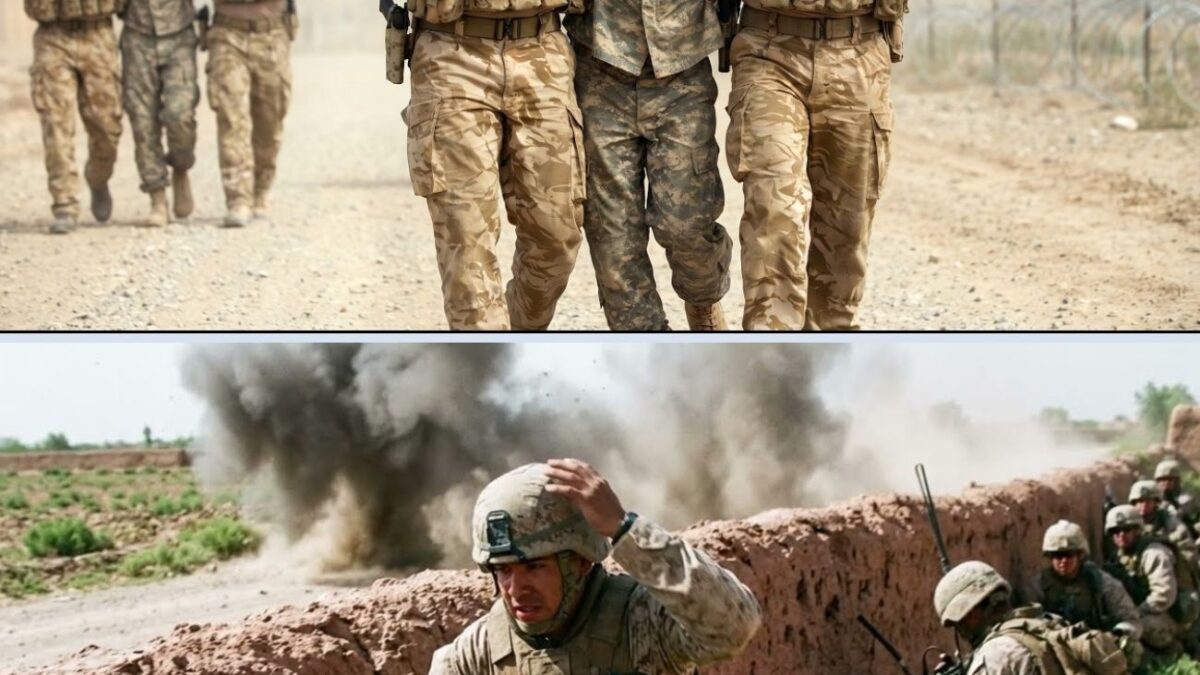
Garmsier district, Helman Province, Afghanistan. April 29th, 2008. Patrol base Silver sat on the east bank of the Helman River. 300 m of Hesco barrier and razor wire holding back 6 kilometers of irrigated farmland marines called the green zone.
Inside the wire, 18 men of second platoon, Golf Company, 24th Marine Expeditionary Unit, and four British soldiers. Nobody on the manifest could fully explain. Captain Daniel Reyes had signed for the platoon, the outpost, and the risk. He had not signed for the four men in unmarked fleece and civilian rifles who slept in his command post and answered radio calls and accents from Heraford, not Camp Llejun.
Two mortar rounds had landed inside the wire that morning. A resupply Chinuk had turned back at the LZ, chased off by machine gun fire from a treeine 400 meters north. Reyes needed help. He did not want theirs.
The wider fight had a name by then, though nobody at Patrol Base Silver used it much. Marine and British commanders referred to the spring push simply as the Garmir operation. An effort by the newly arrived 24th Marine Expeditionary Unit to clear and hold a district center that had changed hands repeatedly since 2006, freeing British forces further north to concentrate on Sanin and the upper Geresk Valley instead of splitting their strength across both fronts. It was on paper a tidy piece of operational math.
American reinforcements taking over ground. The British could no longer cover thinly enough to hold. On the ground at patrol base Silver, the math looked like 18 Marines and four uninvited guests holding 300 m of wire against a network that had spent 2 years learning the terrain.
Nobody was clearing it out of fast enough to matter. Patrol Base Silver had stood for 6 weeks by then. One of a string of small compounds, the 24th MEU pushed south along Route 611 that spring to pry the district center out of a Taliban network that had held it on and off since 2006.
The base itself had been a compound before it was anything else. Mud walls a farmer had built to keep goats in, now reinforced with plywood firing steps and a single generator that ran the radios and little else. Water came up by truck when the road was clear in seven-day cycles that left every Marine on the base doing math about showers versus drinking supply by the fifth day.
Reyes was 28, a Naval Academy graduate on his second combat tour, and he ran the base the way he’d been trained to, manifest everyone, account for everyone, and treat anyone outside that accounting as a problem until proven otherwise. His first tour had been an armored convoy rotation through Anbar province two years earlier. A war fought mostly along fixed roads with fixed checkpoints where the chain of commands authority over every vehicle and every man in it was rarely in question.
Helmond and the four uninvited guests now sleeping in his command post did not work that way, and no part of his training had prepared him for a war where the most capable men on his own base answered to nobody he could call. The four men had arrived 11 days earlier, dropped off by a British Army Land Rover WMK at the north gate with no paperwork Reyes recognized and a liaison order signed by a task force headquarters he’d never spoken to. Their team leader introduced himself only as Staff Sergeant Whitfield, call sign Foxtrot 21, and said his job was advise and enable. He did not say advise on what.
The three men with him, a corporal named Doyle, a signaler named Osler, and a young trooper named Price, who could not have been older than 23, carried GPMGs stripped down for weight, satones instead of the Marines issued radios, and enough demolition charge in their packs to drop a compound wall in under a minute. Reyes had run joint patrols with British infantry before in Sangen the winter prior when three parah and later two Yorks had held that district under a very different chain of command than his own. This was different.
These men trained apart, ate apart, and briefed each other in a corner of the command post in a language of abbreviations Rya’s own staff sergeant couldn’t follow. By April 22nd, Reyes had a working theory about what they were drawn from six years of reading about the outfit in magazines his father kept in the garage. 22 Special Air Service on a mentoring rotation with the newly stood up Helmond Provincial Police and using his outpost as a safe harbor between jobs. He kept that theory to himself.
What he said out loud in front of his platoon sergeant and two visiting officers from battalion was different. They’re guests, Reyes told his executive officer on April 24th, loud enough for the operations chief to log it in the watch journal. I’ve got 18 Marines holding this perimeter and four extra mouths who don’t answer to my chain of command. That’s not force protection. That’s a liability I didn’t ask for. Battalion had asked him to host them anyway.
The order came down from the regimental combat team two weeks earlier, three sentences long, no explanation attached. Provide billeting, water, and force protection to a coalition special operations liaison element call sign Foxtrot 21 duration to be determined by higher headquarters. Rehea’s request for clarification went unanswered for 4 days. When an answer came, it was from a British major at the joint operation cell in Lashkar and it said only that the elements tasking was need to know and that Reyes did not need to know.
He signed the guest log anyway because that was the order. And he wrote in his own log book that night, “Four passengers, zero utility, full liability for as long as they’re here.” Whitfield read the entry. Reyes hadn’t hidden the log book, and in an outpost that size, nothing stayed private for long. He said nothing about it for 3 days.
What he did instead was work. Every evening after last light, while the Marines rotated through a 2-hour watch schedule that left most of them running on 4 hours of broken sleep, Whitfield’s team went out the south gate quietly without a patrol brief without informing the command post duty officer in defiance of an order Reyes hadn’t yet realized he needed to write. They carried no radio set to the company net. They came back before the Muees pre-dawn call, wet to the knee from the irrigation cuts and said nothing about where they’d been unless someone asked directly.
Osler kept a private notebook, not a Green Army issue log book, but a civilian pocket diary he’d bought in Kandahar. And in it, he wrote short lines that had nothing official about them. The names of three compounds the team had mapped. The timing of a dog that barked at 22:30 every night from the same courtyard. The fact that Trooper Price had started rationing his own water to make sure the section’s last four liters lasted through a reconnaissance that ran 2 hours over.
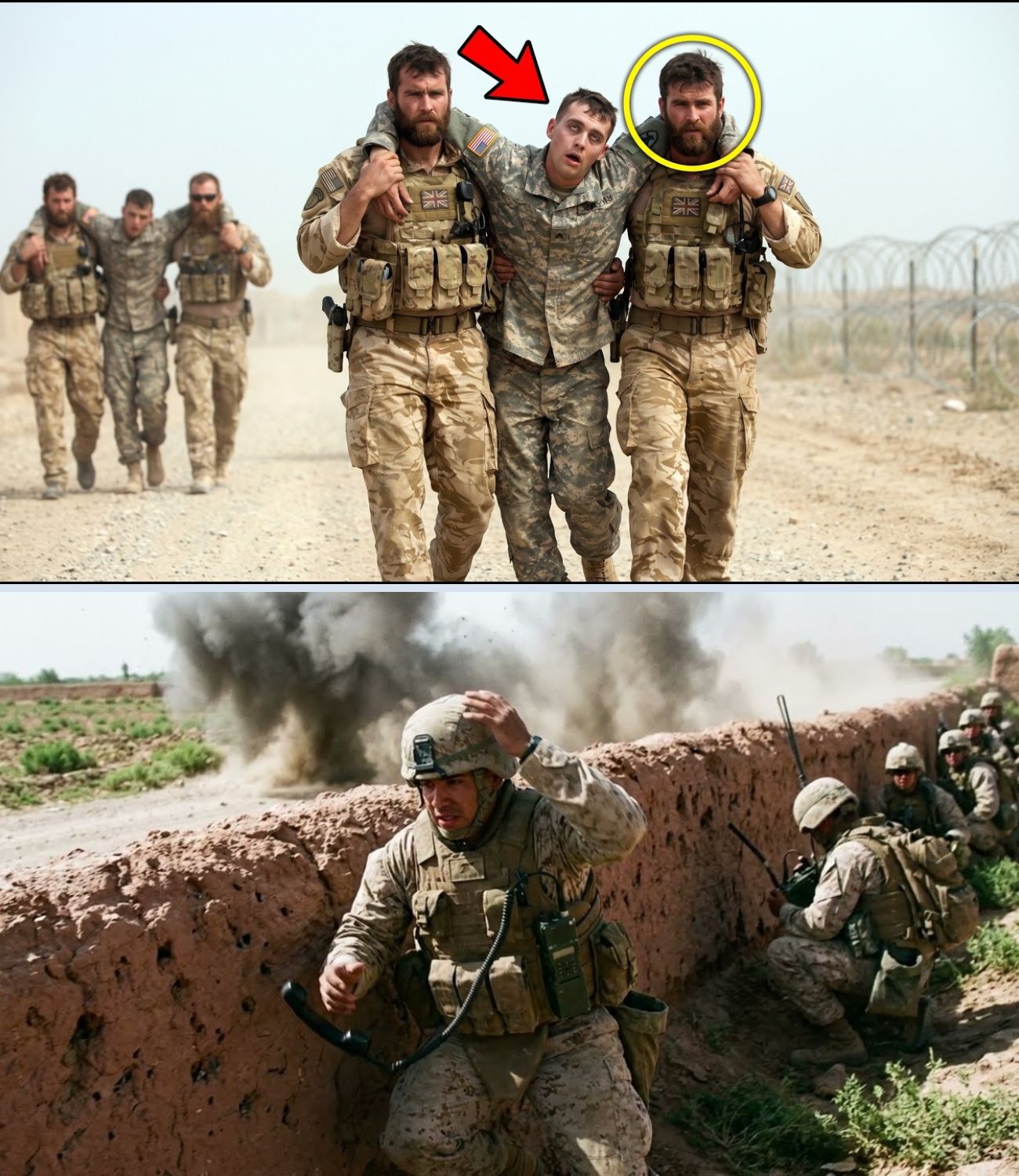
None of it went into any Marine Corps record. All of it would matter within a week. Price was the youngest of the four by 5 years, and it showed in small ways. Nobody at Patrol Base Silver commented on until much later.
He carried an extra belt of link for the GPMG, even when Doyle told him the weight wasn’t worth it over open ground. And he’d developed a habit on the long nights along the canal of counting the irrigation cuts under his breath in sets of 10 to keep his bearing in terrain with no lights and no distinguishing feature past the third field. On the morning of April 27th, still damp from the night’s reconnaissance, he told Osler, not as a complaint, just as a fact, that his boots hadn’t been dry in 6 days and that he’d stopped noticing.
Osler wrote that down, too. It was the kind of detail that never appeared in an afteraction report and never needed to. Then on the morning of April 27th, with mortar fragments still smoking in the outpost’s dirty yard from an overnight barrage that had wounded a Navy corman treating a minor shrapnel wound of his own, Whitfield walked into the command post, set a laminated map on the table in front of Reyes, and said in a flat Yorkshire accent that carried no heat at all:
“Captain, if this compound gets overrun tonight, you’ll want the four extra mouths a great deal more than you want the 18 who can’t cross that canal without help.”
He tapped a blue line on the map, an irrigation cut 200 m south of the wire, the only stretch of the perimeter without direct observation from the tree line. We’ve walked it, your lot haven’t. Reyes did not apologize. He asked what Whitfield meant by walked it.
And Whitfield told him plainly, “Every night since they’d arrived, the team had gone out the south gate in the dark alone without telling the Marine command post and mapped the canal system, the compound walls, and the firing positions the Taliban used to bracket the base with 82mm mortars. 11 nights of reconnaissance nobody at Golf Company had authorized, requested, or known about. Reyes called it reckless. A British element operating inside an American perimeter’s security zone with no coordination, no fire support deconliction, no guarantee his own centuries wouldn’t put a burst into them by mistake in the dark.
Whitfield called it the only reconnaissance that existed. Both men were right, and neither said so out loud. The exchange happened in front of witnesses Kowalik the platoon sergeant and Sergeant Dela Cruz the forward air controller both of whom later gave nearly identical accounts of it during the post incident review that followed the events of the following week.
Reyes folded the laminated map shut before Whitfield had finished speaking and said, “I don’t run patrols on a picture your team drew without telling me.” Whitfield didn’t argue the point. He picked the map back up, said, “Your call, Captain.” and walked out to find his own men, who were by then asleep in the corner of the command post they’d claimed as quarters, boots still on, weapons within reach, the way men sleep when they expect to be woken inside the hour rather than at dawn. Kowaltic remembered thinking at the time that the four Britons looked less like guests than like men who had simply stopped waiting for an invitation.
The contact that afternoon made the argument for them before either man could. At 1410 hours, a patrol from second platoon’s first squad moving to clear a compound 600 meters north of the wire along a footpath locals called the Poppy Road walked into a coordinated ambush from three firing points, two PKM machine guns, and a mortar tube dug into a graveyard. Lance Corporal Peter Vasquez took a round through the calf.
Within the first 30 seconds, the squad went to ground behind a mud wall with no cover from the mortars plunging fire. And the platoon’s forward air controller, a young sergeant named Dela Cruz, working his second deployment, could not raise a Harrier on station for 11 minutes because the aircraft already tasked to the district was committed 12 km south supporting Royal Marines at FOB Delhi. Reyes pushed his quick reaction force out the north gate at 1417 hours. Nine men, one uparmored Humvey, and a 50 caliber gun that jammed on its second belt from sand packed into the feed tray during the morning’s mortar barrage.
Vasquez’s squad leader, a corporal named Ooa, had called the contact in at 1411 hours with a transmission Dela Cruz later described as the calmst he’d heard all deployment, grid reference, direction of fire, casualty count, no wasted words before the mortar round started walking close enough that Ooa dropped the radio handset twice, trying to keep his own head below the wall. The graveyard position cited on a slight rise that gave its gunners a clear line down the length of the footpath had clearly been prepared in advance. Spent PKM links littered the firing point when Marines cleared it later that week along with a cache of mortar rounds stacked and ready rather than carried in under fire. It was not a chance encounter.
Whoever had built that position had studied the same footpath second platoon had been using for 6 weeks and had picked April 27 to use it. A Marine clearing the graveyard 2 days later, a Lance Corporal named Oay working with the platoon’s makeshift EOD trained team found a child’s exercise book wedged under a headstone. Its pages used to log something in a hand nobody at Golf Company could read. Dates, single letters, smallies that meant nothing without context and everything with it.
It went into a translator’s queue at Lashkar and came back three weeks later with a note attached that said, “Only insufficient context to assess,” which was its own kind of answer about how thin the district’s intelligence picture still was that spring. It was the QRF stalled Humvey, a 100 meters short of the pinned squad with its gun down that turned the afternoon from a bad contact into a crisis. Whitfield’s team had not been asked to move. They moved anyway on foot off the QRF’s flank using a drainage ditch the Marines hadn’t cleared because nobody had mapped it.
Doyle put two accurate long bursts into the graveyard position that suppressed the mortar team long enough for the Humvey’s turret gunner, a corporal named Ruiz, to strip the jam and get the 50 back into the fight. Price, closest to the wall where Vasquez lay bleeding through a hasty tourniquet, half carried him 30 m into the ditch under fire. Neither Reyes nor his own platoon sergeant had ordered anyone into.
By 1451 hours, the squad was back inside the wire. Vasquez kept his leg. The action took 34 minutes, start to finish, and it went into the day’s contact report as a successful QRF response credited on paper to second platoon alone with a single line noting supporting fire from attached element buried in the report’s fourth paragraph. Reyes signed that report on April 27th without correcting it.
He told his executive officer the same night that the British element had gotten lucky moving without clearance. And that luck wasn’t a plan he could build a defense around. It was, by any fair reading, the second time in 4 days that the men he’d called a liability in his own log book had kept his Marines alive, and the second time he’d declined to say so plainly to anyone in writing.
What Reyes could not argue away was what came next. Golf Company’s battalion operations officer reviewing the day’s contact reports from Lashkar Ga flagged patrol base Silver’s southern perimeter as exposed and ordered a reinforcement convoy up Route 611 for the following week. A resupply of ammunition, a spare turret weapon, and tentatively six additional Marines to bring the platoon back to strength.
The convoy never arrived. It was rerouted at the last hour to a firefight breaking out near Sangun’s district center 70 kilometers north where a British held combat outpost was taking sustained RPG fire of its own and had priority on the road. Reyes had asked for more Marines. What he got instead was confirmation that no more were coming that week and a Taliban network on the far bank of the Helmond River that had spent 11 days watching patrol base Silver’s patterns and now understood something the base’s own commander had missed.
Whatever reinforcement was due that week would not be American and might not come at all. The battalion commander, a lieutenant colonel named Harmon, running the ground combat element from a forward command post at forward operating base Dwire took the April 27th contact report at face value. A successful QRF action, casualties light, enemy driven off. He had no reason to read past the fourth paragraph, and nobody at Patrol Base Silver gave him one.
It would be 6 days before the flight log surfaced that told him a different story than the one his own captain had signed his name to, and by then, the story had already been settled by events, not by paperwork. Harmon’s own operations staff, briefing him that week on resupply priorities across four outposts strung along Route 611, ranked patrol base Silver fourth of four for convoy priority behind two bases reporting sustained contact and a third reporting a partially collapsed perimeter wall after heavy rain. Rehea’s request for six additional Marines sat in that queue unremarked for 11 days.
A second convoy attempt scheduled for the night of April 28th as a stop gap while the larger reinforcement request worked its way through Harmon’s staff made it as far as a Watti crossing 4 km south of the base before a command wire device disabled the lead vehicle’s front axle. Nobody was hurt. The blast lifted the wheel assembly clean off the mount without breaching the hull. But the convoy commander, a gunnery sergeant running his own risk calculus with a single disabled vehicle blocking a narrow crossing and no quick way to tow it clear in the dark, turned the rest of the convoy back to Fob Dwire, rather than push two more vehicles past a crossing that had just proven itself watched.
It meant no ammunition resupply reached patrol base silver before the attack that followed the next night and it meant the base’s dwindling stock of belted 7.62 met link already thin after the April 27th contact went into the fight on April 28th without the cushion Reyes had been counting on. By the night of April 28th, the tactical picture at patrol base Silver had narrowed to a set of facts nobody at Battalion wanted written down plainly, though the watchlog recorded them anyway. 18 Marines, four of them nursing minor wounds, gathered over six days of intermittent contact.
One squad’s Humvey down for parts. Its spare 50 caliber feed tray cannibalized after the jam 2 days earlier and no replacement due until the next convoy whenever that came. A resupply schedule slipping by 48 hours because the same Chinook approach lane kept drawing fire from the treeine locals called shacked.
Eight lers of drinking water per man, remaining against a nine-man daily allocation the battalion surgeon’s own heat casualty guidance called minimum not comfortable in a district where daytime temperatures had already begun climbing past 38° C and a company commander still convinced the four British soldiers under his roof were guests he hadn’t asked for now quietly dependent on those same guests for the only current intelligence on how the enemy meant to hit him. Next, the water problem had not waited for the enemy to make it worse. The base’s storage bladders filled during the last successful convoy 9 days earlier held enough for the platoon at a reduced ration through May Mart if nothing changed.
No additional heat casualties, no wasted fills, no delay past the already slipping resupply window. Golf company’s corman had flagged two Marines for early heat strain symptoms on April 26th. Both kept on light duty and extra fluid rather than evacuated, a call the corman made alone because there was no medical officer within radio range who could second it. Reyes signed off on the corman’s judgment without comment.
He did not mention in any report that week that the same water shortage applied equally to the four British soldiers under his roof who drew from the same bladders on the same schedule and never once asked for more than their share. The margin got worse before it got better. A mortar fragment from the April 27th barrage had punched a fingernailsized hole through the side of the second bladder without anyone noticing until the morning of April 28th when Kowalic found a dark patch spreading under the plywood pallet it sat on and realized the base had been losing water slowly for most of a day.
The leak caused roughly 60 L before a corporal patched it with epoxy meant for radio housings, and it pushed the platoon’s reduced ration deadline from Mayburn back to April 30th, a 2-day margin that existed only on paper even before the leak and that nobody at Battalion knew had shrunk further until Reyes reported it. Tursley in the same April 30th afteraction statement that first credited Whitfield’s team by function rather than by manifest line. Whitfield’s team had by then produced something the outpost had lacked since it stood up in March.
A pattern. 11 nights of unauthorized reconnaissance had mapped every firing point the Taliban used against patrol base silver, the rotation of fighters between three named compounds along the treeine, and critically the timing. Every serious attack in six weeks had opened between 2100 and 2,300 hours using the cover of the evening call to prayer from the Garmier Bazaar Mosque to mask movement along the canal lines.
Whitfield laid this out to Reyes on the evening of April 28th along with a request, pull the QRF’s one remaining serviceable vehicle off the north gate rotation and stage it quietly on the south side oriented toward the canal crossing. His team had walked 11 times. Reyes refused.
He told Whitfield the North Gate was the bas’s historical point of contact, the direction every prior serious attack had come from before that week, and he wasn’t moving his only working vehicle off it on the strength of four men operating outside his chain of command. However many nights they’d spent walking a ditch he’d never authorized them to walk. At 2140 hours on April 28th, the attack came from the south.
It began with a ranging mortar round that landed short inside the outer wire but outside the Hesco line and it was followed within 90 seconds by sustained small arms fire from a compound Whitfield’s team had marked 8 days earlier as an enemy staging point. Rehea’s operation sergeant manning the radio later logged the volume of fire as the heaviest the base had taken since standing up. Three machine guns, at least one RPG team, and mortar rounds walking closer to the Hesco wall with each salvo.
Within 4 minutes, Lance Corporal Aaron Beckett took a fragment wound to the shoulder, manning the south walls fighting position, and the marine on the 50 cal at the north gate, the gun Reyes, had insisted stay put the night before, could not traverse far enough to bring fire on the southern attack without exposing himself over open ground to the machine gun positions. Whitfield had already marked and Reyes had chosen not to preposition against. It was Whitfield’s team already staged along the same drainage ditch they’d used the day before that broke the assault’s momentum.
Doyle and Osler took the GPMG forward to the lip of the irrigation canal 30 m outside the wire and put flanking fire into the compound the mortar team was using for cover. A position no marine weapon inside the base could reach without crossing open ground under fire. Price working the satphone rather than the company net because the company net was jammed with traffic from three other outposts under fire that same hour along route 611 called in the only aircraft available on station.
A British GR7 Harrier already vectoring north toward the fight at Sangen and diverted it back south with 9 minutes of fuel to spare before its bingo call forced it home regardless. The strike landed at 2201 hours, 400 m from the perimeter. The attack broke apart within 6 minutes of the bomb’s impact. No marine died that night.
Beckett kept his arm inside the wire. The fight had looked nothing like the composed 34-minute action of 4 days earlier. Kowaltic spent the worst of it moving low along the Hesco line with two ammunition cans, resupplying a fighting position that was burning through belts faster than the base’s basic load could sustain and later estimated the platoon fired more rounds in 21 minutes on April 28th than in the entire 6 weeks preceding it.
Dela Cruz, still working the satphone relay price had set up because the company net stayed saturated, logged the Harrier’s weapons release time to the second, aware that 9 minutes of loiter fuel was the entire margin between a strike and a bingo call that would have sent the aircraft home with the compound still firing. There was no interval in that night for anyone at Patrol Base Silver to debate whose reconnaissance had been authorized. There was only the wall, the belts running out, and four men on a canal lip nobody had ordered there.
Reyes own afteraction statement filed with battalion on April 30th described the Knight’s Defense as a coordinated response by second platoon with supporting fires from the attached coalition element. It was the first time in nine days he’d used the word supporting instead of attached liability and the first time he’d credited the four men by function rather than treating them as a line item on a guest manifest. His platoon sergeant, a staff sergeant named Kowalic, who had been with Reyes since Fallujah, read the draft over his shoulder and asked him directly whether he meant to leave that language in the record.
Reyes did not change it. What the afteraction statement did not include because Reyes did not learn of it until the following morning was what Whitfield’s team did in the 90 minutes after the contact ended. At approximately 2315 hours, with a base still on a heightened security posture and most of second platoon manning the wire against a possible second wave, Whitfield’s team quietly rewalk the South Canal route a final time.
This time carrying two casualties from Beckett’s squad. The base’s own Navy corman had flagged for evacuation before daylight. Beckett himself, whose shoulder wound was bleeding through a second field dressing, and Lance Corporal Dwayne Ferris, who had fractured his wrist, scrambling to the fighting position under fire.
The base’s medevac request had been declined twice by regimental air. Both aircraft tasked elsewhere to the fight, breaking out near Sangen. The closest available bird, a British Army Airore Chinuk operating out of Camp Bastion, could take a 9-minute detour if a ground party could get the wounded to a landing zone outside the range of the compounds still holding fighters who hadn’t yet withdrawn.
The decision to move without waiting for the captain’s signoff was not made lightly, and it was not made by Whitfield alone. Doyle argued briefly that the team should at least wake Reyes before leaving the wire a third time in 9 hours. The risk of a Marine sentry mistaking four moving shapes in the dark for infiltrators was real and had nearly happened once already on the team’s fourth night when a nervous private on the north wall had racked around before Kowalic talked him down.
Whitfield’s answer, according to Osler, was that waking the captain cost minutes they didn’t have, and that the centuries on the south wall had already been told quietly days earlier what four men moving low along that specific stretch of wire at that specific hour would look like. It was a small piece of coordination arranged outside any formal channel that existed only because Whitfield had spent 11 nights building the kind of trust with individual Marines that no liaison order could manufacture on its own. Whitfield did not ask Reyes for permission.
He told Osler to raise Camp Bastion on the satphone, gave Rehea’s own corman a grid reference for a landing zone 800 meters south that his team had walked 11 times and the Marines had walked zero and moved the two casualties through the canal system in the dark, avoiding the same footpath the ambushed squad had used 4 days earlier. They had Beckett and Ferris on the Chinuk’s ramp by L 26 hours on April 29th. A landing zone Reyes had not authorized using a route his own marines had never walked.
Called in on a British aircraft his own company had no standing authority to request. Reyes learned of the extraction from his own operation sergeant at or 100 hours, not from Whitfield. He drove to the south gate himself and found the four Britons already back inside the wire, weapons clear, gear stowed, saying nothing about what they’d just done.
He asked Whitfield directly why he hadn’t been told before it happened. Whitfield’s answer, recorded in Reya’s own contemporaneous notes, rather than any official log, was six words:
“You’d have said no, Captain.”
Reyes did not dispute it. He stood in the dark by the south gate for a long moment, looking at the canal line his own men had never walked, then went back to the command post and wrote nothing else in his log book that night. Ferris, waiting on the Chinuk’s ramp with his wrist splinted against his chest, later told the battalion surgeon he remembered almost nothing of the movement through the canal except Price’s hand on his good arm at each turn in the ditch, steering him around a collapsed section of bank.
Neither man could see in the dark, and Doyy’s voice, low and level, telling him the aircraft was 6 minutes out when it was closer to 9. A small deception, Ferris said he understood gratefully, only after he was already airborne. Beckett remembered less.
He had lost enough blood by the time they reached the landing zone that the flight medic on the Chinuk logged him as borderline for shock on intake. A detail that made its way eventually into the same clinical record the battalion surgeon would use two weeks later to defend the captain who hadn’t ordered the extraction at all. The battalion commander learned of the unauthorized medevac two days later when the British Chinuk’s flight log surfaced during a routine cross reference of coalition air taskings at the regimenal combat team’s operation center and it produced exactly the friction anyone at patrol base silver could have predicted.
A memo from the regimenal combat team’s judge advocate dated May Tech Tavanate noted that elements outside the requesting unit’s chain of command had executed an unauthorized casualty evacuation using non-organic air assets and asked Reyes to explain in writing why he had not halted the movement once he became aware of it. It was not a small question. Coalition air taskings in Helman that spring were adjudicated at a level well above a single rifle company. And a captain who led a foreign special operations element call in aircraft on his behalf without so much as a post-action report to his own battalion was inviting exactly the kind of inquiry that followed.
Reyes response submitted May 4th ran to four sentences. It said that by the time he became aware of the extraction, it was complete. That both casualties reached Camp Bastionsfield Hospital 31 minutes faster than the standing medevac request would have delivered them. And that he did not intend to recommend any disciplinary action against men who had, in his own words, solved a problem this headquarters had already failed to solve twice that night.
He sent a copy of the same response to his platoon sergeant before he submitted it to battalion which was not required and which Kowalik later said was the only time in the deployment Reyes showed him a report before it went up the chain. Kowaltic read it standing in the doorway of the command post handed it back without comment and told Reyes only that it was shorter than he expected. Reyes said he didn’t see what else there was to say. That sentence did not appease anyone at regiment.
It also did not need to. The battalion surgeon’s own record, cross-cheed against the Camp Bastion Field Hospitals admission log, showed Beckett’s shoulder debrement, and Ferris’s wrist reduction had both occurred inside the Golden Hour standard. The Marine Corps had spent a decade drilling into every officer commissioned at Quantico.
A standard the standing medevac chain twice declined and rerouted that night had been on pace to miss by roughly 40 minutes given the tasking backlog on route 611. The paperwork friction over Whitfield’s unauthorized call lasted 6 weeks working through the regimental staff and a liaison exchange with a British task force headquarters in Lashkar that neither side wanted to escalate further than it already had. A regimental air liaison officer, a major named Petroski, who had to reconcile the coalition tasking log for his own commander’s signature, told a colleague afterward that the hardest part of the file wasn’t the policy question at all.
It was writing a memo that criticized a decision which had by every clinical measure available been correct without appearing to endorse four soldiers routinely bypassing a chain of command that existed for reasons that were usually sound. He closed his portion of the file in mid June with a single recommendation that future liaison tasking specify in writing whether force protection of the host unit fell inside or outside the element’s mandate so that no captain and no liaison team would have to guess again at 221 hours what advise and enable was supposed to mean.
On the British side, the same nine minutes produced a smaller but sharper argument. A major at the special forces support element in Lashkar Ga reviewing Whitfield’s patrol log for the period noted that the team had spent 11 consecutive nights conducting unbriefed reconnaissance outside its stated liaison tasking and asked Whitfield in a written query dated May 6th to justify the deviation. Whitfield’s reply ran three lines.
It said the tasking order had specified advise and enable without further definition that he had judged force protection of the host unit to fall within that mandate and that he stood by every hour logged. The major did not pursue it further. Task force headquarters weighing a formal rebuke against the operational result chose not to record any finding against the team at all.
A silence that read to everyone who later asked about it as its own kind of answer. Whitfield himself, asked once by a headquarter staff officer whether 11 nights of unbriefed reconnaissance had been worth the risk of a formal reprimand, said only that the risk had already been run the moment his team accepted the tasking and that the paperwork was simply catching up to a decision made two weeks earlier at a gate nobody had bothered to guard against them. The clinical outcome had been settled the night it happened in a canal neither headquarters had ordered anyone to walk.
What changed after Meteek was smaller than a policy and more durable than the memo that prompted it. Reyes stopped calling Whitfield’s team a liability in the log or out loud and started routing his platoon’s patrol timings past their nightly reconnaissance before he issued them. An informal habit. No order required and no memo ever authorized.
Built instead out of 11 consecutive nights of a British corporal’s notebook, proving more accurate than anything Golf Company’s own patrol debriefs had produced. When battalion’s watch officer asked weeks later whether patrol base silver still considered its attached coalition element a force protection burden, Reya’s oneline reply logged May 19th read, “Recommend continued attachment. No further comment required.”
It was the closest thing to an apology. The surviving record shows he ever put in writing. Whitfield’s team stayed at patrol base Silver another 5 weeks before rotating out in early June, back into the anonymity the job required.
No citation Reddit formation, no public accounting, no names released beyond the small circle of officers who had signed the afteraction paperwork and the judge advocates file that closed unresolved in any formal sense. Sometime that summer, Doyle, Osler, and Price moved on to another liaison tasking neither Reyes nor anyone at Golf Company ever heard about again. Reyes finished his deployment that October and returned to Camp Llejun, where he was later heard at a battalion dining in, describing the men who’d shared his command post for 7 weeks not as a liability, but as the only people on that base who’d actually done their homework.
A line his own executive officer repeated for years afterward, usually with a laugh, usually leaving out how long it had taken the captain to say it. Vasquez kept the leg. Beckett kept the arm. Ferris’s wrist healed enough that he reinlisted the following year and made staff sergeant before he left the core.
Kowalic stayed in touch with Whitfield’s team for years afterward through the kind of loose occasional correspondence that survives between men who shared one bad stretch of ground and nothing else. A Christmas card some years, nothing in others, never an address that stayed the same for long. He was the one who at a golf company reunion in 2014 repeated the line about homework that Reyes had used at his own dining in years before and added a detail Reyes had never included that the captain had kept Osler’s Kandahar pocket diary or a photocopy of three pages from it in his own personal effects long after the deployment ended though he never said why and nobody asked.
Reyes retired from the Marine Corps in 2019 as a lieutenant colonel. In a brief interview years afterward asked what he remembered most from his first command in Helmond. He did not mention the ambush on the poppy road or the mortar barrage or the six weeks his platoon spent short of water in 38° heat.
He mentioned a laminated map folded shut before a man had finished making his case and the six words that answered for it 4 days later. He said he’d kept the log entry, too. Four passengers, zero utility, full liability. Not because he was proud of it, but because he thought an officer should have to live with what he’d written before he understood what it cost.
The Chinuk flight log from Nero 26 hours on April 29th, 2008. 9 minutes of an unrequested detour over a canal nobody at Battalion had ever mapped. Still sits in a coalition air tasking archive under a routine administrative designation, one line among thousands. Unremarkable to anyone who doesn’t know what it cost to write and what it saved.
It remains the only official trace of the night. Four men with no place on the manifest and no authority anyone at Golf Company had granted them went out a gate their own host commander hadn’t opened and pulled his platoon out of the wire he’d sworn in his own handwriting that he didn’t need them.
You Might Also Enjoy


Mom Installed a Camera To Discover Why Babysitters Keep Quitting But What She Broke Her Heart


She Gave a Hungry Little Girl a Free Birthday Cake — The Next Morning, a Black Rolls-Royce Arrived




