They disappear in 1984 during a car trip — 16 years later, this turns up in a junkyard…
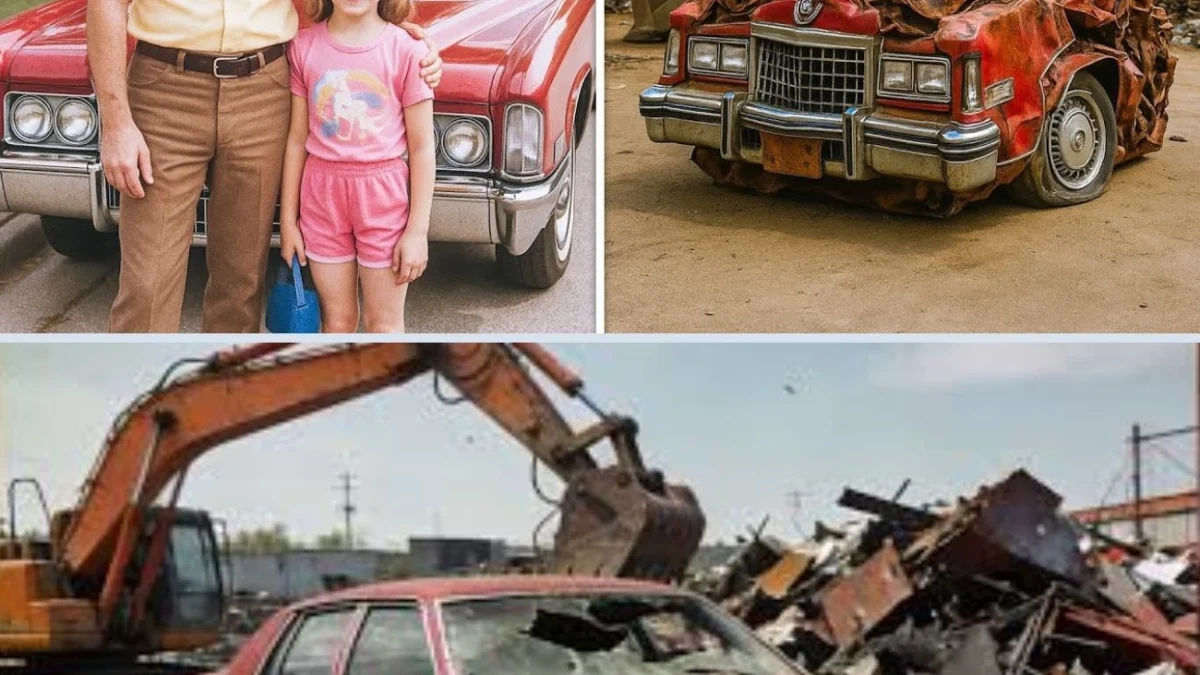

In 1984, a young woman and her father from Austin, Texas, disappeared during a weekend trip, leaving her mother at home with unimaginable grief and unanswered questions for over a decade. But 16 years later, a junkyard owner finds something shocking among the discarded cars. A chilling discovery that would change everything.
The autumn sun filtered through the windows of Margaret Hbrook’s living room in Austin, Texas, casting long shadows across the hardwood floor. Margaret sat quietly on her floral-patterned sofa, the television remote gripping tightly in her hand. Her mother, Doris, sat beside her, her face etched with the same anticipation and dread that had become a ritual on this day every year.
“It’s almost time,” Margaret whispered. Her voice was nearly inaudible as she turned up the volume on the television. The local news program appeared on the screen, and Margaret leaned forward, her eyes fixed on the set. For 16 years, she had paid local news stations to broadcast a missing persons alert on this day.
The anniversary of the day her family was torn apart. When the commercial break began, Margaret’s breath caught in her throat. The screen displayed a photograph of a family: a handsome man with a thick mustache and warm eyes, standing proudly beside a little girl with a radiant smile. Next to the photo was an image of a bright red Cadillac.
“Sixteen years ago, Jim Hbrook and his 8-year-old daughter, Lucia, disappeared during a weekend trip,” the announcer’s voice stated. “They were last seen driving a red 1979 Cadillac de Ville, license plate THB 143. If you have any information about their whereabouts, please contact the Austin Police Department.”
Margaret turned off the television, unable to bear the weight of the silence that followed. She looked at her mother, noticing the somber expression that had settled on her wrinkled face.
“I’m going upstairs to freshen up,” said Doris, shaking Margaret’s hand before slowly rising from the sofa. Margaret watched as her mother disappeared upstairs.
Left alone with her thoughts, Margaret walked to the bookshelf that lined the back wall of the living room. Her fingers glided along the spines of several books before stopping at a worn leather photo album. She picked it up and returned to the sofa, opening it with the care one might devote to a sacred text.
Page after page revealed moments frozen in time. Jim, standing proudly beside the Cadillac he had worked so hard to buy. Lucia on her first day of school, the three of them in Barton Springs, their faces lit up with joy. Margaret traced the outline of her daughter’s face with a trembling finger.
“Where are you?” she whispered to the photograph, as she had done countless times before. The shrill ring of the telephone cut through the silence, startling Margaret. She closed the album and set it aside before walking to the kitchen to answer it.
“Hello,” she said, her voice slightly breathless.
“Mrs. Hbrook, this is Officer Daniels from the Austin Police Department,” came the reply. “I’m calling because we just received a report of potential evidence found at a junkyard in San Marcos. We believe it may be related to the case of your husband and daughter.”
Margaret’s free hand gripped the counter for support. “What kind of evidence?”
“We would prefer not to discuss details over the phone, ma’am. Would you be available to come and identify what was found? We can send a patrol car to pick you up in about 10 minutes?”
“Yes,” Margaret replied immediately, her heart racing. “Yes, I’ll be ready.”
She hung up the phone and ran to the foot of the stairs. “Mom!” she called. “The police just called. They found something at the junkyard in San Marcos. They think it might be connected to Jim and Lucia.”
Doris appeared at the top of the stairs, her face pale. “What did they find?”
“They didn’t say, but they’re sending a car to pick us up in 10 minutes.”
Doris hurried down the stairs, her earlier exhaustion forgotten. “I’ll go with you.”
They waited in tense silence until the patrol car arrived. The officer at the wheel introduced himself as Officer Martins, but spoke little during the hour-long drive south to San Marcos. Margaret watched the familiar Texas landscape blur past, her thoughts racing with possibilities. Beside her, Doris clutched her purse tightly in her lap, her knuckles white.
When they finally arrived at the Hardgrove junkyard, Margaret’s stomach churned at the sight of police cars and yellow crime scene tape surrounding a section of the yard. Officer Martinez led them through the maze of scrapped vehicles toward a group of people gathered around something Margaret still couldn’t see.
“Detective Reis,” Officer Martinez called as they approached. “Mrs. Hbrook and her mother are here.”
A tall man in plain clothes turned to greet them, his expression carefully neutral. “Mrs. Hbrook, Mrs. Barrett, I’m Detective Reis. Thank you for coming so quickly.”
“What did you find?” Margaret asked, her voice firm despite the trembling in her hands.
Detective Reis stepped aside, revealing what the group surrounded. Margaret’s legs nearly gave way beneath her. There, crushed almost beyond recognition, yet still unmistakable, was a red Cadillac de Ville. The paint that had once gleamed was now dull and rusty in places, but there was no doubt in Margaret’s mind.
This was Jim’s car, the one he had saved up for years to buy, the one he had cherished so much, the one in which he and Lucy had left 16 years ago.
“Oh my God!”, Dory whispered beside her, grabbing Margaret’s arm for support.
Margaret approached the vehicle slowly, as if in a trance; the car had been partially crushed, presumably by the large excavator parked nearby. The police officers photographed every angle of the vehicle, while others appeared to be taking measurements and searching the surrounding area.
“We can’t inspect the interior due to its condition,” Detective Reis explained gently. “But we need to confirm. Is this your husband’s car, Mrs. Hbrook?”
Margaret circled the vehicle, her eyes scanning every detail. Finally, she stopped at what remained of the right rear wheel. She pointed to a small dent in the chrome hubcap.
“Jim hit a curb the week before he disappeared,” she said, her voice distant. “We were going to fix it, but…” Her voice trailed off. She looked at Detective Reis, her eyes filled with tears she refused to shed. “Yes, this is their car.”
Detective Reis nodded solemnly, then gestured to a man standing nervously at the edge of the crime scene. “This is Jean Layton, the junkyard owner. He’s the one who called us.”
Jean stepped forward, wiping his hands on a cloth before offering one to Margaret. “I’m so sorry, ma’am. I had no idea about the car’s history, I swear. It was scheduled to be compacted this morning. And I was in my office afterward when I saw the missing persons segment on TV. I recognized the car immediately and called the police.”
“How did he end up here?” Margaret demanded, ignoring his outstretched hand. “Who brought him?”
Jean shifted uncomfortably. “That’s the thing, ma’am. I have no record of when he was brought in. He’s not in our system.”
“That seems suspicious,” Doris said sharply.
Detective Reis raised a hand. “Mr. Layton was the one who alerted us to the presence of the car, Mrs. Barrett. We have no reason to believe he is involved in its appearance here.”
“I’ve been trying to figure out how he got here too,” Jean insisted. “We have strict protocols for accepting vehicles, paperwork, ID, everything.”
As he spoke, a woman in dirty overalls approached the group. “I saw Reid bring him,” she said.
All eyes turned to her. “Reid?”, asked Detective Reis.
“Reid Carway,” Jean explained. “He’s my partner, he takes care of the technical side of things. He’s the head of the technicians here.”
Detective Reis immediately picked up the phone. “We need to talk to him. Can you call him?”
Jean shook his head and pulled out his own phone, dialing a number. After several moments, he shook his head again: no answer.
“I’ll need his home address,” Detective Reis said firmly.
“Sure,” Jean replied, pulling a small notebook from his pocket and writing down an address. “He lives in South Austin. Here’s his information.”
Detective Reis took the paper and turned to one of his officers. “I want a unit dispatched to this address immediately. Tell them to bring Mr. Carway in for questioning.” He turned to Jean. “Is there anything else on Mr. Carway’s property that might be relevant to our investigation?”
“His office,” Jean said, “but it’s locked and only Reid has the key.”
“We’ll need a warrant to properly search him,” Detective Reis said, turning to another officer. “Start getting that sorted out.”
Margaret remained silent during the exchange, her eyes never leaving the battered Cadillac. Sixteen years of doubt, of hope against hope. And now this. The car that had taken her husband and daughter away from her for the last time was there, crushed beyond recognition, but with no sign of Jim or Lucia.
“Let’s search the area,” Detective Reis instructed his team. “Mrs. Hbrook, Mrs. Barrett, if you feel comfortable doing so, your help in identifying any potential personal items would be invaluable.”
Margaret nodded silently, and she and Doris followed the police officers as they began to methodically search the junkyard. Hours passed as they examined piles of scrap metal and discarded items, but nothing related to Jim or Lucia turned up.
Eventually, they found themselves outside Reid Carway’s locked office, waiting for the man himself or for the warrant that would allow them to search him. Margaret leaned against the wall, weariness etched into every line of her face. Doris stood beside her, an arm around her daughter’s shoulders, both women silent and lost in thought as the afternoon sun climbed higher in the sky.
The sun reached its zenith as two police cars pulled into the junkyard. Margaret and Doris straightened up when they saw a third vehicle, a dark blue pickup truck, close behind. The pickup pulled up a short distance away, and a man of about 20 got out. He had short brown hair and wore work clothes with the junkyard logo emblazoned on the chest pocket.
Detective Reis approached him immediately. “Mr. Carway?”
The man nodded, a confused expression on his face. “Yes, it’s me. What’s going on? The police said you needed to speak to me urgently.”
“I’m Detective Reis,” the detective said, extending his hand. “We’re investigating the appearance of a red Cadillac at your junkyard, a car connected to a disappearance case from 16 years ago.”
Reid’s eyes widened slightly. “The car that was crushed this morning, I heard Jean called you about it.”
Detective Reis gestured toward Margaret and Doris. “This is Margaret Holbrook and her mother, Doris Barrett. The Cadillac belonged to Mrs. Holbrook’s husband, who disappeared with their daughter 16 years ago.”
Carway approached the women, his expression suitably grim. “I’m sorry to hear that, I’m Reid Carway.”
He offered his hand, which Margaret accepted after a moment of hesitation.
“The car wasn’t properly registered in your system,” Detective Reis continued. “One of your colleagues said he saw you bring it. We’d like to know how it came into your possession.”
Reid ran a hand through his hair, sighing. “Yeah, it was a strange situation. A few weeks ago, an older man brought it to me when you weren’t around. He said he no longer had any use for the car and wanted it destroyed.”
“Did he give you his name?”, Detective Reis asked.
Reid shook his head. “No, and that’s what was strange. He paid in cash, a good amount too, but when I tried to get his information for our records, he just took off—literally, left the keys in the ignition and walked away. I called him, tried to chase him, but he was already gone.”
“Can you describe this man?”, pressed Detective Reis.
Reid frowned in concentration. “Tall, maybe 6 feet, lean build, gray hair, though it looked like it might have been dark before. He had a mustache, a very thick one, wore glasses, khaki pants and a button-down shirt. He spoke very softly, it was almost difficult to hear him.”
Margaret’s breath caught audibly. “That… that sounds like Jim,” she whispered to Doris, her face pale.
“What?”, said Doris, too loudly. “But that’s impossible.”
Detective Reis turned to them. “Mrs. Holbrook, are you saying that this description matches your husband?”
Margaret nodded slowly, her hands trembling. “It could be. The height, the build, the mustache. Jim always wore button-down shirts, even on weekends.”
Detective Reis looked back at Reid. “How old would you say this man was?”
“Hard to say,” Reid replied. “Maybe 50. He could have been younger. Even so, he seemed tired, worn out, you know?”
Doris shook her head vigorously. “That doesn’t make sense. Why would Jim get rid of the Cadillac? He loved that car. He worked so hard for it.”
“And why now?” Margaret added, her voice stronger. “After 16 years. And where is Lucia?”
Detective Reis raised a reassuring hand. “Let’s not jump to conclusions. We need to investigate further.” He turned to Reid. “We’d like to search your office, Mr. Carway. One of your colleagues mentioned that you keep it locked.”
Reid nodded. “Yes, of course. Nothing to hide. It’s just that we keep some valuable tools and parts catalogs inside. Follow me.”
As they walked toward the small building that housed the junkyard offices, Margaret and Doris exchanged worried glances.
“Do you really think it could have been Jim?” Doris whispered.
Margaret shook her head. “I don’t know, it looks like him, but why would he abandon the car after all this time? And where has he been? Where’s Lucia? I don’t believe Jim would do that. Maybe this man is trying to confuse us,” Doris suggested in a low voice.
When they arrived at the office building, Reid led them to a door at the end of a small hallway. He took out a set of keys and unlocked the door, stepping aside to let Detective Reis go in first.
“Please wait out here,” Detective Reis said to Margaret and Doris. “We’ll let you know if we find anything of interest.”
As the police entered the office, Doris suddenly clutched her chest, her breathing becoming labored.
“Mother,” said Margaret, alarmed. “What is it?”
“My asthma,” Doris gasped, fumbling in her bag. “I think it’s the stress… my inhaler.”
Margaret helped her to a nearby bench. She found the inhaler at the bottom of Doris’s bag and helped her mother use it, watching anxiously as Doris’s breathing gradually stabilized.
“I’m fine,” Doris insisted after a few minutes, though her face remained pale. “Just overwhelmed. Sorry for the trouble.”
“Would you like us to call an ambulance?” Detective Reis had rushed to her side.
Doris shook her head firmly. “No, no, I’ll be fine. I just need to rest a little.”
While Margaret cared for her mother, the search of Reid’s office continued. The policeman would come out with an item to show Margaret and Doris, but each time Margaret shook her head. None of the items belonged to Jim or Lucia.
After nearly an hour, Detective Reis left the office for the last time. “We’ve finished our search,” he told Margaret and Doris. “Unfortunately, we didn’t find anything directly connected to your husband or daughter.”
Margaret’s shoulders slumped in disappointment. “Then we’re no closer to understanding what happened.”
“We’ve made progress,” Detective Reis assured him. “Finding the Cadillac is significant. Now we need to find out who brought it here and why.” He turned to Reid. “Mr. Carway. We would like you to come to the station to give a formal statement.”
Reid nodded. “Of course. Anything I can do to help.”
“Mrs. Holbrook, Mrs. Barrett, we would like you to come as well,” Detective Reis continued. “We would like to review the details of the case with you in light of this new evidence.”
“We’ll go with you,” Margaret said firmly.
“I’ll go in my own car,” Reid offered. “I’m going to Austin anyway.”
Detective Reis considered this for a moment, then nodded. “Alright. We’ll expect you in up to an hour.”
As they walked back to the vehicle, Margaret supported her mother, who was still slightly unsteady on her feet.
“Are you sure you can handle it?” Margaret asked softly.
Doris squeezed her daughter’s arm. “I wouldn’t miss this for the world. If there’s even a chance to find out what happened to Jim and Lucia, I need to be there.”
They climbed into the back of the vehicle, watching as Reid got into his pickup truck. As the small convoy left the junkyard, the sun shone high in the clear afternoon sky, casting sharp shadows on the battered red Cadillac.
The fluorescent lights of the Austin Police Department cast harsh shadows on the faces of everyone seated in the small meeting room. Margaret and Doris sat on one side of the table, Detective Reis and another officer on the other, while Reid Carway gave his statement in a separate room.
“Let’s go over the timeline again,” said Detective Reis, opening a thick folder. “Sometimes, fresh eyes on old details can reveal something we missed.”
Margaret nodded, her hands clasped firmly on the table. “Jim and Lucia left on a Saturday morning, October 12, 1984. Jim had his dental practice right here in Austin. He was very well-respected; he built everything from scratch. He had this distinctive style, the mustache, his colorful ties; his patients adored him.”
“And Lucia?”, the second officer gently encouraged, taking notes.
A small smile touched Margaret’s lips. “She was 8 years old, so bright, so full of energy. She adored her father, following him everywhere when she wasn’t at school.”
“Didn’t you go on the trip with them?”, the second officer asked.
Margaret shook her head. “My mother needed help that weekend. She was rearranging some furniture, reorganizing the house after my father passed away. It was supposed to be just one night, a quick trip to Llano. Jim wanted to show Lucia the autumn foliage in the mountains. Maybe visit Enchanted Rock. They were supposed to be back Sunday night.”
“And when did you first realize something was wrong?” asked Detective Reis, though he certainly knew the answer from the file in front of him.
“Sunday night,” Margaret replied, her voice growing distant. “Jim had promised to call when they left Llano. When I hadn’t heard from him by dinnertime, I called the motel. They said Jim and Lucia had checked out that morning. I called his friends, relatives; no one had heard from them. On Monday morning, I went to the police station.”
Doris reached out and shook her daughter’s hand. “We’ve been searching ever since.”
Detective Reis nodded solemnly. “The investigation at the time was thorough. Officers checked surveillance footage from gas stations and stores along the route. They interviewed motel employees and people at restaurants in the area. Jim’s credit cards and bank accounts were never used again. His dental practice remained untouched.”
“The technology back then wasn’t what it is today,” the second officer added. “No cell phones to track, fewer cameras. We did what we could.”
“And now, 16 years later, his car turns up in a junkyard,” said Margaret, her voice thick with emotion. “Brought in by a man who matches Jim’s description.”
A heavy silence fell over the room. Detective Reis closed his briefcase and leaned forward, his expression grave. “Mrs. Holbrook, I have to ask. Is it possible that your husband left voluntarily?”
Margaret hardened her voice. “No, absolutely not. We had a good marriage. He adored Lucia. His practice was thriving. There was no reason for him to leave.”
“People sometimes have secrets,” Detective Reis said gently. “Lives they keep hidden even from those closest to them.”
“Not Jim,” Margaret insisted. “And even if that were true, which it isn’t, he would never have taken Lucia from me, never.”
The meeting room door opened and a police officer entered. “Reid Carway’s deposition has been processed,” she informed Detective Reis. “He’s waiting in the lobby.”
Detective Reis nodded. “Thank you.” He turned to Margaret and Doris. “We will continue investigating this new lead. The car will be thoroughly examined, and we will try to trace its movements over the last 16 years. In the meantime, I recommend that you two go home and get some rest. It’s been a long day.”
Margaret glanced at her watch, surprised to see it was already past 2 p.m. “Yes, I think we should. Can we ask a police officer to take them?” Detective Reis offered, standing up.
They headed to the police station lobby, where Reid was sitting in a plastic chair, browsing on his cell phone. He stood up when he saw them and approached. “Are you finished?”
“Yes,” Margaret replied.
“Thank you for your cooperation,” Detective Reis nodded. “That’s all for today. We’ll be in touch if we have any further questions, Mr. Carway.”
Reid looked at Margaret and Doris. “I can give you a ride. I live in the Hyde Park area.”
Detective Reis looked skeptical. “That’s not necessary, Mr. Carway. We can make arrangements.”
But before the detective could finish, a uniformed police officer approached Detective Reis with an urgent message, pulling him away from the group. In his absence, Margaret assessed the situation. Her mother was exhausted, and they would face a long wait for a police escort or a taxi.
“We’ll accept the ride,” Margaret decided, ignoring the pang of stomach ache. He had cooperated fully with the police, and they knew where he worked. There was no rational reason to refuse. “I’ll let Detective Reis know,” she added, turning away to speak with the detective, who was still busy with the police officer.
“Are you sure about this?” Doris whispered when Margaret returned. “The police have his information. Everything will be alright.”
Detective Reid returned looking reluctant, but resigned when Margaret informed him of her decision. “I have his license plate and contact information,” he assured them. “Call immediately if there are any problems.”
Reid’s pickup truck was old, but well-maintained. He opened the passenger door for Doris, helping her into the cab. Then he waited while Margaret settled into the middle seat.
“Where in Hyde Park do you live?” Reid asked as they exited the police station parking lot.
“On the Speedway, near 45th,” Margaret replied, maintaining a neutral tone.
Reid nodded. “I live on H Avenue, not far from there. Funny, we’ve never crossed paths before.”
“Thank you again for the ride,” said Margaret.
The afternoon in Austin was relatively calm as they drove north. Reid engaged in casual conversation, asking about the neighborhood, commenting on the city’s changes over the years. Suddenly, Doris gasped and began patting her pockets and purse.
“What is it, Mother?” asked Margaret, alarmed.
“My inhaler,” said Doris, her voice strained with concern. “I think I left it at the junkyard office when I had that bout of illness earlier.”
“Are you feeling well?” Margaret asked, concerned.
“I’m fine now,” Doris assured him. “I just need that inhaler. It’s the prescription kind, and I just got it last week. It was expensive.”
Reid looked at them. “I have asthma too. If you need an inhaler, I have a spare at home and we can stop to pick one up.”
Margaret shook her head. “That’s very kind, but perhaps we could just stop at a pharmacy. There must be one somewhere.”
“It’s a prescription inhaler,” Doris insisted. “I don’t want to spend money on another one when mine is probably sitting on a table at the junkyard. Could we go back and get it now?”
Margaret asked in surprise, “But the junkyard is an hour away from here.”
“I don’t mind taking them back,” Reid offered. “Seriously, it’s no trouble at all.”
“We couldn’t ask you to do that,” Margaret protested. “Can we call a taxi?”
Doris shook her head firmly. “That would be very expensive, Margaret. Mr. Carway is offering to help.”
“Please call me Reid,” he said. “And seriously, I don’t mind. That junkyard is practically my second home. We can go and come back in a few hours.”
Margaret looked at her mother’s determined face and sighed. “If you’re sure, Mother.”
“I have one,” said Doris. “I don’t want to waste a perfectly good inhaler.”
“Okay,” Reid said, signaling to turn at the next intersection. “Back to San Marcos. Here we go.”
The clock on the dashboard showed 3:05 p.m. when Reid’s pickup truck pulled into the Hardgrove junkyard. Police had finished processing the scene, though the battered Cadillac remained cordoned off with yellow tape. Only a few employees were still working, moving parts and organizing scrap metal from a distance. The three got out of the pickup and headed toward the main office.
Jean Layton was behind the counter, looking surprised to see them again. “Reid and Mrs. Holbrook. I thought you’d left with the police.”
Reid explained: “But Ms. Barrett believes she left her inhaler here during her asthma attack earlier.”
Jean’s face softened with understanding. “Ah, I understand. Actually, I found it after everyone had left. I put it in Reid’s office for safekeeping, figuring he’d know how to return it to the lady.”
“How thoughtful!” said Doris. “Would you mind if I took it now? It’s the prescription one, and I’d hate to have to replace it.”
“Sure,” Jean replied. “Reid, do you have the key?”
Reid nodded, fishing his keychain from his pocket. Margaret and Doris walked down the hall toward Reid’s office. He said he would only go in to pick up the medication. Margaret sank into one of the worn plastic chairs, the weariness of the day’s events clearly etched on her face. Doris, however, paced back and forth outside the door. When Reid opened the door and disappeared inside, Doris frowned, narrowing her eyes suspiciously, as if something had caught her attention there.
“How are you coping, Mother?” Margaret asked softly, sitting down in the chair next to her.
“I’m fine,” Doris assured him, “just a little overwhelmed with everything.”
They sat in silence for a moment, the only sound being the distant clang of metal from the junkyard. A few minutes passed and Margaret found herself growing restless. “What’s taking so long? It’s just an inhaler.”
Doris shifted in her seat, then suddenly straightened up, her eyes widening. “Margaret,” she whispered urgently. “When Reid opens the door to leave, look at the top shelf of the glass cabinet opposite the door.”
“What? Why?” asked Margaret, confused by her mother’s sudden intensity.
“I only glanced at him quickly when he came in,” Doris explained hastily. “I think I saw a blue bag up there among some books. It looks like Lucia’s.”
Margaret’s heart skipped a beat. “That’s impossible, Mother. Lucia’s purse was with her when she disappeared.”
“Just look,” Doris insisted. “It’s exactly the same shade of blue.”
Before Margaret could answer, the sound of footsteps announced Reid’s return. When the office door opened, both women instinctively glanced past him into the office. Through the door, Margaret could see a glass-fronted cabinet against the opposite wall. And there, on the top shelf, nestled among various technical manuals, was a small blue bag, the exact shade Lucia carried with her everywhere.
Reid left, holding Doris’s inhaler. “I found it on my desk,” he said, handing it to her.
Margaret couldn’t take her eyes off the glimpse of blue visible through the closing door. “Reid,” she said, her voice surprisingly firm. “That blue bag in your office?”
Reid turned, following her gaze back to the office. “That old thing?” he said casually, but Margaret noticed a slight stiffness in his posture.
“It looks exactly like my daughter’s,” said Margaret, “the one she had with her when she disappeared.”
Reid hesitated for just a moment. “Really? That’s a huge coincidence.”
“Would you mind if I took a closer look?” Margaret asked, already getting up from her chair.
Reid seemed to consider that for a moment, then shrugged. “Sure, I suppose so. It’s nothing special, just an old bag that belonged to my daughter.”
“I didn’t know you had a daughter,” Jean commented from behind the counter.
Reid glanced at her quickly. “She’s no longer with us. She lives with her mother in Houston.”
Margaret and Doris followed Reid back to his office. He unlocked the door again and went straight to the closet, stretching to grab the blue bag from the top shelf.
“Here it is,” he said, handing it to Margaret. “My daughter wasn’t much of a girly girl, but she got this for her first birthday at school. She never really liked it or wanted to use it. So I just kept it here.”
Margaret picked up the bag with trembling hands. It was exactly the same size and style as the one she had bought for Lucia in 1984. A small rectangular bag with white trim and a simple clasp. Lucia had saved her allowance for weeks to buy it, insisting that she was old enough to carry it everywhere.
“This looks like a vintage piece,” Margaret said carefully, turning the bag over in her hands. “What year did your daughter receive this?”
Reid shifted his weight from one foot to the other. “Oh, I don’t remember exactly, it was a few years ago.”
“It’s identical to a bag that was popular in the early ’80s,” Doris observed, watching Reid’s face intently. “I’m surprised they still make them in this style.”
“Well, you know how fashion comes back around,” Reid said with a dismissive wave of his hand. “Vintage is back in style, I suppose.”
Margaret opened the bag, but it was empty. She examined the inside carefully, running her fingers along the lining. “You’re in incredibly good condition for a child’s bag.”
“Like I said, she barely used it,” Reid replied. “You can keep it if you want. It’s just been sitting here collecting dust.”
Margaret’s head snapped up. “Would you give your daughter a birthday present?”
Reid shrugged. “It’s not like she’s missing him. Besides, if it brings her any comfort, it reminds her of her daughter. Why not?”
“That’s very generous,” Margaret said slowly. “Are you sure?”
“Absolutely,” said Reid, with an unreadable expression.
“Didn’t the police see this when they searched your office earlier?” Doris asked suddenly, and Reid nodded.
“Yes, they looked at everything. I told them it belonged to my daughter and they moved on. Just a personal item, nothing suspicious about it.”
Doris picked up Margaret’s bag and turned it over, examining it more closely. Inside, she found a small white ribbon tag sewn into the lining. She narrowed her eyes at it, then frowned. “There’s no manufacturer’s information on this tag,” she said, showing it to Margaret. “It looks like something was printed here before, but somehow it was erased.”
Margaret leaned over to look. The white tag on the suit showed faint traces of what might have been text before, but was now impossible to read. “That’s strange,” she murmured, then looked at Reid. “What kind of birthday present doesn’t have tags or markings?”
“I wouldn’t know,” Reid said, a hint of impatience creeping into his voice. “It was given by a friend or a schoolmate of hers.”
Margaret ran her fingers over the bag’s material again, noting its familiar texture and weight. It was exactly like Lucia’s bag, the one she was so proud to carry, the one she insisted on taking everywhere, even on that final trip with her father.
“We’ll take it,” Doris announced suddenly, pressing her bag against her chest.
“If you’re sure everything’s alright…”
“Like I said, it’s just gathering dust here,” Reid repeated, gesturing toward the door. “Now, if there’s nothing else, I should probably take them back to Austin.”
As they walked back through the junkyard toward Reid’s pickup truck, Margaret and Doris exchanged meaningful glances. Neither spoke until they were seated in the vehicle and Reid had briefly stepped away to speak with Jean.
“It’s Lucia’s bag,” Doris whispered urgently. “I’m sure of it. The label was altered to remove the brand and the year of production.”
Margaret sensed this, her mind racing. “But how would Reid have Lucia’s purse, and why would she be in his office?”
“I don’t know,” Doris replied. “But there are too many coincidences, don’t you think? First, Jim’s car shows up at this junkyard, brought in by Reid. And now this bag that looks exactly like Lucia’s is in his office.”
“Let’s not jump to conclusions,” Margaret warned, although her own suspicions were growing. “This could all be a strange coincidence.”
“Do you really believe that?” Doris asked, her eyes piercing.
Before Margaret could answer, Reid climbed into the driver’s seat. “All set?” he asked cheerfully, as if the strange encounter with the blue bag had never happened.
“Yes,” Margaret replied, forcing a smile. “Thank you again for your help today.”
Reid started the engine and drove out of the junkyard. As they returned to Austin, Margaret held the blue bag in her lap, her fingers tracing its familiar outline.
The day had stretched into late afternoon when Reid’s pickup truck rejoined the northbound traffic on Interstate 35. Margaret sat in the passenger seat, her blue bag clutched tightly in her lap, while Doris occupied the back seat, her newly recovered inhaler safely tucked away in her bag.
The silence in the car seemed heavy with unspoken questions. Margaret’s mind raced with possibilities, each more unsettling than the last. How could Reid have a bag so identical to Lucia’s? And why was he so eager to donate it?
“I don’t know how to thank you for all your help today,” Margaret finally said, breaking the silence. “It’s been quite a day.”
Reid nodded, keeping his eyes on the road. “Happy to help. Finding that car must have been a huge shock for you both.”
“Sixteen years of doubt,” Margaret said softly. “And then to find Jim’s car like this…”
“Tell me about them,” Reid said casually. “Your husband and daughter, what were they like?”
Margaret hesitated, studying Reid’s profile. He seemed genuinely interested, but something about the question made her uncomfortable. Still, talking about Jim and Lucia had always been a way to keep their memory alive.
“Jim was a wonderful dentist,” she began. “He had a way with patients, especially children. They weren’t afraid of him. He told silly jokes and wore those ridiculous ties with tooth patterns.”
A small smile touched Reid’s lips. “He looks like a character.”
“He was,” Margaret agreed. “And Lucia, she was so full of life, intelligent, curious, above all. She was a little fashionista even at 8 years old. Always concerned about her appearance, about what she wore.”
“Is that why she loved that blue bag so much?” Reid asked, gesturing toward the bag in Margaret’s lap.
“Yes,” Margaret replied, stroking the vinyl surface. “She saved her allowance for weeks to buy it. It was from the Barbie accessories collection, a limited edition. She carried it everywhere.”
Margaret pulled a worn photograph from her purse. It showed Jim and Lucia standing in front of the red Cadillac. Jim’s arm was around his daughter’s shoulders, his prominent mustache above a wide smile. Lucia smiled at the camera, her bright pink dress contrasting with the scarlet red paint of the car.
“These are them,” Margaret said, holding the photo out for Reid to see. “This was taken about a month before they disappeared.”
Reid barely glanced at the photo before returning his gaze to the road. “Nice family,” he commented. “She was missing her two front teeth and…”
He took a deep breath, as if savoring the thought. “That pink t-shirt with the rainbow.”
Margaret froze, her eyes darting to Reid’s face. He had barely glanced at the photo, not enough to notice such specific details. And she hadn’t mentioned that there was a rainbow on Lucia’s blouse or that her front teeth were missing.
In the back seat, Doris had remained completely still. Margaret could feel her mother’s eyes piercing the back of Reid’s head.
“That’s right,” Margaret said carefully, putting the photo in her bag with trembling hands.
The rest of the trip passed in uncomfortable silence. Margaret noticed that Reid frequently glanced at her in the rearview mirror, although each time she looked up, he would look back at the road. She wasn’t sure if he was watching her or the blue bag she was holding.
When they finally arrived at Margaret’s house in North Austin, the relief was palpable. Reid pulled over to the curb and put the pickup truck in neutral.
“Here we are, safe and sound,” he said with a smile that didn’t reach his eyes.
“Thank you again,” Margaret said, her voice carefully neutral, as she opened the door. “For everything.”
“It was a pleasure,” Reid replied. “Let me know if you need anything else. I’m in the phone book. Reid Carway.”
Doris had already gotten out of the back seat and was waiting on the sidewalk. Margaret joined her, and they both watched as Reid drove away, his pickup truck disappearing around the corner.
Without saying a word, they hurried down the path to the house. Margaret’s hands trembled as she unlocked the door. Once inside, she quickly locked it from behind, sliding the bolt into place.
“Did you hear what he said in the car?” Doris asked immediately, her voice barely louder than a whisper, even though they were alone. “About Lucia’s teeth and the rainbow blouse?”
Margaret nodded, sinking into the nearest chair, her blue bag still firmly clutched in her hands. “He couldn’t have seen those details just by glancing at a photo while driving.”
Doris leaned forward, her eyes wide. “Margaret, is there any possibility that Reid knew Lucia or Jim? That he might be hiding something?”
“Mother, that’s a terrible accusation,” said Margaret, though her voice lacked conviction. “We have no evidence.”
“Perhaps he just has a sharp eye.”
“It could be.”
“Some people have a photographic memory.”
They both fell silent. Margaret stared at the bag, turning it over in her hands. “If this really were Lucia’s bag, it would have her name on it,” she said slowly. “Remember? I used to write her name with a permanent marker on all her belongings so they wouldn’t get mixed up with her friends’.”
“I remember,” Doris nodded. “She got very angry when I wanted to write her name on this bag,” Margaret continued, a distant smile playing on her lips at the memory. “So we decided to put a sticker inside for identification.” She looked at her mother. “Besides, this style of bag was quite popular at the time.”
“I bought it for her in a Barbie accessories pack.”
“From the original limited edition by Mattel.”
“We saw other children her age with similar bags in different colors.”
“There were even other brands that made similar models and sold them in department stores.”
Doris nodded, but her expression remained worried. “Still, that’s a lot of coincidences, don’t you think?”
Margaret remained silent, running her fingers along the seams of the bag. The material felt right, exactly as she remembered Lucia’s bag. And the white label inside, with its mysteriously faded print.
“Let’s go to an antique shop,” Doris said suddenly. “Ask an expert there to check this bag. If it’s really a vintage piece from the ’80s, they can tell us. We’ll go to the police.”
Margaret considered this for a moment, then nodded decisively. “You’re right. Let’s get an expert opinion. If this really is from Mattel’s limited edition collection, someone who understands vintage items will be able to confirm.”
She rose from her chair, her blue bag still in her hand. “I’ll get the car keys,” Margaret said, her voice stronger now. “That antique shop on Burnet Road? If we hurry, we can get there before they close.”
Doris also stood up, her earlier exhaustion seemingly forgotten in the face of this new clue. “Come on. We need to know what we’re dealing with.”
As they headed for the door, Margaret clutched her blue bag tightly.
Margaret’s sedan pulled out of the driveway and into the golden light of the late afternoon. She gripped the steering wheel tightly as Doris sat beside her, her blue purse nestled securely in her lap.
“It should still be open at Burnet,” said Margaret, checking her watch. “Mr. Keller was always a connoisseur of vintage collectibles.”
Traffic was light as they drove through the city, neither woman speaking much. The weight of the day’s discoveries hung between them. First Jim’s dented Cadillac, and now this purse that looked so much like Lucia’s beloved possession.
“Do you really think this could be Lucia’s bag?” Doris asked softly, tracing the white trim with her fingertip.
Margaret kept her eyes on the road. “I don’t know what to think anymore, Mother. If it belonged to Lucia and Reid was lying, why would he have kept it all these years?”
Twenty minutes later, they stopped in the small parking lot of Burnet Antiques, a modest shop sandwiched between a bakery and a hardware store. A bell rang as they opened the door, and the smell of old books and furniture polish enveloped them. The shop was full of things, but organized, with display cases containing jewelry and small collectibles, while larger pieces of furniture were arranged throughout the open space.
A man in his sixties looked over the counter, smiling in recognition. “Mrs. Holbrook, Mrs. Barrett,” he greeted them. “What a pleasant surprise. How can I help you ladies today?”
“Hello, Mr. Keller,” Margaret replied. “We were hoping you could tell us something about this bag.” She gestured to Doris, who placed the blue bag on the counter.
Mr. Keller adjusted his glasses and looked down. “Hmm, interesting piece. A children’s accessory, early 1980s, if I’m not mistaken.” He turned it over in his hands. “But this isn’t really my specialty. I should call Robert from the back. He’s much better with these kinds of items.”
He disappeared through a curtained door, returning a moment later with a younger man in his 40s, with gray hair and metal-rimmed glasses.
“This is Robert,” explained Mr. Keller. “He’s our expert on antique and collectible toys. His wife is a serious Barbie collector. So, if anyone can correctly identify this piece, it’s him.”
“Ladies,” Robert nodded in greeting. “Let’s take a look at what you’ve brought.”
He picked up the bag and took it to a better-lit section of the counter. With experienced hands, he examined the material, the stitching, and the zipper. He opened it and smelled the inside, his fingers tracing the seams.
“May I ask what specifically you would like to know about this item?” he asked, looking at Margaret and Doris.
“We would like to confirm if it is an original Mattel product from the limited edition Barbie accessories line from the early 1980s,” Margaret explained. “And, if possible, the exact year it was produced.”
Robert nodded and turned his attention to the bag. He pulled a jeweler’s loupe from his pocket and examined the stitching more closely.
“The quality of the vinyl and the stitching pattern are consistent with Mattel’s production standards from that era,” he said. “The specific blue color was part of the Barbie World collection, if I remember correctly.” He continued his inspection by checking the zipper and hardware. “The zipper pull has the characteristic Mattel shape from that period.”
He took his cell phone out of his pocket. “Let me make a quick call to my wife. She’ll know more specific details.”
As Robert walked away to make the call, Margaret and Doris exchanged hopeful glances.
“He seems to think she’s authentic,” Doris whispered.
“But that doesn’t prove it’s from Lucia,” Margaret warned, “only that it’s from the correct period.”
Robert returned a few minutes later, putting his phone away. “My wife confirms that this is almost certainly from the Mattel Barbie accessories collection, specifically from their limited edition 1983-1984 set. They only produced this specific shade of blue for about 8 months.”
He turned his attention to the white tag inside the bag. “That’s interesting, though,” he said, frowning slightly. “The identification tag has been tampered with.”
“Adulterated?” Margaret leaned closer.
Robert nodded, pointing to the label with a pen. “See how the fabric is slightly wrinkled at the edges? And this discoloration here?” He indicated several spots on the small white strip. “It looks like someone deliberately removed the print, probably using some kind of heat treatment, likely a household iron.”
He turned the label toward the light. “You can still see where the ink was. The heat weakened and essentially plasticized the surface of the label. It no longer smells of burnt polyester, but the damage pattern is characteristic of heat application.” He pointed to the surrounding fabric. “There’s also slight physical wear, showing signs of damage to the lining around the label, also consistent with heat treatment. Someone deliberately tried to remove any identifying information that was printed here.”
Margaret’s heart was pounding. “It could have just faded naturally over time.”
Robert shook his head. “No, this is deliberate. Natural fading would affect the entire label evenly. This shows concentrated damage, specifically where the printing would be.”
He looked at them curiously. “If you don’t mind me asking, why is this particular bag so important?”
Margaret hesitated, then opted for a partial truth. “It’s very similar to one my daughter had many years ago. I was curious if it could be the same model.”
Robert seemed satisfied with the explanation. “Well, I can confidently say that this is an original Mattel product from their 1983-1984 line. My wife would be happy to provide more details if you’d like to bring them up sometime when she’s around.”
“Thank you,” said Margaret, her voice slightly unsteady. “You have been extremely helpful.”
Robert carefully returned the bag to her. “Is there anything else you’d like to know about her?”
“No. This is all we needed,” Doris replied, taking the bag. “How much do we owe for your time?”
Robert dismissed the suggestion with a gesture. “No problem. Always happy to help identify a vintage piece.”
They thanked both men and returned to the car. Once inside, with the doors closed, Doris turned to Margaret, her expression serious.
“Margaret, someone deliberately removed the identification tag from this bag,” she said quietly.
Margaret stared at the bag in her lap, her fingers tracing the outline of the heat-damaged tag. “I know.”
“We need to take this to the police,” Doris said firmly. “They need to know about Reid’s connection, both to Jim’s car and to this bag.”
Margaret nodded slowly. “You’re right. Even if this isn’t Lucia’s, even if Reid’s daughter really did get it from a friend at school, the police should know.”
She started the car. Her hands were steadier now that she had a plan. “Let’s go straight to the police station. Detective Reis should still be there.”
As they left the parking lot, the blue bag rested between them. Margaret’s mind filled with questions about Reid Carway and his connection to her family’s disappearance. Questions she hoped the police could finally answer.
They had driven only a few blocks from the antique shop when Margaret noticed the brake warning light coming on in the dashboard. The car began to shake slightly and she frowned.
“This is strange,” he murmured, pressing the brake pedal experimentally. The response seemed slow.
“What is it?” asked Doris, lifting her eyes from the blue bag she had been examining.
“I’m not sure. The brake light just came on.”
Margaret pressed the pedal again, and this time it went almost all the way to the floor. “Something is definitely not right.”
The car began to lose power as they approached an intersection. Margaret quickly signaled and pulled over to the side of the road before the vehicle came to a complete stop. She put it in neutral and turned off the ignition. Then she tried to start it again. The engine sputtered, but wouldn’t start.
“This has never happened before,” said Margaret, confused.
She got out of the car and walked to the front, opening the hood. No steam was coming out and nothing seemed obviously wrong to her untrained eye, but she knew something serious had gone wrong.
“Should we call a tow truck?” Doris asked, joining her daughter in front of the car.
“I think we’ll have to do this,” Margaret replied, picking up her cell phone. Goodbye to the trip to the police station tonight; just as she was about to dial, a pickup truck pulled up behind them.
Margaret’s stomach clenched as she recognized Reid Carway exiting from the driver’s side. A second man, taller and heavier-built, emerged from the passenger door.
“Margaret, Doris,” Reid called, approaching with a concerned expression. “Are you alright?”
“I was just passing by and saw you two standing there,” Margaret forced a smile, though unease stung the back of her neck. “What a coincidence.”
“We’re having some problems with the car.”
“The brake light came on and then the car simply lost power.”
Reid and his friend moved to the front of the car, looking under the hood. “This is my friend, Jason,” Reid said, gesturing to the other man. “He’s very good with cars.”
Reid and his friend moved to the front of the car, looking under the hood. “This is my friend, Jason,” Reid said, gesturing to the other man. “He’s very good with cars.”
Jason nodded to them before leaning over to examine the engine. “What exactly happened?”
Margaret repeated the symptoms while Jason fiddled with various components. After a few minutes, he straightened up, wiping his hands on his jeans. “It looks like your brake line is leaking fluid,” he said. “And it may have affected the transmission as well. It’s not safe to drive like this.”
“Can you fix it here?” Margaret asked.
Jason shook his head. “No, this needs tools. The right parts, probably too.”
Reid stepped forward. “Where were the ladies going? Perhaps we could give them a ride.”
“We were going to… to the police station, actually,” said Doris, clutching her purse tightly.
“The police station?” Reid’s eyebrows rose. “And everything’s alright?”
“Yes, just a follow-up about Jim’s car,” Margaret said vaguely, reluctant to mention the purse.
“Well, I can call a tow truck and take your car to the junkyard,” Reid offered. “We have all the tools there, and I can fix it for you, probably cheaper than a regular garage too.”
“That’s very kind,” Margaret began. “But we’d prefer to go to the police station first?”
Doris interrupted firmly: “We can deal with the car later.”
Reid and Jason exchanged a quick glance that Margaret almost missed.
“Mom!” said Margaret, touching Doris’s arm. “Maybe it makes more sense to take care of the car first. We can always call Detective Reis from the junkyard if necessary.”
“Margaret is right,” Reid said gently. “There’s no point in leaving the car parked here all night. Let me call a truck from a friend’s company and we’ll sort this out.”
Before any of the women could protest further, Reid picked up the phone and made a call. “They’ll be here in about 10 minutes,” he announced after a brief conversation.
The next few minutes passed in an uncomfortable silence. Margaret could feel Doris’s disapproval radiating beside her, and she could understand her mother’s sudden hostility toward Reid. Yes, the coincidences were troubling, but Reid had been helpful since they met. And perhaps he could explain about the bag to the police as well.
The tow truck arrived exactly when Reid had predicted, bearing the logo of a different company. The driver, a burly man with tattoos covering his forearms, barely spoke as he hitched up Margaret’s car.
“All set,” Reid said as the tow truck pulled away with Margaret’s sedan. “You can come with us to the junkyard. We’ll fix this car in a jiffy.”
Margaret and Doris hesitated near Reid’s pickup truck. Doris lingered near the rear bumper, her eyes narrowed as she studied the license plate.
“Are you coming?”, Reid called, already climbing into the driver’s seat with his tall friend beside him.
“Yes, of course,” Margaret replied, opening the passenger door.
Doris remained where she was, staring intently at the license plate number. “Mom!” Margaret called.
With visible reluctance, Doris finally moved toward the pickup truck. As she climbed into the back seat, she whispered very softly in Margaret’s ear: “I don’t like this idea. I have a bad feeling about it. We should have called the police for help.”
Margaret patted her mother’s hand reassuringly, but a flicker of doubt had ignited in her mind. Why had Reid appeared so conveniently right when their car broke down? And why was he so insistent on taking them to the junkyard?
“Actually, Reid, I’ve changed my mind,” she said. “It would be more helpful if you could drop us off at the police station instead of going to the junkyard.”
“Sure,” said Reid.
As Reid drove through the streets, Margaret noticed Doris hunched over in the back seat, her hands tucked into her lap. She realized her mother was furtively texting on her cell phone, shielding the screen from view.
After about 15 minutes of driving, Margaret frowned, looking out the window at the unfamiliar surroundings. “Reid, this doesn’t look like the way to the police station.”
“Taking a shortcut,” he replied, without meeting his gaze in the rearview mirror. “Less traffic this way.”
Jason, who had been mostly silent until now, turned in his seat to face them. His expression had hardened, all his previous affability vanished.
“Reid,” Doris said sharply. “Where are you taking us? This isn’t the way.”
Reid’s hands gripped the steering wheel, his knuckles turning white. “Change of plans,” he said, his voice suddenly cold.
Margaret felt a chill run down her spine. “What do you mean?”
Instead of answering, Jason reached under his seat and pulled out a small gun with what appeared to be a silencer attached. He also produced two pairs of handcuffs.
“Put these on,” he ordered, extending the handcuffs to Margaret and Doris. “Both of you, now.”
Margaret stared at the gun in shock. “Reid, what is this? What’s going on?”
“Put the handcuffs on,” Jason repeated, his voice even harsher this time. When they hesitated, he suddenly yelled, “Put them on now, or I’ll shoot!”
His sudden aggression was terrifying, and both women flinched. With trembling hands, Margaret grasped the cold metal and clamped one end onto her right wrist, then the other onto her left. Beside her, Doris did the same.
Jason reached back again and roughly checked to see if the handcuffs were secure. Satisfied, he produced two handkerchiefs, rolled them up, and stuffed one into Margaret’s mouth, then into Doris’s.
“That blue bag,” Jason said, stretching and snatching it from Doris’s lap. “It’s not yours anymore.”
He shoved them both hard, forcing Margaret to the floor of the back seat, while Doris was pushed to the side, through the seat. Reid’s eyes met Margaret’s in the rearview mirror, all pretense of friendship vanished.
“Be quiet,” he said coldly. “Or you will never see the light of day again.”
As the pickup truck continued down the increasingly rural road, Margaret’s mind raced with terror. The blue bag was important enough to Reid that he was willing to kidnap them for it. Any connection she had to Lucia and Jim, Reid was clearly desperate to keep that information hidden.
Amidst the fear, Margaret met Doris’s gaze. Her mother’s expression conveyed a clear message: I sent a message to someone. Have hope.
Reid turned the pickup truck onto a narrow dirt road, cedar trees closing in around them as they left civilization behind. Margaret closed her eyes briefly, praying that whoever Doris had contacted would find them before it was too late.
The dirt road snaked through dense cedar trees for several miles before opening into a clearing. In the dim light of early evening, Margaret could make out a dilapidated farmhouse with peeling white paint and a sloping porch. Nearby stood a worn-out camper trailer. Its once-white exterior was now a dirty gray.
No other vehicles were in sight, and the property seemed isolated from any neighboring farms. Reid parked the pickup truck about 50 meters from the house and turned off the engine. Jason kept his gun pointed at Margaret and Doris as Reid walked to open the back door.
“Get out!”, he ordered, roughly pulling Margaret from the floor of the pickup truck.
Doris followed, her legs unsteady after being squeezed into the back seat, her hands handcuffed in front of her and the gags still in her mouth; the women were defenseless as Reid and Jason marched them toward the farm.
As they passed the trailer, Margaret noticed it was visibly shaking, as if someone inside was moving violently. Reid nudged Jason with his elbow, laughing. “Looks like the boss’s having some fun in there,” he said, pointing to the shaking trailer.
Jason laughed. “Yeah, we should wait for him to finish.” Before giving him another headache, he nudged Margaret forward. “Those two women are going to be trouble.”
They continued to the farmhouse, climbing the creaking steps to the porch. Reid pushed open the front door, revealing a dark interior that smelled of mildew and cigarette smoke. They were led through a cluttered living room and down a hallway to what appeared to be an office.
A table with an old computer and telephone sat in one corner, while filing cabinets lined the opposite wall. An older man with gray hair sat in a chair near the window, reading a newspaper. He looked up as they entered, his face wrinkled and expressionless.
“Keep an eye on these two,” Reid instructed him as Jason removed the gags from Margaret and Doris’s mouths. “Oh, let’s grab something to eat before the boss is finished.”
The older man nodded, putting the newspaper aside. “Don’t talk to the prisoners,” Jason added sharply, as usual.
Reid crafted a piece of chain which he used to fasten Margaret and Doris’s handcuffs to a heavy metal radiator in the corner of the room. Once satisfied that they could not escape, he and Jason left, closing the door behind them.
As soon as they were alone with the older man, Margaret began to plead: “Please help us. We haven’t done anything wrong. My daughter is a police officer,” Doris added desperately. “She’ll find us. If you help us now, they’ll go easy on you.”
The older man remained silent, picking up his newspaper again, though he wasn’t actually reading.
“Please,” Margaret continued, her voice breaking. “We’re just trying to find my daughter and my husband. They disappeared 16 years ago.”
For several minutes, they continued shouting, pleading for help, explaining their situation. The older man ignored them, occasionally glancing at the door, as if worried that someone might hear.
Finally, after what seemed like an eternity, the door opened. The older man stood up quickly, looking alarmed, but it was only him returning to the room. He approached them with a stern expression.
“Be quiet,” he whispered harshly. “Or they’ll hurt you. You don’t know what you’re capable of.”
“Please,” said Doris, her voice softer now. “I’m Doris Barrett and this is my daughter, Margaret Hbrook. We’re looking for my granddaughter, Lucia Hbrook. She was only 8 years old when she disappeared with her father 16 years ago. If she’s here, please just tell us.”
The older man studied them with hard eyes, his expression unreadable. Then he glanced down the hallway, listening for any sign of Reid or Jason returning. Seemingly pleased to be alone, his face softened imperceptibly.
“They call her Samantha here,” he said, his voice barely above a whisper. “But I knew her name was Lucia, because that’s what they called her before they changed it four years ago.”
Margaret gasped, her knees nearly giving way. “She’s here. My Lucia is here.”
The older man nodded stiffly. “Keep your voices down,” he warned.
“Please help us,” Margaret pleaded, tears streaming down her face. “You seem different from those people. I can see that you’re a good man.”
“Am I going to be a dead man for being a good man now?” he replied grimly. “You don’t know who you’re dealing with.”
“Our years are already short anyway, sir,” said Doris, her gentle voice more urgent than ever. “Soon we will die and live in a different world, according to our actions. Please help us.”
The man seemed to be struggling with himself, the conflict evident in his wrinkled face. Then they heard footsteps in the hallway and Doris whispered, “Please, one more time.”
The man exhaled heavily, as if reaching for a monumental decision. “I’ll do it for Samantha,” he murmured, pulling a cell phone from his pocket. With trembling fingers, he quickly dialed 911. He whispered the farm’s location and hung up, sliding the phone back into his pocket just as the door opened.
Three men entered the room: Reid, Jason, and a large, muscular man wearing only a dirty white tank top and boxer shorts. His bare legs were covered in thick hair, and his arms sported faded tattoos. Margaret felt ill just looking at him, especially when she realized this must be the boss Reid had spoken of.
“What are you doing here, Maik?” demanded the chief, his voice a deep growl. “You shouldn’t be with the prisoners.”
The older man, Mica, stepped back, his face suddenly frightened. “Those women were being noisy, brother. I was just telling them to be quiet. That’s all.”
The chief studied him suspiciously, his eyes narrowing. “Search him,” he ordered Reid and Jason. “If you find anything, deal with him.” He fixed Reid with a meaningful look. “Can you do that?”
Reid nodded without hesitation. “Yes, boss.”
Reid and Mica left the room, leaving Margaret and Doris alone with Jason and the boss. The big man approached them slowly, his eyes scanning their bodies in a way that made Margaret’s skin crawl. Then he said, in a deep voice that made Margaret’s stomach churn, “Reid tells me you’re here for Samantha.”
He reached out and touched Margaret’s hair, then leaned in to smell it. “I like older women too, not just young ones.”
Margaret recoiled from his touch, her handcuffs clinking against the radiator. “Give her back to us,” she demanded, summoning courage she didn’t know she possessed.
The boss laughed, a deep, unsettling sound. “This can’t happen, but I’ll tell you what I can do.” He turned to Jason. “Bring them in.”
Jason nodded and left the room, returning moments later with three women. They appeared to be in their mid-twenties, all with similar builds and long brown hair. They kept their heads down, making no eye contact with anyone.
“Here’s the game,” the boss announced, clearly amused. “Guess which one is the mistress. No arguing allowed. You both have to point at the same time. And if you both guess correctly, I’ll let you see her. Just see, understood?” He smiled, revealing yellowed teeth.
Margaret and Doris studied the three women desperately. All had hair of a similar color to Lucia’s, although they were now grown women instead of the 8-year-old girl Margaret had last seen. Margaret scanned their faces for any trace of the daughter she had lost, any echo of the child she had raised. A woman slightly to the left had a small scar near her right eyebrow, just like the one Lucia got when she fell off her bicycle when she was 6 years old.
Margaret’s heart pounded in her chest as she raised her handcuffed hands to point. “One, two, three, point!” shouted the boss.
Margaret and Doris pointed to the same woman, the one with the small scar.
The boss’s laughter filled the room. “Well, I’ll be damned. The family really knows how to tell them apart, doesn’t it?” He gestured toward the other two women. “Take these two away.”
Jason escorted the other women out, leaving the boss, Margaret, Doris, and the woman they identified as Lucia Samantha in the room.
“Lucia!” whispered Margaret, her voice breaking. “Darling, is it really you?”
The young woman neither answered nor looked up. Her expression remained blank, her eyes distant, as if she had retreated deep into herself.
“Now for the real fun,” the boss said, his voice dropping to a menacing tone. “Samantha, take off your clothes.”
Margaret and Doris gasped in horror. “No!” cried Margaret. “Please, don’t do this to her. Leave her alone,” added Doris, her voice trembling with anger and fear.
The boss ignored them, focusing on Samantha. “I said: take your clothes off now.”
To Margaret’s horror, Samantha began to obey with mechanical movements, her expression still blank. She showed no emotion, no resistance, as if she had performed this act countless times before.
“That’s right,” the boss encouraged, then suddenly raised his hand. “Wait, I have a better idea.” He turned to Margaret with a wicked smile. “More flavors would be nice.”
He approached Margaret and unlocked her radiator chain, though he left the handcuffs on her. Grabbing her roughly by the arm, he dragged her to the center of the room, positioning her between Doris and Samantha.
“I like older women too,” he repeated, running a thick finger along Margaret’s cheek. “Samantha, take her clothes off for me.”
“No,” Margaret choked, looking desperately at the young woman. “Lucia, I’m your mother, please.”
Samantha hesitated, something flickering briefly in her eyes, but her face remained expressionless as she took a step toward Margaret. Margaret tried to back away, but the boss held her firmly in place.
“I like to play with my prey before consuming it,” he said, laughing as Margaret struggled against his grip. With a sudden, violent movement, he ripped Margaret’s blouse at the shoulder, exposing her skin.
Margaret screamed, more from terror than pain, as the boss’s hands began to roam over her body. Suddenly, the door burst open and Reid rushed in, his face pale.
“Boss, the police are outside!”
The boss froze, his expression shifting from lustful to furious in an instant. He shoved Margaret aside and grabbed Samantha’s arm. “How the hell did they find us?!”
“They surrounded the place,” Reid reported, his voice strained with fear.
The boss cursed violently and then turned to Reid. “Finish them off quickly,” he ordered, gesturing to Margaret and Doris. “We’ll escape through the back.”
Reid hesitated. “There’s no way out, boss. They’ve covered the entire perimeter.”
Enraged, the boss snatched the gun from Reid’s waistband. “Then I’ll do it myself,” he growled, pointing the gun at Margaret, who stood frozen in the middle of the room.
Before he could pull the trigger, Maik burst through the door and jumped in front of Margaret. Two shots rang out in quick succession, and Maik collapsed to the floor, blood soaking his shirt.
The boss tried to fire again, but the gun made a blank click. “Damn it!” he roared, throwing the gun aside. “Give me another one!”
Before anyone could move, the sound of splintering wood echoed through the farm, followed by shouts from the police: “Drop your weapons!”
Within seconds, armed police officers flooded the room, their guns pointed at Reid, Jason, and the chief. Jason immediately raised his hands in surrender, as did Reid. The chief, however, lunged toward the nearest officer. A shot rang out, and the chief staggered backward, clutching his thigh where the bullet had struck him.
Instead of collapsing, he laughed. A chilling, maniacal sound. “Do you know how many bullets I’ve taken in my life?” he taunted, blood dripping between his fingers.
Another officer fired, hitting him in the shoulder. This time, the chief fell to his knees, his face contorted in pain, but still defiant.
While the police secured the scene by handcuffing the three men, paramedics rushed to Maik’s side. Margaret, freed from her handcuffs by a female police officer, immediately went to Samantha, who remained motionless amidst the chaos, her eyes vacant.
“Lucia!” whispered Margaret, reaching out to touch her daughter’s face. “It’s me. It’s Mommy.”
There was no response, not even a hint of recognition in those empty eyes. Whatever horrors Lucia had endured in the last 16 years had left deep scars, not all of them visible. Doris, also freed from her restraints, joined them, tears streaming down her face as she looked at her granddaughter.
“We found her, Margaret,” she sobbed. “We finally found her.”
While paramedics worked to stabilize Maik and the police carried the handcuffed criminals away, Margaret held her daughter close in silence, vowing that no matter what it cost or how long it took, she would help Lucia find her way back out of the darkness that had consumed her.
The flashing lights of police cars and ambulances bathed the farm property in alternating shades of red and blue. Police officers flooded the area, securing the scene and collecting evidence while paramedics tended to the wounded and traumatized. Margaret watched in a trance as Reid, Jason, and the man they called the boss were led out of the farm in handcuffs. Reid kept his head down, avoiding eye contact with anyone, while Jason stared blankly ahead, his face expressionless. The boss, despite his gunshot wounds, continued to smile and laugh as the officers pushed him toward a waiting police car.
“Ma’am, we need to examine you,” a paramedic said gently, guiding Margaret toward one of the ambulances.
Doris was already seated on the bumper of another ambulance, a blanket wrapped around her shoulders, while a doctor examined the abrasions on her wrists caused by the handcuffs. Margaret allowed herself to be guided, her eyes never leaving Samantha Lucia, who was being attended to by another paramedic. They had wrapped her in a thick blanket, and she sat motionless on a stretcher, staring blankly into space.
“The lady has a small cut on her shoulder,” the paramedic said gently, cleaning the area where the chief had torn his shirt. “It doesn’t need stitches, but we should bandage it to prevent infection.”
Margaret barely heard her. “My daughter,” she said, her voice hoarse. “Is she alright?”
The paramedic followed her gaze. “Physically she appears unharmed,” she said cautiously, “but she’s not responding to questions. The doctor will want to assess her for psychological trauma when we get to the hospital.”
Margaret felt numb as the paramedic applied a bandage to her shoulder and wrapped a blanket around her.
On the other side of the courtyard, Doris had finished being examined and was walking towards them, her face thin with exhaustion, but her eyes alert. “How is she?” Doris asked, gesturing towards Lucia.
“I’m in shock,” Margaret replied, her voice breaking. “She doesn’t recognize us, Mom.”
“Give her time,” Doris said, squeezing Margaret’s arm. “She’s been through so much.”
A commotion near the farm caught their attention. Paramedics were rushing with a stretcher toward an ambulance. Maik, the older man who had saved Margaret’s life, was there. His chest was covered in bloody bandages, and one of the medics held an IV bag above him as they moved.
“We need to leave immediately,” shouted one of the paramedics. “He’s lost a lot of blood. We need to remove the bullets.”
As they carried Maik to the ambulance, a young police officer approached Margaret and Doris. “The doctors want to transport your daughter to the hospital right away,” he explained. “She needs to be evaluated by specialists. They advised that both of you should also be examined more thoroughly.”
“Of course,” said Margaret, her eyes still on Maik’s ambulance as the doors closed. “That man, Maik, he saved my life. He’ll be alright?”
The police officer’s expression was carefully neutral. “They’re doing everything they can for him. He’s conscious and strong, according to the doctors.”
As they walked toward the ambulance where Lucia was waiting, another paramedic approached them. “Before we go,” he said, “I thought you should know. Maik managed to tell us a few things while we were treating him. He said his name is Maik Carway and that Reid Carway is his son.”
Margaret stopped abruptly. “His son?”
The paramedic nodded. “He also said that Reid works for Charlie Knox, the big guy in the tank top. Apparently, Knox is Maik’s half-brother.”
Doris shook her head in disbelief. “Poor man. His own son abandoned him for a monster.”
“We need to go now,” said the paramedic, guiding them toward the ambulance. “The detectives will speak with you at the hospital.”
Margaret and Doris climbed into the ambulance beside Lucia, who remained seated motionless and unresponsive, her eyes fixed on some distant point. As the doors closed and the vehicle began to move, Margaret hesitantly reached out to touch her daughter’s hand.
“Lucia,” she whispered. “We’re here now. You’re safe.”
There was no response, not even a flicker of recognition in those empty eyes. Margaret exchanged a worried glance with Doris, who reached out to squeeze her shoulder in support.
The journey to the hospital passed in a blur of sirens and lights. Upon arrival, they were separated. Lucia was taken to a treatment room for evaluation, while Margaret and Doris were guided to another area for more thorough examinations.
When the doctors finally released them, they were led to a quiet consultation room to wait. Margaret sank into a chair, the day’s events finally catching up with her all at once. “I can’t believe we found her,” she said, her voice barely above a whisper. “After all these years…”
“I know,” Doris replied, taking the seat next to her. “It’s like a miracle, but she’s been through so much, Margaret… that awful man.”
Margaret closed her eyes, trying to block out the images of what they had witnessed at the farm. They sat in silence for several minutes, each lost in their own thoughts, until the door opened and Detective Reis entered.
“Mrs. Holbrook, Mrs. Barrett, I’m glad to see you both are well. This has been a shocking day for everyone involved.”
“Did you speak to my daughter?” Margaret asked immediately.
Detective Reis shook his head. “The doctors are still evaluating her. She’s physically unharmed, but they’re concerned about her psychological state.”
“And Mica?”, Doris asked. “The man who saved us?”
“He’s in surgery,” the detective replied. “The doctors are optimistic, however; the bullets didn’t hit any vital organs.”
“And the men who captured us?” Margaret asked, her voice hardening. “Reid and Charlie Kerns, was that their name?”
Detective Reis nodded. “All three are in custody. We secured the blue bag as evidence and are investigating the junkyard owner to see if he had any connection to Reid’s activities.”
“Did Reid or Jason say anything?” Doris pressed Jim and Lucia about what happened 16 years ago.
“We’re still putting all the pieces together,” Detective Reis said carefully. “But we recognized Charlie Kerns immediately when we saw him. He’s a wanted serial killer who has been evading capture for decades. He roams from place to place under different aliases, manipulating people and hurting them for his own entertainment.” He hesitated. “He often holds women and young girls captive, controlling them through intimidation and abuse.”
Standing before him, Margaret felt physically ill at the thought of her daughter in the hands of that monster for 16 years. “How did Charlie cross paths with Jim and Lucia?” she asked, dreading the answer but needing to know.
“Reid has been cooperating since his arrest. He said his time had finally come. He almost thought they were invisible,” explained Detective Morales. “He told us he was 10 years old when it happened. He was with Charlie, his stepfather, whom he idolized. Charlie presented himself as a strong male figure, unlike Reid’s father, Mike, whom Reid saw as weak and poor.”
The detective paused, checking his notes. “According to Reid, they were near Marble Falls when they saw her husband’s Cadillac. They pretended to be hitchhikers needing help. Jim stopped and offered them a ride. And Charlie claimed that Reid was his son and wasn’t feeling well. Jim even allowed them to stay in an adjacent room at their motel in Llano.”
Margaret pressed her hand to her mouth, tears welling in her eyes. It seemed exactly the kind of thing Jim would do, always willing to help others, always confident.
“That night,” Detective Morales continued gently, “Charlie drugged Jim’s drink after they spent the night at a local restaurant. Once Lucia was asleep, he strangled Jim in the motel bathroom.”
Doris let out a small cry of anguish, and Margaret reached for her hand, squeezing it firmly as the detective continued. “Charlie staged the scene to make it seem like Jim had left voluntarily. He took Lucia, telling her that her father was injured and had been taken to the hospital. They fled in a vehicle that Charlie had hidden nearby. Over time, he manipulated Lucia into believing that her mother had also left. And with forged documents and constant changes of address, he kept her hidden, changing her name to Samantha.”
“And my husband’s body?” Margaret asked, her voice barely audible.
“Reid and his friend admitted that they stayed behind to clean everything up. They made sure no traces were left. Charlie disposed of Jim’s body in a limestone sinkhole and drove the Cadillac to a wooded area where it remained hidden until recently.”
“So, how did he end up in the junkyard last week?” Doris asked.
“Reid brought him,” Detective Morales explained. “He knew where he’d been abandoned all this time. Under Charlie’s influence, he decided to move him to the junkyard to destroy him, hoping to erase any connection to his uncle. He figured 16 years was enough time for no one to make the connection.”
Margaret sat in silence, stunned, trying to process everything she had learned. Her husband had been murdered that first night, while her daughter had endured 16 years of captivity and abuse.
“We will try to locate your husband’s remains,” Detective Morales said gently, based on Reid’s information about the location.
Before Margaret could answer, the door opened and a doctor entered. “Mrs. Holbrook, Mrs. Barrett, your daughter has been moved to a private room. She is not yet speaking, but she is stable. I believe having you with her will be beneficial.”
They followed the doctor down the hospital corridors to a quiet room where Lucia lay on a bed, staring blankly at the ceiling. She looked so small and frail, despite being a grown woman now.
Margaret approached the bed slowly, with Doris close behind. “Lucia,” she said softly, taking her daughter’s hand. “It’s Mommy, and Grandma Doris is here too.”
For several long moments, there was no response. Margaret continued speaking gently, telling Lucia that she was safe now that Charlie and Reid had been caught, that they would never let anyone hurt her again.
The minutes stretched into an hour as Margaret and Doris took turns talking to Lucia, reminiscing about happy childhood memories, assuring her of their love. And then, just when Margaret was beginning to lose hope, Lucia’s lips parted.
“I feel so much… I’m so broken,” she whispered, her voice hoarse from disuse.
Tears welled up in Margaret’s eyes. “It’s not your fault, darling,” she said, her voice breaking. “None of this was your fault. We’re together now. That’s all that matters.”
“I missed Daddy,” said Lucia, a single tear sliding down her cheek.
Something in her voice, in the way she said “daddy ,” painfully reminded Margaret of the 8-year-old girl who had left on that fateful trip. Although Lucia was 24 now, part of her seemed trapped in that moment, frozen in time.
“I know, darling,” said Margaret, stroking her daughter’s hair. “I missed him too.”
A nurse appeared at the door. “Excuse me, but Mr. Carway is asking to see them. He’s in the next room.”
Margaret hesitated, reluctant to leave Lucia, but Doris touched her arm. “I’ll stay with her. Go.”
Margaret followed the nurse to the adjacent room, where Mike Carway lay on a hospital bed, his chest heavily bandaged. He looked pale and weak, but his eyes were alert.
“Mrs. Holbrook,” he said, his voice barely above a whisper. “I wanted to apologize for my son and for myself for remaining silent all these years.”
Margaret approached his bed. “You saved my life,” she said simply. “If it weren’t for your courage, we would still be on that farm. Perhaps we would never have found Lucia.”
Mike closed his eyes briefly. “My son… he always hated kind and gentle men. He saw that as weakness.”
“So, when they hitched a ride,” Margaret said slowly, understanding the dawn, “pretending they needed help, and my husband helped them… they saw him as suitable prey because he was kind.”
Mike nodded weakly. “I hope that one day you will find it in your heart to forgive me.”
Margaret reached out and gently shook his hand. “You risked your life to save us. There’s nothing to forgive.”
Leaving Mike to rest, Margaret returned to Lucia’s room. Her daughter had fallen asleep, her face peaceful for the first time since they found her. Doris sat beside the bed, tending to her granddaughter with tears in her eyes. Margaret picked up the chair from the other side of the bed, reaching out to hold Lucia’s hand.
After 16 years of waiting against hope, they had finally found it. The road to recovery would be long and difficult, but they would walk it together, one day at a time. As she watched her daughter sleep, Margaret silently thanked whatever forces had led them to that junkyard that day, to that battered red Cadillac and the blue bag that had finally brought her daughter home.
You Might Also Enjoy

Mom Installed a Camera To Discover Why Babysitters Keep Quitting But What She Broke Her Heart


She Gave a Hungry Little Girl a Free Birthday Cake — The Next Morning, a Black Rolls-Royce Arrived