UK 1957 Cold Case | She Vanished Minutes From Home
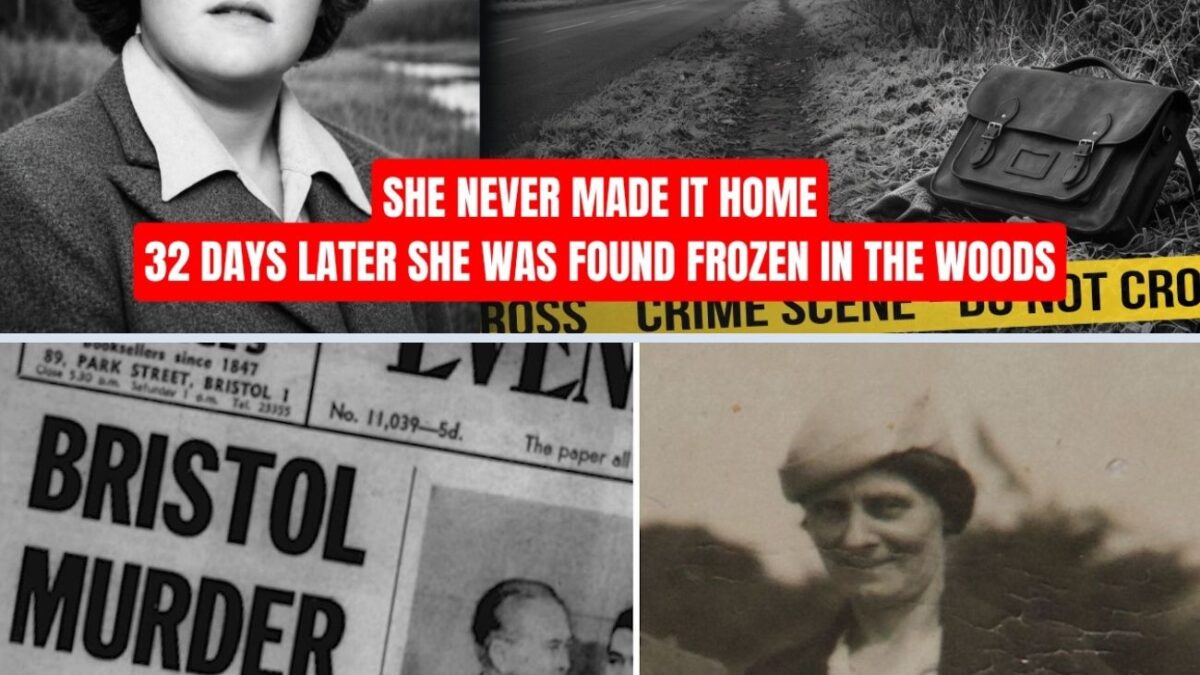
She vanished just minutes from home, and 1 month later her frozen body was found in a woodland. This is the true story of Ann Noblett.
On Monday, December 30th, 1957, 17-year-old Ann Noblett was returning to Marshall’s Heath in Hertfordshire, England. She had spent part of the day in Harpenden, where she attended a dance class or dance gathering at Lord’s Hall. By early evening, she was making the familiar journey back to the rural community where she lived with her parents and brothers.
Nothing in the known record suggests she expected trouble, and police later found no publicly reported evidence that she had planned to leave home. Ann was a student at Watford Technical College. Surviving sources reveal far less about her personality than modern audiences might expect. So, any detailed portrait of her private thoughts would be speculation.
What remains documented is a young woman balancing college, family life, and ordinary social activities. Her father, Thomas Noblett, was associated with Helmets Limited in Wheathampstead and was described in local historical material as the company’s manager. The family was rooted in the area, and Ann’s journey that evening was not an unfamiliar excursion into an unknown place.
Marshals Heath lay west of Wheathampstead near the lower Luton Road and the cherry trees. The surrounding landscape consisted of lanes, hedgerows, open ground, scattered homes, and stretches that became difficult to observe after dark. In the late 1950s, public buses connected communities like Harpenden and Wheathampstead, allowing residents to travel between town centers and rural settlements.
For Ann, the final part of the trip should have been uneventful. Instead, it became the narrow gap in the historical record where every answer disappears. Later reconstructions state that Ann boarded the 391 Green Line bus in Harpenden after missing a bus at her usual stop.
The exact details of that transfer come mainly from later summaries rather than easily accessible police files, but the central point remains consistent. Ann traveled back toward Marshals Heath and left the bus near the cherry trees shortly after 6:00. Several accounts give the time as approximately 6:03 in the evening.
A young woman named Shirley Edwards is identified in later case reports as the last known person to see Ann alive. According to those accounts, she saw Ann after they left the bus. From there, Ann had only a short distance remaining before she reached home, commonly described as a few hundred yards or less than a quarter of a mile.
The route was so brief that whatever happened had to occur within a remarkably small window. No confirmed witness saw Ann being forced into a vehicle. No reliable account records a cry for help.
There was no obvious scene on the road showing where an assault had taken place. One later reported clue involved an area resident who remembered seeing the rear lights of a car farther along the lane around the relevant time. The sighting could have been ordinary traffic, but investigators had no way to dismiss the possibility that the vehicle was connected to Ann’s disappearance.
When Ann failed to arrive, her family’s concern quickly became alarm. She had been expected home, and the journey from the bus stop should have taken only minutes. Police were notified, and searches began across the nearby countryside.
Officers and searchers examined fields, paths, hedges, ditches, and wooded ground. Police dogs were also used, but the first searches produced no clear sign of Ann or an event that could explain where she had gone. The absence of evidence complicated every early theory.
Had Ann left the road voluntarily? Searchers expected to find some indication of her movement. Had she suffered an accident nearby? The limited area should have made discovery more likely.
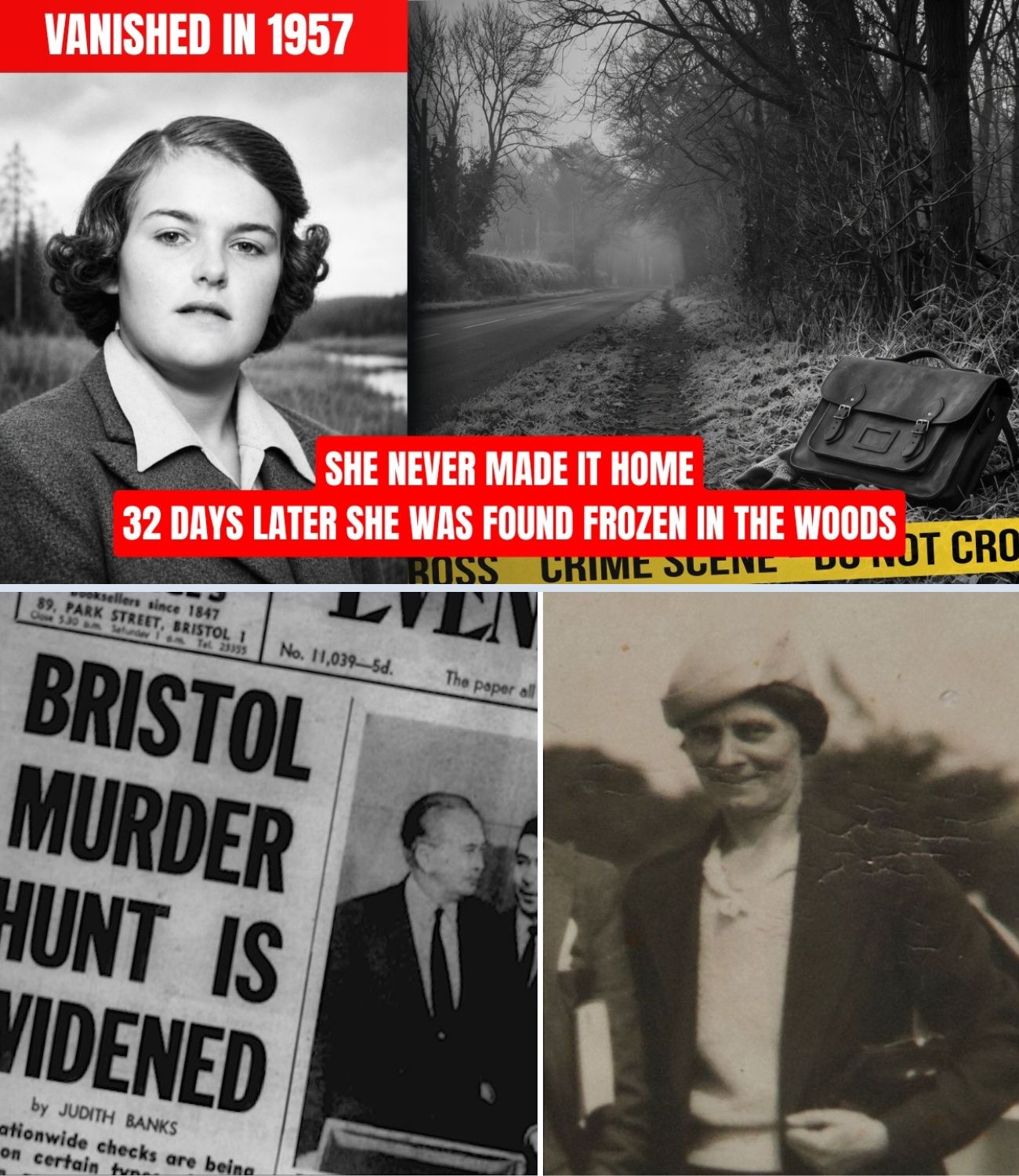
Had someone taken her in a vehicle? The encounter had happened without leaving a confirmed witness who could identify the driver, the registration, or even the exact point where Ann’s route ended. As the days passed, the investigation widened.
Appeals appeared in the press, and police sought information from residents and motorists who had been in the area on the evening of December 30th. The possibility that Ann had run away was considered, but no publicly known evidence supported a planned departure. She had not announced an intention to leave, and investigators found no destination that explained her disappearance.
By the end of January, Ann had been missing for more than 4 weeks. A contemporary report in the Guardian stated that Hertfordshire police were calling off or reducing the large-scale search. Search teams had covered the likely areas, public appeals had generated no solution, and the case appeared to be moving toward a prolonged disappearance.
Then, almost immediately after the organized search was being scaled back, the investigation changed completely. On Friday, January 31st, 1958, brothers Hugh and Brian Symons were walking with their dog, Rip, in Rose Grove Wood near Whitwell. Hugh was a leading aircraftman connected with Royal Air Force Stanmore, while Brian was 14 years old.
During the walk, the dog drew their attention into the woodland. There, several miles from Marshall’s Heath, the brothers discovered the body of Ann Noblett. Ann was found fully clothed in the undergrowth.
Reports state that her glasses remained on her face, and that personal belongings were nearby. The location was some distance from the main road, suggesting that whoever placed her there had entered the woodland rather than simply leaving her beside a passing route. Yet, the condition of her body, rather than the location alone, created the detail that would define the case for generations.
Ann’s remains were frozen, even though accounts of the period described the weather around the discovery as relatively mild. The unusual preservation led investigators and the press to consider whether her body had been kept in refrigerated storage before being moved to Rose Grove Wood. The newspapers eventually attached a name to the case that was as memorable as it was disturbing, the Deep Freeze Murder.
Later summaries of the post-mortem examination state that Ann had been strangled and subjected to sexual violence. They also report that she appeared to have been undressed and then dressed again with details such as incorrectly fastened underwear cited as evidence. Publicly available accounts do not always reproduce the original medical report in full, so the precise wording should be treated with care.
Still, the consistent conclusion in later reporting is that Ann’s death was a homicide, not an accident or voluntary disappearance. The examination was associated with Home Office pathologist Dr. Francis Camps. According to subsequent reconstructions, he supported the possibility that Ann’s body had been refrigerated or frozen before it was left in the woods.
Investigators also studied the vegetation beneath and around her body. Differences in plant growth reportedly suggested she had not been lying at the site for the entire 32 days since her disappearance. That finding created the darkest question in the case.
If Ann had not remained in Rose Grove Wood throughout the missing period, then someone had kept her body elsewhere before transporting it to the woodland. Some reports suggest she may have been placed there no more than about two weeks before the discovery. That would mean the person responsible retained access to a concealed location while police, volunteers, reporters, and Ann’s family continued searching.
The investigation was led by senior officers from Hertfordshire and Scotland Yard. Later accounts identified Detective Chief Superintendent Robert Elwell of the Hertfordshire Criminal Investigation Department and Detective Superintendent Richard Lewis of Scotland Yard’s Murder Squad. Their inquiry focused on the likelihood that Ann had been intercepted during the brief walk from the bus stop, possibly by someone she knew or trusted enough to approach without immediately resisting.
The refrigeration theory gave detectives an unusually specific task. In 1957, a freezer large enough to contain a human body was far less common in a private home than it would become in later decades. Police therefore examined commercial refrigeration sites, farms, factories, storage facilities, and outbuildings.
Later case summaries state that facilities within a radius of roughly 30 miles were checked and that around 2,000 people were questioned. The scale of that effort failed to identify the place where Ann may have been held. No freezer was publicly linked to her through decisive physical evidence.
No employee or property owner was charged with storing her body. The theory generated a vast field of possible locations, but the passage of time between the disappearance and the discovery gave the offender an opportunity to clean, move, or destroy evidence before police understood what they were looking for.
Investigators also had to consider whether the refrigeration theory was entirely correct. A frozen body could point toward deliberate cold storage, but forensic interpretation in the 1950s was more limited than it is today. Outdoor temperature, ground conditions, exposure, and the timing of death could all affect preservation.
Still, the reported vegetation evidence and the comparatively mild weather made a period of storage elsewhere difficult for investigators to ignore. The possibility of a known offender offered one explanation for the lack of visible resistance and may have accepted a ride from someone familiar, especially with home only a short distance away. A local person might also have known secluded buildings, refrigeration facilities, and the approaches to Rose Grove Wood.
Yet, police never established a publicly proven connection between Ann and any individual who could be charged. A stranger remained possible as well. A driver could have stopped to offer help, ask a question, or claim to know Ann’s family.
The darkness and isolation of the lane could have allowed a vehicle to leave within moments. That explanation accounts for the speed of the disappearance, but it requires chance timing unless the driver had been watching Ann or knew her routine. Another theory is that the initial encounter was not intended to end in murder.
Ann might have entered a vehicle or building voluntarily before an assault occurred. Her death could then have forced the offender into a prolonged effort to hide what had happened. This would explain why a body was concealed and later moved, but there is no surviving public evidence that proves such a sequence.
Without a confession, witness, or forensic link, it remains only one possible reconstruction. In April of 1959, a newspaper report stated that two men were questioned for many hours after an early morning police action in Southend. The questioning was connected to Ann’s case and another investigation, but both men were released.
No publicly available record shows that this inquiry produced charges and the lead disappeared from the documented story without resolving Ann’s murder. Decades later, the refrigeration question still generated tips. A report published in 2021 described how a woman recalled a man in the Wheathampstead area who had possessed a large freezer during the 1950s.
Police historians passed the information to cold case investigators, but the person had reportedly already been considered and eliminated. The tip showed how strongly the case remained embedded in local memory, even though memory alone could not replace evidence. Hertfordshire detectives renewed their public appeal in December of 2017, marking 60 years since Ann vanished.
They asked anyone with information to speak, including people who may have remained silent because of fear, loyalty, or uncertainty. Reports connected with the review indicated that little or no usable physical evidence remained for modern testing. Technologies such as DNA profiling can transform old investigations, but only when preserved material survives.
No one has been convicted of killing Ann. No publicly identified suspect has been proven responsible, and no accepted account explains where her body was kept before it appeared in Rose Grove Wood. The last known journey, the car lights on the lane, the frozen condition of her remains, and the later placement theory all form pieces of the same case, but they have never locked together into a complete solution.
Ann is buried in St. Helen’s churchyard in Wheathampstead. The memorial records her death on December 30th, 1957, and her age as 17. Her father, Thomas, was later buried with her.
The inscription contains no reference to the investigation that consumed thousands of police hours or to the name the newspapers gave the crime. It records only a daughter whose life ended before the new year began. The deep freeze murder is remembered because of its extraordinary forensic mystery, but the cold storage theory should never eclipse the person at its center.
Ann Noblett was a college student returning from a dance during the Christmas season. Her family expected her home that evening, and for 32 days they lived without knowing where she was. The discovery in Rose Grove Wood ended that uncertainty in the cruelest possible way, while leaving every larger question unanswered.
Someone knew how Ann left that lane. Someone may have known where she was concealed, how she died, and why her body was moved. That knowledge could have belonged to one person or been shared by others who chose silence.
With each passing decade, the number of living witnesses has diminished, but the central mystery has not changed. A bus stopped near Marshall’s Heath shortly after 6:00 on a winter evening. Ann stepped down and began the final part of her journey.
She was close enough to home that nobody could have imagined the distance would become permanent. What happened in the next few minutes remains unknown, and until that missing interval is explained, the murder of Ann Noblett remains frozen in time.
You Might Also Enjoy


Mom Installed a Camera To Discover Why Babysitters Keep Quitting But What She Broke Her Heart


She Gave a Hungry Little Girl a Free Birthday Cake — The Next Morning, a Black Rolls-Royce Arrived




