What Argentinian Conscripts Said When They First Fought Brits
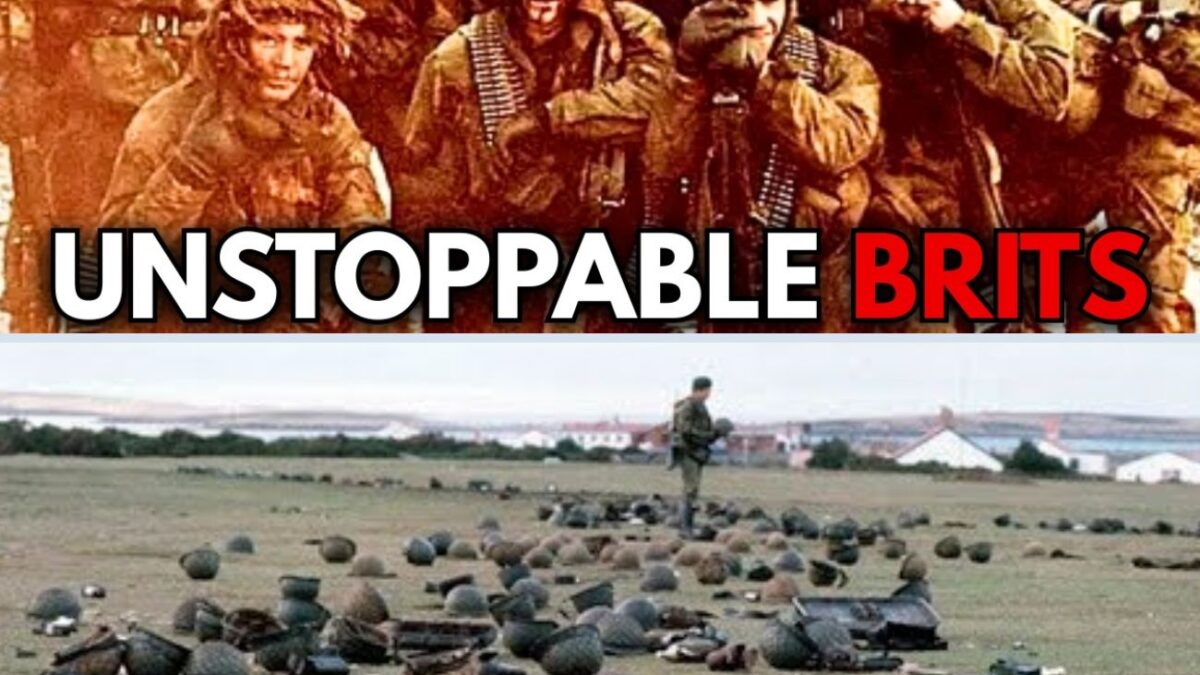
April, 1982. The Falkland Islands. A freezing chain of wind-battered land sitting 8,000 miles from Britain in the South Atlantic. Scattered across the muddy hills around the small capital, Stanley, were roughly 10,000 Argentine soldiers.
Most of them were teenagers. Most of them had no idea what was coming. And what they would say when they finally met British soldiers in battle is something most people in this country have never heard.
Their words tell one of the most striking stories of the entire Falklands War. To understand what those Argentine soldiers said, you first have to understand who they actually were, because the picture most people have in their heads is wrong.
The vast majority of Argentine troops on the islands were not professional soldiers. They were conscripts. Boys of 18 and 19 pulled from civilian life under mandatory military service.
Many came from the warm northern provinces near Brazil, places like Corrientes and Chaco, where some had never seen frost in their lives. Now they were being sent to one of the coldest and most miserable places on Earth as winter closed in.
Their training was almost nothing. Some had been in the army for as little as 45 days. A handful had barely fired their rifles.
They were given old equipment, thin clothing, and boots that fell apart in the wet ground. And then their officers told them the one thing that would shape everything that came next.
They told them not to worry. They told them the British would never come. This was not just casual talk.
It was the official line from the military junta in Buenos Aires, repeated at every level. Britain was a fading empire. The islands were too far away.
The Americans or the United Nations would force a deal. Argentine newspapers ran the same message. Crowds cheered in the streets back home.
Many of the conscripts genuinely believed they would be home within weeks.
“Don’t worry. This will be over soon,” some wrote in letters to their families saying exactly that. Then the British task force sailed south.
127 ships, two aircraft carriers, destroyers, frigates, and landing vessels. And on board were the men that no one had told those Argentine teenagers about.
Royal Marines, paratroopers, Gurkhas, Scots Guards, Welsh Guards, SAS, and SBS. These were not conscripts. They were career professionals, many with multiple tours in Northern Ireland behind them, who had spent years training for exactly this kind of fight.
The Parachute Regiment, the Royal Marines, the Gurkhas. These were among the most experienced and aggressive infantry units in NATO.
They were fit, well-fed, well-equipped, and led by officers and sergeants who knew their jobs completely. The gap between these men and the shivering Argentine conscripts was enormous.
But the conscripts did not know that yet. The Argentine High Command believed that numbers and geography would be enough.
Stanley was ringed by mountains. They dug trenches, laid minefields, and set up defensive positions that looked strong on paper.
They assumed the British would see this and negotiate. They assumed wrong about almost everything. Because the British were not coming to negotiate.
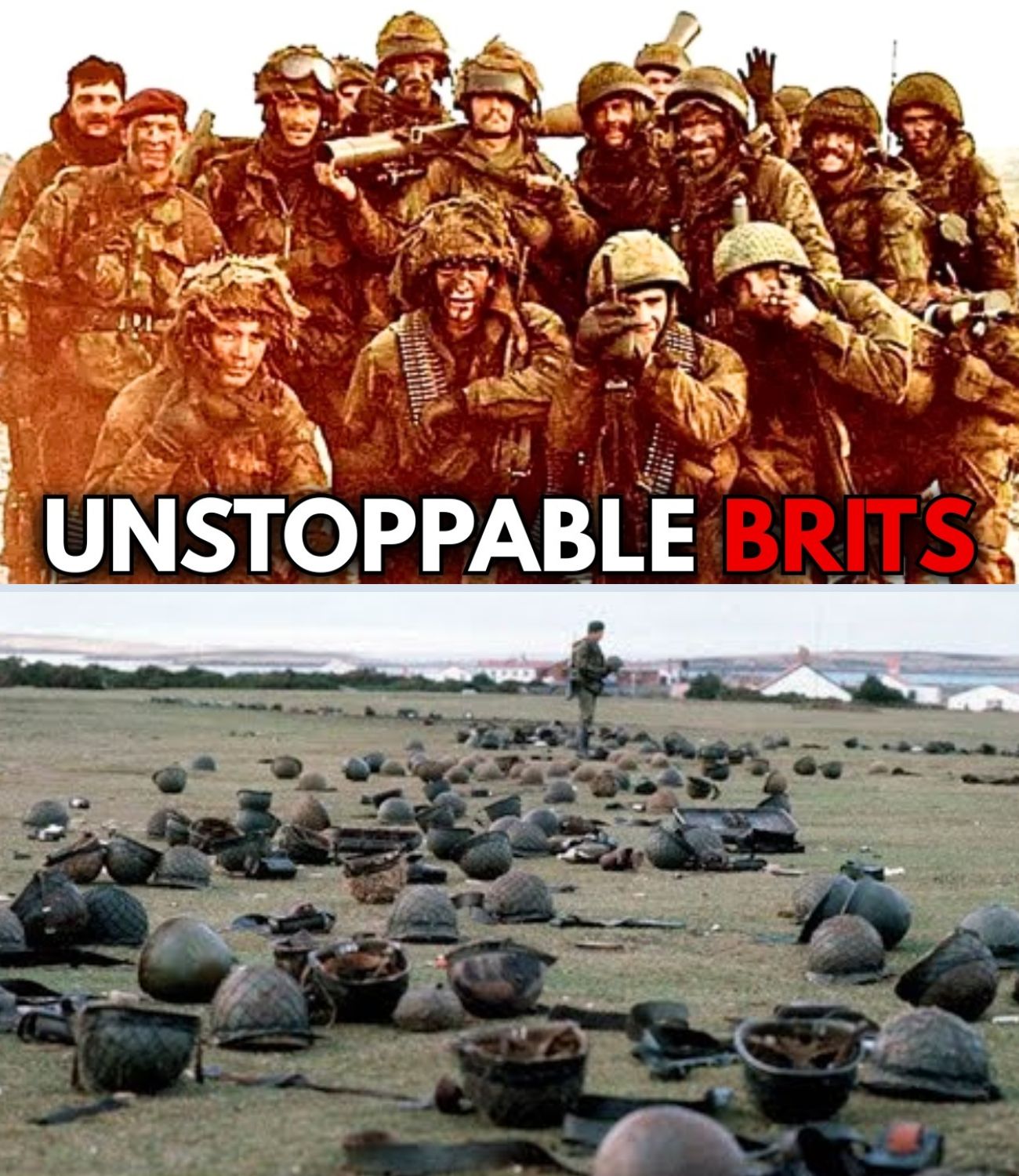
They were coming to fight at night in the freezing dark, up steep rocky slopes with bayonets fixed and faces blackened. And they were going to keep coming, no matter what.
But the conscripts knew none of this yet. They sat in their positions as the weather grew colder, eating shrinking rations, listening to reassurances that made less sense with each passing day.
Then came reports of British submarines, Harrier jets overhead, the distant rumble of naval guns. The mood in the trenches shifted.
The boys from the warm north pulled their thin jackets tighter, and a question began forming that nobody wanted to ask out loud. What if the British really are coming? The answer was about to arrive in the worst possible way.
Before the first real land battle even started, the Argentine conscripts were already breaking. Through most of May, British warships sat offshore and pounded their positions with naval gunfire.
The shells came at random hours, day and night, shaking the ground and filling the air with a sound one conscript later described as a freight train tearing through the sky. Harrier jets screamed low and fast, dropping bombs before the boys in the trenches could even react.
There was no way to fight back against any of it. All they could do was press themselves into the freezing mud and wait for it to stop.
In their diaries and letters, Argentine soldiers wrote about the constant shaking in their hands, the ringing in their ears that never went away, and the feeling that the next shell had their name on it. And through all of this, they were starving.
Rations that were already thin became almost nothing. Some units went days eating only hard biscuits and cold water.
Meanwhile, several conscripts later said that their own officers were hoarding food, eating proper meals while the boys in the front trenches went hungry. One non-commissioned officer reportedly told his freezing, starving men not to worry about the British.
“They are not real soldiers anymore,” he said. “They are a declining empire, easy to beat.”
Then came the 21st of May, San Carlos Water. 4,000 British troops stormed ashore on the western coast of East Falkland, and everything the conscripts had been told collapsed in a single morning.
Argentine soldiers in forward observation posts watched the landing craft coming in wave after wave. They saw the sheer scale of it, the helicopters filling the sky, the Marines pouring onto the beaches, and they understood for the first time that this was not a bluff.
One Argentine soldier later described that moment as the first time he realized his officers had lied to him about everything. 7 days later came the battle that changed the entire war, Goose Green.
On the 28th of May, roughly 450 men of the 2nd Battalion, the Parachute Regiment, attacked an Argentine garrison of about 1,000 troops dug in around Darwin and Goose Green. The British were outnumbered more than two to one.
The Argentine defenders had trenches, bunkers, and strong positions. On paper, they should have held.
They did not hold. What the Argentine soldiers saw that night and into the next day stunned them into silence.
The Paras advanced across open ground, taking heavy fire, taking casualties, and they did not stop. They kept coming.
“I expected the British to take cover and wait when they met resistance,” one Argentine officer later said. “They did not. They just kept coming.”
Colonel H. Jones, the commanding officer of 2 Para, was killed charging directly at a trench line in an act that would earn him a posthumous Victoria Cross. But even his death did not slow the attack.
The Paras pushed forward with a fury that the Argentine conscripts had never imagined possible. In the darkness and the fog, the sound of sustained gunfire got closer and closer.
And one by one, the Argentine positions collapsed. Some units broke and ran.
Others threw down their weapons and surrendered. By the time it was over, 961 Argentine soldiers had been taken prisoner.
Many of them wept openly. When British paratroopers handed them food, water, and cigarettes, several conscripts later admitted they were treated better by their captors in those first few minutes than they had been by their own officers in weeks.
Word of what happened at Goose Green spread fast through the Argentine lines around Stanley. The message was simple and terrifying.
The British are not what we were told. After Goose Green, the British did not stop.
They marched east across the island towards Stanley in brutal winter conditions. Royal Marines and paratroopers carried everything on their backs, yomping and tabbing across miles of boggy, treeless ground in freezing rain and biting wind.
And every night, the Argentine conscripts dug into the ring of mountains above Stanley, could see campfires in the distance getting a little closer. They knew what was coming.
The only question was when. The Argentine defensive positions on Mount Longdon, Two Sisters, Mount Harriet, Tumbledown, and Wireless Ridge were strong on paper.
Trenches cut into rock, minefields laid across the approaches, machine guns positioned to create interlocking fields of fire. The Argentine command expected a conventional assault, maybe in daylight, or perhaps no assault at all.
Perhaps the British would see these positions and choose to negotiate. Instead, on the night of June 11th, the British attacked in darkness.
And what happened over the next three nights produced some of the most vivid and haunting testimony of the entire war. Mount Longdon was first.
Three Para went in at night, moving silently up the rocky slopes with blackened faces. Then, an Argentine mine detonated under a British soldier, and the element of surprise was gone.
What followed was 12 hours of savage close-quarter fighting, trench by trench, rock by rock, in pitch darkness. Argentine conscripts later described British soldiers appearing out of nowhere like ghosts, screaming as they charged into positions with bayonets fixed.
One Argentine soldier said they came out of the rocks as if the mountain itself was attacking them. The sound was overwhelming.
Grenades cracking inside stone sangars, the sustained rattle of machine guns, men screaming on both sides. Sergeant Ian McKay of Three Para charged a machine gun position that had his men pinned down, killing the crew before being shot dead himself.
He was awarded a posthumous Victoria Cross. From the Argentine side, survivors described watching this happen in disbelief.
A man running straight into gunfire and not stopping. The fighting on Longdon was among the most brutal British soldiers had experienced since Korea.
But it was not the only battle that night. 45 Commando took Two Sisters and 42 Commando took Mount Harriet in simultaneous attacks.
Argentine soldiers in those positions described the Royal Marines as methodical and relentless, clearing trenches one by one with grenades and 66 mm rockets. Some Argentine defenders recall the shock of anti-tank missiles being fired directly into their bunkers from just meters away.
Weapons designed to destroy armored vehicles were being used to blow apart rock positions with men still inside them. Two nights later came Tumbledown.
This was different. The Argentine 5th Marine Battalion defending the mountain were not conscripts.
They were trained, motivated marines, and they fought hard. The Scots Guards who attacked uphill into their positions faced fierce resistance and hand-to-hand fighting in the freezing dark.
Even these Argentine regulars, the best troops on the islands, eventually broke under the relentless pressure. And then, there were the Gurkhas.
The mere rumor that Gurkhas were coming caused panic in Argentine lines. Conscripts had been told by their own officers and by whispered stories that the Gurkhas took no prisoners and cut the ears off the dead.
It was exaggerated, but the fear was real. When the 7th Gurkha Rifles finally attacked Mount William, the Argentine defenders had largely melted away before they even arrived.
An entire position abandoned because of a name. By dawn on June the 14th, every mountain top had fallen.
Argentine soldiers were streaming down into Stanley in disarray, exhausted, frozen, and beaten. And what they said in those final broken hours revealed something far deeper than just a military defeat.
On the 14th of June, 1982, it was over. 9,800 Argentine troops surrendered in and around Stanley.
The scene in the town that day was something no one who saw it would ever forget. Columns of young men, hollow-eyed and filthy, lined up in the cold to lay down their weapons.
Many were shaking, and not just from the freezing wind. Their uniforms were soaked and torn.
Their boots were falling apart. Some had not eaten a proper meal in days.
British soldiers who watched the surrender later said they were shocked by the condition of the conscripts. These were not beaten warriors.
These were abandoned children. And what those Argentine soldiers said in the hours after surrender tells you everything about what this war really was.
Many spoke of relief. Pure, overwhelming relief that they were still alive.
Some wept openly and could not stop. Others sat in silence, staring at the ground, unable to process what had happened.
But the emotion that came through most clearly in account after account was not grief for their defeat. It was anger.
Deep, burning anger directed not at the British, but at their own officers and the generals who had sent them there. “They lied to us,” one conscript said.
“They told us the British would never come. They told us we would win.
They told us nothing that was true.” Other survivors described how their officers had hoarded food and warm clothing while the conscripts froze and starved in forward trenches.
Some spoke about a punishment called Estaca, where soldiers were staked out spread-eagled on the frozen ground for minor offenses by their own non-commissioned officers. These were not the words of men angry at their enemy.
These were the words of men betrayed by their own side. When the conscripts returned to Argentina, they expected something.
Recognition, maybe. Gratitude.
A country that would at least acknowledge what they had been through. Instead, they got silence.
The military junta that had started the war collapsed shortly after the defeat, and the democratic governments that followed wanted to move on. Veterans were told not to wear their uniforms, not to talk about the war, not to draw attention to themselves.
The nation that had cheered them off to the islands now looked away and pretended it never happened. And in that silence, the real tragedy unfolded.
In the years and decades after the war, it is estimated that more Argentine Falklands veterans took their own lives than were killed in the fighting itself. More than 500 suicides compared to 649 combat deaths.
Young men who survived the shells, the cold, the night battles, and the surrender came home to a country that did not want to hear their story. And the silence destroyed them.
But not all of the story ends in darkness. In the years that followed, something remarkable and quiet began to happen.
British and Argentine veterans started meeting each other. Former enemies who had fought on the same mountains shook hands at memorials, shared meals, and talked about what they had lived through.
In those conversations, a single word kept appearing in what Argentine veterans said about the British soldiers who had come at them through the darkness. That word was respect, not hatred, not bitterness, respect.
The Argentine soldiers’ words across four decades tell us something important that goes beyond this one war. Their testimony is not really about who won or lost on those frozen mountains.
It is about what happens when young men are sent to fight by leaders who lie to them, fail to prepare them, and then abandon them when it all falls apart. The British won the Falklands War because of skill, courage, and leadership at every level.
The Argentines lost it for the opposite reasons. And the boys who paid the price for that failure have been trying to tell us so ever since.
“The British were not our real enemy,” as one veteran put it years later, looking back on everything he had been through. “Our real enemy was the generals who sent us there.”
You Might Also Enjoy


Mom Installed a Camera To Discover Why Babysitters Keep Quitting But What She Broke Her Heart


She Gave a Hungry Little Girl a Free Birthday Cake — The Next Morning, a Black Rolls-Royce Arrived




