What the U.S. Marines Wrote After One Night With the SAS
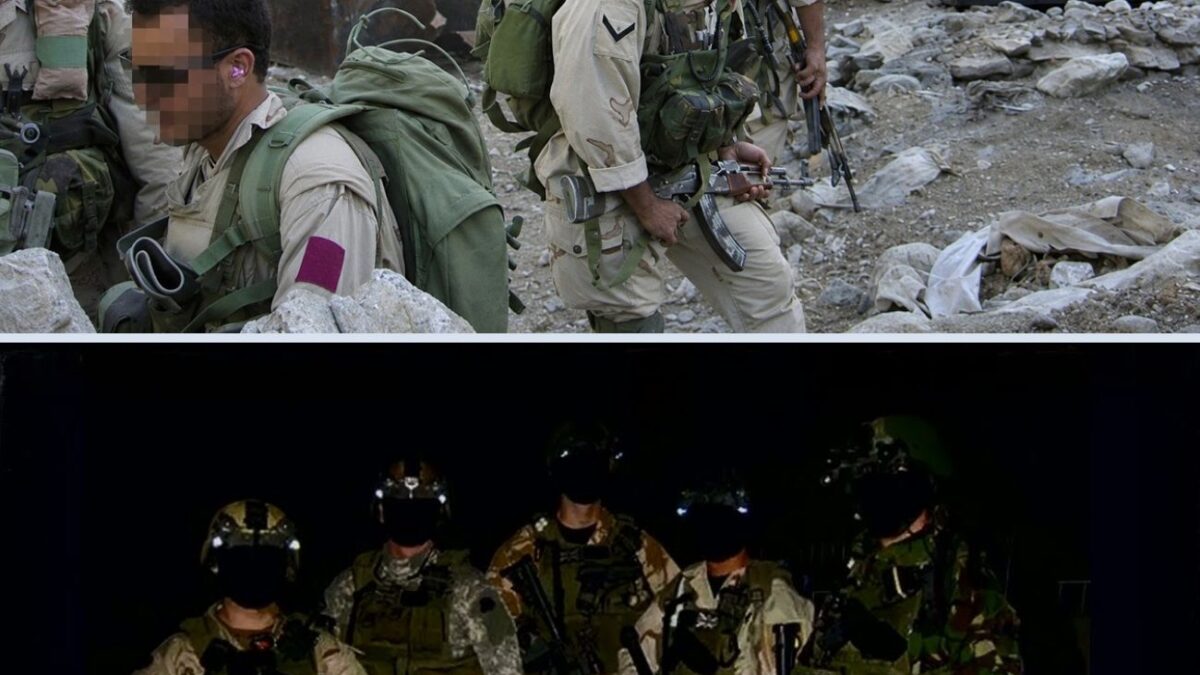
These aircraft would likely have been used to oppose the later amphibious landing at Port San Carlos on East Falkland Island. Major Jeffrey M. Brewer, United States Marine Corps, Marine Corps Gazette, December 2019.
That sentence sits in footnote 36 of an essay about a war fought by another country. There were 11 aircraft. The night was the 14th of May 1982.
The men who destroyed them belonged to D Squadron, 22nd Special Air Service Regiment. No Marine was there. The footnote sounds like praise. It is an audit.
An officer whose service exists to put men on beaches counts 11 enemy air frames that never flew against a beach head and writes the number down. Brewer wrote the essay as a student at the School of Advanced War Fighting, the Marine Corps School for Campaign Planners. He was looking for lessons. The lesson he took from that night was a sum.
Now, the strange part. Search the open record for nights when United States Marines and the British SAS were in the same fight and you find a handful. A desert in Afghanistan, a city in Iraq, a district of Helmand.
Then search for what the Marines wrote about those nights. The second search comes back almost empty. So why is the most careful thing Marine officers have published about 22 SAS devoted to a raid no Marine saw? And what does the silence say about the nights the two forces did share?
The pieces of the answer are scattered across 28 years and four wars. Some sit in Marine footnotes, some sit in NATO statistics, some sit in decisions taken by politicians in London. Today we put them back in order.
Start with the man who knew both worlds better than any other Marine of his generation. Burnaby Trainer joined the Marine Corps in 1946. He finished the basic school in December 1951 and went to Korea as an infantry platoon commander with the first battalion, first Marines.
In 1958 the Corps sent him across the Atlantic on exchange. He commanded a company of 45 Commando Royal Marines on the island of Malta. Royal Marines are Britain’s sea soldiers. The Special Air Service is an army regiment.
Americans have confused the two for decades and the confusion runs through this whole story. In 1965 Trainer advised Vietnamese Special Operations Forces. He came back to Vietnam to command the first battalion, fifth Marines and then the first reconnaissance battalion in 1970 and 1971.
He retired on the first of July 1985 as a lieutenant general, deputy chief of staff for plans, policies and operations at headquarters Marine Corps. Then he picked up a pen. He was chief military correspondent of the New York Times from 1986 to 1990, then director of the National Security Program at Harvard’s Kennedy School.
With the journalist Michael R. Gordon he wrote three books, The General’s War in 1995 on the Gulf War, Cobra II in 2006 on the invasion of Iraq, The End Game in 2012 on what came after. 22 SAS fought in Iraq in every one of those periods.
In 1991 its patrols and American Delta Force teams were sent deep into the Western Desert to hunt Scud launchers aimed at Israel. One assessment credits the special operators with cutting Scud launches against Israel by more than 80%.
The same assessment says the hunt failed its military objective and cost the lives of special forces soldiers. So Trainer had served inside a British unit and then spent decades chronicling the wars the SAS fought. Keep his name in mind. His dates matter at the end of this file.
Next, the Marine who wrote the footnote, Jeffrey M. Brauer, major. When the essay appeared he was G3 future operations planner for the Marine Air Ground Task Force at Marine Forces Central Command, the headquarters for Marines across the Middle East. The record gives no age and no hometown. It gives his work.
A second Marine major, Brandon H. Turner. In the summer of 2018, the Journal Marine Corps History, published by Marine Corps University, ran his article. The title is long and exact. Fighting within the A2 Falklands War as a case study for the future amphibious task force.
A2AD stands for anti-access area denial. It is the military term for an enemy coastline packed with aircraft, missiles, and sensors built to keep a fleet offshore. That phrase explains why two Marine majors chose to write about the SAS at all.
On the British side, two officers. Captain Gavin Hamilton commanded 19 Troop, the mountain troop of D Squadron, 22 SAS. Lieutenant Colonel Ed Butler commanded the largest operation in the regiment’s history in November 2001 in a desert where a brigade of United States Marines was about to land.
The search starts there, Afghanistan, November 2001. In mid-October, A and G Squadrons of 22 SAS deploy to northwest Afghanistan. In mid-November, they are flown back in covertly through Bagram Airfield. The code name for that move is Operation Blood.
The assault itself will be Operation Trent. The target lies in the Registan Desert, southwest of Kandahar. The accounts disagree on the distance. One puts it 90 miles from the city. Another says 400 kilometers.
It is an opium processing plant tied to Al-Qaeda, defended by trench lines and makeshift bunkers. Between 80 and 100 foreign fighters. An eight-man team goes in first. They jump from more than 20,000 feet with parachutes set to open automatically at 4,000.
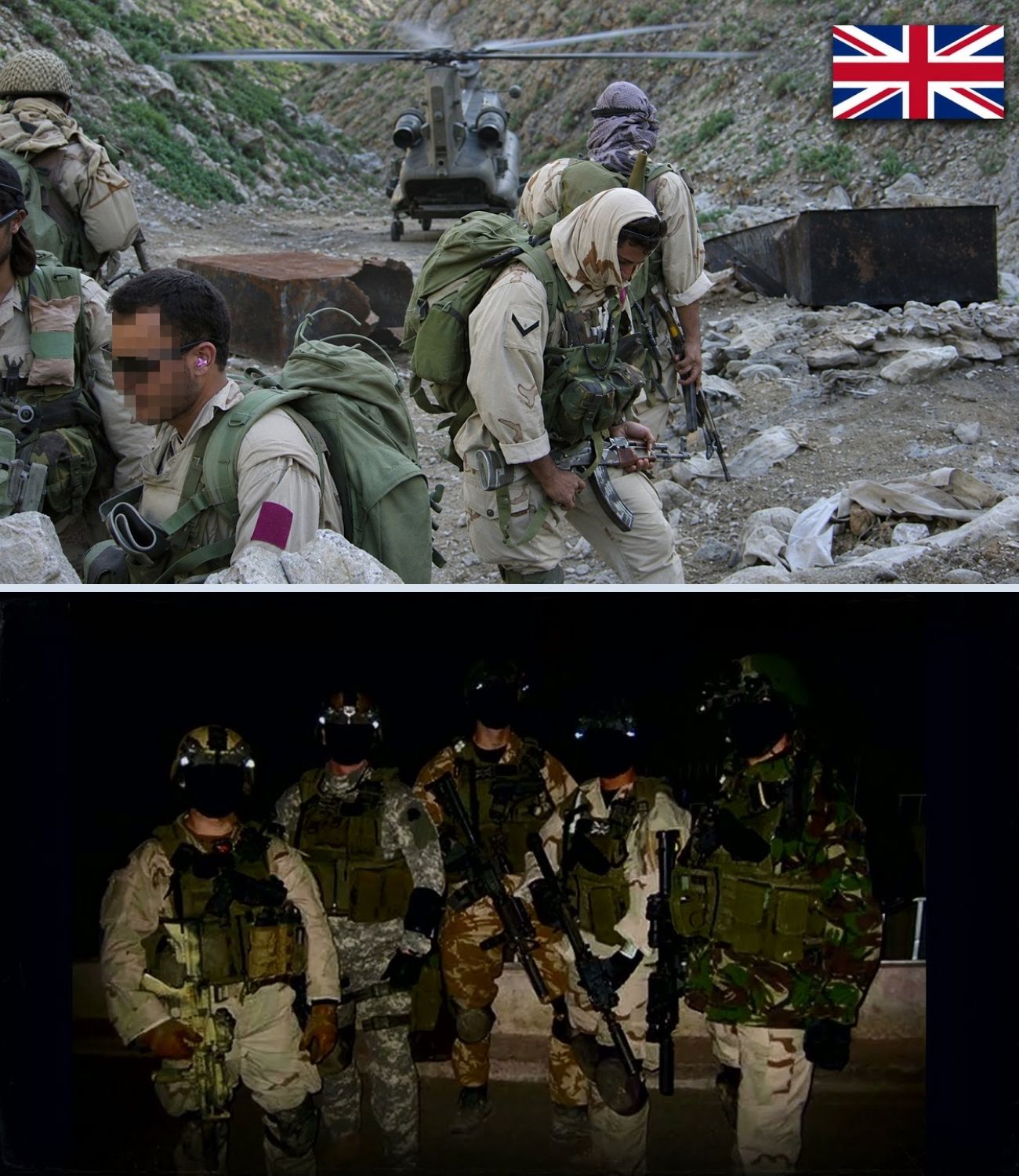
Some accounts give an exit height of 28,000. Their job is to find and mark a stretch of hard desert where heavy transports can land. 17 later, the C130s arrive. At least six vehicles roll down the ramps. Then a 1,220 mile drive to the objective.
The regiment would have chosen to attack in the dark. It does not get the dark. United States Central Command will not provide air support for a night raid, so the assault goes in by day.
There is no time for a detailed reconnaissance. Close air support is limited to 1 hour. Four American Hornets, two Tomcats, a squadron assaults. G squadron fires from half a mile out.
General purpose machine guns, heavy machine guns, Milan missiles, mortars, Barrett rifles. 4 hours. Four SAS soldiers wounded, none of them fatally. At least 18 enemy killed and several dozen wounded or captured.
Two laptops and a set of documents recovered from the headquarters. The awards came later. Two conspicuous gallantry crosses, one distinguished service order, and two military crosses.
Now the other airstrip. 25th of November 2001. Marines stand on a dirt runway in southern Afghanistan, about 400 miles from the ships they left. This is Task Force 58 under Brigadier General James Mattis.
The site is called Camp Rhino. It sits in the same Registan Desert, about 100 nautical miles southwest of Kandahar. At its peak, it holds roughly 1,100 Marines.
Two British squadrons and a Marine brigade are in the same desert within the same few days, and each depends on a strip of ground where transport planes can land. Nothing in the open record joins them.
There is no published Marine account of the SAS strip and no published SAS account of Rhino. If the two forces crossed paths that November, neither side has said so.
The first possible meeting leaves no trace. Iraq. March 2003. The Western Desert. On the night of the 17th by one account, the 18th by another. B and D squadrons of 22 SAS cross into Iraq.
60 men of D squadron and their vehicles are flown 120 km in by six Chinooks. B Squadron drives across the Jordanian border in Land Rovers. The targets are the air bases known as H2 and H3 and a suspected chemical weapons site at Al Qaim.
Delta Force operators join them. A company of American Rangers and Royal Marines of 45 Commando fly in from Jordan to reinforce the air bases. 45 Commando was trainer’s old unit, 44 years after Malta.
The United States Marine Corps, though, is hundreds of miles to the east, driving north toward Baghdad. Once again, the SAS works alongside Americans and once again they are not Marines.
Fallujah, November 2004. Responsibility for Fallujah and the surrounding area has passed from the army’s 82nd Airborne Division to the 1st Marine Division. On the evening of the 7th of November, the second battle for the city begins.
About 6,500 Marines and 1,500 army soldiers go in with Iraqi units. In Baghdad, a British squadron prepares to join them. It is D Squadron of 22 SAS, the squadron that raided Pebble Island 22 years earlier.
In 2004, it is part of Task Force Black, the British element of the Special Operations hunt for Al-Qaeda in Iraq. London says no. Political nervousness about the possible scale of casualties stops any direct British part in the ground battle.
The SAS stays out of the city. The British contribution comes from regular infantry. The 1st Battalion, the Black Watch, 850 men, is ordered to help seal the outskirts.
Four of its soldiers are killed in attacks around Fallujah. Inside, the Marines clear the city house by house. By the night of the 9th, they reach Phase Line Fran at Highway 10.
American forces lose 95 killed and 560 wounded. This was the closest the two forces came to sharing the same streets. The decision that kept them apart was taken in London.
In Baghdad, the Americans who fought beside the SAS did go on record. They were army. General David Petraeus said, “The SAS have helped immensely in the Baghdad area, in particular to take down the Al-Qaeda car bomb networks and other Al-Qaeda operations in Iraq’s capital city.”
Over 18 months from early 2007, the task force reportedly arrested 3,500 suspects in Baghdad and killed several hundred others. Its own losses vary by source. One count gives two SAS soldiers killed, another gives six killed and 30 wounded.
The open record cannot settle the difference. Their American partner on those raids was Delta Force. That relationship goes back to Delta’s founder, Colonel Charles Beckwith, who served as an exchange officer with the SAS before he created his unit in 1977.
The army has an institutional memory of the SAS. In those years, the Marines were fighting in Anbar, a separate war a few hours drive to the west.
Then comes the nearest thing to a shared night that the record holds. Helmand Province, Afghanistan, the 13th of February 2010, Operation Moshtarak.
The main force is the Second Marine Expeditionary Brigade, Task Force Leatherneck, First Battalion, Third Marines, First Battalion, Sixth Marines, Third Battalion, Sixth Marines, Third Battalion, 10th Marines, the Second Combat Engineer Battalion. The objectives are the town of Marjah and the Nad Ali district.
Hours before dawn, American and Afghan Special Operations Forces land at two key sites. At 4:00 in the morning, the main lift begins. 90 Chinook and Huey helicopters, more than 15,000 coalition troops take part.
About 4,000 are American. About 1,200 are British with up to 4,200 more available. Around the Marine advance runs a quieter campaign of raids built on a pattern called find, fix, strike.
Four-man SAS teams carry them out with an American Army Special Forces team, ODA 1231. According to NATO, those raids killed 50 Taliban leaders in the area. 50.
They happened inside a Marine-led operation on the same nights the battalions were pushing into Marjah. So what did the Marines write about the four-man teams?
As far as the public record shows, nothing. No Marine statement about the SAS raids around Marjah has been published that can be quoted here, and this file will not invent one. The NATO figure survives. A Marine sentence does not.
From February to December 2010, the operation cost 45 American dead and 13 British. This is the midpoint of the file and a good place to stop for a moment.
On the 2nd of April 1982, Argentina seizes East Falkland. The small Royal Marine detachment in Port Stanley resists and then surrenders to a larger force. Britain assembles a task force.
Brewer’s essay lists what it carries. The Royal Marines of 3 Commando Brigade, two battalions of the Parachute Regiment, three sections of the Special Boat Squadron, and two squadrons of the Special Air Service.
Brewer also lists what waits for them. The Argentine Air Force and Naval Aviation Field, a combined 44 Mirage fighters, 68 A-4 Skyhawk fighter bombers, eight to 10 Canberra bombers, five Super Etendard naval attack aircraft, and about 60 Pucara ground attack aircraft.
The British carriers hold 35 Sea Harriers between them. By one report, the Argentine aircraft outnumber them five to one. This is the bubble in Turner’s title.
Brewer calls it a “crude yet capable anti-access/area denial, A2AD, defensive envelope.” Every aircraft inside that envelope is a threat to the landing to come.
Some of them sit on a grass strip on Pebble Island, off the north coast of West Falkland. Turner gives its length as 1,600 feet.
The 10th of May, an eight-man patrol from the squadron’s boat troop sets out by Klepper canoe, a folding kayak. The sea is rough. One of the patrol later described the approach, “We dismantled the canoes and man packed them over to Deep Ferny Valley.”
The 12th and 13th of May, the patrol sets up an observation post and watches the strip. They count 11 aircraft.
The 14th of May, on board HMS Hermes, D Squadron prepares. About 45 men go in, including a naval gunfire observer, Captain Chris Brown of the Royal Artillery from 48 Battery.
The force splits into three groups, one to destroy the aircraft, one to deal with the settlement, and one in reserve. Hamilton’s Mountain Troop has the aircraft. Sea Kings of 846 Naval Air Squadron are to carry them.
Two warships, HMS Glamorgan and HMS Broadsword, move into support. Then the wind turns against them. Strong headwinds slow the flight from Hermes. The planned 90 minutes on target shrink to 30.
At a quarter to midnight, the helicopters set down at Philips Cove, about 6 km from the strip. They march in the dark, loaded with explosives, toward a garrison of about 150 men. The minutes are already short.
Glamorgan opens fire on the western edge of the runway to draw attention away from the raiders. The Mountain Troop reaches the aircraft, charges are set on the airframes.
Rifle fire goes into the fuel tanks. Grenades follow. Six Pucarás, four Turbo Mentors, one Skyvan, 11 The ammunition and fuel dumps go up as well.
A charge laid by the defenders detonates and wounds one of the raiders. A second man is wounded. Then they leave. Back across the ground to the landing site and back to the Sea Kings before first light exposes the helicopters.
At dawn, the air strip on Pebble Island is wrecked. 11 aircraft are burned out on the grass. Two British soldiers are wounded. None are dead.
Read the Marine accounts now, and they say very little about courage. What they measure is effect. Brewer, footnote 36, “Drawing on an American study published in 1984 under the title Military Lessons of the Falkland Islands War, Views from the United States. Uhlig provides details of the SAS raid conducted 14 to 15 May at Pebble Island, located on the north end of West Falkland Island, where the British force destroyed 11 Argentine aircraft. These aircraft would likely have been used to oppose the later amphibious landing at Port San Carlos on East Falkland Island.”
He follows the SAS to the beach itself. “The SAS neutralized the tiny Argentine observation post overlooking the landing beach and prevented Argentine forces from moving north from Goose Green toward the landing beach.”
He also records the start of the campaign on South Georgia. 75 Royal Marines, SAS, and SBS troops defeated the Argentine defenders thereon with neither side firing a shot.
There are no adjectives about the regiment and nothing about the men’s character. Brewer is a planner, and he writes down what the SAS did to the enemy’s ability to stop a landing.
That is the answer to the question this file opened with. Marine officers wrote at length about the one SAS night they could read in full.
Pebble Island lies in the open record, recorded in British accounts and examined in American studies. The Afghan, Iraqi, and Hellmand nights are different.
Britain has a longstanding practice of not commenting on its special forces, and what the Marines may have seen of the SAS in those places has not been published. The second reason is the bubble.
The Corps now studies how a landing force survives inside an enemy’s defended envelope, and Turner’s title says it directly. The Falklands as a case study for the future amphibious task force.
When the Marines went looking for that the SAS was in it, cutting down the enemy’s air power on a grass strip before the ships came close. The Marines did not write about the SAS because they shared a war with it.
They wrote about the SAS because one night in 1982 answered a question they now have to answer themselves.
Here is what became of the men in this file. Captain Gavin Hamilton survived Pebble Island. A few weeks later, still on the Falklands, he was killed at Many Branch Point on West Falkland, the same island where his troop had burned the aircraft.
Lieutenant Colonel Ed Butler and his two squadrons left the Rajasthan desert with four wounded, two laptops, and a set of documents. The awards for Operation Trent were among the highest the regiment received in that war.
Brigadier General James Mattis left Camp Rhino with his Marines. Nothing in the record shows him meeting the SAS squadrons that fought in that desert days earlier.
Major Jeffrey M. Brewer went on to plan future operations for Marines in the Middle East, the same region where 22 SAS had fought in four campaigns.
Major Brandon H. Turner’s article is still published by Marine Corps University in the summer 2018 issue of its history journal.
Lieutenant General Bernard E. Trainer, the Marine who had commanded Royal Marines on Malta and spent decades writing the history of the wars the SAS fought in, was born in 1928 and died in 2018. Turner’s article on the SAS night at Pebble Island appeared that same year.
Why is so little of this in popular histories? Part of the reason is secrecy. The nights in the Rajasthan at the edge of Fallujah and around Marja are still largely unpublished, and the people who know most about them have little reason to write.
Part of the reason is that the two institutions keep separate memories. The Army’s links to the SAS run through Delta and through Beckwith’s exchange tour, and that history has been told many times.
The Marine Corps’ connection is thinner and harder to find. It sits in an exchange posting with 45 Commando, a brigade landing in the same desert, an operation the SAS was ordered to stay out of, and four-man teams working on the edge of a marine advance.
The rest of it is in professional journals that few people outside the corps read. Two majors at Marine Corps Schools went back to a cold night in the South Atlantic and wrote it down so that future planners would have it.
That is where the Marine record of the SAS is kept in footnotes, essays and case studies. Go back to footnote 36. These aircraft would likely have been used to oppose the later amphibious landing at Port San Carlos on East Falkland Island.
At the start of this file, it read as a dry calculation. With the rest of the record laid out, it reads as the clearest statement the Marine Corps has published about what the SAS is for.
A landing force needs the enemy’s aircraft destroyed before it arrives. And on the night of the 14th of May 1982, an SAS squadron did that on a grass strip.
The documented record is narrower than that and more interesting. Anything written down can be checked and the rest has to be taken on trust.
You Might Also Enjoy


Mom Installed a Camera To Discover Why Babysitters Keep Quitting But What She Broke Her Heart


She Gave a Hungry Little Girl a Free Birthday Cake — The Next Morning, a Black Rolls-Royce Arrived




