Why 600 British Paras Beat An Argentine Force Twice Their Size At Goose Green
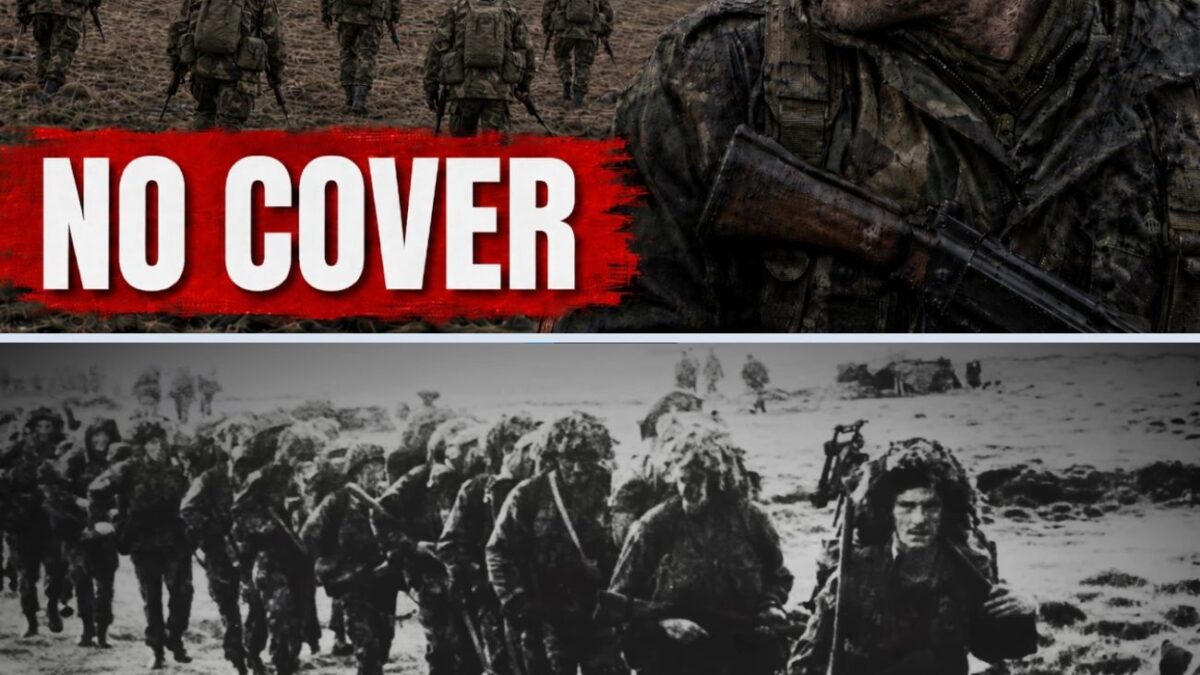
The 28th of May, 1982. First light on East Falkland. The temperature sits a few degrees above freezing, and a cold rain is moving in off the South Atlantic. A lieutenant of the 25th Infantry Regiment lies in a trench on a low ridge above the settlement called Darwin. He is a professional, paratroop trained, one of the best soldiers Argentina has put on these islands, dug into ground he chose himself on a strip of land so narrow that on a clear day the sea is visible on both sides of him. He is watching men die to reach him, and he cannot understand why they keep coming.
Below him, across bare open hillside with no cover worth the name, British soldiers are advancing into the fire of prepared positions. His machine guns have the range. His artillery is registered on the ghost line. Everything he was taught says that an attacker crossing open ground, uphill, in daylight, into interlocking fire should stop, should go to ground, should break. They do not break. They come forward in short rushes, one group firing while another moves, and when one of them falls, another takes his place, and the line keeps closing the distance.
He has more men than they do. He has the guns, the high ground, the trenches prepared over weeks. He has every advantage the textbook promises to the man who defends, and by this time tomorrow, he will be a prisoner.
Pause on that. This is not a story about a hill in the Falklands. It is not, in the end, a story about who brought more men, though the numbers matter, and we will come to them. This is a story about two different ideas of what an army is for, and what happens when one of those ideas meets the other on open ground with nowhere left to hide. The question is not how many men each side had. The question is why one side stopped and the other side did not.
Part one. To understand what that lieutenant was seeing, you have to understand what he was doing there in the first place, and why he had every reason to be confident. On the 2nd of April, 1982, Argentine forces had seized the Falkland Islands, a British possession in the far South Atlantic that most of the world could not have found on a map. Britain sent a task force 8,000 miles to take them back.
By late May, the British had come ashore at San Carlos on the northwestern coast of East Falkland and were holding a beachhead ringed by hills. And on a thin isthmus to the south sat the settlements of Darwin and Goose Green, the airfield beside them, and the small garrison that held all three. That garrison had a name, Task Force Mercedes, commanded by Lieutenant Colonel Italo Piaggi.
Its core was the 12th Infantry Regiment, and its soldiers were for the most part conscripts. Young men drafted for a single year, many of them from Corrientes, a warm subtropical province in the north of Argentina, now shivering through the first weeks of a Falklands winter. To stiffen them, Piaggi had a company of the 25th Infantry Regiment, commando-trained and genuinely good, and a platoon of the 8th holding the western approaches at a ruin called Boca House.
He had a battery of three 105-mm pack howitzers. He had heavy anti-aircraft guns that could be turned to fire straight down the isthmus. And beside the airfield, he had more than 200 Argentine Air Force ground crew under a separate commander, Vice-Commodore Wilson Pedrozo.
Now, here is the part that is easy to miss and important to get right. Piaggi’s plan was not stupid. It was, on its own terms, sound. Look at the ground. The isthmus is a bottleneck, treeless, almost without folds, a funnel of open moorland between two arms of the sea. A defender sitting on the low ridges could see for miles. His guns could be ranged in advance on every obvious line of approach. An attacker had to come at him down that funnel in the open, with the water on either flank cutting off any wide move around the position.
On paper, this is a defender’s dream. You hold the high ground, you make the other man cross the killing ground, and you let the arithmetic do the work. His assessment was not insane. It was built on the data in front of him. The problem was that the data described a battle the British had no intention of fighting. Because the whole plan rested on a single quiet assumption.
It assumed that the attacker, taking losses in the open, would behave the way soldiers are expected to behave. It assumed he would stop. The Argentine army that held that isthmus had been built over decades for a particular kind of war. A conscript army, large, organised from the top down, designed to hold ground and to be directed by its officers. Orders came from above and the men below carried them out. It was not built to improvise.
Its regiments, thrown together on the islands, had in many cases never trained as a single body before the shooting started. The 12th had never fought alongside the 25th. The winter was closing in. The supply chain across the water was thin and getting thinner. And the men in the forward trenches had already spent weeks under naval and air bombardment before a single British infantryman appeared in front of them.
And still, understand this, they were not cowards and they were not fools. They were a professional plan, competently made, resting on an assumption about human behaviour that had held true on a thousand battlefields. Their model worked right up until the moment it met an enemy who had decided the model did not apply to him.
Part two. The enemy was a single battalion, the second battalion of the parachute regiment, the men the British army simply called two para. To grasp what happened on that isthmus, you have to understand that a parachute battalion is not just a group of soldiers who can jump out of aircraft. It is the product of one of the hardest selection courses in the British army. A process designed to fail most of the men who attempt it. The ones who pass are volunteers twice over, first for the army, then for the regiment. They are trained, above everything else, to keep moving forward and to think for themselves while they do it.
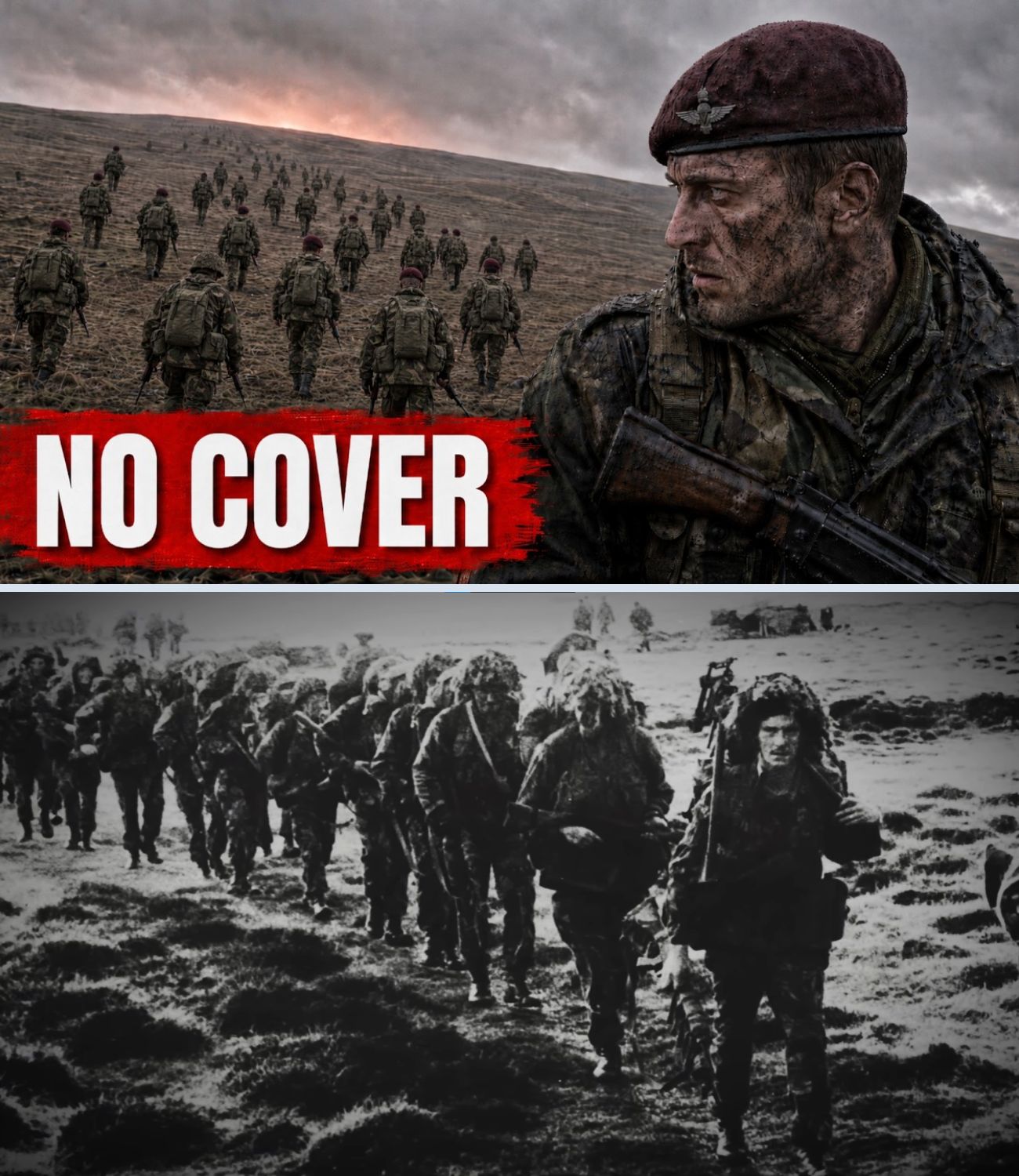
They were led by Lieutenant Colonel Herbert Jones, a man known throughout the army by a single letter, H. He was an intense, driving officer who had pushed hard to get his battalion into the fight. And he had, in the days before the battle, been handed a problem that would have given a cautious man pause. His men had marched to the start line because most of the task force’s heavy-lift helicopters had gone down at sea with the ship carrying them. Two Para could not be flown to the fight.
They walked. They carried their own weapons, ammunition, and equipment across roughly 13 miles of cold, wet, broken ground to a farmstead called Camilla Creek House, and then they turned to attack. And before they could, something happened that reads today like black comedy. The BBC World Service, broadcasting from London, announced to the world, and therefore to anyone in Argentina with a radio, that a British parachute battalion was poised to assault Darwin and Goose Green.
Colonel H, listening in his own headquarters, was said to be incandescent, threatening to sue the government that had let the secret out. His attack had been announced before he had launched it. He launched it anyway.
The assault went in during the small hours of the 28th, a night attack down the isthmus in a series of phases, company by company, position by position, in darkness and freezing rain. The frigate HMS Arrow lay offshore to support them with her 4.5-inch gun, though her fire was thinner and less reliable than the plan had counted on. The three light guns ashore had fewer than a thousand shells between them. There were no reinforcements coming.
There was no armour. There was, for long stretches, no air support at all because the weather kept the Harriers grounded and the guns on the isthmus made every low pass a gamble. The Paras went forward with what they had, and it was brutal, close, exhausting work. They cleared the first houses and found only Falklands civilians inside, unharmed. They fought across ridges in the dark, one group pinning an enemy trench while another worked around its flank.
And then, as the sky lightened, the advance ran into a wall. On the forward slope of Darwin Hill, along a gully thick with gorse, the Argentine defenders held a line of mutually supporting trenches, and here the attack stalled. A company was pinned in the open, unable to go forward and unwilling to go back, and men were being hit. The whole battalion’s momentum, the one thing it could not afford to lose was draining into that gully.
What Colonel H did next has been argued over ever since and we will come back to that argument honestly because he deserves nothing less but the bare fact is this. He took his small party forward toward the enemy trenches to break the deadlock himself. He seized a submachine gun and charged the nearest position. He was hit and he fell and he died within a few yards of the enemy line.
For that act he was awarded the Victoria Cross, the highest decoration his country can give and it was given to him after his death. He was not the only one lost in that gully. His adjutant Captain David Wood and Captain Chris Dent were killed in the same close fighting. The Royal Marine pilot who flew forward to lift the Colonel out, Lieutenant Richard Nunn, was shot down and killed by an Argentine ground attack aircraft. The only air-to-air kill the Argentine forces would score in the entire war. He too was decorated after his death and here is the thing that matters most about Darwin Hill.
The death of the commanding officer did not stop the battalion. Command passed down, the men kept working the flanks and it was a corporal, Dave Able who at last cracked the position knocking out the trench that had held them with a single 66 mm rocket. Able was awarded the Distinguished Conduct Medal. The line broke and the Paras went on.
Stop and see what these men were and what they were not. They were not better armed than the defenders. They were not more numerous. They were not fresh. They had marched 13 miles under their own weight, slept in the wet and gone into the attack cold and tired against an enemy who had chosen the ground. What they had was a way of fighting and a refusal bred into them over years to accept that a defence in front of them was allowed to hold.
Part three. Here is what the numbers alone will never tell you. An army is not only its rifles and its ration strength, it is a set of habits grown slowly inside an institution about who is allowed to think, and the deepest reason 2 Para did what it did on that isthmus lies not in its weapons, but in its wiring.
The British had built over a long time a professional volunteer army in which initiative ran downward. A corporal was expected to understand the plan well enough to carry it forward if his officer fell. A section commander was trained to see an opportunity and take it without waiting to be told. The whole method of the attack, one group firing while another moves, closing the range in short violent rushes, depends absolutely on junior leaders acting on their own judgement in the noise and the dark. It cannot be run from the top. It has to be trusted to the bottom.
That is why the death of the commanding officer did not end the battle. The machine was designed to keep running when its head was gone. The Argentine army was built on a different principle, and it was not a foolish one. It was built to be directed, to hold the line its generals gave it, to do as it was ordered.
That works and works well in the kind of set piece defences planners had imagined, but it is exactly the wrong shape for a fight that dissolves into a hundred small decisions made in seconds by the most junior men present. You cannot issue initiative as an order. You cannot conscript it for a year and expect it to appear on a cold hillside. It has to be grown, and it takes an institution years to grow it, and the enemy on that ridge simply did not have the years.
So, set the two things side by side, and here is the number the whole story turns on. 600 men of 2 Para attacked that isthmus. By the most careful count made afterward, the garrison holding it numbered 1,083. And when it was over, the Paras took 961 Argentine soldiers prisoner. More than 1 and a half men surrendered for every Para who had come to take the ground.
Sit with that for a moment. British intelligence before the attack had assessed the garrison at somewhere between 3 and 500. The number of men who laid down their arms was, all by itself, the plainest possible measure of how badly that guess had missed and of what 600 determined soldiers had actually walked into and beaten.
Part four, for the men in the Argentine trenches, the realisation came slowly and then all at once. Through the 28th, their defence did terrible work. The heavy anti-aircraft guns beside the airfield were swung down to fire straight along the ground and against troops in the open they were murderous. The Paras pushing toward the schoolhouse and the airfield ran into that fire and took hard losses, one company losing something close to a fifth of its strength before the guns were finally silenced by a Harrier strike that got through late in the day.
This was not a garrison folding at the first push. This was a defence that fought. And in the middle of that fighting came one of the war’s cruelest moments, one that both sides have argued over ever since.
Near the airfield, Lieutenant Jim Barry went forward under what appeared to be a local truce to accept a surrender and he and two of his men were killed when firing broke out. The British who were there believed it treachery. The Argentines insisted it was a tragedy of signals crossed in the confusion, a surrender that was never ordered, a message that never arrived. Both sides, in the years since, have largely come to call it what it most likely was, a terrible misunderstanding on already full of them.
But by nightfall, the arithmetic that had once favoured Colonel Piaggi had turned all the way around. He was being pressed back into Goose Green itself, the last settlement, crowded now with his own men and with Falkland civilians. His mortars had run dry. His artillery was down to a few hundred shells. Reinforcements flown in that evening arrived too late and too few to change anything. He had held the ground and kept the numbers and it had not been enough because the enemy in front of him had never once behaved as though the numbers should decide it.
They had been right about so much. They were right that the ground favoured the defender. They were right that they had the greater strength. They were right that the open isthmus would cost the attacker dearly, and it did. What they had been wrong about was the one thing that turned out to matter. They were wrong to believe that a defence, however well made, could hold against an attacker who simply would not accept that it was holding.
By then, the British battalion had a new commander. Major Chris Keeble, his second in command, had taken over the moment Colonel H fell. He had spent perhaps 2 hours steadying the battalion, reorganising under fire, and then driven the attack onto the edge of Goose Green. And that night, with his men cold, short of food and water, and running low on ammunition, facing the prospect of clearing a settlement house by house with civilians inside it, Keeble made a colder and harder choice than any charge.
He decided to demand that the Argentines surrender. He sent two Argentine Air Force prisoners back through the lines carrying his terms and an alternative if the terms were refused, and then he waited to see which idea of war would blink first. Keeble had no illusions about the men he was fighting, and he said so afterward, plainly.
“All the talk, he said, of an enemy who did not want to fight was nonsense.”
They had fought hard. The regiment’s own chaplain, writing later of his conscripts, drew a line between the men of the 25th who wanted to cover themselves in glory and the men of the 12th who fought because they were told to. And he insisted it made the second group no less brave.
“On the whole, he wrote, they stayed admirably calm.”
Remember that whenever this story is told as though one side were lions and the other sheep. It was never that. It was two ways of making war, and one of them broke first.
Part five. On the morning of the 29th of May, which happened to be the Argentine army’s own commemorative day, Colonel Piaggi accepted that there would be no rescue and agreed to talk. He put the choice to Vice Commodore Pedrozo, who commanded the airmen, and Pedrozo, thinking of the civilians in the settlement, agreed reluctantly to end it. There was a short parade. The men laid down their weapons. The regimental flag was burned so that it could not be taken as a trophy, and then the officers led their soldiers into captivity.
Now, return to the question we began with. Up on that ridge in the freezing dawn, not how many men each side had, why one side stopped and the other side did not. The answer is not that the British were braver men or better men or that God favoured the island with the older flag.
The Argentine soldier on that isthmus was very often a 19-year-old conscript from a warm province dropped into a winter war, worn down by weeks of bombardment, holding a line his generals had drawn, and he held it longer and harder than his enemies expected. The answer is not about the worth of men. It is about the shape of armies.
The Argentines had the numbers, the guns, and the ground. The British had a way of fighting that did not depend on any of them. The Argentine army had been built to hold a line. The British battalion had been built to break one and to keep breaking it after the officer who ordered the attack was gone. They did not stop when the weather grounded their aircraft. They did not stop when their guns ran short of shells. They did not stop when the open ground offered them nothing, and they did not stop when their commanding officer fell in the gorse below Darwin Hill.
They stopped only when the last enemy in front of them had put down his rifle. It cost them 17 men of 2 Para did not come home from that isthmus, 18 if you count the Royal Marine pilot and the sapper attached to the battalion, and 64 more were wounded. On the other side of the line, between 45 and 57 Argentine soldiers were killed and some 86 wounded, most of them men who had never chosen this war and would not see 30.
Reverence, not triumph, is the only honest note to end on. And there is one more debt of honesty to pay, because this channel does not sell you clean legends. The attack on Goose Green may not have been necessary at all.
The brigadier commanding the landing force, Julian Thompson, regarded it as a diversion from the real march on Stanley and mounted it only under heavy political pressure from London, which needed a land victory and needed it soon. He admitted later that he had sent Colonel H to capture the settlements with too small a force for the job. And the charge that won the Victoria Cross has been questioned, too.
One historian argued years afterward that the solo charge did more to hinder the battalion than to help it, and that the fight only truly opened up once junior commanders were free to use their own initiative. It is a hard argument and an honest one, and here is the strange thing about it. It does not diminish the courage in that gully by a single degree. It simply says, in the end, exactly what this whole story has been saying, that the deepest strength of that battalion was never in one man’s charge. It was in the 600 who did not need to be told to keep going.
I should tell you, too, that the lieutenant we began with, watching the impossible in the rain above Darwin, is a composite. His name is a stand-in for several real Argentine officers whose positions and reports I drew on, men who genuinely could not account for what they were seeing. The observation was real. The confusion was real. Only the single figure is a device, and you deserve to know that.
Remember the names that were not devices. Lieutenant Colonel H. Jones, who fell breaking a deadlock. Corporal Dave Able’s, who broke it in the end. Major Chris Keeble, who chose to demand a surrender rather than fight through a settlement full of frightened people. Lieutenant Richard Nunn, lost trying to save a man already gone. And the Argentine conscripts who held their line in a winter that was never theirs, longer than anyone had any right to expect.
You Might Also Enjoy


Mom Installed a Camera To Discover Why Babysitters Keep Quitting But What She Broke Her Heart


She Gave a Hungry Little Girl a Free Birthday Cake — The Next Morning, a Black Rolls-Royce Arrived




