ANNE’S WINDSOR SHOWDOWN: Princess Royal Allegedly Orders Camilla’s Daughter to Remove Diana’s Lover’s Knot Tiara as Catherine Refuses to Back Down
Anne’s Windsor Showdown: The Lover’s Knot Tiara Dispute That Allegedly Put Camilla, Laura and Catherine on a Collision Course
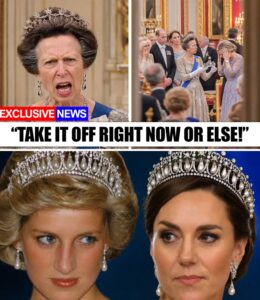
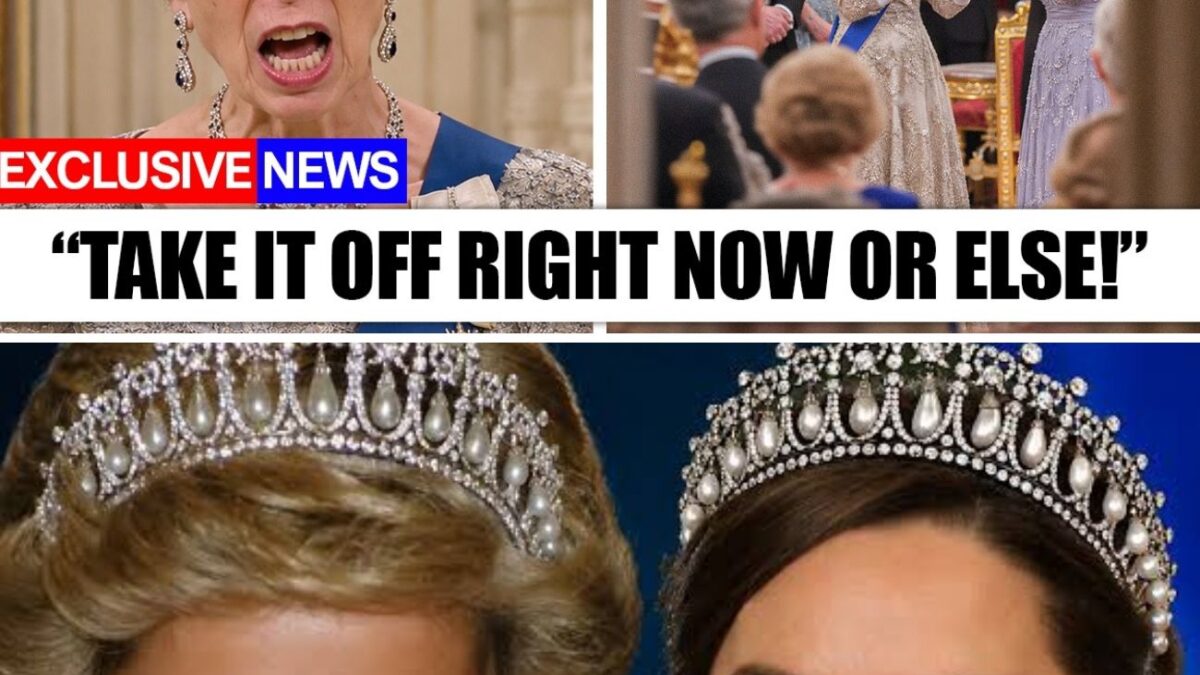
The atmosphere at Windsor Castle was said to have become increasingly tense on October 20, 2026, just hours before a state banquet honoring the Sultan of Oman. What should have been a carefully choreographed diplomatic occasion allegedly developed into a serious dispute involving Princess Anne, Queen Camilla, Laura Lopes and Catherine, Princess of Wales. At the centre of the reported confrontation was the Lover’s Knot Tiara, the famous diamond-and-pearl jewel closely associated with the late Princess Diana.
According to the account, the tiara had been allocated to Catherine for the evening’s banquet. Yet when preparations were underway, Laura Lopes, Camilla’s daughter, was reportedly discovered wearing it in her dressing room. Laura had been invited as a personal guest and held no official ceremonial position. The discovery allegedly prompted Anne to intervene immediately, setting in motion a chain of events that would reach King Charles III.
A disagreement over the state banquet
The tension reportedly began before the missing tiara was discovered. During the afternoon preparations, Camilla allegedly questioned the official receiving arrangements for the Omani delegation. She wanted Catherine moved further back in the receiving line, arguing that the Queen should occupy a more prominent position.
Catherine is said to have rejected the proposal, pointing out that the arrangements had already been approved by Charles and the Foreign Office. Changing them at the last moment, she reportedly argued, would undermine established diplomatic protocol. Anne, who was overseeing ceremonial preparations, supported the existing schedule and reminded those involved that no changes could be made without the King’s written authorization.
The disagreement appeared to end when Camilla returned towards the private rooms associated with Clarence House. But another problem was about to emerge.
The empty velvet case
At around 3:30 p.m., Margaret Ellis, an experienced employee responsible for preparing royal jewellery, opened the secure cabinet where the Lover’s Knot Tiara was supposed to be stored. The deep red velvet presentation case was empty.
With only a few hours remaining before the banquet, Margaret reportedly contacted Anne rather than attempting an informal search. Anne arrived, instructed staff not to disturb the case and ordered security personnel to secure the storage area.
A transfer receipt soon raised further questions. It reportedly showed that a member of Camilla’s staff had taken the tiara to the Queen’s private rooms that morning for an inspection of its suitability with formal clothing. The case had later been returned, but the required physical check had apparently not been completed. The paperwork therefore recorded the return of the case without confirming that the tiara itself was inside.
Margaret explained that she had accepted the case believing the handover had been properly completed. Only when she prepared to deliver the jewel to Catherine did she discover that it was missing.
Questions about Clarence House
During an internal examination, Margaret reportedly told Anne that requests to review jewellery allocations had been coming from Clarence House for several weeks. The requests were presented as routine preparations, with the argument that the Queen should receive suitable priority when historic jewels were selected for important occasions.
The account also describes an unusual visit that morning. A Camilla aide allegedly requested the Lover’s Knot Tiara for a clothing inspection and promised it would be returned before Catherine began preparing for the banquet. When Margaret delivered the case, she reportedly noticed a dark blue evening gown and pearl accessories laid out for Laura.
That detail took on greater significance when the case came back empty.
Anne went directly to Catherine and explained what had happened. Catherine reportedly said she had never agreed to any change in the allocation. For her, the issue was not simply who would wear an expensive piece of jewellery. The tiara had been assigned through an approved arrangement, and changing that decision without authorization would raise questions about the management of royal property.
Anne and Catherine agreed that the matter should be taken to Charles.
Charles faces an uncomfortable decision
At approximately 4:30 p.m., the two women reportedly entered the King’s private library carrying the empty case and the transfer records. Charles was preparing for the diplomatic reception when Anne explained the missing jewel and the apparent failure to follow the required handover procedure.
The King initially appeared reluctant to launch a full investigation so close to an important state occasion. He reportedly suggested that the incident might have resulted from confusion between departments. Catherine, however, argued that the evidence could not simply be dismissed as a minor administrative mistake. Anne added that Laura had no authority to wear a jewel from the royal collection without proper approval.
Charles eventually confirmed, according to the narrative, that he had not authorized anyone other than Catherine to wear the tiara. He then allowed Anne and Margaret to investigate the chain of custody.
Camilla reportedly arrived during the discussion and objected strongly. She insisted that the jewel was undergoing technical inspection and would be returned in time. Hoping to prevent a wider confrontation, Charles gave her thirty minutes to resolve the matter personally.
The discovery in Laura’s dressing room
Camilla allegedly went straight to Laura’s dressing room and demanded that her daughter remove the tiara. Laura refused, believing that her mother’s position gave her sufficient authority to approve its use. She reportedly placed the jewel back on her head and continued looking at herself in the mirror.
The account describes an unexpected witness: a member of the banquet service team who had been asked to bring a full-length mirror into the room. The employee allegedly saw Laura wearing the tiara and later informed Margaret, who passed the information to Anne.
With the new testimony, Anne decided not to wait for the full thirty-minute period. She took Margaret and Catherine to Laura’s dressing room. According to the story, they entered and found Laura standing before the mirror with the Lover’s Knot Tiara in her hair.
Anne ordered her to remove it immediately. Laura protested that Camilla had given permission, while Camilla accused Anne of humiliating her daughter and creating a scandal just before the banquet.
Catherine then challenged Camilla’s understanding of her authority. The tiara, she reportedly argued, was a royal treasure governed by formal rules, not a personal possession that could be lent according to family preference. Being Queen did not mean that Camilla could override the King’s decisions.
Under pressure from Anne, Catherine and Margaret, Laura eventually lifted the tiara from her head. Margaret examined its settings, diamond links and suspended pearls before returning it to the velvet case and applying a security seal.
An emergency meeting and a royal ruling
At around 5:40 p.m., Charles reportedly convened an emergency meeting attended by Camilla, Anne, Catherine, Laura and Margaret. The jewellery employee presented the transfer request, the receipt for the empty case and the record of the tiara’s recovery.
Laura allegedly admitted wearing the jewel because she believed her mother had arranged the necessary permission. Camilla described the incident as an attempt to make her daughter feel welcome. But Anne reportedly presented additional correspondence from the previous six months, raising questions about repeated proposals to change jewellery allocations and ceremonial arrangements.
The documents, as described in the account, suggested that the dispute might extend beyond one evening’s outfit. Catherine argued that private family relationships should not determine access to royal treasures or official ceremonial privileges.
At approximately 6:30 p.m., Charles was said to have announced a series of decisions. The Lover’s Knot Tiara would remain allocated to Catherine. Future requests involving important royal jewels would have to go through the appropriate collection authorities and receive the required written approval. Clarence House would no longer be able to make independent changes to those arrangements.
The narrative further claims that Laura’s invitation to the banquet was withdrawn and that she was escorted from Windsor Castle. Camilla reportedly accepted the restrictions and chose a smaller tiara from her personal collection.
The tiara returns to Catherine
After the meeting, Anne allegedly carried the recovered jewel to Catherine’s dressing room and returned it personally. Catherine thanked her, emphasizing that the dispute was about protecting protocol rather than competing over jewellery.
When the banquet began at eight o’clock, Catherine reportedly appeared beside Prince William wearing the Lover’s Knot Tiara. Its diamonds and pearls shone beneath the chandeliers of St George’s Hall as the Omani delegation was welcomed.
In the story’s final scene, Anne watched the proceedings from her supervisory position while Camilla stood beside Charles. The evening continued according to the original ceremonial arrangements.
Whether the dramatic account reflects real events remains unverified. But its central question is unmistakable: where should the boundary lie between family influence and the rules governing a monarchy’s public responsibilities?
You Might Also Enjoy






CATHERINE BREAKS DOWN IN TEARS OVER PRINCE WILLIAM: The Devastating Royal Pressure He Hid From His Own Wife!