PRINCE HARRY HUMILIATED IN COURT: Royal Privileges Gone, Security Battle Crushed as Britain’s Palace Establishment Delivers a Devastating Blow!
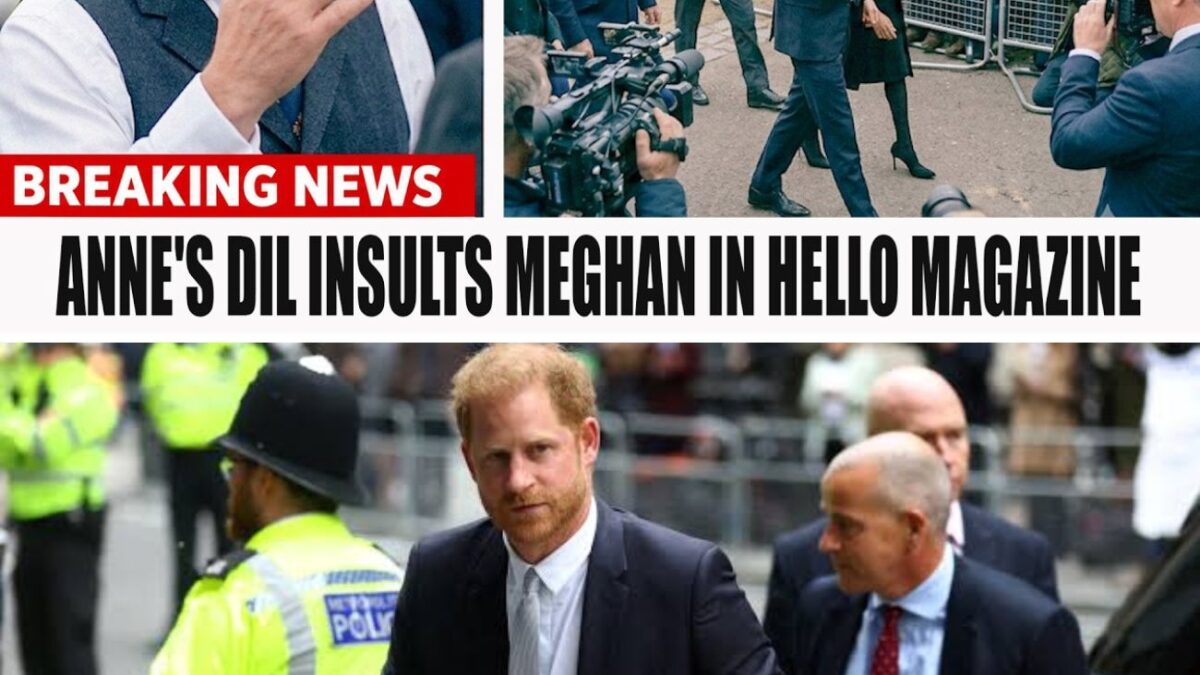
Prince Harry Relegated to a Different Royal Status After Crushing Court Defeat: The Security Battle That Changed Everything
For Prince Harry, the fight to protect his family in Britain has become one of the most painful chapters of his life outside the royal institution. What began as a dispute over police protection has developed into a prolonged legal confrontation involving government officials, royal security arrangements and the consequences of stepping away from official duties. In May 2025, the Duke of Sussex suffered a decisive defeat when the Court of Appeal rejected his challenge. The ruling was not simply another disappointing legal outcome. It highlighted how dramatically his position had changed since he and Meghan Markle left their roles as senior working royals.
The headlines describing Harry as a tourist rather than a prince may sound deliberately provocative. Legally, however, the distinction is more complicated. The court did not strip him of his royal title. Instead, it upheld the decision to provide him with a different level of publicly funded protection when visiting Britain.
The decision that changed Harry’s security arrangements
The dispute dates back to early 2020, when Harry and Meghan announced that they would step back from their responsibilities as senior members of the Royal Family.
Their decision to establish a new life abroad, initially spending time in Canada before settling in California, brought significant changes to their official position. They would no longer undertake the same full-time royal duties or live primarily in Britain.
That change had consequences.
The Executive Committee for the Protection of Royalty and Public Figures, known as RAVEC, reviewed the family’s security arrangements. Following the change in their status, the couple would no longer receive the same level of publicly funded police protection they had previously enjoyed.
For Harry, this was not an ordinary administrative decision. He believed the risks associated with being a member of the Royal Family had not disappeared simply because he had stopped performing official duties.
His legal representatives argued that his public profile, military background and exposure to threats remained significant. They also emphasized that his wife and children could face security concerns when travelling to Britain.
The prince maintained that his privately funded security arrangements in the United States could not fully replace the protection provided by British police, particularly because private personnel did not have equivalent access to government intelligence.
Harry argued that his family remained vulnerable
Harry’s position was straightforward: leaving the royal institution did not mean leaving behind the dangers associated with his identity.
His legal team argued that he had been treated unfairly and that the arrangements introduced after his departure were inadequate.
The dispute also involved an important question about payment. Harry had indicated that he was willing to pay personally for police protection in Britain rather than place the financial burden on taxpayers.
However, the issue was never simply whether the prince could afford security officers.
Police protection involves access to intelligence, coordination with authorities and decisions about the level of risk. These arrangements cannot automatically be purchased by private individuals, even those willing to cover the costs.
For Harry, that distinction was deeply frustrating. He believed the system was preventing him from obtaining the protection he considered necessary for his family.
The first major courtroom defeat
The case eventually reached the High Court, where retired judge Sir Peter Lane delivered his judgment on February 28, 2024.
Harry’s challenge was dismissed.
The court concluded that RAVEC, as an expert body responsible for evaluating security arrangements, was entitled to reach its decision in the circumstances. The judge did not find that the decision was unlawful, irrational or procedurally unfair.
The ruling was a serious setback, but Harry did not give up.
His legal representatives continued arguing that the original decision-making process had failed to follow the appropriate procedures. They believed the security assessment had not properly considered the circumstances surrounding his position and the risks he continued to face.
The prince subsequently pursued an appeal, setting the stage for another major confrontation with the British authorities.
The Court of Appeal delivers its verdict
The appeal hearing took place at the Royal Courts of Justice in London on April 8 and 9, 2025.
Harry personally attended the proceedings, demonstrating how important the matter remained to him.
On May 2, 2025, Sir Geoffrey Vos, Master of the Rolls, delivered the judgment alongside Lord Justice Bean and Lord Justice Edis.
The result was another defeat for the Duke of Sussex.
The three judges rejected his appeal, upholding the earlier decision that the security arrangements were not unlawful.
Sir Geoffrey Vos acknowledged the strength and emotional weight of Harry’s concerns. He recognized that the prince felt badly treated by the system and that his arguments deserved serious consideration.
However, the judge drew a distinction between understanding someone’s sense of grievance and establishing a legal basis for overturning an official decision.
In his judgment, Harry’s concerns did not translate into a successful legal argument.
It was a particularly difficult conclusion for a prince who had spent years insisting that his family’s safety required a different approach.
Was Harry really treated like an ordinary tourist?
The language surrounding the judgment quickly became dramatic.
Some commentators portrayed Harry as having been reduced to the status of an ordinary visitor whenever he returned to Britain. Others argued that he could no longer expect the privileges associated with being a full-time working royal while living overseas and pursuing an independent life.
But the legal position is more precise.
Harry retained his title as Duke of Sussex and his place within the Royal Family. The court did not declare him a tourist or remove his royal identity.
What changed was the level of publicly funded protection he received.
The government maintained that security should be assessed according to individual circumstances rather than automatically granted because someone belongs to the Royal Family.
That principle placed Harry in a different position from working royals who undertake official duties and live under different security arrangements.
The distinction may appear uncomfortable, particularly when applied to the son of a reigning monarch. Nevertheless, it was central to the legal dispute.
King Charles caught in the middle
Although King Charles was not the defendant in Harry’s security case, the wider royal family tensions inevitably formed part of the public conversation.
Harry has repeatedly spoken about his concerns for Meghan and their children, particularly when returning to the country where he grew up.
His relationship with his father has also remained strained.
Following the appeal defeat, Harry gave an interview to the BBC in which he discussed his disappointment and his desire for reconciliation. He suggested that some members of his family would never forgive him for his memoir, Spare, but said he remained willing to forgive them.
He also expressed concern that the ongoing security situation made it difficult to imagine bringing Meghan and the children back to Britain.
For Charles, the situation presents an uncomfortable family dilemma. His younger son remains a member of the family, but the king cannot simply reverse a government security decision through personal intervention.
The legal responsibilities belong to the relevant authorities, not to the monarch acting as a father.
The human cost behind the courtroom battle
For all the legal arguments, the most personal issue remains Harry’s relationship with his homeland.
He has spoken about wanting Archie and Lilibet to know Britain and to have a connection with the country that shaped their father’s childhood.
Yet the security dispute has become a major obstacle to that ambition.
Harry has argued that without appropriate protection, returning with his family would involve unacceptable risks. His critics, meanwhile, believe he must accept the consequences of stepping away from official royal responsibilities.
Both positions reveal a fundamental disagreement about what royal status should mean in modern Britain.
Should someone who has left official duties continue receiving exceptional public protection because of their family identity and public profile? Or should security arrangements be determined strictly by current responsibilities and independently assessed risks?
The courts have upheld the government’s approach in Harry’s case.
A royal relationship still waiting for answers
The May 2025 judgment marked a decisive moment in Harry’s legal battle, but it did not resolve the wider family conflict.
The Duke of Sussex remains separated from much of the royal life he once knew. His relationship with King Charles continues to attract attention, while Meghan and the children remain largely based in the United States.
The palace has not publicly transformed the court ruling into a declaration that Harry no longer belongs to the family. Nor did the judges rule on whether the king should personally reconcile with his son.
What the case established was narrower, but still significant: Harry had not demonstrated that the government’s security decision was unlawful.
For a man born into extraordinary privilege, the experience of losing access to arrangements he once regarded as essential must have been deeply difficult.
And perhaps that is what makes this dispute so revealing. Harry wants the freedom to build a life outside the monarchy while retaining protection against risks associated with being part of it. The British authorities, meanwhile, have insisted that those arrangements must reflect his changed circumstances.
The courtroom battle may be over, but the question of where Prince Harry belongs in Britain’s royal world remains far from settled.
You Might Also Enjoy






CATHERINE BREAKS DOWN IN TEARS OVER PRINCE WILLIAM: The Devastating Royal Pressure He Hid From His Own Wife!