“IT WAS ABOUT ARCHIE”: The Six-Page Letter Meghan Took to Police Raises Explosive Questions About What She Knew Before Her Son Was Born
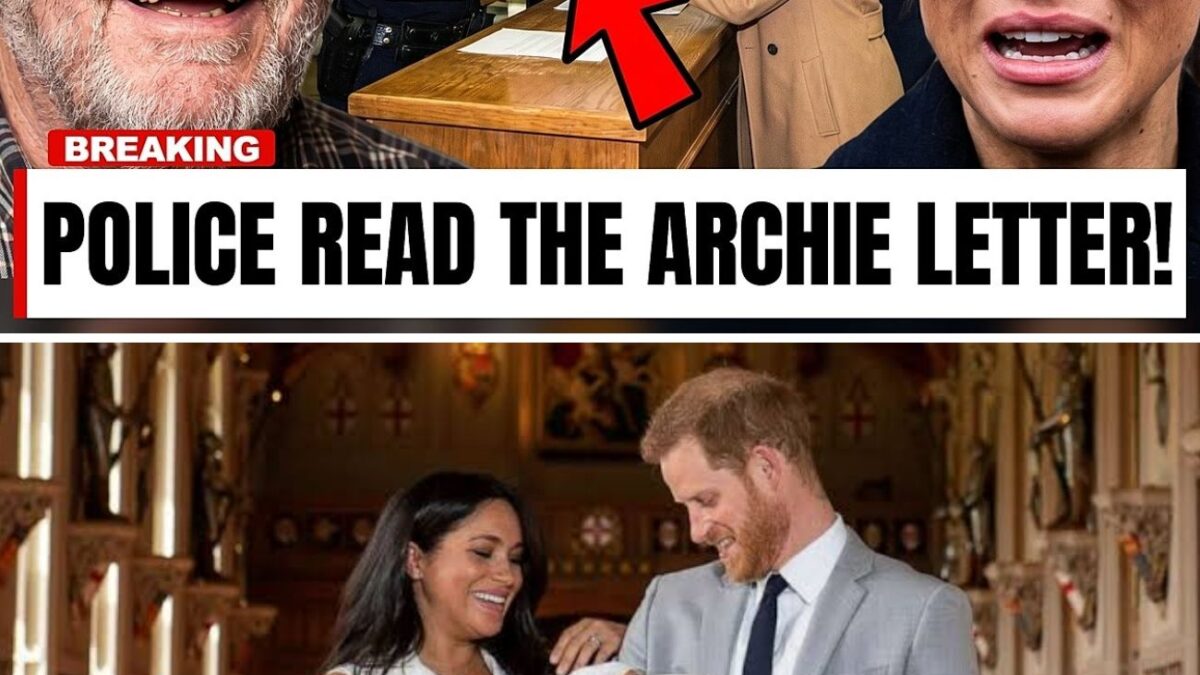
“IT WAS ABOUT ARCHIE”: The Letter Meghan Took to Police Wasn’t Simply About Her Father
A six-page handwritten letter, a pregnant duchess and a police department now facing questions about how sensitive information was handled. What began as a deeply personal family dispute involving Meghan Markle and her father, Thomas Markle, has developed into a much wider controversy. At the centre of it is a question that has captured public attention: was the letter sent to Scotland Yard really intended as a warning about Thomas Markle, or was its underlying concern the safety of the child Meghan was expecting?
The answer has not been established. But the timing and circumstances surrounding the letter have prompted commentators to examine the episode from a different perspective.
A letter that raised questions
According to reports discussed in the original account, the letter was written by Roslin Loveless, Thomas Markle’s first wife and the mother of his children from his earlier marriage. It was reportedly handwritten and approximately six pages long. The letter was sent to the Metropolitan Police’s Fixated Threat Assessment Centre, a specialist unit that assesses potential threats involving public figures, including members of the Royal Family.
The reported timing is significant. Meghan and Prince Harry announced their pregnancy in October 2018. In January 2019, Meghan was around five months pregnant and publicly appeared at an engagement in Birkenhead, where she spoke about the baby expected in the spring.
That same month, according to reports, the letter arrived at the police unit. Its contents allegedly included serious accusations concerning Thomas Markle and a potential threat to the Duke and Duchess of Sussex.
Those accusations must be treated with considerable care. Thomas Markle has denied them, describing them as lies. The original account also makes clear that he has not been charged with an offence in connection with the allegations discussed. The existence of a letter does not establish the truth of what it reportedly contains.
Nevertheless, the circumstances in which the letter was received and subsequently shared have become the subject of scrutiny.
Why was Meghan given the letter?
One of the most important details is where the letter was sent. Rather than being addressed to an ordinary local police station, it reportedly went to a specialist unit responsible for assessing threats to public figures.
The account says the letter was subsequently passed to Meghan and Prince Harry’s office so that they could be made aware of its contents. The Metropolitan Police has reportedly acknowledged that officers from its Royalty and Specialist Protection Command were involved in passing on a letter in 2018 or 2019, while saying that internal inquiries were being undertaken to establish precisely what happened.
A further question concerns the original document. Reports cited in the account say that the Metropolitan Police could not locate its own copy and later requested a copy from Meghan.
That detail has raised questions about record-keeping, the handling of sensitive information and whether the correct procedures were followed. It has also prompted debate about why the information was reportedly passed to the Sussexes rather than being immediately referred to authorities in the countries where the alleged conduct was said to have taken place.
A former police officer quoted in the programme argued that information concerning alleged offences outside British jurisdiction should ordinarily be passed to the appropriate authorities. Another explanation offered by a former superintendent was that police must make safeguarding decisions about whether information should be shared with someone who may be affected by it.
The distinction matters. Passing on a warning for someone’s awareness is not necessarily the same as opening a criminal investigation.
The Archie theory
The most provocative interpretation concerns the date of the letter. Meghan was pregnant when it was reportedly received, and Archie had not yet been born.
Some commentators have therefore suggested that the warning may have been motivated less by concern about Meghan herself and more by concern for the child she was carrying. In this reading, the letter was intended to alert a mother to information that might affect decisions about who would be allowed near her future child.
That is the theory behind the headline claim that the letter was really about Archie.
It is an interpretation, however, not a confirmed finding. The contents of the complete letter have not been independently established in the public account, and there is no verified evidence presented there proving that Archie was its specific subject. The timing may invite questions, but it cannot, by itself, establish the writer’s intention.
Meghan has previously explained that her decision to prevent her father from having contact with her children was made to protect them. That statement has taken on renewed significance as the earlier letter has attracted attention.
The programme also considers a contrasting interpretation. Lady Colin Campbell suggested that Roslin Loveless may have been motivated by hostility towards her former husband and a desire to damage his relationship with Meghan. That, too, is an opinion rather than a proven explanation. Without hearing directly from the writer or examining all the available evidence, her precise motives remain uncertain.
Roslin Loveless reportedly offered to speak to officers or meet them in person if further information was needed. According to the account, she was never contacted. She died in 2024, meaning that investigators can no longer ask her directly to explain the letter.
The second letter and a family divide
The story also returns to a separate letter Meghan sent to her father years later. According to reports cited in the programme, it was delivered to Thomas Markle while he was in hospital in the United States in December 2025. The letter reportedly made clear that he would not meet Archie or Lilibet.
The delivery attracted attention because video footage of the moment was reportedly recorded. For some commentators, this raised questions about why such a private family communication was documented. Others viewed it as a painful but deliberate way of making Meghan’s position unmistakable.
The two letters serve different purposes and were written years apart. The first was reportedly a warning from a third party, passed through police channels while Meghan was pregnant. The second was a direct communication from a daughter to her father, setting out the future of their relationship with her children.
Connecting them may help explain why the Archie theory has gained attention, but it does not prove that the first letter was written specifically about him.
The programme also revisits Meghan’s public comments about her estrangement from her father, including her 2021 interview with Oprah Winfrey. Critics have questioned why the reported allegations in the earlier letter were not publicly discussed during that interview. Supporters may argue that a private and distressing family matter did not have to be disclosed to the world.
There is no clear public evidence in the material presented that establishes which members of the wider Royal Family knew about the letter at the time. The Sussexes’ office was then connected administratively with the wider Kensington Palace operation, leading to further questions about who might have seen the correspondence. Those questions remain unanswered.
A watchdog inquiry puts the police under scrutiny
The most consequential development is not a commentator’s theory about Archie. It is the reported involvement of the Independent Office for Police Conduct.
The watchdog announced an independent investigation into the handling of allegations of serious offending, while a separate matter concerning the possible inappropriate disclosure of information was referred back to the Metropolitan Police. The account describes this as an alleged data breach, not a proven one.
These inquiries raise important questions. Who received the original letter? Who decided to pass it to Meghan? Was the information shared appropriately? Why can the police reportedly not locate their original copy? And were the relevant overseas authorities informed as they should have been?
The answers should come from evidence and the investigation, not speculation.
The Metropolitan Police has reportedly said that it was making inquiries and that referrals to relevant overseas agencies were being arranged. The account also says the force confirmed it had not investigated Thomas Markle over the allegations concerning indecent images of children. That distinction is essential: an inquiry into the handling of a letter is not the same as an investigation establishing the allegations against the person named in it.
What was the letter really about?
For Meghan, the episode touches one of the most painful chapters of her family life. For Thomas Markle, the allegations have brought renewed public scrutiny, despite his denials. For the police, the controversy raises questions about procedure, confidentiality and the responsibility to act appropriately when serious information is received.
And for Archie, the central point is that he was an unborn child when the letter was reportedly written. Whether the writer’s primary concern was Meghan, her unborn son or both cannot yet be stated as fact.
The claim that the letter was “about Archie” is powerful because it offers a possible explanation for its timing and destination. But the public still needs the full evidence before treating that interpretation as the truth.
Ultimately, the most important question may not be which side wins the argument over Meghan and her father. It is whether the authorities handled the warning properly, whether information was shared lawfully and whether every relevant concern was passed to the people responsible for assessing it.
Until the watchdog’s findings are known, the six-page letter remains a troubling piece of an unfinished story — one involving a family fracture, an unborn child and serious questions about the decisions made behind closed doors.
You Might Also Enjoy






CATHERINE BREAKS DOWN IN TEARS OVER PRINCE WILLIAM: The Devastating Royal Pressure He Hid From His Own Wife!