BEYOND THE BRINK: How David Foster Cried Foul, Ignored 13 Desperate Calls, and Cut Off the Sussexes’ UK Security Millions Forever
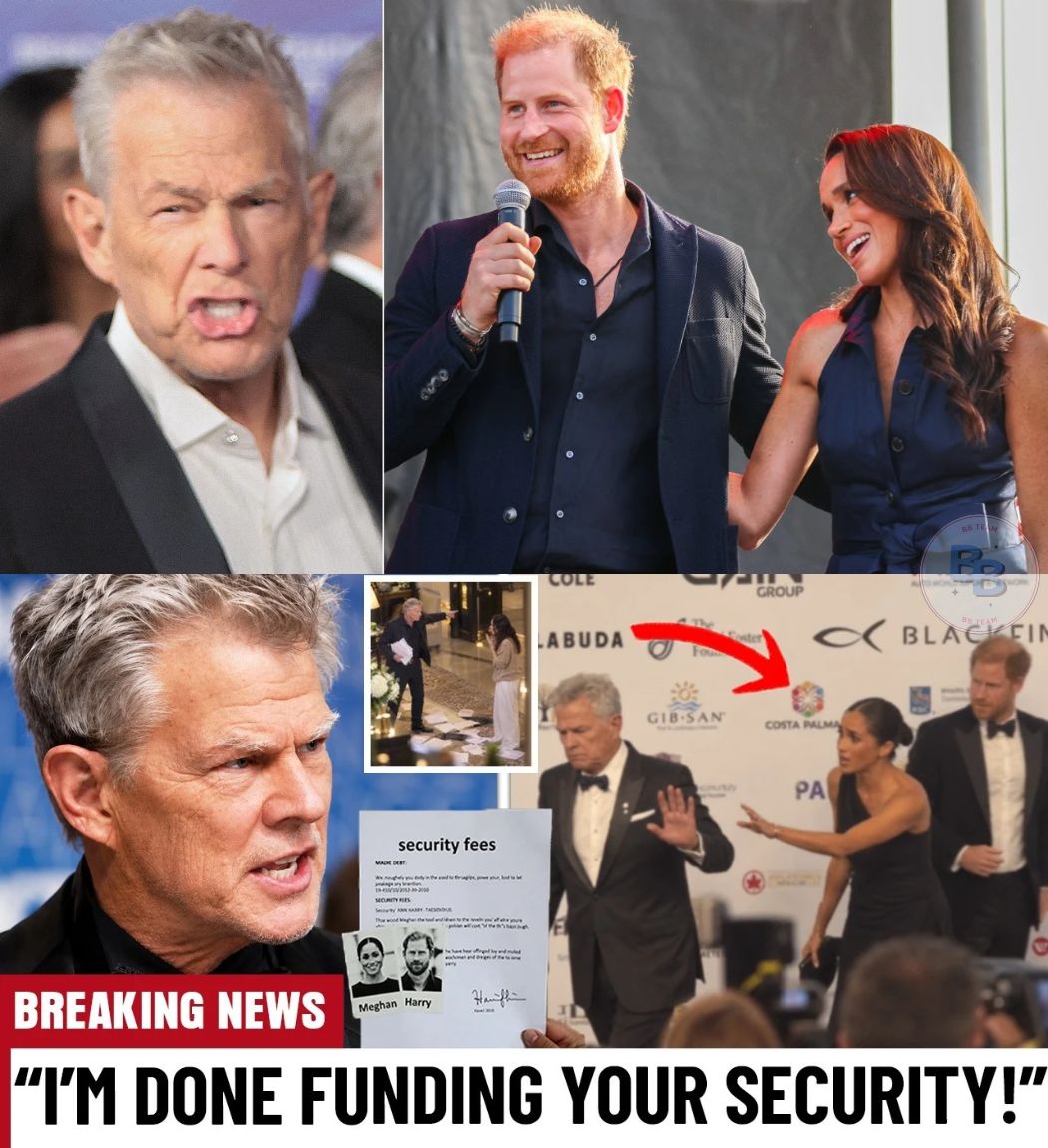
BEYOND THE BRINK: How David Foster Cried Foul, Ignored 13 Desperate Calls, and Cut Off the Sussexes’ UK Security Millions Forever
The gilded gates of Montecito, California, have long served as a sanctuary for those who trade royal duty for Hollywood sovereignty. For Prince Harry and Meghan Markle, the sprawling multi-million-dollar estate was supposed to be a fortress of independence—a place where they could dictate their terms to the world, raise their children away from the intrusive lens of the British press, and build a global empire on their own merit. Yet beneath the curated press releases, the high-profile red carpet appearances, and the polished humanitarian image lies an ongoing, debilitating crisis that refuses to fade: the immense, staggering cost of global personal security.
When the Duke and Duchess of Sussex famously stepped back from senior royal duties in early 2020, they relinquished not only their official duties and titles but also the automatic, state-funded round-the-clock protection provided by the Metropolitan Police. In the years following their departure, Prince Harry has waged an intense, unrelenting legal and public battle with the British Home Office and RAVEC (the Executive Committee for the Protection of Royalty and Public Figures), attempting to overturn decisions that stripped him of top-tier police protection whenever he sets foot on British soil.
However, with legal appeals dragging through the High Court, administrative delays mounting, and royal relations remaining deeply strained, the immediate financial burden of elite personal protection has landed entirely on the couple’s own shoulders. For a lifestyle that demands armored vehicles, former Special Air Service (SAS) operatives, advanced intelligence monitoring, and 24/7 static guard details in multiple international jurisdictions, the annual security bill routinely soars into the millions of dollars.
As total bills escalated and cash flow came under unprecedented pressure, the couple allegedly turned to a figure who had once stepped up as their ultimate protector and mentor in North America: sixteen-time Grammy Award-winning music mogul and billionaire producer David Foster.
The bond between Prince Harry and David Foster was once hailed across media outlets as one of the most unlikely yet touching friendships in modern pop culture. The relationship was originally forged through Foster’s wife, singer and actress Katharine McPhee, who attended the same high school as Meghan Markle in Los Angeles. When the Sussexes first fled the United Kingdom in late 2019 seeking refuge from intense media scrutiny, it was Foster who personally stepped in to arrange their ultra-exclusive, hidden retreat at a luxurious $14 million estate on Vancouver Island, Canada.
During those formative months of exile, Foster acted as an unofficial godfather and protector to the young royal family. In a widely quoted interview, Katharine McPhee openly remarked on the deep emotional connection that had developed between the two men, famously stating that her husband and Prince Harry were “like father and son,” noting that Foster adored helping the couple navigate their tumultuous transition into North American life.
For years, Foster remained a reliable confidant—a wealthy, well-connected Hollywood powerhouse willing to open doors, lend private jets, and offer advice. But as the financial reality of the Sussexes’ post-royal life set in, the boundaries of that mentorship were put to an agonizing test.
According to multiple high-level sources familiar with the high-stakes entertainment and royal social circles, the dynamic began to shift dramatically during the summer months. Following a series of high-profile legal setbacks in London regarding Harry’s security status, the Duke found himself facing an imminent UK trip requiring an unprecedented level of private security deployment. With traditional royal resources unavailable and personal private security firms demanding hefty upfront retainer fees running into hundreds of thousands of pounds per month, the pressure reached a fever pitch.
What followed was a campaign of persistent outreach that quickly escalated from friendly catch-ups to urgent, high-pressure financial pleas. Sources intimate with the situation allege that Prince Harry made no fewer than thirteen desperate, high-strung telephone calls to Foster’s private line over a span of less than two weeks.
Initially, the conversations were framed as inquiries into high-net-worth security trusts, private funding networks, and international foundation sponsorships. But as the deadlines for UK travel arrangements drew closer, the tone of the communications shifted dramatically. Harry reportedly requested that Foster either directly bankroll a massive security retainer fund or use his extensive influence among billionaire philanthropists and corporate sponsors to underwrite the Sussexes’ UK security detail.
For Foster, a veteran of the cutthroat music industry who built his fortune on hard-nosed negotiation and clear boundaries, the sheer intensity and persistence of the outreach felt unprecedented. Close associates report that Foster originally attempted to handle the calls with diplomacy, pointing out that funding private security for high-profile public figures fell far outside the scope of his charitable foundation and personal investments.
Yet, the calls continued to come in at all hours of the day and night. Texts, encrypted messages, and direct calls poured into Foster’s phone, with messages stressing the emotional strain, the grave threat levels facing the Sussex family, and the moral duty of close friends to step up in times of peril.
The tension finally boiled over during a dramatic, late-night phone call that marked the definitive end of their storied relationship. Sources claim that after listening to yet another impassioned argument about duty, loyalty, and the extraordinary dangers facing the royal exile, Foster finally snapped. The legendary producer, known for his direct and unfiltered demeanor, bluntly informed the Prince that friendship had limits—and that those limits did not include serving as an endless financial piggy bank for personal protection details.
“I am a friend, Harry, not your father, and certainly not your endless bank account,” Foster reportedly barked into the receiver during the heated exchange. “You made your choices to walk away from your family and your country. You cannot expect the rest of the world to foot the bill for the consequences. Do not call this number asking for money ever again.”
The resounding click of the disconnected line echoed like a thunderclap through the Montecito residence. The surrogate father figure had officially cut the cord, leaving Prince Harry stunned and isolated in a world where true allies were becoming increasingly scarce.
Word of the bitter fallout quickly sent shockwaves through the exclusive enclaves of Montecito, Bel-Air, and London’s high society. For months, whispers had circulated about a growing distance between the Sussexes and their initial circle of Hollywood heavyweights. Early supporters who had once rushed to offer private private jets, security teams, and lavish vacation rentals were beginning to quietly step back, weary of being pulled into ongoing royal feuds, litigation, and financial entanglements.
The breakdown of the relationship with Foster represents far more than just a personal feud between two celebrities; it exposes the core vulnerability of the Sussexes’ post-royal narrative. When Harry and Meghan left the United Kingdom, their ambition was to build a self-sustaining, independent media and philanthropic powerhouse that could rival major global institutions. However, the overhead costs of maintaining a royal-level apparatus in the private sector have proven to be an insatiable financial engine.
While major multi-million-dollar deals with streaming giants initially provided a massive capital injection, the long-term reality of funding private intelligence networks, international legal representation, PR crisis firms, and elite armed security guards has created an immense, ongoing drain on resources. Unlike working royals, whose protection is embedded into the state security infrastructure funded by sovereign budgets, private citizens must pay market rates for every single bodyguard, armored SUV, and advance security reconnaissance trip.
When traveling to the United Kingdom, those costs multiply exponentially. Because private security officers in the UK are not legally permitted to carry firearms or access real-time state intelligence feeds, private security details must hire specialized, highly trained former military and police personnel who operate at premium rates. A single multi-week trip to London for the Duke and his team can easily incur hundreds of thousands of dollars in logistics, transport, local support, and around-the-clock surveillance.
When Harry’s efforts to force the British government to provide police escorts hit repeated legal brick walls, the responsibility fell entirely on his personal accounts. Turning to wealthy friends like Foster was seen by some as a desperate attempt to bridge the gap without draining personal investment portfolios. But to the Hollywood elites who initially welcomed them with open arms, the constant demands for financial and logistical assistance have slowly transformed the couple from glamorous guests into high-maintenance liabilities.
Inside the Montecito compound, the reaction to Foster’s rejection was reportedly swift and defensive. Sources close to the Duchess contend that the couple felt deeply betrayed by someone they had considered family, believing that Foster’s sudden coldness reflected a broader pattern of fair-weather friends abandoning them when the political and financial stakes became too high.
However, observers within Hollywood point to a growing fatigue among A-list inner circles. In the high-stakes world of international entertainment and finance, relationships are built on reciprocity, mutual benefit, and discretion. The perception that the Sussexes were using personal relationships as leverage to solve long-term structural and financial problems alienated even their most staunch defenders.
The public fallout reached a crescendo during a recent high-profile charity gala in Canada held by the David Foster Foundation. While the Duke and Duchess did make a brief appearance, keen-eyed observers and camera crews captured moments of unmistakable awkwardness between the hosts and the royal couple.
Red carpet footage showed brief, stiff interactions, forced smiles, and an undeniable chill in the air—a stark contrast to the warm, affectionate embraces that had characterized their public reunions in previous years. Though Foster later issued public statements attempting to downplay red carpet speculation as mere “positioning for photos,” royal insiders insist that off-camera, the damage was complete and irreversible. The warm “father-son” bond that had once captured headlines was officially dead.
The fallout with Foster comes at a pivotal moment for Prince Harry. As he continues his relentless pursuit of security guarantees through the courts, his isolation on the global stage grows more pronounced. With his relationship with King Charles III and Prince William remaining deeply fractured, the royal safety net that once protected him no longer exists.
Without state-backed security in the UK and with private Hollywood benefactors closing their checkbooks, the Duke is left facing a harsh, inescapable reality: the price of freedom is far higher than he ever anticipated, and the queue of people willing to pay it for him has completely run out.
As the sun sets over the Pacific, the Montecito estate remains a gilded cage—a grand fortress built on high hopes, but surrounded by rising walls of financial strain, legal battles, and burnt bridges. The drama surrounding thirteen desperate phone calls and a scathing rejection from a surrogate father serves as a stark reminder that in the unforgiving arenas of royal power and Hollywood privilege, true independence cannot be borrowed—it must be paid for in full.