BREAKING NEWS! PRINCESS ANNE REVEALS THE TRUTH ABOUT ARCHIE & LILIBET! A SHOCK FOR HARRY & MEGHAN!
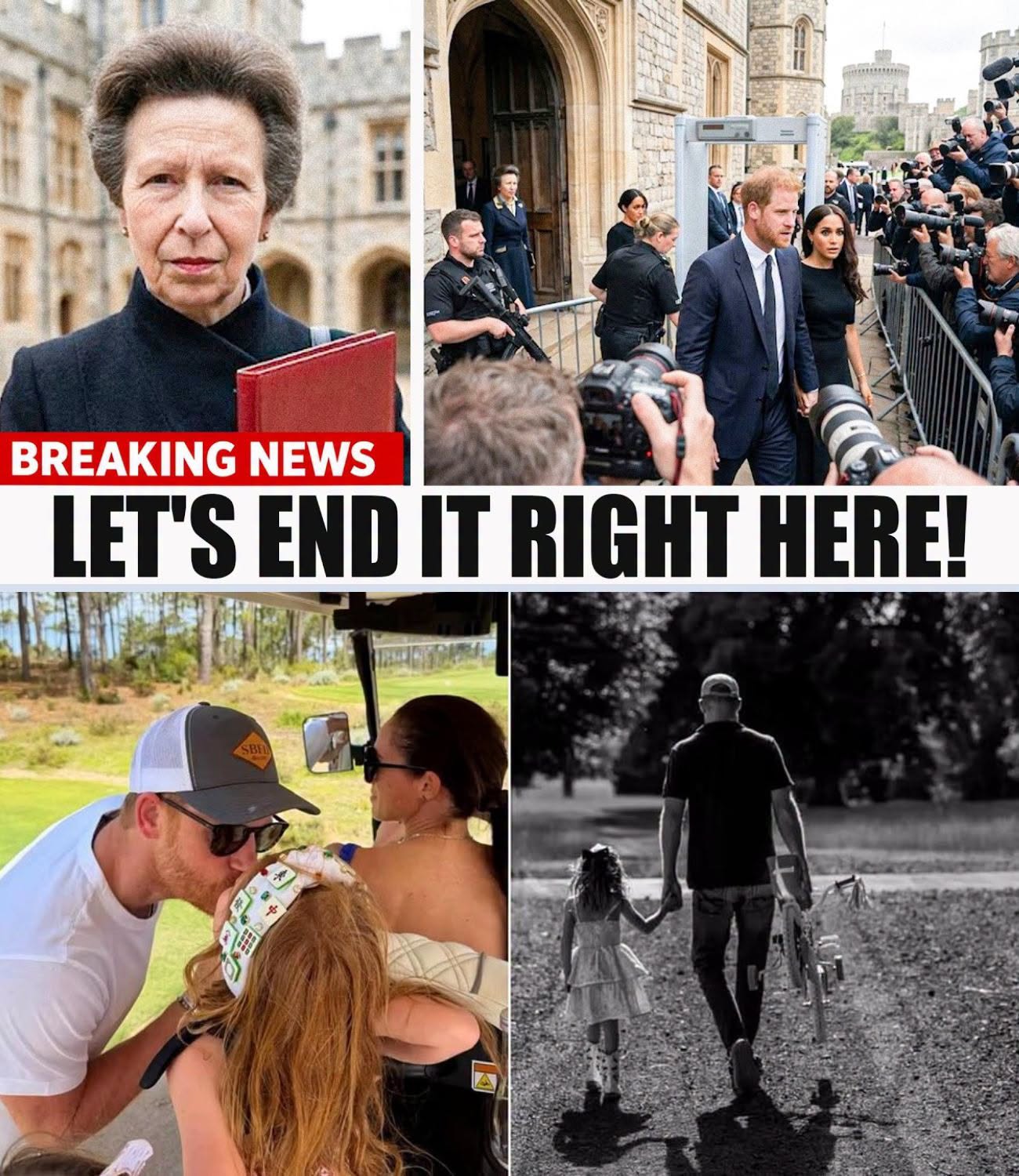
THE RED FOLDER REVELATION: Princess Anne’s Devastating Exposure of Harry and Meghan’s Secret Masterplan Shatters the House of Sussex!
There are moments in the long, theatrical saga of the modern British monarchy when the velvet curtain is pulled back to reveal the unyielding, cold steel of state governance. Such a moment occurred behind the heavy, oak-panelled doors of a private estate when Prince Harry, running on a cocktail of mounting financial panic and misplaced hubris, attempted what he believed would be his final, triumphant power play. He had flown across the Atlantic carrying an ambitious, uncompromising wishlist: hereditary titles carved into permanent constitutional stone, open-door access for his children to return as funded part-time working royals in their adulthood, and—most crucially—an automatic, taxpayer-funded armed diplomatic security detail whenever his family touched British soil.
He believed he was walking into a boardroom negotiation. He assumed that the palace, weakened by institutional transition and royal illness, would fold under the pressure of international optics.
Instead, he walked straight into an ambush orchestrated by the ultimate guardian of Queen Elizabeth’s institutional memory. Without raising her voice, without dramatics, and without leaking a single syllable to the tabloid press, Princess Anne simply reached across the mahogany table, opened a red leather folder sealed since May 2019, and placed a single confidential memorandum before her nephew. In one quiet, devastating motion, she obliterated his bargaining leverage, dismantled his victim narrative, and proved beyond a shadow of a doubt that the crisis Harry was begging the crown to resolve was entirely of his own making.
The Illusory Break from the Sandringham Agreement
To understand the sheer desperation driving Harry across five thousand miles of ocean, one must rewind to the geopolitical shifts governing the Sussex household. On September 21, the Sussex communications machinery had officially broadcast a defiant declaration: they were unilaterally abandoning the late Queen’s historic Sandringham agreement. Their rationale was as convenient as it was aggressive. Because the British government and the Executive Committee for the Protection of Royalty and Public figures (RAVEC) had rightly stripped away their taxpayer-funded armed police protection following their departure from working royal life, Harry and Meghan argued they were entirely released from every rule, protocol, and understanding established during the 2020 summit.
To the outside world, it was framed as an act of fiery independence. Behind closed doors in Monteceto, however, it was an admission of sheer terror.
The financial reality of maintaining elite, Scotland-Yard-level security out of private reserves was bleeding their bank accounts dry. Private bodyguards flown across international borders cannot carry automatic weapons on British motorways, cannot barrel through congested red traffic lights, and lack the legal authority to clear London streets with screaming sirens. More importantly, in the hyper-competitive ecosystem of Hollywood and global corporate boardrooms, armed state security is the ultimate status symbol. Without a gleaming police motorcade announcing his arrival, Harry was rapidly discovering that he looked less like an international statesman and more like an ordinary celebrity whose commercial currency had plummeted.
Sensing that the constitutional clock was ticking down toward the future reign of Prince William—who has made it abundantly clear that his reign will tolerate zero self-serving exemptions—Harry sought to force a binding settlement while his father, King Charles III, was still on the throne. He wanted his children’s princely titles locked down, his security bill footed by British taxpayers, and a golden parachute guaranteed for the future.
What he completely underestimated was that the Firm keeps meticulous receipts.
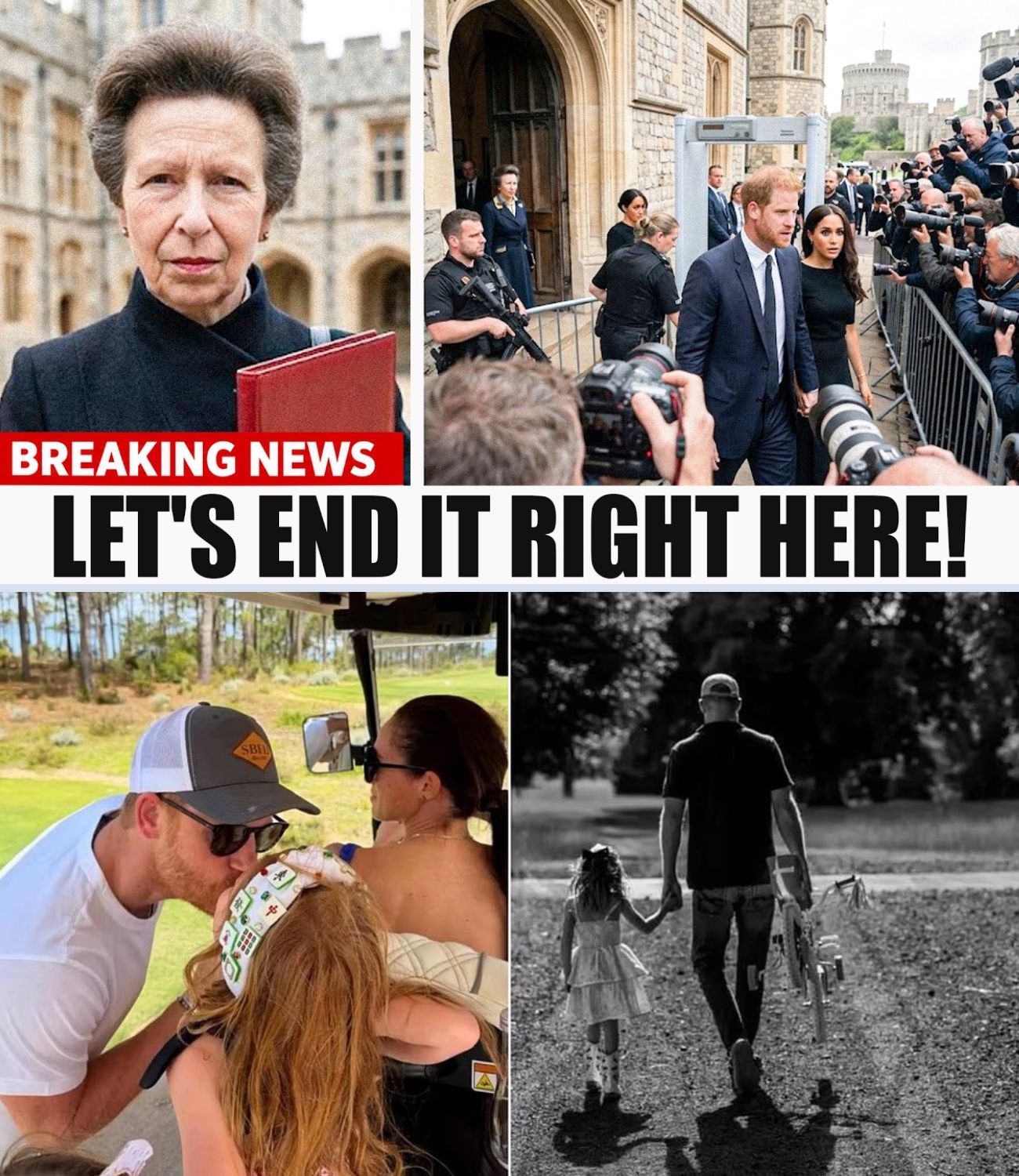
The Red Folder and the Ghost of May 2019
When Princess Anne met with Harry, she did not engage in a shouting match over family grievances. She simply laid out the historical record. At the centre of her dossier was a forgotten chapter from May 2019, centering around the birth of Prince Archie at London’s Portland Hospital.
For more than a century, the British monarchy maintained a rigorous, non-negotiable constitutional ritual upon the birth of a potential heir to the throne. An ornate golden easel was traditionally placed outside the gates of Buckingham Palace, displaying an official medical bulletin bearing the verified, legal signatures of the sovereign’s appointed royal physicians and obstetricians. This was never mere decorative pomp; it was essential constitutional transparency. The British public funds the institution of monarchy, and the rule of law demands unquestionable, verifiable proof regarding the direct line of succession.
Yet, when Archie was born, Harry and Meghan chose to bypass that entire protocol. They issued chaotic, conflicting press announcements, falsely claimed the Duchess was entering labour hours after the child had already been safely delivered, and flatly refused to publish the names or legal signatures of the attending medical team. Investigative journalists like Tom Bower have extensively documented how the couple dismantled an unbroken chain of institutional verification under the sweeping banner of personal privacy.
That decision created a massive, dangerous information vacuum. It immediately fueled reckless internet rumors, wild conspiracy theories, and legitimate public questions regarding the constitutional status of the newborn prince.
And this is where the true brilliance—and protection—of the crown comes to light. When those poisonous rumors first erupted across the global media landscape, senior palace officials and the Privy Council did not retaliate with hostility. Instead, they offered Harry and Meghan an elegant, discreet, and deeply generous solution. They proposed a confidential verification protocol overseen by an independent panel of senior Privy Council medical advisers. Those doctors would examine the private hospital paperwork in total, uncompromised secrecy, verify its constitutional legitimacy within days, and issue a single, certified declaration to the realm.
There would be zero public disclosure, zero invasive medical photography, and complete protection of their personal dignity. It was designed specifically to silence the tabloids, squash conspiracy theories, and secure the children’s standing and state protections forever.
Harry and Meghan gave an absolute, flat refusal. They rejected the institution’s quiet, protective shield, kept the official medical records firmly locked away, and chose instead to file bitter, multi-million-pound lawsuits against British newspapers while simultaneously complaining on international television that nobody was protecting them.
As Princess Anne opened that red leather folder in front of Harry, she laid out the cruelest irony of all: You rejected the institution’s protection when it was freely offered to secure your family’s future, and now you fly five thousand miles across the ocean demanding that the very institution you defied grant you extraordinary, taxpayer-funded privileges you previously spat upon.
Harry had built his own institutional trap, and the key had just been turned from the outside.
Mud on Boots vs. Hollywood Gloss: The Two Worldviews
To understand why Princess Anne held zero emotional sympathy for Harry’s plight, one must examine her own extraordinary family blueprint—a philosophy that Queen Elizabeth II frequently hailed as one of the wisest decisions of her entire seventy-year reign.
Back in November 1977, when Princess Anne gave birth to her firstborn son, Peter Phillips, followed four years later by Zara, Queen Elizabeth stood ready to bestow grand hereditary peerages and princely styles upon both newborns. The ancient titles were resting on a silver platter, entirely free of charge, fully endorsed by the sovereign.
Anne took one look at that royal offer and delivered an absolute, uncompromising refusal.
She turned down every royal prefix, every hereditary title, and every taxpayer-funded security detail. Instead, she chose to raise Peter and Zara at Gatcombe Park, deep in the Gloucestershire countryside, living on a genuine, working commercial farm. Her children grew up with thick mud on their riding boots, real agricultural chores to finish before breakfast, and parents who flatly refused to treat them like fragile museum pieces.
Anne understood decades before anyone else that unearned aristocratic privileges do not protect a young child; they burden them with hollow expectations, public resentment, and a dangerous sense of entitlement. The proof of her parenting is written across Olympic medals and thriving independent careers. Zara became an elite equestrian champion, winning an Olympic silver medal entirely through her own athletic grit. Peter built a successful, respected career in international sports management. Neither Peter nor Zara has ever demanded a single penny from the British public purse, and neither has ever whined on television about how royal life held them back.
Contrast that quiet, dignified independence with the relentless noise radiating from California. While Anne proved that true self-worth stems from personal character, Harry appeared hopelessly trapped in the illusion that royal letters patent and armed police cordons were the only things validating his existence. He viewed his aunt not as an inspiring pillar of selfless duty, but as a soft gatekeeper he could pressure into cutting a shortcut. He was profoundly mistaken.
The Monteceto Exodus and the Collapse of the American Dream
While Harry was losing his private war behind palace walls in London, investigative reporting across the Atlantic was busy exposing the chaotic, unraveling reality of their American sanctuary. For four years, the Sussexes had marketed their coastal Santa Barbara compound as an idyllic paradise of private freedom. Yet, local residents and long-standing neighbors painted a vastly different picture—one that looked less like a triumphant royal transition and far more like a hasty midnight retreat.
Consider the testimony of Penny Bianke, a prominent seventy-nine-year-old interior designer whose sprawling estate sits directly next door to Oprah Winfrey’s property. She revealed that even the teachers and administrators at Archie’s private school were kept completely in the dark about the family’s departure. Bianke explained that her grandchildren attended the exact same academy, and local parents were astonished to discover the Sussexes had abruptly pulled Archie out overnight without even allowing him to say goodbye to his classmates. The school staff were reportedly relieved, having grown thoroughly exhausted by the heavy-handed private security guards who disrupted the peaceful morning routines of ordinary families.
Then there was Bruce Johnston, the eighty-four-year-old music icon and legendary member of the Beach Boys, who has lived peacefully in the Santa Barbara area for decades. Approached at a local coffee shop, Johnston did not mince his words, remarking candidly that Harry’s behavior around town had frequently mirrored that of an entitled jerk.
Beneath the neighborhood friction lay a far more devastating commercial collapse. When Harry and Meghan first arrived in America, they were courted by global corporate giants promising hundreds of millions of dollars. Within a few short years, that glittering Hollywood mirage had completely evaporated. Their exclusive twenty-million-dollar audio deal with Spotify was unceremoniously cancelled, with top executives publicly denouncing them as talentless grifters. Netflix quietly shelved their expensive vanity projects after viewing figures plummeted, leaving their multi-million-dollar production empire in tatters.
Even Meghan’s heavily hyped commercial lifestyle venture stumbled out of the gate, plagued by bureaucratic trademark rejections and supply chain delays. In an act of sheer desperation that horrified traditional royal observers, sponsored advertisements began circulating online urging customers to “savor the royal touch.” When they abandoned the monarchy in 2020, they explicitly promised the late Queen that they would uphold the highest ethical standards and never exploit royal status for commercial profit. Now, they were reduced to using the word “royal” to peddle lifestyle consumer goods on the internet.
The Final Administrative Execution: The Roster That Erased Harry
When the moment finally arrived for the crown to deliver its definitive response to Harry’s desperate overtures, there was no dramatic family confrontation, no televised statement, and no bitter war of words leaked to the evening tabloids. The House of Windsor did not raise its voice. Instead, it activated the cold, quiet machinery of the British state, resolving the entire crisis through the permanent, unyielding finality of administrative paperwork.
A formal update to the Court Circular and the sovereign’s official household calendar quietly laid out the operational roster of working royals for the coming year. Printed in crisp, unyielding black and white were the names carrying the constitutional weight of the United Kingdom and the Commonwealth: King Charles, Queen Camilla, the Prince and Princess of Wales, the Princess Royal, and the Duke and Duchess of Edinburgh.
Prince Harry’s name was completely, surgically absent from that official ledger. No royal budget line was authorised. No taxpayer-funded security contingency was established. No palace secretariat was assigned to manage his affairs.
Meanwhile, on the official royal family website, Archie and Lilibet remain listed under their legal styles in technical accordance with King George V’s 1917 decree. But behind those decorative titles, the reality is utterly stark. There are no royal patronages, no charitable duties, and no official offices attached to their profiles. They have been permanently cataloged in the exact same manner as Princess Beatrice and Princess Eugenie—beloved blood members of the extended family, but entirely private citizens in the eyes of the realm, possessing zero claim on the sovereign purse and zero authority to represent the crown on the world stage.
From five hundred miles away at Balmoral Castle, King Charles sent an unmistakable message through his complete personal silence. He remained focused entirely on his medical treatments and high-level constitutional meetings, declining to interrupt his schedule for Harry’s arrival. There was no royal car waiting on the airport tarmac, no private dinner inside Windsor Castle, and no invitation to sit at his father’s bedside.
Prince William and Princess Catherine continued their scheduled public engagements across the country, smiling warmly and appearing completely unbothered, refusing to acknowledge Harry’s presence in Britain with a single public word. The working monarchy simply stepped around him as though he were any other foreign visitor passing through town to attend a private charity gala.
The Unbreakable Covenant
When you step back and examine the full arc of this historic collision, the saga was never truly about security guards, hotel motorcades, or ancient aristocratic prefixes printed on parchment. It was about the fundamental nature of honor in public life.
For nearly a thousand years, the British monarchy has survived foreign wars, political revolutions, and institutional shocks because it operates on a singular, unbreakable covenant: Royal privilege is the reciprocal reward for lifelong, selfless duty to the nation. You do not get to inherit the applause, the historic palaces, and the taxpayer-funded protection without standing in the freezing rain to serve the people who pay for that privilege.
That was the profound truth Queen Elizabeth II understood until her final breath. It was the truth Princess Anne proved through five decades of tireless public service. And it is the quiet, humble standard that Prince William and Princess Catherine are actively instilling in George, Charlotte, and Louis every single day at the school gate.
Real dignity is never demanded through a corporate megaphone, nor is it extracted through expensive courtroom litigation against state departments. It is earned through character, restraint, and genuine dedication to a cause far greater than personal vanity.
Harry spent four long years touring international media studios, publishing bitter memoirs, and telling global audiences that the British royal family was an emotionally cold, toxic prison that suffocated his freedom. Yet he flew five thousand miles across the ocean, begging that exact same supposed prison to extend its golden bars around his own children forever.
The world can finally see through the smoke and mirrors. The grievance narrative was never about principle or noble reform; it was about preserving commercial leverage in an American market that quickly grew weary of repetitive family complaints. And when Harry attempted to renegotiate a contract he had already broken, he discovered a fundamental truth: The crown does not bend to modern celebrity tantrums.
The institution did not lash out in anger. It merely acted with the calm, immovable authority of a constitutional state that will outlive any individual ego. The door was never slammed in anger; it simply turned on its centuries-old hinges and locked with the quiet finality of a key turning in an administrative vault, leaving the exiled prince to face the enduring reality that the realm functions perfectly well without him.