dShattered Illusion: Unseen Security Footage Exposes the Truth Behind Harry and Meghan’s Manhattan Car Chase Myth
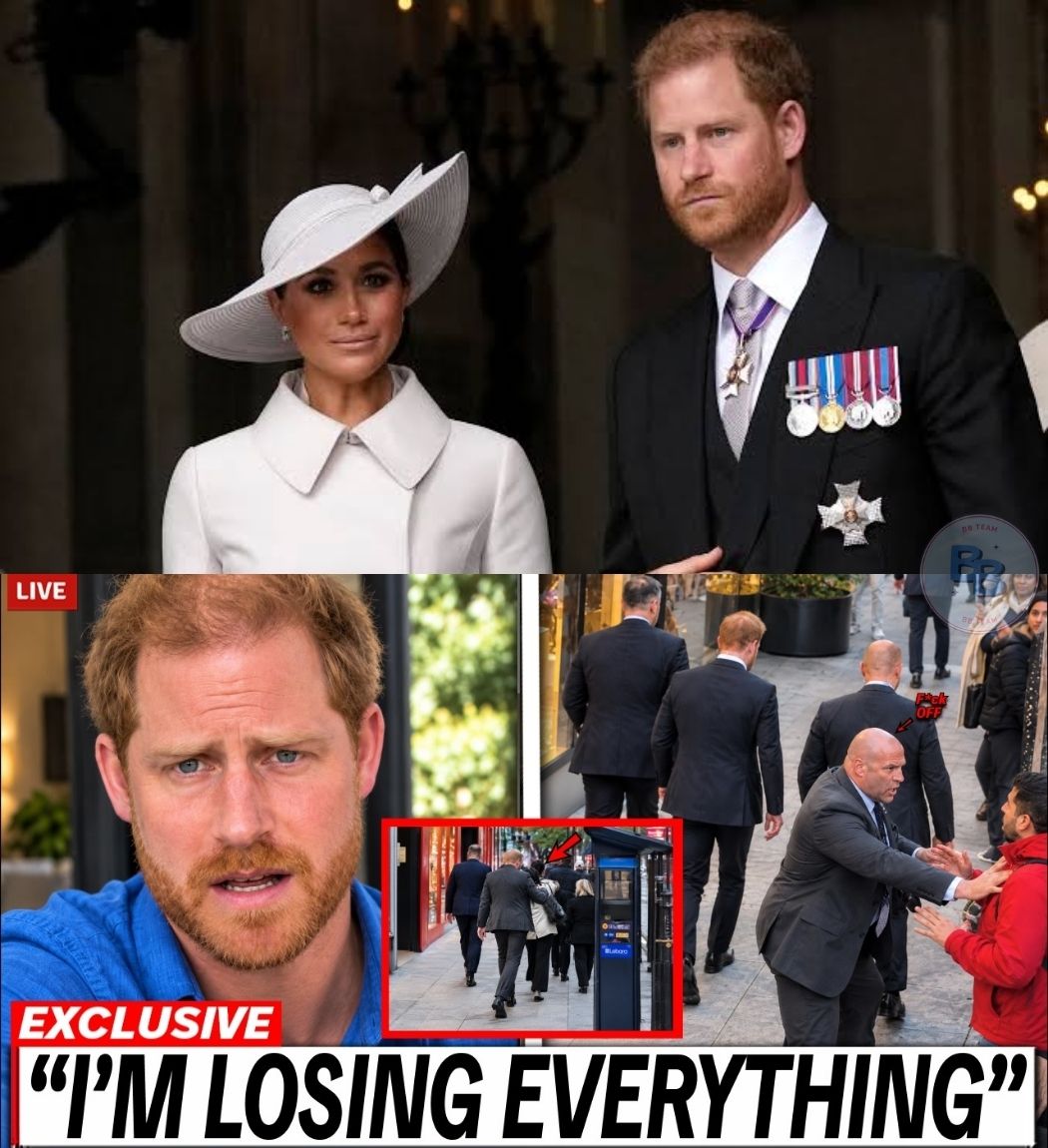
Shattered Illusion: Unseen Security Footage Exposes the Truth Behind Harry and Meghan’s Manhattan Car Chase Myth
May twenty-third, two thousand and twenty-three, started out as a night of glamour and glittering public recognition for Prince Harry, Meghan Markle, and her mother, Doria Ragland. They had attended the Ms. Foundation for Women’s annual gala in New York City, an event where Meghan was honored with the Women of Vision Award. However, by the early hours of the following morning, the narrative surrounding their departure shifted dramatically, transforming from a high-society celebration into an international news storm. Through representatives, the Duke and Duchess of Sussex released a statement that sent shockwaves across global media outlets: they claimed they had been subjected to a two-hour, near-catastrophic car chase involving a ring of highly aggressive paparazzi.
The initial public reaction was a mixture of intense alarm, immediate condemnation of aggressive tabloid culture, and painful, inescapable echoes of the tragic fate that befell Princess Diana in Paris back in nineteen ninety-seven. The phrasing used in their official statement was carefully chosen to evoke the maximum amount of emotional resonance. It described a relentless pursuit by half a dozen blacked-out vehicles featuring individuals driving on sidewalks, running red lights, driving past traffic cops, and risking the lives of pedestrians and other drivers simply to capture photographs of the royal couple. Major news networks immediately picked up the story, running breathless updates, analyzing the psychological toll on Prince Harry, and sparking fierce debates about press freedom, personal privacy, and the safety of high-profile public figures in modern urban environments.
However, almost as quickly as the story dominated the headlines, cracks began to form in the official narrative. First came statements from local law enforcement, including the New York Police Department, and the mayor of New York City, Eric Adams, who offered a more measured, skeptical assessment of the evening’s events. While acknowledging that the city’s streets can be chaotic and that paparazzi behavior can often be aggressive and intrusive, they noted that the incident did not involve high-speed, catastrophic maneuvering to the degree initially portrayed. Taxis moved slowly through heavy Manhattan traffic; the vehicles involved were navigating congested streets at standard speeds; and while the couple certainly felt harassed, the phrase “near-catastrophic” began to look increasingly like an exaggeration designed for maximum dramatic impact.
The controversy deepened exponentially with the emergence of new, unredacted security camera footage, dashcam recordings, and eyewitness accounts from individuals who were actually on the ground that night. This new tranche of visual evidence completely dismantled the foundational pillars of the Sussexes’ dramatic tale. Far from a high-speed, cinematic pursuit through the concrete canyons of Manhattan, the footage reveals a low-speed, highly managed transit involving yellow cabs, private security vehicles, and a small cluster of photographers on scooters and bicycles attempting to snap pictures as the vehicles stopped and started in standard city gridlock. The contrast between the apocalyptic narrative presented by the Sussexes and the mundane, albeit annoying, reality captured by security lenses triggered a massive cultural and media backlash.
To understand the profound weight of this controversy, one must examine the deep psychological conditioning surrounding Prince Harry. Ever since the devastating loss of his mother in a high-speed tunnel crash fleeing photographers in Paris, Harry’s relationship with the press has been defined by trauma, hyper-vigilance, and an overarching sense of protection. The public has historically extended an enormous amount of empathy toward him for this exact reason. When Harry speaks of aggressive photographers, people listen, because they remember the profound tragedy of his childhood. Consequently, when a claim is made involving a dangerous car chase in New York, the automatic emotional response is one of fear, anger, and protective solidarity. This emotional equity is precisely why the Manhattan car chase story was so potent, and conversely, why the revelation of its exaggeration proved so devastatingly damaging to their public credibility.
As investigators, independent journalists, and digital sleuths began piecing together the timeline of that fateful night, a clearer, far more mundane picture emerged. The couple had left the Ziegfeld Ballroom after the gala and entered an SUV. Photographers caught wind of the movement, as they invariably do with global celebrities. Rather than heading straight to their destination, their security team engaged in a series of evasive maneuvers, circling blocks, entering parking garages, and switching vehicles in an attempt to shake off the trailing lensmen. While evasive driving is standard protocol for high-profile protection details, these very maneuvers created the perception of a chase. The photographers, trying to keep up with a vehicle that was deliberately darting through city streets, naturally followed, leading to the frustrating cat-and-mouse game that the Sussexes ultimately interpreted and reported as a life-threatening ordeal.
The fallout from the leaking of the full security footage was immediate and unrelenting. Critics, royal commentators, and skeptics seized upon the discrepancy to question the integrity of the couple’s public statements. Pundits on various news networks debated whether the exaggeration was a deliberate attempt to manipulate public sympathy, secure higher-level government-funded security, or manufacture a compelling storyline for their ongoing media projects. The phrase “near-catastrophic” became a punchline on social media platforms, with side-by-side comparisons of the dramatic press release and the calm, slow-moving traffic captured on street cameras flooding platforms like X, Instagram, and TikTok.
For an organization and a brand that heavily relies on authenticity, victim advocacy, and truth-telling, this credibility gap was disastrous. The Sussexes have frequently positioned themselves as crusaders against misinformation, media manipulation, and tabloid abuse. Yet, by propagating an account of events that objective evidence showed to be vastly overstated, they inadvertently opened themselves up to accusations of hypocrisy. How could they credibly lecture the world about the perils of misinformation when their own high-profile representatives distributed a narrative that independent observers and law enforcement officials quickly walked back? The cognitive dissonance was difficult for even their most loyal supporters to reconcile.
Moreover, the incident cast a harsh spotlight on the complex, often toxic relationship between modern celebrities and the paparazzi economy. On one hand, paparazzi behavior can indeed be predatory, intrusive, and deeply unsettling, crossing ethical boundaries and infringing upon basic human dignity. Celebrities have every right to feel exhausted and violated by the constant presence of long-range lenses and aggressive shouting. On the other hand, the entertainment and media ecosystem often thrives on a symbiotic relationship where proximity, scandal, and dramatic tension generate the visibility necessary to stay relevant. When the drama is amplified beyond recognition, it risks trivializing genuine dangers and exhausting public empathy, leaving audiences cynical and fatigued by perpetual crisis management.
The security footage also sparked intense debates about the use of private security in urban environments and the responsibilities of high-profile individuals navigating public spaces. Critics argued that the decision by the security team to drive erratically through Midtown Manhattan—entering one-way streets the wrong way or mounting curbs, as some reports initially suggested—posed a far greater risk to innocent pedestrians than the photographers themselves. If a vehicle is driven aggressively to evade photographers, the irony is that the security detail itself becomes the primary hazard on the road. This tactical failure became a major talking point for security experts analyzing the fallout, who pointed out that professional protection details are trained to de-escalate situations and blend into urban environments rather than creating high-drama spectacles that attract even more attention.
In the weeks and months following the incident, the ripple effects continued to impact the public standing of Prince Harry and Meghan Markle. Public opinion polls in both the United States and the United Kingdom reflected a growing weariness regarding their public relations strategies. While their core base of supporters remained fiercely loyal, arguing that any level of harassment is unacceptable and that the couple’s trauma is entirely valid, a significant portion of the moveable middle grew increasingly skeptical. The narrative of constant crisis began to wear thin, replaced by a narrative of manufactured drama designed to keep them at the center of the global news cycle.