EXCLUDED: Inside the Explosive Cotswold Feud as Jeremy Clarkson Reportedly Banishes Harry & Meghan from High Society’s Most Exclusive Inner Circlef
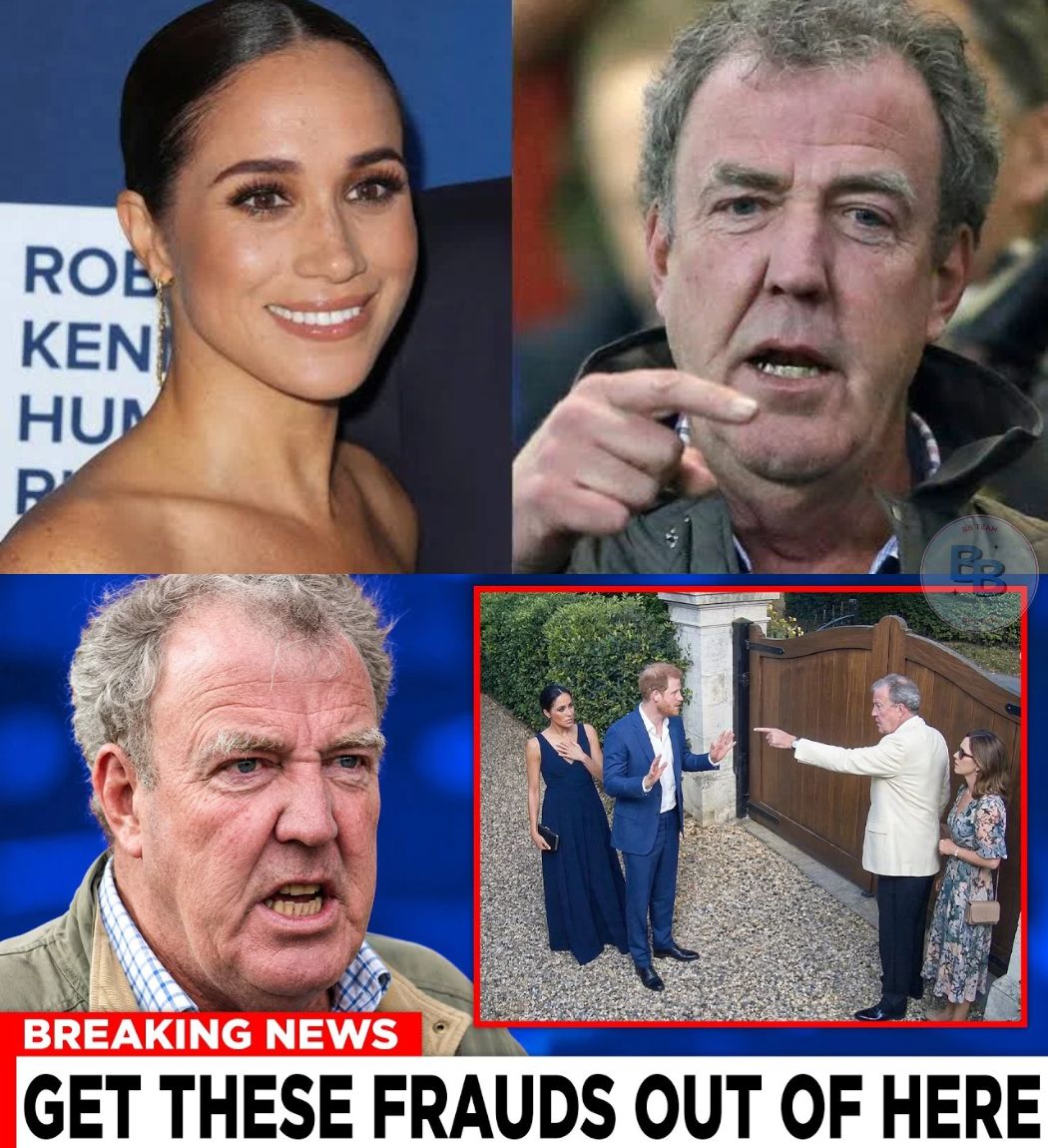
The serene, rolling green pastures and honey-colored stone villages of the English Cotswolds have long served as a sanctuary for world leaders, billionaire tech tycoons, global fashion icons, and senior members of the British Royal Family. Known as the playground of the global super-elite, the region thrives on an unwritten, ironclad code of conduct: discretion, unwavering tradition, and absolute secrecy. But that delicate facade of rural peace shattered overnight in a spectacular, unprecedented fashion. In what is already being dubbed the most sensational rural aristocracy scandal of the decade, legendary TV presenter and outspoken Cotswold landowner Jeremy Clarkson has reportedly drawn a definitive line in the rust-colored soil, orchestrating what insiders describe as a complete, merciless banishment of Prince Harry and Meghan Markle from the region’s most exclusive high-society social network.
The drama, which had been simmering quietly behind closed oak doors and wrought-iron estate gates for months, finally erupted during a tense, star-studded private gathering near Chipping Norton. What was supposed to be a quiet late-summer celebration among high-net-worth landholders quickly transformed into the battleground for high society’s ultimate culture war. According to multiple high-ranking sources present during the fateful evening, Clarkson—never one to mince words or shy away from fiery confrontation—publicly and bluntly addressed the presence of the Duke and Duchess of Sussex’s representatives, declaring that the couple’s public campaign against the monarchy had made their standing in traditional British elite circles completely untenable.
“The Cotswolds isn’t Hollywood, and it certainly isn’t a filming set for a self-pitying docuseries,” an anonymous high-society attendee who witnessed the explosive encounter disclosed. “Jeremy voiced what every major landowner, aristocrat, and long-standing local heavyweight had been whispering under their breath for over two years. The moment he stood up and laid down the law, the atmosphere in the room turned completely ice-cold. You could have heard a pin drop across the entire estate. It wasn’t just a petty disagreement; it was a formal execution of their social standing in rural high society.”
The rift between Clarkson and the Sussexes has a long, turbulent history, dating back to Clarkson’s widely discussed media commentaries that ignited intense international public debate. However, local insiders reveal that the recent fallout goes far beyond past media squabbles. The core of the current crisis lies within the ultra-exclusive “Cotswold Set”—an elite, interconnected web of influential political figures, media moguls, high-profile celebrities, and ancient landed gentry who effectively govern the social access of the region. For years, Harry and Meghan had maintained strong personal ties to the area, frequently staying at private retreats and utilizing the secluded environment to court high-net-worth donors, prospective media partners, and influential British allies.
However, Clarkson’s dramatic stance has reportedly forced local power brokers to pick a side, triggering a massive domino effect across the countryside. Prominent figures who previously attempted to remain neutral, balancing their respect for traditional British institutions with their desire to remain culturally relevant, now find themselves pushed into an uncomfortable corner. The fallout has swept through private dining clubs, high-end country estates, and exclusive agricultural charity galas. Invitations to private summer galas, elite equestrian shoots, and discreet political dinners that were once casually extended to the Sussex camp are now reportedly being quietly rescinded or indefinitely delayed.
The mechanics of this high-society banishment are both subtle and devastatingly efficient. In the world of elite British society, individuals are rarely banished with a formal letter; instead, they are subjected to a systematic, ice-cold freeze. Key doors silently lock, private reservations become mysteriously unavailable, and prominent hosts suddenly suffer from schedule conflicts. In the case of Harry and Meghan, Clarkson’s open defiance served as the official catalyst that authorized other influential estate owners to close their doors as well.
“What Jeremy did was break the dam,” explained a prominent London public relations executive with deep ties to the Cotswold aristocracy. “For a long time, people were uncomfortable with the Sussexes’ continuous attacks on the Royal Family, especially given how deeply intertwined the British establishment is with rural land management and local philanthropy. But no one wanted to be the first person to publicly draw a line in the sand and risk being labeled hostile or backward. Jeremy didn’t care about the optics. He didn’t care about potential backlash from international media. He said what he believed, and in doing so, he gave the rest of high society the green light to quietly cut ties.”
News of the dramatic banishment quickly reverberated across the Atlantic, sending shockwaves through the couple’s California headquarters. Representatives and strategic advisors for Harry and Meghan were reportedly caught entirely off-guard by the sudden, united front presented by the British countryside establishment. The Cotswolds had long served as a vital bridge for the couple—a remaining foothold in the United Kingdom that allowed them to maintain an aura of authentic royal lineage and high-society clout while pursuing their commercial ventures in North America. Losing their standing in the region represents a severe blow to their carefully curated image as global, elevated figures who move effortlessly between Hollywood red carpets and historic European royalty.
“This isn’t just about missing out on weekend dinner parties or polo matches,” noted a seasoned royal commentator based in London. “This is about cultural legitimacy. The moment you are pushed out of the Cotswold inner circle, you lose direct access to the traditional power brokers of Great Britain—the very people who uphold the heritage and international prestige that made the Sussex brand valuable in the first place. If you are viewed as persona non grata in the heart of rural England, your status shifts from modern royal to standard celebrity, and that is a massive step down in terms of global influence.”
As the feud intensifies, the local community in the Cotswolds finds itself deeply divided. At local farmers’ markets, historic pubs, and high-end artisanal shops around Chipping Norton, Great Tew, and Soho Farmhouse, the situation has become the single most talked-about event in years. Long-time local residents, who have watched their quiet rural home transform into a buzzing hub for international wealth, have overwhelmingly rallied behind Clarkson. Many locals view Clarkson as an unlikely hero—a rough-around-the-edges champion who defends local agricultural traditions, genuine hard work, and classic British pragmatism against what they perceive as performative Hollywood elite culture.
“Jeremy lives here, works the land, invests millions into local farming, and actually deals with the daily realities of the British countryside,” said a local business owner in Chipping Norton. “He transformed a struggling farm into something that highlights the real struggles of British farmers. Meanwhile, the general feeling around here regarding Harry and Meghan is that they wanted all the perks, prestige, and privacy of royal rural life without showing any real respect for the traditions or the people who live here. When Jeremy stood his ground, he was speaking for a lot of working people who are tired of elite hypocrisy.”
Conversely, a vocal minority of younger creatives and international transplants residing in the area have expressed concern over the aggressive tone of the social exile. Some worry that the public spectacle creates an unwelcoming, hostile environment that could potentially harm the region’s reputation as a modern, forward-thinking destination for global innovators and artists. They argue that Clarkson’s fiery style, while entertaining on television, threatens to deepen cultural divides and drag the tranquil region into an ongoing, toxic media circus that benefits no one.
Adding fuel to the raging fire are persistent, unconfirmed rumors circulating through elite media channels regarding the existence of private audio recordings from the night the confrontation occurred. While no official media outlet has released any tapes, the mere mention of audio evidence documenting the tense exchange between high-society figures has created widespread panic among celebrity PR teams. If released, such recordings could expose candid, unvarnished opinions held by top British aristocrats regarding the Sussexes, potentially triggering a fresh wave of international headlines and further damaging fragile personal relationships.
“The PR landscape right now is pure chaos,” admitted a top crisis communications manager based in London. “Everyone involved is desperate to manage the narrative. The Sussex camp wants to minimize the story and frame it as an irrelevant dispute with a controversial television personality. On the other side, the British high-society circle is completely unbothered; they feel they have successfully reclaimed their boundary. The real danger for Harry and Meghan is that this social cold war spreads beyond the Cotswolds to London elite circles and private clubs in New York and Los Angeles.”
Indeed, the psychological impact of this social exile on Prince Harry cannot be overstated. Friends close to the royal family note that the Cotswolds held deep emotional significance for the Duke of Sussex. It was the countryside where he spent vast portions of his youth, riding horses, attending private gatherings with childhood friends, and enjoying the unpretentious freedom of the British landscape. To be effectively cast out of the very social ecosystem that formed the backdrop of his upbringing represents a painful, highly personal personal rupture—one that underscores the steep, irreversible price of his public break from the British establishment.
“Harry grew up in these fields and estates,” stated an author specializing in royal history. “The Cotswolds was one of the few places in the world where he could feel entirely at home among people who understood his background. To see that community turn its back on him, led by someone as culturally dominant in rural England as Jeremy Clarkson, must feel like an immense, heartbreaking personal loss. It confirms that the bridges aren’t just burned in London at Buckingham Palace; they are burned in the countryside as well.”
Meanwhile, Jeremy Clarkson appears completely undeterred by the massive global media storm brewing around his farm gate. True to his signature unfiltered style, Clarkson has continued his daily operations at Diddly Squat Farm, entertaining thousands of visiting fans, promoting British agriculture, and making sly, witty remarks to the press regarding the importance of keeping the countryside “authentic, straightforward, and drama-free.” When approached by reporters outside his farm shop for a direct statement regarding the banished royal couple, Clarkson simply smiled, shrugged his shoulders, and remarked, “The countryside has a way of sorting out what belongs here and what doesn’t. We like things simple, honest, and quiet.”
As the dust slowly settles over the idyllic hills of Oxfordshire, one reality remains unmistakably clear: the social landscape of high-society Britain has been fundamentally rewritten. The dramatic clash between Jeremy Clarkson and the Duke and Duchess of Sussex is far more than a fleeting celebrity feud; it is a historic clash of cultures, values, and institutions that has forever altered the rules of aristocratic access in modern England. The gate to the Cotswolds’ most exclusive inner circle has officially slammed shut, and as high-society doors continue to close around the world, the royal couple faces an increasingly isolated future, stranded between a distant British past and an uncertain American dream.