“Ghost Protocol: How Britain’s Rogue SAS Squadron Sabotaged US High Command and Walked Away Unpunished”
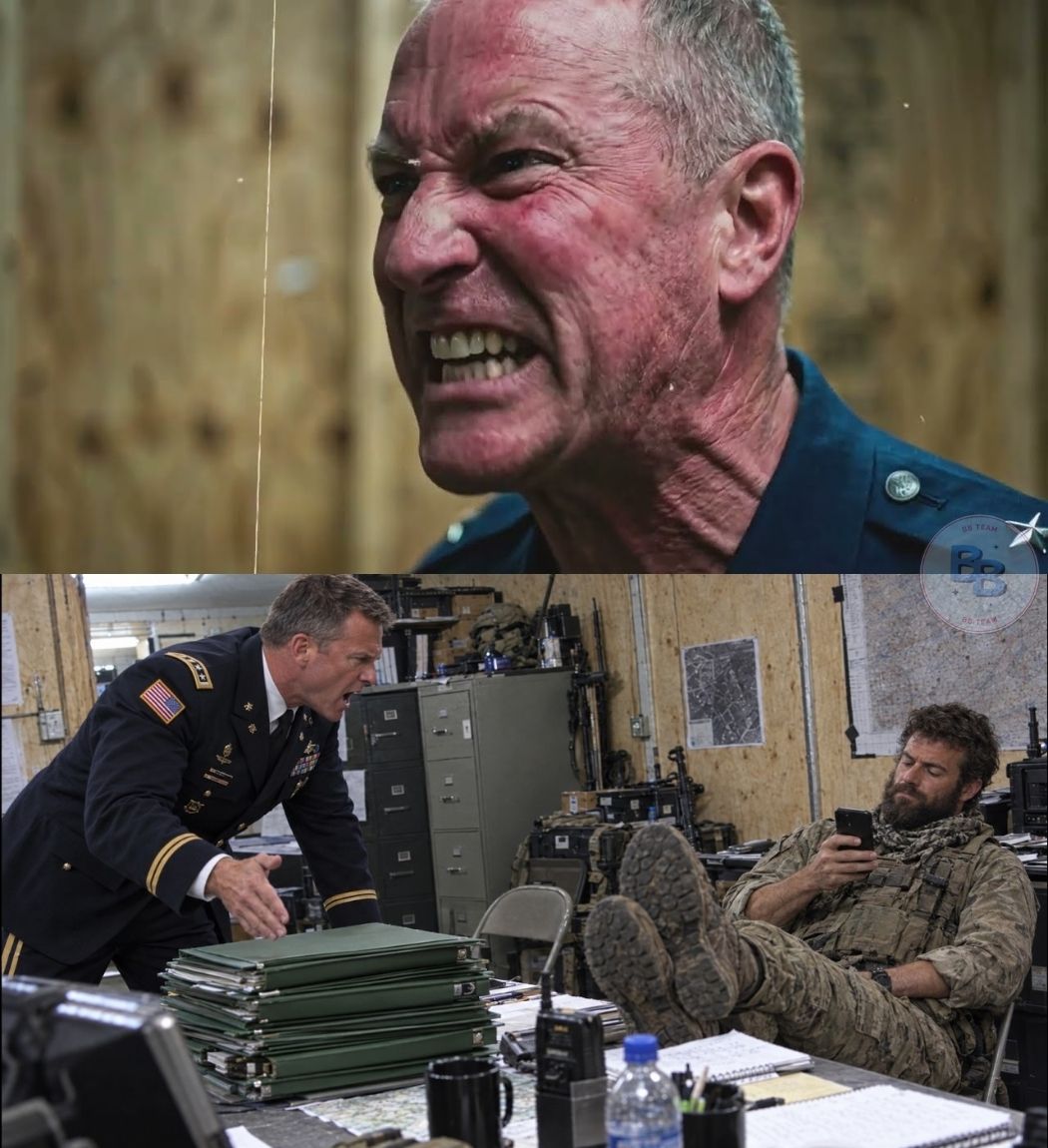
“Ghost Protocol: How Britain’s Rogue SAS Squadron Sabotaged US High Command and Walked Away Unpunished”
The Ghost Squadron That Broke Every Rule in the Book
The humid air of the forward operating base hung heavy with the smell of JP-8 jet fuel, unwashed fatigues, and impending disaster. Inside a makeshift briefing room lit only by the flickering green glow of a tactical map display, Major Julian Vance stared across a metal table at an American colonel whose face was mottled with suppressed rage. On the table lay an encrypted dispatch straight from the Pentagon, marked with the crimson seal of the Joint Special Operations Command.
It was an execution order disguised as a strategic directive. The mission parameters were simple on paper: spearhead a nighttime raid across a heavily fortified, highly populated border sector to capture a mid-level insurgent financier. But the collateral damage projections were astronomical. Intelligence had already confirmed that the target was embedded within a densely packed civilian encampment—a makeshift refuge for hundreds of displaced families. The American plan relied on a heavy pre-assault artillery barrage followed by indiscriminate door-to-door clearance.
For the men of B Squadron, 22 Special Air Service Regiment, this wasn’t just a tactical blunder; it was an absolute moral and operational abomination. They had spent months operating in the shadows of this fractured theater, earning the trust of locals through precision, discipline, and restraint. To unleash a sledgehammer where a scalpel was required would erase years of hard-fought goodwill in a matter of minutes and leave scores of innocent dead in its wake.
Major Vance looked up, his expression carved from stone. “We’re scrubbing the artillery prep,” he said, his voice dangerously calm.
The American colonel slammed both palms onto the table, leaning forward so violently that his rank insignia rattled. “You don’t get to scrub anything, Major! This is a combined-forces directive signed by the theater commander himself. You have your targets, you have your transport, and you will execute this operation exactly as written. That is an order.”
Vance didn’t flinch. He reached out, picked up the pristine, crisp sheets of the Pentagon order, and slowly folded them in half. Then in quarters. Without breaking eye contact, he dropped the paper into an empty coffee mug, pulled a lighter from his pocket, and watched the official directive curl, blacken, and turn to ash.
“No paperwork,” Vance said softly, turning on his heel toward the door. “And no mission.”
That single act of insubordination triggered a silent, high-stakes war between London and Washington—a classified confrontation that nearly shattered the special operations alliance at its core. How a rogue British squadron managed to look the Pentagon in the eye, reject direct orders, pull off an unauthorized rogue operation of their own, and walk away completely unpunished remains one of the most closely guarded secrets of modern military history.
The Anatomy of a Rogue Unit
To understand why B Squadron was willing to risk courts-martial, dishonorable discharges, and international condemnation, one must understand the unique psychological ecosystem of the SAS. These were not conventional soldiers bound by the rigid, bureaucratic checklists of standard infantry units. They were vetted, selected, and trained to operate in extreme moral grey areas where conventional rules frequently collapsed under the weight of harsh realities.
By the time they deployed to this volatile theater, B Squadron had already earned a legendary reputation for unorthodox problem-solving. While other units relied on overwhelming firepower and technological dominance, the SAS placed its faith in meticulous reconnaissance, localized intelligence, and absolute operational autonomy. They cultivated sources that conventional intelligence agencies couldn’t touch, moving through hostile territory like ghosts.
However, this autonomy bred friction with their American counterparts. The Pentagon doctrine favored massive, centralized control, heavy mechanization, and rigid adherence to top-down command structures. To American planners, the SAS were frustratingly independent operators who played by their own rules. To the SAS, American leadership often appeared dangerously detached from the ground truth, prioritizing political metrics and sweeping campaigns over tactical precision and human consequences.
The flashpoint had been building for weeks. Minor disagreements over patrol routes, intelligence sharing, and rules of engagement had steadily escalated into mutual contempt. But the breaking point arrived with the discovery of the target known only as “The Architect”—a logistics coordinator funneling millions in illicit funds to regional warlords.
American intelligence wanted him captured at all costs, regardless of the footprint left behind. They viewed the surrounding civilian population as an acceptable tactical casualty in a wider war of attrition. B Squadron saw it differently. They knew that launching an assault on a civilian enclave would instantly radicalize an entire generation of locals, turning potential allies into lifelong enemies.
When the written orders arrived demanding compliance with the high-collateral strike plan, Vance and his senior non-commissioned officers didn’t hesitate. They knew the risks. Military law is unforgiving, and willful disobedience of a direct operational order in a combat zone is historically treated as treason. Yet, the unwritten code of the regiment held a higher authority: do what is right, protect your men, and never sacrifice your humanity for the sake of a clean report card.
The Ghost Operation
With the official orders reduced to ash in a coffee mug, B Squadron went completely dark. They severed routine radio check-ins with the coalition command center, switched off their blue-force tracker transponders, and vanished into the unforgiving desert night.
To the coalition watch officers staring at their tactical displays back at base, B Squadron had simply dropped off the radar. Panic erupted within the command tent. Had they been ambushed? Captured? Slain in an early scout? Secure channels lit up with frantic demands for status updates, all of which were met with deliberate, deafening silence from the British tactical net.
Meanwhile, miles away in the dead of night, the SAS were executing a plan that bore no resemblance to the Pentagon directive. Instead of a massive, noisy assault backed by heavy artillery, Vance and sixteen operators executed a silent, micro-surgical infiltration.
Operating in total darkness, relying on night-vision optics and suppressed carbines, the operators bypassed the outer civilian perimeter entirely. They didn’t kick down doors or throw flashbangs into crowded rooms. Instead, utilizing precise intelligence gathered by their own clandestine HUMINT networks weeks prior, a two-man element slipped into the target compound through an unguarded drainage culvert while the rest of the squadron established silent overwatch positions on surrounding rooftops.
The target was sleeping less than twenty feet away from his sleeping family members. The extraction was so quiet, so disturbingly fast, that the guards stationed outside the compound didn’t realize anything was amiss until the team was already airborne in a pair of unmarked civilian-pattern helicopters they had illicitly requisitioned from a private logistics contractor earlier that week.
The entire operation took twelve minutes. Not a single civilian was harmed. Not a single round was fired. And by the time the sun began to peek over the jagged horizon, painting the desert in hues of blood orange and gold, “The Architect” was secured in a makeshift holding cell at a remote, off-the-books forward staging post, staring in stunned disbelief at his captors.
The Pentagon Meltdown
Back at the main coalition headquarters, the morning briefing was an absolute bloodbath. When the morning intelligence summaries crossed the desk of the commanding general, it became immediately apparent that B Squadron had not only disobeyed orders—they had successfully carried out an unauthorized, unsanctioned, and completely rogue operation right under the coalition’s nose.
The American colonel who had argued with Vance the previous evening stormed into the British liaison office, demanding immediate arrests, court-martials, and the immediate extradition of Major Vance to a military tribunal.
“This is mutiny!” the colonel roared, slamming a fist onto the desk of the British Brigadier general commanding the sector. “Your men deliberately compromised a joint operation, went AWOL in a combat zone, and conducted an independent raid without authorization. They have undermined the chain of command, violated international coalition protocols, and spat on every principle of military law. I want them stripped of their ranks by noon today!”
The British Brigadier, a grizzled veteran with decades of service and scars that told stories of campaigns long forgotten, leaned back slowly in his chair. He took a long, unhurried sip from his tea, letting the silence stretch out until the American’s breathing echoed loudly in the small office.
“Let’s look at the facts on the ground, Colonel,” the Brigadier said, his voice measured and icy. “First, your planned operation would have leveled a civilian compound housing over three hundred non-combatants, instantly guaranteeing an international PR disaster and handing our enemies a massive propaganda victory.”
“Collateral damage is an inherent reality of modern warfare!” the colonel interrupted, his face flushing crimson.
“Second,” the Brigadier continued smoothly, ignoring the outburst, “my major did not fail to accomplish the mission. In fact, if you check your secure terminals right now, you will find that ‘The Architect’ is currently sitting in a secure holding facility, completely unharmed, with his entire encrypted laptop and financial ledger intact and ready for exploitation.”
The colonel froze. He opened his mouth to speak, but no words came out.
“Third,” the Brigadier added, leaning forward with a cold, predatory smile, “there is no paperwork. Your directive was never logged into the operational register because, as far as the official records show, B Squadron was conducting routine deep-reconnaissance patrols in an entirely different sector. There are no orders to disobey. There is no mission failure. There is only a remarkably successful intelligence coup executed by ghosts.”
The implication hung heavily in the air. If the Pentagon pushed for a court-martial, they would have to publicly admit that their own high-command strategy involved leveling a civilian encampment—a scandal that would instantly trigger congressional investigations, international outrage, and career-ending inquiries at the highest levels of the Department of Defense.
The Cover-Up and the Legend
Within forty-eight hours, the crisis was quietly, ruthlessly swept under the rug. There would be no courts-martial. There would be no public reprimands, no dishonorable discharges, and no medals—at least, none that would ever appear in an official service record.
Major Vance and his men were quietly rotated out of the theater ahead of schedule, officially cited for “exhaustion and standard operational rotation.” They packed their kit in silence, loaded their gear onto transport aircraft, and vanished back into the misty green hills of Hereford, England, as quietly as they had arrived in the desert.
“The Architect” was quietly transferred into deep-tier intelligence custody, his network dismantled piece by piece using the intelligence gleaned from his seized laptop. The official after-action reports were scrubbed, rewritten, and sanitized until they reflected a pristine, collaborative coalition victory achieved through textbook military coordination.
Yet, within the secretive fraternities of global special operations, the legend of B Squadron’s mutiny only grew with every passing year. It became a whispered campfire myth among operators—a testament to the fact that true courage sometimes means having the strength to tear up the rulebook, defy the generals, and do what is right when the system itself loses its moral compass.
Decades later, the ghosts of that desert night still linger in the corridors of power. Whenever military planners draft sweeping campaigns with heavy collateral price tags, older, wiser officers often lean across the table and ask a quiet, chilling question:
“Are we writing an order that our men will actually follow, or are we writing a stack of paper that’s destined to end up in a coffee mug?”
And somewhere out there in the shadows, the men who refused to follow bad orders continue to watch, wait, and remind the world that true honor cannot be found in a bureaucratic filing cabinet.