Harry And Meghan Face BRUTAL Rejection! Silent Crowd At Mental Health Festival Leaves Them HUMILIATE
The Iron Wall: How William and Princess Anne Permanently Locked Harry and Meghan Out of the Royal Vault Forever
There was no theatrical family summit broadcast to the world, no tearful reconciliation captured on television lenses, and no explosive public statement issued from the gates of Buckingham Palace. Instead, King Charles III delivered his final, definitive verdict on the status of Prince Archie and Princess Lilibet through the quiet, unyielding machinery of administrative paperwork. From the remote serenity of the Scottish Highlands, while undergoing intensive cancer treatment, the sovereign struck a final blow that effectively slammed the door on every strategic ambition Prince Harry had spent years fighting to achieve.
The timing of the decision, emanating from Balmoral while the monarch battled illness, underscored the absolute finality of the move. To understand how a multi-year crisis was resolved without firing a single rhetorical shot, one must look back to a chilly February morning in 2024—a moment that shattered whatever lingering illusions remained inside the Sussex camp regarding their standing within the sovereign circle.
The 5,000-Mile Dash and the Cold Reception
On the sixth of February 2024, less than twenty-four hours after Buckingham Palace stunned the globe by announcing that King Charles had been diagnosed with cancer, Prince Harry boarded a commercial flight in Los Angeles and crossed five thousand miles of ocean. To the wider public, cast through the sympathetic lens of international media, it appeared to be the classic gesture of a devoted son rushing anxiously to an ailing father’s bedside.
Behind closed doors within the corridors of state power, however, senior courtiers recognised an entirely different reality. Harry had not crossed the Atlantic merely to offer quiet family comfort or hold his father’s hand. He had arrived carrying an urgent, hardline proposal, intending to sit across from the sovereign and extract fresh institutional concessions before the royal landscape shifted irrevocably beneath his feet.
The king was resting at Clarence House at the time, physically depleted and preparing for a quiet convalescence at Sandringham. Harry demanded an immediate, high-priority audience, convinced that his father’s medical vulnerability provided a golden window to force a renegotiation. Yet the encounter that followed was starkly devoid of familial warmth.
The audience lasted barely thirty to forty-five minutes. There was no private banquet, no lingering tea, and certainly no invitation to accompany the monarch north to Norfolk. As the king’s royal helicopter blades whirred furiously on the tarmac, signaling an imminent departure, Harry posed a blunt question: where was he to stay for the night?
The palace’s response was chillingly clinical. Every official royal residence, from the historic grandeur of Windsor Castle to the private apartments of Kensington Palace, was declared completely unavailable to him. Harry was forced to book a commercial luxury hotel in central London, accompanied only by private bodyguards whose credentials carried zero legal authority on British soil.
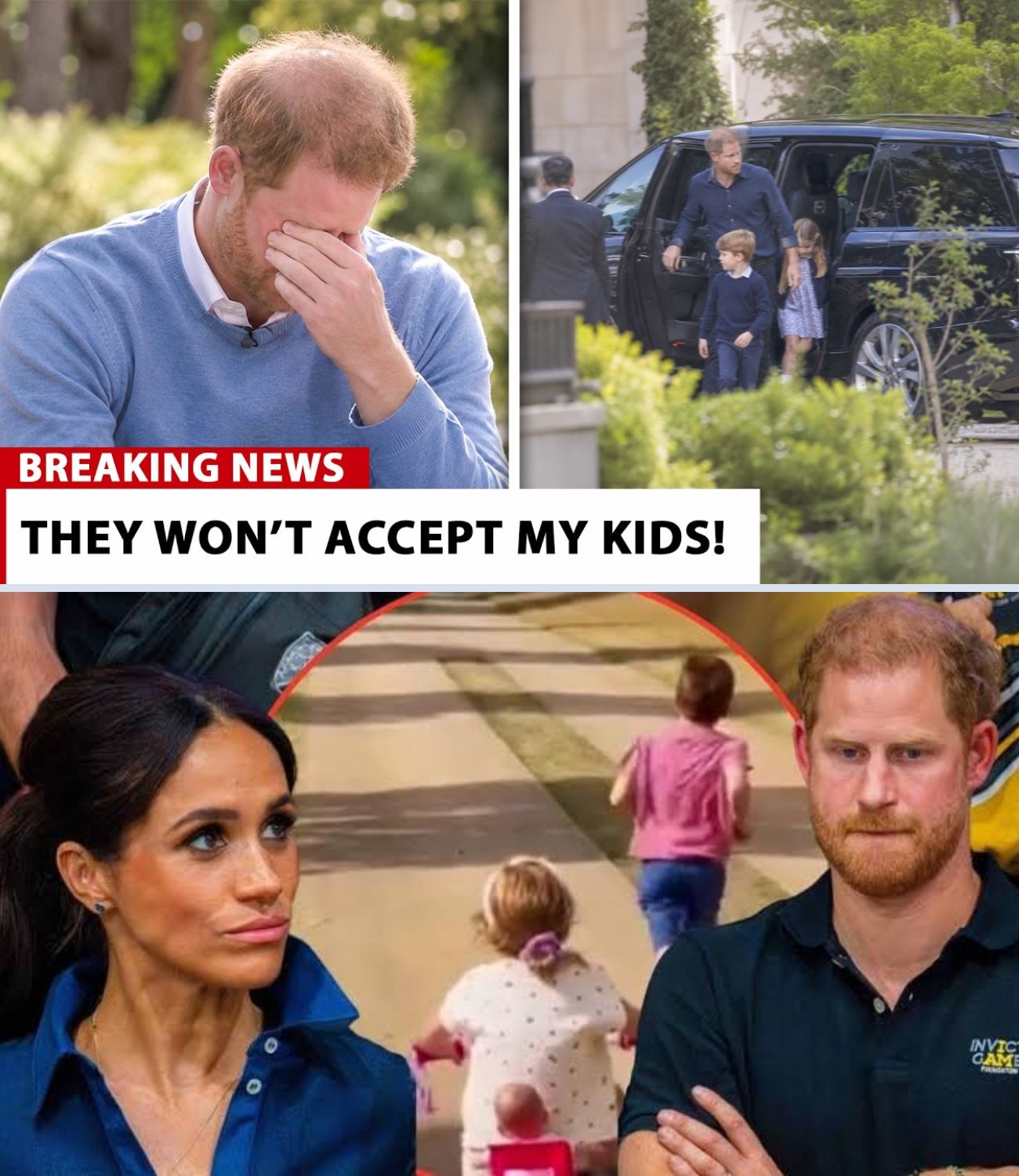
The Iron Perimeter: William and Princess Anne Strike Back
That night in the hotel suite marked a decisive turning point, transforming a family disagreement into a rigid exercise in institutional self-preservation. While Harry paced his rooms, Prince William and Princess Anne had already activated a total diplomatic blockade. William made his position unmistakable to senior private secretaries: he would not grant his younger brother a single second of his time—no phone call, no hallway greeting, and no private audience.
William understood precisely what was at stake. He knew that the moment his father’s guard was down, Harry would attempt to bypass royal advisers to secure unearned privileges and financial protections for his household in California. Operating as the future sovereign shielding an exhausted monarch from emotional manipulation, William systematically dismantled every diplomatic avenue Harry hoped to exploit.
The palace was not negotiating. William and Anne had erected an impenetrable constitutional perimeter around the throne. Harry had flown thousands of miles expecting soft apologies and open arms, only to shatter against an absolute wall of protocol. But to comprehend why William refused to even look his brother in the eye, one must examine the high-stakes legal battles Harry was simultaneously waging across London courts.
The Security Crusade and the RAVEC Verdict
For over three grueling years, Harry had dragged the British Home Office through bitter, multi-million-pound courtroom battles in London. His core grievance was not ancient etiquette or missing family heirlooms; he was demanding round-the-clock, taxpayer-funded armed protection from elite units of the Metropolitan Police whenever his family touched British soil.
Harry assumed that holding royal blood granted an automatic, birthright shield of government-backed firepower. Within the operational machinery of the British state, however, state-funded protection is a security asset determined by threat assessments, not a decorative trophy to flaunt in Southern California. On the twenty-eighth of February 2024, High Court Judge Sir Peter Lane delivered an uncompromising fifty-one-page verdict that dismantled Harry’s legal crusade.
The court ruled decisively that the Executive Committee for the Protection of Royalty and Public Figures (RAVEC) acted entirely within the law when it downgraded Harry’s security status. The moment Harry chose to abandon his full-time constitutional duties to pursue lucrative commercial ventures in America, he ceased to be a working servant of the realm. Sir Peter Lane made it crystal clear that the British government was under zero legal obligation to provide armed paramilitary motorcades to individuals carving out private corporate careers five thousand miles away.
Consequently, every journey Harry made across the Atlantic required hiring private security teams draining hundreds of thousands of pounds from his personal reserves per visit. Yet private bodyguards lack the legal authority to carry automatic weapons on English motorways, barrel through red traffic lights, or clear London streets with screaming sirens. That relentless financial hemorrhage was creating panic in Monteceto, driving Harry into a desperate bid to force British taxpayers to absorb his travel costs under the banner of family safety.
Harry craved the visual theater of an armed government escort to prove to Hollywood studio executives and commercial partners that he still wielded the sovereign influence of an active British prince. William and Anne saw straight through the performance, recognising that granting taxpayer-funded police protection to an overseas private celebrity would spark a furious constitutional scandal across a nation wrestling with a harsh cost of living crisis. Nationally, over seventy-six percent of British citizens loudly rejected paying a single penny for his private security. William refused to let the crown subsidize an American commercial empire.
The “York Blueprint” and the Three Demands
Behind closed doors, palace courtiers discovered the aggressive operational blueprint Harry had brought across the Atlantic. Senior aides gave the strategy a precise moniker: the York Blueprint. It was a calculated attempt to resurrect the exact half-in, half-out arrangement that had plagued royal operations decades prior.
Aware that King Charles’s cancer treatments were limiting his public engagements, Harry knew the constitutional clock was ticking down to zero. The moment Prince William ascends the throne, the era of royal indulgence will end permanently. William has never hidden his determination to streamline the monarchy, ruthlessly cutting peripheral figures who contribute nothing to public life. Harry recognised that once William held the sovereign seal, a single administrative stroke could strip princely titles from children living permanently on the California coast.
Thus, Harry launched a frantic campaign to corner his family, demanding three non-negotiable concessions while his father still reigned:
An ironclad legal codification of the titles of prince and princess for Archie and Lilibet, drafted so tightly that no future sovereign could touch them.
A formal open-door clause guaranteeing that once the children reached twenty-one, they could return to the United Kingdom as funded, part-time working royals.
Automatic, armed state security financed entirely by British taxpayers.
It was the exact scheme Queen Elizabeth II, King Charles, and Prince William had rejected four years prior at the Sandringham Summit. The late queen had made it abundantly clear that the crown was not an à la carte menu where departing family members could harvest lavish perks while discarding public duties. Yet Harry had repackaged the rejected proposal and presented it to a sick monarch as if history had never happened. What he failed to calculate was that Princess Anne stood as the ultimate guardian of Queen Elizabeth’s institutional memory.
The Precedent of 1977: Princess Anne’s Wise Choice
To understand why Princess Anne possessed zero patience for Harry’s grievances, one must look back nearly five decades into royal history. In November 1977, Anne gave birth to her firstborn son, Peter Phillips, followed in 1981 by her daughter, Zara. Queen Elizabeth stood ready to bestow grand hereditary and royal styles upon both newborns, offering ancient titles on a silver platter completely free of charge.
Yet Anne looked directly at her mother and delivered an uncompromising refusal. She deliberately turned down every royal prefix, hereditary peerage, and taxpayer-funded police security detail. Instead, she raised Peter and Zara at Gatcombe Park in the Gloucestershire countryside, living on a working farm where her children grew up with mud on their riding boots and real chores to finish before breakfast.
Anne understood long before anyone else that unearned aristocratic privileges do not protect a child; they burden them with hollow expectations and a dangerous sense of entitlement. Zara grew up to win an Olympic silver medal in equestrianism entirely through her own athletic grit, while Peter built a thriving independent career in sports management. Neither has ever demanded a penny from the public purse. Queen Elizabeth frequently considered Anne’s choice one of the wisest family decisions of her seventy-year reign.
Conversely, in their March 2021 television interview, Meghan Markle dismissed Anne’s precedent as a false equivalence, arguing that Anne had a voluntary choice whereas Archie faced an institutional lockout. Meghan pointed to Prince William’s children, enjoying royal styles from birth, and alleged that discussions had occurred regarding how dark Archie’s skin might be.
Yet courtiers held a confidential document that upended that narrative completely.
The May 2019 Medical Protocol Offer
For five years, the narrative from California alleged that a cold institution cruelly withheld security and titles from two innocent children. However, examining sovereign files reveals a confidential memorandum dating back to May 2019 that destroyed the victim narrative.
For over a century, the British monarchy maintained a rigorous constitutional ritual upon the birth of a potential heir: an ornate golden easel outside Buckingham Palace displaying a medical bulletin bearing the verified signatures of the sovereign’s royal physicians and obstetricians. This provided essential constitutional transparency regarding the lineage of succession.
Harry and Meghan bypassed that protocol, issuing chaotic statements and refusing to publish the signatures of attending medical teams. When internet rumors and doubts erupted, senior palace officials in the Privy Council offered an elegant, discreet solution: a confidential verification protocol overseen by an independent panel of senior medical advisers. These doctors would examine the hospital paperwork in total secrecy, verify the constitutional legitimacy within days, and issue a single certified declaration.
There would be zero public disclosure, no invasive photography, and complete protection of personal dignity. Harry and Meghan said an absolute, flat no. They rejected the institution’s quiet protection, kept hospital records locked away, and filed lawsuits while complaining on television. The crown offered an ironclad shield, and the parents deliberately walked away from it.
The Phantom IV Paranoia and the St. Mary’s Freeze
Underlying Meghan’s deep-seated resentment was an incident dating back to her wedding day on May 19, 2018. Arriving at St. George’s Chapel in an immaculate claret-coloured 1950 Rolls-Royce Phantom IV—one of only eighteen ever manufactured, commissioned exclusively for the royal family—Meghan viewed the gesture not as an honor, but as a chilling, deliberate slight.
The vehicle model had been used in 1972 to transport Wallis Simpson, the American divorcee whose marriage to King Edward VIII forced his abdication, to her husband’s funeral. Major newspapers published side-by-side photographs highlighting the parallel. Meghan became convinced the car selection was a superstitious omen, believing senior royals had prejudged her as a disruptive outsider. Working royals, by contrast, viewed this interpretation as toxic paranoia—attributing malicious intent to the queen’s generous provision of an irreplaceable state treasure.
This festering divide culminated publicly on August 28, 2024, at the memorial service for Lord Robert Fellows at St. Mary’s Church in Snetisham. Harry slipped into the back of the church just before the service began. Moments later, Prince William walked through the stone entrance.
The brothers stood under the exact same wooden rafters, separated by merely five metres. Yet throughout the solemn hour, the atmosphere was arctic. Multiple attendees and the local vicar, Reverend Dan Tansy, confirmed the brothers sat in entirely separate rows. William did not turn his head, offer a word, or acknowledge Harry’s presence. When the service concluded, they departed through separate doors in opposite directions.
It was no mere fraternal sulking; William was executing a calculated constitutional manoeuvre. He signaled to the government and international media that the working monarchy’s perimeter was permanently sealed. Harry was treated not as a returning brother, but as a total stranger whose access to the sovereign circle was revoked.
The California Lockdown and Final Ledger
Back in Monteceto, day-to-day operations shifted into total lockdown. Following friction at Santa Barbara’s All Saints by the Sea preschool regarding aggressive private security patrols, the Sussex household instituted absolute secrecy regarding their children’s education. Strict non-disclosure agreements were imposed on administrators and staff; no school names were confirmed, and no official photographs were released.
Simultaneously, through friendly biographies like Omid Scobie’s Endgame, the California camp circulated a chilling message to Buckingham Palace: because the royal family refused automatic taxpayer-funded police protection and an official royal welcome, the palace should never expect Archie and Lilibet to look toward the UK as home or maintain any living connection to their heritage.
This message was designed to strike at King Charles during his cancer treatment. At seventy-five, isolated in Scotland, the king had seen Princess Lilibet in person exactly once during the 2022 Platinum Jubilee. Anne and William viewed this emotional blockade as the weaponisation of innocent children.
Yet the crown’s final administrative closure was already underway. A formal update to the court circular and the official household calendar laid out the working royal roster for the coming year in crisp black and white: King Charles, Queen Camilla, the Prince and Princess of Wales, the Princess Royal, and the Duke and Duchess of Edinburgh.
Prince Harry’s name was surgically excised from the official state ledger. No sovereign budget line was authorised, no taxpayer-funded police security was established, and no palace private secretary was assigned to manage his affairs. On the official royal website, Archie and Lilibet remain listed under their legal styles per King George V’s 1917 decree, but they possess zero royal patronages, no charitable duties, and no official secretariats. They are cataloged as private citizens with no claim on the sovereign purse.
The institution spoke entirely through silence. The doors of private family hospitality remain open for the children to visit their grandfather as private family members, but the constitutional doors of state governance are locked forever. No special letters patent will be issued, and no public funds will finance an American celebrity lifestyle.
Ultimately, the saga was never merely about motorcades or ancient prefixes. It was an inevitable collision between two incompatible worldviews: the Sussex philosophy that royal status is a portable celebrity asset, versus the immovable conviction upheld by Princess Anne and Prince William that royal privilege exists solely as a byproduct of lifelong public service. Harry attempted to use his mother’s memory as a master key to unlock state privileges, only to discover that the key no longer turns. The register of the realm remains written strictly in duty, and the crown functions perfectly well without him.