He Called the SAS Weekend Hikers. Then They Broke His Rangers on His Own Mountain.
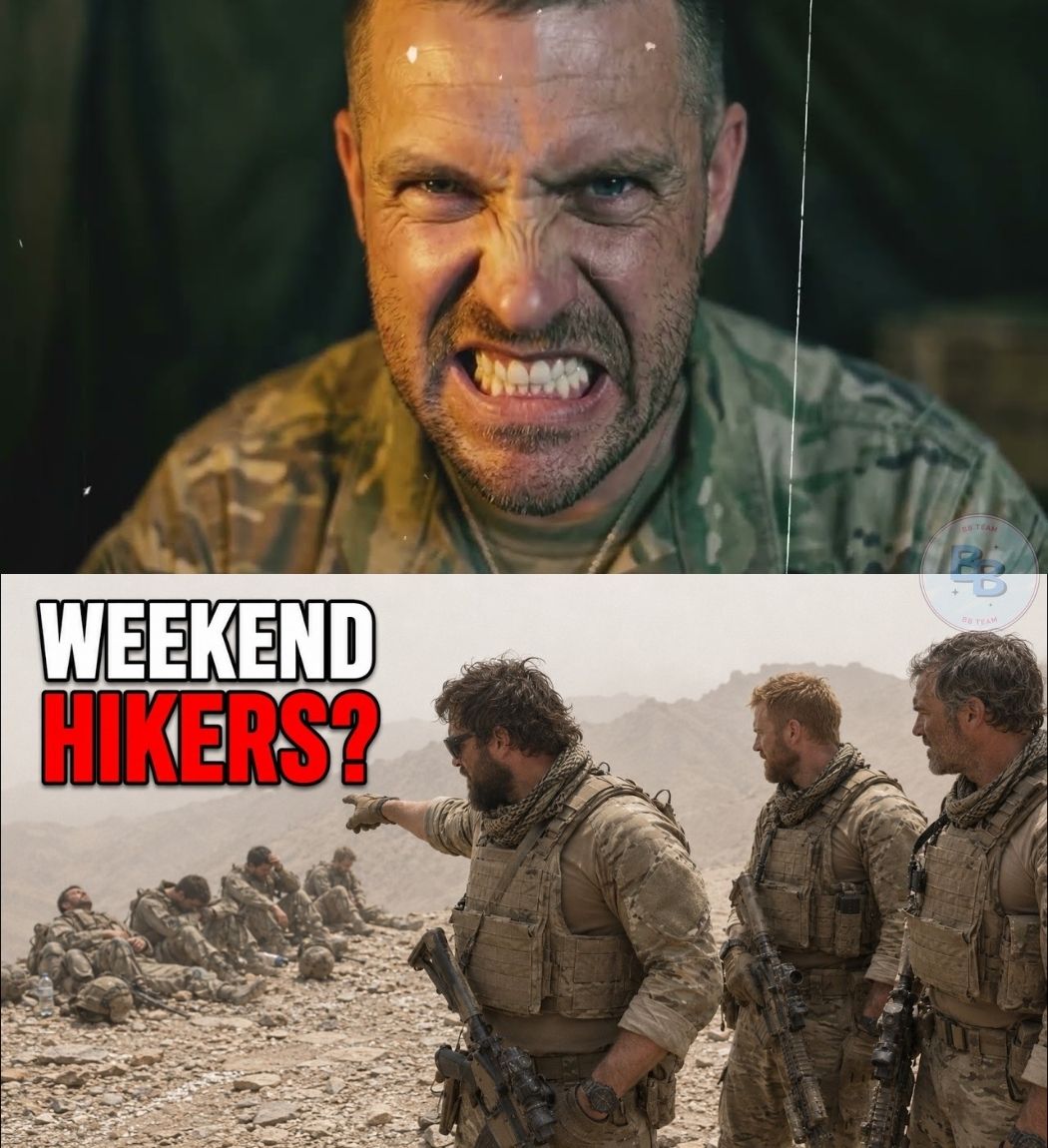
He Called the SAS Weekend Hikers. Then They Broke His Rangers on His Own Mountain.
There is a sentence a United States Army Ranger Major said out loud in a canvas briefing tent at the foot of a 3,000 meter ridge in eastern Afghanistan in front of 40 of his own men and nine British operators who had flown in the night before.
“They’re weekend hikers in better boots,” he said. “Send them up the hill first and we’ll see how far the tea gets them.”
His name was Garrison Vance. He was 39 years old, a major in the Second Ranger Battalion, three combat tours deep, with a Silver Star for a rooftop in Sadr City, and an instructor’s tour at the Ranger School in Dahlonega behind him. And he was not a stupid man. That is the part worth saying first, because the lazy version of this story would make him a fool, and he was not a fool. He had earned the right to be listened to on a mountain. He had simply chosen that morning to use that right to be contemptuous about men he had not watched work.
The British operators heard him. Their troop commander, a captain called Marsh, chewed the inside of his cheek and did not look up from the map on his knee. The staff sergeant beside him, a man named Don Levy, took a long breath in through his nose and let it out through his nose, and that was all. Nobody argued. Nobody smiled.
One of the younger rangers at the back laughed, a short bark that he cut off when he realized nobody else had. The major did not notice. He would remember saying it—he would be made to. That is the promise this story is built on, and it is worth being honest about now before the ground starts rising.
By last light that day, inside 16 hours of the sentence leaving his mouth, Major Vance would be standing on the lower slope of his own training ridge, holding a clipboard he did not want to look at, while a master sergeant from his own company read a count of it that he could not argue with. One of his platoon leaders would be on a stretcher. 10 more of his rangers would be off the hill. Four British operators, the ones he had called hikers, would be the only men still on their feet above the 3,000 meter contour inside the cutoff time he himself had set.
He would reach at that point for a laminated range card he kept folded in his left breast pocket, the way he always did when he needed to be certain of something. He would touch it through the fabric. He would not take it out. There would be nothing on it that helped.
But that is the end of the day. At the start of the day in the tent, with the dust still settling on the plastic sheeting of the map table, he said what he said, and the men he said it about simply started checking their water.
To understand why the sentence landed the way it did, you have to understand the man who said it, because he was not a loud officer, and he was not a careless one. Garrison Vance had enlisted in 1991 out of a small town in eastern Washington, and he had been a ranger for his entire adult working life. He had gone through the Ranger Indoctrination Program when it still broke men on purpose. He had done the Ranger School tabs at Benning and Dahlonega and the mountain phase in North Georgia twice, once as a student and once as an instructor. And by the time he arrived in Afghanistan in the summer of 2007 as the officer in charge of a high-altitude pre-deployment training serial for his battalion, he had three combat tours stamped into his record: one in Iraq in 2003, one back in Iraq in 2004, which was where he had earned his Silver Star for a rooftop fight in Sadr City that his own after-action reports described in sentences so flat they almost disappeared, and one in Afghanistan the year before in Paktika, which was where he had first developed the view that mountains were an American problem, solved by American infantry, and that everyone else was dabbling.
He kept in the left breast pocket of his uniform a laminated range card from the Mogadishu airfield, 1993, where he had deployed as a very young Ranger private in the aftermath of the October fighting. He had not been there for the battle itself. He had arrived afterwards, and the card was a souvenir drawn by a sergeant he had admired. He tapped it through the fabric when he was certain of a thing. The gesture was not showy. Most of his own men did not know the card was in there. But if you watched him long enough, you noticed the hand go to the pocket, and you noticed that it went there before he said the sentence that was going to end a conversation.
He went to the pocket that morning in the briefing tent before he spoke.
The context was simple. A 10-day bilateral mountain warfare exchange had been scheduled between a Ranger company running its high-altitude work-up in Nangarhar and a nine-man element from Mountain Troop, B Squadron, 22 Special Air Service, who had been running their own troop-level training further north and had been invited down for the week. The British element was commanded by a captain, Elliot Marsh, with a staff sergeant, Price Don Levy, as his senior man, and the rest were a mix of corporals and troopers, including the lead climber of the troop, Sergeant Iddris Hollis—red-hair, red beard, universally called Red—and the youngest badged man in the squadron, a trooper named Ren Kadic.
They had flown in on a Chinook late the previous night, slept 4 hours on cot beds in a transit tent, and walked into the briefing with their kit on the ground outside and their faces showing nothing in particular.
Vance had looked at them for perhaps 6 seconds. He had taken in the bergens larger than his own men’s rucks by a visible margin, and the belt kit, and the civilian-looking fleece one of them was wearing under his smock, and the fact that two of them were drinking tea from metal mugs they had produced from somewhere, and he had come to a conclusion.
It was not an uneducated conclusion. He had seen British soldiers before. He had worked with Royal Marines in Helmand, and had respected them. But these men with their big packs and their mugs in his tent on his hill did not read to him as what he had been told they were. And he said so.
He said it to his own company commander first, a captain named Marlon Teague. In a voice that was not quite low enough, he said, “Mal, I want these guys out in front on the serial tomorrow. Let’s see what they’ve actually got because right now I’m looking at weekend hikers in better boots.”
Teague, who was a thoughtful officer and who had read the file the British had sent ahead, said nothing. His master sergeant, Odell Crook, a thick-necked man with 22 years in, and the eyes of a person who had stopped being surprised a long time ago, also said nothing. But he glanced sideways at the British captain and then back at his own major and then down at his notebook.
And then Vance turned because he was a direct man and because he believed in saying things to people’s faces rather than behind them. And he addressed the British element and he delivered the full sentence.
“They’re weekend hikers in better boots,” he said. “Send them up the hill first and we’ll see how far the tea gets them.”
The young ranger at the back barked his laugh. Nobody else joined in. Captain Marsh chewed the inside of his cheek. Staff Sergeant Don Levy breathed in through his nose and out through his nose. Red Hollis took a slow sip from the metal mug and put it down on the plastic sheeting of the map table with great care, so it did not make a sound. Trooper Kadic, who was 24 and still at the age where things like this registered on his face, looked once at his staff sergeant, saw that his staff sergeant was not reacting, and arranged his own face to match.
The briefing continued. Routes were walked through. Timings were set. Vance set the cutoff time for the summit rendezvous himself with a flourish at 6 hours from the line of departure and said he thought that was generous. Nobody argued with that either.
Outside in the dust, the British began checking their water.
The ridge above the ranger camp was called, on the ranger maps, Objective Spine, and on the local maps, it had a name in Pashto that meant something like the back of the camel, which was accurate. It rose out of the valley floor at about 1,200 m above sea level and climbed in three distinct steps to a long flat false summit at just over 3,000 m where a stone cairn marked the official rendezvous. Beyond that cairn the ground dropped away into a scree field on the far side and then rose again more gently to a true summit nobody was asked to reach.
The route from the camp to the cairn, as planned, was 11 kilometers on the ground and 1,700 m of vertical gain, almost all of it on broken rock and loose shale, with two sections of exposed scramble on the second step where a slip would not kill a careful man, but would ruin his knee.
The temperature at the camp at 6:00 in the morning was already climbing through the high 20s. The air at the cairn would be noticeably thinner with a dry wind off the far side, and by the forecast coming in off the operations tent that afternoon, there was weather building to the north that would arrive on the ridge in the late afternoon as a short, hard rain squall with gusts strong enough to make the second step unpleasant.
Vance had read that forecast. He had chosen not to shift the start time. He had said in Teague’s hearing that his men trained in weather and that the British could learn to. That was Vance’s hill. That was what he knew.
What he did not know, because he had not watched them long enough, and because he had made the oldest mistake a competent man can make—which is to assume that what looks slow is slow—was what the British element had been doing with their 4 hours in the transit tent and their 40 minutes outside the briefing.
They had not been sleeping, most of them. They had been drinking water in measured amounts and eating in measured amounts and doing the small dull administrative things that mountain troop did before any serial on any hill in any country, which was the reason mountain troop had the reputation it had.
Captain Marsh, who chewed the inside of his cheek when a thing was going right, and chewed it harder when he thought a thing was going wrong, had sat on the step of the transit tent at 4 in the morning with his bergen open, and had repacked it by head torch in the order he always repacked it: heaviest items low and against the spine, water bladder sat flush against the back panel, belt kit laid out beside the bergen with ammunition, water, medical kit, and a stripped-down survival pouch in that order, so that if the bergen came off in a hurry, he would still have what kept him alive. He had done this on more hills than he could easily list. He did it the same way every time. He did not look up when his staff sergeant walked past.
Staff Sergeant Don Levy, a Welshman from Carmarthen with 11 years in the regiment and a jaw that looked as though it had been set by someone else, carried in his left trouser pocket a brass compass that his father had carried in Oman in 1972. He never took it out in company. That morning, in the dark, with nobody watching, he took it out, checked the bezel against the stars he could see through the gap in the tent flap, nodded once to himself, and put it away. The compass was accurate. He had known it would be accurate. The gesture was not about the compass. It was about the ritual of knowing.
Sergeant Red Hollis, the lead climber, who would be out in front on the second step when the time came because he was the best man in the troop on rock, had spent 20 minutes with his boots off going through his feet, taping two spots on his right heel where he had felt a hot patch on the walk-in from the helicopter pad, trimming a nail, rebuilding the lacing on the left boot so it sat half a tension tighter at the ankle than at the instep. He hummed while he did it: a single bar of a Welsh hymn his grandmother had sung in a chapel in the Rhondda. He always hummed it. He only ever hummed one bar. The men in the troop knew the bar and knew they were not to mention it.
Trooper Ren Kadic, who was 24, badged 2 years, and still at the age where he wrote his mother’s address on the inside of every map case he was issued in case the map case was all they found, wrote the address that morning and blew bro inside the new case he had drawn the night before. He did it quickly. He did not want anyone to see him doing it. Don Levy saw him doing it and said nothing. Don Levy had done the same thing when he was Kadic’s age with the name of a girl he no longer spoke to.
They were drinking tea, two of them in the briefing. Vance had seen the tea and had drawn his conclusion. What Vance had not seen, because tea is tea and does not announce itself, was that the tea was lightly salted out of a sachet Don Levy carried in his belt kit, and that the point of the tea was not comfort. It was a hot fluid taken an hour before a hard climb at altitude with electrolytes dissolved in it, which was a thing mountain troop had been doing since before Vance had been a corporal. It looked like a mug of tea, because it was a mug of tea. It was also a loaded weapon.
Their bergens, which Vance had noticed, were heavier than the ranger rucks by a visible margin, and Vance had drawn the obvious conclusion about that, too, which was that the British were overloaded and would pay for it on the hill. The British bergens were heavier than the ranger rucks because the British were carrying on top of their ammunition and their water and their day’s food a full set of warm kit for the top, a bivvy bag each, a group shelter between four, and the climbing rack and ropes that Red Hollis would need on the second step if the weather came in. The rangers had chosen not to carry warm kit because the serial was 6 hours and the forecast was for weather in the afternoon and 6 hours was less than afternoon. The British had chosen to carry warm kit because the forecast was for weather in the afternoon and the mountain did not read forecasts.
That was the gun. It was loaded that morning in plain sight of everyone in the briefing tent, and the man with the Silver Star did not see it because he had already decided what he was looking at.
They stepped off at 06:15.
Vance watched them go. He noted with a small internal satisfaction that the British were walking slower than his own pointmen. He tapped the laminated card in his pocket because he was certain the first step of the ridge from the valley floor to a broad shelf at about 1,700 m was the easy third of the route. It was a steady grind up a goat path on compacted scree. No exposure to speak of, and the rangers took it at the pace Vance had set for them, which was the pace of a confident unit on a known hill.
The lead platoon under First Lieutenant Hobson Vain pulled away from the start line like a column that had something to prove, which it did, and inside 20 minutes they were 100 m clear of the British. And inside 40 minutes they were 200 m clear, and the youngest ranger in the lead section was calling back a joke about the hikers over his shoulder to the man behind him. And the man behind him was laughing.
Captain Teague, who was walking at the back of the lead platoon as the company commander, heard the joke and did not laugh. He had been watching the British since the step-off, and he had been watching them the way a man watches another man do a trade he does not quite understand. They were walking, as Vance had noted, slower than his own point, but they were walking at exactly the same speed they had set in the first 100 m, and they had not changed it, and they had not spoken, and they had not stopped.
The gap between the two columns, which had opened fast, had stopped opening at about the 14-minute mark, and then Teague noticed this, and it was the first thing that put a small cold feeling in his stomach. The gap had started very slowly to close—not because the British had speeded up; they had not, he checked, they were still walking at the same unhurried pace they had set at the gate—because the rangers had slowed down. They had slowed down the way men slow down who have gone off too hard in the first third of a route, which was something Vance would have corrected in his own instructor voice if he had seen it on a tab at Dahlonega.
But Vance was not with the lead platoon. Vance was riding at the rear in a vehicle on the lower track that ran along the valley floor with a radio and a pair of binoculars and the understanding that he would meet his men at the summit cairn. He could see from where he was that the British column had not caught up. He could not see from where he was that it had stopped falling behind.
Teague could see both. Teague kept his face still and said nothing.
At the shelf, at the top of the first step, Lieutenant Vain’s platoon halted for the 10-minute water stop that had been built into the plan. The rangers came off the climb, breathing hard. They took their helmets off. They dropped their rucks. They sat. The young one, who had made the joke, lay back flat with his hands behind his head, and said something about the view that his section commander did not answer. They had been climbing for an hour and 10 minutes. They were, by the plan, on schedule.
9 minutes into their 10-minute stop, the British walked past them.
Walked, not jogged, not pushed, walked, in the same unhurried column, in the same order they had been in since the start, with their bergens still on their backs, and their rifles still slung, and their faces showing nothing.
Captain Marsh, at the front, chewing the inside of his cheek, nodded once to Lieutenant Vain as he went past, the way you nod to a man you have passed on a path. Staff Sergeant Don Levy three men back did not nod. Red Hollis further back did not look. Trooper Kadic at the tail gave the lying-down ranger a small, polite, unironic smile.
The British did not stop at the shelf. They kept going. They walked straight through the ranger platoon’s water halt and up onto the start of the second step. And in 90 seconds they were above the shelf and climbing, and the goat path turned behind a rock and they were out of sight.
Lieutenant Vain sat up. He looked at his platoon sergeant. His platoon sergeant looked at him. The young ranger with the joke did not say anything.
Captain Teague keyed his radio and spoke to the vehicle on the lower track in a voice carefully drained of weather. “Six, this is Six-Six. British element is through the shelf and onto the second step. They did not halt. Over.”
There was a pause on the radio. Then Vance’s voice, flat, slightly louder than it needed to be: “Say again, Six-Six.”
Teague said it again.
Vance did not reply for a moment. Then he said, “Copy. Push your platoon off the water stop. I want eyes on the British at the top of the second step.”
Teague said, “Roger.”
He looked at Vain. Vain was already standing. The rangers who had been lying down were standing. They put their helmets back on. They put their rucks back on. The weight of the rucks, which had felt reasonable at the start line, felt heavier now because they had sat down for 9 minutes with the rucks off, and because their legs had cooled, and because the British had just walked past them without stopping, and the shame of that was in the muscles. They stepped off the shelf 2 minutes later.
In those two minutes, Red Hollis, up on the second step, with his bergen still on his back, had already covered another 150 m of ground. The gap, which had been 200 m with the rangers in front and the British behind, was now 100 m with the British in front and the rangers behind, and it was still opening.
Captain Teague, climbing at the back of his own platoon with his eyes on the rock in front of his boots, chewed something inside his own mouth and did not look up.
Below on the valley track in the vehicle, Major Vance lifted his binoculars and found on the second step a column of nine men in British kit moving at the exact same unhurried pace they had used at the start with full bergens up, and found below them his own lead platoon strung out and visibly working.
He lowered the binoculars. He did not say anything on the radio. His hand went briefly to his left breast pocket. He touched the card. He did not take it out.
That was the first time that day he was wrong. It was the smallest time. The weekend hikers, he had called them. They had just walked with full packs past the first American platoon on an American mountain without breaking stride at the end of an hour’s climb. And that was only the first time that day he would be wrong.
The second step of the ridge was where the hill stopped being a walk and started being a mountain.
The goat path broke up at about 1,900 m and the ground went to broken slabs and loose blocks the size of a small car, with two short pitches of exposed scramble on the north side where the maps marked a dotted line and the ranger instructors habitually marked a chalked arrow on the rock. On a clear day in good boots, a competent infantryman could get up it unroped if he was careful and if his hands were cold enough to be honest with him. On a wet day with weather coming off the ridge, it was a different hill.
The forecast weather was still at that point 3 hours away. The sky to the north was the color it had been at the start. What was not 3 hours away was the second pitch itself, which arrived under Red Hollis’s hands at about the 90-minute mark, and which was where the British did a thing that Lieutenant Vain’s rangers, climbing up behind them, and now visibly closer because Hollis had slowed to deal with the rock, got to watch in full.
They roped up—not the whole column. Hollis, who was leading, and the second man, who was Trooper Kadic, moved up onto the first pitch unroped and placed between them three pieces of protection in cracks they clearly already knew about, with the economy of men who had rehearsed this section in their heads before they ever saw it in daylight. They were climbing on a short rope, not for the men behind them. The protection they placed was for the troop.
By the time Captain Marsh and Don Levy and the rest of the British column arrived at the base of the pitch, there was a running rope up the hard section, anchored on three points, and a man at the top ready to belay through it, and the British were going up two at a time on it, with their bergens still on their backs, and it was taking them about 4 minutes a pair.
The rangers caught them at the base of the second pitch. Lieutenant Vain halted his platoon 10 m back because there was nowhere else to put them and watched Don Levy go up the rope with his bergen on. Don Levy went up it the way a man goes up a ladder. He did not look at the drop to his left. At the top he unclipped, moved aside, and the next man came up.
Vain’s platoon sergeant, a staff sergeant named Reyes, said quietly to his officer, “Sir, we didn’t rope this last time.”
Vain said, “We did it dry.”
Reyes said, “Yeah, we did it dry.”
The implication was not spoken. The British were not roping because the pitch required a rope on a dry day. The British were roping because they had decided before they left the camp that any pitch that would require a rope on a wet day would be roped on a dry day as well. So the troop moved at one speed on the hard ground instead of two, and so that if the forecast weather arrived early, the rope would already be in. They were climbing slow where it mattered, because they were climbing fast where it did not.
The water halt the rangers had just taken—9 minutes of it—had cost the rangers the gap. The 4 minutes a pair the British were taking on the rope were not costing them anything because the British had not stopped since the start line.
Vain understood this. Reyes understood it. Teague further back understood it most of all.
The last British man up the pitch was Red Hollis himself, who had come down to clean the gear once his troop was above him. He did it without a rope on himself, which was within his competence, but was also, Vain noticed, done without any pause for a pose or a glance down at the audience. Hollis cleaned the three pieces, clipped them to his harness, and climbed back up the pitch to his troop.
The whole British passage of the second pitch had taken, by Reyes’s watch, 19 minutes for nine men with full bergens, including the time to set the rope and clean it.
Then Vain’s platoon went up unroped because the rope was gone, because Hollis had taken it with him. They went up carefully. The first two rangers got up in 4 minutes between them. The third ranger, who was carrying the platoon’s spare radio battery and whose ruck was heavier than the standard load, went up slower, and halfway up he found a hold that was looser than it had looked, and he put a knee down on the slab to catch himself, and he opened a cut on his kneecap through the fabric of his trousers that was not serious, but was going to be sore for the rest of the day. The fourth ranger went up fine. The fifth ranger, who had been the one at the shelf lying on his back, went up with his hands shaking slightly from the lactate still in his forearms from the first step, and he did not fall because he was not going to fall, but he stopped twice on the pitch and had to be talked up by Reyes from below.
Vain’s platoon took, by Reyes’s watch, 31 minutes to get up the pitch unroped—12 more minutes than the British had taken with a rope.
The gap on the hill, which had been a 100-meter opening when the rangers reached the water shelf, was now, by Teague’s eye from the base of the second pitch, closer to 400 m. The British were above the second step and already on the long traverse to the third. The rangers were still rebuilding themselves at the top of the second pitch with one man taping a knee.
On the valley track below, Major Vance watched the second pitch through binoculars and saw the rope come down and go up with the British, and he saw his own platoon climb it slower without one, and he worked the sequence out, and he said to the driver of the vehicle quite quietly, “They prepped the gear in the tent last night.”
The driver, a corporal, did not know what the right answer to that was, and did not give one.
Vance watched the hill. “Weekend hikers,” he had said. He put the binoculars down. He said mostly to himself, “They’re not setting the pace. They’re setting hours.”
He had got that part right. It was the only part he was going to get right that day.
The weather came in 2 hours early.
The forecast had said late afternoon, which in a ranger company operating on a 6-hour serial that had started at 06:15 meant arriving on the ridge somewhere around 15:00, by which time the lead platoon would be at the cairn, and the trail elements would be inside the last kilometer, and nobody would be caught on exposed ground.
The forecast had been wrong, or more precisely, the mountain had been faster than the forecast, which is a thing mountains routinely are.
At 11:40, with the British column halfway along the long traverse between the second and third steps, and the ranger lead platoon 200 m back on the same traverse, the wind on the ridge dropped and then came back from a different direction, and the smell of the air changed. And 20 minutes after that, the first fat drops hit the rock.
Red Hollis, up at the front of the British column, heard the wind change and said one word over his shoulder, which was, “Weather.”
He did not stop walking. Behind him, in sequence, the rest of the troop opened the top of their bergens, pulled out their waterproof smocks, and had them on inside 60 seconds in the order of the column without breaking the column. Kadic, who was still at the tail, got his on, and then got his map case out and checked it was sealed and tucked it back inside his smock. Don Levy, in the middle of the column, did not look at the sky. He took the brass compass out of his trouser pocket, flipped the lid, took a bearing off the ridge line ahead by feel of the bezel under his thumb, closed the lid, put it back in his pocket, and tapped Captain Marsh on the shoulder once.
Marsh nodded. He had already made the same decision. He adjusted his line two degrees to the right of the one he had been walking, which put the column onto the sheltered side of the traverse before the weather hit properly. And he did it so smoothly that from behind, in the ranger column, it looked as though the British had simply drifted. They had not drifted. They had moved to the side of the ridge where the wind would hit the rock before it hit them.
The ranger platoon 200 m back were not carrying waterproofs. The decision not to carry warm kit had come with the decision not to carry wet kit because the forecast had been for weather in the afternoon and the serial would be done by the afternoon. And because the rangers had been training in the valley for 3 weeks in weather that had not required waterproofs, and because the extra weight was weight, Lieutenant Vain, when the first drops hit him, pulled his cap down and kept walking. He had no other option.
The rain built over the next 10 minutes from fat drops into a steady, hard, cold rain driven sideways by a wind that was now coming off the far side of the ridge at a strength that the maps did not warn about because maps do not warn about weather. And inside 15 minutes his rangers were wet through to the skin.
Being wet through on a ridge at 2,500 m in a wind with another 500 m of climb still to go is a particular problem that Vance would have recognized instantly from a classroom in Dahlonega.
The instructor from Dahlonega recognized it from the vehicle on the valley track. Now he keyed his radio and asked Teague for a status.
Teague’s voice came back level because Teague was a professional, but it came back slow. “Six. We are in weather on the traverse. Lead platoon is wet. We are continuing over.”
Vance said, “Push them.”
Teague said, “Roger.” He did not say that pushing wet men up a ridge was a thing you did when you had no other option, which was the position he was now in.
On the British line 5 minutes further on, Don Levy slowed the column by half a step—not stopped, slowed—because he had seen a thing in the way Trooper Kadic was walking that the trooper did not know he was showing: a slight shortening of the stride on the left side, which meant the left boot had rubbed through the taping on an unexpected spot and which, if ignored, would be a blood-soaked sock by the top. He pulled Kadic out of the column, sat him on a rock, took the boot off himself, retaped the spot in 40 seconds in the rain under his own smock, put the boot back on, laced it, and put Kadic back in the column. The column had moved perhaps 30 m in that time. The gap to the rangers had not closed.
Don Levy did this without saying a word to Marsh, and Marsh did not look back, because Marsh had known Don Levy would do it the moment Don Levy had stepped out of line.
“How far the tea gets them,” the major had said. The tea at that point, salted and taken an hour before the climb, was the reason Captain Marsh’s hands were still warm enough to work the fastenings of his smock. He did not say that either.
The rangers further back were having a worse time. Lieutenant Vain was still on his feet and still leading, and he would stay on his feet and keep leading because he was that kind of officer. But the young ranger with the joke had started shivering 10 minutes into the rain, and was now, 20 minutes in, shivering hard enough that Reyes had closed up on him in the column to watch him. The ranger with the cut knee was limping worse now that the taping on his trousers had soaked through. The ranger with the spare radio battery was carrying it in a ruck that was now heavy with absorbed water because ranger rucks were not sealed against weather in the way British bergens were—because the British had packed everything inside dry bags inside the bergen because that was what mountain troop did, and the rangers had not because the forecast had been for weather in the afternoon.
Captain Teague, climbing at the back, watched his lead platoon start to come apart in slow motion in front of him, and he did the hardest thing a company commander does on a hill, which was not shout. He keyed his radio instead.
“Six-Six-Six,” he said. “I have one ranger shaking. I have one ranger limping. I have one ranger carrying a wet ruck. Request guidance. Over.”
The pause on the radio was long.
Vance said finally, “Continue to the cairn.”
Out in the vehicle, the driver did not look at him. Vance’s hand went again to his left breast pocket. It stopped halfway. He did not touch the card. He put the hand back on the radio handset. He had said how far the tea gets them. He had by then mostly stopped saying things.
Shift to the top of the ridge. Shift to now.
The weather is at its hardest. The wind on the cairn is coming across the flat at a speed that makes the rope ends on Red Hollis’s harness slap against his thigh with a sound like a slow applause. The rain has turned in the last 400 m into something that is not quite sleet but is cold enough to burn on the backs of the hands.
Red is at the cairn first. He touches the stone with his gloved palm because that is the thing you do, and he hums one bar of the hymn under his breath, which nobody hears over the wind, and he turns and faces back down the ridge and watches his troop come in.
They come in in order. Captain Marsh second, chewing the inside of his cheek. Don Levy third, with his hand on the shoulder of Trooper Kadic, who is fourth, and whose left foot is still working because of a 40-second retape done in the rain. One by one, up to seven.
The eighth man and the ninth man are not with them. The eighth man is a corporal called Price who has stayed with the ninth man, a trooper 200 m down the traverse, because the trooper has twisted an ankle on a wet slab and is coming in slowly under his own power with Price alongside him. They are not on the cairn. They are not off the hill either. They are below the cutoff contour. They are coming at the cairn with the weather on them.
There are four British operators standing: Marsh, Don Levy, Hollis, and the trooper behind Kadic, who is a lance corporal called Bragg. Kadic himself has walked another 10 m past the cairn and sat down against the lee of the stones out of the wind. Because Don Levy has pointed to the ground there and said, “Sit.” And because sitting under weather at the top of a hill is a thing mountain troop does when the climb is done before the walk-off starts, because the walk-off is where men who have been strong on the way up get hurt.
Kadic sits. Bragg sits beside him. Red stays on his feet because Red always stays on his feet at the top.
The time on Marsh’s watch when his boot touches the base of the cairn is 5 hours and 21 minutes from the line of departure. The cutoff set by Major Vance that morning in the briefing tent with a flourish was 6 hours.
The British are inside the cutoff by 39 minutes with full bergens up in weather after setting a rope on the second pitch and taking it down behind them. They are also at this moment the only men on the top of the ridge.
The ranger lead platoon is not at the cairn. The ranger lead platoon is spread by Captain Teague’s count over 400 m of the final slope in weather, with Lieutenant Vain at the front and Reyes at the back and 11 men in between in varying states of distress.
Vain himself, in a different weather and a different day, would have reached the cairn inside the cutoff. He is a competent officer. He is also at the moment carrying the shivering ranger’s rifle in addition to his own because he has made the call that the shivering ranger needs his hands free, which is the right call. The shivering ranger is wet through and now visibly stumbling. The limping ranger is further back. The ranger with the wet ruck is sitting down on a rock in a way that Reyes does not like.
At 6 hours exactly on the master clock in Teague’s radio, which is the cutoff, the ranger lead platoon is 160 vertical meters below the cairn, strung out with one casualty—the shivering man who has at that moment gone down on one knee and not got back up. Reyes closes on him. Reyes calls for his platoon medic. The medic is three men away.
On the cairn with the cutoff past, Captain Marsh looks at his watch and then at Don Levy, and Don Levy nods once. Red Hollis has already started repacking the British inside their own 39-minute margin, re-roping the second pitch from the top on their way back down because they are going to have to come down it anyway and because now the rangers below them are going to have to come up it in weather with a casualty. Red fixes the rope on the top anchor. Don Levy walks it down. Captain Marsh goes down the ridge to find Captain Teague. Kadic stays with Bragg at the cairn as instructed.
The two British on the traverse—Price and the twisted-ankle trooper—come into the cairn at 6 hours and 11 minutes, which is still inside the cutoff by Marsh’s watch of departure, but outside the cutoff by the master clock, and nobody argues about it because the master clock is now the only clock that matters, and because what is about to happen is bigger than the margin.
What happens in the next 90 minutes is this: the British troop, instead of walking off the hill as planned, splits in half. Marsh and Don Levy and Red Hollis and Bragg go down the ridge to the rangers. Kadic, Price, the twisted-ankle trooper, and two others set up a shelter at the cairn in the lee of the stones and get a stove going inside the group shelter they have been carrying in Marsh’s bergen since the start line.
Over the next 90 minutes, under Red’s rope on the second pitch in a wind that has not slackened, the British bring rangers up to the cairn one by one out of the weather into the shelter around the stove.
The shivering ranger comes up first on a short rope between Marsh and Hollis, with Don Levy at his back. He is put inside the shelter. Dry kit from a British bergen stripped onto him by a British medic. Hot sweet drink from the stove inside him within 4 minutes of arrival. He stops shivering inside 20.
Lieutenant Vain is the last ranger onto the cairn. He walks it. He is not helped. He is not going to be helped. He arrives at 6 hours and 58 minutes on the master clock. He finds Captain Marsh standing in the lee of the stones with his hand on the shoulder of the shivering ranger who is now sitting up.
Vain does not say anything. Marsh does not say anything either. Vain goes into the shelter.
Down on the valley track in the vehicle, Major Vance is listening to the radio traffic between Teague and his platoon leaders and the British, and he is piecing together in the clean, clinical way that a man with three combat tours and a Silver Star can piece a thing together exactly what has happened on his own hill:
Four British operators on the summit rendezvous inside the cutoff, full bergens, after fixing a rope on the only hard pitch and taking it down with them.
Zero rangers on the summit rendezvous inside the cutoff.
11 ranger casualties by the time Reyes’s count comes back over the radio off the hill in some form: one hypothermic, one limping, one with a cut knee, one with the wet ruck, one, two, three others on the slope, the shivering man, and the twisted-ankle equivalent in the second platoon. And the platoon leader coming in last on his own two feet.
One of them, Lieutenant Vain’s own pointman, had gone down hard enough on the traverse that the rangers were going to carry him off on a stretcher the British had put together out of two climbing ropes and a British bergen frame.
Vance listens. Vance writes the numbers down on a notepad on the dashboard of the vehicle because that is what he does with numbers: 4, 0, 11.
He does not touch the pocket. He has stopped touching the pocket.
They brought the rangers off the hill in sequence—roped where it needed roping, carried where it needed carrying, walked where it was still possible to walk. The weather broke in the last hour of the descent, which is the way weather works on mountains, late and useless to the men it is already finished with.
By the time the first British operator, which was Red Hollis, came down the goat path onto the valley track, the sun was out again on the lower slopes, and the dust that had been laid flat by the rain was starting to lift, and Major Garrison Vance was standing at the edge of the ranger camp’s helicopter pad with his helmet in his hand, waiting, because that was where the vehicle had put him, and because he was the senior officer present, and because there was nowhere else he could reasonably stand.
Master Sergeant Odell Crook was beside him. Crook had a clipboard. Crook had been doing the counting all afternoon on the radio, and he had the count now in black bra in capitals in a column down the left side of the paper.
Vance did not look at the clipboard. Crook did not offer it.
Red Hollis walked past them to his bergen, which the British had piled in the dust 12 m from the pad at the start of the day. He did not look at the major. He unslung his rifle, laid it across the top of his bergen, took his gloves off, and sat down on the bergen with his elbows on his knees and his hands hanging. He hummed under his breath: one bar.
Don Levy came in next with the lance corporal called Bragg and Trooper Kadic. Kadic was carrying in his hand the map case he had written his mother’s address on the inside of that morning. On the walk-off the ridge he had given it folded to a ranger sergeant whose own map had come apart in the rain, and the ranger sergeant had used it off the top of the second step down to the shelf and had tried to hand it back at the valley track, and Kadic had told him to keep it. The case was back in Kadic’s hand now because the ranger sergeant had insisted. The address on the inside of it was in blue bra and had not run.
The rangers came off the hill behind them in a longer line. Lieutenant Vain was somewhere in the middle walking. The shivering ranger was being helped between two of his section mates with a British fleece on under his smock. The ranger with the cut knee had been bandaged by a British medic at the shelf on the way down.
First Lieutenant Hobson Vain, the lead platoon leader, who had refused all offers of a stretcher on the ridge, came off the hill under his own power, nodded to his master sergeant, and then, on the flat ground of the pad, finally allowed the camp medic to look at his left leg, which turned out to be a hairline fracture of the fibula that he had walked the last 3 km on. He went off after that on a stretcher. He was the first man off the ridge on a stretcher. He was not the last.
Crook with the clipboard finally spoke. He read the numbers off the paper in the voice of a man who read numbers for a living.
“Summit inside cutoff,” he said. “British, 4. US, zero. Casualties off the ridge, US, 11 including Lieutenant Vain. British, zero.”
Vance did not say anything. He had been going to say something. The sentence had been forming behind his teeth on the walk from the vehicle to the pad, and it had not quite assembled, and when Crook finished reading it, did not assemble any further.
His hand went up partway to his left breast pocket, and stopped at the second button, and came back down to his side.
Captain Teague, who had come in behind his own platoon, and who was still wet to the knees, walked over to his major, and stood next to him for perhaps 30 seconds without speaking. Then he said, not loudly, but loudly enough that Crook heard, and Don Levy, 12 m away on the bergen pile, heard too:
“Sir, they walked us off our own mountain.”
Vance did not answer him. He looked at Teague. He looked past Teague at the British who were on their bergens doing the slow administrative wind-down that they had been doing in the tent at 4 in the morning. Marsh was repacking. Don Levy was taking his boots off. Red Hollis was humming. Kadic was writing something in a notebook—the address was already written, so it was probably something else, perhaps the name of the ranger sergeant.
Lieutenant Colonel Fairbairn, the British commanding officer who had flown in that afternoon from the north and had not been in the briefing tent that morning, was standing at the edge of the pad with his hands behind his back, watching. He had not spoken all day. He did not speak now. He looked once at Major Vance briefly and then he looked back at his men and that was all he did.
Vance finally said one word and he said it to Teague: “Noted.”
Then he turned and he walked in the straight line of a man with three combat tours and a Silver Star and an instructor’s tour behind him back to the operations tent where he had something to write up. He did not look at the British as he went past them. The British did not look at him either. There was nothing left on either side to look at.
The after-action was written that night. It was written by Captain Teague because that was Teague’s job, and it was countersigned by Major Vance because that was Vance’s job, and it went up the chain in the clean, flat prose that ranger after-actions were written in.
It noted the weather. It noted the cutoff. It noted the 4 and the zero and the 11.
It did not note the sentence that had been said in the briefing tent at 06:00 in the morning, because after-actions do not note sentences said in briefing tents, and because the sentence had, by the time the report was written, already been paid in full on the ground it was said about.
The British flew out the following morning on the same Chinook they had come in on. They did not stay for the rest of the 10-day exchange. The exchange was quietly curtailed by mutual agreement at the colonel level, which is the level at which these things are quietly curtailed.
Lieutenant Colonel Fairbairn, who had still not said anything to anyone that mattered, shook Captain Teague’s hand on the pad and said, “Your platoon leader did well on his leg. Tell him that from us.” And that was all he said.
Teague told Vain. Vain, in a hospital bed in Bagram with a cast forming on his left tibia and fibula, said thank you and meant it, and that was separate from the rest of the story.
Major Vance kept the laminated range card in his left breast pocket. He did not stop tapping it. He did stop tapping it before he spoke. That was a small change, and only his own master sergeant noticed it, and his own master sergeant did not comment.
He had been right about one thing that morning in the tent. He had been right that the British had been drinking tea. The two mugs on the plastic sheeting of the map table had been real. The tea in them had been real. He had seen it correctly.
Right about the tea, wrong about the men who drank it. Wrong about how far it would get them, which was 5 hours and 21 minutes up a 3,000-meter ridge in weather with full bergens inside a cutoff he had set with a flourish, past an American platoon on an American mountain, with a rope they had set and taken down behind them, and a casualty count on the other side that ran to 11, and on their own side ran to none.
Weekend hikers in better boots, he had called them.
By last light he had watched them walk his own company off his own hill, and he had stood on the edge of his own pad while a master sergeant read the numbers out, and he had said, in the end, one word, and it had not been the word he had used in the morning.
The men he had called hikers had already stopped listening by then. They were sitting on their bergens, taking their boots off, drinking between them from a flask Don Levy had carried up and down the ridge: the last of the salted tea.