“He’s Just A Sergeant” The US Colonel Who Laughed At The SAS, Until The Night Everything Went Wrong
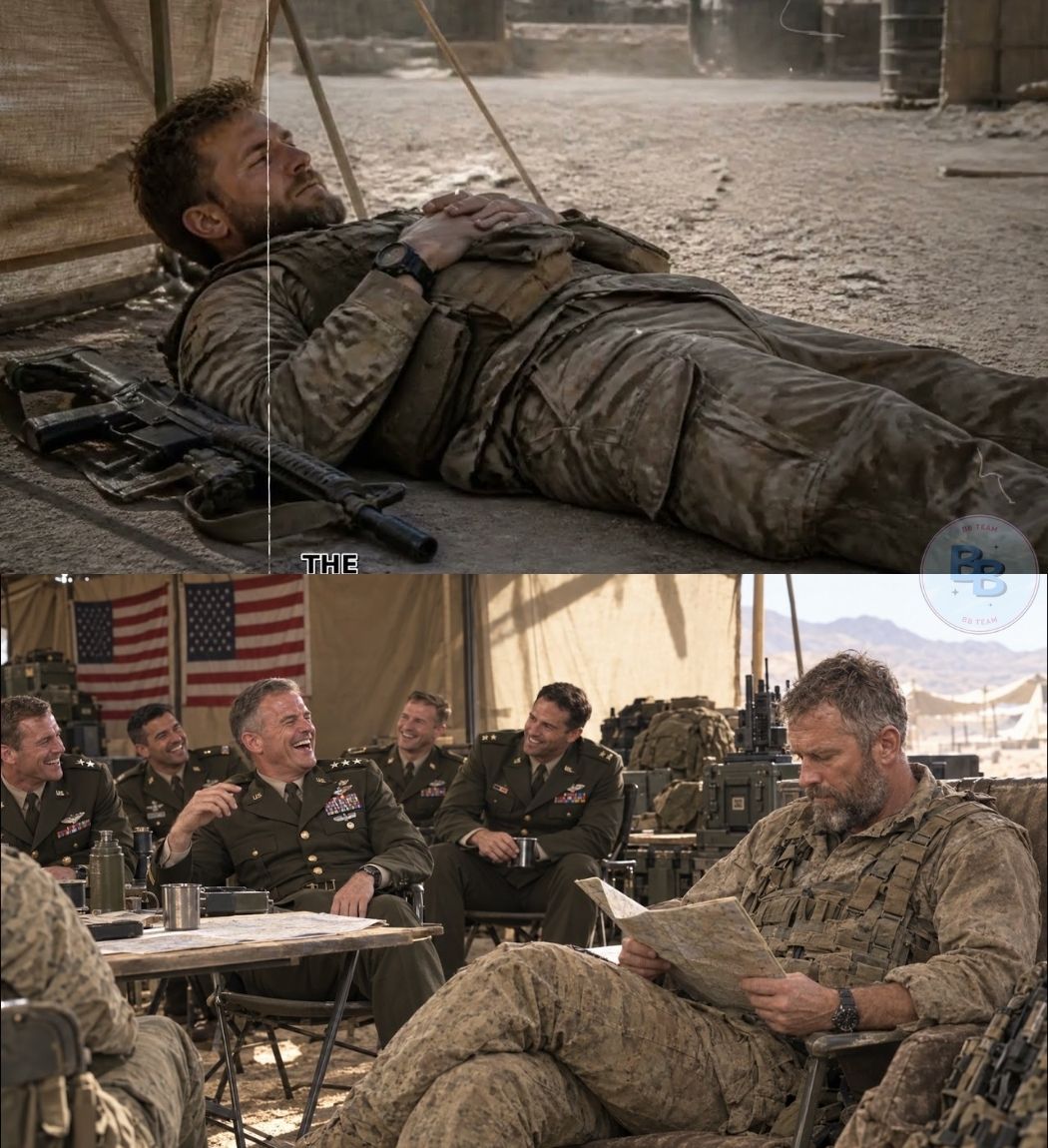
“He’s Just A Sergeant” The US Colonel Who Laughed At The SAS, Until The Night Everything Went Wrong
The air inside the Forward Operating Base tactical command tent hung thick with the metallic stench of stale coffee, damp camouflage, and the unmistakable, suffocating weight of impending doom. Outside, the jagged mountains of the Hindu Kush carved a razor-sharp silhouette against a moonless, star-choked Afghan sky. Inside, fluorescent light flickered over laminated topographical maps, casting long, jittery shadows across the faces of men who had stared death in the eye too many times to count.
At the center of it all stood Colonel Marcus Vance. Pristine, impeccably groomed, and dripping with the arrogant condescension of a West Point graduate who had never once smelled the copper tang of real, close-quarters combat, Vance was a man who measured war in PowerPoint slides and casualty projections. To him, the British Special Air Service detachment attached to his command was little more than a pack of unruly, undisciplined mercenaries who played by their own rules. And tonight, those rules were about to collide with a catastrophic wall of military hubris.
Leaning over the map table was Master Sergeant Alistair “Mac” McAllister. A thirty-year veteran of the SAS, Mac’s face was a roadmap of scarred skin, cold calculation, and hard-earned wisdom. His eyes, faded to the pale blue of winter ice, scanned the proposed infiltration route for Operation Iron Spear with a creeping sense of absolute dread. The target was a heavily fortified insurgent communications hub nestled deep within a treacherous gorge. Vance’s plan called for a massive, thunderous frontal assault utilizing mechanized infantry supported by heavy mortar fire, completely bypassing stealth in favor of raw, thunderous American firepower.
“With respect, Colonel, this plan is an absolute suicide mission,” Mac said, his voice a low, rascal rasp that cut through the low hum of the tactical radios. “The terrain in the pass acts like a natural acoustic amplifier. If you roll armor in there without clearing the ridges first, you aren’t launching an assault—you’re driving your men straight into a fishbowl. The enemy has the high ground locked down with heavy machine guns and anti-tank teams. We need a small, clandestine insertion to neutralize the ridge nests before the main body moves.”
Colonel Vance didn’t even bother to look up from his tablet. A patronizing, venomous smirk curled the corners of his mouth. He let out a sharp, dismissive laugh that echoed mockingly against the canvas walls, drawing uncomfortable shuffles from the junior officers standing nearby.
“Listen to me very carefully, Master Sergeant,” Vance drawled, his voice dripping with condescension as he straightened his collar. “In the United States Army, we don’t skulk around the shadows like frightened ghosts waiting for permission to fight. We bring the hammer down with overwhelming force. Your little British regiment is used to fighting insurgent cell remnants in the desert shadows, but this is a real war. Save your amateur hour tactical advice for your pub buddies back in Hereford. He’s just a sergeant, people—he doesn’t design the strategy here. We execute as planned at 0200 hours.”
Mac stared at the Colonel for a long, heavy moment. There was no anger in the SAS veteran’s eyes—only a profound, chilling pity. He slowly closed his notebook, tucked it into his chest pocket, and gave a stiff, ironical nod.
“Understood, Colonel,” Mac murmured, turning on his heel. “May God have mercy on your boys, because the men waiting in that gorge certainly won’t.”
By 0145 hours, the desert night had plummeted to a bitter, bone-chilling freeze. The staging area was a hive of controlled chaos as armored Stryker vehicles roared to life, their diesel engines thrumming through the earth like a mechanical heartbeat. Colonel Vance stood on an elevated command berm, binoculars pressed to his eyes, watching his proud mechanized columns begin their slow, grinding crawl toward the narrow entrance of the Korat Gorge. He looked like an emperor surveying his triumphant legions, completely blind to the abyss opening up beneath his feet.
At 0215 hours, the silence of the valley was violently shattered.
It didn’t begin with a warning shot or a distant scout report. It began with an apocalyptic roar of steel tearing through flesh. The lead Stryker vehicle hit a massive, remotely detonated improvised explosive device buried deep beneath the shale, lifting the twenty-ton combat vehicle completely off the ground before it slammed back down in a ball of searing, white-hot flame. The shockwave rolled back through the gorge, knocking secondary vehicles off balance and instantly plunging the convoy into chaotic darkness.
Before the dust had even begun to settle, the surrounding cliff sides erupted. Thousands of rounds of heavy caliber machine-gun fire rained down from the pitch-black ridges above, systematically shredding the thin armor of the American transport vehicles like paper. RPG trails streaked through the night sky like angry red comets, detonating against fuel tanks and personnel carriers with devastating, concussive force.
Inside the command tent, the tactical radios instantly devolved into an absolute symphony of human terror. Screams of agony, frantic cries for medic support, and overlapping reports of catastrophic casualties drowned out the steady hum of the generators.
“We are taking heavy flanking fire! We are pinned down in the kill zone! Send armored support, for the love of God, send—!” a frantic voice screamed over the primary tactical frequency before cutting off abruptly into a sickening burst of static.
Colonel Vance’s face drained of every drop of color. The arrogant, triumphant smirk had vanished entirely, replaced by a mask of sheer, unadulterated panic. His hands trembled violently as he grabbed the radio handset, his voice cracking into a high-pitched shriek.
“All units, report! Fall back! Fall back immediately!” Vance shouted, but his commands were completely swallowed by the deafening chaos of the ambush. There was no falling back. The gorge was a slaughterhouse, and his men were trapped like fish in a barrel.
As the situation deteriorated past the point of no return, the tent flap flew open. Master Sergeant Mac and a twelve-man SAS rapid-reaction element stood in the doorway, fully geared up in night-vision equipment, suppressors locked onto their carbines, and grim determination etched across their dirt-smeared faces. They hadn’t waited for orders; true professionals never do when amateurs are busy destroying the world.
Mac walked right up to the paralyzed, shaking Colonel, towering over him in the flickering red emergency light.
“Your grand hammer just hit an anvil, Colonel,” Mac said, his voice ice-cold and devoid of any emotion. “Now, unless you want every single soldier out there to bleed out in the dirt while you piss your pants, sit down, shut your mouth, and let the professionals clean up your mess.”
Without waiting for an answer, Mac turned to his squad. “Move out! Let’s go pull those kids out of the fire.”
What followed over the next six hours was nothing short of a miracle born from supreme tactical grit. While Colonel Vance sat frozen in the command tent, staring blankly at his hands, Mac and his SAS operators slipped up the sheer, unguarded cliffs through a blinding vertical goat path that Vance’s intelligence staff had deemed “impassable.” Operating in absolute silence under the cover of thermal optics, the British unit systematically dismantled the insurgent heavy weapon nests one by one, engaging in ruthless, silent close-quarters combat in the jagged crags of the mountain.
By dawn, the valley floor was littered with the smoldering wreckage of American armor and the grim toll of unforgivable hubris. Over thirty US soldiers were severely wounded, and nearly a dozen lost their lives in a battle that never should have happened. As the medical evacuation helicopters finally touched down to ferry the broken bodies away, Colonel Vance walked out toward the wreckage, his boots sinking into the blood-soaked ash, a hollowed-out shell of a man.
He searched the perimeter for Mac, desperate to offer some pathetic semblance of an apology, but the SAS sergeant was nowhere to be found. The British detachment had already packed their gear, slipped back into the shadows from whence they came, leaving behind only the cold, bitter reality of war.
Back at the Pentagon, the official after-action report was heavily sanitized, scrubbed clean of Vance’s monumental incompetence to protect the political optics of the command chain. Colonel Vance quietly retired six months later with a respectable commendation medal pinned to his chest, drifting into a comfortable civilian life of corporate consulting.
Yet, to this day, friends whisper that on dark, stormy nights, Marcus Vance wakes up in a cold sweat, staring wildly into the empty corners of his bedroom. He can still hear the deafening roar of the IED, the frantic screams of dying boys through the static, and the chilling, ice-blue gaze of a sergeant who warned him that pride always comes before the slaughter.