“It Was Unbelievable” — Why Two Spetsnaz Officers Went Silent After Watching The SAS
“It Was Unbelievable” — Why Two Spetsnaz Officers Went Silent After Watching The SAS
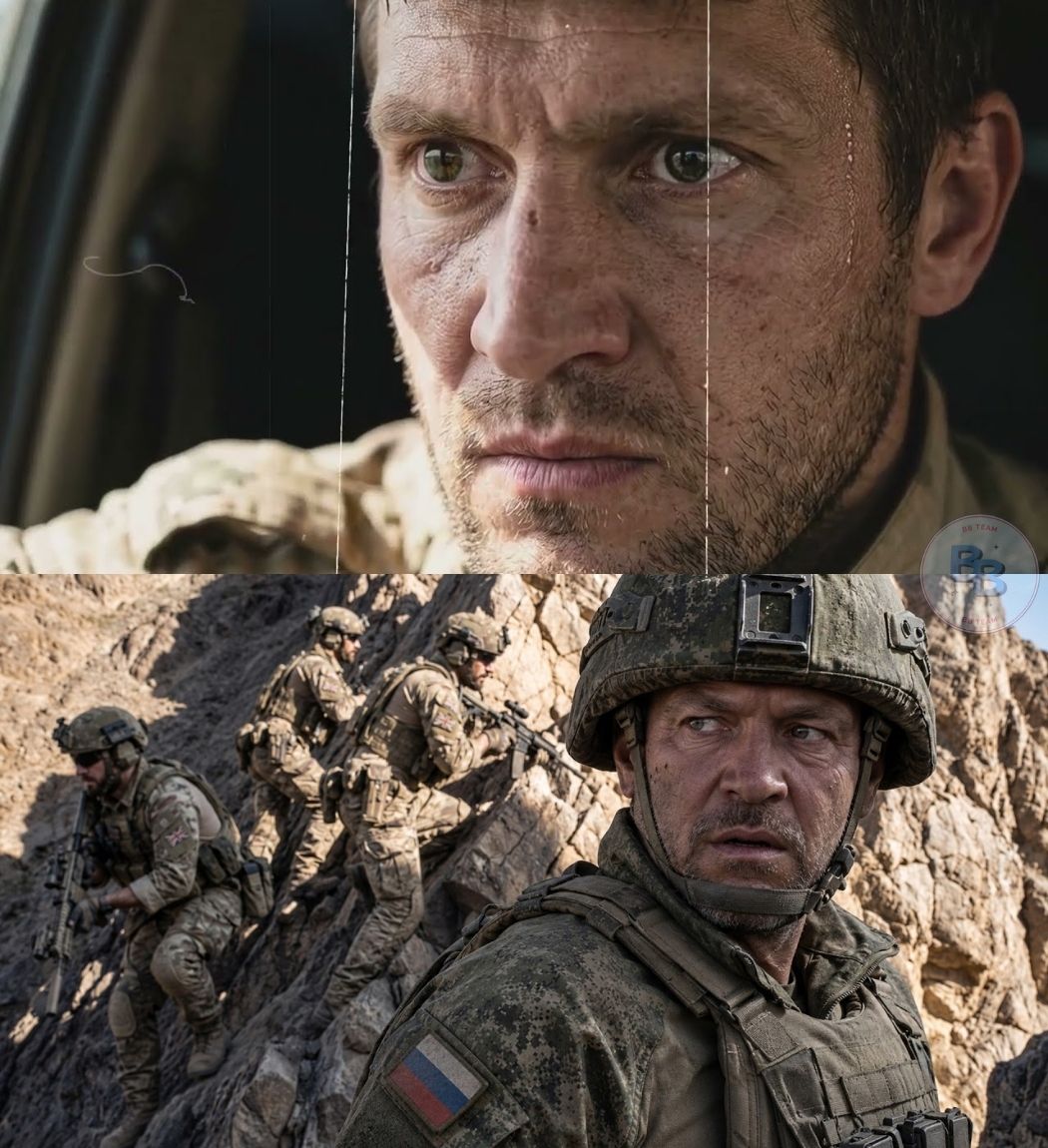
You are looking at two Russian officers who have not spoken to each other for 19 minutes. One of them is a Vympel major with a green notebook open on his knee and a pen uncapped in his hand and he has not written a word. The other is a GRU captain who laughs before he speaks and he has not laughed since sunrise. They are sitting in the back of a Land Rover Wolf on a track above Sennybridge in the Brecon Beacons in Wales. And the rain is not the drama of rain in films. It is the fine patient rain of the Welsh uplands, the kind that soaks a man from the inside of his collar down, and neither of them notices it anymore. Below them, a column of figures in olive smocks is coming off the fan by the eastern ridge. There are 12 of them. They are not running and they are not walking. They are moving at the pace the regiment moves under a Bergen which is a pace that has no name in Russian doctrine. One of the figures one-third from the front is a Welshman called Preduk who has not spoken since the rendezvous at first light either though for entirely different reasons. Voronin the major watches the third figure resolve out of the mist. He has been in Beslan. He has been in Grozny in the second war. He has stood over the bodies of men his own age and made professional notes about the entry angle of the round that killed them. He is not a man given to reverence. He closes the notebook. He does not close the pen. The pen stays uncapped in his fingers and a bead of rain runs down the barrel and drips onto the empty page. Tarasov next to him is looking at the same figure. He opens his mouth once. He closes it. The question the two of them will not ask out loud and that their driver Baktin is too well-trained to ask for them is this. What have we been doing wrong for 20 years? And beneath that question, the older one, the one Voronin will only articulate months later in Moscow in a room without windows to a man he trusts. What did we watch this morning that we cannot admit we watched?
To understand what happened on that hillside and what did not happen, you have to understand who Arkadi Voronin was before he stepped onto it. He was 39 years old in the year of the exchange and he had come up through the harder of the two Russian ladders. Airborne school at Ryazan in the late 1980s where the training staff considered a broken collarbone during hand-to-hand a matter of poor rolling rather than injury. From there into the naval infantry following the ghost of his father. That father was a Soviet Marine colonel who had died of a heart attack at 53 with three combat awards on his tunic and a habit of measuring his only son against standards the son could never quite reach. From naval infantry into Vympel, the FSB’s Directorate for Special Operations. In the mid-1990s, when Vympel was rebuilding itself out of the wreckage of the Alpha Split, and taking men only from units that had already thinned themselves, he had done two full tours in the North Caucasus. He had been part of the after-action review team at Beslan, which is not a thing a man volunteers for lightly, and which had left a small permanent tightness in his voice when he spoke of children. He was a qualified hand-to-hand instructor in the Russian system, which is a system that treats the human body as a tool that will either survive being used correctly or fail and thus need replacing. He could run 10 kilometers in full kit in a time that most western tier 1 selection candidates could not match on their best day. He had killed by his own private count 11 men, and he did not remember most of their faces because he had trained himself not to. He was, by every honest measurement, a serious man.
His belief, the one he brought with him to England in a suit carrier and a professional issue kit bag was this. Elite soldiers are produced by a specific process. You take a large number of hard young men and you subject them to conditions that break the merely capable and what is left is the material you require. The process must be brutal. The process must be humiliating. The process must include real fear, real injury, and ideally real deaths, not from carelessness, but from the honest edge of the training. This is how Vympel is made. This is how the 45th is made. This is how the naval infantry is made. He had watched Americans train in Kazakhstan on a joint exercise once, and he had come away thinking they were athletes rather than soldiers. Fit, well-fed, extraordinarily well equipped, and fundamentally unbroken, he had made a private note in the green pocketbook. Not tested by loss, he expected the British to be a softer version of the Americans, better manners, worse food, similar athletes.
Jora Tarasov, his junior on the trip by four years and two ranks, had different credentials, but the same instinct. GRU 45th Guards Spetsnaz Brigade out of Kubinka, a reconnaissance company commander in the second Chechen war. Army boxing champion at heavyweight in the year 2000, which had left him with a flat nose and the confidence of a man who has been hit hard by a professional and stood up afterwards. He believed in the process, too. He believed that a soldier who had not been genuinely afraid of his own training staff was not yet a soldier.
They had come to Hereford together in the second week of an unusually wet October, expecting to observe a system that was famous and probably overrated. They had been given permission to watch, to ask, and to make notes. They had been given no permission to be impressed. That was not what observers were for.
The exchange itself was a small quiet thing, the kind of arrangement that happens between professional services during the brief windows when politics allows. Two Russian officers, one non-commissioned officer as driver, three weeks observer status only, no live participation, no access to sensitive material, no photographs. In return, at some point in the following year, two men from the regiment would spend a similar period at Znagorsk, watching the Russian side train and drawing their own quiet conclusions.
They were driven from Brize Norton to Herefordshire in a plain civilian estate car by a corporal who did not tell them his name. The countryside outside the window was not what Voronin had expected. He had read about Hereford as if it was somewhere in the mountains. The way people write about the Special Air Service tends to fold its base and its selection ground into one mythic place. But Hereford was a market town in the flat, damp English West with black and white timber-framed pubs and a cathedral and cows in the fields. The base itself, Stirling Lines at Credenhill, was a former Royal Air Force Station a few miles outside the town. It looked from the outside like any other British army establishment. Fences, a gate house, unremarkable buildings behind the trees.
Selection, they would learn, happened elsewhere, in Wales, in the Brecon Beacons and the Black Mountains. A 2-hour drive south and west into country that was in fact mountainous in the specific low weather-punished way British mountains are mountainous. On the first evening, they were received by the commanding officer, Lieutenant Colonel Hugo Fairbairn, in a small mess room with a coal fire that smoked. Fairbairn was ex-parachute regiment, tall, unhurried, and he greeted them in Russian, not phrasebook Russian, proper Russian, with the correct case endings and a Petersburg vowel he had picked up somewhere he did not explain. He spoke it for perhaps three minutes, enough to welcome them, enough to name the men who would be their principal hosts, enough to make Voronin understand that the informal chain of information between the two services was longer and better maintained than he had assumed. Then he switched to English and never used Russian in front of them again.
Voronin made a note in the green book. He is showing us the door is open. He is also showing us the door.
The dismissal came later that evening in the accommodation block when the British had gone and the Russians were alone. Tarasov had drunk two beers which Baktin was warming up. He sat on the edge of the narrow bed with his boots off and his flat-nosed face reddened by the fire and by the flight. And he said the thing that both of them had been thinking on the drive.
“Your selection is a walking competition in the rain,” he said. He said it in Russian to Voronin, but he said it loudly enough that Baktin in the next room could hear. “We break men, you tire them.”
Voronin did not answer at once. He was standing at the window, looking out at the sodium lit car park and the rain that had started again. And he was thinking about the man Fairbairn had named as their principal host for the field portion, a squadron sergeant major with a Welsh name he had not caught on the first hearing. He turned from the window.
“We will see,” he said. “3 weeks, then we will see.”
But he agreed with Tarasov. In the private ledger of his professional judgment, he had already written the assessment he expected to file in Moscow. A well-organized light infantry selection with excellent administration and mediocre stress. Suitable for the British temperament, not to be confused with a serious process. He would carry that assessment uncorrected for exactly 4 days.
The first wrong footing was not on the ranges and not on the hill. It was in a corridor. They were being walked between briefing rooms on the second morning along the ground floor of the training block, though Tarasov, still mentally in a Russian building, kept calling it the first. The man walking them was the squadron sergeant major Astin Preduk, B squadron. He was somewhere in his early 40s, broad in the shoulder and short in the leg, with the flat, quiet face of a man from Machynlleth, who had learned early that saying less made other men say more. He was carrying a battered enamel mug with a hairline crack down one side, and he refilled it from an urn as they passed the mess without breaking stride or spilling a drop. He had not, Voronin realized, raised his voice once, not that morning, not the previous evening, not on the parade ground, when a young trooper had jogged past without seeing him, and then seeing him had stopped so abruptly that his rifle had swung on its sling. Preduk had said something short and low that Voronin had not caught, and the trooper had gone very still, and then had moved off in a different direction, and Preduk had walked on with the mug. In Voronin’s world, a squadron sergeant major would have taken that trooper apart in Russian in front of anyone who happened to be watching, and the trooper would have been the better for it. He would have shouted. He would have used his rank as a physical object. Preduk had used something else. Voronin was not yet sure what.
The second wrong footing was in the room where they were introduced to the mountain troop senior, Staff Sergeant Dominic Ashworth. Ashworth was reading. He was sitting on a plastic chair against the wall of the briefing room waiting for them with a paperback book open on his knee. And when they came in, he finished his sentence. Not the page, the sentence. And then he stood and shook their hands. The book was face down on the chair when he stood. Voronin, who had a habit of noting titles, noted this one. It was a small orange Faber edition of Louis MacNeice. There was a scar through Ashworth’s left eyebrow, thin and old, that lifted the eyebrow into a permanent slight interrogation.
“Poetry,” Tarasov said in Russian to Voronin once they had sat down. He said it the way a man says interesting, meaning the opposite.
Ashworth, who did not speak Russian, understood the tone perfectly, and did not react to it. He briefed them in a soft north of England voice on the coming week. Two days of range work at Pontrilas, a night navigation serial on the beacons, and at the end of the first week, what he called simply a walk on the fan. He did not oversell any of it. He said, “Walk the way a fisherman,” says a bit of a swell.
The third wrong footing came at lunch. They ate in the ordinary mess with the ordinary soldiers, which Voronin had not expected. In his world, foreign observers ate with the officers in a separate room from better plates. Here they queued behind a cook’s mate with a nose stud and were given a plate of what was honestly quite bad pasta. And they sat at a long table with troopers who did not stare at them and did not ignore them either. Men who simply included them in the flow of the meal with the practiced English trick of being neither warm nor cold. There was no swagger. That was the thing that Voronin, chewing his pasta slowly, could not stop noticing. In every elite unit he had known, in his country and in others, there was a manner, a way of walking, a way of holding the eyes, a way of taking up more space than one’s body strictly required. The Americans he had watched in Kazakhstan had it in abundance. His own men had it, subtler, but present. Here in a mess full of men who had statistically done more genuinely dangerous things in the last 5 years than any comparable population on earth. There was none of it, he wrote in the green book at lunch on his knee under the table. They do not perform being dangerous. Consider why. It was the first line in the notebook that would not later be crossed out.
The fan dance is not a secret. It is a route across the highest ground in the Brecon Beacons up and over Pen y Fan and back carrying a Bergen and a rifle done to a time that has been the same for decades because the ground has been the same for decades. Voronin had read a description of it in a western military journal on the flight from Moscow. He had come away with the impression that it was a fitness test for candidates and a nostalgia ritual for badged men. He had not understood that the ritual and the test were the same object.
They went out at first light on the fifth day in a convoy of three Land Rovers from the drop off at the Storey Arms car park on the A470. It was raining. It had in fact been raining since the previous afternoon in the fine continuous Welsh way that the local men do not classify as weather. The tops were not visible from the road. Somewhere above the low cloud was the summit of Pen y Fan 886 m the highest point in southern Britain and somewhere on the far side was the rendezvous. Voronin and Tarasov were not carrying full Bergens. They were observers. They had light day sacks and their notebooks and a radio. The regiment men, 12 of them from B squadron, doing a routine reinforcement of their own fitness rather than any kind of selection event, were carrying 35 plus rifle plus water, which was the standing load, and they had 8 hours to complete the route to standard.
The trooper Voronin had been told to keep an eye on at Preduk’s suggestion was Sergeant Ridian Murig, a farmer’s son from Ceredigion, sniper qualified in mobility troop with hands like a bricklayer’s and a habit, Preduk had said with something close to a smile, of speaking Welsh on the radio when he wanted to annoy the headshed. Murig was 31. He had been in the regiment for 4 years.
They set off at 6:12. Voronin timed the first hour on his watch. The first thing he noticed was that no one was talking. In a Russian unit on a march, there would be voices, the low continuous conversation of men managing the pace together, the occasional joke from the back. Here there was breathing and boots. Preduk was at the front. He did not look back. He did not check his watch. He walked at what appeared to be his ordinary walking speed, which was not slow, and the 11 men behind him fell into it as if the pace were a shared piece of furniture in the room they had all grown up in.
The second thing he noticed was the ground. Voronin had trained on hills. He had trained in the Caucasus, which is a proper mountain range. He had not trained on this. The beacons are not high, but they are shaped by centuries of sheep and weather into a surface that is neither path nor slope, but a soft deceptive give. Tussocked grass over bog, over hidden stones, over water that appears with no warning at the level of a man’s shin. Every step took more from the leg than the map suggested. Within 40 minutes, his own light day sack felt as if it had gained a stone. He looked ahead at Murig’s Bergen, which was heavier than his by 20 kilos, and Murig’s step had not shortened.
At the summit of Pen y Fan, the wind hit them. Voronin, who had thought he understood wind, understood that he had not. It came off the western side of the ridge in a flat continuous slap that took the breath sideways out of the mouth before the mouth could close on it. There was no view. There was cloud in every direction and the small stone trig point rising out of it. And Preduk touched the trig with one hand without stopping in a gesture that was neither a salute nor a superstition but something older than either and he went over the top and down the other side without breaking his pace. Tarasov behind Voronin was breathing hard. Voronin did not look at him. It would have been a discourtesy.
On the descent, Voronin fell twice. Not badly, not painfully. The tussocks caught him and put him down onto his hands. The regiment men did not fall. They came down the slope in a rhythm he could not identify. Not fast, not cautious, but placed as if each of them had made an arrangement with the ground before setting off that morning that the ground was now honoring. Murig came down the last steep section past Voronin and without slowing, without turning his head, said, “Watch the stone with the moss on it, sir. It goes over on you.”
He said it in English for the Russians’ benefit. Voronin heard the switch. He had heard Murig on the radio earlier that morning at the first checkpoint doing something with the call sign in Welsh and Preduk on the other end saying something back in Welsh and both of them laughing without laughing. That had been for their own amusement. The warning about the mossy stone had been for him.
They made the rendezvous in 6 hours and 41 minutes. Voronin with a lighter load and no responsibility for anyone else’s route was 22 minutes behind Preduk. Tarasov was 39 minutes behind. Baktin who had come along for the last stretch from a jeep insertion had turned back at the halfway point without complaint. At the rendezvous in the lee of a stone wall, the 12 regiment men were sitting on their Bergens drinking hot brews from thermos flasks that Preduk had somehow arranged to be there before them. No one was breathing hard anymore. No one was talking about the time. Murig was eating a boiled sweet.
Voronin sat down on his day sack. He unclipped his water bottle. He drank. He did not open the notebook. The assumption that had died on the walk was a specific one. And he made himself say it to himself in Russian in his head precisely because he was a man who believed that a thing not named was a thing not properly killed. We break men. They do not.
It had not been a walking competition in the rain. It had been a language he did not speak, spoken fluently in front of him for 6 hours and 41 minutes by men who had not raised their voices and had not at any point seemed to notice that anyone was watching. That he understood was the wrong footing. They had not been performing.
They had a rest day after the fan. The regiment did not call it a rest day. They called it admin. Kit was cleaned, feet were checked, ammunition was drawn from the armory for the following morning, and a small mountain of paperwork was moved from one desk to another by a corporal in the mobility troop office who did not appear to enjoy his life. Voronin and Tarasov were left alone in their accommodation for most of the afternoon, which was the first time since arrival that they had had genuine privacy. Tarasov used it predictably to rebuild his position.
“So they can walk,” he said. He was lying on his bed with his feet up on the metal rail staring at the ceiling. His voice had recovered its ordinary volume. “So they can walk in the rain in Wales. Good. I did not doubt they could walk.”
Voronin at the table by the window did not answer.
“Fitness is not the test,” Tarasov said. “Fitness is the ticket to the test. We will see them shoot. We will see them in a room. Then we will see.”
He rolled onto his side and looked at Voronin. Voronin was writing in the green book. Tarasov could see from the bed that he was writing quickly, which was unusual.
“And their kit,” Tarasov added on the way to something else, “is not even expensive. You saw the boots, ordinary boots, British issue.”
He said it lightly. He said it as an ordinary Russian officer’s ordinary observation. He said it once. He would not say it again for the rest of the trip, and neither would Voronin, because within 24 hours they would both understand that the money was not the point, and had never been the point, and to keep talking about it would be to admit they had missed the point on purpose.
That evening, in the mess, Voronin found himself standing next to Ashworth by the urn. Ashworth had the paperback in his back pocket, folded, spine broken. He nodded at Voronin without pretending they were friends.
“How were your feet after yesterday?” he asked.
“They were adequate,” Voronin said.
“Good,” Ashworth said. He poured tea into a paper cup for himself. “Preduk was worried.”
Voronin looked at him.
“He said you had fallen twice on the descent,” Ashworth said. “He said the second one was slower to get up from than the first. He wanted to make sure you were not carrying anything into tomorrow.”
Voronin did not know what to say to this. In his professional life, no senior man had ever asked through a third party whether his falls that morning were healing. The idea that Preduk had noticed both falls and had classified them by their recovery time while ostensibly not looking back at any point was information Voronin needed a moment to process.
“Tell him,” he said finally, “that both falls are recovered.”
“I will,” Ashworth said. He drank his tea. He walked away.
That night, in bed, in the dark, Voronin listened to Tarasov snoring in the next room and to the rain against the window. He was still tired from the fan in a way he did not want to admit. He was not, as he had assumed he would be, resentful. He was curious, and curiosity in a man like Voronin was a form of surrender he had not yet noticed committing.
The killing house at Credenhill is not a house. It is a low, thick-walled building at one end of the training area, purpose-built with rooms whose partitions can be reconfigured, ceilings low enough to matter, and walls of a construction that absorbs live rounds without spitting them back. Foam-backed hostile targets are set out on rails and pulleys together with civilian figures painted with faces, and the lighting is controlled from a booth above.
Voronin and Tarasov are taken into the observation gallery on the seventh morning. The gallery is behind ballistic glass above the main entry room and from it they can see three quarters of the ground floor. They have been told to watch and not to speak. It is Preduk’s team. Six men. Murig is on point. Ashworth is number two. The other four are troopers whose names Voronin has not yet learned. One of them from air troop has a beard that would not be permitted in a Russian barracks and a manner so quiet that Voronin has not in three days of the same mess heard him speak.
The scenario is a hostage rescue in a small domestic layout. Three armed hostiles, two civilians, one of them wounded on the floor of the second room. The team is stacked outside the main door. Live rounds, no blanks, no simunition, no rehearsal for the observers. The house goes dark.
The entry when it comes is not what Voronin has been expecting. In the Russian system, a room entry is a wave. Men move fast, loud, with a shout that is partly command and partly a psychological weapon against the men in the room. The idea is to fill the space with noise and bodies faster than the enemy can process. It is not wrong. It works at cost.
Here there is no shout. The door goes in with a single controlled charge, a flat crack rather than a bang. And the six men come through it in a sequence so tight that from the gallery it looks like one man passing himself into the room six times. Murig takes the near corner. The Diemaco C8 in his hands. The SIG Sauer P226 Voronin notes in the fraction of a second in which he can note anything comes up and puts two rounds into the first hostile target at 4 m. Ashworth is already past him. The second man takes the far corner. The third goes low. The fourth, fifth, sixth flow past into the corridor.
Voronin has not heard a single voice. There are shots. He counts them because counting is what his hands know how to do. Two. Two. Two. Three doubles. Then two more from the corridor. Then a pause of perhaps a second and a half in which he can hear through the wall a woman-shaped target being lifted off the floor by two of the troopers with a care that is entirely professional and somehow entirely human. Then two more shots further in and then silence.
The lights come back up. It has been from breach to silence 17 seconds. Voronin looks at his watch. He looks at Tarasov. Tarasov is not looking back at him.
They are taken down into the house afterwards on Preduk’s nod. The smell hits them first. Burnt propellant sharp and clean, and under it the specific smell of a building that has been shot in. The smell of pulverized drywall and the plastic of the target backers. This is the smell of the actual work.
The hostile targets have taken two rounds each. Tight upper chest at the vertical center line. The civilian targets have taken none. There is a target of a woman with a child in her arms in the corner of the second room and it has not been touched. And Voronin realizes walking past it that not touching it was the harder shot because in the flow of the entry the child’s silhouette had crossed the line of Murig’s muzzle for perhaps a quarter of a second and Murig had not fired.
He asks Ashworth about it. “You saw the child,” he says, not a question.
Ashworth is unloading. He does not look up. “You always see the child. You are not ready to be in the room.”
Voronin writes nothing in the notebook. He is holding it. He is not writing. Tarasov next to him is looking at the pistols. The team have their Glock 17s in drop holsters. He has been expecting Voronin knows some more elaborate sidearm. Some special variant, some regiment-only configuration. The Glocks are ordinary Glock 17s. The magazines are ordinary. The holsters are ordinary. The difference is not in the pistol. The difference is that the pistol has not been drawn.
They run the scenario twice more that morning with different room configurations and different hostage placements. The second run is 15 seconds. The third is 19 because the third scenario has been deliberately designed with a civilian moving at the wrong moment and Murig has held his fire for a full second and a quarter waiting for the geometry to open up. 19 seconds, Voronin understands, is not slower. 19 seconds is a decision.
Between the second and third runs, Preduk comes into the gallery with the enamel mug. He does not sit down. He looks at Voronin. “You have done this yourselves,” he says. “In your service. Yes.”
Voronin says, “How fast?”
Voronin considers the question. He considers a professional lie. He considers the truth. He is a serious man and he has been raised in a system that regards lying to another professional about capability as a small betrayal of the whole idea of being a professional. “Faster in some rooms,” he says, “louder in all of them, not as clean.”
Preduk nods. He does not smile. He drinks from the mug and he goes out of the gallery. And the third run begins.
Tarasov, when the lights go down for the third time, exhales through his flat, broken nose. He says something under his breath in Russian that Voronin does not entirely catch. Voronin thinks it might have been the beginning of a joke that Tarasov has decided halfway not to finish. The joke does not come back.
That night Voronin does not sleep for the first 2 hours. He lay on the narrow bed in the accommodation block at Credenhill with his hands folded on his chest in the position his father had taught him as a boy, the position of a soldier who is resting rather than sleeping, and he went through the day again in the order it had happened. He was a professional. He had a method. He ran the tape, the breach, the angle of Murig’s rifle as it came up, the absence of the shout he had been braced for. The precise silence of Ashworth’s boots on the concrete, because there had been no boot noise, and boot noise in an entry is a thing every man he had ever trained with had produced without noticing. He ran it again. He ran the second entry. He ran the third, the 19-second one, and the moment where Murig had held.
Murig had held. Voronin had in his career given the order to fire in situations where a civilian silhouette had crossed the line at the wrong moment. He had given the order because the alternative, a further second of exposure for his own men, was by the arithmetic of the Russian doctrine he had been trained in, the worse outcome. He had been right by that arithmetic. He had also, in one specific instance, in a courtyard in Grozny in the winter of 2000, been wrong in a way that had never entirely left the back of his mouth.
He got up. He went to the window. The rain had stopped. There was a moon behind the cloud showing as a paler patch of gray, and the car park was wet and shining under the sodium light. And somewhere across the base, a dog was barking and being ignored.
He opened the notebook on the small desk under the window. He uncapped the pen. He tried to write the assessment he had come there to write. A well-organized light infantry selection with excellent administration. The words would not come. His hand did not want to shape them. He tried again more honestly. Their close quarter method emphasizes restraint over speed and produces…
He stopped. He did not know how to finish the sentence. Every word he could think of to finish it with was a word that would, when read in Moscow, be understood as praise, and observers were not sent to praise. He put the pen down. He sat at the desk in his undershirt in a British army accommodation block in the English West at 3:00 in the morning, and he understood quite calmly that the framework he had carried for 20 years had a hole in it.
The framework said elite soldiers are produced by breaking men. The framework had produced in his own person a man who was very good at things a man should not have to be good at. The framework had produced Vympel and the 45th and the naval infantry and the specific memory in the courtyard in Grozny that had not left him. What he had watched that day was not the product of that framework. What he had watched that day was the product of a different one, a framework in which the tiring was preparation, not the point. And the point was that in the 17th second of an entry, a man did not fire at a shape that might be a child. The framework in which he had been trained had regarded that second of restraint as unaffordable. The framework he had watched that day regarded it as the entire purpose of the exercise. Everything before it, the walking in the rain, the mug of tea in the enamel cup, the paperback in Ashworth’s back pocket, the boy officer’s Russian at the first evening. All of it had been in the service of that second.
He was not humiliated. He was something worse than humiliated. He was reorganized. Some furniture in him had been moved, and he did not know yet where the new arrangement would end. He did not write in the notebook that night. He kept the pen. At 4 he slept. He slept well. In the morning Tarasov looked at him at the breakfast table and did not ask.
The turn when it happened was not on a range and not on a hillside. It was in a Land Rover on a wet track on the way back from a demolition demonstration on the 11th day, and it involved a cup of tea. Voronin had slipped on the way down from the demolition pit. His right ankle, which had taken the second of the two falls on the fan a week earlier, had gone from him under a wet plank, and he had come down hard on his side into a shallow ditch of running water. He was not hurt in any serious sense. He was winded, cold, wet through on the side that had not previously been wet, and this was the part that mattered. He had done it in front of Murig and Preduk, and no one else.
Preduk was out of the Land Rover before Murig was. He did not run. He walked quickly. He put a hand under Voronin’s elbow, not the shoulder, the elbow, because a man who had fallen preferred to be lifted from the joint below rather than the joint above, and Preduk knew this the way another man might know a phone number. He brought Voronin up out of the ditch and onto the track without effort and without comment. He said only, “Bit greasy underfoot today, sir.”
He said it in exactly the tone he might have used to a squadron member in his second year. He did not adjust the tone upward for a Russian major, and he did not adjust it downward. In the Land Rover, he unscrewed the top of the flask he kept in the door pocket. He poured tea into the enamel mug with the hairline cracked down its side, which was his own mug, not a spare, and he handed the mug to Voronin. “Drink that,” he said.
Voronin took the mug. He drank. The tea was very strong with too much sugar in it in the way regiment tea has too much sugar in it because sugar is a legitimate piece of kit. He drank half of it. He was about to hand the mug back. Preduk was looking out through the windscreen at the rain. Preduk said without turning, “Finish it.”
It was not an order. It was a courtesy stated as an instruction in the specific British working-class way that a courtesy is stated when a man does not want to appear to be offering one. Voronin finished it. He handed the mug back. Preduk took the mug. He put it into the door pocket without wiping it. Murig driving had not said anything at all.
That was when Voronin understood the thing he had been trying to understand for a week. The economy he had mistaken in the first days for coldness and then for a strange English form of arrogance, the not raising of the voice, the not swaggering, the not performing, was not economy at all. It was care. It was care so unshowy that a man from Voronin’s world could spend a week inside it before recognizing it, because the signals for care in Voronin’s world were entirely different signals, loud, physical, ritualized. Here care was that a mug was not wiped after a foreign officer had drunk from it. Care was that a fall was classified by its recovery time. Care was that a target with a child in its arms was left standing.
The mastery he had watched on the hill and in the house was not separate from that care. It was the same thing at a different tempo. He looked out at the rain. He did not speak. Murig did not speak. Preduk did not speak. The three of them rode the last four miles into Credenhill in a silence that for the first time since Voronin had arrived in England was not a silence he was trying to fill with a note.
Pontrilas is a training facility south of Hereford where the regiment maintains among other things a full-scale mock embassy. It is not the embassy of any particular country. It is deliberately an embassy-shaped problem, three floors, a basement, an internal courtyard, a rear service entrance, and a diplomatic residence in a separate wing connected by a corridor with two doors. It has been shot in, entered, exited, and reset thousands of times in the years since 1980, when the regiment did the real thing at Prince’s Gate and changed for a generation what the world understood about how such problems were solved.
On the 13th day of the Russian visit, they run a full-scale exercise on it. Two teams from B squadron live rounds in some areas, marker rounds in others. Hostages played by regimental staff who were volunteered for the day and are being paid in beer. The observers, Voronin, Tarasov, and Baktin, are placed at three different points around the building in body armor and helmets with radios tuned to the exercise net.
Voronin is on the first floor of the resident’s wing. He is behind a taped line on the floor of a corridor, which is the line he is not permitted to cross. He can see from where he stands, the door of the ambassador’s study and the head of a staircase. The exercise starts at 4:03.
He hears it before he sees it. There is a sound he has learned in the last two weeks to distinguish the sound of the regiment moving through a building at working speed. It is not the absence of sound. It is a specific pattern of sound in which the sounds a building makes when men move through it fast, creeks of floorboard, brush of kit against a doorframe, breath, are present but demoted so that the sounds that matter, the flat crack of a charge, the double tap of a Diemaco, the one-word command moving that is not shouted, sit clearly on top of them.
The team clears the ground floor in 11 seconds. They are on the staircase in 14. Voronin at the taped line does not move. He watches. Murig comes up the stairs first exactly as he had come through the door of the killing house on the seventh day and Ashworth is behind him and the four others flow up in the same tight sequence. They pass Voronin without looking at him. They are past him and into the ambassador’s study and back out of it in 9 seconds. There has been one shot in the study. The hostile in the study has taken it in the upper chest. The volunteer playing the ambassador has been extracted onto the landing on his feet without being touched by any of the six men who have entered the room he was in.
Then something happens that is not in the exercise plan. A door on Voronin’s left, a door he has not been briefed on, opens, and a man in the black tracksuit that is the exercise’s designation for a hostile, comes out of it with what is at this distance plainly a training rifle raised. He is between Voronin and the team. Voronin is behind the taped line. Voronin is an observer. Voronin has no weapon. The nearest regiment man is Preduk, who has come up the stairs in the second wave and is at the top of them now with his own C8 lowered along his leg.
Preduk sees the door open. Preduk sees the tracksuit. Preduk sees Voronin. The rifle comes up in the tracksuited man’s hands. Preduk does not shout. He does not warn. He moves. In one continuous motion, he steps sideways across the corridor between the tracksuited man and Voronin, brings his rifle up, and fires a single marker round into the center of the tracksuited man’s chest at a range of 4 m.
The marker round splashes yellow paint. The tracksuited man goes down onto one knee, which is the drill for a hostile who has been hit, and the exercise controllers in the ceiling booth call kill one upstairs east on the net and the exercise continues. The whole thing has taken from door opening to marker round 1 and a half seconds.
Preduk does not look at Voronin. He is already moving past up the corridor to link with Murig and Ashworth in the diplomatic wing. Voronin stands behind the tape. He is aware in the small clear part of his mind that has continued to work throughout the last two weeks of two things.
The first is that Preduk had, without breaking stride or making an announcement of it, put his own body between an unarmed foreign observer and a rifle raised at 4 m. Not because Voronin was a Vympel major, because Voronin was an unarmed man in the room. It is the same care he has been recognizing for days now in smaller and quieter forms. Its final form when the tempo goes up is this.
The second thing he is aware of is that Preduk has not at any point in the two-week visit described himself to Voronin as anything other than a squadron sergeant major from Machynlleth who liked a strong brew.
The exercise ends at 4:19. 16 minutes for a full compound. Two hostiles hit with marker rounds. All hostages extracted. No blue on blue. No civilian target touched. One observer technically saved, though the observer had not been in real danger because the training rifle had contained only marker rounds, and Voronin knows this, and Voronin also knows that Preduk had not at the moment of stepping across the corridor known what the training rifle contained.
He walks out of the residence wing at the end of the exercise. Tarasov is waiting for him in the courtyard. Tarasov looks at his face. Tarasov does not ask. That is the moment Voronin will later say that the two of them went silent. Not in the Land Rover on the hill above Sennybridge, though that came later, here in the courtyard of a mock embassy in Herefordshire at 4:24 in the morning in the rain, with their radios still on their belts and the paint on the corridor floor upstairs still wet.
The two of them, by their own account, did not speak for the rest of that morning. They did not speak in the Land Rover on the way back from Pontrilas. They did not speak at the debrief at which they had been invited to comment and had declined politely through Baktin. They did not speak on the drive up onto the ridge above Sennybridge later that same day where Ashworth had taken them at the end of the exchange to watch a routine B squadron reinforcement come off the fan by the eastern ridge in the fine patient Welsh rain.
Voronin sat in the back of the Wolf with his notebook open on his knee and his pen uncapped and he did not write. Tarasov sat next to him and did not laugh.
They went home on the following Tuesday. There was a small handover at Credenhill at which Fairbairn thanked them in English and shook their hands and Preduk was somewhere on the other side of the base with the enamel mug and did not appear at the farewell, which Voronin understood and preferred. He filed a report in Moscow within a fortnight. The report was by the standards of such reports short. It was also by the standards of such reports unusual in what it did not contain.
Some years later, the year does not matter, and Voronin, who is a careful man, has never confirmed it in public, he was asked about the visit over the course of a long evening by a colleague he trusted in a room in Moscow without windows. The colleague was a serious man, too. The colleague poured the second and the third of the drinks that evening himself, which was a signal in their world that the conversation had left the record. By his account, and this is his account, given long afterwards, and no operational specifics are given here that would embarrass a service still in existence, this is what he said.
“You want to know why we went quiet?” he said. “Tarasov and I on the hill in the Land Rover.”
The colleague waited.
“It was not,” Voronin said, “that they were better than us. I want to be clear about that. In some things they were better. In some things we were better in a straight fight at range with our equipment against theirs on ground we had chosen. I would still back a good Vympel troop against a good B squadron troop. That is not what silenced us. What silenced us was this. We had come there believing that men like us are made by being broken. My father believed it. His father I suspect believed it. I have believed it my whole life and I have broken men in my turn in the belief that what I was doing was necessary and that the man I broke if he survived it would afterwards be more than he had been. I have carried in my mind a specific arithmetic that the cost of the breaking is paid by the man being broken and the profit is paid later to the men whose lives he saves. I have not doubted the arithmetic. What we saw at Hereford, and I mean the whole of it, the walking in the rain and the shooting in that low building of theirs, and the sergeant major stepping across a corridor at 4 m with a rifle already coming up on him, was the same profit produced by a different arithmetic. They had not broken those men. They had chosen those men, and then they had taught them over years that the point of everything they were being taught was the second in which they would decide not to fire, not the second in which they would fire, the second in which they would not. And I understood, watching Preduk move across that corridor without a shout and without a warning, and without, so far as I could tell, a change in his heart rate, that the arithmetic I had been carrying since I was a boy in my father’s flat in Sevastopol was not the only arithmetic that produced serious men, that there was another one, that the other one was not softer than mine, that it was, in some way I did not want to examine too closely, harder, because it required the man doing it to hold in his own head the option of not doing it right up until the last quarter of a second. And I understood as I sat in that Land Rover with Tarasov that if I said any of this out loud at that moment on that hill to a Russian officer in Russian, I would not be able to unsay it afterwards. So we did not say it. Not on the hill, not in the car, not at the debrief, not on the plane home. We wrote what we had to write in the report which was less than we had seen, and we kept the rest. That is why we were silent, not because they had beaten us, because they had shown us a version of the work we do that we had never been permitted in our lives to consider. And once a man has been shown such a thing, he cannot pretend he has not been shown it. He can only keep quiet about it, which is what we did.”
The colleague, by Voronin’s account, did not answer for a long time. Then he poured the fourth drink.
“Your father,” the colleague said finally, “would have hated that answer.”
“Yes,” Voronin said, “he would.”
What changed for Voronin in the years after Hereford was not a matter of policy. He was not in a position to change the arithmetic of a whole service, and he did not try. He was a professional and professionals do not attempt reforms they have not been ordered to attempt. He served out his time. He rose one more rank. He retired eventually to a dacha outside a small town whose name he prefers not to give, and he keeps bees now, which is a hobby that suits a man who has spent his working life among creatures capable of stinging.
But something did change in how he trained the men beneath him in the years he had left in uniform. Nothing declarative, nothing that could be written into a curriculum. A small shift in the tempo of the room drills. A pause introduced before the entry that had not been there before in which he required his men to name out loud in the corridor before the door went in the person they would not shoot. It was regarded in his brigade as an eccentricity of Major Voronin’s and it was tolerated because the results in the actual entries were by the metrics that mattered marginally better than they had been. No one asked him where he had picked it up. If anyone had asked, he would not have said Hereford. He would have said probably that it had come to him one night.
Tarasov for his part left the service 2 years after the exchange. He runs a security company now in a mid-sized Russian city, and by the private accounts of men who have worked for him, he is a fair employer who does not shout at his staff, and who has a particular thing which none of them entirely understand about not raising his voice in front of foreign visitors.
Neither of them, so far as anyone knows, has ever spoken publicly about the fortnight at Credenhill. Preduk retired from the regiment in the following decade and does not in the manner of the regiment give interviews. Ashworth is gone now of an unrelated illness and the paperback was found on his bedside table by his daughter with a bookmark still in it at a poem that begins with a line about the ordinary bravery of small things. Murig is still quietly on the books on the hill above Sennybridge.
On the day two Russian officers watched a column of men in olive smocks come off the fan by the eastern ridge in the fine patient rain, a small green notebook was closed and a pen was kept, and the man who kept it understood for the first time in his professional life that there were serious ways to be a serious man that his father had never lived long enough to consider. He did not write it down.
If stories like this one, the ones about the men who watch and the men who are watched and the small quiet things that pass between them are the ones you want to keep hearing, there are more of them here waiting. The regiment does not tell its own stories. Someone has to.