“No Mercy at the Palace: How King Charles and Prince William Shut the Gates on Harry and Meghan, Wiping Out £2.4 Million in Royal Funds”
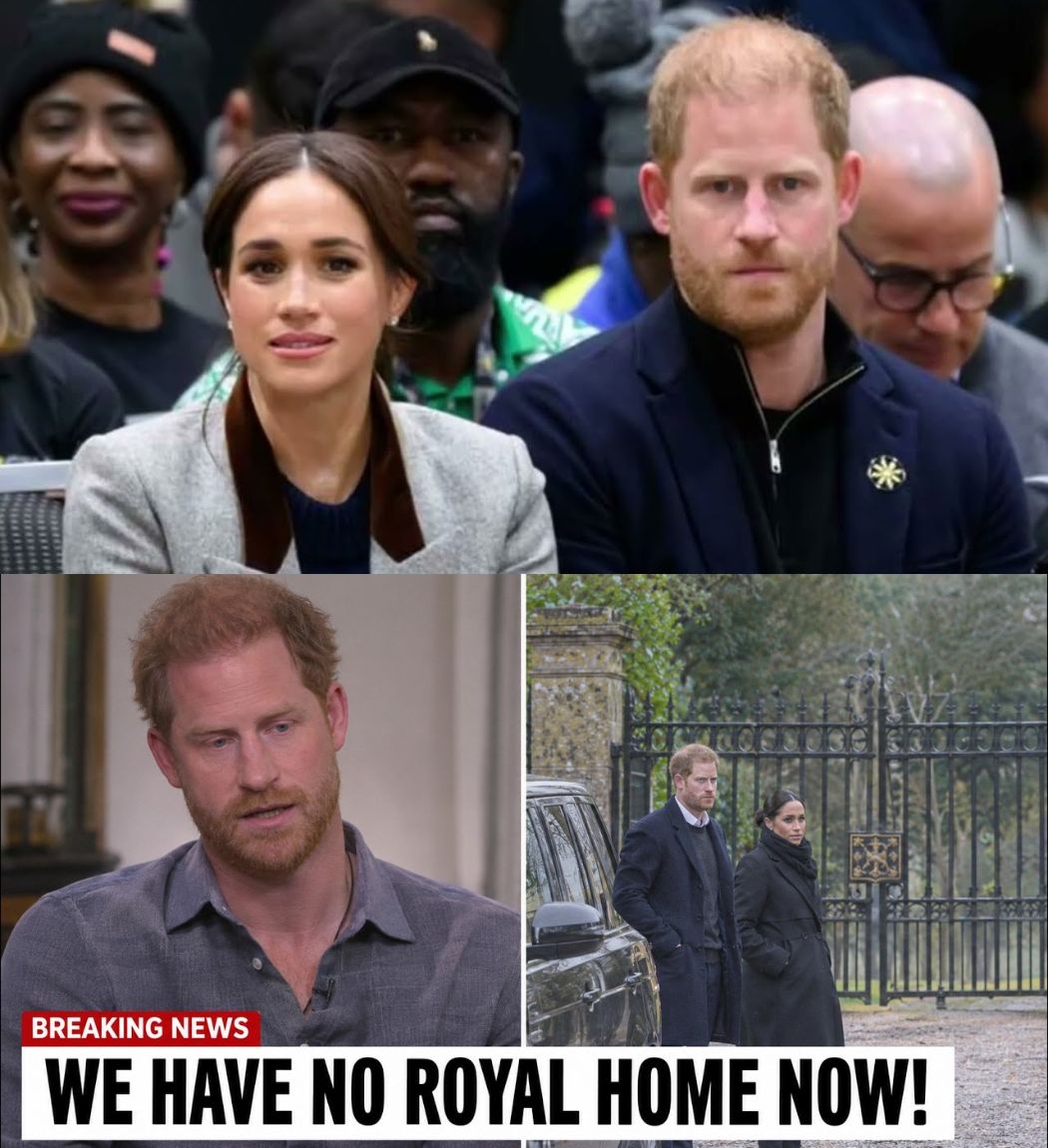
“No Mercy at the Palace: How King Charles and Prince William Shut the Gates on Harry and Meghan, Wiping Out £2.4 Million in Royal Funds”
The gilded gates of Buckingham Palace have endured centuries of political upheaval, national crises, and intimate family dramas, yet rarely has a rift threatened to permanently reshape the British monarchy quite like the bitter war of attrition between the House of Windsor and the Duke and Duchess of Sussex. What began as an uneasy separation in 2020 has now dissolved into an outright financial and personal freeze-out. In an unprecedented show of unity, King Charles III and Prince William have formally closed the royal coffers to Prince Harry and Meghan Markle, declaring in absolute terms that not another penny of royal money will be allocated to secure, house, or subsidize the couple.
This dramatic move comes on the heels of the shocking reality regarding Frogmore Cottage—the historic Windsor estate that once served as the couple’s official residence. Despite high-profile declarations of financial independence and reported repayments of public funds, insider accounts reveal a catastrophic accounting disaster behind palace walls: a staggering £2.4 million in sovereign and private estate resources has been effectively written off as lost forever. The decision to cut all financial lifelines marks a defining point of no return, signaling to the world that while blood ties remain, the institutional mantle—and the vast fortunes that protect it—is strictly closed to those who stand outside the firm.
The Financial Catastrophe Behind Frogmore Cottage
To understand the explosive tension currently rocking the royal household, one must look back to the origins of Frogmore Cottage. Granted to Harry and Meghan by the late Queen Elizabeth II following their fairy-tale wedding in 2018, the Grade II listed home in Windsor underwent a lavish, top-to-bottom renovation. Taxpayers and sovereign funds were tapped to turn the historic dwelling into a modern, high-tech sanctuary suitable for a senior royal family.
However, following the couple’s rapid departure for North America, the property became a lightening rod for public outrage and political criticism. While headlines initially celebrated Prince Harry’s commercial deals with Netflix and Spotify, which allowed him to issue a lump-sum payment aimed at covering the renovation costs and future rent, financial forensic analysts within the Crown Estate paint a far grimmer picture. High-maintenance security upgrades, structural preservation expenses, ongoing tax liabilities, and the sudden eviction order served by King Charles have left a gaping hole in the royal ledger.
Sources close to the Royal Household’s finance committee reveal that when administrative fees, lost rental opportunities, and specialized security retrofitting are calculated, over £2.4 million has effectively evaporated into thin air. “It is money that will never be recovered,” notes a former royal treasurer speaking on the condition of anonymity. “The palace spent millions creating a tailor-made sanctuary, only for it to sit empty, serve as a point of leverage in media negotiations, and ultimately be stripped of its status. In purely commercial terms, it is a catastrophic loss.”
The Cold Alliance: King Charles and Prince William Join Forces
Perhaps the most gripping dynamic in this unfolding drama is the complete alignment between King Charles III and his heir, Prince William. Historically, royal observers noted subtle differences in how the Monarch and the Prince of Wales approached the “Sussex Problem.” King Charles, driven by paternal instinct and a desire to avoid an enduring personal tragedy, had occasionally sought pathways toward quiet reconciliation. Prince William, conversely, was reported to hold a far more rigid line, viewed by insiders as fiercely protective of the institution’s future and deeply aggrieved by allegations published in Harry’s memoir, Spare.
Now, however, any lingering hesitation from the Sovereign has completely vanished. Faced with continuing commercial tell-alls, unpredictable legal battles regarding personal security, and the ongoing demand for royal level accommodation during UK visits, King Charles has officially aligned himself with William’s stern doctrine.
“The King and the Prince of Wales are speaking with one voice,” reveals a senior palace insider. “There is no good-cop, bad-cop routine anymore. The message is simple: you cannot attack the foundation of the British Monarchy for commercial gain in California and then expect the Monarchy to pay for your roof in Berkshire. The palace bank account is closed. The security umbrella is closed. The property portfolio is closed.”
This united front represents an immovable wall. When Prince Harry made brief, fleeting visits to London, expectations were high that private royal accommodations would be provided within the secure perimeter of Kensington Palace or Windsor Castle. Instead, the Duke of Sussex was reportedly informed that no official royal residences were available to him without formal, long-term security clearances and advance notice approved directly by the Prince of Wales’ office—a administrative hurdle designed to emphasize his non-working royal status.
A Tale of Two Lifesyles: Montecito Luxury vs. Crown Accountability
As the palace locks its vault, the stark contrast between the lives of the working royals in the United Kingdom and the Sussexes in Montecito, California, has reached a critical juncture. In the sun-drenched enclave of Santa Barbara County, Harry and Meghan reside in an expansive $14.7 million estate boasting nine bedrooms, sixteen bathrooms, private tennis courts, and lush gardens. Yet, maintaining such an empire requires exorbitant capital.
With multi-million-dollar production deals undergoing industry-wide scrutiny, media executives demanding tangible content, and private security teams charging upwards of millions per year, the financial pressures on the Sussexes are immense. The loss of royal housing guarantees in the UK is not merely a symbolic blow; it is a severe economic blow to their operational model. Every return trip to Harry’s homeland now requires private arrangements, private hotel suites, and commercial security teams—expenses that pile up rapidly without the sovereign shield to protect them.
Back in London, the institutional narrative is focused entirely on fiscal responsibility and modernizing the Crown. Under King Charles’ vision for a streamlined, slimmed-down monarchy, luxury residences are being reassigned, downsized, or opened to the public to generate revenue. The notion of reserving a multi-million-pound renovated estate for a couple residing thousands of miles away was deemed utterly indefensible to a British public navigating economic challenges of their own.
The Secret Meetings and Failed Negotiations
Behind the public press releases and formal statements lies a trail of clandestine negotiations that broke down in bitter frustration. Reports suggest that in the months leading up to the final eviction from Frogmore Cottage, representatives for the Sussexes attempted to negotiate a long-term lease agreement that would retain a permanent foothold for the couple on royal soil.
The proposed agreement allegedly sought guaranteed high-level security provided by royal protection units whenever the family set foot on UK soil, alongside an exclusive arrangement regarding property access. However, Prince William reportedly intervened directly during high-level meetings with the Crown Estate commissioners. The Prince of Wales emphasized that granting special residential privileges to non-working royals set a dangerous precedent that undermined the hard work of active family members like Princess Catherine, Prince Edward, and the Duchess of Edinburgh.
“William was adamant,” says a source familiar with the discussions. “His view was that you are either all in, or you are out. You cannot cherry-pick the perks of being a prince while running a commercial media enterprise overseas. The idea that royal property and royal funding could be used as a convenient landing pad for international celebrity tours was an absolute non-starter.”
When the final decision was handed down by King Charles, it was swift and absolute. The keys to Frogmore Cottage were surrendered, and the remaining possessions of the Duke and Duchess were packed and shipped across the Atlantic, closing a chapter that had cost the royal estate millions in capital and immeasurable emotional strain.
The Fallout: Can the Royal Rift Ever Be Healed?
The financial lockdown has sent shockwaves through royal circles and global media alike. For supporters of the Sussexes, the refusal to provide accommodation and security is viewed as a cold, punitive measure designed to alienate Prince Harry from his birthplace and isolate him from his family history. Critics argue that regardless of institutional roles, a father should always leave a door open for his son.
However, from the perspective of the palace, the decision is seen as an act of self-preservation and institutional integrity. After years of public tell-alls, Netflix docuseries, and explosive television interviews, the monarchy has chosen to draw a clear line between family affection and institutional resources. By refusing to pay for “one roof” or cover the residual losses of the £2.4 million renovation, King Charles and Prince William are sending an unmistakable message: the business of the monarchy will no longer be compromised by private grievances.
As Prince Harry continues his independent ventures across the globe, the physical and financial distance between Montecito and Buckingham Palace has never been wider. The £2.4 million lost in the sands of Windsor property management stands as a permanent monument to a fractured legacy—a staggering sum that serves as a reminder of what happens when ancient tradition clashes with modern ambition.
The royal gates remain shut, the ledgers have been written off, and the message from London is loud and clear: the bank of the British Monarchy is officially closed.