Palace Civil War Explodes: Duke Of Kent Defies The King, Demands Crown Jewels Go To Catherine Over Camilla In Ultimate Betrayal!
Palace Civil War Explodes: Duke Of Kent Defies The King, Demands Crown Jewels Go To Catherine Over Camilla In Ultimate Betrayal!
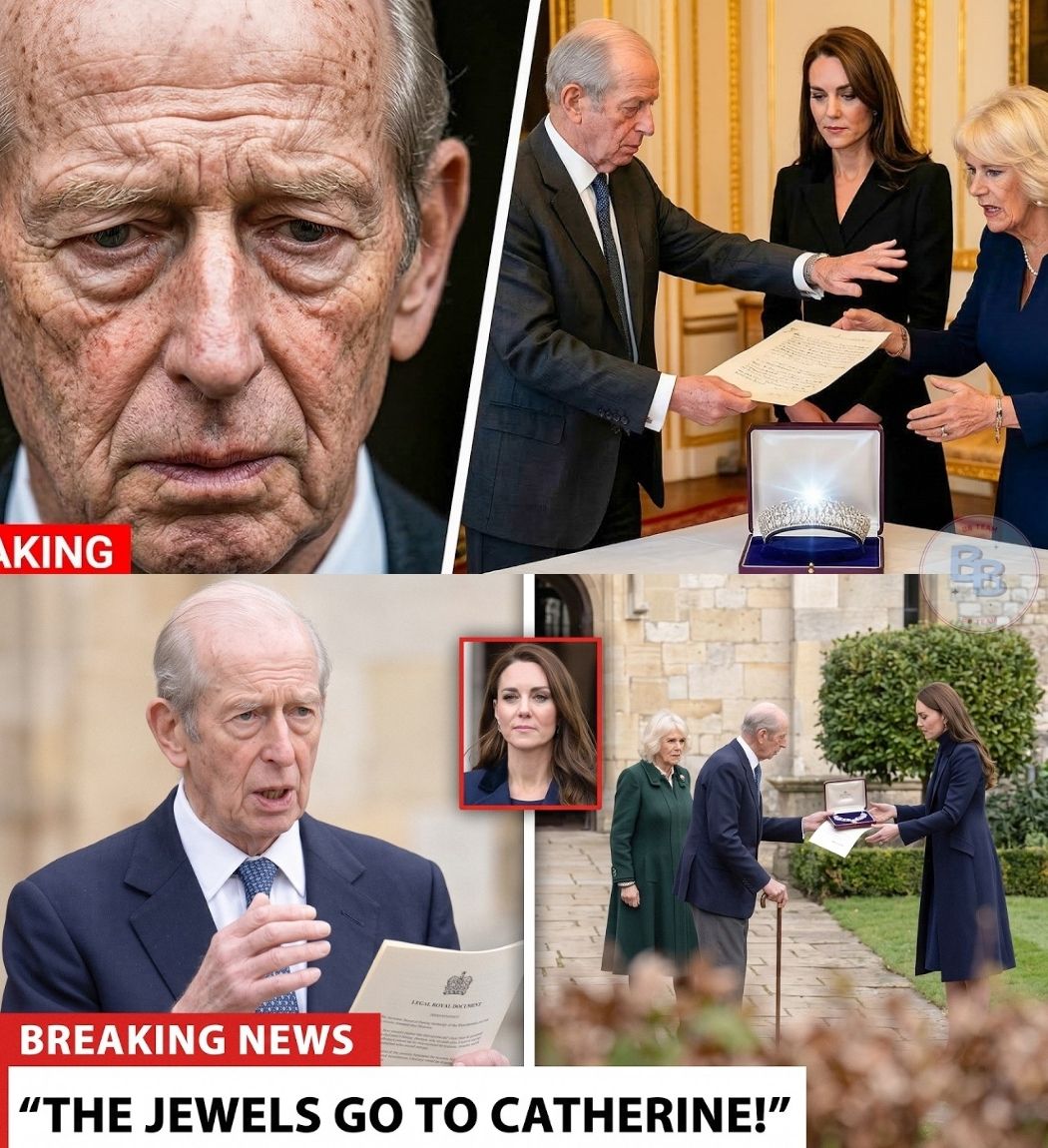
The opulent, gilded gates of Kensington Palace have long concealed a theater of whispers, silent feuds, and calculated survival. But every so often, a fault line so deep ruptures through the ancient stones that the seismic tremors cannot be contained by royal PR machines. Today, that fault line has split wide open. Whispers echoing from the inner sanctums of the aristocracy suggest that Prince Edward, the Duke of Kent—a quiet, enduring fixture of the House of Windsor—has committed the ultimate taboo. According to explosive, unconfirmed murmurs shaking the foundations of the British establishment, the Duke has allegedly declared that the historic crown jewels and royal heirlooms designated for future queens rightfully belong to Catherine, Princess of Wales, rather than Queen Camilla.
It is a declaration that detonates right at the heart of the modern royal hierarchy. For a monarchy already grappling with shifting public loyalties, health crises, and the heavy burden of transition under King Charles III, this alleged defiance is nothing short of a palace coup from within.
To understand the sheer magnitude of this controversy, one must look back through the dusty ledgers of royal history. The Duke of Kent is not merely a distant cousin; he is a living archive of the Windsor dynasty. Having served the Crown for decades, his word carries an unmatched aura of institutional legitimacy. When a man of his stature reportedly questions the distribution of historic royal assets, the court does not just listen—it trembles.
At the center of this brewing tempest are two very different women who represent the past, present, and future of the British throne: Queen Camilla and Catherine, Princess of Wales. Camilla, fierce, resilient, and fiercely protective of her hard-won position beside King Charles, has steadily integrated her own family and legacy into the fabric of the court. For years, palace insiders have noted a quiet consolidation of power and privilege around the King’s inner circle.
On the other side stands Catherine, the undisputed darling of the British public and the global stage. Even amidst her own harrowing battles with health over the past year, her radiance, poise, and unwavering dedication have cemented her status as the emotional anchor of the monarchy. To millions across the globe, Catherine is not just a future queen consort; she is the savior of the institution’s public soul.
According to the explosive rumors rocking elite circles, the Duke of Kent’s alleged intervention stems from a deep-seated anxiety over the stewardship of priceless historical artifacts. The royal collection is not merely a glittering array of diamonds and emeralds; it is a spiritual and historical ledger of the British Empire. Tiaras, necklaces, and brooches passed down through generations carry the weight of sovereign destiny.
Insiders whisper that a recent closed-door appraisal of historic heirlooms sparked a fierce debate over which branch of the family would ultimately inherit the most prized pieces upon future successions. While protocol dictates a traditional flow through the reigning monarch’s consort, the Duke reportedly argued that the historical continuity and moral authority of the Crown now rest squarely on the shoulders of Prince William and Catherine.
“It is not about vanity; it is about survival,” a high-ranking aristocratic source allegedly leaked to confidants. “The jewels belong to the spirit of the people, and the people have spoken with their hearts. To bypass Catherine would be an insult to the future of the nation.”
If true, these words represent an unprecedented breach of royal protocol. For centuries, the distribution of royal jewels has been a tightly guarded prerogative of the sovereign, insulated from public opinion or internal lobbying. By allegedly inserting himself into this delicate ecosystem, the Duke of Kent has inadvertently invited public scrutiny into a world that fiercely protects its private ledgers.
The reaction within Clarence House and Buckingham Palace has reportedly been swift and icy. Senior aides, already hyper-vigilant about maintaining a united front, went into immediate crisis mode as the rumors began circulating among high-society circles in Mayfair and Belgravia. Phone lines between royal residences burned bright into the early hours of the morning as advisors scrambled to contain the narrative.
To royal traditionalists, any suggestion that a senior royal can dictate the allocation of crown treasures outside the King’s direct command is seen as a direct challenge to the royal prerogative. King Charles, known for his modernizing vision and desire for a streamlined monarchy, faces a delicate balancing act. Does he ignore the chatter and risk appearing weak, or does he address the rumor mill, thereby breathing oxygen into a scandal that threatens to pit faction against faction?
Meanwhile, the public reaction has been nothing short of rapturous frenzy. Social media platforms are already divided into warring camps. Hashtags supporting Catherine’s supreme right to the historic jewels are trending globally, with royal watchers pointing out that her visual association with iconic tiaras generates unprecedented goodwill and tourism interest for the United Kingdom. Supporters argue that Catherine’s grace under immense pressure has earned her every diamond, pearl, and gold leaf in the royal vaults.
Conversely, defenders of Queen Camilla argue that protocol must be respected above all else. Dismantling established traditions to appease public popularity contests, they warn, sets a dangerous precedent that could destabilize the monarchy from within. Camilla has navigated decades of intense public scrutiny with stoic resilience, earning her place at the King’s side through loyalty and endurance. To undermine her standing now, critics of the rumor argue, would be a cruel betrayal of the King’s wife.
Yet, the drama extends far beyond sparkling stones and glittering metals. This flashpoint exposes the underlying tension between an old, rigid institutional hierarchy and a new, populist era of monarchy where public affection dictates moral authority. Prince William and Catherine represent a modernized, relatable face of royalty, carefully cultivating an image of duty, family, and emotional intelligence. Camilla represents an older, traditional paradigm of royal endurance.
As this high-stakes drama continues to unfold behind closed doors, the silence from official royal spokespeople only amplifies the suspense. In the secretive world of the House of Windsor, silence is rarely peaceful—it is the heavy quiet before the storm.
Whether the Duke of Kent’s rumored bombshell was a calculated act of institutional preservation or a careless whisper blown wildly out of proportion, one undeniable truth remains: the crown has never felt heavier, and the battle for its soul has only just begun. The world is watching, holding its breath to see which woman will ultimately wear the crown’s most sacred legacy into the future.