Prince William EVICTS Camilla From Highgrove Estate! King Charles FORCED To Sign EXPLOSIVE Decision!
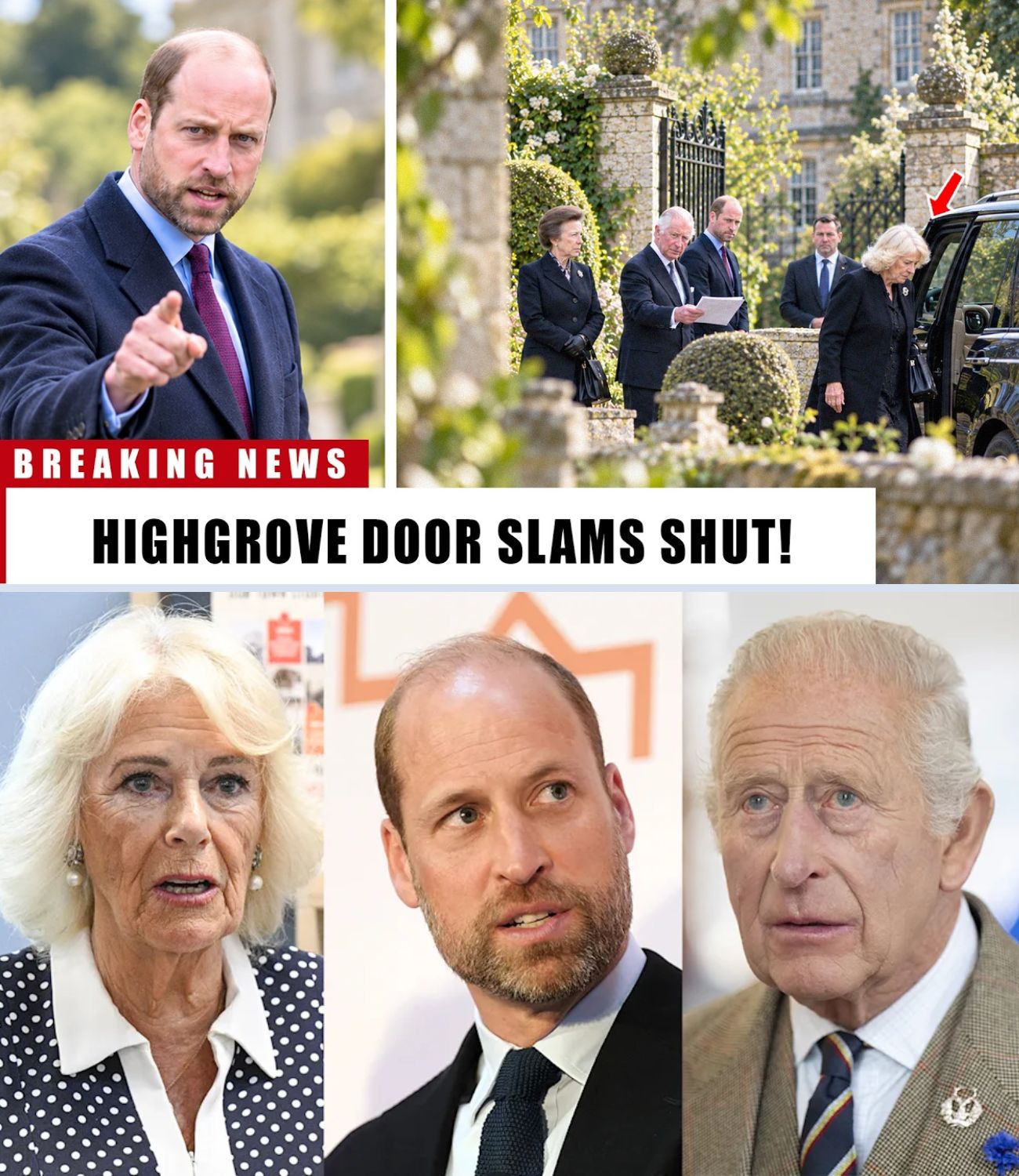
THE SHADOW OVER HIGHGROVE: Anatomy of a Thwarted Royal Takeover
I. The Document That Almost Slipped Through
There is an invisible, high-stakes machinery that governs the House of Windsor—a complex web of ancient charters, secret memorandums, and royal statutes that operate far away from the glittering pageantry seen by the public. For months, a meticulously crafted legal document had been quietly wending its way through the bureaucratic corridors of the royal household, skirting the usual channels of institutional oversight. It was a formal tenancy agreement drafted for Highgrove Estate, the Gloucestershire sanctuary that has served as King Charles’s private organic refuge for over four decades.
To the casual observer, the arrangement might have seemed like a routine piece of estate administration—a simple provision to ensure security for a queen consort after the eventual passing of her husband. But the moment the document crossed the desk of the Duchy of Cornwall’s legal counsel, the atmosphere inside the administrative offices shifted from quiet routine to absolute alarm. Attached to the lease application was not just a residential agreement, but a sweeping succession clause and an aggressive commercial memorandum.
The plan was working with terrifying efficiency. It had cleared Camilla’s legal team, bypassed the standard institutional checkpoints, and landed on the desk of King Charles, who was reportedly preparing to append his signature. Had it not been for a vigilant member of the secretariat who flagged the package hours before the royal pen touched paper, the British monarchy would have sleepwalked into a legal trap that would have taken decades and millions of pounds in litigation to unravel.
Enter Prince William. Armed with nothing more than a medieval statute, a long-forgotten letter from his late grandmother, and an unyielding commitment to institutional preservation, the Prince of Wales executed a lightning-fast veto that brought the entire clandestine operation to a screeching, permanent halt.
II. The Fifty-Year Lease and the Parker Bowles Succession
To understand why William’s intervention was so swift and uncompromising, one must examine the astonishing mechanics of the proposed lease itself. On paper, the arrangement granted Queen Camilla a fifty-year tenancy on Highgrove Estate—an expansive property whose grounds, organic farming operations, and historic buildings are conservatively valued in excess of fifteen million pounds. The stipulated annual rent? Exactly one pound per annum.
In British property law, a nominal rental figure of one pound is far more than a mere administrative quirk; it is a legal signal denoting a personal royal grant rather than a commercial transaction. By keeping the rent nominal, the legal architects of the agreement attempted to anchor the lease closer to the realm of personal royal prerogative than to standard estate governance.
However, the true dynamite of the document was buried further down in the text: a comprehensive succession clause. This specific provision granted Camilla’s biological children—food writer and restaurant critic Tom Parker Bowles and arts professional Laura Lopes—the unassailable legal right to inherit and continue the tenancy for the remainder of the fifty-year term following their mother’s death.
Consider the legal implications. Neither Tom Parker Bowles nor Laura Lopes possesses any constitutional connection to the British crown, nor do they occupy any place in the line of succession to the throne. Yet, under the terms of this proposed lease, if Camilla had outlived Charles by even a single day, her children would have secured a court-enforceable right to occupy and operate from Highgrove Estate until the year 2073. A private family enterprise run by non-royals, anchored to one of the most treasured properties in the British countryside, protected by a half-century legal shield.
III. The Commercial Memorandum: A Corporate Hijack
If the fifty-year residential lease was audacious, the document attached directly beneath it revealed the true commercial motivation behind the entire endeavor. When Duchy of Cornwall lawyers peeled back the tenancy agreement, they found a detailed corporate development memorandum—a sophisticated business plan structured with professional precision.
The memorandum laid out an operational framework for the Highgrove organic brand. The lucrative hospitality, retail, and agricultural enterprises built around Highgrove’s famous walled kitchen garden—an internationally recognized name generating substantial annual revenue—were slated for licensing under a management structure intimately tied to a Parker Bowles enterprise. Tom Parker Bowles, whose professional life has long revolved around the culinary and restaurant industries, would have assumed operational involvement in running a commercial business anchored to a royal estate brand.
The fifty-year lease at one pound a year was never the ultimate goal; it was merely the legal mechanism. The real prize was permanent, legally protected access to a multi-million-pound commercial brand that trades entirely on its association with the Duchy of Cornwall and the heir to the throne—a brand that is constitutionally destined to belong one day to Prince George.
Faced with a strategy that sought to alienate crown assets into private, non-royal hands for half a century, the legal counsel recognized an existential threat to the estate’s integrity. But stopping it required more than righteous indignation; it required absolute, unassailable legal authority.
IV. The 1337 Charter and the Power of the Duke of Cornwall
To fully grasp why William possessed the unilateral power to smash this agreement, one must look at the unique legal structure of the Duchy of Cornwall. Established in 1337 by King Edward III via a foundational royal charter, the Duchy is not a collection of personal gifts or disposable family wealth. It is a functioning, 700-year-old estate comprising approximately 130,000 acres across 23 counties in England and Wales, generating an annual surplus of over twenty-three million pounds that flows directly to the heir to the throne.
The charter’s primary legal mandate is absolute: to provide financial independence to the heir while preserving the estate intact for the next generation of the direct royal line. It was explicitly designed to prevent the fragmentation or alienation of estate assets to spouses, stepchildren, or outsiders.
When Charles purchased Highgrove in 1980, he did so using income generated by the Duchy, and approximately 347 acres of the surrounding grounds sit squarely on Duchy land. Consequently, the property does not belong to Charles in any personal capacity that can be separated from his institutional role. He cannot leave it to a spouse in a will, nor can he grant a long-term tenancy exceeding statutory limits without the formal, written consent of the Duke of Cornwall.
Since September 2022, following the accession of King Charles, that title and its accompanying statutory powers have belonged entirely to Prince William. Under the governing statutes of the Duchy, any tenancy agreement on estate land for a term exceeding twenty-one years is legally void and unenforceable without the explicit written consent of the Duke.
There was no need for a dramatic, table-pounding confrontation. Within hours of discovering the application, William’s legal team filed a formal, uncompromised objection. As Duke of Cornwall, he withheld his consent. In one stroke, the fifty-year lease was rendered a legal nullity.
V. The Ghost of Highgrove: Diana’s Garden and the Weight of History
While the legal battle was fought with cold statutes and administrative precision, the emotional architecture of Highgrove carries a heavier, more haunting history—one inextricably linked to the ghost of Diana, Princess of Wales.
When Charles and Diana married in 1981, Highgrove became their first family home. Long before Camilla ever walked its manicured lawns, Diana poured her heart, soul, and artistic vision into the estate. She worked alongside interior designers to curate every room and spent months collaborating with landscape architects to plan the grounds. The world-famous walled kitchen garden—the very heartbeat of Highgrove’s modern commercial identity—began entirely as Diana’s personal project. She stood in the damp English soil, supervising the planting and shaping the sanctuary she believed she was building for a lifelong family.
As the royal marriage tragically fractured under the weight of an enduring affair with Camilla, Diana watched the home she had constructed slip away. Following the formal separation in 1992, her access to Highgrove ceased entirely, and she was restricted to Kensington Palace while Camilla gradually assumed a permanent domestic presence in the house Diana built.
Prince William was ten years old during the separation and fifteen when his mother died. Growing up inside that tumultuous domestic reality forged a deeply attentive, fiercely analytical mindset in the young prince. While the public consumed sanitized tabloid summaries, William quietly studied estate governance, mastering Duchy statutes and understanding the exact mechanisms designed to protect crown property. When he inherited the title of Duke of Cornwall in 2022, he was not learning on the job; he was deploying expertise he had spent over a decade preparing to use.
VI. The Secret Archive: Queen Elizabeth’s 2014 Warning and Anne’s Intervention
Adding an extraordinary layer of institutional foresight to the crisis, Duchy senior counsel reviewing the lease application uncovered a second, explosive piece of evidence: a private letter penned by Queen Elizabeth II’s private secretary in 2014.
Written eight years before Charles ascended the throne, the memorandum explicitly directed that Highgrove’s commercial rights and branding could never be alienated from Duchy of Cornwall control, regardless of who occupied the physical residence. It was a classic demonstration of the late Queen’s long-range institutional paranoia—a quiet directive filed away to ensure future monarchs could not dismantle estate protections for personal accommodations.
Even after William filed his statutory consent refusal, a final desperate attempt was made to salvage the arrangement. Proponents of the lease advanced a thin legal argument invoking the royal prerogative, suggesting that the King as sovereign retained a personal authority to grant tenancies on private properties that overrode standard Duchy governance.
Recognizing that this dangerous line of reasoning threatened to drag the monarchy into an unprecedented constitutional crisis, the Princess Royal stepped directly into the fray. In a blunt, private exchange with her brother, Princess Royal Anne delivered an unvarnished reality check: invoking the royal prerogative to override a 700-year-old statute merely to accommodate a stepfamily would hand the republican movement its most devastating rhetorical weapon in generations. She reminded the King that the crown’s moral authority derives entirely from its consistency; the moment it rewrites its own rules for personal convenience, it forfeits its legitimacy.
Recognizing the immutable truth in his sister’s warning, King Charles picked up the phone to his solicitors. Without a press release or public fanfare, he signed the formal withdrawal of the lease.
VII. The 30-Day Reality and the Shape of the Coming Reign
With the stroke of a pen, the fifty-year lease vanished into administrative history, leaving behind a stark and unyielding reality for Queen Camilla. Without the lease, her residency at Highgrove is tied exclusively to her marriage and Charles’s occupation of the throne. She possesses no independent legal claim to the estate, no Duchy beneficiary status, and no statutory right to remain once the King is gone.
Under Duchy rules, the incoming sovereign holds absolute authority to determine the residential arrangements of previous occupants. While unconfirmed reports suggest a tight thirty-day window to vacate following the demise of the monarch, the legal record is crystal clear: the door has been firmly bolted from the inside.
Weeks after the legal filing, photographs circulated showing Prince William, Princess Catherine, and their children walking through Highgrove’s walled kitchen garden. To casual viewers, it appeared to be a charming family snapshot; to those fluent in the language of estate governance, it was an unmistakable act of active stewardship—a boundary inspection establishing an unshakeable record of institutional ownership.
William did not need to shout, argue, or deliver a public speech. Using a medieval charter and his grandmother’s foresight, Diana’s son closed a door that had remained precariously ajar since 1992. It was a masterclass in modern statecraft, proving that the future of the British monarchy will be governed not by personal sentiment and royal accommodations, but by unyielding institutional law.