Prince William EVICTS Camilla From Highgrove Estate! King Charles FORCED To Sign EXPLOSIVE Decision!f
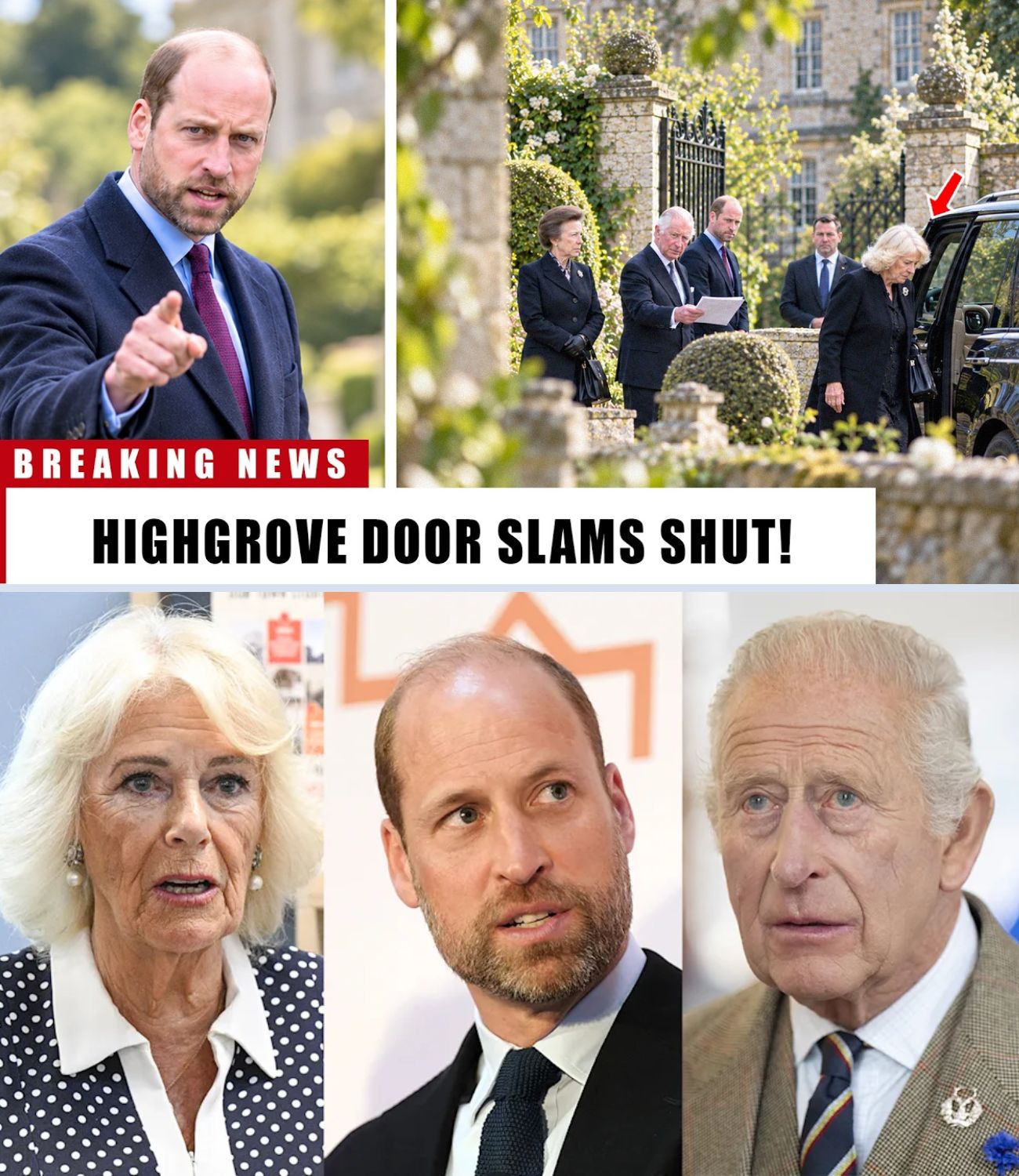
THE SHADOW OVER HIGHGROVE: Anatomy of a Thwarted Royal Takeover
I. The Document That Almost Slipped Through
There is an invisible, high-stakes machinery that governs the House of Windsor—a complex web of ancient charters, secret memorandums, and royal statutes that operate far away from the glittering pageantry seen by the public. For months, a meticulously crafted legal document had been quietly wending its way through the bureaucratic corridors of the royal household, skirting the usual channels of institutional oversight. It was a formal tenancy agreement drafted for Highgrove Estate, the Gloucestershire sanctuary that has served as King Charles’s private organic refuge for over four decades.
To the casual observer, the arrangement might have seemed like a routine piece of estate administration—a simple provision to ensure security for a queen consort after the eventual passing of her husband. But the moment the document crossed the desk of the Duchy of Cornwall’s legal counsel, the atmosphere inside the administrative offices shifted from quiet routine to absolute alarm. Attached to the lease application was not just a residential agreement, but a sweeping succession clause and an aggressive commercial memorandum.
The plan was working with terrifying efficiency. It had cleared Camilla’s legal team, bypassed the standard institutional checkpoints, and landed on the desk of King Charles, who was reportedly preparing to append his signature. Had it not been for a vigilant member of the secretariat who flagged the package hours before the royal pen touched paper, the British monarchy would have sleepwalked into a legal trap that would have taken decades and millions of pounds in litigation to unravel.
Enter Prince William. Armed with nothing more than a medieval statute, a long-forgotten letter from his late grandmother, and an unyielding commitment to institutional preservation, the Prince of Wales executed a lightning-fast veto that brought the entire clandestine operation to a screeching, permanent halt.
II. The Fifty-Year Lease and the Parker Bowles Succession
To understand why William’s intervention was so swift and uncompromising, one must examine the astonishing mechanics of the proposed lease itself. On paper, the arrangement granted Queen Camilla a fifty-year tenancy on Highgrove Estate—an expansive property whose grounds, organic farming operations, and historic buildings are conservatively valued in excess of fifteen million pounds. The stipulated annual rent? Exactly one pound per annum.
In British property law, a nominal rental figure of one pound is far more than a mere administrative quirk; it is a legal signal denoting a personal royal grant rather than a commercial transaction. By keeping the rent nominal, the legal architects of the agreement attempted to anchor the lease closer to the realm of personal royal prerogative than to standard estate governance.
However, the true dynamite of the document was buried further down in the text: a comprehensive succession clause. This specific provision granted Camilla’s biological children—food writer and restaurant critic Tom Parker Bowles and arts professional Laura Lopes—the unassailable legal right to inherit and continue the tenancy for the remainder of the fifty-year term following their mother’s death.
Consider the legal implications. Neither Tom Parker Bowles nor Laura Lopes possesses any constitutional connection to the British crown, nor do they occupy any place in the line of succession to the throne. Yet, under the terms of this proposed lease, if Camilla had outlived Charles by even a single day, her children would have secured a court-enforceable right to occupy and operate from Highgrove Estate until the year 2073. A private family enterprise run by non-royals, anchored to one of the most treasured properties in the British countryside, protected by a half-century legal shield.