Princess Anne’s Final Verdict: Harry Ordered Back to the US as Royal Fury Reaches Boiling Point!
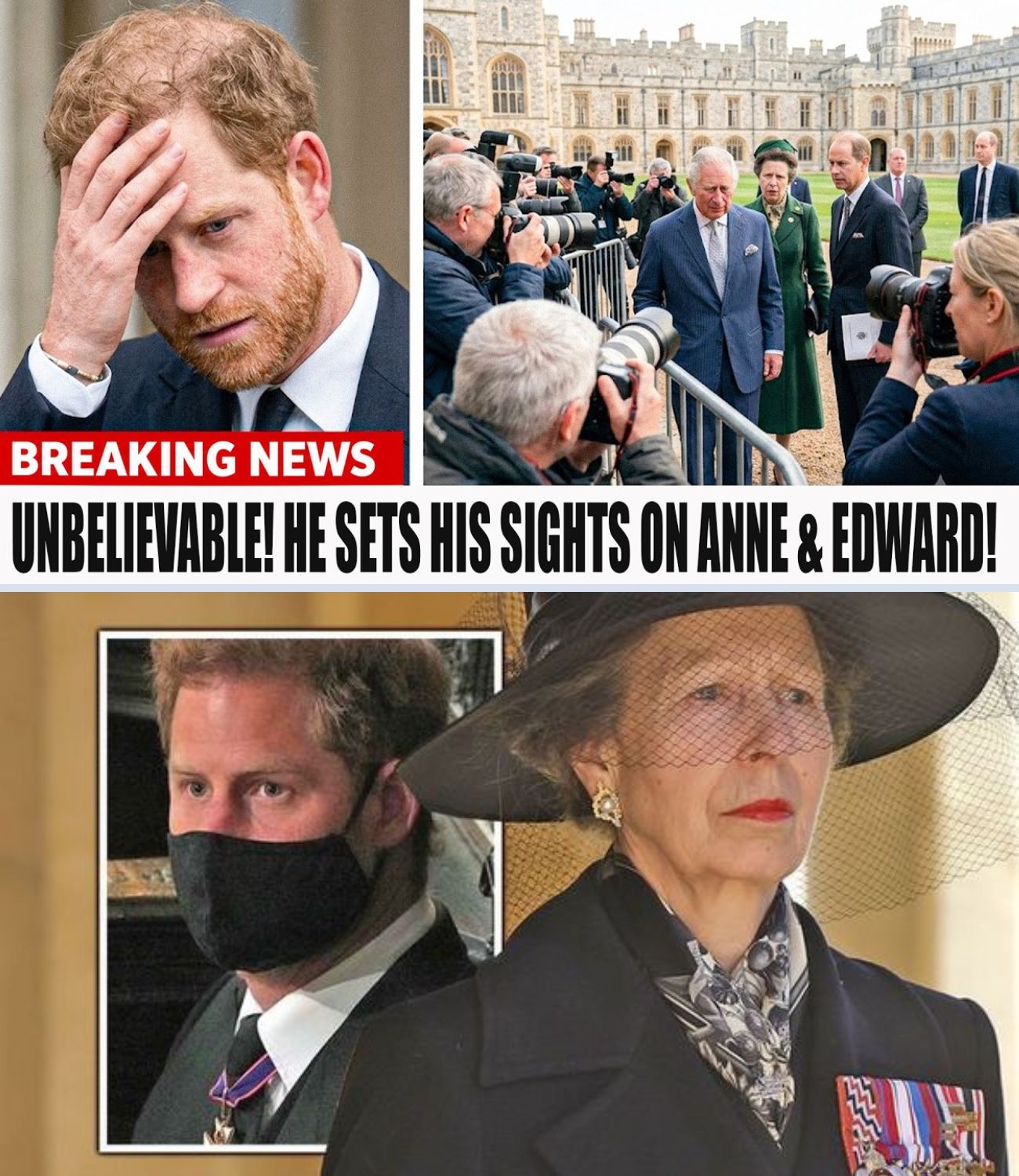
The Ultimatum at the Gate
There are thresholds in the long, centuries-old saga of the British monarchy where institutional patience finally wears completely thin. For over four years, the high-stone walls of Buckingham Palace and Kensington Palace absorbed an unprecedented barrage of public grievances, tell-all memoirs, television interviews, and strategic media briefings emanating from across the Atlantic. Courtiers counselled restraint; senior royals prayed for familial healing; and a grieving sovereign attempted to balance the heavy duties of state with the deep, lingering affection of a father.
Yet, history demonstrates that every institution has an absolute structural limit—a point where sentimentality collides with survival, and the velvet glove is unceremoniously discarded. That breaking point arrived not with a quiet diplomatic whisper, but with an aggressive public grenade lobbed directly across the bow of the British establishment. When Prince Harry’s camp publicly declared that he no longer recognised the validity of the late Queen Elizabeth’s foundational 2020 Sandringham agreement, it was not merely interpreted as another grievance. It was viewed as an open declaration of institutional war.
And standing directly in the path of that assault was not a weary monarch or a beleaguered heir, but the most formidable operational force within the House of Windsor: The Princess Royal.
The Public Grenade: Defying the Sandringham Pact
To fully comprehend the seismic shockwaves that reverberated through London, one must revisit the precise terms of the historic Sandringham Summit held in January 2020. Convened in the wake of the chaotic “Megxit” exodus, the late Queen Elizabeth II drew a crisp, uncompromising line in the sand. Her late Majesty established a fundamental constitutional truth that brook no exception: one cannot be half-in and half-out of the British monarchy. You cannot roam the corporate soundstages of Hollywood, sign multi-million-pound commercial contracts capitalizing on royal titles, and simultaneously expect to enjoy the full-time ceremonial, diplomatic, and taxpayer-funded privileges of working royalty.
The agreement was anchored in the Nolan principles—total selflessness, absolute integrity, and zero personal financial profiteering from public duties. It was designed to shield the crown from the grubby realities of commercial exploitation.
For years, the Duke of Sussex chafed under these boundaries, viewing them not as protective constitutional guardrails, but as a personal punishment inflicted by cold palace officials. However, the announcement delivered through veteran royal correspondents marked a breathtaking escalation. Harry’s representatives let it be known that he no longer considered himself bound by the 2020 summit terms, arguing that because the British government and the Home Office had withdrawn his round-the-clock, taxpayer-funded armed police protection, the palace had allegedly breached the compact first.
In plain English, the argument was as simple as it was audacious: unless British taxpayers forked out millions of pounds annually for his private motorcades and elite Scotland Yard bodyguards, his solemn promises to his dying grandmother were null and void. It was a classic hostage negotiation disguised as personal grievance—an ultimatum delivered at a time when King Charles was visibly fatigued and undergoing gruelling cancer treatments.
Inside the Strategy Memo: The Extortion Blueprint
What turned a standard media spat into an unmitigated institutional crisis, however, was what transpired behind closed doors just days prior to the public announcement. During a high-profile visit to London, Harry had attempted to force an audience with Princess Anne. Seeking her backing, or at the very least her passive neutrality, for a fresh slate of commercial maneuvers, he found his overtures flatly rejected. Anne did not clear her diary, did not issue polite bureaucratic excuses, and refused to take his call.
When the Duke realised his aunt was entirely immune to his pressure, his intermediaries delivered a chilling warning. He claimed that the royal family would soon find themselves in such a desperate corner that Anne herself would be forced to pick up the phone and plead for his return.
Crucially, this was not idle bravado. Buckingham Palace intelligence intercepted a classified strategic document drafted by Harry’s legal team and commercial advisers, titled the Alternative Engagement Framework.
When the physical paperwork landed on the desk of Princess Anne, the dynamic shifted from familial annoyance to defensive fury. The document laid out a cold, calculated blueprint:
The Global Rollout: If the crown failed to restore his armed security status and grant him a customized, part-time working royal role before the end of the year, his team was prepared to launch an aggressive commercial offensive across international markets.
The Title Weaponization: The memo noted specific target markets, speaking tours, and corporate partnerships where Harry and Megan planned to deploy their royal styles without seeking palace sign-off.
The Legal Loophole: The advisors calculated that because the 2020 Sandringham agreement was a personal family declaration rather than a legally binding civil contract, the palace possessed zero standing in a standard courtroom to stop them.
The strategy was predicated on the belief that King Charles was far too weak, sentimental, and physically compromised to ask Parliament to strip their peerages through legislation. It was an institutional shakedown designed to exploit a father’s medical vulnerability for corporate leverage.
The Iron Princess Steps In: Anne’s Unyielding Fury
If Harry believed his tactical memo would induce panic within the royal household, he profoundly miscalculated the character of the woman holding it. Princess Anne had spent her entire adult life standing guard over her mother’s legacy with fierce, unbending loyalty. To her, the monarchy was not a family business to be leveraged for venture capital; it was a sacred, lifelong covenant with the British people.
Refusing to allow courtiers to manage the crisis through digital channels or sanitised video conferences—which she warned could be leaked or recorded by external streaming producers—Anne marched straight into the private apartments of the King. She demanded an immediate, face-to-face emergency summit, insisting that the sovereign and the heir sit in the exact same room and take collective responsibility without hiding behind computer screens.
The stage was set inside the high-ceilinged private library at Sandringham—the very sanctuary where Queen Elizabeth had laid down the law four years prior. Present around the polished mahogany table were King Charles, Prince William, Princess Anne, Prince Edward, and senior constitutional secretaries.
Placing the leather-bound 2020 charter alongside Harry’s intercepted strategy memo in the dead center of the table, Anne laid out four brutal, undeniable indictments:
The Desecration of a Dying Wish: Harry was actively spitting upon the final peace terms personally brokered by his late grandmother during her twilight years.
Taxpayer Extortion: He was attempting to bully ordinary British citizens—many struggling through severe economic headwinds—into bankrolling private security for an absentee prince.
The Military Betrayal: He was treating his former honorary military patronages like commercial trinkets to be bought, sold, and traded for social clout.
The Cruelty of Timing: He was deliberately weaponizing his father’s medical frailty and cancer battle to force a capitulation.
King Charles sat in heavy, heartbreaking silence, visibly shaken by the realisation that his olive branches had been transformed into ammunition. Prince William stood shoulder-to-shoulder with his aunt, presenting ironclad documentation proving that every private gesture of goodwill extended over the preceding four years had been instantly monetised in Hollywood.
The verdict was unanimous, absolute, and entirely irreversible. There would be no public screaming matches, but the institutional drawbridge was about to be pulled up forever.
The Medals Stunt vs. The Sovereign’s Service
The consequences of that Sandringham summit manifested with startling speed just 48 hours later on the streets of London. Staging a high-profile appearance for the tenth-anniversary celebrations of the Invictus Games at St Paul’s Cathedral, Harry delivered a theatrical act of defiance that left royal protocol experts aghast.
Stripped of his honorary military appointments—including his coveted role as Captain General of the Royal Marines—under the terms of the Sandringham agreement, protocol strictly barred him from wearing a British military uniform. Instead of accepting this constraint with dignity, Harry stepped out in an ordinary civilian business suit with a heavy, gleaming row of campaign medals and jubilee honors pinned conspicuously across his chest.
According to briefings leaked by his camp, he supposedly found traditional military attire too “constrictive” for his modern, liberated identity. To the British public and military veterans alike, however, the stunt appeared less like a noble statement and more like a desperate attempt to cosplay as a battlefield commander while rejecting the chain of command that made those honors meaningful.
The contrast on that very same afternoon was nothing short of cinematic. While Harry paraded his medals before flashing cameras, Princess Anne—who had formally inherited his role as Captain General of the Royal Marines—was performing frontline duty under grey English skies. Dressed in full, impeccably tailored ceremonial uniform, the Princess Royal stood unflinchingly in the pouring rain, inspecting lines of young service personnel.
“One was a veteran princess who quietly gave her entire life to the defense of the crown, standing stoically under English weather. The other was an exile prince in an expensive suit, strutting before photographers with trinkets pinned to his lapel.”
The visual juxtaposition stripped away whatever remained of Harry’s royal mystique. The nation saw the reality: one path was built on quiet, unglamorous sacrifice; the other was fueled by performative vanity.
The Final Administrative Lockout: Solicitors and Silence
Realizing that the old playbook of manufacturing public crises to force private compromises no longer worked, Buckingham Palace executed its final, most devastating maneuver. Eschewing angry press statements or undignified public shouting matches, the institution deployed its most powerful weapon: absolute, chilling administrative silence.
When journalists pressed palace aides regarding Harry’s claims about the Sandringham agreement, the matter was calmly redirected to the British Home Office, reiterating that state security is a matter for independent risk committees, not family negotiation. The hostage loop was decisively severed.
Simultaneously, a series of quiet, surgical constitutional changes took place:
The Counsellors of State: Parliament and the palace reinforced the legislation to ensure that only active working royals—William, Anne, Edward, and Camilla—would handle state affairs during royal travel or incapacity, effectively sidelining Harry into constitutional irrelevance.
The Legal Firewall: All future correspondence from Montecito regarding financial pleas, security protocols, or personal requests was redirected strictly through the monarch’s private courtroom solicitors. The King’s personal telephone line was dead-bolted, ending years of emotional blackmail.
The Diplomatic Reclassification: The Foreign Office formally notified international partners that the Sussexes held zero diplomatic standing, rendering any political commentary from California as the mere opinions of private foreign residents.
Furthermore, when Harry’s representatives submitted formal petitions requesting elite British school registration coordination and residential endorsements for Prince Archie and Princess Lilibet, King Charles handed the file directly to Princess Anne. True to her reputation as the industrial shredder of royal bureaucracy, she brought the petitions to a grinding, permanent halt. No letters of recommendation were penned, and no special dispensations were granted.
The Crown Moves Forward
Step back and examine the full canvas of this modern royal drama. What began as a personal estrangement has crystallized into the defining constitutional watershed of the modern era. The British monarchy survived centuries of civil war, political upheaval, and shifting societal norms because it possesses an institutional immune system capable of purging anything that threatens its survival.
Prince William stands ready to ascend the throne unburdened by commercial scandals, backed by the unyielding steel required of a modern monarch. King Charles has chosen the preservation of the crown over sentimental parental anguish. And Princess Anne has proven herself the ultimate guardian of the realm, ensuring that the legacy of her mother remains a sacred covenant rather than a franchise to be auctioned off to the highest bidder in California.
Prince Harry flew back across the Atlantic with his streaming contracts and California estates, but he returns entirely bankrupt in the only currency that truly matters: his homeland, his family name, and the enduring respect of the people. The heavy oak doors of Windsor and Buckingham Palace have swung shut for the final time, locked securely from the inside.