“Put Your Hand Down”: The One Mistake That Set Off the British SAS
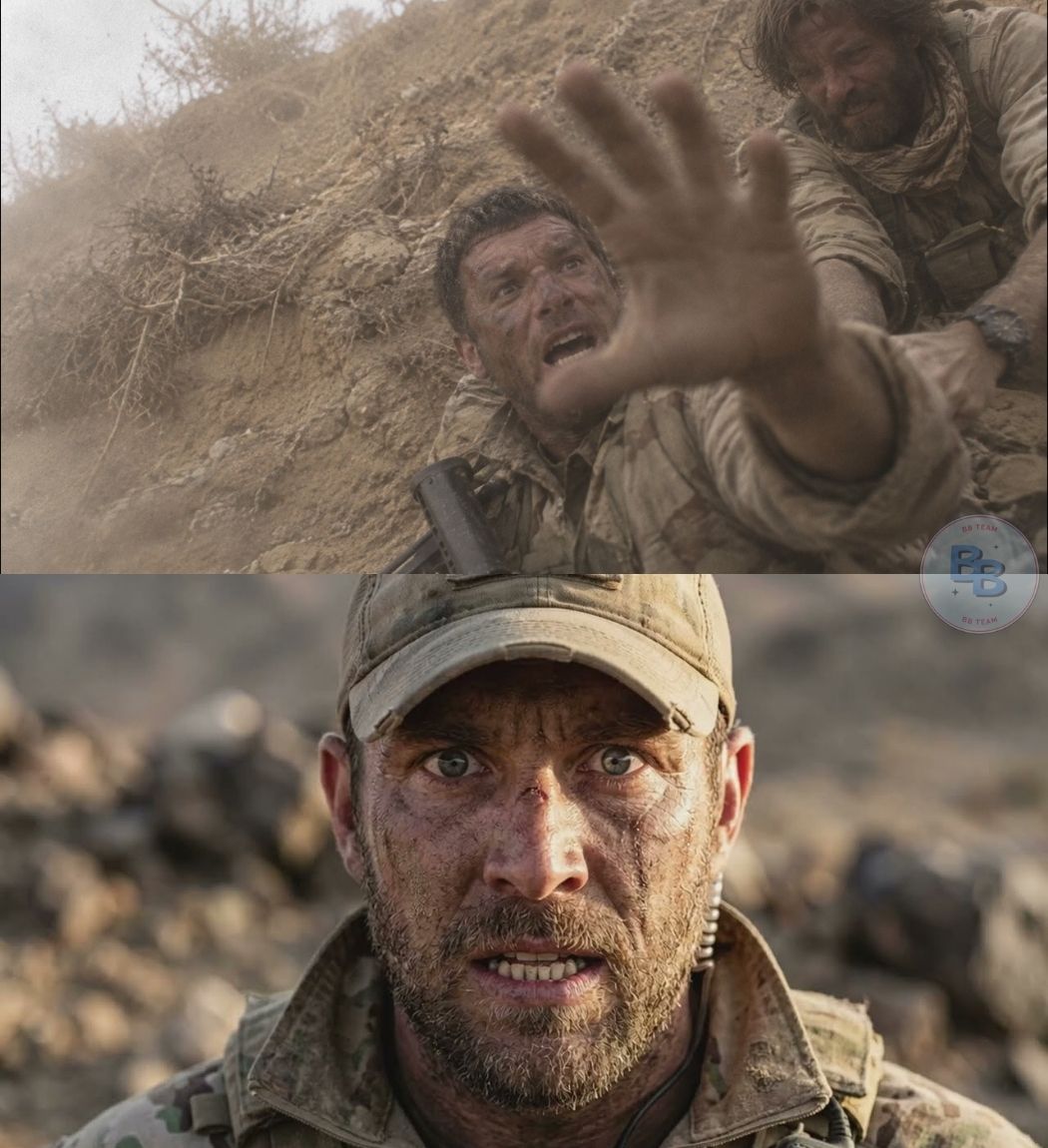
“Fatal Hubris: How One Disastrous Order Unleashed Hell on the British SAS”
Introduction: The Myth of Infallibility
The mythos of the British Special Air Service (SAS) is built on an almost godlike aura of perfection. In the public imagination, men in black kit and gas masks descend from the night sky like ghosts, neutralize high-value targets with clinical precision, and vanish before the enemy even realizes they have been breached. They are portrayed as infallible instruments of statecraft—cold, calculating, and immune to human error.
Yet, military history is rarely shaped by perfection; it is forged, fractured, and often doomed by catastrophic human error. Behind the sanitized press releases and the romanticized memoirs lies a much grittier, uncomfortable reality: elite operators are still human, prone to ego, fatigue, and fatal misjudgments.
This is the story of “Operation Nightfall”—a mission that should have been a routine extraction, a footnote in a classified ledger, but instead unraveled into a nightmare of friendly fire, broken command chains, and institutional cover-ups. At the center of it all was a single, arrogant gesture: a raised hand that signaled a catastrophic green light when the shadows themselves were screaming to stand down.
Chapter I: The Prelude in the Badlands
The deployment began in the unforgiving, sun-bleached badlands of a volatile border region, a chaotic crucible where rival insurgent factions, smugglers, and rogue elements constantly shifted allegiances. For weeks, B Squadron of the 22nd SAS Regiment had been playing a deadly game of cat and mouse with a high-value target known only as “The Architect”—a shadowy logistics mastermind responsible for routing advanced explosives to regional terror cells.
Intelligence was thin, fragmented, and heavily contested. Local assets claimed The Architect was holed up in a fortified mud-brick compound on the outskirts of an abandoned ghost town. Satellite imagery showed intermittent foot traffic, but thermal scans were inconclusive due to the brutal desert heat radiating off the stone walls.
Major Julian Vance, a silver-haired squadron commander with a reputation for aggressive, high-risk maneuvers, was desperate for a decisive win before his rotation ended. Vance was under immense pressure from headquarters to deliver results, and the whispers in the mess hall suggested his next career promotion hinged on bagging The Architect. This ambition created a toxic undercurrent within the planning room—a subtle, dangerous bias where ambiguous intelligence was deliberately interpreted as confirmation rather than warning.
Master Sergeant Thomas “Mac” Miller, a 15-year veteran of the regiment and the troop leader on the ground, felt the tension in his bones. Miller was an old-school operator. He trusted his instincts, the weight of his weapon, and the silence of the night. During the final pre-mission briefing, Miller pointed out glaring gaps in the intel package.
“We don’t know the exact layout of the inner courtyard, Sir,” Miller warned, his voice low and gravelly. “And intercepted comms suggest the local militia unit changed its patrol route yesterday. We’re walking into a fog.”
Vance dismissed the concerns with a wave of his hand. “The window is closing, Mac. If we wait for 100% certainty, the bird will have flown. We go in hard, we go in fast, and we secure the package. Trust your training.”
It was a fatal directive. It prioritized speed over security, and ambition over survival.
Chapter II: The Breach
Midnight descended like a lead blanket. There was no moon, only a thick, choked sky heavy with desert dust. Two heavily modified Chinook helicopters touched down three kilometers away from the compound, their rotors muffled by the natural roar of a howling windstorm.
The twelve-man assault team moved with practiced, silent grace. Encased in night-vision goggles that turned the pitch-black landscape into an eerie emerald dreamscape, they humped heavy packs across jagged terrain. Every man knew his role. Breakers, point men, rearguard, medics—they were a well-oiled machine of violence and discipline.
As they reached the perimeter wall of the compound, the atmosphere shifted. Miller felt a sudden, icy knot in his stomach. The silence was too profound. There were no guard dogs barking, no distant chatter of local villagers, no flickering campfires. It felt less like an active enemy stronghold and more like an abandoned tomb.
Through his thermal scope, Miller signaled to Vance, who was commanding the element from the rear support position. He tapped his helmet, indicating a potential trap or an empty shell.
Vance flashed back a hand signal: Push through. Clear the buildings.
The breach was executed with textbook brutality. The primary explosive charge blew the heavy iron-reinforced wooden gates off their rusted hinges with a thunderous roar that shattered the desert silence. Smoke billowed into the courtyard, smelling of cordite and burning dust.
“Go, go, go!” shouted Corporal Liam Thorne, the point man, as he swept through the smoking threshold with his carbine raised.
What happened next took less than four seconds, yet it rewrote the fate of every man in the unit.
Chapter III: The Fatal Gesture
As Thorne vaulted into the central courtyard, his night-vision gear briefly white-flickered from the blinding flash of a secondary tripwire flare that hadn’t been picked up by pre-mission drone sweeps. For a split second, the courtyard was illuminated like a harsh Hollywood movie set.
Out of the smoke and dust, a figure emerged from a low-slung doorway on the eastern flank. It was a civilian—an elderly man wearing traditional robes, his hands raised in absolute terror, clutching a string of prayer beads. He was clearly not an insurgent; he was a terrified local caught in the wrong place at the worst possible time.
Thorne froze, his finger tightening on the trigger but held back by human instinct. He lowered the barrel of his rifle by a fraction of an inch, shouting for the man to get down.
Behind Thorne, Master Sergeant Miller moved up to support. He took in the scene instantly. “Hold fire! Non-combatant!” he roared over the tactical comms channel, stepping forward to shepherd the old man away from the line of fire.
At that exact moment, Major Vance rushed through the shattered gate, adrenaline surging, his mind hyper-focused on the primary objective. Through the chaotic haze of smoke, dust, and green-tinted night vision, Vance saw a figure moving aggressively near his lead element. He did not wait for identification. He did not wait for a situation report.
Driven by the frantic need to secure a victory, Vance committed the ultimate cardinal sin of special operations command: he panicked under the weight of his own impatience.
Vance thrust his hand forward and down in a sharp, aggressive chop—the universal combat sign for Engage target, lethal force authorized.
It was the command to kill.
Chapter IV: The Bloodbath
Before Miller could countermand the order or explain the situation, a barrage of suppressive fire erupted from the supporting flank. Two eager junior operators, conditioned to follow the squadron commander’s direct physical commands without hesitation, opened fire with suppressed carbines.
The elderly local man was hit instantly, collapsing into the dust without a sound. But the tragedy did not end there.
The gunfire triggered a catastrophic chain reaction. The loud report of suppressed automatic weapons echoed off the thick mud-brick walls, bouncing back in a confusing acoustic maze. Halfway across the compound, a secondary element of SAS operators stationed on an adjoining rooftop heard the firing and assumed they were being ambushed from within.
Mistaking their own teammates for a coordinated insurgent counter-attack in the zero-visibility dust storm, the rooftop element unleashed a torrent of blind return fire down into the central courtyard.
“Friendly fire! Friendly fire! Cease fire, goddammit!” Miller screamed into his radio, his voice cracking with fury and disbelief.
It was too late. The chaos was self-sustaining. For ninety agonizing seconds, elite operators fought elite operators in a dark, terrifying maze of crossfire. Bullets chewed through plaster walls, ricocheted off stone floors, and tore through tactical vests.
When the frantic ceasefire commands finally penetrated the blood-fog of the battle, the courtyard fell back into a sickening, heavy silence.
The smoke slowly cleared to reveal a horrific scene. Two operators lay dead in the dust—not killed by enemy insurgents, but by the weapons of their own brothers-in-arms. Three others were severely wounded, including Corporal Thorne, who had taken a round to the shoulder while trying to shield the fallen local civilian.
There was no Architect. There were no enemy fighters. The compound was completely empty, save for a few rusted farming tools and empty storage crates. The entire intelligence package had been a ghost—a phantom target chased by ambition and validated by arrogance.
Chapter V: The Cover-Up and the Fallout
The aftermath of Operation Nightfall was swift, brutal, and shrouded in the deepest secrecy known to the British Ministry of Defence.
Within forty-eight hours, the survivors were airlifted back to a secure holding facility in Cyprus. They were stripped of their comms devices, subjected to intense debriefings, and forced to sign draconian non-disclosure agreements under the Official Secrets Act. The official casualty report released to the public weeks later was a masterpiece of military euphemism: it claimed the men had died “during a fierce firefight with heavily armed insurgent forces in a contested sector.”
Major Julian Vance was quietly retired from active service with full medical benefits, shuffled into a cushy desk job within a defense logistics contractor firm where his failures could be neatly swept under the rug of bureaucracy. There was no court-martial. There was no public inquiry. The military machine protected its own, knowing that a full public scandal would shatter the invincible myth of the SAS and spark a parliamentary investigation into the loosening of command standards.
Yet, you cannot bury blood in the sand so easily.
Master Sergeant Miller resigned his commission the day he stepped off the transport plane back in Hereford. He walked away from the regiment, leaving his medals and his beret on the commander’s desk with a simple, handwritten note: Ego kills.
Today, Operation Nightfall remains one of the darkest, most closely guarded secrets in modern military history. It stands as a chilling reminder that the greatest threat to an elite fighting force is never just the enemy waiting in the shadows—it is the hubris of the men wearing the uniform, and the devastating cost of a single, unthinking gesture in the dark.