“Rank Means Nothing Here”: The Brutal Six-Word SAS Reality Check That Humbled a U.S. Officer
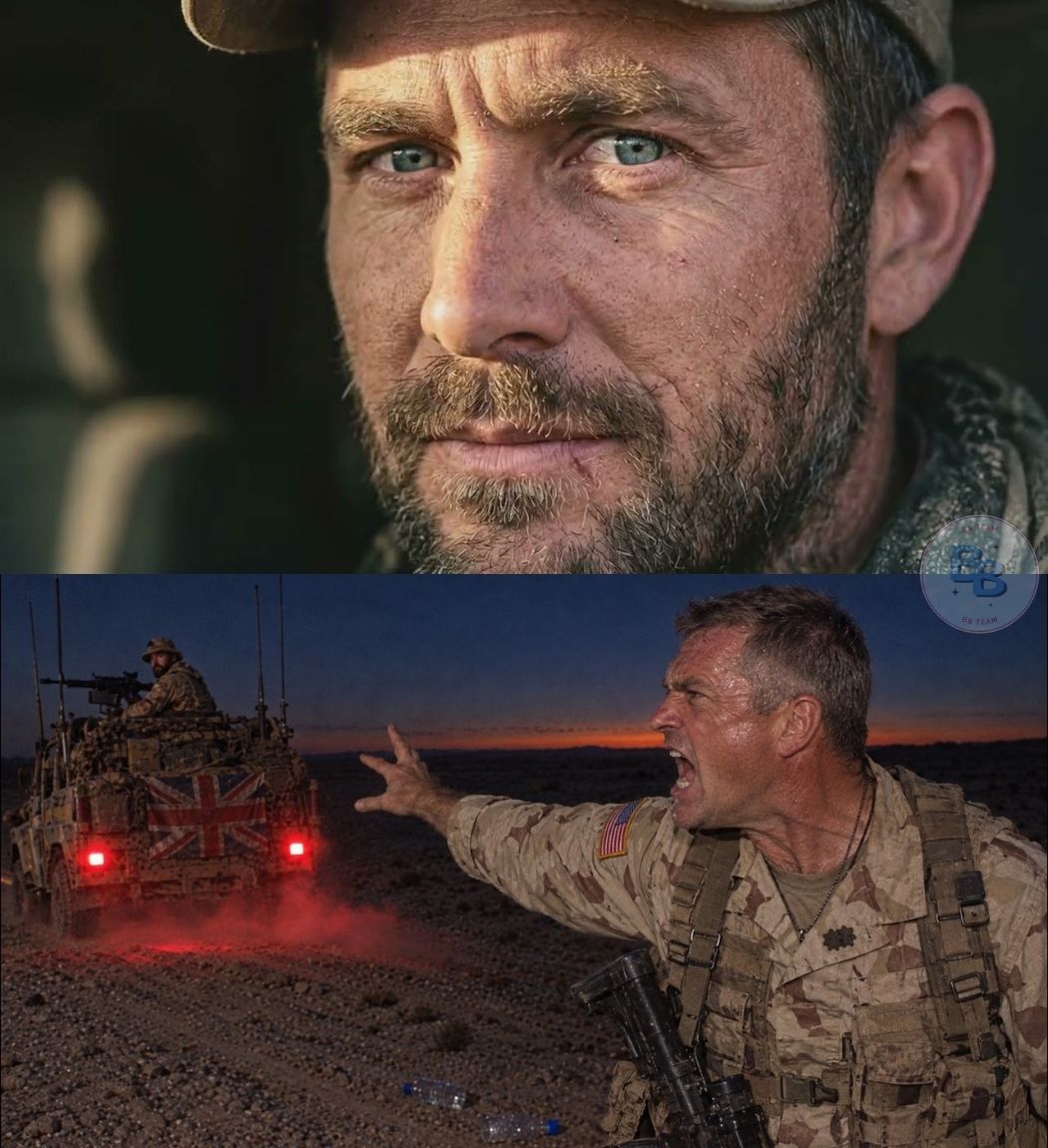
“Rank Means Nothing Here”: The Brutal Six-Word SAS Reality Check That Humbled a U.S. Officer
The heavy, suffocating humidity of the joint international training facility hung in the air like a physical barrier, thick enough to taste and relentless enough to break even the most seasoned operatives. It was the third week of Exercise Iron Vanguard, a high-stakes, multi-national counter-terrorism simulation designed to test the absolute limits of elite special forces from around the globe. Operating in a remote, dust-choked sector of the desert complex, teams from various allied nations were pushed to exhaustion, running complex hostage-rescue and urban-assault scenarios under simulated live-fire conditions. Tempers were predictably short, sleep was a distant memory, and the friction between differing military doctrines was beginning to spark visible flames.
At the center of this brewing storm was Lieutenant Colonel Marcus Vance, a rising star in the United States military command structure. Vance was a man who wore his rank like heavy armor, acutely conscious of the gold oak leaves gleaming on his collar and the immense administrative power they represented. A West Point graduate with an immaculate service record, Vance viewed military operations through the lens of strict hierarchy, standard operating procedures, and rigid chains of command. To him, the battlefield—even a simulated one—was an extension of organizational charts where protocols governed every move, and respect was automatically commanded by insignia.
Stationed alongside Vance’s unit was a detachment of British Special Air Service (SAS) operators. To the American staff officers, the SAS personnel were an enigma, bordering on insubordinate. They wore mismatched gear, eschewed traditional salutes in the field, spoke in low murmurs that ignored protocol, and carried themselves with an easy, unnerving confidence that seemed dangerously casual for soldiers playing in the big leagues. While Vance’s men moved with synchronized, textbook precision, barking crisp commands and maintaining strict tactical formations, the SAS detachment operated with a fluid, almost predatory independence. They observed the rules just enough to avoid disciplinary action, but their true loyalty was clearly to mission success and each other, not to military theater.
The clash of cultures reached its boiling point on a blistering Tuesday afternoon inside the tactical command bunker. A critical debriefing was underway following a botched night raid simulation. Vance’s team had meticulously planned the assault using satellite reconnaissance and advanced data analytics, but an unexpected variable—a simulated local militia reinforcement—had completely shredded their timeline, resulting in multiple simulated casualties and a failed extraction. Vance was pacing the length of the concrete bunker, his face flushed with frustration, looking for anyone outside his own chain of command to absorb the blame for the operational failure.
Leaning against a stack of communication crates in the corner of the room was Sergeant Major Arthur “Artie” Pendelton, a veteran SAS operator whose face looked like it had been carved from weathered teak. Pendelton wore a faded, grease-stained combat shirt with all insignia deliberately removed, a stark contrast to Vance’s starched uniform. Throughout the debrief, Pendelton had been silently cleaning his tactical knife with a small oil cloth, paying only marginal attention to Vance’s elaborate PowerPoint presentation detailing why external factors had ruined the operation.
Vance noticed the perceived indifference and felt a surge of professional insult. To him, Pendelton represented everything that was wrong with non-traditional command structures: undisciplined, arrogant, and seemingly immune to the pressure of senior rank. Vance stopped pacing, turned sharply toward the corner, and decided it was time to establish who was truly running the exercise.
“Sergeant Major Pendelton,” Vance barked, his voice carrying the sharp, authoritative cadence of a commander accustomed to immediate obedience. “You and your men have been sitting in the back of this briefing room observing our operations for three days now. Yet, during last night’s critical insertion, your squad took a completely independent route away from our main assault element, violating our primary operational parameters. Care to explain why you sabotaged the unit’s cohesion?”
The room went dead silent. The American staff officers froze, pencils hovering over notepads, while the other British operators simply stopped what they were doing, their eyes locking onto the confrontation with cool, detached interest.
Pendelton did not look up immediately. He continued to draw the steel blade across the sharpening stone, the metallic scrape echoing softly in the tense silence of the bunker. After a deliberate pause that felt like an eternity, the veteran operator slowly folded the knife, clicked it shut with a satisfying snap, and raised his steady, blue eyes to meet the lieutenant colonel’s angry glare.
“With respect, Colonel,” Pendelton said, his voice a low, gravelly British murmur that lacked any trace of panic or subordination, “your operational plan was absolute rubbish from the moment it was printed.”
The oxygen seemed to vanish from the room. Vance’s face turned from flushed red to a dangerous, mottled purple. The idea of a mere non-commissioned officer—regardless of his regiment—critiquing an officer of his rank, let alone in front of his entire staff, was an unforgivable breach of military etiquette.
“You forget yourself, Sergeant Major!” Vance shouted, slamming his fist onto the metal table, rattling coffee cups and computer monitors. “You are speaking to a lieutenant colonel in the United States armed forces! You will address me with the respect my rank demands, and you will answer my question without the insolence! In this coalition, my rank outstrips yours by miles, and your little underground club doesn’t exempt you from basic military discipline!”
The outburst echoed off the concrete walls. Vance’s staff held their breath, expecting Pendelton to snap to attention, stammer an apology, or face immediate administrative censure for insubordination.
Instead, Arthur Pendelton did something terrifyingly calm. He pushed himself slowly off the communication crates, standing to his full, imposing height. He didn’t flinch, he didn’t salute, and he didn’t raise his voice. He simply looked straight through Vance, as if the gold leaves on the officer’s collar were nothing more than harmless specks of dust.
With absolute chilling composure, Pendelton delivered the six-word reply that instantly silenced the entire command center and sent shockwaves through the multinational training command:
“Rank means nothing here.”
Before Vance could find his voice to scream for disciplinary action, Pendelton stepped forward into the harsh fluorescent light of the bunker, his presence completely dominating the room despite his lack of insignia.
“You spent three hours yesterday briefing us on your credentials, your degrees, your commendations, and the exact protocol for every imaginable contingency,” Pendelton continued, his tone dangerously quiet, cutting through the heavy silence like a razor. “You managed every single variable on paper, Colonel. But the moment a real-world variable walked through that door—a local militia commander who didn’t read your textbook—your entire plan collapsed in thirty seconds. Why? Because you were too busy looking at your rank on your collar to look at the ground beneath your feet.”
Vance opened his mouth to speak, but no words came out. The sheer audacity of the critique, delivered with the terrifying weight of absolute operational truth, had paralyzed him.
“In the real world, Colonel,” Pendelton said, stepping closer until he was standing just inches away from the furious American officer, “bullets do not check identification cards. Shrapnel does not respect seniority. And an enemy sniper does not give a single damn whether you went to West Point or finished at the bottom of your class. When the shooting starts, nobody asks what your rank is. They only ask who is still standing, who can solve the problem, and who isn’t too proud to admit they’re wrong.”
The silence in the bunker was absolute. The American officers stared down at their desks, suddenly intensely interested in their paperwork, realizing the undeniable truth behind the SAS veteran’s words. The culture clash that had simmered for weeks had finally resolved itself in a single, devastating moment of raw reality.
Pendelton gave a slight, dismissive nod, turned on his heel, and walked slowly toward the exit of the bunker, tossing his combat knife casually in his palm.
Lieutenant Colonel Marcus Vance stood frozen at the head of the table, his face still burning, but the illusion of his armor had completely shattered. The gold leaves on his collar were still there, shining brightly under the bunker lights, but for the first time in his military career, he understood that they were entirely weightless where it mattered most.