Royal Revolt: William Halts State Banquet After Camilla’s Furious Ultimaum Over Elizabeth’s Iconic Tiara Triggers Palace War!
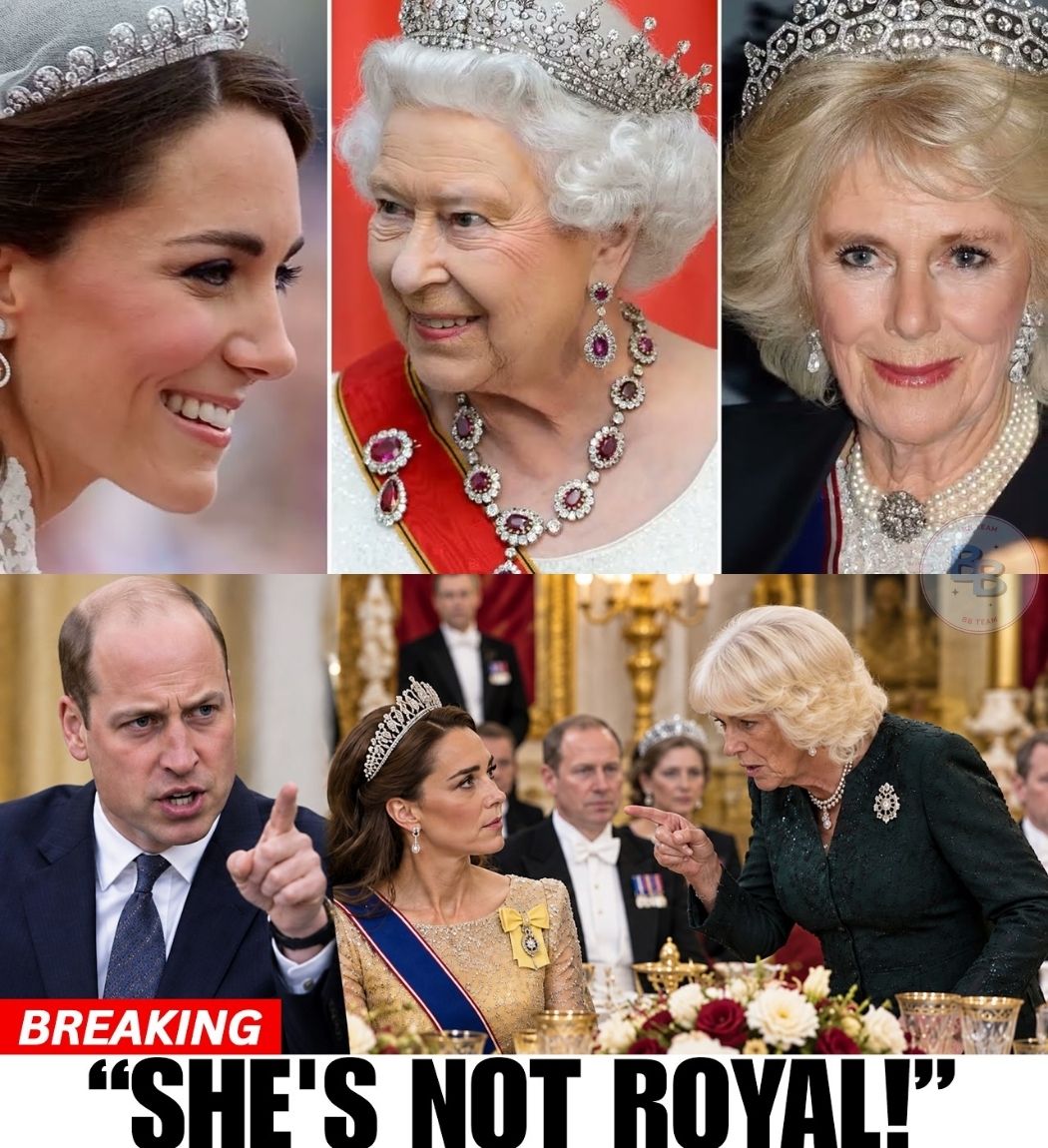
Royal Revolt: William Halts State Banquet After Camilla’s Furious Ultimaum Over Elizabeth’s Iconic Tiara Triggers Palace War!
The opulent chandeliers of Buckingham Palace usually cast a warm, unblemished glow over state banquet nights, reflecting generations of gilded tradition, diplomatic harmony, and impeccably rehearsed royal etiquette. But on a humid autumn evening, the heavy oak doors of the grand dining hall bore witness to a fracture so violent, so deeply personal, and so utterly unprecedented that whispered rumors of it would send shockwaves through the global media within hours. Prince William did not merely voice a disagreement; he brought the crown’s most prestigious evening to a screeching, humiliating halt, ordering the entire event into a stunned freeze after an escalating feud reached a boiling point over a single, priceless piece of royal history: Queen Elizabeth the Second’s legendary Cartier Halo Tiara.
The catalyst for this catastrophic collision of wills was a quiet accumulation of palace politics, deeply bruised egos, and a battle for the soul and visual supremacy of the modern monarchy. For months, tensions between Queen Camilla and Catherine, the Princess of Wales, had been simmering beneath a veneer of public smiles and carefully coordinated joint engagements. While courtiers and PR teams worked overtime to project a unified front of sisterly royal solidarity, insiders knew the reality behind closed doors was a high-stakes chess match. Camilla, ever protective of her hard-won status and eager to cement her legacy as Queen Consort, felt acutely overshadowed by Catherine’s universal global adoration, immaculate fashion reception, and the undeniable public appetite to see her draped in the late Queen’s most cherished jewels.
The breaking point arrived just forty-eight hours before a major diplomatic state visit, an event designed to impress foreign dignitaries and project supreme stability. According to deeply placed palace sources, Camilla issued a direct, unyielding decree through senior aides: Catherine was to step aside from wearing the iconic Cartier Halo Tiara—the very crown Catherine wore down the aisle on her wedding day in 2011, and a piece universally associated with her grace and connection to Queen Elizabeth. In its place, Camilla demanded that the Princess of Wales accept a lesser, historically minor piece, reserving the crown jewels associated with Elizabeth’s direct lineage strictly for Camilla’s chosen inner circle and her own family members.
When Catherine received the directive, she reportedly stood her ground with quiet, unshakeable dignity. For years, Catherine had endured subtle palace machinations and protocol turf wars, but stripping away her historical connection to Queen Elizabeth’s personal collection crossed a definitive red line. The tiara was not merely an accessory; it was a symbol of emotional inheritance, a tangible link to the grandmotherly figure who had guided Catherine through her harrowing transition into royal life. Catherine refused to comply with the last-minute jewelry swap, choosing instead to prepare for the banquet wearing the disputed piece as originally scheduled by royal protocol coordinators.
Word of Catherine’s defiance reached Queen Camilla moments before the grand procession into the state banquet hall, where international ambassadors, prime ministers, and foreign royals were already taking their seats. Enraged by what she perceived as insubordination and a direct challenge to her authority as Queen, Camilla allegedly confronted Catherine directly in the private holding salon adjacent to the grand suite. Witnesses described a tense, ice-cold verbal exchange that quickly escalated from hushed whispers into sharp, biting reprimands. Camilla reportedly accused Catherine of undermining the throne, weaponizing public sentiment, and forgetting the hierarchical order of the royal house. Catherine, maintaining her composure under extreme fire, calmly reminded the Queen Consort that royal history and the affection of the British people could not be dictated by decrees or jewelry box gatekeeping.
The confrontation spilled over into the view of close aides and security details, creating an atmosphere of palpable panic. As the time approached for the royal family to make their grand entrance down the sweeping staircase, the standoff remained deadlocked. Protocol dictates that the King and Queen Consort lead the procession, followed closely by the Prince and Princess of Wales. But as the introductory fanfare began to play, Prince William was alerted to the emotional distress inflicted upon his wife and the blatant power play executed by Camilla.
What happened next stunned the entire household. Rather than smoothing over the crisis for the sake of international optics, Prince William made a split-second, explosive executive decision. Stepping into the corridor, he intercepted the procession master and issued a direct command: halt the entrance. Witnesses report that William’s face was white with fury, his jaw clenched as he bypassed centuries of rigid protocol. He marched straight to the staging area where King Charles and Camilla were standing.
In a rare and shattering display of raw emotion and protective rage, William confronted his stepmother directly. He made it unmistakably clear that he would not stand by and watch his wife be bullied, marginalized, or stripped of her rightful heritage to appease insecurities within the royal household. The tension in the private corridor was so thick that senior security guards instinctively stepped back, unsure whether to intervene in a family dispute involving the most powerful heirs to the British crown. King Charles, caught terribly between his fiercely protective wife and his furious, immovable son, attempted to mediate the chaos, pleading for calm to preserve the dignity of the evening and avoid an international scandal in front of foreign dignitaries.
For several agonizing minutes, time seemed to stand still. The music outside echoed faintly through the thick palace walls, while inside, a family civil war played out in full view of bewildered courtiers. William refused to back down, declaring that if Camilla’s demands stood, he and Catherine would walk out of the banquet entirely, leaving the state event without its most popular and anticipated royal figures. The threat of a public walkout—a catastrophic PR disaster that would immediately leak to the global press—sent panic rippling through the King’s advisory team.
Faced with the terrifying prospect of an empty seats scandal and an irrecoverable fracture within the royal family’s public image, a frantic compromise had to be struck in the shadows of the banquet hall. Camilla, realizing that pushing the issue further risked detonating the entire monarchy’s reputation on the world stage, was forced to back down from her ultimatums. The decree regarding the tiara was rescinded on the spot, and Catherine emerged victorious, walking into the grand banquet hall alongside William, her head held high, wearing the disputed Cartier Halo Tiara in a dazzling, silent declaration of triumph.
As the banquet proceeded under a veneer of glittering silver and sparkling champagne glasses, the atmosphere was forever altered. To the outside world, everything appeared majestic, orderly, and serene. But beneath the glittering surface, the reality was stark: a line had been drawn in the sand. Prince William had proven that he would shatter protocol, challenge royal hierarchy, and risk a palace rebellion to protect his wife from internal tyranny. The tiara may have stayed on Catherine’s head for one glittering evening, but the shockwaves of this historic showdown have set the stage for an inevitable, high-stakes war over the future direction of the British monarchy.