Shadows of Helmand: The Night US Forces Realized the SAS Weren’t Just Soldiers—They Were a Different Breed of Warfare
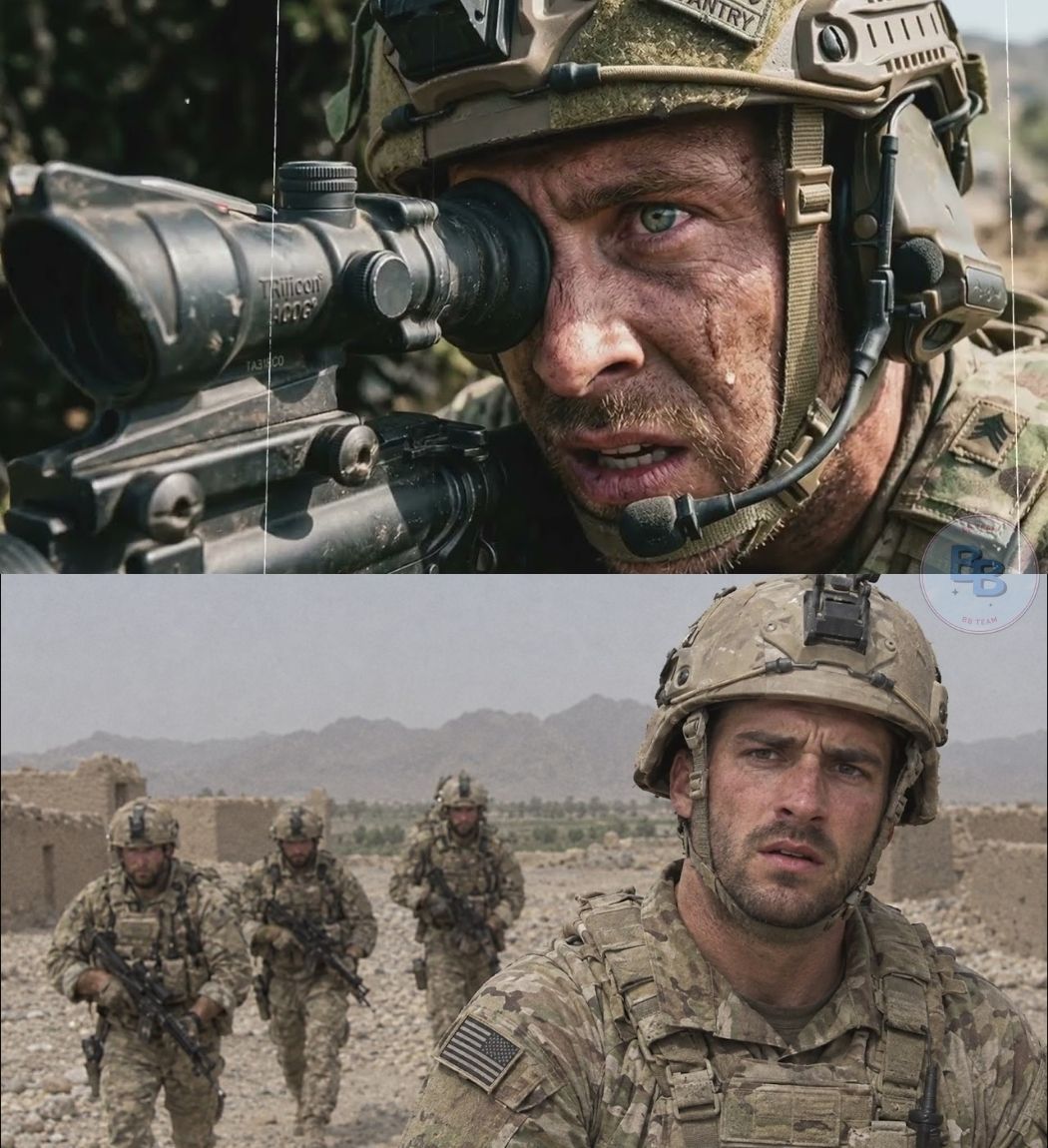
Shadows of Helmand: The Night US Forces Realized the SAS Weren’t Just Soldiers—They Were a Different Breed of Warfare
The dust of Helmand province does not simply settle; it clings to the skin like a shroud, baking under a relentless Afghan sun that seems to mock the men who walk beneath it. For the United States Marines and Army Rangers operating out of the volatile crucible of southern Afghanistan, survival was a daily exercise in heavy firepower, rigid protocols, and overwhelming numbers. They were the apex predators of conventional warfare—backed by air supremacy, artillery batteries, and armor that could weather an IED blast. They believed, with absolute conviction, that they were operating at the absolute pinnacle of modern tactical efficiency.
That illusion shattered on a moonless night in 2008, deep within the insurgent-infested labyrinths of the Sangin district, when a joint operation paired a platoon of battle-hardened US Rangers with a four-man patrol from the British Special Air Service (SAS).
What those American soldiers witnessed over the course of a single, harrowing night did not just surprise them; it fundamentally rewired their understanding of combat, fear, and the dark art of survival.
The initial briefing set the tone for what the Americans quickly realized was a completely alien operational philosophy. US doctrine, forged in the vast expanses of Iraq and the early chaotic years of Afghanistan, relied heavily on synchronization matrices, communication loops, and layered security perimeters. When the SAS detachment arrived at the Forward Operating Base, they did not look like the elite warriors of Hollywood myth. They wore mismatched gear, carried heavily modified weapons devoid of standard-issue accessories, and spoke in low, laconic murmurs. Their leader, a scarred veteran with dead, calm eyes who went strictly by his callsign, offered no grand tactical overview.
“We go in quiet, we find the target, we neutralize the threat, we vanish,” the Briton had said, his tone casual, almost bored. “Try to keep up, mates.”
The American platoon leader, Captain Marcus Vance, a West Point graduate who prided himself on meticulous planning, felt an immediate prickle of irritation. He tried to hand over a comprehensive 40-page synchronization packet detailing route clearance, medevac contingencies, and quick-reaction force protocols. The SAS commander took the thick sheaf of papers, rolled it up absentmindedly, and wedged it beneath a sandbag near the armory.
“Keep your radios on channel four, keep your safeties off, and for God’s sake, don’t use your flashlights,” the SAS operator muttered, shouldering his suppressed rifle.
The objective was a compound suspected of serving as a staging ground and transit hub for high-value improvised explosive device (IED) makers. Intelligence indicated it was defended by a dozen fanatical insurgents equipped with night-vision gear and heavy machine guns. Standard US procedure would have called for a coordinated midnight assault: an initial reconnaissance drone pass, a blinding artillery barrage to soften the perimeter, followed by a bounding infantry assault supported by armored vehicles and gunships circling overhead.
The SAS had a different definition of coordination. They intended to walk right into the heart of the spider’s web, entirely unsupported, without firing a single warning shot or calling in a single asset until the job was completely done.
As the joint force moved out into the moonless desert, the stark contrast between American heavy infantry and British special operations became immediately apparent. The US Rangers moved with disciplined, heavy purpose—their plates clinking softly, boots crunching rhythmically on the gravel, comms chirping under strict electronic silence protocols. They were a well-oiled machine, formidable and terrifying to any conventional force.
The SAS moved like smoke.
They did not walk; they seemed to dissolve into the terrain. Distances between the operators stretched and compressed effortlessly. There were no hand signals, no whispered tactical updates, no checking of gear. They communicated through an invisible, unspoken choreography forged in years of relentless, clandestine bloodshed.
About a mile from the target compound, the patrol encountered an unexpected obstacle: an active Taliban patrol moving along an irrigation canal directly intersecting their path.
For the US Rangers, this meant a sudden halt, a hasty defensive formation, and a tense debate over whether to bypass, ambush, or call in overhead assets. Captain Vance signaled for the column to freeze, his hand raised, heart hammering against his ribs as he anticipated the inevitable firefight.
He looked over for the SAS commander. The Briton was gone.
Vance whipped his head around, panic threatening to spike his adrenaline. In the span of three seconds, the four SAS operators had not taken cover; they had evaporated into the shadows of the muddy canal banks.
What happened next lasted less than forty seconds, yet it was executed with such terrifying, chilling efficiency that the watching American troops later described it as watching apex predators hunt in absolute silence.
Two of the SAS operators slipped behind the front elements of the unsuspecting Taliban patrol, while the other two positioned themselves ahead. There was no shouted warning, no demand to surrender. There was the dull, wet thud of a silenced carbine, a sudden muffled gasp, and the soft collapse of bodies hitting the dirt. The entire Taliban patrol of six men was eliminated before the last man even realized his comrades had ceased breathing.
There was no blood-curdling shout, no adrenaline-fueled war cry. One of the SAS operators simply wiped his blade on a pant leg, flashed a quick, almost imperceptible hand gesture toward the frozen Americans, and whispered into his radio: “Path’s clear. Keep moving.”
Specialist Roy Miller, a 21-year-old machine gunner from Texas who had survived three intense firefights in the Korengal Valley, stood frozen behind a mud wall, his knuckles white around his M249 SAW. Later, he would confess to his peers that his stomach had turned completely inside out.
“It wasn’t a firefight,” Miller recalled years later. “It was an execution, pure and simple. But it wasn’t cruel—it was surgical. Like taking out the garbage. I had guys in my platoon who talked tough, who loved the noise and the bravado of war. But watching those Brits… they didn’t care about looking tough. They were just cold, calculating ghosts. It scared the absolute hell out of me because I realized right then that if those guys ever had to kill us, we wouldn’t even hear the shot.”
Shaken but compelled by professional duty, the American contingent followed the SAS shadow-walk right up to the perimeter wall of the primary insurgent compound.
Intelligence had missed something crucial. As the patrol closed in, the thermal optics of the lead SAS operator picked up a secondary, unmapped guard position inside the courtyard—an insurgent sitting directly beside a heavy DShK heavy machine gun, smoking a cigarette and scanning the perimeter with thermal binoculars.
Under standard US doctrine, this would have triggered a halt. A sniper team would be called up, a firing solution calculated, and a synchronized shot executed to eliminate the threat before breaching.
The SAS operator didn’t wait for a team, didn’t calculate windage formulas, and didn’t hesitate. He pulled a specialized suppressed pistol from his chest rig, stepped out of the shadow of the mud wall into the open moonlight with total, chilling audacity, walked thirty yards across open ground directly toward the guard tower, and fired a single round.
The insurgent slumped forward onto the machine gun without a sound. The cigarette dropped from his limp fingers, glowing red in the dust before dying out.
Captain Vance felt his breath catch in his throat. It was an act of reckless, bordering-on-suicidal arrogance. If the shot had missed, or if the guard had flinched and managed to pull his trigger, the entire compound would have erupted, trapping the small force in a killing zone with zero cover.
Yet the SAS operator moved with such absolute, unshakeable confidence that the universe itself seemed to bend to his timing. He didn’t look back to check if the Americans were watching; he simply scaled the mud wall like a cat, dropped soundlessly into the compound, and unlocked the heavy wooden rear gate from the inside.
Inside the compound, the operation descended into a masterclass of brutal, close-quarters elimination. The target—a high-value bomb maker known as Mullah Rahim—was sleeping in a back room with two armed bodyguards.
The SAS did not breach with flashbangs, breaching charges, or shouting. They simply stepped through the heavy curtains of the room like shadows bleeding through a wall. The American Rangers, stacking up behind them in the doorway, watched in mesmerized horror as the British operators moved with an eerie, predatory grace.
There was no hesitation. No second-guessing. The bodyguards were neutralized before their eyes could adjust to the darkness. Mullah Rahim woke up to the cold, hard muzzle of a suppressed rifle pressed firmly against his forehead.
He didn’t scream. He didn’t have time. A zip-tie was cinched around his wrists with a sharp, crisp snap, a canvas hood was slipped over his head, and he was hoisted over the shoulder of a towering SAS operator as easily as a sack of grain.
“Target secured,” the lead operator crackled softly over the radio channel. “Exfil in three minutes. Keep your eyes sharp on the way back.”
The withdrawal was executed with the same terrifying, frictionless perfection. As the joint force slipped back through the desert perimeter toward the extraction point, the sun began to edge over the distant mountains, painting the Helmand horizon in bruised shades of violet and gold.
The contrast between the American and British soldiers as they waited for the Chinook transport helicopters was palpable. The US Rangers were soaked in sweat, breathing heavily, their adrenaline still coursing through their veins like liquid fire, chatting in nervous, excited whispers about the sheer audacity of what they had just witnessed.
The SAS operators, meanwhile, were already sitting quietly on their rucksacks, calmly sharing a tin of cigarettes and checking their watch batteries as if they had just returned from a mundane morning jog in Regent’s Park. Not a single word of self-congratulation passed their lips. To them, it hadn’t been a legendary raid; it had been Tuesday.
As the twin rotors of the Chinook kicked up a blinding hurricane of dust and grit, churning the earth and drowning out the quiet desert morning, Captain Vance walked over to the SAS team leader. He wanted to say something profound—to express his gratitude, to question their training methods, or perhaps to validate the shock still vibrating through his core.
He yelled over the deafening roar of the engines, holding out his hand.
“I’ve never seen anything like that in my life,” Vance shouted, his voice laced with a mixture of professional awe and lingering dread. “You guys operate on a completely different plane. What the hell was that?”
The SAS commander looked down at the extended American hand, gave it a firm, brief shake, and adjusted his helmet strap. His face remained an impass máscara of absolute, unreadable calm.
“We don’t fight to win battles, Captain,” the Briton shouted back over the roar of the turbine. “We fight to ensure there isn’t a battle to begin with. Teach your boys to move like ghosts, not soldiers. In this country, noise is just another word for a tombstone.”
With that, the British operators climbed up into the belly of the rising aircraft, disappearing into the dark metal cabin as the helicopter lifted off into the bright Afghan sky, leaving the dust to settle once again over the unforgiving desert floor.
The American troops stood silently on the tarmac, watching the helicopter fade into the horizon. For the rest of their deployment in Helmand, the Rangers never looked at combat the same way again. They had seen behind the curtain of modern war, and they understood a terrifying, fundamental truth: behind the roaring walls of artillery and the mighty displays of conventional might, there existed a shadow world—a place where men walked like phantoms, where killing was reduced to a quiet, terrifying art form, and where the most dangerous men on Earth wore no patches, made no noise, and left no trace behind.