“Tea-Drinking Tourists” — The Delta Cadre Who Mocked Visiting SAS, Then His Own Selection Broke Him
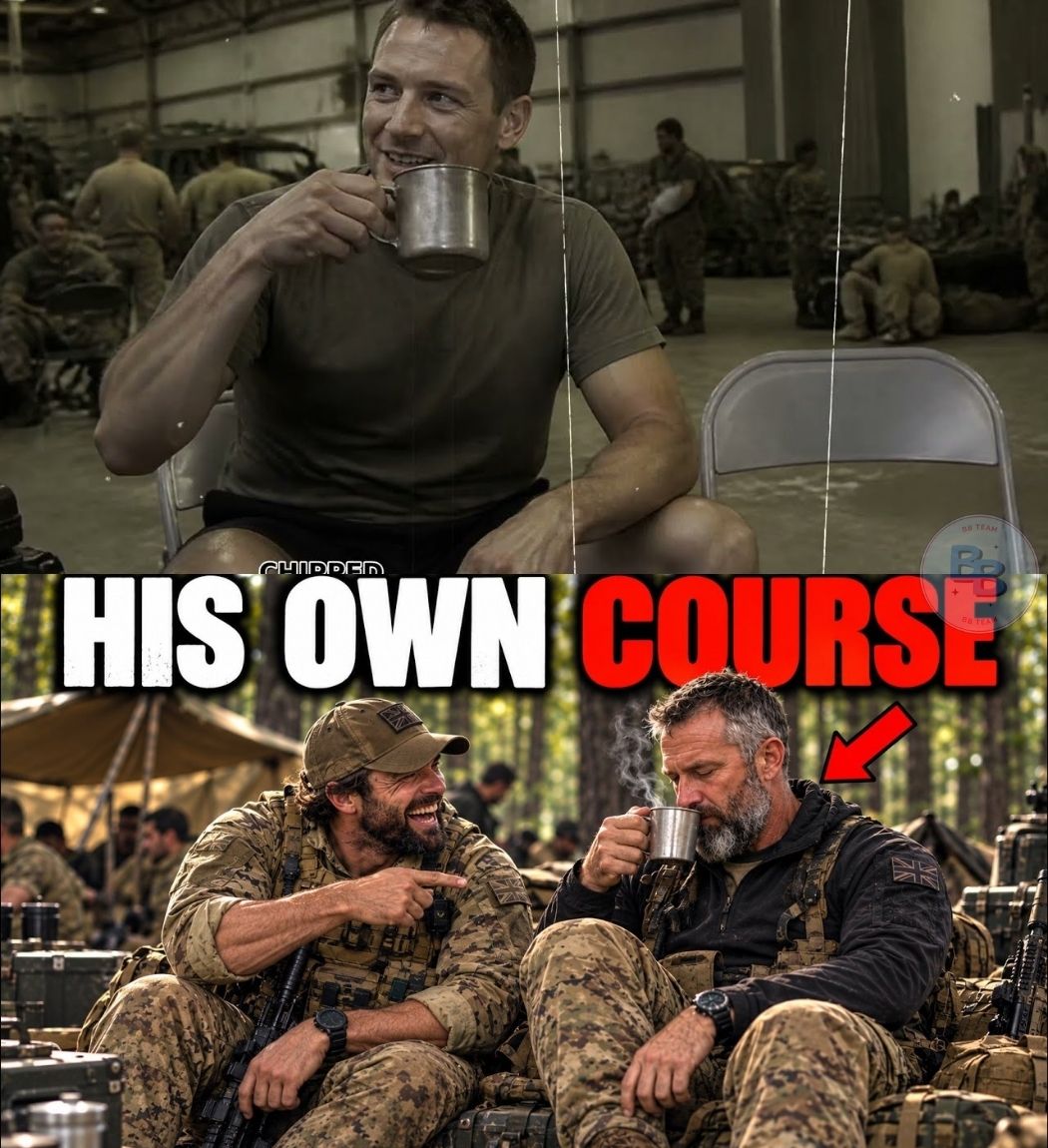
“Tea-Drinking Tourists” — The Delta Cadre Who Mocked Visiting SAS, Then His Own Selection Broke Him
There is a hangar at Fort Bragg where the air conditioning never quite catches up with the North Carolina summer. And on a Tuesday in July, the man at the whiteboard holds a dry-wipe marker in one hand and a coffee in the other, and he looks down the room at 10 men in borrowed physical training kit, drinking tea from metal mugs.
He has a Silver Star in a drawer at home. He has three tours in Iraq, two of them in the bad years, and a tin of cinnamon toothpicks in his breast pocket. And he has stood in more stairwells with more dead men on them than most instructors on this base have stood in front of classrooms.
His name is Dwight Rollison. He is a master sergeant in the United States Army’s 1st Special Forces Operational Detachment-Delta. And this morning he is the senior cadre on the operator training course block the British are visiting.
He looks at the row of folding chairs and he smiles.
“Tea-drinking tourists,” he says. “That’s all they are. Send them in first. See what the carpet looks like.”
The laugh that follows is the laugh of men who like their boss. Two of the junior Delta operators actually clap. Captain Dale Furlong, the liaison, looks at the ceiling. A sergeant first class called Velano in the second row does not laugh at all.
On the folding chairs, Sergeant Henrik Oldfield, the senior Special Air Service man in the room, lifts his mug to his mouth and takes a mouthful of tea and swallows it and does not change his face. Beside him, Staff Sergeant Ewan Price rests one boot on the back of the empty chair in front of him and watches Rollison the way a man watches a river to see which way it is actually running.
None of them speaks. Nobody on their side needs to. The British do not answer insults in the room the insult is given in. They answer them in a different room, on a different day, in a currency the man who said it understands.
He would remember saying it. He would be made to by the end of this exchange—in 16 days, in a different country, on a hill in Wales that is not kind to visitors. Rollison will stand bent at the waist with his hands on his knees in a wind that cannot be reasoned with, and a color sergeant with a pace stick will read a number off a clipboard, and the master sergeant will not be able to make his mouth form any shape at all.
This is the story of how that happened. It begins with a line he said in a hangar where the men he said it about were drinking tea and did not reply.
To understand what happened on that Welsh hill, you have to first understand that Master Sergeant Dwight Rollison was not a fool. He had enlisted in the army at 19, come up through the 75th Ranger Regiment on a Panama rotation that ended with his first Combat Infantryman Badge before he was old enough to drink, and he had put himself through Delta selection in the Appalachians in a winter cycle that had thinned three-quarters of the course. He had passed the operator training course on his first attempt. He had done the stress shoots and the hostage lanes and the long weeks of close-quarters battle work, and he had come out the other end with his unit’s quiet nod, which is a thing you do not get given; you get taken off the floor by not failing.
He had three combat tours in Iraq by the time of this story. And the second of them, the one in 2004, had ended with him putting his body in a stairwell in Sadr City between a wounded teammate and a man with a Kalashnikov coming down from the roof. He had taken two rounds in his plate, shot the man dead with his sidearm from six feet, carried his teammate down three flights, and come out of the building with the man alive and his own hands shaking so hard he could not open the magazine on the Glock 17 to reload.
For that stairwell they gave him the Silver Star. He had the ribbon in a drawer in the small house he rented off Bragg Boulevard. He did not wear it except on the days the army made him.
He had earned, in other words, the right to a certain kind of certainty. Delta’s culture rewards operators who look at every problem on Earth and ask whether they can walk into a room with it and end it. And after 15 years of being paid to answer yes, Rollison had developed the view that an operator who did not look like he could walk into a room and end it was not an operator, but a reenactor.
He had worked with the Special Boat Service once briefly in a maritime pass-off and come away unimpressed. He had never worked with 22 Special Air Service. He had read about them. He had seen the Iranian Embassy footage. He had decided long before the folding chairs went into the hangar that the regiment’s reputation was a piece of theater the British kept polished because they could no longer afford a navy.
The 10 men who flew into Pope Field on the Sunday night did not help his first impression. They came off the C-17 in civilian jackets with no unit patches. Two of them had full beards. Three of them, including Oldfield, were drinking from the thermos flasks they had carried the whole way from Hereford. They did not swagger. They did not do the thing visiting units sometimes do, where they produce their reputation at customs; they produced driving licenses and nothing else.
Captain Furlong, meeting them at the apron, told Rollison later that evening in the mess that the senior man, a sergeant, had thanked him for the lift and asked where the laundry room was.
“Laundry room,” Rollison had said, and smiled around a cinnamon toothpick. “Jesus, Dale, laundry room? These are the men. These are the men.”
The next morning: the hangar, the whiteboard, the marker in his hand, the 10 British faces on folding chairs with their tea, and the 12 Delta men standing along the back wall with their arms folded, and Furlong in the second row with his cap on his knee.
Rollison gave them the welcome brief. Then he gave them the schedule. Then he turned at the whiteboard and he looked at them with the look he gave the operator training course candidates in week three and he delivered the line:
“Tea-drinking tourists, that’s all they are. Send them in first. See what the carpet looks like.”
He said it in the voice of a man making a joke to friends about guests who are standing in the room. His own men laughed. Furlong did not laugh. Velano did not laugh. Oldfield in the front row lifted his mug and took a swallow of tea and set the mug back down on the empty chair beside him. And when he grinned briefly at nothing, the chipped front tooth in his smile caught the hangar light.
Price next to him closed his eyes for one long second as if confirming something to himself and opened them again and looked at Rollison and nodded once politely, as a man might nod to confirm an appointment.
That was the moment Furlong would say later that the master sergeant lost the exchange. He had put his money on the table and the British had seen the hand. Everything after that was arithmetic.
The Bragg range complex is not modest. It is a cathedral of American money spent well. The shoot houses have reconfigurable walls on hydraulic rails and ceiling-mounted cameras that record every entry from four angles. And the pop-up targets on the outdoor lanes come up and go down on a timer the instructors can program from a tablet.
Hereford, for comparison, has a killing house, a pistol range, and the Welsh hills. And anyone who has worked at both knows which one makes the harder man.
The British that first week used the American facilities exactly as they would have used their own. They walked in, they drew ammunition, they shot, they cleaned the weapons, they left. They did not comment on the hydraulics. They did not comment on the coffee. Price, asked by a Delta armorer whether he preferred the Diemaco or the Colt lower, said:
“I prefer the one that’s clean.”
And the armorer laughed and did not realize he had not been joking.
On the first full morning, Rollison ran them through a transition drill, long gun to pistol. From standing, five rounds, five rounds, under 8 seconds was the mark. His own men went first, as hosts should, and the fastest of them came in at 6.4.
Oldfield went first for the British. He drew the pistol with the economy of a man unlocking a familiar door, put all five on the plate, and holstered.
The timer said 5.9.
The second British shooter, a lance corporal, did it in 6.2. The third did it in 6.1. The fourth did it in 6.0. The fifth did it in 6.0.
By the time Price stepped up, Rollison had stopped looking at the timer and started looking at the watch on his own wrist because he had understood that the British were not racing. They were calibrating.
“Why are they all shooting the same?” the junior Delta operator next to him asked, honestly curious.
“Because they can,” Velano said before Rollison could answer.
And Rollison gave Velano a look that Velano did not return.
That afternoon there was a one-mile flat run as an informal thing. Physical training after lunch, no rank, no scoring. The Delta men went out hard, as Delta men do, because a one-mile flat run is a sprint for them. The British went out at a pace that looked from the sideline as if they were jogging back from the shop.
Three Delta operators finished under five minutes and were pleased. Price finished at 5:22, breathing through his nose. And when Rollison, standing at the finish, said:
“You wanted to beat them.”
Staff Sergeant Price said:
“I wanted to finish without needing a drink of water, sir.”
And he did, and walked past him to his Bergen, pulled a paperback from the lid pocket, and sat down on it to read. The paperback was Edward Thomas’s selected poems. Rollison glanced at the cover as he passed and let a small puff of air out through his nose. Tourists.
What he did not see, because contempt makes a man read for the thing he expects, was that Price had run the mile at exactly the pace he would run the first mile of a 20-mile load carry over Welsh ground in horizontal rain in November. He had run it as a rehearsal. He had run it as a prayer. He had run it the way a carpenter checks a plumb line.
The British were in a different exam from the one Rollison thought they were sitting. They had been in a different exam from the moment they had come off the C-17.
The silent pace, that was the thing. It is not glamorous. It is not something the regiment demonstrates to visitors because there is nothing to demonstrate. It is simply the pace at which a man carrying 40 kilos can move across a hill from dawn to dark and still be useful at the end of it. And it is taught not in a classroom, but by the weather and the ground over months and years, until the body knows it the way a dancer knows a waltz.
The British were full of it that first week on Bragg. It leaked out of them on the ranges, in the mess, in the way they packed their kit at night, in the way Price drank his tea in exactly four swallows and did not rush the fifth. Rollison saw it. He saw it 20 times a day. He mistook every sighting of it for proof of what he had said in the hangar: they were slow. They were quiet. They did not shout. They did not race. They were tourists.
On the Friday of that first week, Captain Furlong brought him the paper to sign. The exchange by its terms was reciprocal: two of the Delta cadre would travel to Hereford the following week to attempt elements of the Special Air Service’s hill-phase assessment—the Fan Dance, a night navigation leg in the Black Mountains, a long-range shoot on the Sennybridge area under the supervision of 22 Special Air Service directing staff.
One of those two cadre would be the senior man on the United States side.
“That’s me,” Rollison said, taking the pen. “Of course that’s me.”
Furlong held the paper for one half-second longer than he needed to.
“You sure, Dwight?”
“I’m sure,” he signed.
He put the toothpick back in the corner of his mouth. “Send me in first. See what the carpet looks like.”
He thought he was quoting himself. He was not. He was writing the first line of a different document in a country whose weather he had never been in, under men whose exam he had not understood he was sitting.
The final evolution of the Bragg block was the shoot house hostage lane, the operator training course used in week nine of its own course. It was a six-room single-story layout with a kitchen, a hall, two bedrooms, a bathroom, and a central room containing three plastic men with rifles, two plastic women seated on folding chairs, and a plastic child between them.
The pass mark was 12 seconds from breach to clear call with no non-combatant hits and a minimum of two rounds per threat in the high chest. Delta’s own best time on the lane that quarter was 8.1 seconds, held by a four-man element from the unit’s assault troop.
Rollison had designed the lane himself. He put his own best four in first as a demonstration. They breached clean, flowed through the kitchen into the central room, dropped the three threats in a staggered sequence that was almost beautiful to watch on the overhead, and called clear at 7.9. One of the operators had on the entry muzzle-swept the plastic child by about 10 degrees for a fraction of a second. The after-action review software flagged it in yellow. Rollison didn’t mention it.
He turned to the British and said:
“You want to see what good looks like twice, or you want to try?”
Oldfield stacked his four—himself, Price, Lacy, and a corporal called Welby—on the breach side without speaking. They set the charge. They waited.
The charge went. They flowed.
On the overhead, the four British bodies came through the kitchen in a line that bent like water finding the shape of a glass. In the central room, Oldfield took the left-hand threat with two in the chest and one in the head before the man beside the hostages had finished his first blink. Price took the right-hand threat on the same half-breath. Lacy, moving behind Price, picked up the rear threat behind the kitchen door that the overhead camera could barely see, hit him twice through the plywood, and crossed to the hostages without looking down. Welby called clear.
The timer stopped at 5.4.
Nobody in the control room said anything for a count of three. The Delta staff sergeant running the clicker, a man named Rhodes, looked at the number, looked at the overhead, looked at the number again, and handed the clicker to Velano without turning his head.
“Run it again,” Rollison said.
They ran it again. The second time, with the targets reconfigured and the hostages moved, Oldfield’s four called clear at 5.6. The third time, with the breach side changed from a doorway to a window, they called clear at 5.8.
On none of the three runs did the after-action review software flag a single muzzle sweep of a plastic non-combatant. On the third run, Price, moving through the hall, had put his support hand on the shoulder of the plastic woman in the folding chair to steer her out of his line as he passed, which was not in any manual Rollison had ever written, and had cost him perhaps a tenth of a second, and had been the most polite thing anyone had done in that building in a year.
Rollison stood at the back of the control room with his arms folded. He did not say anything. The toothpick in the corner of his mouth did not move.
Velano, holding the clicker, said quietly:
“Master Sergeant, that’s three for three under 6 seconds.”
“I can read a clock, Marcus.”
“Yes, Master Sergeant. Don’t put it on the board?”
“I have to put it on the board.”
He did put it on the board. The board was a whiteboard in the operator training course crew room with the quarter’s best times in black marker. He wrote the 5.4 and four at the top in a hand that was steady, and under it he wrote in brackets: Visiting United Kingdom. And he kept the pen and put it back in the tray without looking at Rollison.
Oldfield, outside cleaning his rifle on a bench in the shade, did not look at the board when he was told. He put the bolt back into the upper, charged the weapon, dry-fired it, and set it on the bench muzzle down, the way a man sets down a tool he is finished with for the day.
Price next to him had taken his paperback out again and found his place.
“Good shoot, staff,” Furlong said, passing.
“Good house, sir,” Price said, and did not look up.
That was the first time—inside the hangar at Bragg, where he had said it—that Rollison’s own instrument told him the tea-drinking tourists, as he had called them, were in fact better than his own best four at the specific thing he had built his career on. And he did not know yet that it was the first time of several in the days ahead that he would be wrong. And that was only the first time that day he would be wrong.
The second blow came three nights later, and it came in the dark, which was the thing Rollison had told himself he would always own. Night work was Delta’s ground. He had crossed Iraqi cities on night-vision devices for a decade. He had read ground in starlight on four continents.
The night navigation leg at Bragg was a six-point exercise through the Pine Barrens run in pairs with map and compass only—global positioning system units sealed in a plastic bag that was tagged and inspected at the end for an unbroken seal. The ground was his own ground. He had walked it in daylight that very morning as a check.
He partnered with Velano. They stepped off at 2200, moving well, taking the first three points on the clock, Rollison calling the bearings, Velano on the pace count. By point 4 they were sweating through their smocks in the humid pines. By point 5 they had drifted off their line by about 60 m because the fire road they had expected on the map had been overgrown and they had cut around it in the dark.
And Velano had said nothing, because a sergeant does not correct his master sergeant in the field unless the correction is going to save a life.
The British had gone out in pairs, too. Price had taken Lacy, the 23-year-old from Carmarthen who was the youngest man on the exchange. The directing staff brief had told the British to walk the ground as if it were their own, which meant to walk it slowly, to read it, to use the map as a confirmation of what the feet already said and not as an instruction.
Price had never set foot in a North Carolina pine barren in his life. He had, however, been raised on hills where mist could kill you if you believed the map over the ground, and he walked the Bragg woods with the same discipline. He let Lacy hold the compass. He himself held nothing but the map, folded small, and his torch, red filter, which he used perhaps four times across six kilometers.
At point 4, where Rollison had drifted, Price had stopped. He had put his hand flat on the pine needles. He had felt under his palm the compaction of a path that did not exist on the sheet—a trail the hunters used, going at an angle to the fire road, which took 150 m off the dogleg if you trusted it.
He had looked at Lacy. Lacy had looked at the map.
Lacy had said:
“Not on their staff.”
Price had said:
“No. But a man made it, and he was going our way.”
They had taken the trail. They had made point 5 on the clock. They had made point 6 on the clock. They had come into the final rendezvous at an abandoned fire tower at 12 minutes before midnight, which was 18 minutes inside the directing time and 6 minutes faster than the fastest Delta pair had ever done the lane in daylight.
Rollison and Velano came in at 12 minutes after midnight, which was still a pass, and which was the slowest time Rollison had posted on that ground since he was a sergeant.
He saw the British by the fire tower before he saw the directing staff. Price had his Bergen off and was drinking from a canteen. Lacy was executing a boiled sweet. Their boots were dry on the uppers, where Rollison’s and Velano’s were black with the water they had taken on cutting around the overgrown road.
“How do you boys get here so fast?” Rollison said. He did not say it kindly.
“We found a path,” Price said.
“There’s no path there.”
“There’s a path there, sir. We walked it.”
“You had the sheet earlier.”
“We stepped off at 10 like you.”
“You went light.”
“Same weight as you, Master Sergeant. They weighed us.”
Rollison had looked at Velano. Velano had looked at the ground.
The directing non-commissioned officer, a Delta man of long service, had cleared his throat and said:
“Times are what they are, Master Sergeant, on the board,” and had walked off before the conversation could become one Rollison needed to lose in public.
In the truck back to the barracks, in the dark, Rollison sat with his jaw set and told himself two things: that the British had been given more time to study the sheet, and that they had cheated on the weight.
Both things were untrue. Velano, next to him, did not correct him. Velano, who had read ground himself for 20 years, knew what had happened. He had seen Price put his hand on the pine needles. He had seen the moment on the map when Price had chosen the hunter’s trail. He had seen in the fire tower’s porch light Price fold his map back into exactly the same small rectangle it had come out of, and put it in exactly the same thigh pocket, and button the pocket flap down with the care of a man who had been taught by someone he had loved to look after the kit that kept him alive.
The schoolgirls, he had not said, but he had thought: the schoolgirls in their shorts. He was not calling them that out loud. He was looking for a new word because tourists was not holding.
He went to bed that night and lay on his back for an hour and did not sleep well.
That was the second time. There would be a third in a place he did not yet know, and he had already signed the paper.
By the Thursday of the second week, the time on the board at Bragg was on the board, and the night navigation time was on the board, and the man with the Silver Star was running out of ground on which the day could be won.
He chose as the final evolution of the Bragg phase a long-range precision shoot of his own design. The target was a steel plate the size of a man’s chest at 820 m from a cold bore on an unknown wind lane with no spotter calls and no sighter rounds. The rifle was his own personal LaRue OBR in .308, which he had owned for seven years and shot more often than he had telephoned his father.
The range was a flat shoot through long grass with a creek bed at 400 that funneled wind in a way only locals read. He had not lost that lane to a visiting shooter in six years.
He went first. He got into prone, settled, took his two minutes on the glass, dialed his elevation, held off two mils for a wind he judged at eight knots left to right, and broke the shot. The plate rang at a count of one and a half. First round hit left of center—a very fair call. His own men made a short, polite noise.
He stood up and brushed grass off his elbows and said:
“Who’s going?”
Oldfield had looked across at Lacy. Lacy—23, from Carmarthen, who still called his mother on Sundays in Welsh—had come forward and taken the rifle Velano offered him: a borrowed OBR, same model as Rollison’s, zeroed on paper that morning by a Delta armorer and not touched since. The glass on it was a Nightforce he had never looked through before this morning.
He laid down in the grass. He put the rifle on the bipod. He did not touch the turrets for a long time. He took four minutes, which under the directing clock was almost at the edge of acceptable. He was reading the grass. He was reading the way the heads of it moved at 200, at 400, at 600. He was watching the mirage boil through the glass. He put a finger down into the pine straw and lifted it and watched the back of his wrist for the hairs to move.
Then he dialed his elevation and he held off for a wind that nobody standing on the firing point could see him calculate, because he had done the calculation on his hand like a boy at a bus stop.
He broke the shot. The plate rang at a count of one and a half. First round hit dead center, a shade higher than the master sergeant’s.
“Again,” said M. Mardle, the color sergeant who had come across from Hereford as the British directing staff for the shoot. “Same hold.”
Lacy broke the second shot without redialing. The plate rang.
The Delta spotter next to Rollison, looking through a loophole on a tripod, said:
“He put the second one through the first one, Master Sergeant. He put the second one through the first one.”
Rollison did not answer. He reached as he always reached for the tin of cinnamon toothpicks in his breast pocket. His thumb found the catch. The tin opened.
The tin was empty.
He had chewed through them in the night, lying awake in the barracks, and he had not refilled the tin that morning, and he realized now, standing in the grass at Bragg while a boy from Carmarthen put two rounds through one hole at 820 m, that he had been chewing them to a particular rhythm for three days, and the rhythm was anxiety.
He closed the tin. He put it back in his pocket. He did not say anything.
Lacy stood up. He handed the rifle back to Velano, muzzle up, bolt back, the way he had been taught.
“Thank you for the loan,” he said.
Velano nodded.
Mardle, holding his clipboard, said:
“On the board, Owen,” and Lacy went red at the ears and did not look at Rollison at all.
By the end of that afternoon, the Bragg phase of the exchange was closed. The British had their times. The Delta cadre had their times. The ratios were not kind.
Furlong in the mess that night found Rollison alone at a corner table nursing a coffee he had not drunk.
“You still flying Sunday, Dwight?”
“I’m still flying Sunday.”
“Nobody would blame you if you dropped out of the hill phase.”
“I signed the paper.”
“I know you signed the paper.”
“I’m flying Sunday.”
The toothpick tin was in his pocket. The tin was empty.
The tourists, as he had called them, were on a C-17 two days later, and he was on it with them, and on the Wednesday morning after that, in a car park at a place called Storey Arms in the Brecon Beacons National Park in Wales, in the wrong trousers, he would meet the hill.
The third time he was wrong had been loud. The fourth time he was wrong would not be loud at all. It would be weather.
The car park at Storey Arms sits at a little under 400 meters above sea level on the A470 in the Brecon Beacons National Park in Wales. And on the Wednesday morning Rollison arrived there, the cloud was down on the ground, the rain was coming in across the car park horizontally, and the wind was reading everyone’s kit for them.
Major Alistair Crew, the Hereford directing officer, stood at the back of a Land Rover with a clipboard inside a plastic sleeve. Color Sergeant M. Mardle stood next to him with a pace stick under his arm. Warrant Officer Class 2 Brighten “Tommo” Hughes, the squadron sergeant major, was moving down a line of 26 men in Bergens, checking straps, checking the weight on a set of hanging scales he had brought out from Hereford in a canvas bag: 22 kilos dry, plus rifle, plus water, plus belt kit.
Tommo was saying to each man in turn:
“Dry, mind. If it’s wet, it’s your problem.”
He came to Rollison, who was standing on his own in a borrowed Hereford smock that did not quite fit, and put the hook of the scale under the top strap of the master sergeant’s Bergen, and let the needle settle.
“22 on the nose, sir,” Tommo said to Crew. “Not to roll.”
“Thank you, Mr. Brighten,” Crew said.
He looked up from the clipboard. He had an open, unnoisy, unhurried face. His father’s silver whistle, career-era, hung on a cord under his smock; he never used it. He looked at Rollison and he said quietly:
“Master Sergeant, the route is the Pen y Fan horseshoe out and back—Storey Arms to Talybont turnaround and return, 24 kilometers, this weight. The directing staff cutoff on this phase is four hours. The squadron average this morning will be a little under three. There are no favors for guests. If you fall behind the sweep, the sweep picks you up and the day is finished. Any questions?”
“No, sir.”
“Good man.”
They stepped off at 0700.
The first mile is up. The pace as they go is the silent pace. Nobody talks. 26 Bergens move at the same cadence through the gate at the back of the car park and onto the stone track. And Rollison, in among them, finds that his legs are being set by other men’s feet.
The British do not look at him. They do not slow down for him. They do not speed up to drop him. They move at the pace the hill will accept, and the hill will not accept more.
On the pull up to Corn Du, the wind takes a thermos out of a man’s side pocket and the man does not reach for it. On the summit, the cloud is so close that the trig point appears at 6 ft, and Rollison, who has been breathing hard for 20 minutes already, does not see Pen y Fan ahead of him until he is 12 paces from it.
On the descent off the Fan, the ground drops like a staircase, and he lands on his heels because he has not yet learned to land on his midfoot, and the shock goes up through his knees into his hips, and he thinks, for the first time: I am going to have to walk the back half of this.
Jacob’s Ladder is what the hill phase takes from a man who has not earned it. It is a staircase of boulders set in the hillside at an angle the body does not want and the lungs refuse.
The British go up it at the same cadence they came up Corn Du. Rollison, behind Price now by six paces, feels the cadence as a drum he cannot catch. He loses it halfway up. He stops. He puts his hands on his knees.
The man behind him, Welby, passes him without a word. The man behind Welby passes him without a word.
At the turnaround at Talybont, M. Mardle is standing with a stopwatch on a lanyard. He clicks each man through. He does not call the times; he writes them. When Rollison comes through, bent, breathing with his whole chest, Mack writes a number on the clipboard without looking at him.
The number is 13 minutes behind the lead man and 9 minutes behind the squadron median, 12 km back.
“Master Sergeant,” Mack says, “sweep is 23 minutes behind you. You know what sweep is?”
“I know what sweep is.”
“Then go, son.”
Son. Mack is 48. Rollison is 41. Mack has done the Fan Dance in every month of the calendar. He says son the way a father says it.
Rollison goes.
The back half is the half the hill takes. He goes up the Fan again on legs that are not his legs. He crests Corn Du again in cloud that is not kind. On the long descent back to Storey Arms in the last mile, with the rain coming in off the reservoir and the stone track running water under his boots, Price—who has already finished and come back out—is beside him.
Price says nothing. He walks. He adjusts his own pace to the master sergeant’s. He does not look at him. He does not touch him. He is simply there. And he is there because that is what the regiment does for a man on a hill—including a man who called them tourists in a hangar, because the hill does not care what you said about anyone.
Rollison comes into the car park at 3 hours 49 minutes 11 seconds. He crosses the line and he puts his hands on his knees and he does not stand up for a long time.
Major Crew lifts the clipboard. He reads from it. He reads clinically. He is not performing.
“Fastest time this morning: Staff Sergeant Price, 2 hours 38 minutes. Squadron median: 2 hours 54 minutes. Directing staff cutoff: 4 hours. Master Sergeant Rollison, United States Army: 3 hours 49 minutes 11 seconds. Inside the cutoff by 10 minutes 49 seconds.”
He lowers the clipboard. He looks at Rollison.
“That is a pass, Master Sergeant. On a bad day for a man who has not walked this ground before. For your information, the squadron would consider that time from one of our own on hill phase a borderline fail.”
Nobody laughs. Nobody smiles. Mack writes the number down and caps his pen.
Read that number again: 3 hours 49 minutes. The squadron median was 2 hours 54. The men he had called tourists in their shorts had walked the hill in an hour less than the man who had called them tourists in a room with his coffee in his hand.
They put him in the back of a Land Rover with the tailgate down and a foil space blanket round his shoulders, and Dr. O’Shea, the squadron medic, pressed a boiled sweet into his hand without being asked.
“Lemon, Master Sergeant,” O’Shea said. “For the shivers. Suck it, don’t chew it.”
Rollison sucked it. His hands were shaking. O’Shea watched the shaking for the correct length of time and then nodded to himself and moved on.
The squadron came past him then, one by one, as they went to collect their flasks and their waterproofs from the two trucks parked at the back of the car park. They did not look at him. They did not avoid looking at him. They walked past the tailgate as men walk past a stretcher in a corridor—which is to say, with the professional courtesy of knowing that today it is you, and tomorrow it is me, and no man on this hill is more than one bad knee from being the one in the blanket.
Oldfield passed. He had his hood down. His Union Jack patch was dark with rain. When he was level with the tailgate, he glanced in—not at Rollison, but at Dr. O’Shea—and he grinned briefly, and the chipped front tooth caught the gray Welsh light. He did not say anything. He went to get his flask.
Lacy passed. He did not grin. He did not look. He had learned in the last fortnight to pass a man in a space blanket the way the regiment passes men in space blankets, which is to leave them their dignity.
Price passed. He stopped. He turned. He looked at the master sergeant in the back of the Land Rover, and he said quietly:
“You walked a hard hill, sir.”
Then he went to his Bergen and took out the Edward Thomas and sat down on a stone in the rain to read.
Velano, who had flown in two days earlier to run the second half of the United States side of the exchange, came and stood by the Land Rover with a tin mug of tea Dr. O’Shea had given him. He did not drink the tea. He looked out across the car park at the men coming off the hill and he said without looking at Rollison:
“Master Sergeant, for what it’s worth, a stairwell in Sadr City is not a hill in Wales. You did a thing in that stairwell that none of these men have ever been asked to do, and you have the paper for it, and nobody here forgets that. But a hill in Wales is not a stairwell in Sadr City, either. And these men have the paper for this ground, and today you did not. That is all that happened today.”
Rollison did not answer. He opened his mouth. He closed it. He opened it again. The thing he could not say was that in a hangar at Bragg two weeks ago he had told the room what the carpet would look like if you sent them in first. And today the carpet was a stone track running water. And he had been the man they sent in first, and the carpet looked like him.
He put his face in his hands for a count of three. Then he took his hands away and he sat up straight because that was what Delta cadre do. And he watched the men he had called tourists go to get their tea.
Major Crew came past at the end. He did not stop. He touched the brim of his cap once in Rollison’s general direction as an officer does, and he carried his clipboard back to the Land Rover with the exchange paperwork on it, and he put the clipboard away. The debt was paid—not with a speech, not with a handshake, not with the master sergeant turning disciple and asking to come back next year. He was not a disciple. He was a diminished man in a borrowed smock sucking a lemon sweet in the back of a Land Rover in the Welsh rain, and the men he had laughed at were drinking their tea six yards away and not looking at him. And that was the shape of it, and the shape of it was enough.
In the hangar at Bragg on a Tuesday in July, Master Sergeant Dwight Rollison had looked down a row of folding chairs at 10 men drinking tea from metal mugs. And he had said, with the certainty of a man who had earned his certainty in stairwells in Iraq, that they were tea-drinking tourists, and that the thing to do with them was to send them in first and see what the carpet looks like.
He had been right about the tea. There had been tea. There had been a great deal of tea.
He had been catastrophically wrong about the men who were drinking it.
That is the thing contempt does. It looks at a style and calls it a ceiling. It sees the mug and misses the hand. It sees the paperback in the Bergen lid and does not understand that the man who reads Edward Thomas on a stone in the rain in the Brecon Beacons has already walked a hill harder than any room the master sergeant has ever cleared and will walk it again on Monday, and the Monday after that, and will not need to tell anyone about it in a hangar.
In the car park at Storey Arms, as the Land Rovers were loading, Staff Sergeant Ewan Price closed his paperback and put it back into the lid pocket of his Bergen and did up the strap. He drank the last swallow of his tea. He threw the dregs onto the gravel. He shouldered his Bergen without using his hands on the straps, which is a thing you learn only by doing it 10,000 times, and he walked to the truck.
The hill behind him went back into the cloud it had come out of for the morning.
That was all. There was no speech. There was a number on a clipboard. There was a man in a space blanket. And there was a squadron going on.