The Lost Spencer Vault: Inside the Secret Diaries That Sent Prince William Into a Rage and Threatened to Tear the Crown Apart
The Lost Spencer Vault: Inside the Secret Diaries That Sent Prince William Into a Rage and Threatened to Tear the Crown Apart
V
The rain over Norfolk fell in heavy, rhythmic sheets, hammering against the leaded glass windows of Anmer Hall like a relentless accusation. Inside, the atmosphere was thick enough to choke on. Prince William stood by the grand fireplace, his knuckles stark white as he gripped a leather-bound journal so tightly the binding groaned. The air in the room was charged with a volatile energy, the kind that precedes a catastrophic storm.
Across the room sat a secure laptop, its screen glowing in the dim twilight, displaying scanned pages of handwritten script that had just been covertly smuggled out of a high-security vault in Northamptonshire. These were not mere historical footnotes. They were the personal, unfiltered, and deeply devastating diaries of a confidant close to the Spencer family—journals that had remained hidden for nearly thirty years, detailing secrets that the British royal establishment had spent decades, and millions of pounds, burying.
For generations, the narrative surrounding the House of Windsor and the Spencer family has been combed over, sanitized, and neatly packaged for the public consumption. We were fed the fairy tales of modern royalty, the diplomatic handshakes, the charitable galas, and the carefully curated grief. But history is a stubborn thing. It refuses to stay buried, especially when the dirt covering it is loose. And right now, the dirt was being kicked up by a tempest that no amount of royal press maneuvering could ever hope to contain.
To understand why Prince William is currently locked in a state of fury, we have to look back at the fault lines that have fractured the British aristocracy for decades. The Spencer name carries a weight that rivals the Crown itself. Rooted centuries deep in English history, the Spencers view themselves as protectors of an ancient lineage, often looking down upon the Windsors as mere bureaucratic newcomers who happened to inherit the throne. When Diana Spencer married Prince Charles in 1981, that collision of worlds created a cosmic shockwave. But what happened behind closed doors at Highgrove and Kensington Palace was never fully told—until now.
According to the newly unearthed pages, the diaries were penned by a high-ranking member of the Spencer household staff who served as a silent witness to the psychological warfare waged behind velvet curtains. These entries paint a harrowing picture of a young, isolated princess trapped in a gilded cage, systematically gaslit by courtiers whose primary allegiance was to the survival of the institution rather than the human beings within it. But the diaries go much further than just recounting the familiar tragedies of the past. They contain explicit, naming-and-shaming accounts of modern conspiracies, attempts to silence whistleblowers, and a trove of confidential memos detailing how internal palace investigations were quietly squashed to protect high-ranking royals from public disgrace.
One particular entry, dated just months before the tragic events in Paris in 1997, details a furious confrontation between a senior royal advisor and Diana over missing correspondence. The diary alleges that private letters containing explosive allegations about the inner workings of the royal household were stolen from a locked safe at Althorp House. For years, rumors of missing documents have circulated among royal biographers, but this is the first time a firsthand account has explicitly linked the disappearance of those papers to a coordinated effort by palace operatives.
When word of the diary’s existence reached William’s team earlier this week, the reaction was swift and merciless. According to palace insiders who spoke on the condition of strict anonymity, the Prince of Wales went through a spectrum of emotions—from absolute disbelief to cold, calculating fury. To William, these diaries represent more than just a historical excavation; they are a direct, deeply personal attack on his mother’s memory, weaponized for modern sensationalism. More terrifying to the palace, however, is the legal and public relations nightmare these revelations pose for King Charles and Queen Camilla, who are named in several passages concerning the suppression of internal dissent.
The timing could not be more catastrophic for the monarchy. As the institution navigates an era of intense public scrutiny, economic uncertainty, and shifting generational values, the last thing it needs is a ghost from the past rising up to rattle its chains. The younger generations of Britons are already increasingly skeptical of the monarchy’s relevance and transparency. A scandal of this magnitude—backed by physical, handwritten evidence rather than tabloid gossip—threatens to erode the remaining pillars of public trust.
The custodian of these diaries, a distant relative of the Spencer lineage who chose to remain anonymous for fear of personal safety, sat down for a clandestine interview in a secluded country house just outside of Oxford. Speaking in a hushed voice, away from the hum of potential electronic surveillance, they explained the motivation behind bringing the documents to light.
“The narrative has been controlled for far too long by people who wear crowns and medals, but never had to face the consequences of their own cruelty,” the source said, leaning forward in the dim light. “Diana was not just an icon on a postage stamp; she was a flesh-and-blood woman hunted by the very system she tried to humanize. These pages prove that the machinery that broke her is still active, still protecting itself, and still lying to the public. William is angry because he knows the truth is finally out of his control. He wants to protect his family’s legacy, but you cannot build a healthy future on a foundation of rotting bones.”
The contents of the diary are divided into three distinct volumes, each more damning than the last. Volume one focuses on the early years of the marriage, detailing the psychological isolation imposed upon Diana by royal protection officers and private secretaries who reported her every movement. It describes instances where personal letters from her mother and friends were intercepted, read, and discarded under the guise of security protocols. The diarist writes of a young woman crying herself to sleep on velvet pillows, surrounded by opulence yet entirely destitute of human warmth.
Volume two shifts to the turbulent mid-1990s, capturing the covert operations launched by palace PR teams to discredit Diana during her separation from Charles. The entries provide specific names of journalists, editors, and fixers who were allegedly fed fabricated stories to shift public sympathy back toward the future king. It is a masterclass in institutional manipulation, showing how a multi-billion-pound enterprise can use the full weight of the state to crush an individual dissenting voice. For Prince William, reading these specific names must be a bitter pill to swallow, as some of those individuals or their protégés still walk the halls of power today.
Volume three is perhaps the most explosive, touching upon the immediate aftermath of the Paris crash and the subsequent scramble to secure personal effects before they could be cataloged by independent authorities. The diarist claims to have personally witnessed a late-night raid on a private study at a royal estate, where documents detailing financial settlements and secret agreements were seized by individuals carrying diplomatic credentials. If verified by forensic handwriting experts—preliminary analysis by independent archivists suggests the ink and paper match the late 1990s period perfectly—these claims could open the door to parliamentary inquiries and unprecedented legal challenges against the Crown.
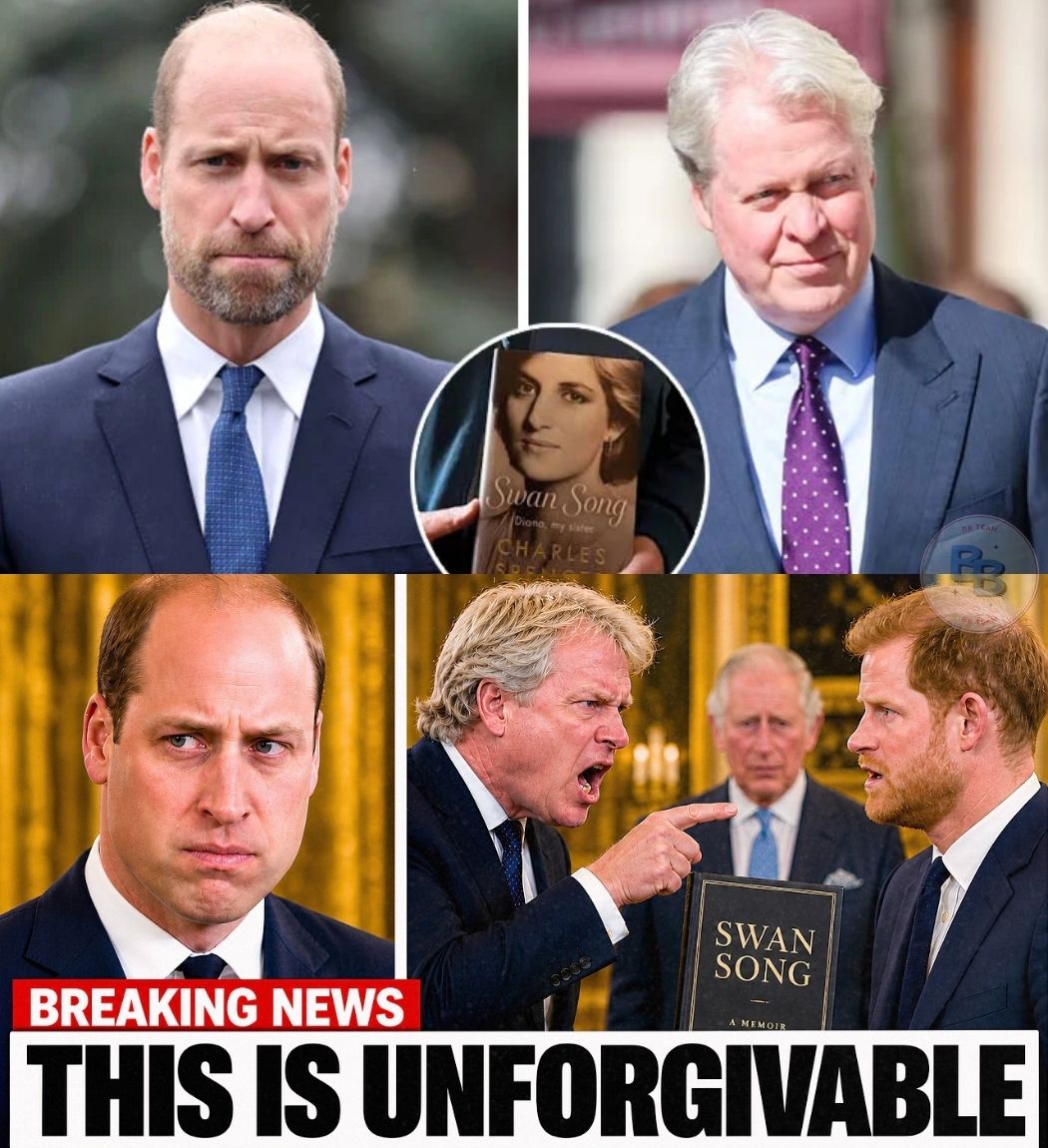
Legal experts are already weighing in on the implications. While the British Crown enjoys sovereign immunity from many forms of prosecution, civil suits regarding privacy breaches, data protection, and the handling of personal estates could create a constitutional crisis. Furthermore, the Spencer family estate, currently managed by Charles Spencer, Diana’s brother, has found itself thrust into an uncomfortable spotlight. While Earl Spencer has publicly distanced himself from the leak, whispers within aristocratic circles suggest a deep internal rift over whether the diaries should have been handed over to national archives rather than kept in private, volatile hands.
As the news of the diary leak trickles out across international media outlets, the public reaction has been nothing short of volcanic. Social media platforms are flooded with hashtags demanding full transparency, with republicans and monarchists alike locking horns over the integrity of the institution. Supporters of the Prince of Wales argue that the release of private journals is a predatory violation of privacy, a ghoulish exhumation of old grief designed solely for commercial profit and clickbait sensationalism. They point out that William and Harry have spent years trying to heal from the trauma of their mother’s death, and dragging these ghosts back into the sunlight is an act of cruelty against a grieving son.
On the other side of the debate, a surging wave of critics argues that accountability has no expiration date. They contend that as long as the British monarchy remains a taxpayer-funded institution wielding immense political and social influence, the public has an absolute right to know the unvarnished history of its inner workings. For these critics, the diaries are not just about Diana; they are a diagnostic tool revealing the systemic rot of a feudal relic that refuses to modernize.