The Ultimate Betrayal: King Charles Severs All Ties With Harry, Handing the Monarchy to William in a Brutal Final Ultimatum
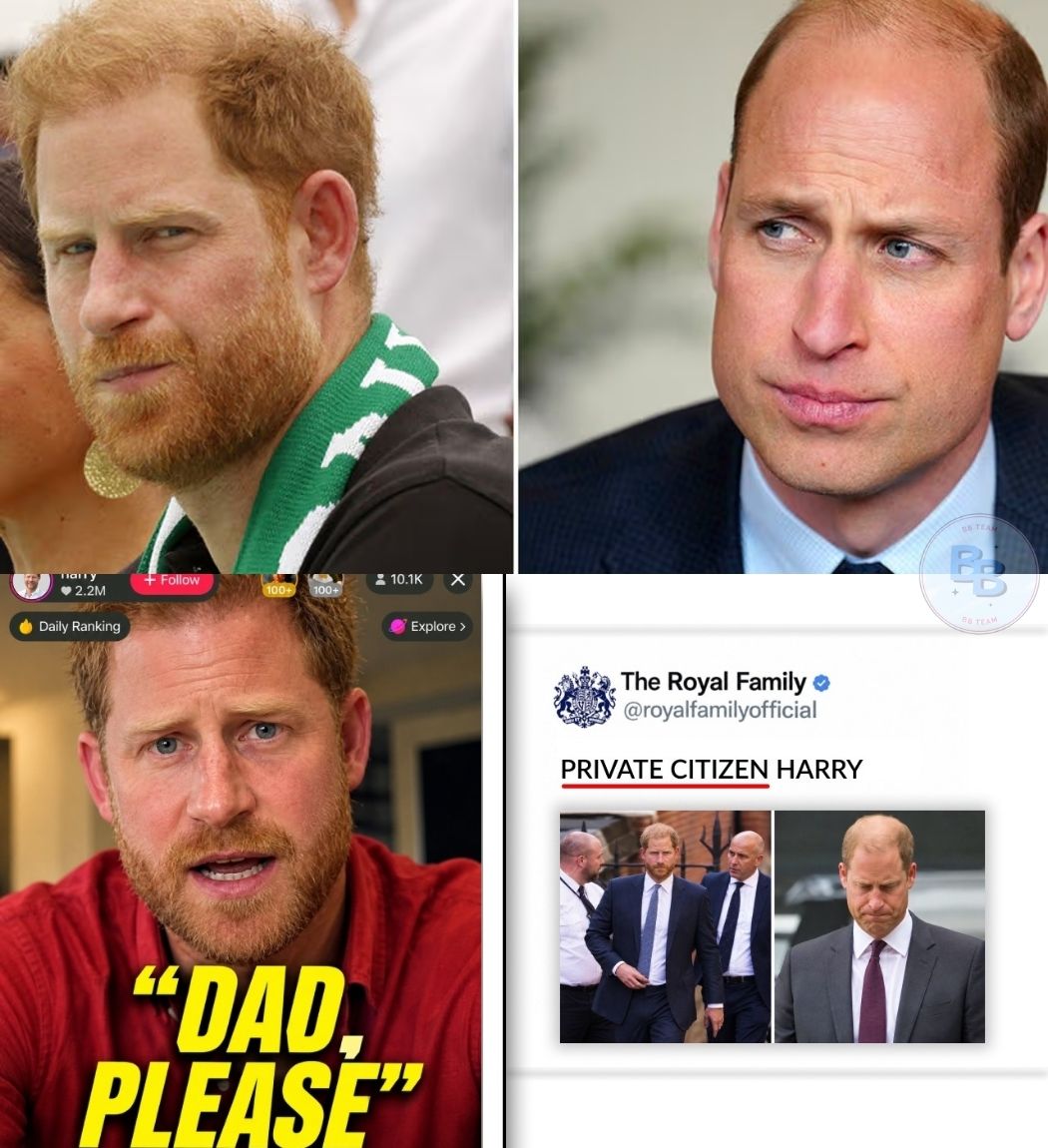
The Ultimate Betrayal: King Charles Severs All Ties With Harry, Handing the Monarchy to William in a Brutal Final Ultimatum
The heavy oak doors of Clarence House closed with a definitive, chilling thud that seemed to echo through the very foundations of the British monarchy. Inside the dimly lit study, the scent of aged leather and burning mahogany sat heavy in the air, matching the glacial atmosphere between a monarch and his youngest son. For months, whispers had ricocheted through the corridors of power, painting a picture of a fractured family standing on the precipice of an irreversible abyss. But what transpired behind those locked doors was not a reconciliation, nor was it a quiet family intervention. It was a complete, unvarnished severing of ties—a tectonic shift that has sent seismic shockwaves from London to Montecito, forever altering the destiny of the House of Windsor.
King Charles III, weary from relentless family turmoil and burdened by the heavy mantle of statecraft and his ongoing health battles, reached a breaking point. Beside him stood Prince William, the Prince of Wales, a figure of icy composure and unwavering resolve, fully aligned with his father’s vision for a streamlined, untouchable institution. Across from them sat Prince Harry, defiant yet increasingly isolated, clutching grievances that had long since worn out their welcome in the royal court. When the dust finally settled, the reality was stark and unyielding: Harry had lost everything, and the King had officially chosen his successor, locking the door and throwing away the key.
To understand how this catastrophic rupture reached its boiling point, one must look at the escalating tensions of the preceding months. The breaking of the royal covenant was never a single event, but rather a slow-motion train wreck fueled by competing narratives, lucrative media deals, and a deep-seated institutional distrust. From the moment Harry and Meghan stepped back from royal duties, declaring their intention to forge an independent path, the royal household braced for impact. However, the subsequent barrage of tell-all interviews, documentary series, and explosive memoirs crossed a line that the Firm—and specifically Prince William—refused to forgive or forget.
William’s position had hardened into absolute granite. To the future King, his brother’s actions were not merely a departure from family duty; they were a direct and calculated assault on the very stability of the crown. Sources close to the inner circle revealed that William had delivered an ultimatum to his father months prior: it was either the monarchy’s survival or the perpetual appeasement of a renegade prince. The King, torn for years between his duties as a sovereign and his unconditional love as a father, finally yielded to the harsh realities of state survival. The crown, as it always must, came first.
The catalyst for this final showdown was a confidential dossier compiled by senior royal aides, detailing the financial and operational fallout of Harry’s continued use of royal associations for private commercial gain. Despite repeated warnings from palace legal teams, entities tied to the Duke of Sussex continued to leverage his former status in ways that directly conflicted with the Sovereign Grant and the established protocols of the royal household. When this dossier landed on the King’s desk, accompanied by a sharply worded memorandum from Prince William’s office, the illusion of a possible future reconciliation evaporated instantly.
Summoned to London under the guise of a routine family discussion, Harry arrived at Clarence House expecting an opportunity to negotiate terms of engagement and perhaps air lingering grievances regarding security and institutional support. Instead, he walked into what insiders have privately described as a tribunal. There were no warm embraces, no offers of tea, and certainly no olive branches. Instead, King Charles sat behind his mahogany desk, flanked not by personal friends, but by the Keeper of the Privy Store and the King’s private secretary. William stood near the window, looking out into the rain-slicked courtyard, a silent sentinel of the new era.
The meeting commenced with the King laying down an uncompromising decree. Charles made it unequivocally clear that the grey areas, the half-in, half-out illusions, and the ongoing exploitation of royal titles for commercial leverage were being brought to an immediate and permanent halt. The monarch detailed a comprehensive restructuring of the royal registry, one that would systematically strip away remaining patronages, honorary military titles, and any lingering official recognition associated with the Duke of Sussex.
Harry, caught off guard by the cold, bureaucratic precision of the execution, attempted to interrupt, pointing to what he perceived as double standards within the family and demanding accountability for perceived mistreatment. But his protests were met with a chilling silence from his father. It was William who stepped forward to deliver the most devastating blow of the afternoon. With clinical detachment, William laid out the cold facts of the royal succession and the absolute necessity of absolute loyalty. He informed his younger brother that his chapter within the institution was closed forever, and that any future attempts to negotiate from a position of media-backed leverage would be met with swift, unyielding legal and public counter-measures from the palace.
The confrontation quickly escalated. Voices, normally kept to a hushed whisper within the hallowed halls, reportedly breached the heavy oak doors, alarming staff stationed in the outer antechambers. Harry, feeling cornered and betrayed by the father he had once looked up to and the brother he had grown so distant from, accused the institution of sacrificing him to protect its own public image. He argued that he was merely speaking his truth, fighting for his family’s protection in a toxic media landscape that the palace itself had tacitly fed.
In response, King Charles delivered a line that will undoubtedly go down in royal history as the definitive epitaph of the Sussex royal journey. According to a high-ranking insider privy to the transcript of the exchange, the King looked directly at his youngest son and stated that a house divided against itself cannot stand, and that those who choose to live outside the walls can no longer expect to draw warmth from its hearth. It was a heartbreaking admission from a father, but a masterclass in sovereign survival. Charles emphasized that the monarchy’s primary obligation is to the British people and the Commonwealth, not to individual family dynamics that threaten to destabilize centuries of tradition.
The aftermath of this summit was swift and merciless. Within hours of Harry’s departure from Clarence House—a departure so abrupt that his security detail was forced to scramble their vehicles—the official digital mechanisms of the palace kicked into overdrive. Webpages were updated, patronages were officially revoked, and statements were issued to the global press confirming that the separation was now total, irrevocable, and comprehensive. The message was broadcast to the world with crystal clarity: Harry is entirely out, and William is firmly, unquestionably in control of the future.
For William, this moment represents the consolidation of his authority and the realization of the formidable role he has been preparing for his entire life. Far from being a passive observer, William has emerged as the chief architect of the modern monarchy’s defensive strategy. He has made it clear that sentimentality will not be allowed to compromise the institution’s integrity. By standing shoulder-to-shoulder with his father during this crisis, William has signaled to the British public and the international community that he is ready to lead with strength, discipline, and an unyielding commitment to duty.
The ripple effects of this total rupture are already being felt across the Atlantic. In Montecito, the reality of the palace’s final decision has reportedly plunged the Sussex camp into a state of intense crisis management. Without the remaining vestiges of royal association to lend gravity to their commercial and philanthropic ventures, Harry and Meghan face a daunting new landscape. The currency of royal adjacency, which fueled their multi-million-dollar media deals, has been thoroughly devalued by the sovereign himself. Industry insiders in Hollywood are already whispering that doors which were once reluctantly opened out of curiosity or residual royal respect are now beginning to close.
Furthermore, the public relations battle has taken a decisive turn. For years, the narrative surrounding the royal rift was defined by a he-said-she-said war of words in the global media, with leaks, counter-leaks, and explosive interviews keeping the public divided. However, by taking such a definitive, uncompromising stance, the palace has effectively short-circuited that dynamic. By stripping away the titles, the patronages, and the illusion of a pending reconciliation, the King and Prince William have removed the primary commodity that fueled the drama: the soap opera of a potential return. There is nothing left to negotiate, nothing left to speculate about, and no bridge left to burn.
Historians and constitutional experts are already weighing in on the profound significance of this event. Many are calling it the most decisive royal pruning since the abdication crisis of 1936. Just as Edward VIII was forced to choose between the crown and his personal desires, Harry has now been definitively shown that the modern monarchy cannot and will not accommodate those who seek to use its platform while simultaneously attacking its foundations. The institution has vaccinated itself against further internal disruption, choosing survival and stability over familial appeasement.
As the sun sets over London, illuminating the grand facade of Buckingham Palace, the new reality of the House of Windsor stands carved in stone. King Charles has weathered the storm, steering the ship of state through turbulent waters by making the ultimate sacrifice of paternal indulgence for the greater good of the crown. Prince William stands ready at his side, tested by fire and proven as the undisputed anchor of the future. And miles away, Prince Harry finds himself standing alone in the Californian sun, having lost not just his titles, his patronages, and his royal status, but the very family ties that once defined his place in the world. The battle for the soul of the monarchy is officially over, and the victors have slammed the door shut for good.