They Called the Shot Impossible — Until an SAS Sniper Ended Two Machine Gunners at 2,475 Metres.
They Called the Shot Impossible — Until an SAS Sniper Ended Two Machine Gunners at 2,475 Metres.
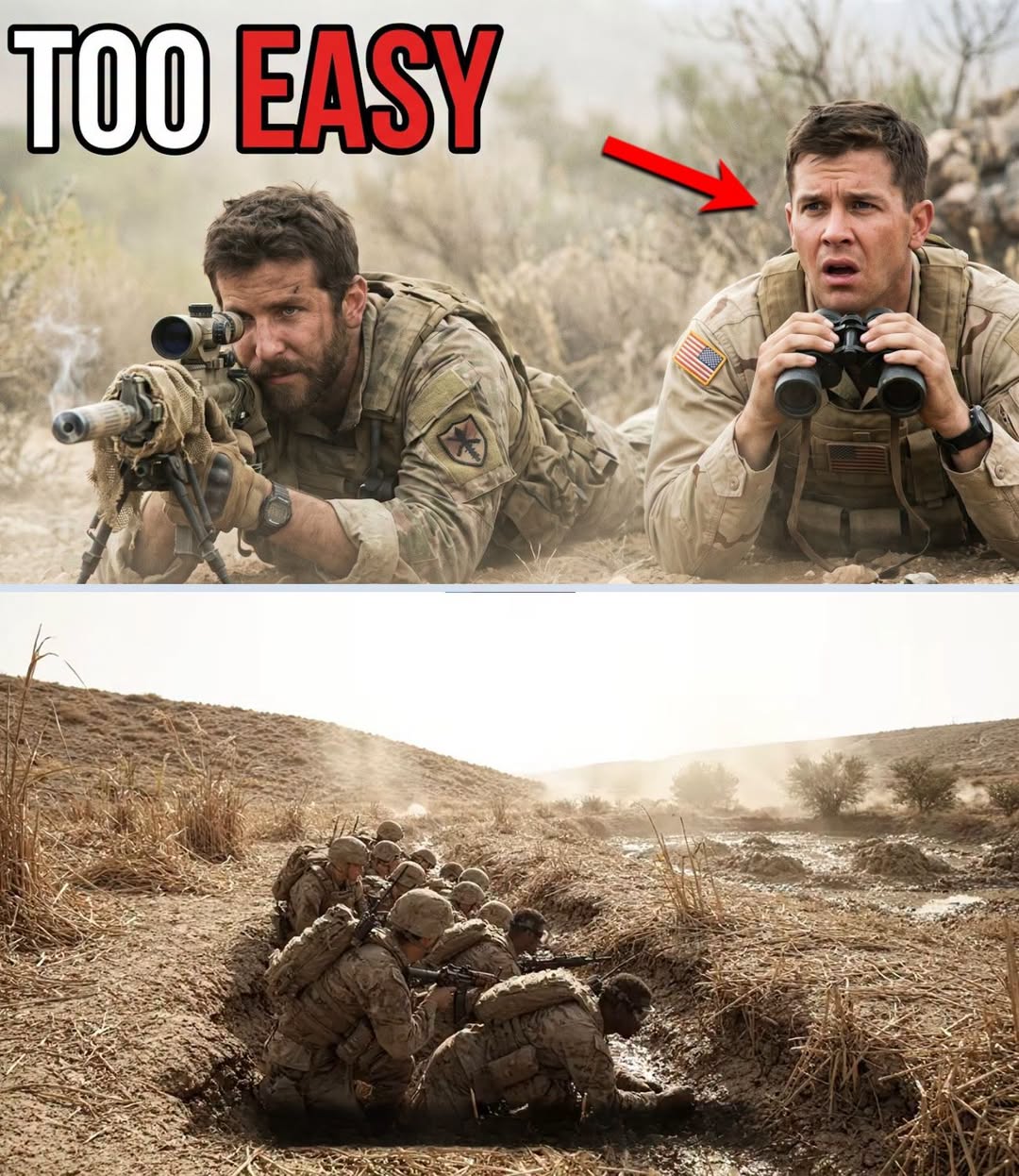
At 11:50 a.m. on September 11, the valley in Helmand province narrowed down to one fact. A NATO foot patrol of 14 fighters was pinned to the ground in an irrigation ditch 400 meters from the wall of the structure, while two Taliban machine gun crews were holed up in a forest strip on a distant ridge. They controlled the only way out of the range that every officer on the radio considered unsuitable for firing.
Lying on a rise behind a low clay wall, an SAS sniper named Callum Rees measured the distance to the nearest firing point with a laser rangefinder—2,475 meters, double-checked the reading, and was silent on the radio for 11 seconds, calculating the wind correction in his head , because the figure itself must have sounded like a joke to everyone.
Next to him lay the observer, equally motionless, his sights already tracking the second firing point, awaiting a decision that neither of them had ever had to make before . This is just one of those stories. I recorded 20 operations that were never mentioned in official reports, that were classified as declassified for the SAS.
If you want them, they are there. I won’t mention it again. Rees had been in position on the high ground since before dawn, part of a two- man observation party whose initial task was merely to provide early warning during the patrol’s march . The mission was planned as routine: a supply to the district center under escort from Osei’s platoon, where Reece and Galloway were to provide cover from a height they had used twice before without incident.
The combat order did not call for prolonged fire contact, and Rees’s equipment that morning was not designed to fire from a distance of 2,475 meters. He had his regular rifle with him, the same ammunition, and the same laser rangefinder he had used on dozens of quieter mornings, measuring distances that had never weighed as much as they suddenly did now.
No British or American sniper had ever engaged or destroyed a target at such a distance in actual combat. The longest confirmed shots in history, openly discussed in sniper school lecture halls and quietly contested in every cafeteria where accuracy debates raged, reached about 2,300 meters and were made years earlier by a special forces sniper from another country with a rifle of a similar class.
Rees’ commander, having received a report on the situation from the forward base 6 kilometers to the rear by radio, cut off that the shot he was talking about was not a real tactical decision, and that Rees’ task was to hold the position and wait for air support, which at that time was 31 minutes away. The jets already destined for this valley were still refueling at an airfield further south, and no amount of radio urgency could shorten the physical limits of this delay.
The combat clash began 9 minutes ago, when the vanguard of O’Shea’s patrol crossed a dry canal bed, which on the map was marked as a minor irrigation facility, but on the ground turned out to be a natural kill zone under the sight of a forest strip on the opposite ridge. The first round hit the lead sentry’s body armor and knocked him down without penetrating his defenses.
It was a stroke of luck that gave the rest of the patrol perhaps 4 seconds to find some cover in the ditch before a second machine gun opened fire from a different angle, cutting off the only obvious escape route. By the time the last soldier of the patrol had thrown himself into the ditch, every path back to the canal crossing they had just used was already being shot through; and the wall of the building ahead, 400 meters away , became not the target anyone had planned, but the only patch of land that could offer real protection. 31
minutes—that’s a time frame that a patrol pinned to the ground in a ditch wouldn’t be able to withstand. Machine gun crews had already wounded two fighters in the first 90 seconds of the battle, and the medic, who crawled under fire to the nearest wounded man, himself received a bullet through the straps of his backpack, which passed a palm’s width from his spine.
The patrol commander, a young American captain, Trent O’Shea, assigned to the same task force, had twice already tried to break away from the enemy to the south along the ditch line, and both attempts had drawn such accurate fire that it proved: the machine-gun crews had already shot the entire length of the ditch; This meant that any movement in any direction carried a real risk of a third loss within seconds.
O’Shea commanded the platoon for 4 months— long enough to know most of the 14 men in the trench by more than just rank, and he later said, ” The worst part of those first minutes was not the fire itself, but the arithmetic that went through his head automatically.” How much water did each soldier have, how long could a medic apply pressure to a soldier’s injured leg before the tourniquet became a bigger problem, how many more minutes could the shallow cover of a ditch realistically hold back accurate machine gun fire before someone else
got injured.” None of these calculations anticipated that help would come from rifle fire from a ridge located almost 2.5 kilometers away. At such a distance, as far as Ossie understood the capabilities of any of his army’s weapons, the sniper’s position only provided observation of the enemy, and was not a reliable means of fire support.
Reese’s corrections officer, a corporal named Ben Galloway, who had worked alongside him for two years and knew his habits better than most people know their brothers. He later described the 11 seconds of silence on the air not as hesitation, but as the most prayer-like thing he had ever seen Reese perform. A private calculation of variables that had nothing to do with faith, but everything to do with the rifle, the wind, and a target that had never been hit at such a distance in combat conditions in the entire history of the discipline.
Galloway and Reese had been paired since selection two years ago, and their partnership had lasted one previous round in another province, where their longest confirmed hit was just over 1,100m—a tough shot by any standard, and less than half the distance the rangefinder was currently showing. Galloway later said that the gap between what they had been preparing for and what they now had to try was the only reason those 11 seconds of silence seemed so difficult.
None of them had a well-established procedure for firing at a distance that far exceeded anything they had ever fired to kill. Instead, they had two years of trusting each other’s judgment during shots that were simply difficult. And an inexpressible hope between them that this same trust would persist across a distance that was more than double any of their previous joint achievements.
The rifle itself was a bolt-action .338 Lapua Magnum, the standard long-range weapon issued to SAS sniper pairs for just such tasks; on paper it was capable of hitting targets at ranges beyond 2,000 m, but according to every manual Reese studied, it had consistent lethality closer to 2,500 m. Beyond that range, the bullet’s flight time exceeded 4 seconds — enough for a crosswind to deflect it meters from the target, enough for the bullet to pass through several different wind currents as it traversed open terrain.
Long enough that even a perfectly timed shot could be ruined by a gust of wind that arose after the hook was pulled. Every sniper school Reese ever attended taught the same doctrine. Beyond a certain point, accurate shooting ceased to be a skill and became a bet, and the regiment did not teach people to bet on shots that could not be repeated.
This doctrine existed for a good reason. Reese’s own instructor at sniper school, a warrant officer named Colin Petts, who had trained three generations of regimental riflemen, had built his entire training course on the failures of long-range shooting, not its successes. Situations when a sniper, confident in the theoretical maximum range of the rifle, fired a shot despite adverse conditions, missed, and thereby exposed the position of the enemy’s allies, who had not even suspected that they were being tracked before.
Petts’ lesson, which he repeated in every one of his courses, was straightforward. A rifle’s specification describes what a bullet is physically capable of under ideal conditions. It says nothing about what a particular shooter on a particular day in a particular wind can actually do. Reese learned this lesson so well that it was probably the loudest voice in his head during those 11 seconds of silence.
Not the excitement of the chance to make a record-breaking shot, but a trained, conscious suspicion of one’s own confidence. What Reese had in abundance, which the doctrine did not account for , was six weeks of almost daily observation of this valley, recorded in a personal range card that he kept folded in his bulletproof vest. Not an official report, just a personal habit.
The same discipline that once made him a sniper. He measured the wind on that ridge on 11 separate mornings at about the same time, tracking it as it swept across a side channel and crossed the valley floor in three distinct bands before reaching the distant treeline. He knew, like no manual could teach , exactly how this particular patch of terrain behaved at this particular time of day, because he had spent 6 weeks quietly gathering knowledge that no one had asked him for.
He began keeping a range card almost by accident during a few weeks of lull early that summer, when the unit’s mission shifted to continued surveillance of the same section of the valley while a broader clearing operation moved through the area. During those long, quiet mornings, there was nothing to do but observe.
The same area was repeated over and over again. And Reese, who never liked to sit idle, began recording wind data the way another person would keep a diary. Not because I expected it to be necessary, but because this habit gave real estate meaning. By the 40th day of observation, he knew the wind patterns of the valley better than he knew the layout of his own barracks in Hereford— a fact that seemed insignificant to no one until that morning, when it became more important than anything else he had ever studied.
Falloway had his own version of this habit, and it wasn’t so much about the valley itself as it was about the discipline of doing something exactly every day, regardless of whether the day gave him a reason to do it. He grew up in a family of surveyors and once, half-jokingly, said that tracking wind currents and dust movements was more like his father’s job than military service, which he vowed as a teenager to never do.
This joke took on a bitter taste after that September morning when the very skill he had tried not to acquire for years turned out to be the only thing that saved 14 men from dying in a ditch. Falloway measured the distance a second time to confirm, then began to determine the wind. Three distinct zones, shimmering mists over the hot ground, gave approximate speed and direction for the next 200 meters.
A strip of dust raised by a vehicle on the road a kilometer away allowed us to estimate the average area. And for the last zone, closest to the target, there was nothing but his memory of how the wind behaved on that ridge each morning, which Reese recorded. By all the official standards taught in sniper school, this was an unacceptably incomplete shooting solution.
But it was also the best solution any of them had ever devised for a shot that neither of them had specifically prepared for. Falloway’s method for the final wind zone was based on something less measurable than haze or dust: a sense of how the terrain itself directed the air currents in the last 300 meters before the forest, developed over 11 previous mornings of observing how the dust from the goat trail near the target dissipated before settling.
He never entered this observation into the official shooting card because it was not something that could be clearly translated into numbers. Instead, it existed as instinct —knowledge that an observer accumulates simply by looking at the same patch of land often enough that its behavior becomes as familiar as a human face.
When it came time to call a number for the final zone, Falloway didn’t calculate it. He simply knew her the way a person recognizes the silhouette of a friend in the twilight, and he named her Riza with a certainty he could not justify on paper to someone who had not spent those 11 mornings by his side. Twenty meters to Oshie’s left, a specialist named Danny Obergold pressed a field pack tightly to the wound in the leg of a wounded soldier, already soaked in blood, silently counting in his head the way the platoon medic had once taught him to
estimate blood loss when there was nothing else he could do usefully. He had no radio, he couldn’t see the ridge, and he had no idea there was a sniper pair in the valley that morning, except for a vague note in the briefing he had barely memorized before the patrol set out. His entire war at that moment narrowed to a strip of blood-soaked cloth and a human pulse beneath his fingers— the distance from the 2,575-meter calculation happening above him couldn’t have been greater, even if it were measured in years rather than
meters. Two completely different wars, fought at the same moment on the same valley floor by people who will never understand the other’s version of that morning. Oshi, listening to the radio conversations from the ditch, his face pressed against six inches of standing irrigation water, did not hear a word of this technical exchange.
He heard only silence, followed by a single transmission from the sniper position . Wait. Wait for the shot. He had no way of knowing whether that meant help in 30 seconds or 30 minutes, and he made the only available decision: keep his patrol pressed to the ground, quiet and alive, as long as the ditch would allow them to do so.
He had patrolled this valley enough times to know that the ditch itself had an expiration date as a shelter, not a fixed one, but one that was diminishing with every passing minute. The gun crews had to adjust their sights and aim more accurately at a target that was not moving. He changed position twice in the next few minutes, not out of tactical calculation , but out of the same restless instinct that made everyone in the ditch move ever so slightly, unable to remain still , even when stillness was the only thing that saved life, because a body under
fire desperately wants to do something, anything, even when the only right decision is to do nothing at all. Reese’s commander, who still objected to the shot from the forward base, raised a specific and reasonable objection that had nothing to do with doubting Reese’s skill. A stray shot at such a range that it would have hit anywhere near the compound being used as a shelter could have hit civilians who might be hiding inside—a result that would have cost the mission more than any tactical benefit from the shot itself. This
was the same argument that for years kept most armies from training snipers to even attempt to fire at ranges beyond 2,000 meters. The question was not whether the rifle could physically hit the target, but what would happen to the responsibility and trust of the local population in the event of a miss.
The commander, Lieutenant Colonel Adrian Kessler, who spent much of his previous career in liaison officer positions coordinating just such civilian risk assessments, did not obstruct for the sake of counteraction itself. Eighteen months earlier, he was already dealing with the aftermath of another battle in a neighboring province, where a long-range shot missed its target and hit the corner of a residential building— an incident that cost the task force weeks of local favor and nearly ended the district governor’s willingness to cooperate with
coalition forces. For the next three months, Kessler personally attended shura meetings and compensation negotiations related to that one miss—a slow and grueling process that taught him the true cost of a missed shot more than any lecture in a classroom could. This memory was behind every word of his objection to shooting Reese, although neither he nor anyone else on the radio airwaves voiced it directly.
Institutional caution in this case was not an abstraction. She had a specific building in a specific province that still stands as a reminder of what exactly could go wrong. Falloway responded to this objection in the only way possible, by providing data instead of assurances. He read over the radio Rees’s 11- day log of observations in short, fragmentary sentences.
Wind speed, direction, time of day, compared to every previous detection of movement near the same tree line, and asked the commander to evaluate the shot not as a theoretical worst-case scenario, but as a specific, carefully worked out calculation that was actually made by two people on the position .
The commander did not give direct permission to fire. According to Falloway’s later testimony , he said exactly six words: “Your decision, your responsibility, make it right.” This was not an official authorization that could later be cited as institutional support. It was a conscious transfer of decision-making authority to the two men who were actually observing the target, made by an officer who understood that no doctrine written in a classroom 6,000 miles away could replace six weeks of wind logs and the trained instincts of an observer.
Kessler later said during a debriefing, choosing his words with obvious discomfort , that he had not so much made a decision as he had refused to overturn what had effectively already been made by the people who would have to live with the outcome. Reese took a half-breath, as he had done 10,000 times at the Welsh range and perhaps 30 times in real life, and adjusted the sight beyond any manufacturer’s markings, taking the rifle to a range that the weapon’s specifications didn’t even officially allow. The bullet would
take almost 4 and a half seconds of flight to cover this distance, during which the machine gunner it was aimed at would move, breathe, shift his weight onto the bipod, and would have no idea that a single round was flying toward him across the valley , invisible and silent at such a distance almost the entire time.
Falloway called the windage correction for the last time half a second before Reese’s finger began its final conscious pressure on the trigger. A correction of less than 2 miles per hour at medium range, hardly worth mentioning at any range where they trained, but at a distance of almost 2.5 km it was a correction that could have shifted a bullet by the width of a man’s shoulders.
Reese accepted it without changing his position, without a word in response—the kind of silent understanding that comes only after years of trusting another’s judgment more than his own. The first round hit the nearest machine gunner just as he was adjusting his sights toward the ditch. The sound of the shot itself reached the target almost 4 seconds after the bullet had already hit it.
The physical disconnect between cause and sound meant that the second machine gunner, 30 meters to the left, received no warning before Reese’s second round, fired 8 seconds later with the corrected windage correction, found him too. Falloway watched the first bullet fly through his scope for almost the entire 4 and a half seconds it took to cross the valley.
A discipline instilled in every observer from early training sessions, which at that particular moment seemed almost unbearably long. A visible trail of dust and shivering air from the heat, slightly curving along a trajectory that would either intersect or not with a human chest at a distance of almost 2.5 km.
When the bullet left the barrel, both had nothing left to do but watch and wait for the outcome, determined by physics that they could no longer influence. He said that the 4 seconds between the shot and the hit felt closer to 40 to him, and that he involuntarily counted his own pulse, just to have a yardstick for this wait.
Both machine guns fell silent 11 seconds apart . O’Shea’s patrol, still pinned to the bottom of the ditch and unable to see the ridge from which the shots were coming, heard only the guns fall silent, and the valley was filled with a silence not known since the beginning of the battle. It took the patrol almost another 90 seconds to make sure the silence wasn’t the calm before the storm, and another 2 minutes before O’Shea dared to risk sending one fighter to check if the escape route was indeed clear.
He sent his most experienced sergeant forward alone in a short, confident lunge, instead of throwing the entire patrol into silence, which for all they knew could still be a trap. And so it was. The wall of the structure 400 meters away provided protection that the ditch never had, and by the time air support finally arrived 26 minutes later, the patrol had reached it alone, carrying both wounded men.
Oberhold, who continued to apply pressure to his leg wound as the patrol moved, later said that the strangest thing about that day was that at no point did he connect the cessation of fire with the events on the distant ridge. He assumed, if he even thought about it at that moment, full of adrenaline , that the aircraft had arrived earlier, or that the machine gun crews had simply run out of targets worth the risk of further exposure .
Only that evening, after hearing the story from another soldier who was monitoring the radio exchange, did he learn that both machine guns had been suppressed not from the air, but by a single rifle shot from a hillside almost 2.5 kilometers away. And that the number that indicated this distance was the one he initially thought was wrong.
The distance itself became the first victim of institutional distrust once the report of the battle reached senior management. The staff officer reviewing this battle for the weekly task force briefing noted the distance as a rangefinder error, noting in the margins that in all records known to him there were no confirmed combat hits at that distance, and recommended that the figure be reduced to a more acceptable one before the report was circulated further.
Reese’s commander, who had listened to the entire battle on the radio and had the original rangefinder readings , independently recorded by Falloway before either knew whether the shots had hit, rejected the correction , including both measurements in the final report. This forced the staff officer to either accept this data or formally challenge two independent measurements made before the result became known.
The staff officer, a major named Ellis Whitcomb, who worked in the task force’s reporting group, did not act out of malice or laziness. Over the previous two years, he had processed dozens of combat reports, the figures in which, upon closer examination, turned out to be bona fide exaggerations. A rangefinder error in the adrenaline of battle, mixed up coordinates under pressure, a distance rounded up by a soldier seeking to embellish the story.
His skepticism was generally a well-founded professional habit, based on real errors that he had personally discovered and corrected in the past. What made this case different, and what he eventually had to admit when the independent data was put before him , was that both figures were recorded before any of the fighters on the ridge had any reason to inflate them.
Recorded not as a triumphant conclusion, but as a dry technical requirement for a shot whose success was unknown at the time . The dispute did not end there. Rumors of the battle reached a brigadier general who was visiting the unit for a routine inspection in three weeks, and, according to officers present, he openly expressed skepticism at the briefing, sharply asking whether the task force was more interested in accurate reporting or in creating a high-profile PR record.
It was a valid question from someone who had watched for thirty years as inflated claims were quietly canceled as soon as someone checked the documents. This forced Reese’s unit to do something they had n’t planned on: conduct a formal technical review of the battle, comparing satellite imagery of the firing position and target strip, ballistic data from the rifle’s serial number, and Falloway’s wind notes to prove the distance beyond any institutional doubt.
The survey took almost six weeks to prepare, alongside the unit’s daily operations, and the task fell largely to Falloway: collecting satellite coordinates, time-stamped radio logs, and conducting a physical survey of both positions by a two-man team sent specifically to confirm the distance with another instrument.
The results of the re -measurement differed from Reese’s original data by only 4 meters, which was well within the permissible error of the equipment, and the brigadier general’s office, having received a full report, closed the case without further comment. No apologies, no refutation of skepticism, just a quiet administrative admission that the figure remains unchanged.
A two-man verification team , a sergeant and a corporal from another unit who had no personal interest in whether Reese’s data would be confirmed, spent the day verifying both positions with other equipment, cross-checking their measurements with satellite coordinates obtained independently by the task force’s geospatial department.
The sergeant who led the inspection later admitted, with the dry humor characteristic of people who have spent their lives inspecting the work of others, that he expected to find a significant discrepancy, if only because such a great distance seemed to have prompted it. Finding that the results of both measurements differed by only 4 meters, he said that this was the case in his career when he was most disappointed with the quality of the work performed.
After all, finding a mistake is a more interesting story than proving that it didn’t exist. Reese himself found the entire vetting process more exhausting than the shot itself. During one of the long evenings when they were reconstructing wind data from notebooks and memory, he privately told Fellowes that he had spent 11 seconds deciding to shoot, and for 6 weeks afterward he had been proving to people who were n’t there that he had the right to do so.
This imbalance struck him as one of the strangest features of the job, where the hardest part of the fight often only began after the shooting had stopped. The brigadier general, who first expressed skepticism, never issued a public rebuttal, and Reese, having learned secondhand about the closed investigation, said he never expected it and would have been more surprised by an apology than by the silence that followed .
He understood, unlike the junior officers around him, that the brigadier general’s initial doubt was not personal. It was the same institutional reflex that had protected the regiment’s reputation for decades, the same reflex that had once, in another theater of war, saved careers and lives by not allowing unverified claims to go unheeded.
Being the object of this reflex for 6 weeks was unpleasant. But, by Reese’s own assessment, it wasn’t wrong. Osei, for his part, never knew the exact distance until he read a combat report a few weeks later at another base; By then, he had already told this story dozens of times to his subordinates, using an approximate figure that was several hundred meters less than the real one.
When he finally saw the confirmed number on paper, he said, as an officer present there recalls, that it made no difference to how he actually felt that day, sitting in the trench. Distance had been an abstraction to him all this time, a number that belonged to people on the hillside he had never seen, while in his memory remained something simpler and closer.
The roar of the cannon subsiding, silence, and the decision to finally get up and move on. For years afterward, in his stories, he would give a smaller, approximate number, not out of carelessness, but because the exact number, once learned, seemed too big to utter without appearing like a braggart who was exaggerating his own story instead of simply telling it as it was.
The second life of this episode began almost a year later, when a sniper instructor from the regiment’s training wing , having read the conclusions of the technical report, asked to add this case to the long- range shooting training program. Not as proof that such shots should become the norm, but as an extremely well- documented example of what it really takes to calculate a shot when a rifle is pushed to the limits of its capabilities.
In his briefing to new cadets, the instructor emphasized separating the two lessons of this case because he was justifiably concerned that the students would only learn the one that seemed more exciting. The first lesson was that the shot was physically possible given six weeks of study of a specific terrain, a disciplined observer, and a target that gave the shooter enough time in the bullet’s flight to account for and correct for wind.
The second lesson, which he spent more time on, was that the same shot without those six weeks of preparation by a couple who hadn’t spent a single morning studying exactly how the wind blew in that area would most likely have been a miss. And a miss at such a distance in the direction of that object had consequences that none of them were prepared to accept without proper preparation that would justify such a decision.
He illustrated this second lesson in every subsequent briefing for the next two years with a simple exercise. He asked each new course which of them could describe in detail the behavior of the wind in a section of terrain they had observed for six weeks in a row, and almost no one could. Most students, he noted, were too frequently moved between ranges and duty stations to purposefully acquire such local knowledge, and the shot that made Reese famous in the regiment depended on precisely the kind of patient, repetitive observation that the
modern operational pace rarely allows anyone to build up calmly. The lesson presented in this way made a much stronger impression than any warning about mistakes. This is not a warning against ambition, but a quiet argument for the value of boredom, if used correctly. Fallowell left the regiment after two years, but returned briefly at the invitation of the training unit to tell the observer course not about the shot itself, which had already become a legend in the unit, but about the everyday discipline: recording 11 mornings of
mirages, ghosts, and dust movements in a valley that no one had asked him to study. He explained to the course what the instructors then repeated: The 11 seconds of silence before Reese’s shooting actually built up over six weeks, morning after morning, and no one, watching the spectacular video of the shooting, would ever see the part of the story that made it possible.
One of the cadets, a young corporal who later served two terms of his own, said that what he remembered most was not the wind log itself, but Fallowell’s description of the fortieth day—a moment, unremarkable at the time , when the air pattern in that valley finally became something he could predict, not just observe.
Fallowell told the course that he could not name the specific morning when this knowledge came. It just accumulated, like calluses on the hands from constant work, until one day he stopped “reading” the wind. He just knew him. Reese was asked during a debriefing held months later for the unit’s historical records, recorded at his insistence, with no mention of the brigadier’s initial skepticism or the six weeks spent refuting it, what he remembers most clearly about that moment.
He didn’t mention the two machine gunners, the foreman’s skepticism, or even the six-week investigation that followed. He described the sound of his own first shot, which reached its target almost four seconds after the bullet struck it. An abyss that, according to him , he could never get used to, no matter how many times he calculated it in advance, because it meant that within the time of one slow breath, the outcome of the shot was already decided, and neither he nor the person he was shooting at could yet know it.
He kept the wind log long after the trip was over, folding and unfolding it so many times that the paper began to fray at the folds, and never fully explained, even to Falloway, why he didn’t throw it away when it had clearly lost all value. It eventually lay in a drawer in Hereford—11 mornings of pencil marks recording only the mundane: dust, haze, and the direction in which smoke drifted from goat trails.
It was all that simple foundation of a shot that everyone else would call impossible for the rest of his career, and which he himself, as he turned over that same worn page for the last time before hiding it, would call only necessary.