US Command Wanted an American Team on the Mountain Ridge. They Finished the Job With the SAS.
US Command Wanted an American Team on the Mountain Ridge. They Finished the Job With the SAS.
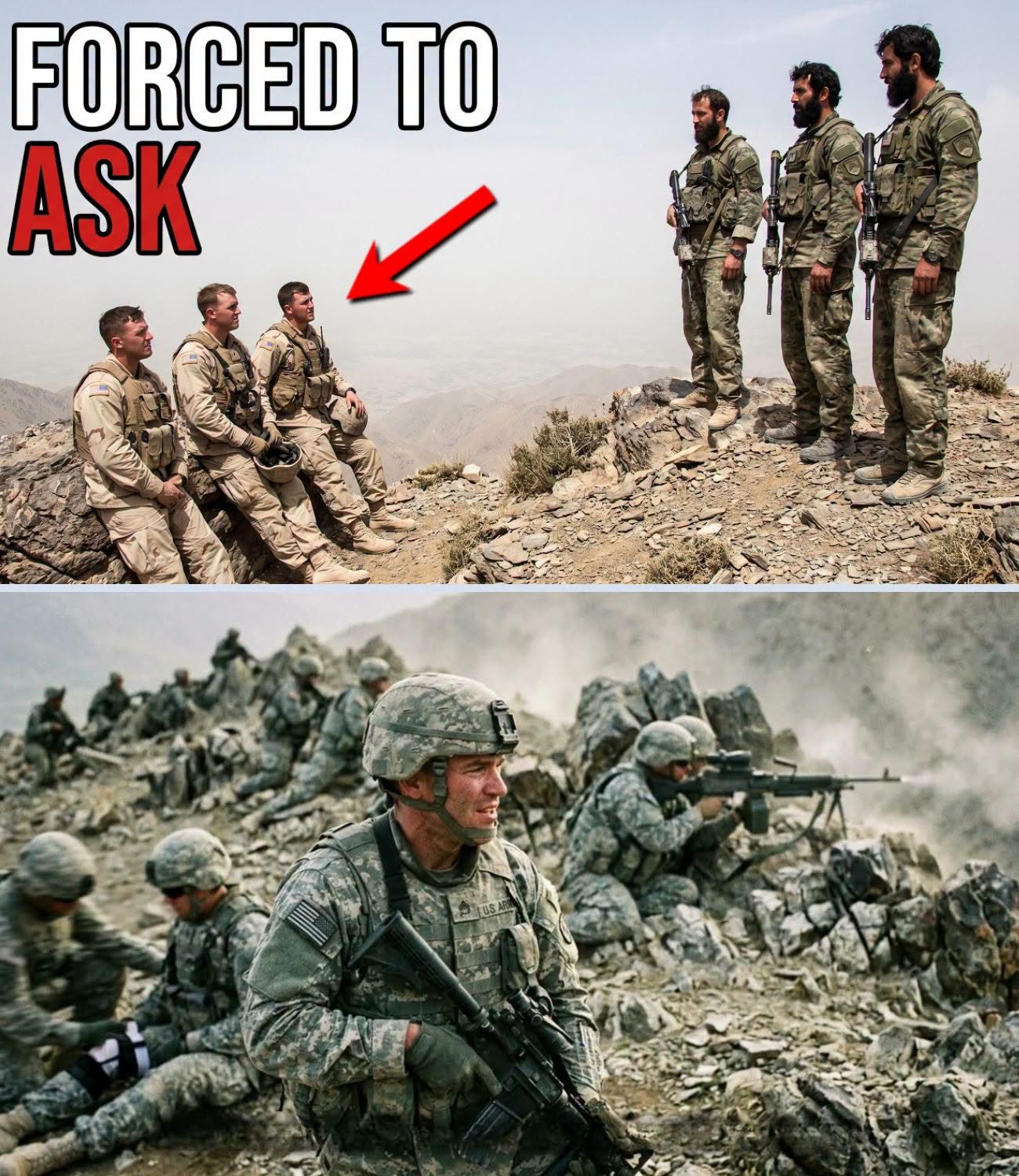
At 05:10 on March 6, 2008, on the ridge marked on the maps at the task force’s operations headquarters as ” Ridge 3140,” three American light infantrymen lay slumped against a waist-high stone wall that had stood on the mountainside longer than any army currently fighting it, watching the silhouette of a Chinook recede to the south without them, for the fourth man they were waiting for— their platoon’s medic —was still 600 meters below with a sprained ankle and a radio that had stopped transmitting 11 minutes earlier.
The ridge loomed over the only road wide enough for supply convoys to pass through the Barless Valley, and for four months the road became increasingly difficult for coalition trucks to pass through— one more landmine planted every week until the command decided that someone should take the high ground above it and watch.
This is just one of those stories. I recorded 20 operations that were never mentioned in official reports in the ” Declassified SAS Data ” section of the description. If you want it, it’s there. I won’t mention it again. The order to take “Ridge 3140″ did not come from the people who ultimately climbed it. It came from Colonel Frank Delacroix, commander of the joint task force headquartered 11 km to the south, who had been listening to complaints for the previous 6 weeks that were becoming increasingly difficult for him to accept. Namely, that
every recent success in combating the campaign of roadside bombs in the Barless Valley was attributed, in briefings reaching levels well above his own headquarters, to a small squadron of British special forces operating in the same area under a different command. Delacroix had no doubt about the squadron’s competence.
He doubted what a war looked like where American soldiers held the valley floor while a British force, many times smaller, was constantly mentioned by name in reports that rose above his own. The complaints had a specific origin, and Delacroix was frank about it with his staff, though hardly anyone else. Six weeks earlier, an ambush on two cars on the same road in the valley had been foiled not by Delacroix’s unit, but by four SAS soldiers returning from another patrol who happened to be in radio range when the fighting began.
The operation itself lasted less than 10 minutes and cost the ambush force three casualties, and it made it almost verbatim into the weekly coalition briefing that Voss’ own headquarters sent to each subordinate unit, with the full name of the SAS squadron. Delacroix’s own battalion had flown 41 convoy security missions on the same road during the same period without receiving a single mention in reports that went beyond his headquarters—a discrepancy he had difficulty explaining to soldiers who had been on the road for months and had
never seen their unit’s name on any document. Delacroix assigned Captain Ryan Mathers and a reinforced platoon from his light infantry company, which that spring operated under the unofficial name ” Eagle Company,” to occupy the ridge. The company, which had been engaged in clearing facilities and guarding convoys for five months, had never received a task with such a high level of public attention.
Mathers, a 29-year-old officer on his second tour, understood what the assignment meant before Delacroix had finished the briefing. This was a mission to prove on paper and in reports important to higher-level leadership that Eagle Company did not need anyone’s help to hold the positions the enemy sought to capture.
Mathers spent four days practicing the climb on a training area behind the task force base—a lower ridge with a similar gradient—where he led his platoon up the route twice with full equipment before he was convinced that the schedule ordered by Delacroix was physically feasible. During planning, he expressed his objection in writing , noting that the water requirement of 3 liters per person for a six-hour operation left little to no reserve in case of delay—a concern that the operations department took into account but did not change, arguing that the
mules would carry the extra supply. This reserve was loaded onto the same two mules that would later limp over the scree—a detail that no one had flagged as a critical failure point until it already was. The plan was to land two Chinooks in an area identified by satellite imagery as flat enough for a quick landing , but that plan was stuck until the moment of reconnaissance, when the lead pilot, Warrant Officer Steve Allman, who had flown over the valley on three previous rotations, radioed that the area in the imagery was actually a
40- degree scree slope that would tip the Chinook onto its propellers as soon as its wheels touched down. Allman changed course to a support area 800 meters from the ridge crest —a decision that added 90 minutes of upward movement to the plan where it was not expected at all , and it was the first problem that physically limited the ability of Mathers’ platoon to get anything done before dawn.
As the platoon reached the bottom of the final climb, two of the 11 mules used to carry ammunition and water limped on loose shale, forcing the soldiers, who were already carrying more than 60 pounds of their own equipment, to redistribute another 40 pounds of the load among themselves. Specialist Danny Okafor, who was carrying an extra box of belt ammunition in addition to his own rifleman’s equipment , later told the platoon sergeant that he stopped counting steps around the second switchback and started counting breaths
because at that point they were the only measure of ascent that still mattered to him . The platoon medic, Corporal Wesley Tran, fell on a patch of loose rock about two- thirds of the way up, twisting his leg with a crunch that, two soldiers nearby later described, was audible even over their own heavy breathing.
Tran insisted that he could still walk, and walked for a while until the swelling made the decision for him. Mathes made the decision to leave the two shooters with Tran at the assembly point below the ridge crest, rather than risk carrying him the rest of the way. A decision that reduced his effective assault unit from 22 to 19 fighters before the first shot was fired .
The loss of Tran meant that the platoon’s only combat rescue bag capable of stopping serious arterial bleeding was now 600 meters from the target. A fact that Mathes calculated in his head as he continued his climb. 19 men, 900ml of water each, left after the supply had disappeared along with the lame mules, and no medic ahead of the assembly point in case someone ahead was seriously injured.
It was the type of calculation where there was no good solution, only worse and slightly less worse. And Mathes chose to continue moving rather than stop the ascent to redistribute the water again . A decision he kept replaying in his head for weeks after the surgery was completed. It was still dark when the platoon’s lead patrol climbed to a false peak about 300 meters from the real objective.
And it was there, in the gray predawn twilight, that a barrage of automatic fire from a firing position dug in on the opposite slope caught the lead group in the open . Private First Class Aaron Lister was shot in the thigh, and Sergeant Miguel Vance, rushing to pull him back over the crest of the false peak, received a second bullet in the forearm before the platoon’s machine gun crew was able to suppress the position enough for both men to be pulled into cover.
What Mates had found himself in, although he didn’t realize it for another twenty minutes, was a fighting position that the enemy had been steadily improving over the past few weeks, precisely because they too understood the strategic importance of this ridge. Later reports indicated that there were at least six fighters in the position that morning, dug in behind stone and wooden fortifications that had taken months of painstaking work to build—a level of preparation that made it clear that the ridge was never an undefended height,
as the original plan, based on aerial photography, had suggested. Mathes’ platoon sergeant, a staff sergeant named Ali Brent, crawled up to Lister under cover of fire and found the private already attempting to apply a tourniquet to himself with one hand—a detail Brent later repeated so often that it became almost a key phrase in the platoon’s account of the battle.
Lister didn’t wait for help, he started saving himself before anyone could get to him. It was a stark fact that needed no embellishment, and Brent, who had been on two previous tours and had seen many wounded respond much worse to similar situations , said it was this detail that convinced him that the platoon would hold the false summit before their machine gun crew opened suppression fire.
Return fire from the platoon forced the enemy to keep their heads down, but could not silence them . And after about 6 minutes of gunfire, Mates realized a second, more acute problem that overlapped the first. The platoon’s two designated marksmen had together fired almost a third of their ammunition without ever suppressing the enemy position, which meant that any value of this battle was now measured only in rounds.
No one would have survived if the platoon had to hold the false summit for another hour, waiting for reinforcements that had n’t even been agreed upon yet. With two wounded, a medic unable to move 600 meters below, and 19 soldiers pinned to the ground under a fighting position they had not expected to exist, Mathes radioed Delacroix’s operations center with a request that, by his own admission, was more difficult for him to make than any other transmission in his entire career.
He needed reinforcements, and the only force close enough to reach the ridge before the enemy could regroup or reinforce their position was a group of six SAS signal officers operating 7 miles away, training a company of Afghan National Army soldiers under an arrangement separate from Eagle Company. Delacroix delayed the request for 9 minutes before approving it, and according to his own explanations later given to the commission investigating the fight, these 9 minutes were not caused by doubts about Mathes’ decision.
This was the work of Major General Harlan Foss, who commanded a division two levels above Delacroix. He made it extremely clear in a private conversation last month that he wanted the operation on the ridge to be proof that American units in that sector no longer needed British support to hold the disputed territory.
Delacroix weighed this instruction against the radio report of two wounded soldiers and the halted advance, then approved the request. But, according to two officers present at his operations center that morning, he did so with apparent reluctance that had nothing to do with the SAS unit’s capabilities, but rather with what their involvement would mean when the report on the operation reached Foss’s desk.
Foss’s exact words during that previous conversation were never officially recorded . And Delacroix, when later asked about it, repeatedly refused to quote them verbatim, only noting that the general’s opinion was unambiguous, even if it would have been better not to repeat the wording itself . Both officers present that morning later separately confirmed to the commission that Foss had cited the previous ambush and its coverage in the coalition buildup as an example, telling Delacroix bluntly that he did not want a repeat of the
divisional report crediting six British soldiers for a success that the American company should have achieved alone . Nine minutes, weighed against two wounded soldiers on an open slope, is how long it took Delacroix to decide which of these two considerations was actually more important. These nine minutes did not pass in silence.
Delacroix’s operations officer, Major Curtis Reyes, who had served under his command for most of the year, insisted on immediate approval from the first radio call. He later said that watching his commander weigh institutional policy against the lives of two wounded soldiers over a radio broadcast that both could hear was the closest he had come in 11 months at headquarters to genuinely questioning the decision Delacroix ultimately made.
Reyes kept his own notes on the messages exchanged, noting the time— a habit he said grew out of a simple desire to have a clear conscience in case the pause cost any of the wounded more than it already had. The SAS communications unit was commanded by Captain Liam Ashworth, a squad leader with eight years of experience who had already completed two rotations in Afghanistan.
That week, he had been working with Sergeant Joe Prentice and four other soldiers on a training mission that had nothing to do with Ridge 3140 , until Delacroix’s operations center relayed a request over their own communications channel. It took Ashworth less than four minutes to organize a response once the task was received.
The only Chinook, which was already on standby for another mission, was diverted midway. There were six men on board and about half the ammunition that Mattis’s platoon had started the morning with , for Ashworth’s squad was accustomed to moving without any extra load and was not about to climb the same scree that had already cost Eagle Company two crippled mules.
Ashworth’s pilot, Flight Lieutenant Owen Nash of the British helicopter squadron operating in the same sector, chose a completely different landing zone. A narrow ledge on the northern slope of the ridge, identified not from satellite imagery but from a reconnaissance photograph that Ashworth’s squad had taken 11 days earlier while on another surveillance mission.
A crumb of institutional memory that was not in the plans for the Eagle Company mission , because no one at Dellacqua’s headquarters had thought to ask the British liaison officers what they knew about this section of the ridge . Nash flew the Chinook low along a ravine that hid the helicopter from the ridge crest until the final 90 seconds of the approach.
Piloting skills that Ashworth later described with characteristic restraint as ” competent” rather than ” exceptional.” Although Prentiss credited Nash with the most difficult maneuver of the entire operation in his report, the ledge itself, according to Nash’s later assessment, was barely wide enough for the helicopter’s rear wheels, with a chasm on one side so steep that a soldier who took too wide a step to the left would fall off the mountain rather than stand on it.
Nash kept the helicopter in a hover, not a full landing, and the wheels barely touched the rocks for those 11 seconds, until all six soldiers were off the ramp. Six SAS fighters moved from that northern ledge along a goat trail that took them to the rear and just above the enemy fighting position 26 minutes after landing.
A route that Prentiss later described in a debriefing as unremarkable, except for the fact that no one on the American side had apparently considered it, even though it was visible on the same photos that Eagle Company planners used to select their landing zone. Prentice carried the same reconnaissance photo taken by Ashworth’s squad 11 days earlier, folded inside a map, and later said that the ascent up the goat trail felt less like a new movement than like a re-walk through familiar terrain.
His eyes had already surveyed her on a quiet morning weeks earlier, when no one had expected this photograph to have any significance. The path was barely wide enough for one person in places, forcing the soldiers to walk one after the other along a chasm that Private Marcus Riley, who was walking third, later estimated to be nearly 130 feet of sheer drop, something neither of them said at the time because there was nothing to add except to follow their footsteps.
Ashworth split his unit about 200 meters from the objective, sending Riley and a fourth man around to block the most likely retreat route from the position on the reverse slope, while he himself, along with Prentiss and Cullen, covered the final distance of the route. It was a decision made in less than 30 seconds without discussion— the kind of division that six men who had trained together for years could execute without a word of command.
Each of them already understood what part of the task he had to solve. What happened next, according to numerous testimonies collected later, took less than 4 minutes from first contact to the moment the position fell silent. Private Davy Cullen, second in command of the assault group, later said that the defenders of the position were clearly focused on the false peak where Mathers’ platoon remained pinned to the ground, and did not suspect the approach from the higher north until Ashworth’s group was within range .
Two of the militants were killed in the initial firefight, a third was wounded and captured, and the rest abandoned the position and retreated down the opposite slope faster than Ashworth’s smaller group, which was still climbing the position itself, could pursue. Riley and a fourth soldier, who had taken up position specifically to block this escape route, shot two more escapees before the rest scattered into a system of ravines that within seconds had hidden them from view—a stretch of terrain that Ashworth had determined, even before the assault began,
not worth the risk of further pursuit by six men with limited ammunition. He reported that the position was cleared, not the ridge, a distinction so important to him that he repeated it twice on the radio, not wanting anyone below to assume the pursuit was over, which, by conscious choice, no one had attempted to carry out.
Cullen, describing those four minutes with much more restraint than the others involved in the operation, said that the captured militant, wounded in the shoulder, said little during a brief interrogation, other than confirming through the platoon interpreter who arrived later that morning that they considered themselves well hidden on all sides except the side of the false peak.
The translator, a local man who worked under the pseudonym Gul Rahman for his own safety, later told Mattis privately that the wounded militant’s tone when he said this was not so much defiant as bewildered. A person who, even after being captured, was still trying to figure out exactly which element of her own plan had failed her.
Mattis, watching the firefight from a false peak below, unable to see clearly what was happening on the position itself, asked twice on the radio about the status of affairs before Ashworth got in touch with four words that, according to Matters, he remembered for the rest of his life. Position cleared, come forward. It was not the sentence, Mathers told a fellow officer a few weeks later, that he expected would end his platoon’s morning on that ridge .
The cost of those four minutes fell almost entirely on the enemy position, not on any of the coalition elements, and this fact will be of considerable importance when the course of the battle turns into two separate and not entirely consistent accounts. Ashworth’s detachment suffered no casualties. Two wounded from Eagle Company, Lister and Vance, were evacuated by the same Chinook that had dropped Ashworth’s group off 90 minutes earlier , along with Tran, whose ankle turned out to be broken, not just sprained.
At 06:40, American soldiers and SAS fighters together occupied the ridge crest, and it was there, surveying the abandoned enemy position, that Sergeant Prentiss found something that would outlive the operation itself in stories. A hand-drawn sketch of the approaches to the ridge, found in a bag left behind during the retreat, showed that the defenders of the position had expected an assault from the false summit and had left the northern goat trail virtually unattended, considering it too open and narrow for a force larger than a
single scout. Mattez radioed in a report of safety on the ridge at 06:51— a message that reached Delacroix’s operations center as undeniably good news, and within an hour—as a much more complicated document. The initial situation report, compiled by a junior staff officer based solely on radio transmissions, credited Eagle Company with capturing the objective—a wording that was technically accurate in the sense that American soldiers were now in position, but it made no mention of the four minutes during which Ashworth’s group
actually cleared it. Delacroix reviewed a draft of the report that same day, and, according to two staff officers present, sat over it for nearly 20 minutes before adding just one paragraph rather than correcting what was written. The paragraph, placed near the end rather than at the beginning , noted that the SAS support unit carried out the final clearing of the facility after contact had resulted in the wounding of two Eagle Company soldiers.
It was true. This was also, as several officers later privately agreed , placed so that a reader in a hurry might easily miss it. Voss’s own review of the report, passed up the chain of command three days later, was considerably harsher. According to a staff officer who prepared slides for Voss’s weekly report, the general’s office demanded that the paragraph on the SAS be further shortened on the grounds that the report should emphasize the American command of the operation, not the specific unit that physically cleared
the last fighting position. The request did not ask to delete this paragraph and did not distort any facts in it . He only required four sentences to be reduced to two—a seemingly minimal edit, but one that, in the subsequent retelling that circulated through the division for months, changed which unit name the reader remembered first.
The redacted report reached the coalition’s oversight board five weeks later as part of a routine quarterly audit of significant combat operations—a process that existed primarily to identify exaggerated claims before they became official history. And that’s where the shortened paragraph ran into a problem that no one in Voss’s office had anticipated.
Ashworth’s own squadron had separately submitted its account of the same four minutes through a completely different chain of reporting, and the board’s administrative officer, a lieutenant colonel named Priya Ferris, who had spent three years investigating just such discrepancies, had flagged the two reports as materially inconsistent .
The American version described how Eagle Company took control of the facility after a firefight. The British version described a group of six fighters clearing a fortified position defended by at least six militants. Both versions were technically true. Neither of them, read separately, gave an accurate picture of the other.
The Ferris Board did not accuse anyone of deliberate falsification, and its final memorandum, when it was circulated three weeks later, was remarkably restrained in its wording, noting only that the discrepancy apparently reflected different institutional priorities in what each report chose to emphasize, rather than an actual contradiction between the two versions.
The practical consequence of the memorandum, despite its careful wording, was a requirement for Delaqua’s staff to submit a revised condensed version of the report, in which the SAS paragraph was restored to its original size and, at Ferris’s explicit instruction, moved to the main body of the report rather than to the last page.
Voss never commented on this correction directly, and no officer interviewed later could recall him raising the issue again in any briefing. Reyes, Delaqua’s operations officer, said privately that silence itself spoke louder than any statement. The general, feeling that his initial intuition had been confirmed, usually spoke up about it, while Voss said nothing at all—a silence that the personnel around him began to perceive, rightly or wrongly, as something close to an awkwardness he had no intention of expressing in words
. Matthews, who was unaware of any of these edits and did not learn of them for several weeks, had a different and much less complicated view of the morning’s events. He voiced it without hesitation when the brigadier general, during another inspection visit the following week, asked him directly who he considered responsible for the capture of the ridge.
Matthews said that his own platoon, under fire, brought Eagle Company to within 300 m of the objective, losing two wounded soldiers and one broken ankle, while the SAS unit covered the last 300 meters in about 4 minutes because it knew the route to the ridge, which no one in his planning staff had identified.
He said he saw no reason to describe it any differently than it actually was. Two forces were solving different halves of the same problem on the same morning at the same altitude. Prentiss’s discovery of the enemy’s hand-drawn sketch was, in its own way, the detail that outlived the merits debate itself. The sketch was passed to the division’s intelligence section, where an analyst confirmed that the northern goat trail used by Ashworth’s unit was not marked on any coalition tactical map then in circulation— a gap the division quietly
filled within a month by adding the route to its standard survey materials for that section of the valley. This was, as several officers later noted with a certain dry irony, the single most lasting result of the entire operation: a map correction that would later become important to units that didn’t even know the name of Ridge 3140.
Allman, the Chinook pilot whose change of landing zone had cost Matthews’ platoon 90 minutes and indirectly caused a medic to fall onto a scree, flew a resupply mission to the same ridge 11 days later and asked over the radio, half- apologetically and half-sincerely , if anyone had ever actually walked the scree he had refused to land on.
Matthews replied to him on the same radio network that two of his soldiers had crossed him, dragging the wounded man, and were ready to personally confirm that Allman’s decision that morning was absolutely correct, no matter what it cost them. Voss’s insistence on downplaying the SAS’s role in the official account did not stand up to scrutiny from the real people who were on the ridge that morning, in the sense that was most important to the units involved.
Within Eagle Company itself, the story that circulated over the following weeks had little in common with the abbreviated paragraph in the division report. Okafor , the specialist who dragged an extra box of ammunition up the scree, told the story to a new soldier who joined the company two months later, almost exactly as it actually happened.
His own platoon had suffered casualties during the fight for the false summit, and six British soldiers he had never met before that morning had climbed another route and completed the job in about the time it takes to boil a kettle. Ashworth, answering questions about the operation during a briefing for his own squadron’s internal report, not for an American audience, made his account noticeably shorter than any other.
A habit that, according to several of his soldiers, he always had, no matter how the mission went. He attributed the success to a reconnaissance photograph taken by his group 11 days earlier as much as to four minutes of direct fire contact, noting that the position would have been much harder to clear if, before the first shot was fired , they had not known from which side the defenders least expected an attack.
Delacroix, analyzing the completed operation a few weeks later during a routine debriefing with his staff, made another adjustment that never appeared in any written report. He instructed his planning officers for each subsequent operation in that sector to formally request any relevant intelligence or topographical information held by liaison officers or partner forces before approving a landing zone or assault route— a small procedural change that stemmed directly from the goat trail that his staff had never thought to ask about,
and whose existence Eagle Company had learned about at the cost of two wounded soldiers. Lister and Vance, two wounded soldiers, were transported from a forward surgical post to a hospital in Germany within 36 hours of contact, and both subsequently returned to duty. Lister, after 11 weeks of physiotherapy for a hip injury that bypassed the femoral artery with such minimal deviation that the surgeon later called it nothing more than luck.
Vance, when asked a few weeks later by a visiting chaplain whether he blamed the wound in his forearm on the planning of the operation, replied only that he blamed the mules—a joke that nevertheless had a bitter undertone, since it was the lack of water on those same mules that determined almost every decision Matthews made in the hours that followed.
Tran, a medic whose broken ankle had deprived the platoon of forward medical support just when it mattered most, returned to full duty in 10 weeks and unusually asked to be transferred to Eagle Company’s next major operation rather than a more sedate position while he finished his recovery— a request that the company commander granted without objection.
Many months later, Tran, in one of his candid moments, told a fellow climber that he had spent much of his recovery replaying that climb in his head , confident that if he had set foot on that patch of scree differently, he would have stayed on his feet. Arithmetic that he knew was probably useless, but he still couldn’t stop counting it.
Operation “Second Life”, as it sometimes happens, began almost a year later and several thousand kilometers from here, when an instructor at the regiment’s training center prepared a short case study on a ridge assault for a course on managing small groups under limited time. The instructor’s version made little mention of the merit dispute that had been plaguing Voss’s headquarters for weeks, but it paid much more attention to one operational detail that he considered the real lesson: Ashworth’s unit had reached its objective faster and with
fewer casualties not because it was smaller or more elite in the abstract sense, but because it had 11 days of terrain knowledge that a larger and better- equipped planning staff simply hadn’t thought to ask. He told each new class the same thing , each time in slightly different words. It was n’t six men who conquered the ridge against nineteen.
He was captured by a photograph that no one remembered to ask about until it was almost too late. Matthaeus, invited two years later to review a draft of the same case as part of an exchange program between the two forces, made only one edit to the instructor’s account, leaving the rest unchanged. The edit concerned Brandt, the platoon sergeant who first reached Lister on the false summit and whose name was removed entirely from the training center version in favor of a general mention of the platoon sergeant major.
Matthaeus asked for the name to be returned—not out of sentimentality, he said, but because the case that crossed out the men who held the false peak under fire to make room for those who cleared the position after them taught only half the lesson worth learning. The training center made the appropriate correction.
Delacroix retired 4 years after the deployment ended, and in an interview for his battalion’s informal history, he was asked directly if he regretted the 9 minutes he spent weighing Voss’s previous instruction against the radio report of two wounded soldiers. He replied that he did not regret approving the request, and added, with the same meticulous precision he had used in briefings throughout his career, that those nine minutes had taught him something he had never voiced to his superiors: the price of defending the headquarters’ preferred version of events is
always ultimately paid by the soldiers on the slope, who have no say in how the story is later told. He said he tried for the rest of his career never to make a wounded person wait for an agreement on his version of events again. Voss completed the same tour and moved to a staff position in Washington the following year.
And the officers who served under his command later said that they never mentioned the spinal surgery in his presence again . Not because of any direct instructions, but because of the same quiet institutional instinct that allows an embarrassing episode to be erased from the command’s operational memory without the need to officially close the case.
Ferris, the commission officer whose memo prompted the correction, kept his own copy of both original reports long after the review was complete , once telling a colleague that he pulled them out from time to time, not to argue over the discrepancies again, but simply as a reminder of how easily two truthful accounts of the same four minutes could tell two very different stories, depending solely on which sentences someone chose to move to the last page.
The stone wall from which the operation began, the one behind which three soldiers crouched waiting for the fourth, who never made it to the Chinook, stood all that spring as it had stood many decades or centuries before, indifferent to whose army report ultimately described the events above it. Local shepherds used the ridge again in early summer, following the same northern goat trail that six men had briefly traversed for about 26 minutes on a March morning, moving faster and higher than either army’s plans for the area had called for. The
hand-drawn sketch that Prentiss found at the abandoned position was eventually filed, translated, and annotated in the division’s intelligence archive, where it remained long after the operation itself had faded from most people’s memories of that deployment. What Prentiss himself remembered, in his own words years later, was not the tactical significance of the sketch, but a smaller, stranger detail hidden within its banks.
A single word scrawled near the northern approach, translated by the division’s linguist as roughly ” unattended,” was written by someone who decided the trail was too narrow to matter. That morning it mattered more than any other line on the page. Riley, when asked years later what he remembered most about the ridge, did not recall the two fighters he and a fourth soldier eliminated on the return slope, nor did he recall the report, the commission, or Voss’ silence after the corrections were made.
Instead, he described the route back to the northern ledge after the position was declared cleared. The six men, moving in full daylight, which they had not had during the climb, passed goat droppings and old stone terraces that had clearly supported herds on that slope for generations, before any of them were born.
And a strange little realization that dawned on him during that descent. The ridge never cared about what mattered to the land itself: what flag ended up flying over it that particular morning. Gul Rahman, the interpreter who translated the wounded militant’s confused account of his own capture, continued to work with coalition forces in the valley for two years after the operation, and at the end of that term told a British officer that Ridge 3140 was known by an older name among the herders and farmers who actually lived below it, one that predates
any military designations and had nothing to do with the roads, supply routes, or the struggle for control of them. He never translated the name completely to anyone’s satisfaction, only saying that it roughly referred to the special properties of the wind that swept across that particular rocky saddle in early spring.
A wind that, he said, had been blowing there long before anyone thought of fighting for what it offered, and would continue to blow long after every unit that participated in that March morning had returned home and been replaced by soldiers who had never heard of them.