“Watch The British Choke” — The Insult That Cost SEAL Team Six Everything
“Watch The British Choke” — The Insult That Cost SEAL Team Six Everything
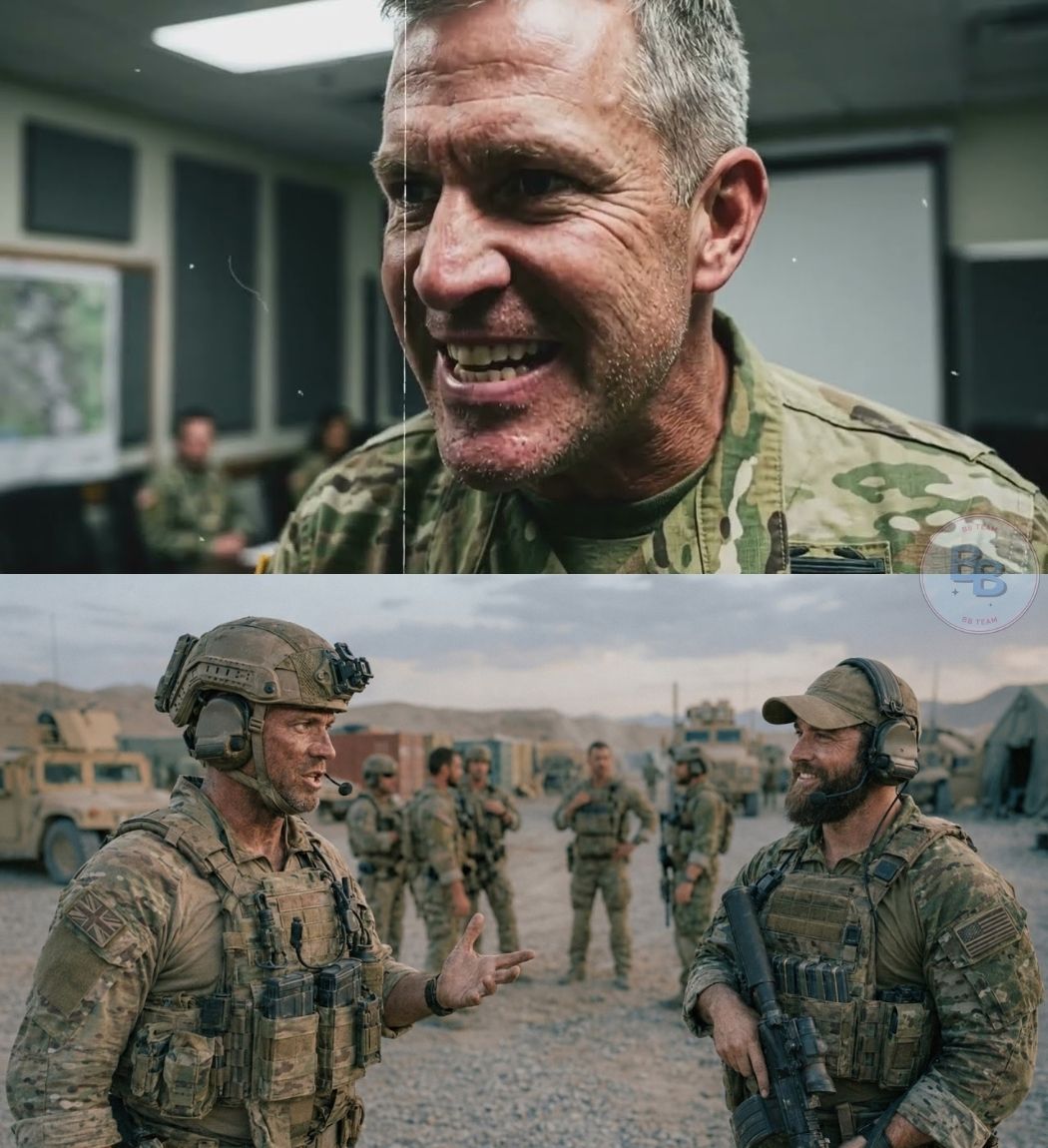
You are not elite. You are a joke. Tea-drinking amateurs playing at war. Put my boys in first and let your school girls sweep up behind. That was said out loud in daylight in a briefing room at Sterling Lines by a serving American commander with a silver star on his record and three joint task force rotations behind him. And there were 19 men in the room when he said it. 11 of them were British. Eight of them were his. Every one of them heard every word. His name was Wade Rickett, commander, United States Navy Troop Commander, Red Squadron Naval Special Warfare Development Group. The unit the newspapers insist on calling SEAL Team 6, even after the men in it have stopped bothering to correct them. He had come to Hereford in the second week of a joint counterterrorism validation exercise sent by a headquarters that wanted the two units to sharpen each other. He had not come to sharpen. He had come to teach. And in the first 90 seconds of the first working meeting, he had taught the room exactly what he thought of the men across the table from him. And he had done it in words a stenographer could have written down without asking him to repeat himself. He would remember saying it. He would be made to. He would be made to remember it standing on a concrete apron at Copehill Down four days later with a stopwatch in his own hand, watching men he had called school girls walk out of a building he had called impossible in a time he had said no team on earth could reach. He would be made to remember it sitting at a plywood table in a porter cabin at the edge of that same range, while a Frenchman he had barely spoken to for two days said one sentence to him that he would not be able to answer. He would be made to remember it in front of his own master chief, in front of a British lieutenant colonel who never raised his voice, and in front of a piece of paper with two numbers on it side by side that would still be there in the morning. You do not in this trade get to take words back. You get to find out what they cost. Rickett had said his out loud in a room with witnesses, and the receipt for them was already being written by men he had refused to look at properly when he walked in. What follows is what he said, who he said it to, and minute by minute, blow by blow, the exact price the regiment charged him for it in front of every person he had wanted to impress.
To understand what he cost himself, you have first to understand why anyone in that room on either side of the table had been prepared to listen to him at all. Wade Rickett was not a fraud. He was not a loud staff officer on his first foreign posting. He was on paper one of the more dangerous men the United States military had produced in his generation. He had come up through the 75th Ranger Regiment as a young enlisted man and taken a commission the hard way on the recommendation of officers who did not sign such things lightly. He had done a tour with a line seal team on the Iraqi border in the bad years, another on the Afghan-Pakistani frontier when the frontier meant something, and a third with the outfit he now commanded a troop of. He wore on the appropriate uniform a silver star for an action in Helmand in the spring of 2010 in which he had, according to the citation, personally cleared two rooms of a fortified compound after his point man was hit and carried the point man out under fire when the compound was clear. The citation used the word unhesitating. People who had been there used harder words than that. He was, in short, exactly the sort of man whose contempt hurts because it is not the contempt of a man who does not know. It is the contempt of a man who knows a version of it and thinks his version is the only one.
He had been sent to Hereford at the request of a two-star officer at Fort Bragg, who genuinely believed the two units had drifted apart in the years since the joint task force days and needed to be reintroduced. The exercise was to run for 11 days. There would be a range week, a close quarter battle week, and a validation problem at the end on the Copehill Down urban training facility on Salisbury Plain. Rickett had brought seven of his men with him. The regiment had opened B Squadron’s training calendar to receive them. Lieutenant Colonel Aiden Apprentice, B Squadron’s commanding officer, had chaired the first working meeting himself. His squadron Sergeant Major, Rowan Talbert, a warrant officer with 21 years in and no record of ever raising his voice, had sat at his right hand. Neither man had spoken more than a hundred words in the first hour, and Rickett, cracking his knuckles one at a time under the lip of the table, had taken that quiet for what he wanted it to be.
He had opened with a joke about the tea trolley in the corridor. The younger of his men had laughed. His master chief, Elliot Vance, 22 years in, had not laughed and had, without moving his head, looked at the wall. Rickett had gone on. He had said that in his experience, and he had leaned on the word experience, the British approach to the direct action problem was, and he wanted to be honest with his hosts here, dated. He had said that the regiment’s killhouse times he had been shown on paper the day before were cute. He had said that in the current operational environment, and here he had cracked another knuckle, you needed violence delivered at a speed that with respect he was not sure the men in this room could still generate.
And then, because no one had interrupted him, and because the silence of a British officer is not a silence an American commander of his stripe has been trained to read correctly, he had gone one sentence too far.
You are not elite, he had said. You are a joke. Tea-drinking amateurs playing at war. Put my boys in first and let your school girls sweep up behind.
Two of his own men laughed, one out of loyalty and one out of the sort of embarrassment that produces the wrong noise. The rest of his side of the table did not. Master Chief Vance closed his notebook with the flat of one hand and did not open it again for the remainder of the meeting. Captain Marcus Halbestram, the US Army liaison who had been sent along to smooth exactly this sort of moment, examined a point on the ceiling as if he had lost something in it. Colonel Yves Thibault, the French observer from GIGN, wrote one word in the margin of his own pad and underlined it twice.
On the British side of the table, nobody moved at all. Apprentice did not look up from his green notebook. Talbert’s face did not change. A trooper by the door, 23 years old, blinked twice and went back to being furniture. That was the whole of the British answer to it then and there.
Apprentice, when the meeting broke, thanked the American commander for his frankness, shook his hand, and told him he looked forward to the range week.
Talbert, on the walk back down the corridor, said nothing. Warrant Officer Class One Neville Acliffe, the regimental sergeant major, who had heard the whole thing without setting foot in the room, because regimental sergeant majors hear everything, met Talbert at the end of the corridor and asked very quietly whether the American had really said school girls.
Talbert said he had.
Acliffe said, “Right then,” and walked on.
That was the beginning of the debt.
The exercise moved out of Hereford on the second morning and reassembled 90 miles south on Salisbury Plain at the training complex the army calls Copehill Down and everybody who has worked there calls the village. It is a purpose-built fake town of concrete houses, a church, a chapel, a school, a garage, a marketplace, and enough dead ground between the buildings to teach a man everything he does not know about clearing a street. Bolted onto the edge of it in a compound of its own sits a plywood annex the regiment uses for close quarter battle problems that need dressing to a specific brief.
That week the annex had been dressed as a two-story residential structure, ground floor and first floor above it in British numbering, seven rooms in all with paper hostages taped to the walls of two of them and paper hostage takers taped to the walls of the other five. On the outer face of the plywood near the primary breach point, someone had written a time in blue chalk. Three digits, a colon, two more. It was faint. It had been rained on. It was still there.
Rickett saw it on the walkaround and asked mildly whether that was somebody’s best. Talbert, walking two steps behind him, said it was the house’s current standing time and left it at that.
Rickett asked whose.
Talbert said the regiment’s.
Rickett cracked a knuckle and said his boys would put a new number under it by Friday.
Talbert said nothing. The chalk stayed where it was, a stopwatch. An old mechanical Heuer with a scratched face sat on the trestle table by the breach door. Nobody explained the stopwatch either. It had been there the day before. It would be there on Friday.
That afternoon, while the Americans zeroed weapons on the 30-meter range and shouted at each other in the friendly way men do when they know they are being watched, two men from B Squadron walked up onto the low hill above the village and lay down in the grass. Corporal Henrik Ashdown and Staff Sergeant Ewan Meredith, boat troop sniper pair, working out of R for the week, Meredith from a valley town in South Wales called Abertillery. They had left the accommodation block at 1420. They lay down at 1447. They did not move again in any way a man watching them would have registered as movement until 1912, not to drink, not to eat, not to swat at the flies that came up off the grass in the last of the sun.
Meredith chewed the corner of his bottom lip once, when a fox came out of the tree line 300 meters below them, and stared at the spot where he was lying for the better part of a minute, and then walked on because there was nothing there to see. Ashdown counted his breathing in Welsh under his breath, which was a habit he had picked up on selection in the Brecon Beacons, and never lost, and which nobody had ever told him to stop. Un, dau, tri. The count was not for the count. The count was for the discipline of the count.
Any man who has done the trade can tell you that they were an observation stag. That was all. There was no problem being solved that afternoon that required two of the regiment’s best shots to lie in the grass for four and a half hours in silence. They were doing it because that was what the week’s schedule said, and because in the regiment you do the stag whether it is watched or not.
Down in the village in the last of the light, Rickett walked out of the annex with his master chief and paused on the concrete apron and looked up at the hill and did not see them. He was looking at the hill. He was looking more or less at the exact patch of ground where two men were lying in the grass with rifles across their forearms, and he did not see them. He turned back to Vance and said something about the light.
Vance, who had been in this trade long enough to know when a hillside was empty and when it was not, looked once more at the slope, held the look a beat longer than his commander had, and said, “Yes, sir.” Then he walked on.
That was the undoing device put down on the table in front of everybody in the exercise in plain daylight on the second afternoon. Not the rifles, not the camouflage, the stillness, the willingness of two grown men to lie in wet grass for four and a half hours to accomplish so far as the paperwork was concerned. Nothing at all. It is the single hardest thing in the trade, and it is the thing loud men cannot see because loud men do not know to look for it.
Rickett was, whatever else he was, a loud man with him. They were at that moment on the range below, shooting fast and shouting each other’s shot calls, and doing it well, and doing it in a way that would have won them any admirer they cared to look for.
Meredith and Ashdown came down off the hill at 1930 in the last dregs of the light, walked into the accommodation block, ate what was left of the evening meal cold, and went to bed without speaking to anybody. Nobody asked them what they had seen.
There was a green notebook in Lieutenant Colonel Apprentice’s left thigh pocket, in which later that night, in his own left-handed shorthand, he wrote two lines. What they were, only he knew what they were about. Anybody who had walked the village that afternoon could have guessed.
The chalk mark on the plywood wall was still there. The stopwatch was still on the trestle. The hill above the village was empty again in the way it had been empty all afternoon.
Rickett went to bed cracking his knuckles one at a time, planning the assault he intended to make on that house on Friday morning. He had no reason yet to think it would not go the way he had told the room in Hereford it would go. He had on the range that afternoon shot very well. He had in the walkaround seen nothing that alarmed him. He had a stopwatch waiting on a trestle table and a chalk number on a plywood wall to beat, and he intended to beat both. The gun was loaded. He did not know it was loaded. He had in fact loaded himself four days earlier in a room in Hereford in front of witnesses and the man who would pull the trigger on it on Friday morning was already asleep upstairs in a room he shared with three other men having said not one word about the American commander all day.
The third morning opened cold and gray with a low mist over the plane that had not lifted by breakfast. The problem set on the whiteboard in the range hut was one every close protection instructor in the world sets when he wants to see who a man actually is. Cold bore, no warm-up, no dry practice. One magazine of Glock 17 9mm. Six paper targets at 7, 10, and 15 meters. Three of them designated non-shoots on a par time of nine seconds from the holster. Scored by hit location and by penalty for any round that touched a non-shoot.
The regiment ran it two men at a time on parallel lanes. The Americans invited to run whichever man they wanted first put up their best pistol shot. A tall, quiet petty officer second class who had won money on a private circuit the year before and did not miss things at 7 meters in warm rooms.
The regiment put up Sergeant Douglas Kinsley, Air Troop, Parachute Regiment, who refused to wear gloves shooting in any weather, and was not wearing them that morning either. The mist was cold enough that when he laid his hand flat on the trestle to sign the safety brief, the wood came back darker where his palm had been.
He signed. He walked to the line he drew. He fired six rounds in something under two and a half seconds and holstered again with his hands in exactly the position they had started in.
The American shot well. He put five of his six inside the center of mass zones of the three shoot targets and clipped by the width of a fingernail the shoulder of one of the non-shoots at 15 meters. It was on any range in the world outside the one he was standing on a very good run.
The scorer, a corporal from Air Troop with a clipboard and no expression at all, called it out at 88, penalty one, net 78.
Rickett, watching from behind the firing line, nodded once and cracked a knuckle.
Kinsley’s targets came down. The scorer walked them across to the trestle without speaking. Six rounds, three shoot targets, two rounds to each, all six inside a coffee cup circle at center mass. No touch on any of the three non-shoots. On a par time, the scorer read off the timer and read again because he wanted to be certain of it. 2.31 seconds, net 100, no penalty.
There was a pause on the line long enough for a man to take a breath in and let it out. Nobody said anything. Kinsley picked up his brass, walked it to the bin at the end of the trestle, and walked back to the group of British soldiers standing under the awning at the edge of the range, and said to nobody in particular that the mist was thicker than he had thought it would be. He did not look at the Americans. He did not look at Rickett. He put his hands in the pockets of his smock because they were by then cold and stood in the way a man stands who has done nothing that requires comment.
Master Chief Vance, standing at his commander’s shoulder, looked at the target on the trestle for a long time. Then he looked at his own man’s target, which was next to it. Then he looked at Kinsley at the far end of the awning, hands in his pockets. Then he looked, for the first time since the meeting in Hereford, directly at Rickett.
He did not say anything. He did not need to. He held the look for perhaps 3 seconds and then in the perfectly correct way he had held himself for 22 years went back to looking at the range.
Rickett cracked another knuckle more slowly than he had cracked the first one and said aloud that it was a good run. He said it in the voice a man uses when he wants the word good to do work it cannot do.
Colonel Thibault, standing off to one side under a separate awning, as observers are supposed to, wrote another word in his pad. He had, by now, three words in it. He did not underline this one.
The rest of the morning went the way mornings on that range go. The regiment shot the same problem down the line, and put up six more scores, four of them over 90, none of them under 82. The Americans shot it and put up four more, all of them in the 70s and low 80s, which is to say that they shot it well, and shot it like the professional pistol shots they were. On any other range, against any other unit, they would have gone back to the accommodation block that evening, pleased with themselves.
That morning, they went back quiet. They had not lost on the scoreboard. They had in fact been within a bracket of the regiment across the group, but the man they had put up first, their best, had been beaten on the individual line by a man wearing no gloves in a mist thick enough to hide a fox, and beaten not by a point or two, but by an order of neatness. Six rounds inside a coffee cup, on time, cold, in weather, on a range that was not his.
Rickett walking back to the accommodation block at the end of the morning said to Halbestram the army liaison that Kinsley was clearly the regiment’s ringer and that they had been shown him first on purpose.
Halbestram, who had been in enough rooms to know when a commander was talking to himself, said nothing at all.
Vance, walking behind them both, said yes sir to a question that had not been asked.
Somewhere in the same accommodation block, Kinsley, who had shot the run at 2.31 seconds cold, without warming up, without gloves, on the wettest morning of the week, was drinking a mug of tea and eating a biscuit, and complaining mildly that the biscuit was stale. He did not mention the range. He did not mention the American. Nobody in the room asked him to.
That was the first time that morning that Rickett had been wrong about the men in front of him. It was the smallest of the wrong things he was going to be that week, and it was only the first.
That afternoon they moved off the pistol range and onto the long range up on the eastern edge of the plane, where the ground opens out in shallow folds, and the wind does what it wants because there is nothing between it and the sea to slow it down. The problem was a two-man precision shoot on a moving target at unknown distance. Target width 40 centimeters. Target speed, a slow walking pace on a rail. First round hit required. Engagement window 12 seconds from the observer’s spot call. Wind that afternoon was gusting to 20 knots from the southwest, unsteady, the sort of wind that will drop for 2 seconds and then come back at you sideways. There was at the far end of the range a small orange flag on a stake that had not stopped moving all day.
The Americans put up a pair from their sniper cell and shot it well. First round hit at what the range officer calling it out afterwards said was 640 meters and a second round followup when the target was called live a second time. Engagement 13 seconds, one over the window, which the American observer honest to his own trade accepted without complaint.
Rickett standing behind them nodded twice. He had by this point in the day stopped cracking his knuckles. He had without noticing put his hands in his pockets in the way Kinsley had put his in his pockets that morning.
The regiment put up Meredith and Ashdown, the same two men who had been on the hill above the village the afternoon before, and whom Rickett had not seen. They walked to the mat without speaking, took the range card the observer offered them, looked at it once, and lay down, Meredith on the trigger, Ashdown on the glass and the wind.
The rifle was an Accuracy International chambered in .338 on a bipod. The scope was a Schmidt and Bender. The rest of the kit was the kit the regiment always brings, and nobody photographs.
Ashdown counted under his breath in Welsh. Un, dau, tri. He read the flag. He read the grass. He read something in the light that was not written on the card. He called a wind adjustment aloud quietly.
Meredith moved the turret with the pad of his thumb.
Ashdown said, “On.”
Meredith chewed the corner of his bottom lip. The target was called. The rail hummed. Meredith fired.
At a moment nobody standing behind him could have picked out of the flow of the afternoon as the moment and the target 40 centimeters wide at what turned out on the tape to be 720 meters. Walking in that wind went down in one round. Engagement time from spot call to strike 6 seconds.
The observer read the timeout and did not read it out a second time.
They shot it a second time because that was the drill and the second target was called at a distance the observer only afterwards disclosed to the group had been 810 meters. Meredith put the second round through it in 7 seconds.
Ashdown on the glass said hit and nothing else and then said in Welsh under his breath wyth, which is the number eight, because that was where his counting had got to. He rolled off the glass, folded the bipod, and lay in the grass another moment before getting up. Because getting up too quickly on that range in that wind is the mark of a man who thinks the shot is the interesting part.
The school girls, Rickett had called them. 24 hours earlier in a briefing room 100 meters north in front of 19 men.
Meredith, standing up off the mat and dusting the grass off his forearms, had not been in that room. He had however been told the phrase by his troop staff sergeant on the drive down to the plane in the way things are told to men in the regiment which is once and then never again. He had chewed the corner of his bottom lip when he heard it and had not said anything back because there is nothing to say back to a thing like that until you are on a range.
Now he had been on a range. Now he had said what he had to say.
The American snipers, who were whatever else professionals, walked over to the British mat and shook Meredith’s hand and Ashdown’s hand, and asked in the direct way of their trade, how they had read the wind.
Ashdown, who was not talkative, said one thing about the flag, and one thing about the shadow of a cloud that had been moving across the grass at the 700 mark, and left it at that.
The American on the glass looked at the flag for the first time as if he were looking at a person he had walked past all day and only just recognized.
Rickett did not walk over to the British mat. He stood behind his own men, hands in his pockets, and said to Halbestram that the range was clearly one the regiment ran often and knew the peculiarities of, and that on a range his own men knew, the numbers would be different.
It was not an unreasonable thing to say. It was in the strict sense true. It was also the sound a man makes when he is beginning without meaning to to build the walls he is going to need that evening in the accommodation block. Alone.
Halbestram, who by now had said nothing at all for the better part of a day, said, “Yes, sir.”
Vance, standing behind them both, said nothing.
Colonel Thibault wrote a fourth word in his pad. He underlined this one twice.
That evening, in the mess, Meredith ate his food, drank his tea, complained about the same biscuit Kinsley had complained about that morning, and went to bed early. He did not mention the range. Nobody asked him to.
On the whiteboard in the range hut, a corporal with a clipboard had without ceremony written two times against two names, 6 seconds, 7 seconds under them in a different hand. Someone had written the American times and put a line between them and closed the whiteboard cabinet and locked it. The key hung on a nail. It was the same nail it always hung on.
The next problem was the one Rickett had without saying so been quietly waiting for.
The Americans as a group are extraordinary athletes. They lift heavier than most of the regiment lifts. They run faster over short distances. And in the gym on the base at Hereford in the first week they had in front of the British put up numbers on the pull-up bar and the deadlift bar that were not answered. Rickett had noticed. He had by the third afternoon of the exercise stored that as the thing his men were about to prove on Salisbury Plain in front of everybody when the endurance problem came out of the folder.
The problem when it came was a night tab. Full kit Bergen weighed at the start line at 35 kg. Belt kit and rifle on top. A fixed loop of 18 km across broken ground on the northern edge of the plane. From a start point at a chalk pit to a finish point at the same chalk pit in the dark on ground the regiment knew well and the Americans honestly did not.
They were set off in two teams of six, one British, one American, staggered by 15 minutes, the British team going first. The finish line was a chemical light on a stake by the pit.
There was a stopwatch. Apprentice had it this time. Talbert stood next to him. Rickett stood next to Talbert. Vance stood behind Rickett.
The wind, which had died down at last light, came back a little after midnight.
The British team came in at 3 hours 41 minutes, walking in a loose file of six, in step, breathing through their noses, unhurried. Trooper Bennett Crawl, 23 years old, the youngest man in the squadron, a new badge on mobility troop, came in third from the back and made a joke to the man in front of him about the ground on the last kilometer being softer than the ground on the first. And the man in front of him laughed, a real laugh, unforced in the way men laugh in the dark when they are, in the strict sense, not tired.
They dropped their Bergens by the chemical light and sat on them in a line and unscrewed their canteens and drank and did not speak again for perhaps a minute and then began quietly a conversation about breakfast.
Apprentice clicked the stopwatch. He did not in Rickett’s line of sight look at it. He wrote a number in his green notebook with his left hand and closed the notebook and put it back in his left thigh pocket.
The American team came in at 4 hours 19 minutes, which is to say they came in 38 minutes behind on the same route with the same weight in the same dark. They came in strong. They came in unbroken. They came in together, six men, no dropouts in a way any officer who has led an endurance march will recognize as a good performance by a serious unit. On any other night, against any other benchmark, 38 minutes is a number a commander could look at and say his men had done well.
Rickett standing at the finish line watched them come in past the chemical light and did the arithmetic in his head and did it again and did it a third time. Because 38 minutes over 18 kilometers on that ground in that dark was a gap that could not be explained by a route the regiment knew and his men did not.
His own men, when they had drunk and eaten and taken their boots off, sat on their own Bergens in the dark, and did not speak much. One of the more junior of them, a petty officer second class who had been on the pistol range the day before, looked across at the row of British men 15 meters away, still sitting on their Bergens in a line, still talking about breakfast, and said quietly to the man next to him, “They are not even breathing hard.”
The man next to him did not answer.
Vance heard it. Rickett heard it. Halbestram heard it and did not look up.
Rickett stood at the finish line for a long time after his own men had walked off to the trucks. He did not say anything to Apprentice. He did not say anything to Talbert. He looked once at the chemical light on the stake and then he looked at the line of British men sitting on their Bergens in the dark. And he did the thing a proud man does when the last brick of the wall he has built between himself and the truth has come out in his hand, and he does not know where to put it.
He put his hands in the pockets of his smock. He did not crack a knuckle.
The school girls, he had called them, sweeping up behind. He did not say it again. He would not say it again.
Somewhere between the finish line and the trucks, standing in the dark on a piece of ground he did not know, watching six men he had insulted in front of 19 witnesses drink from their canteens and talk about eggs, he stopped arguing with what had happened to him that week. He did not admit it. He did not say it aloud. He did not have to.
Vance, walking behind him to the truck, saw the shape of his commander’s shoulders in the light of the chemical stick and knew what he was looking at. Vance had walked behind other men whose shoulders had done that in the dark in other years on other ranges. It is a specific angle. There is not another one like it.
The tab had not been the point. The tab had been the loadbearer that carried the point in. The point was that Rickett had four days earlier in a room said a specific thing about a specific set of men, and the specific set of men had, without saying a word back, spent three days proving him wrong on the pistol, on the long gun, and now on their feet in the dark, under 35 kg across 18 km of ground.
There was one thing left. There was the house.
Friday morning was clear and cold. The mist that had sat on the plane all week had lifted overnight, and the light on the concrete of Copehill Down was hard and flat and honest. The problem chalked on the whiteboard outside the plywood annex was the one both units had been walking around all week. Two-story structure, ground floor and first floor. Seven rooms, two paper hostages, five paper hostage takers, breach point on the ground floor, exit through the roof. Success measured on three things. Time from breach to last room clear. Hits on hostage takers scored by paper. Hostage recovery counted head by head. Failure defined as any round on a hostage.
There was no par time. There was only the chalk mark on the outside wall, faint and rained on, and the stopwatch on the trestle.
Rickett on the walk-in that morning asked in front of both units whether he might hold the stopwatch for the British run.
Apprentice without looking up from his green notebook said that he might.
Talbert standing next to Apprentice did not react.
It was, Rickett would later tell himself and would not be believed by himself, a gesture of good faith. It was also, and here his instincts as an operator had gone quiet on him for the week, a gift he was walking into with both hands.
The American team went first. At his insistence, they breached at 9:02. Charges on the door, flow through the ground floor in two pairs, up the stairs to the first floor in a stack. Two rooms cleared left, three rooms cleared right. Hostages called out and moved to the stairwell. Exit through the roof at 9:08 and 22 seconds. 6 minutes 22 from breach to last man out on the paper.
Four of five hostage takers down clean. One with a wounding hit that would have needed a follow-up in the real world. And the scorer walked the paper out on the trestle and did not draw attention to it because he did not need to: one of the paper hostages in the first floor rear room with a 9mm hole through the shoulder. Tagged, not killed, but tagged in the trade that is a failure of the hardest kind, and the American team, walking off the roof, knew it before anybody said it. Their team leader, a lieutenant with three years on the squadron, looked once at his master chief, and did not need to be told anything. 6 minutes 22, one tag, on a house they had walked in daylight three times that week. It was on any other range a strong run. On this range that morning, it was the number Rickett was holding on the watch when the British team walked up to the start line.
Then the British team did the thing the American team had not budgeted for. They did not walk to the breach point. They walked past it. They walked around the outside of the plywood annex up onto the low rise behind it and went to ground in the grass, all six of them, full kit, faces down, and they stayed there for two hours.
The stopwatch in Rickett’s hand did not start because the run had not started because the run does not start until the breach charge is on the door.
Rickett stood on the apron and watched the empty side of the building and did not at first understand what he was watching.
Vance understood. Vance had been on the pistol range on the third morning. He had been on the long range on the third afternoon. He had been at the chalk pit in the dark on the fourth night. He had walked behind Rickett to the truck with a specific angle in his commander’s shoulders. Vance stood on the concrete apron in the hard white light of the Friday morning and understood before his commander did that the run had been running for a week. That the two hours the British team was about to spend in the grass on the rise behind the building were the same two hours Meredith and Ashdown had spent in the grass above the village on the second afternoon when Rickett had looked up at the hill and seen an empty hill. That patience is a weapon. That silence is a weapon. That the school girls in the grass on their bellies in full kit at 9:15 in the morning in front of a stopwatch held by the man who had called them that were about to fire the weapon he had not seen them load.
At 11:09, the British team moves—not runs, moves. Six shapes in the grass become six men on their feet at the wall of the annex at a breach point the American team did not use at the back of the building, which is a wall the American plan did not cover from the outside because it was, everybody had agreed in the walkaround on Monday, the wrong wall to breach.
It is now at 11:09 the right wall. The charge goes on the door. The charge goes off.
Present tense now, because this is the minute the debt is paid.
The stack flows through the ground floor, rear rooms in a blur that is not fast in the way Americans use the word fast. It is fast in a different way. The way of six men who have decided before the door came off exactly which of them was going to look at which corner in which room in which order, so that no man is choosing anything after the door comes off.
The first two paper hostage takers go down in the first room without a wasted round. The stack moves: the second room empty. The third room: one hostage taker, one round.
The stairs cleared by two men from above and two men from below in a scissor Rickett has not seen used in a live house for six years.
The first floor, front room, both paper hostages recovered. Crawl, the youngest man in the squadron, calls them out by hand.
The two remaining hostage takers down in the last room in a single stack push. Kinsley on the point of that stack, no gloves, hands red with the cold of the plywood he has just gone through. Meredith, second man, chewing the corner of his bottom lip as he checks a corner nobody has ordered him to check.
And the last man is walking through the roof hatch.
And Apprentice on the concrete apron is looking not at his squadron, but at the man holding the watch.
3 minutes 51 seconds on the watch in Rickett’s hand, in his own hand. He has clicked it himself because the drill is that the man holding the watch clicks it when the last man is out of the building and the last man is out of the building and he has clicked it and the number on the watch reads 3:51 and there is no tag on either hostage and there is no wound score on any of the five hostage takers. And there is a scorer standing on the concrete apron with a clipboard reading the paper out to the room and it is clean. Every hit, every head.
Read that number again. 3:51 against 6:22 on the same house in front of the same witnesses on a watch held by the man who had said school girls in a room in Hereford four days earlier in front of 19 men.
The debt is paid.
He does not move for a long time. His hand is still on the stopwatch. The last of the British team has come off the roof, walked down the outside ladder, and is standing in a loose group on the concrete apron with the others. Six men breathing through their noses, unhurried in the way they had come off the tab in the dark on Wednesday night.
Apprentice has taken the notebook out of his left thigh pocket. He has written one number in it. He has closed it. He has put it back. He has not looked at Rickett. He is not going to look at Rickett; that has not been said without a word being spoken.
By the number on the watch in Rickett’s own hand, the British team walks past him on their way to the trucks. They do not look at him either, not out of contempt, out of the more devastating thing, which is that they have by lunchtime on Friday stopped thinking about him. Crawl walks past him at his shoulder height and says in the friendly way a young man says a thing on a Friday when the week is nearly over that it is a nice day for it. He is speaking to the man next to him. He is not speaking to Rickett. Rickett has not been spoken to.
They walk him afterwards into the porter cabin at the edge of the range. There is a plywood table. There is a chair. There is a sheet of paper on the table printed off in the range office 10 minutes earlier with two lines on it. The after-action review summary.
Two runs, same house, same morning.
American team: 6 minutes 22 seconds. One hostage tagged. First floor rear room. Single round non-fatal in the model.
British team: 3 minutes 51 seconds. No tags. All hostage takers down. Single round center mass or head. No follow-ups required.
Under both lines in a different hand, a delta: 2 minutes 31 seconds.
The number in Rickett’s own handwriting because Apprentice has asked him politely whether he would like to write the delta himself. He has. He has written it in the neat square capitals of a man who was once a long time ago an enlisted man taking dictation.
He puts the pen down. He does not read the sheet aloud. He is going to be asked to in a moment by the exercise director because that is how the after-action review is closed. He is going to open his mouth to read it and he is going to read American team 6 minutes 22 seconds and he is going to stop. He is not going to be able to read the second line. Not because he does not know the number, because his mouth will not in that moment form the shape of the number. He will close his mouth. He will slide the sheet across the table to Vance.
Vance will read it out in the flat voice of a man reading a fitness report. The room will not react.
Later, in the corridor outside the porter cabin, Master Chief Vance will stop his commander with one hand on his sleeve—the only time in the 22 years of his career he has ever put a hand on an officer—and will say quietly in a voice not meant for anybody else and heard nevertheless by Halbestram three paces behind them, “Sir, you mocked them in a room. They answered you in a house.”
He will let go of the sleeve. He will walk past his commander to the trucks. He will not for the rest of the exercise say another unnecessary word.
Colonel Thibault will find Rickett on the concrete apron 40 minutes later when the trucks are loading and the British team is already gone. Thibault, who has said almost nothing for four days, who has been writing single words in the margin of a pad and underlining some of them, will stand next to Rickett for perhaps a minute in silence, and will then say in the accented, careful English of a man who does not spend his sentences on things he does not mean:
“You mocked the wrong quiet men, commander.”
He will not wait for an answer. He will walk to his car. He will not look back.
Rickett stands on the concrete apron with his hands flat at his sides. He does not crack his knuckles. He does not put his hands in his pockets. He does not for the rest of the afternoon do the small physical thing he has done for 20 years when a room has gone the way he wanted it to go. He is not a man being converted. He is not going to spend the next 15 years talking about the regiment with respect in interviews he does not give. He is going to go back to his headquarters and he is going to write a very short after-action report and he is going to keep the phrase he said in the briefing room in Hereford out of it. And everybody in the room in Hereford is going to remember the phrase anyway for the rest of their careers because that is how those things work.
He is not humbled, he is diminished. It is not the same thing. It is the harder thing.
You are not elite. You are a joke. Tea-drinking amateurs playing at war. Put my boys in first and let your school girls sweep up behind.
He had said it in daylight in a room in front of 19 men. It is worth setting it down one more time so that the shape of it can be seen against the shape of what happened. He was right about the tea. There had been a tea trolley in the corridor. There had been biscuits stale complained about twice. He was right about the surface of the thing. He was right about none of the rest of it.
He had looked at quiet men and read the quiet as absence, when in fact the quiet was the weapon, and by the time he understood which way round it went, he was standing on a concrete apron with a stopwatch in his hand and a number on it he could not read aloud.
Contempt is a form of blindness. It is not the loud, obvious blindness of a man who does not know his trade. It is the harder blindness of a man who knows a version of his trade and mistakes his version for the whole of it.
Loud men count seconds. Quiet men count breaths.
On any given Friday, on any given range, on any given house, the men who counted breaths that week walked into a building the men who counted seconds had already walked out of and walked out of it faster, cleaner, and without a mark on the paper.
That is not a story about nations. It is a story about one man in a room saying a specific thing out loud and being answered by other men who did not in the four days that followed raise their voices once.
The apron at Copehill Down is empty now. The chalk mark on the plywood wall has been rubbed off and rewritten. The number under it is smaller than it was on Monday. The stopwatch is back on the trestle. The nail the whiteboard cabinet key hangs on is the nail it has always hung on. Somewhere in a green notebook in the left thigh pocket of a lieutenant colonel who writes left-handed, there is a number in shorthand nobody but him will read. Somewhere in the accommodation block, a young trooper 23 years old is complaining about a biscuit. Somewhere on a hillside, two men are lying in the grass in silence for reasons that will not appear on any schedule and will not be photographed by anybody.
That is the regiment. That is what he mocked and that is what mocked him back without ever in four days on Salisbury Plain raising its voice. There are other debts told the same way at the same pace with the same refusal to gloat. Other rooms, other loud men, other quiet answers. If the shape of this one held you, the rest are waiting where you found this one. And they are told with the same silence.