“We Don’t Answer to You”: The British SAS Who Turned a Green Beret Assessor Into a Student
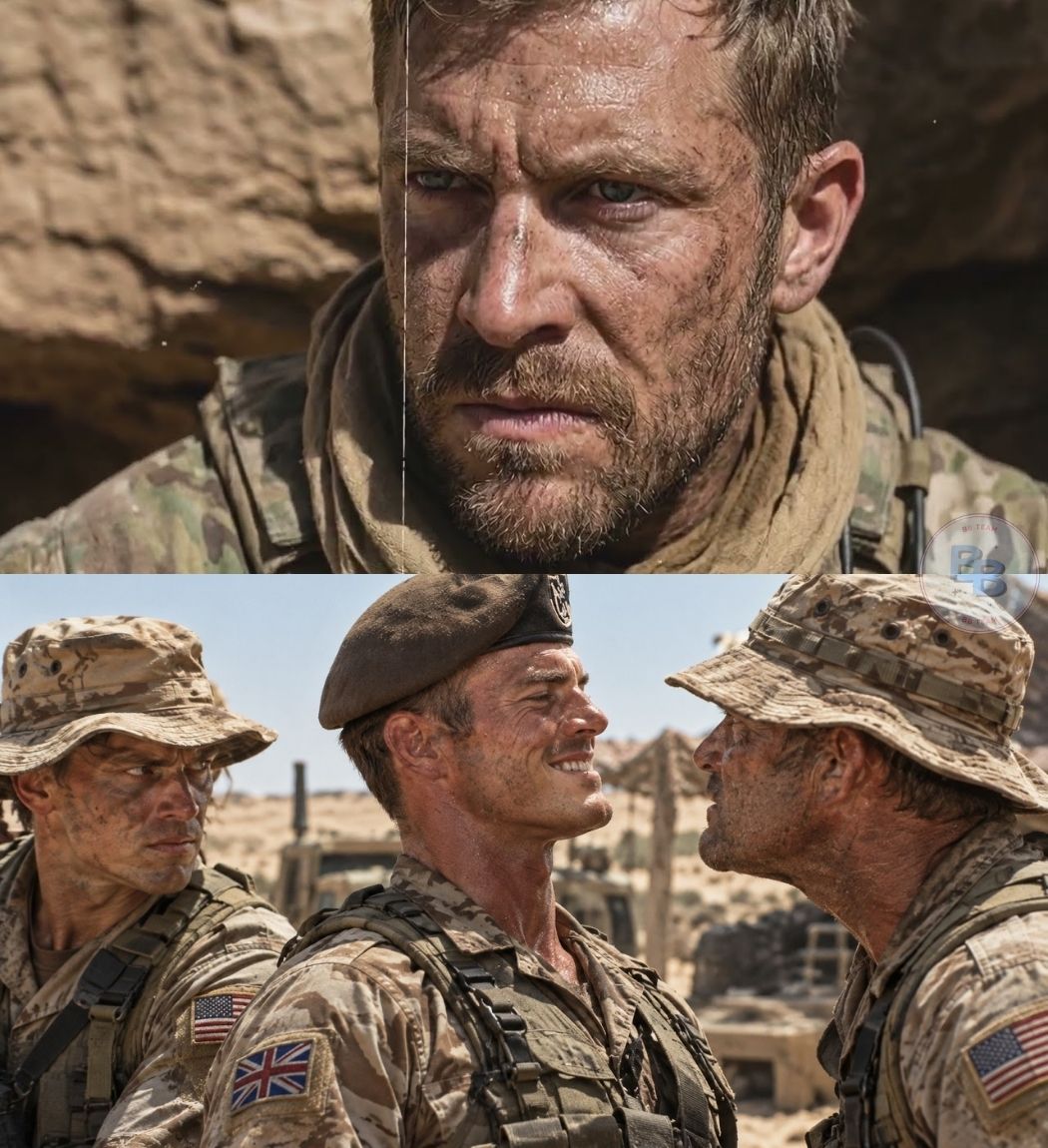
“Inside the Secret SAS Selection Where America’s Top Green Beret Instructor Was Humbled Into a Rookie”
The rain in the Brecon Beacons does not merely fall; it drives sideways, scouring the Welsh moorland with a relentless, freezing malice designed to strip the warmth from human bone. It is an environment where equipment rots, morale shatters, and men discover the precise limits of their physiological endurance. On a grim Tuesday morning in the autumn of 1994, a figure stood atop Pen y Fan, watching the misery unfold. This man was not a rookie recruit gasping for breath under a sixty-pound bergen. He was a legendary United States Army Green Beret instructor—a veteran of unconventional warfare, survival expert, and master of his craft—who had arrived in the United Kingdom with a quiet arrogance. His mission: to evaluate, observe, and critique the selection methods of the world-famous British Special Air Service (SAS).
He believed he was there to inspect. He did not know he was about to be destroyed.
For decades, an unspoken rivalry has simmered between the elite units of the US military and their British counterparts. While the Green Berets and Delta Force are renowned for their technological supremacy, operational aggression, and unmatched logistical backing, the SAS has cultivated a mystique built on an almost ascetic austerity, psychological resilience, and a philosophy that operational security and individual initiative trump all else. The American instructor—whom we will call Master Sergeant Vance—arrived at the SAS selection camp near Hereford with a clipboard, a critical eye, and a polite condescension. To Vance, the SAS methods looked antiquated. There were no high-tech biometric monitors strapped to the candidates’ chests, no real-time satellite tracking, and precious little hand-holding.
“You guys are running these boys into the ground on pure guesswork,” Vance remarked to an SAS staff sergeant on day one, nursing a steaming mug of black tea in a drafty mess tent. “In the detachment, we use data-driven performance metrics. We know the exact caloric deficit before a soldier even feels it.”
The SAS staff sergeant, a man with a face like cured leather and eyes that had seen things in Northern Ireland and the Falklands that he never spoke of, took a slow sip of his tea. He didn’t raise his voice. He didn’t bristle at the American’s arrogance. He simply smiled—a cold, humorless curve of the lips—and delivered the five words that would dismantle Vance’s entire worldview: “Theory is cheap. Try the hills.”
That evening, the arrogant instructor was invited—or rather, challenged—to participate in a modified, unannounced navigation exercise alongside the Directing Staff (DS). It was framed as a routine map-check. Vance, proud of his Ranger and Special Forces pedigree, accepted without hesitation. He grabbed his compass, adjusted his webbing, and stepped out into the gathering gloom.
What followed was not an exercise; it was a psychological dismantling. The SAS instructors did not compete with Vance by running faster or lifting heavier. Instead, they played a silent, invisible game of psychological attrition. They vanished into the mist, leaving Vance to navigate treacherous terrain in zero-visibility conditions where conventional compass work is violently warped by local iron deposits. Within three hours, Vance was turned around, shivering, soaked to the skin, and utterly alone on a desolate ridge.
When he finally stumbled toward a checkpoint shack three hours past his estimated arrival time, expecting a warm fire and a cup of coffee, he found two SAS troopers sitting in silence, quietly cleaning their weapons by the dim amber glow of a single hurricane lamp. They didn’t ask if he was okay. They didn’t offer him shelter.
“You’re late, Yank,” the senior trooper said, not even looking up from his rifle slide. “And your pace count was off by four miles. If you were on a real tasking, your entire troop would be dead in a ditch.”
Stung to his core, Vance demanded a formal rematch. He challenged them to a direct, timed navigation and endurance test across the infamous Fan dance route the very next morning, carrying a full operational load. The SAS accepted instantly, appointing a seasoned veteran—a veteran of covert operations in the Persian Gulf—to shadow him step-for-step.
The next morning, the crucible began. Vance pushed himself to the absolute red line of human capability. His lungs burned, his thighs screamed with lactic acid, and every breath tasted of iron and cold mud. He poured every ounce of his Green Beret training into the march, driving his legs forward with stubborn American pride. For the first two hours, he kept pace with his shadow, feeling a surge of vindication.
Then, the psychological trap sprung. The SAS shadow didn’t just match Vance; he toyed with him. At every steep incline, while Vance was gasping for oxygen, the Brit would casually initiate a conversation about tactical doctrine, remaining preternaturally calm, his breathing regulated and steady. It was a calculated demonstration of superior physiological control and mental dominance.
By mile nine, Vance’s body began to betray him. The cold had seized his joints, and the sheer monotony of the brutal ascent broke his focus. He made a critical navigation error, misinterpreting a spur on the ridgeline. His SAS shadow watched him commit the error, let him walk fifty meters down the wrong path, and then stopped.
“Where are you going, Master Sergeant?” the Brit asked quietly.
Vance froze. He checked his map, his hands trembling with exhaustion and frustration. Realization hit him like a physical blow. He had completely lost his orientation.
“We don’t babysit,” the shadow said, stepping forward to loom over the exhausted American. “In the Regiment, if you rely on someone else to save your hide, you’re already a casualty. You came here thinking you were an assessor. You wanted to grade us. But out here on the Welsh rock, you’re nothing more than a student who just failed day one of basic selection.”
Those words stung worse than the freezing rain. They cut through decades of military prestige, unit bravado, and personal ego. Vance stood there on the windswept ridge, chest heaving, staring at the impassive face of a soldier who represented an organization that operates in the deepest, darkest corners of global conflict without seeking applause, medals, or corporate sponsorships.
When Vance returned to the base camp later that evening, the swagger was entirely gone. He sat by the heater, wrapped in a heavy wool blanket, looking broken. The Senior Instructor walked over, handed him a fresh cup of tea, and sat down beside him. There was no mockery in his eyes now—only a quiet, professional respect earned through suffering.
“You’re a tough bastard, Vance,” the Senior Instructor said quietly. “Your physical conditioning is world-class. Your shooting is sharp. But you rely on systems, tech, and ego. The SAS doesn’t rely on systems. We rely on each other, and on an inner stillness that cannot be bought or measured by a machine.”
Master Sergeant Vance never published his critical report on the SAS selection process. Instead, when he returned to Fort Liberty—then Fort Bragg—he quietly rewrote his entire unit’s small-unit navigation and mental resilience curriculum, incorporating the brutal, unyielding lessons he learned on the damp, unforgiving slopes of Brecon Beacons.
The story was long buried in classified debriefs and whispered squad-room legends, a testament to the day an American Green Beret master found out that true elite status isn’t about the patch on your shoulder or the gear on your vest. It is forged in the silence, the cold, and the absolute refusal to quit when the world around you collapses into chaos. And now, the veil has finally been lifted.
What are your thoughts on this legendary clash of military titans? Who do you think truly holds the crown in modern special operations? Share your perspective in the comments below!